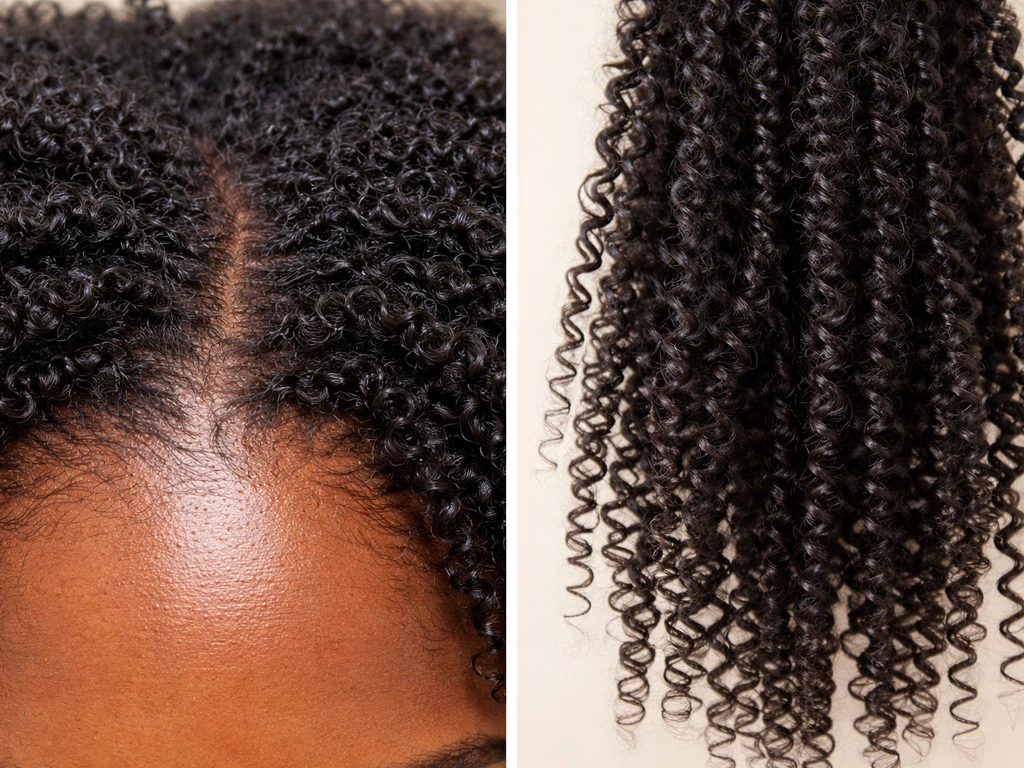
Your hair is almost certainly already growing. Black hair, coily hair, 4C hair, it all grows at roughly the same rate as any other hair type, averaging about half an inch per month or around six inches per year. The reason it doesn't seem to get longer is usually not slow growth. It's breakage. The hair that grows out at the root is snapping off at the ends before you ever get to see it. Once you understand that distinction, growing long hair as a Black woman stops being a mystery and becomes a practical problem with real, fixable solutions.
How to Grow Long Hair for Black Females: A Practical Guide

Simone Okonkwo
18 May 2026
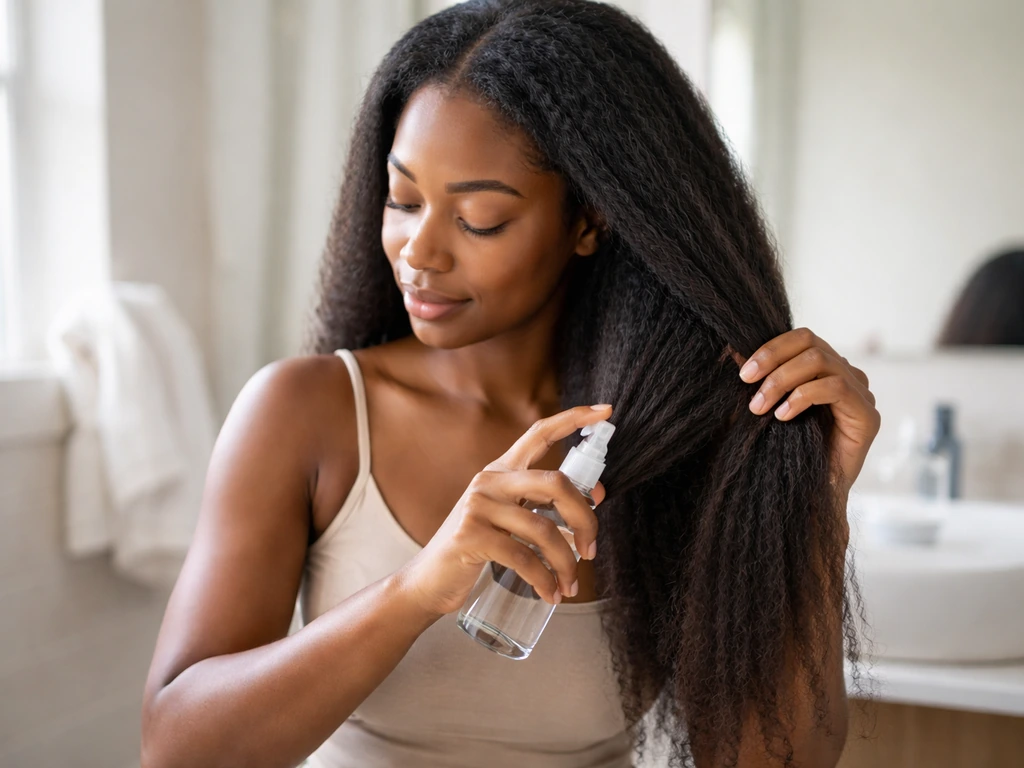
What "growing long hair" actually means for Black women
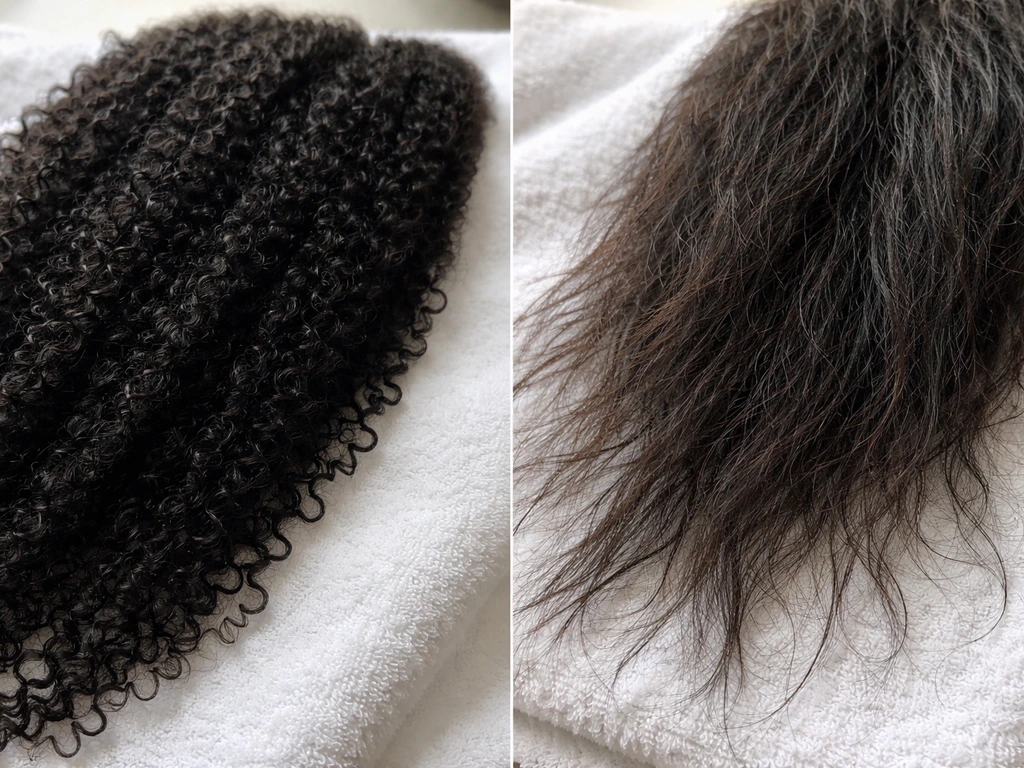
There are two separate things happening on your head at all times: growth and retention. Growth is what your follicles do underground, your scalp produces about 0.5 inches of new hair every month regardless of what you put on it topically. Retention is how much of that length you actually keep. If your ends are breaking off at roughly the same rate your scalp is producing new hair, your length stays flat even though your hair is technically growing constantly.
Normal daily shedding is also part of the picture. The American Academy of Dermatology confirms that losing around 50 to 100 hairs per day is completely normal, those are hairs that have finished their growth cycle and released from the follicle. Shedding is not the same as breakage. Shed hairs have a white bulb at the root. Broken hairs don't. When you can tell the difference, you can target the actual problem instead of panicking over hair in your brush.
The goal for growing long hair is simple in theory: protect the length you already have while giving your scalp the conditions it needs to keep producing healthy strands. Everything else in this guide supports those two things.
Why Black hair struggles to retain length (it's almost always breakage)
Coily and kinky hair textures have a structural characteristic that makes them more vulnerable to breakage than straight hair: the curl. Each bend in the hair shaft is a stress point where the cuticle is naturally thinner and more likely to crack under tension, dryness, or mechanical force. That's not a flaw, it's just the reality of the structure, and knowing it helps you handle your hair accordingly.
The most common breakage culprits I see come up again and again are these:
- Dryness and low moisture retention — coily hair has a harder time moving sebum (the scalp's natural oil) down the hair shaft, so ends tend to be dry and brittle
- Mechanical damage — rough detangling, dry combing, and aggressive styling tear the cuticle and snap strands
- Tension from tight styles — traction on the hairline and edges is a major cause of both breakage and traction alopecia
- Chemical processing — relaxers, color, and heat straightening alter the hair's protein bonds and raise the cuticle, making strands more porous and fragile
- Neglecting ends — ends are the oldest part of your hair and need the most protection and moisture
Research published in dermatology journals confirms that hair weathering, the structural deterioration of the hair shaft from combing, braiding, straightening, perming, and dyeing, raises and damages the cuticle layer, exposing the cortex underneath to further damage. Once the cuticle is compromised, moisture escapes faster and breakage accelerates. This is why product choice and handling technique matter so much more than any "growth supplement" marketing.
Protective styles that actually help you retain length
Protective styles work by tucking your ends away and reducing the daily manipulation that causes breakage. When done correctly, braids, twists, locs, and weaves are genuinely useful tools for length retention. The problem is that "done correctly" is doing a lot of heavy lifting in that sentence. A protective style that's too tight, left in too long, or not maintained properly can set your length goals back significantly.
Braids and cornrows
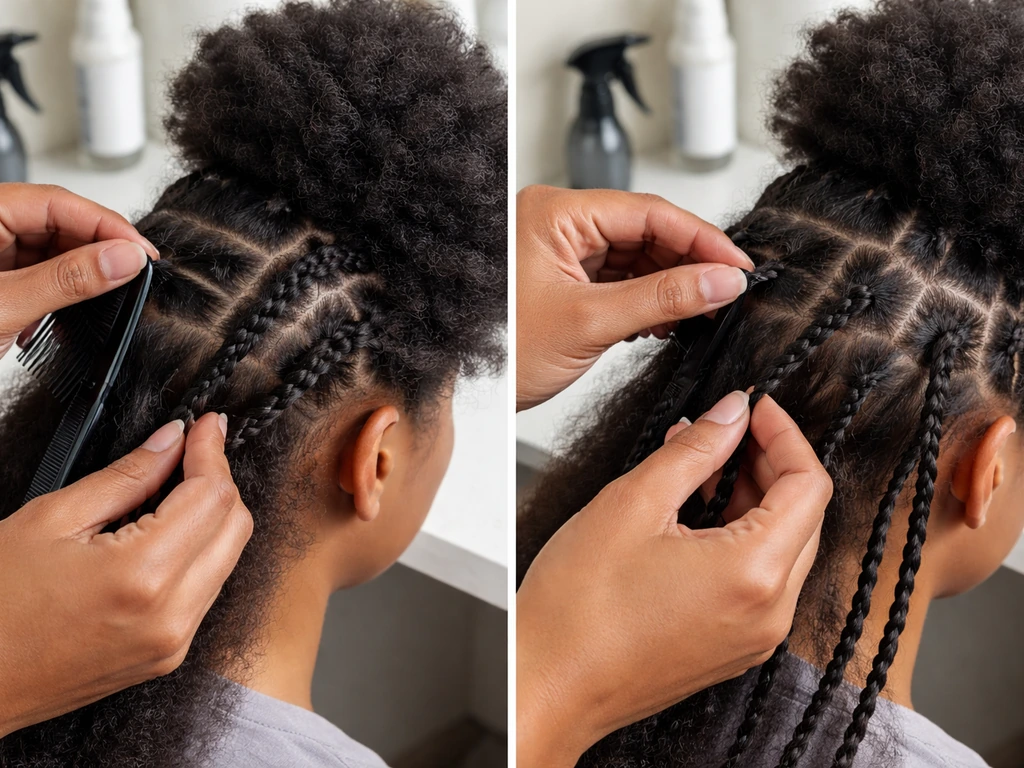
Box braids and cornrows protect ends and reduce daily manipulation, which is genuinely good for retention. The risk is tension. The AAD is direct about this: if a hairstyle causes pain, it is too tight. Full stop. Research in JAMA Dermatology identifies tight braids and prolonged tension as leading causes of traction alopecia, a form of hair loss that starts at the hairline and temples, exactly where braids tend to pull hardest. The "fringe sign," where a thin band of shorter hair remains at the very front hairline, is a classic early indicator. Loose braids worn for no longer than six to eight weeks, installed without extensions being attached too close to the scalp, are far safer than tight microbraids left in for three or four months.
Twists and twist-outs
Two-strand twists are one of the lowest-tension protective options available. They're gentler on the hairline than braids and easier to remove without mechanical damage. Leaving them in for two to three weeks at a time, keeping them moisturized at the scalp, and detangling carefully on takedown makes them one of the most consistently length-friendly styles for natural hair.
Locs
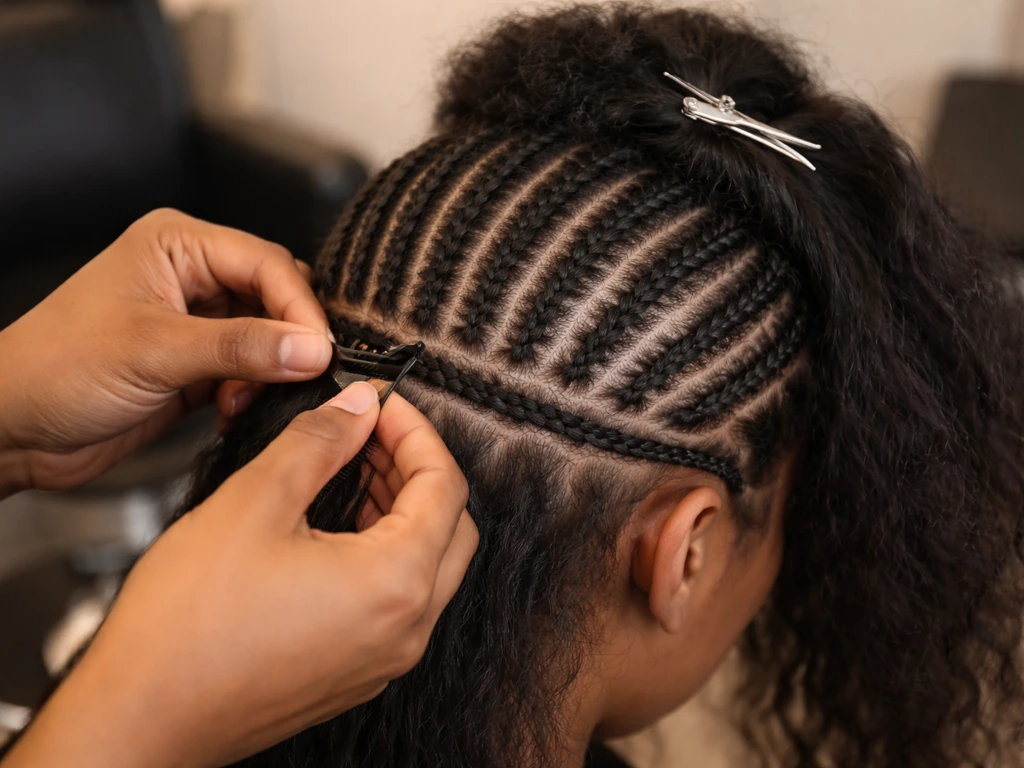
Mature locs are actually a good long-term protective style because they eliminate most daily manipulation. The risk is in the early loc journey and in retwisting too tightly or too frequently. StatPearls research specifically lists locs as a traction alopecia risk factor when tension is high. Retwist only when necessary, keep the tension loose especially at the hairline, and see a professional if you notice thinning at the temples.
Weaves and wigs
A well-installed sew-in or a wig over a flat-braided base can be genuinely protective if the braided foundation underneath isn't too tight and the style isn't left in for more than six to eight weeks without checking the scalp. Wigs without tight elastic bands or hard caps tend to be the safest option because they apply no tension to the hairline at all. The scalp still needs attention under any of these styles, more on that in the routine section below.
Your daily and weekly routine for actual length retention
There's no single "correct" routine, but there are core principles that consistently produce results for coily and textured hair. Here's how to structure yours.
Washing
Wash weekly or every one to two weeks depending on your scalp's oil production, activity level, and whether you're in a protective style. The goal is a clean, healthy scalp, hair grows from the follicle, and a buildup-clogged, inflamed scalp is not an ideal growing environment. Use a sulfate-free or low-sulfate shampoo if your hair is dry or chemically processed. Focus the shampoo on your scalp, not your lengths, and let the rinse water clean the rest.
If you're wearing braids or a weave, don't skip washing entirely. WebMD and dermatologist guidance both recommend cleaning your scalp with a diluted sulfate-free shampoo every one to two weeks even while in a protective style. Buildup and sweat under a protective style can irritate the scalp and disrupt the follicle environment.
Conditioning
Deep condition every wash day. A rinse-out conditioner after every shampoo is the baseline, but a deeper treatment, left on for 15 to 30 minutes with or without heat, makes a real difference for coily hair that tends to be dry. Look for conditioners with humectants (glycerin, honey, aloe vera) to draw in moisture and film-forming agents or proteins (hydrolyzed keratin, silk amino acids) to reinforce the cuticle. If your hair feels mushy or over-elastic after washing, it may need a light protein treatment to balance things out.
Detangling
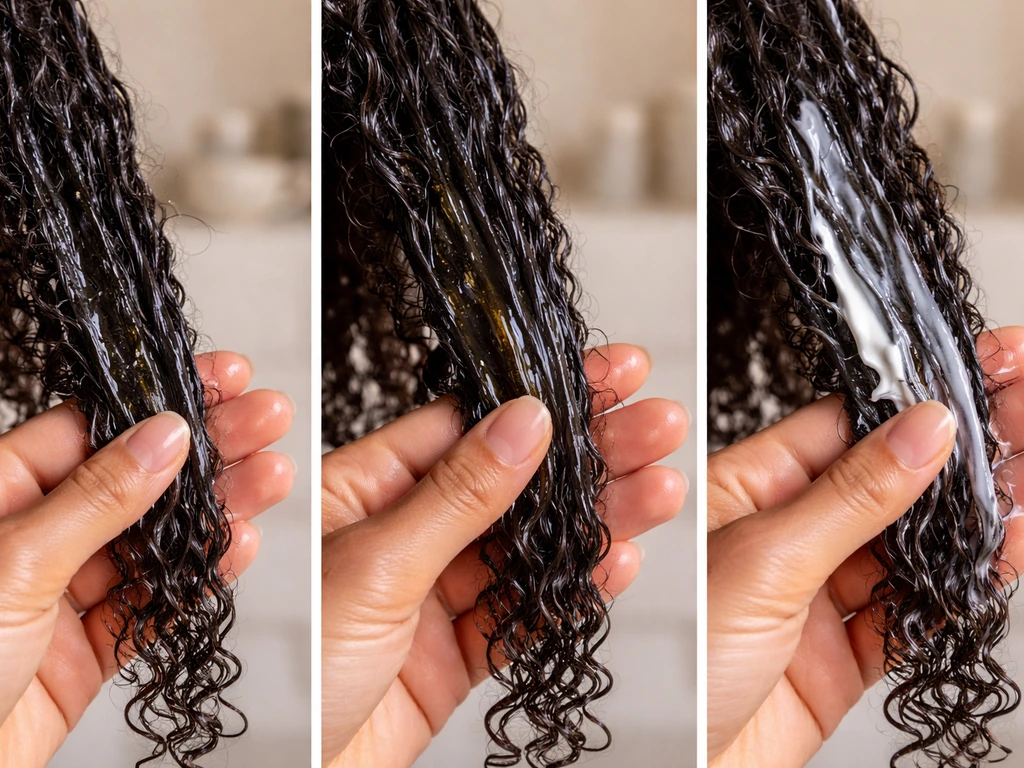
This is where a huge amount of breakage happens, and the rules here are not complicated. The AAD's guidance is clear: never brush or comb dry coily hair. Always detangle on wet or damp hair with conditioner or a detangling product providing slip. Work in sections, four to eight sections depending on your density and curl tightness. Start at the ends and work your way up to the root. Use your fingers first, then a wide-tooth comb if needed. Avoid fine-tooth combs and paddle brushes on coily hair that hasn't been stretched or straightened.
Moisture and sealing
The LOC or LCO method (Liquid, Oil, Cream, or Liquid, Cream, Oil) is a popular and practical way to layer moisture into coily hair. The idea is to apply a water-based product first to deliver moisture, then layer an oil or cream on top to seal it in. Heavier oils like castor oil, avocado oil, or shea butter work well as sealants for very coily textures. Lighter oils like argan or jojoba work better for finer strands. Moisture the scalp lightly (not drenching it with grease) and focus most moisture application on the mid-lengths and ends.
Low-manipulation habits that reduce shedding and breakage
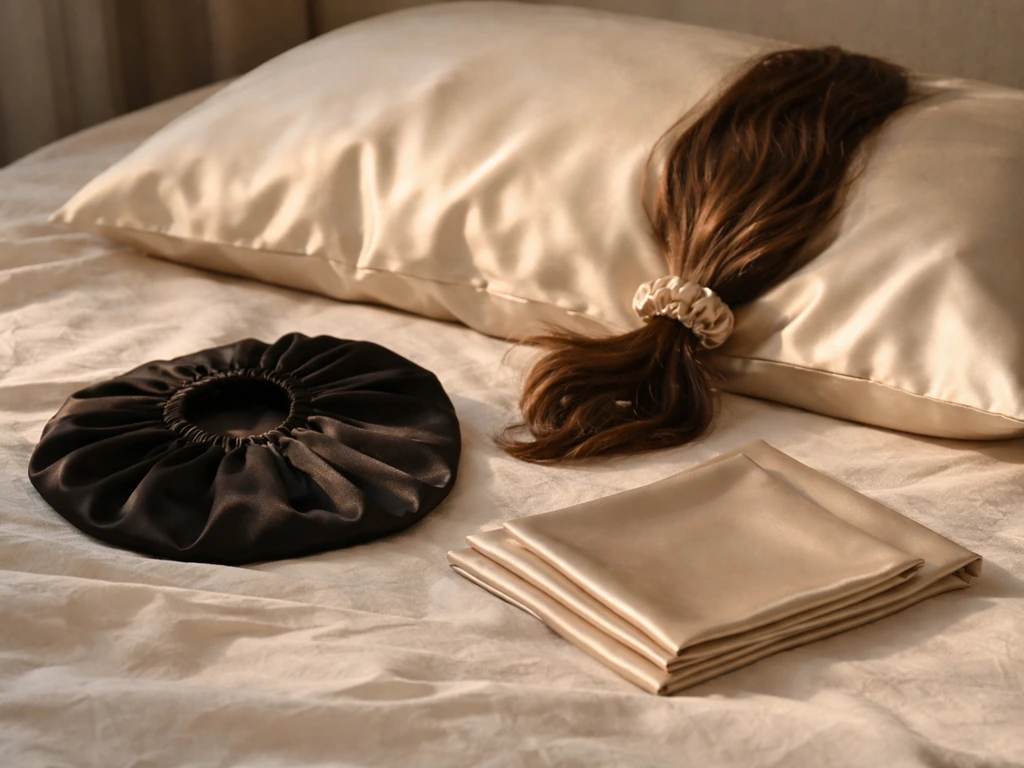
How you handle your hair on non-wash days matters as much as what you do on wash day. Low-manipulation styling means reducing the number of times per day or week you comb, brush, pull, or restyle your hair. The less you touch it, the less mechanical stress you create.
- Sleep on a satin or silk pillowcase, or use a satin bonnet or scarf — cotton pillowcases create friction that roughens the cuticle and causes tangling overnight
- Avoid tight ponytails, buns, or puffs daily — especially with rubber bands or tight elastics at the same spot every day
- When your hair is loose, let it be loose — resist the urge to finger-comb throughout the day
- Stretch your styles: instead of restyling every day, choose styles that last three to five days
- Trim split ends every eight to twelve weeks — split ends travel up the shaft and cause more breakage if left alone
- Avoid heat as a daily tool — if you use flat irons or blow dryers, use a heat protectant and the lowest effective temperature
Research on mechanical hair damage confirms that longer comb strokes and brushing (compared to short sections and finger detangling) increase the ratio of long-segment breaks in the hair shaft. That means aggressive detangling isn't just uncomfortable, it's physically snapping your hair in ways that compound over time.
How to choose products that actually help
The hair care market is full of products promising growth, length, thickness, and transformation. Most of them are selling you retention benefits (keeping the hair you have healthy) and labeling it as growth. That's not necessarily dishonest, retention is how you get long hair, but it helps to know what you're actually buying.
Moisturizers vs. oils: know the difference
Water is the only true moisturizer. Products that contain water (aqua) as a primary ingredient are moisturizing products. Oils do not moisturize, they seal. Applying oil to dry hair seals in dryness. The correct order is always: water-based product first, oil or butter second. For very coily hair, you may need to refresh moisture every two to three days between wash days using a light water or aloe spray followed by a sealing product.
Ingredients worth prioritizing
- Glycerin, aloe vera, panthenol: humectants that draw moisture into the hair shaft
- Hydrolyzed keratin, hydrolyzed silk, hydrolyzed wheat protein: help rebuild and reinforce a damaged or porous cuticle
- Shea butter, mango butter, avocado oil, castor oil: rich sealants for coily textures that lose moisture quickly
- Argan oil, jojoba oil, grapeseed oil: lighter oils that work well for sealing on finer strands or in humid climates
- Cetyl alcohol, cetearyl alcohol: these are fatty alcohols (not drying) that add slip and help with detangling — a good sign in conditioners
What to skip or minimize
- Heavy mineral oil and petroleum applied directly to dry scalp — they can block follicles and don't actually moisturize
- Products with high alcohol content (isopropyl alcohol, alcohol denat.) near the top of the ingredient list — these are drying
- Sulfate-heavy shampoos used daily or on chemically processed hair — they strip the natural oils coily hair already struggles to retain
- Products marketed as "growth" serums without clinical evidence — most act as scalp stimulants at best; they can't override genetics or fix a broken routine
Natural, relaxed, and color-treated hair: what changes by processing type
Your processing history changes your hair's porosity, elasticity, and breakage risk, and that changes what your routine needs to look like.
| Hair Type | Key Vulnerability | Routine Adjustment |
|---|---|---|
| Natural (unprocessed) | Dryness, mechanical breakage at curl bends, shrinkage hiding length | Focus on moisture retention, gentle detangling, protective styling with minimal tension |
| Relaxed | Reduced elasticity, increased porosity, breakage at line of demarcation (where relaxed meets new growth) | Protein-moisture balance is critical; avoid over-processing; be especially gentle at roots during new growth transition |
| Color-treated (natural texture) | Raised cuticle from bleach or dye, increased porosity, color fade and dryness | Deep condition more frequently; use bond-building treatments (olaplex-type); minimize heat overlap with color |
| Relaxed + color | Highest breakage risk; both processes compromise the hair shaft simultaneously | Space chemical services by at least 4–6 weeks; protein treatments essential; keep styling manipulation very low |
| Heat-straightened natural | Cuticle damage from heat, risk of heat damage altering curl pattern permanently | Use heat protectant every time; limit flat iron use to monthly or less; keep temperatures at or below 375°F |
Amino acid analysis research has confirmed that chemical relaxers cause structural changes in African hair that make it more prone to breakage, this is not about relaxers being inherently "bad," it's about understanding that relaxed hair needs a different level of care and gentleness than unprocessed hair. Combining relaxers with tight braids or cornrows is a compounding risk that dermatology research specifically flags as increasing traction alopecia likelihood. If you're relaxed, that's a reason to be even more careful about tension, not a reason to stop protective styling altogether.
For natural hair wearers, shrinkage often makes it look like hair isn't growing when it absolutely is. If you're tracking length, measure stretched hair (after a blowout or in a twist-out) to get an accurate read. Waist-length goals in stretched length are very achievable with consistent retention habits, the readers working toward waist-length Black hair specifically will find that the retention strategies here are the exact same ones that make the difference at every length milestone.
A realistic timeline and mindset for getting to long hair
At half an inch per month, getting from a short cut to shoulder length takes roughly two years of solid retention. From shoulder to bra-strap takes another year or two. These timelines assume minimal breakage, which is the whole point of this guide. Anyone telling you a product will double your growth rate is selling you something your biology can't deliver. What you can actually control is retention, and done well, it compounds over time. For black men with long, curly hair goals, the same retention-focused approach applies: protect your ends, reduce breakage, and keep your scalp healthy so growth can show up as length how to grow long curly hair for black men.
Start with the basics: get your moisture routine consistent, handle your hair gently during detangling, wear protective styles with zero pain or tension, and clean your scalp regularly whether your hair is loose or in a style. Those four habits alone will change your length trajectory. Add protein treatments when your hair feels weak, trim when ends are split, and check in on how your scalp feels under any protective style. If a style hurts, take it down, no length goal is worth traction alopecia, which can be permanent if the follicle is damaged long enough.
Growing long hair as a Black woman is absolutely possible and it happens all the time. The people doing it consistently aren't using magic products, they've figured out how to keep their ends as healthy as their roots, and they've stopped letting manipulation and tension quietly erase the progress their scalp is already making.
FAQ
How do I know if my hair growth is actually happening if my hair shrinks?
A quick way to tell is to do a stretch-length check every 4 to 6 weeks. If your stretched hair length is flat while your roots look healthy, you likely have breakage or mechanical damage (detangling, friction, rough dry combing), not slow growth.
Should I trim long hair even if I am trying to grow as fast as possible?
Split ends do not heal, so trimming is about preventing splits from traveling up the shaft. When you trim, pair it with a breakage fix (gentler detangling, reduced tension, better moisture) so the next cycle does not create new splits at the same speed.
How do I know whether I need more protein or more moisture?
If your hair feels tangled, rough, or hard after washing, that is often a moisture balance issue rather than a “growth” issue. Many people do better with a lighter protein treatment followed by a deep conditioner, then retesting how elastic it feels a few days later.
Can I keep protective styles in longer if they look good and my scalp feels fine?
Yes, but only if you do not create tension. Keep your style loose at the hairline, avoid pulling the same spots repeatedly, and remove and reinstall on schedule (not months later) to prevent traction irritation.
What are the warning signs that my protective style is damaging my hairline?
If you see redness, tenderness, or new thinning at the edges or temples, take the style down immediately and rest the area. Ongoing pain or hairline thinning is not something to “push through,” because traction-related damage can become long-term.
How often should I wash my hair if I have a protective style or a busy schedule?
Your wash frequency depends on scalp buildup and protective-style sweat, not just hair texture. A practical starting point is weekly if your scalp gets oily quickly, every 1 to 2 weeks if it stays comfortable, and more frequent scalp rinses when you are sweating in a style.
What should I do to keep my scalp healthy when my hair is in braids, twists, or a weave?
Do a scalp-focused cleanse even under braids or a sew-in. Use diluted, low-sulfate shampoo or a scalp cleanser and rinse thoroughly, then dry the scalp gently, so sweat, product, and sebum do not keep the follicle environment inflamed.
Why does my hair break even though I use lots of oils and butters?
Hair products rarely speed up follicle growth, but you can remove one common mistake: using oil as the first step on dry hair. Water-based moisture first, then sealing, helps reduce dryness-related snapping between wash days.
My edges grow slowly, how can I protect them while still styling my hair?
When edges feel tight or inflamed, switch to a low-tension style and consider a temporary break from styles that pull at the front. You can also prioritize extra slip during detangling and limit edge-focused manipulation like repeated styling with tight parting.
What is the best way to measure progress for long-hair goals on 4C hair?
Track stretched length, not shrinkage, and watch for change over time. A helpful routine is to measure once monthly, keep the same method each time (same stretch style, same parts), and compare results to how often you had protective styles, detangled, or increased tension.
Citations
American Academy of Dermatology (AAD) states that tight hairstyles can cause traction alopecia and advises that if a hairstyle causes pain, it’s too tight; dermatologists recommend stopping tight styles that stress the hair follicle (including loosening braids and reducing stress/heat/products).
https://www.aad.org/public/diseases/hair-loss/causes/hairstyles?pp=1
AAD notes a simple patient safety check: if a hairstyle feels painful, it’s too tight.
https://www.aad.org/public/diseases/hair-loss/causes/hairstyles?pp=1
A case-based medical review in JAMA Dermatology describes traction alopecia as hair loss caused by prolonged/repetitive tension from tight braids, locks, and other pulling hairstyles; it also notes risk increases with tight styles and with certain combinations of chemical relaxers and braids.
https://jamanetwork.com/journals/jamadermatology/fullarticle/2804567
NCBI/StatPearls lists traction alopecia risk factors including hair accessories that increase tension and also risk with chemical relaxers and other styling factors that increase tension.
https://www.ncbi.nlm.nih.gov/books/NBK470434/?report=printable
DermNet (NZ) describes a characteristic sign for marginal traction alopecia: the “fringe sign,” where some hair is retained along the frontal/temporal rim of the hairline.
https://dermnetnz.org/topics/traction-alopecia
DermNet indicates traction alopecia is commonly associated with African/Black hairstyles where tight braids contribute to hair loss, especially along the hairline where traction is greatest.
https://dermnetnz.org/topics/traction-alopecia
AAD provides curly-hair detangling guidance: avoid brushing/detangling while hair is dry to prevent breakage and frizz; if hair is hard to detangle before washing, apply conditioner before washing.
https://www.aad.org/public/everyday-care/hair-scalp-care/hair/curly-hair-care?szn-session=zdravi.euro.cz
AAD recommends detangling by working in sections and using fingers or a wide-toothed comb/brush designed for curly/coily hair (with conditioner/leave-in as appropriate).
https://www.aad.org/public/everyday-care/hair-scalp-care/hair/curly-hair-care?szn-session=zdravi.euro.cz
AAD states it’s normal to shed roughly 50–100 hairs per day (and advises seeing a dermatologist for excessive shedding vs hair loss).
https://www.aad.org/public/skin-hair-nails/hair-care/hair-loss-vs-hair-shedding/
DermNet lists normal daily shedding and telogen proportions (e.g., healthy scalp ~85–90% anagen, and normal shedding typically ~50–100 hairs/day depending on washing/combining routines).
https://dermnetnz.org/topics/hair-shedding
American Family Physician (AAFP) review notes that usually an average around 100 hairs are lost each day; excessive shedding can occur in telogen effluvium.
https://www.aafp.org/pubs/afp/issues/2009/0815/p356.html/
A study indexed by PubMed describes that brushing/combing conditions affect hair breakage; factors such as bleaching, longer comb strokes, and brushing vs combing can increase the ratio of long-segment breaks (relevant to mechanical breakage risk).
https://pubmed.ncbi.nlm.nih.gov/18305876/
WebMD’s medical content on braids quotes dermatologist advice: braids can be protective if not too tight and not left in too long; tension can damage the scalp and hairline.
https://www.webmd.com/beauty/hair-braiding
WebMD also recommends scalp cleaning while wearing braids: clean scalp regularly with diluted sulfate-free shampoo every 1–2 weeks to reduce buildup and irritation risk under protective styles.
https://www.webmd.com/beauty/hair-braiding
Allure cites dermatologist guidance that washing the scalp while hair is in braids is wise (wash at/while installation rather than avoiding cleansing entirely).
https://www.allure.com/story/how-to-wash-braided-hairstyles
Allure emphasizes scalp care is still necessary with protective styles; it frames the scalp as skin that should be cleaned/moisturized appropriately and not treated as a “vacation” from care.
https://www.allure.com/story/how-to-care-for-braids-scalp-under-wig
Pediatric Dermatology resources (SPD) list traction alopecia risk categories and identify high-risk styles (e.g., tight braids/cornrows/locs, weaves, tight ponytails/buns) and lower-risk alternatives such as loose braids or wigs without tight caps.
https://pedsderm.net/site/assets/files/1028/spd_traction_alopecia_bw.pdf
DermNet describes traction alopecia as often causing hair loss where traction is applied and notes symptoms may include tenderness/inflammation depending on stage (i.e., scalp pain/tenderness can be a red flag).
https://dermnetnz.org/topics/traction-alopecia
DermNet’s hair-shaft defects page explains that cuticle damage and “raised/porous” cuticle can be precipitated by external injuries, including physical or chemical hair straightening and curling irons (mechanistic basis for increased porosity/breakage risk).
https://dermnetnz.org/topics/defects-of-the-hair-shaft
A scientific review section on hair weathering (MDedge) describes how weathering/structural deterioration of the hair shaft can be induced by cosmetic practices including combing/brushing, braiding—weaving, straightening, perming, and dyeing; it notes that the cuticle becomes raised/porous, exposing the cortex to further damage.
https://www.mdedge.com/dermatology/article/70025/hair-nails/hair-weathering-part-1-hair-structure-and-pathogenesis
ScienceDirect/JAD dermatology-linked abstract notes that chemical relaxers (“relaxers”) can cause biochemical/structural changes and relates relaxer use to complaints of breakage in African hair (evidence of processing-linked vulnerability).
https://www.sciencedirect.com/science/article/abs/pii/S0190962209009360
A study describing chemical treatments indicates side effects such as increased dryness, reduced elasticity, and increased susceptibility to split ends after chemical straightening/perming/coloring (general mechanisms for length retention loss).
https://www.seejph.com/index.php/seejph/article/download/2654/1760/3911
AAD provides curly-care guidance that hair is more prone to breakage and dryness (especially when detangling mechanically); AAD specifically advises to apply conditioner and detangle carefully (fingers/wide-tooth) and to avoid dry brushing.
https://www.aad.org/public/everyday-care/hair-scalp-care/hair/curly-hair-care?szn-session=zdravi.euro.cz
Stanford Health Care includes general prevention guidance that hair loss may be prevented when causes include hair care and other factors; it supports a general concept: scalp/overall health and avoiding damaging hair care practices is part of prevention.
https://stanfordhealthcare.org/medical-conditions/skin-hair-and-nails/hair-loss/prevention.html
Dyson’s summary cites AAD’s typical scalp hair growth averaging ~0.5 inches (1.25 cm) per month (~6 inches/15 cm per year) as an average baseline for ‘true growth’ vs retention goals.
https://www.dyson.com/discover/insights/hair/science/how-fast-does-hair-grow
AHA/dermatology-adjacent hair science source (American Hair Loss Association) states scalp hair growth rate around 0.3–0.4 mm/day (~6 inches annually) and normal shedding range 25–100 telogen hairs/day (useful for framing growth vs shedding vs breakage).
https://www.americanhairloss.org/types-of-hair-loss/hair-science/
Next Article
What Helps African American Hair Grow: Growth vs Length
Learn what helps African American hair grow and keep length: retention tips, protective styles, moisture, and breakage p