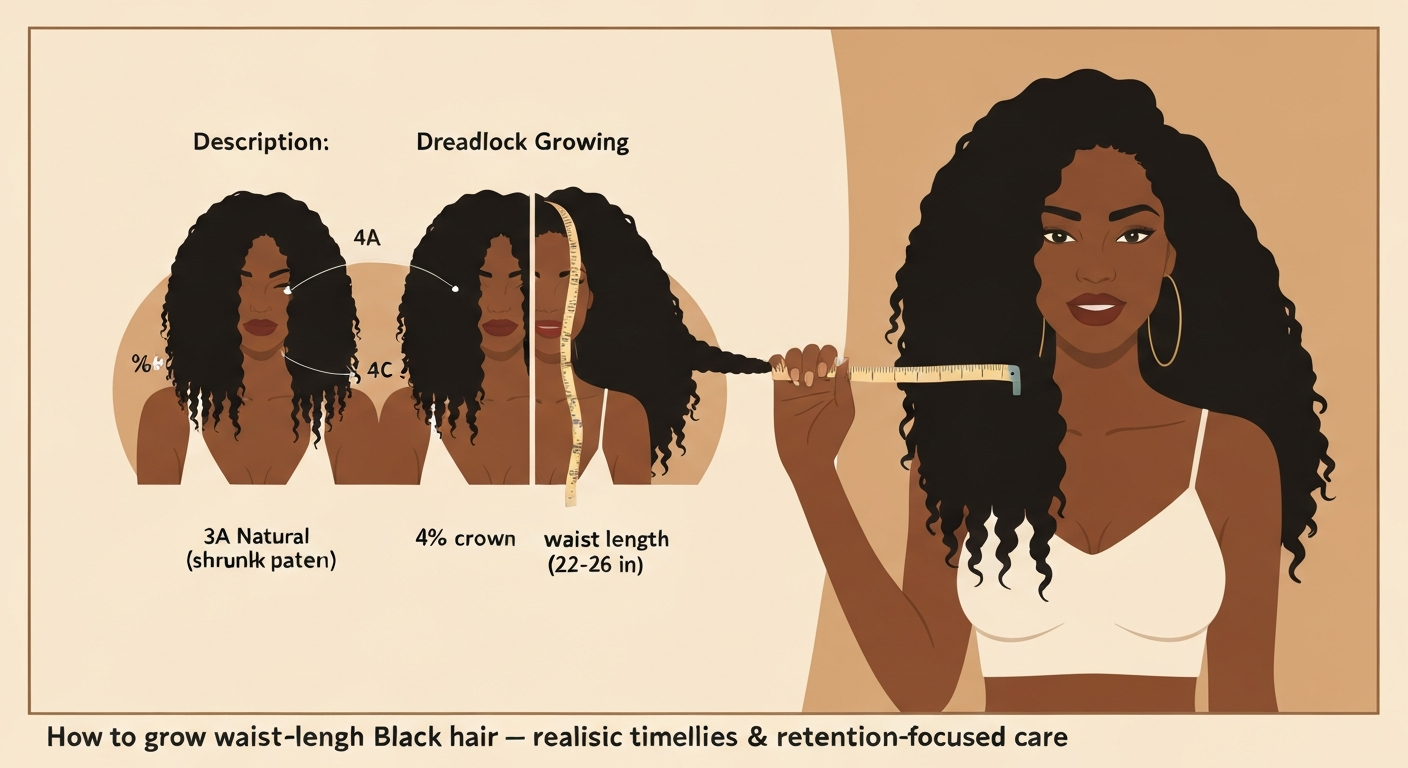
Two-strand twists don't make your hair follicles grow faster, but they can absolutely help you retain more of the growth you're already producing. If your main goal is to help your dreads keep more length instead of focusing on growth speed, that directly connects to the question does 2 strand twist help dreads grow.
Do Two-Strand Twists Help Hair Grow? Truth and Tips

Simone Okonkwo
26 Apr 2026
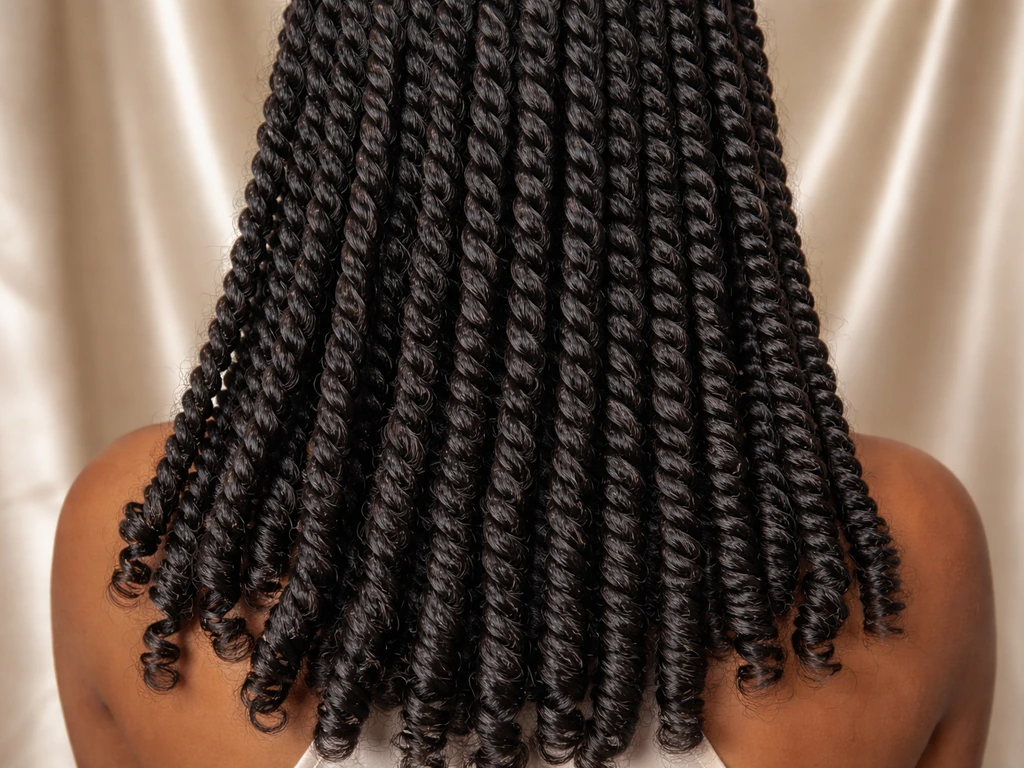
For most people with textured or Afro-textured hair, the real problem isn't that hair isn't growing; it's that it keeps breaking off before you can see the length. To grow twists faster, focus on minimizing breakage and keeping hair moisturized, since protecting the length you already have usually makes the biggest visible difference. That's where twists earn their reputation.
Done right, they reduce daily manipulation, protect your ends, and help your hair hold onto moisture, all of which add up to noticeably more length over time. Done wrong, they create tension, dryness, and buildup that set you back further than where you started.
Growth vs. retention: what twists actually do
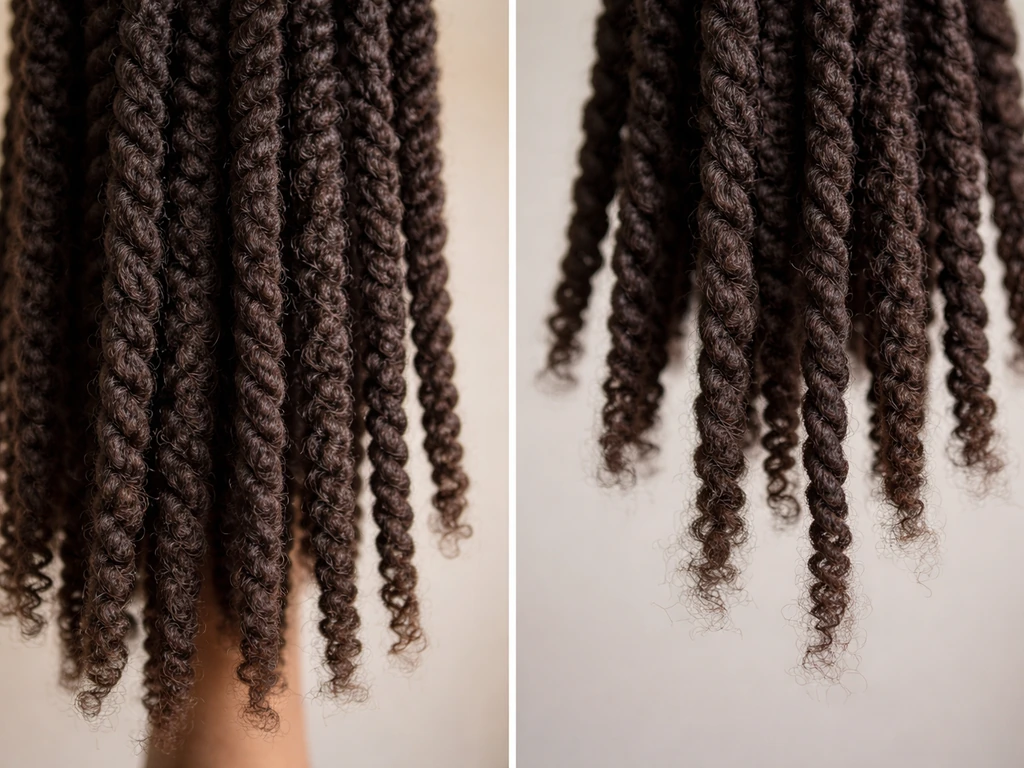
Your scalp grows hair at roughly 1 centimeter per month, and that rate is largely set by your biology. The hair follicle cycles through growth (anagen), transition (catagen), and rest (telogen) phases, and no styling method changes that clock. What determines your final length isn't really how fast your hair grows; it's how long your follicles stay in the active growth phase and how much of that growth survives to become actual length you can measure.
This is where twists come in. Textured hair, especially tightly coiled hair, has a structure that makes it more vulnerable to breakage at points along the shaft. When hair is left loose and handled daily, combing, friction from clothing, and re-styling sessions all chip away at the cuticle and create weak points where the hair snaps. Dermatology research describes this as trichorrhexis nodosa, a breakage pattern strongly associated with mechanical trauma. Twists remove most of that daily handling. Your hair stays tucked, your ends are protected, and detangling sessions drop from daily to once every week or two. Less trauma equals less breakage equals more visible length over time.
Moisture retention matters here too. Tightly coiled hair has a harder time moving sebum (your scalp's natural oil) from root to tip, which is why the ends tend to dry out and become brittle. Twists help by locking in whatever moisture and product you apply during installation, keeping the hair shaft more supple and flexible between wash days.
When two-strand twists actually work for you
Twists are most useful if your current bottleneck is breakage, not slow growth. If you want to know whether two strand twist work for your goals, focus on breakage first, then protect moisture and avoid tight tension two strand twists. If your hair is growing but you're seeing it stay at the same length month after month, breakage is almost certainly the issue. Two-strand twists work especially well for type 3c through 4c hair textures because these curl patterns have the most mechanical vulnerability and benefit the most from reduced manipulation.
They're also a good fit if you want a style that does double duty: protective and wearable. A well-installed set of twists can be worn for one to three weeks as a defined style, then unraveled for a twist-out, giving you two styles from one install with minimal re-manipulation. If your goal is to grow out a fade, transition from relaxed to natural, or simply build length over a few months, rotating between twists and other low-manipulation styles is one of the most practical approaches available.
If your main concern is slow growth rather than breakage (meaning your hair isn't shedding or snapping, it just seems to stop at a certain length), twists alone won't solve that. Slow growth can be connected to anagen phase duration, nutritional gaps, scalp health, or medical factors that styling can't touch. That's a different conversation, and worth exploring with a dermatologist if retention improvements don't change anything.
The real downsides: when twists cause more harm than good
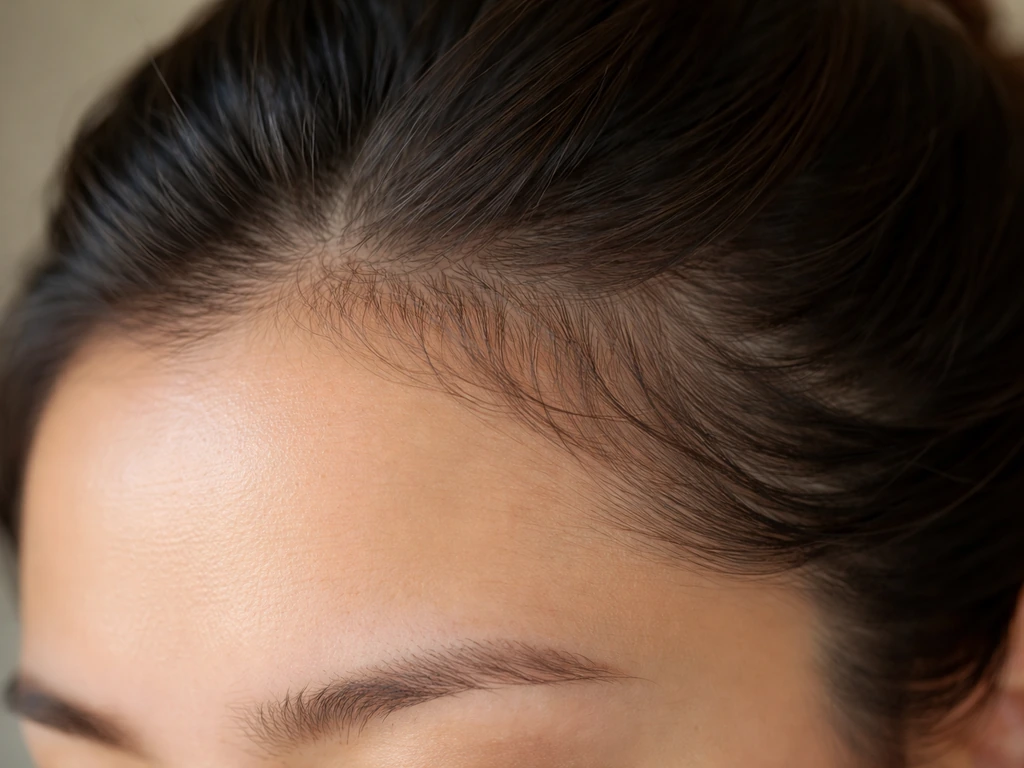
Tension and traction alopecia
Tension is the biggest risk with any twist style. Traction alopecia is hair loss caused by prolonged or repeated pulling on the follicle, and it's well documented in dermatology literature as a direct consequence of tight protective styles. The edges and nape are usually the first places affected because the hair there is finer and the follicles more sensitive. Traction alopecia is preventable and, if caught early, reversible. But if the tension continues, the damage becomes permanent.
The warning signs are clear: pain during or after installation, soreness at the scalp, redness, small pimples along the hairline, or actual thinning at the temples. If you notice any of these, the twists are too tight and need to come out. No style is worth follicle damage.
Nighttime tension is another issue that doesn't get talked about enough. Research has specifically flagged what's called nocturnal traction, where the way you secure your hair for sleep pulls on the scalp over hours every night. Tying your twists too tightly into a pineapple or wrapping them under a scarf with high tension adds up fast across a two-week install.
Dryness and product buildup
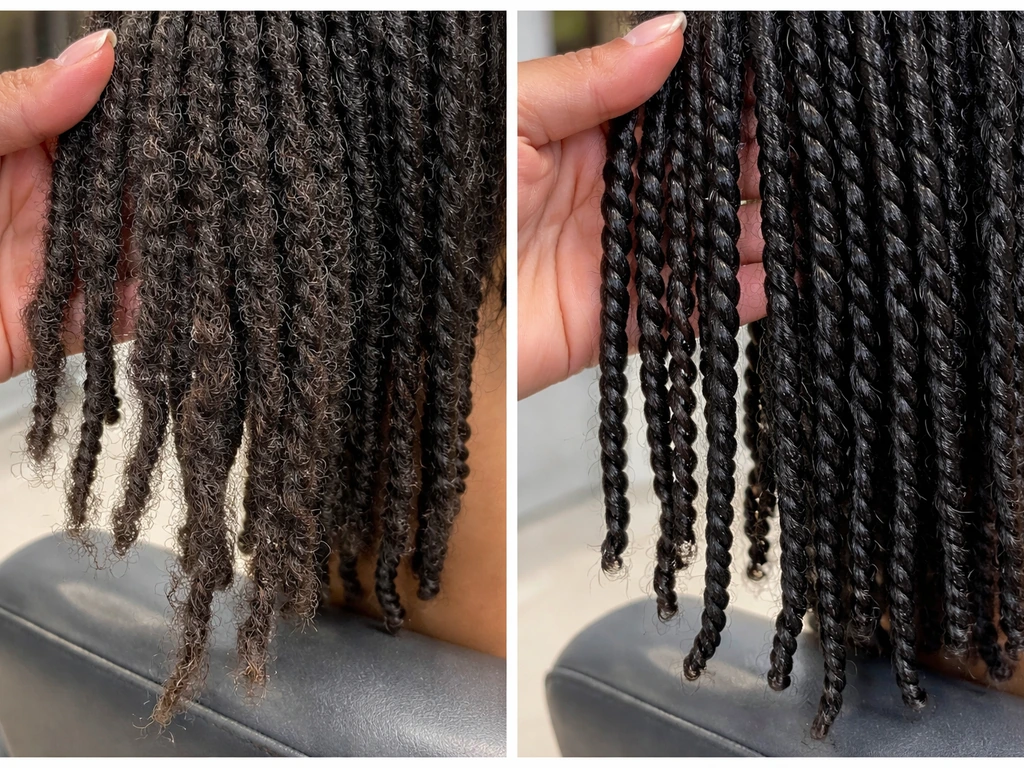
Leaving twists in too long without refreshing moisture leads to dryness, and dry hair breaks. Overloading your twists with heavy products at installation creates buildup that sits on the scalp, causes itching, and can block follicles over time. Some products used for textured hair styling can also strip the scalp's natural sebum or cause residue to accumulate faster, which is a real concern during extended wear.
Rough take-down
A careless take-down undoes everything the protective style was supposed to achieve. Ripping out tangled ends or unraveling too quickly causes as much breakage as daily combing would have. This is where a lot of people lose length without realizing the twist install itself wasn't the problem.
Over-manipulation and too-frequent retwisting
Redoing your twists every week defeats the purpose. Practical guidance around twist maintenance suggests that retwisting more often than every four weeks can cause thinning at the root. The point of a protective style is fewer touch-ups, not more.
What "helps hair grow" really means, realistically
When people say two-strand twists helped their hair grow, what they almost always mean is that their hair got longer, which is not exactly the same thing. Their follicles were growing hair at roughly the same rate the whole time. Johns Hopkins Medicine reports that human scalp hair grows about half an inch per month (about 1.25 cm/month) hair is reported to grow about half an inch per month. What changed is that more of that growth survived. Depending on how much breakage someone was dealing with before switching to a protective style routine, the visible difference can be dramatic, sometimes several inches over the course of a year, without any actual change in the growth rate.
Realistically, if you're consistent with a protective style routine that includes proper moisturizing, gentle handling, and safe tension, most people with textured hair can retain most of their monthly growth rather than losing a large chunk of it to breakage. Over 12 months at approximately 1 cm per month, that's the difference between retaining 10 to 12 centimeters versus retaining 3 to 5 because of damage. The math matters.
Timeline expectations: it usually takes at least two to three months of consistent protective styling before you notice a meaningful length difference. Results depend on your current hair health, how much breakage you were experiencing before, and how well you maintain the style. Give it at least a full season before judging whether it's working.
A practical routine you can start today

Step 1: Start with a clean, conditioned base
Shampoo with a sulfate-free or gentle moisturizing shampoo. Heavy buildup on the scalp before a protective style install creates problems throughout the wear period. Follow with a moisturizing conditioner, focusing on the mid-lengths and ends. Consider a light deep conditioning treatment if your hair is particularly dry or damaged before you begin.
Step 2: Apply moisture and a light sealant before twisting
On damp (not soaking) hair, apply a leave-in conditioner or moisturizing cream from roots to ends. Follow with a light oil to seal that moisture in. Coconut oil is a good option here because research on oils and hair damage shows it can penetrate the hair shaft and reduce protein loss, which lighter oils like sunflower don't do as effectively. Use light-handed application; a little goes a long way and heavy oils cause buildup.
Step 3: Detangle thoroughly before you touch a twist
Detangle in sections with a wide-tooth comb or your fingers while the leave-in is still in your hair. Starting with tangled hair and trying to twist around knots is how you create breakage and uneven, frizzy twists that don't hold. This step is non-negotiable.
Step 4: Section and twist with safe tension
Part your hair into clean sections. Smaller sections give you mini twists that last longer and offer more definition; larger sections are faster and puffier. Apply a small amount of twisting cream or butter to each section, divide it into two equal parts, and twist one strand over the other consistently in the same direction all the way to the end. The key is consistent tension that keeps the twist together without pulling at the scalp. If your scalp feels tight or you're wincing, loosen it. If you want a clearer walkthrough, follow this step-by-step guidance on how to grow 2 strand twist results over time. No amount of neatness is worth traction damage.
Step 5: Protect at night without adding tension
Use a satin or silk bonnet or sleep on a silk pillowcase every night. If you're gathering your twists up, use a loose scrunchie or a single satin tie at the very top, not a tight elastic band. The goal is to reduce friction and prevent frizz without creating overnight tension on your edges or hairline.
Step 6: Maintain moisture during wear
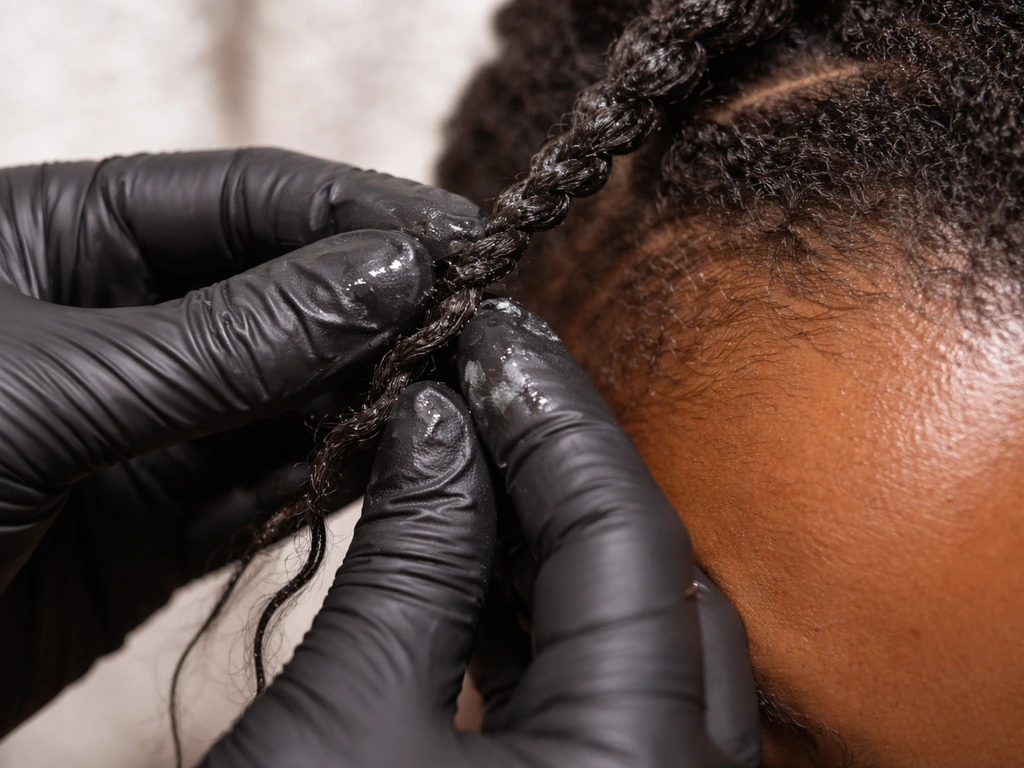
Every few days, lightly mist your twists with water or a diluted leave-in spray and seal with a light oil. Don't drench them; you want to add just enough moisture to keep the hair pliable without causing buildup or mildew. If your scalp gets itchy between wash days, apply a small amount of diluted tea tree oil or a scalp serum directly to the scalp with a dropper or applicator bottle.
Step 7: Take them down carefully
After two to four weeks (three is a reasonable sweet spot for most people), take the twists down with patience. Add a slip product or a light oil to each twist before unraveling to reduce friction. Unravel gently from the end up rather than pulling from the root down. Once fully unraveled, finger-detangle before reaching for a comb. This is how you keep the inches you worked to protect.
A quick comparison: twists vs. other protective styles
| Style | Manipulation level | Tension risk | Moisture access during wear | Typical wear period |
|---|---|---|---|---|
| Two-strand twists | Low | Low to moderate (depends on technique) | Easy to refresh | 1 to 4 weeks |
| Box braids | Low | Moderate to high (especially with extensions) | Harder to penetrate | 4 to 8 weeks |
| Senegalese twists | Low | Moderate to high (extensions add weight) | Moderate | 4 to 8 weeks |
| Locs (starter) | Very low once set | Low (if not over-retwisted) | Moderate | Ongoing |
| Loose twist-out | Moderate (daily re-styling) | Low | Easy | 1 to 3 days per refresh |
Two-strand twists stand out as one of the most accessible and adjustable options because you control the tension entirely, there are no extension attachments adding weight, and you can refresh moisture easily throughout the wear period. If you're specifically focused on length retention and scalp health, starting here before moving to extension styles like Senegalese twists makes sense. If you are considering Senegalese twists specifically, the same tension and moisture rules apply to keep breakage under control. Those styles can also support retention, but the added weight and longer wear periods mean you need to be more careful about tension, especially at the roots.
The bottom line on twists and hair growth
Two-strand twists are genuinely useful for hair health, but not for the reason most people think. They don't wake up your follicles or speed up your growth cycle. What they do is give your already-growing hair a fighting chance to stay on your head instead of breaking off. To maximize the benefits, follow a simple two-strand twist routine for clean prep, proper moisture, safe tension, and careful nighttime protection.
To maximize the benefits, follow a simple how to grow hair with two strand twists routine for clean prep, proper moisture, safe tension, and careful nighttime protection. For textured hair that's prone to dryness and mechanical damage, that's a meaningful and real benefit. Keep the tension gentle, moisturize consistently, protect at night, and take them down carefully, and you'll start seeing the length difference within a few months.
Keep the tension gentle, moisturize consistently, protect at night, and take them down carefully, and you'll start seeing the length difference within a few months do 2 strand twist grow hair. If you are specifically wondering, does two strand twist grow dreads, the answer is that it mainly helps by reducing breakage and improving retention, not by dramatically speeding up growth. Two-strand twist styling can support hair growth by improving retention when you minimize breakage and keep tension gentle does two strand twist grow dreads.
FAQ
If my hair is growing slowly, will two-strand twists still work?
Yes, but only if the goal is retention. If you keep the twists gentle, moisturize between washes, and avoid buildup, you may see length over time because breakage slows. If your issue is truly low growth (minimal shedding, hair stops at a certain length), two-strand twists usually will not change the growth clock.
How often should I wash my scalp while wearing two-strand twists?
Wash your scalp and keep the style clean. A common mistake is only misting the hair and skipping scalp cleansing, which can lead to itching and residue. Many people do a gentle shampoo or scalp cleanse at least once every 1 to 3 weeks depending on how quickly their scalp gets oily.
Can I just keep spraying my twists with water to grow faster?
Not exactly. You should refresh moisture without soaking. Overly wet twists can encourage mildew or lingering dampness at the roots. A practical rule is to spritz lightly, let them dry fully, then seal with a small amount of oil (more on the hair lengths, not heavy on the scalp).
Is it okay to retwist every week to keep the style neat?
No, retwisting too often can increase root stress and make thinning more likely. If you need to freshen the front or edges, do only targeted maintenance (for example, palm-twist reworking a small section) while keeping the original bulk of the twist intact.
How do I know if my twists are too tight at the roots?
You want consistent, comfortable tension and a twist that holds without pulling. If you feel pain, see redness, or notice “scalp lines” where the twist bites, it is too tight and should be redone sooner. Loosening the twist start point (not tightening the roots) usually improves comfort.
What causes itchiness or buildup after I install two-strand twists?
Avoid heavy butters, thick gels, and layering lots of products during installation. In extended wear, buildup can make twists feel hard, itchy, or waxy and can trap residue on the scalp. If your twists are starting to feel sticky or dry at the same time, simplify products and focus on light leave-in plus minimal sealing oil.
How can I prevent nighttime tension and frizz without undoing my style?
Use it as a mini routine, not a full reset every night. Loosen tension by using a loose bonnet or satin scarf that does not drag your hairline, and sleep with twists secured high but not stretched. If your twists flatten from friction, switch from a wrap to a bonnet that fully protects the style.
Why do I lose length when I take my twists down?
Yes, but only if you use a protective, gentle approach. Detangling after unraveling should be finger-first, then comb only when necessary. Ripping through tangles at the ends is a common reason people lose length even when the twist install itself looked neat.
Do I need to stretch my hair for two-strand twists to help it grow?
For most people with textured hair, stretching can help reduce shrinkage, but it can also mask breakage if your ends are not protected. If you stretch, do it gently (not aggressive pulling) and still moisturize and seal. The key remains breakage prevention.
What should I do if I think I’m getting traction alopecia from twists?
If you notice thinning at the temples, persistent soreness, or repeated scalp pimples in the same areas, do not “push through.” Remove the twists, let the scalp rest, and consider seeing a clinician if symptoms keep recurring. Early traction damage is more reversible than damage left unaddressed.
Next Article
How to Grow Waist-Length Black Hair: Evidence-Based Guide
How to grow and retain waist-length Black hair: realistic timelines, routines, protective styles, and evidence-basedTips