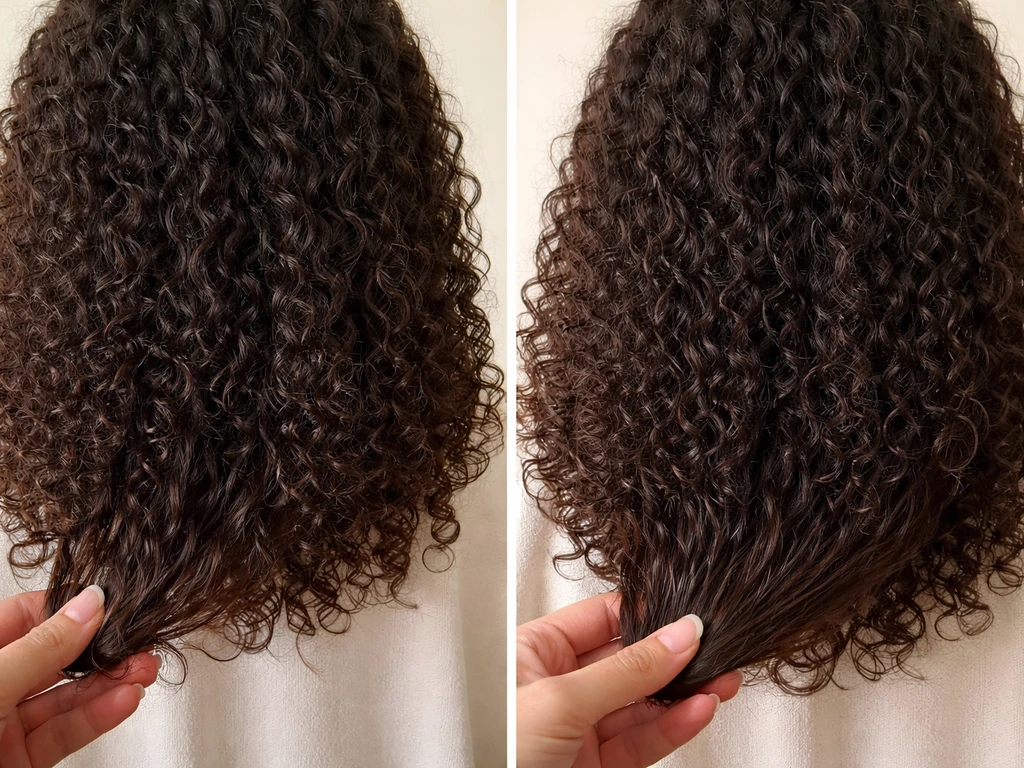
Twists do not make your hair grow faster. Your scalp grows hair at a biologically fixed rate, roughly 1 to 1.25 cm per month, and no hairstyle changes that. What twists can genuinely do is help you keep more of the length your scalp is already producing by reducing daily manipulation, friction, and breakage. That difference between growing hair and retaining length is the whole story, and it matters a lot if you want longer hair.
Do Twists Grow Your Hair Faster? Evidence and Tips

Simone Okonkwo
29 Apr 2026
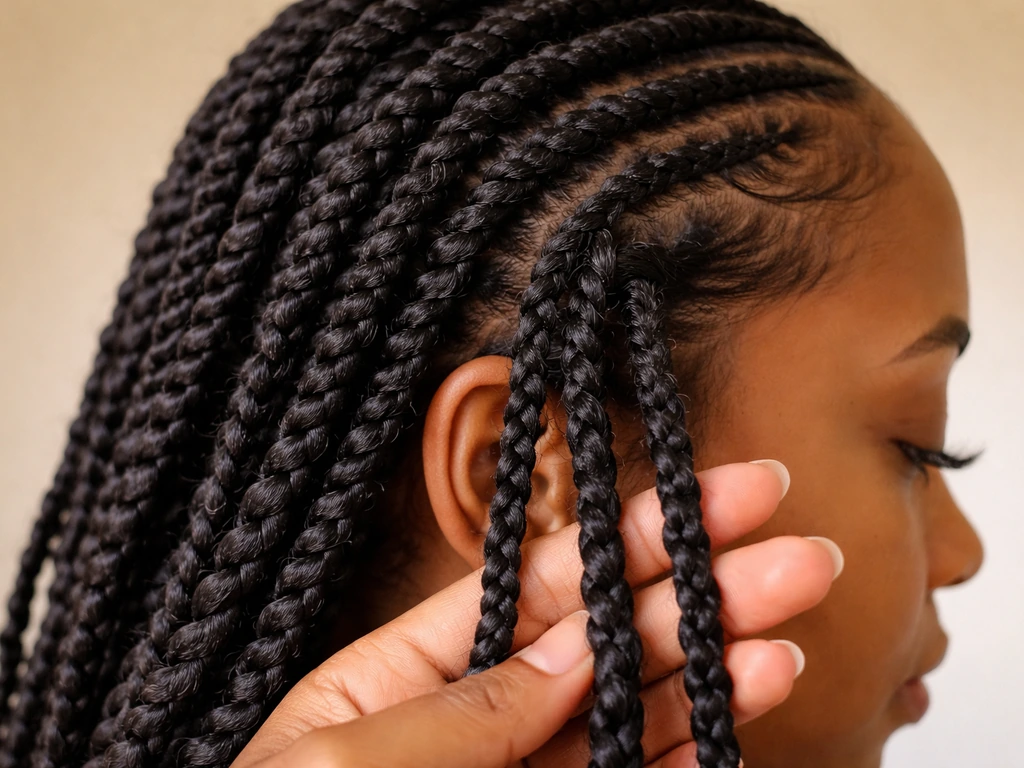
Growth vs. retention: what twists actually change
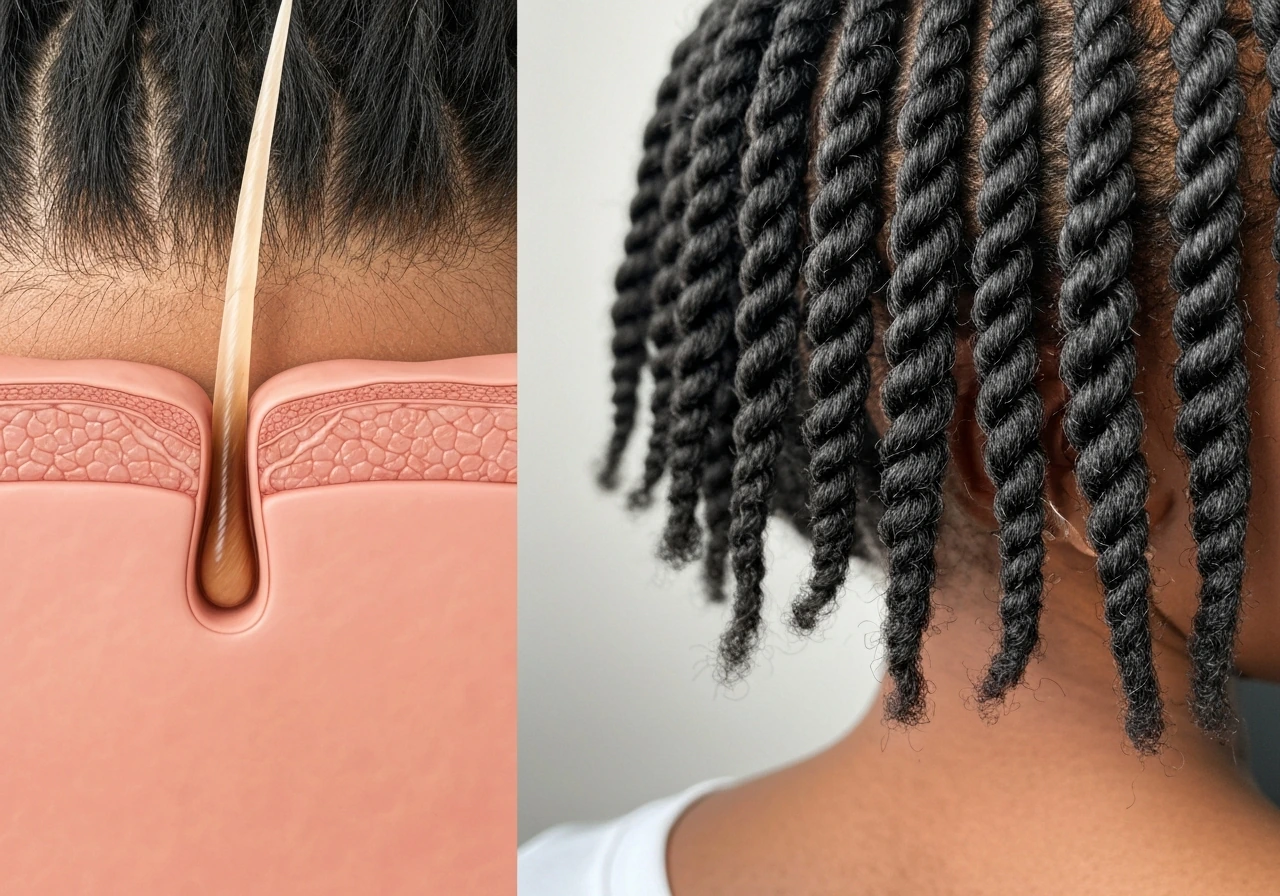
Hair growth happens entirely at the follicle, underground. The anagen phase, the active growing stage, lasts roughly 2 to 7 years depending on genetics, and every strand on your head is cycling through growth, transition, and rest on its own schedule. Nothing you do topically or stylistically speeds up the follicle's mitotic activity. Twisting your hair does not signal those cells to divide faster.
What twists change is what happens to the hair above the scalp. Textured and coily hair, especially type 4 hair, is structurally more vulnerable to breakage than straight hair because the tight curl pattern creates points of stress along each strand. Every time you finger-detangle, brush, or style loose hair, you create friction. Twists bundle strands together, tuck the ends away, and dramatically cut down that daily mechanical stress. Less breakage means the length your scalp grows actually stays on your head instead of snapping off. That is retention, and retention is why people swear their hair grows faster in twists.
How to twist for maximum retention
Tension
This is where most damage happens. Traction alopecia, documented extensively in dermatology literature, is directly caused by prolonged or repetitive tension on the hair shaft and follicle. Tight braids, tight twists, and styles that pull at the hairline are associated with non-scarring hair loss that can become permanent over time if the tension continues. Traction alopecia risk can increase when tension is applied to blank" rel="noopener noreferrer">chemically relaxed or thermally straightened hair. When you install twists, the style should feel secure, not tight. If your scalp hurts, if you see bumps at the roots, or if the skin along your hairline looks pulled and shiny, the twists are too tight. Loosen them immediately. No retention benefit is worth follicle damage.
Twist size
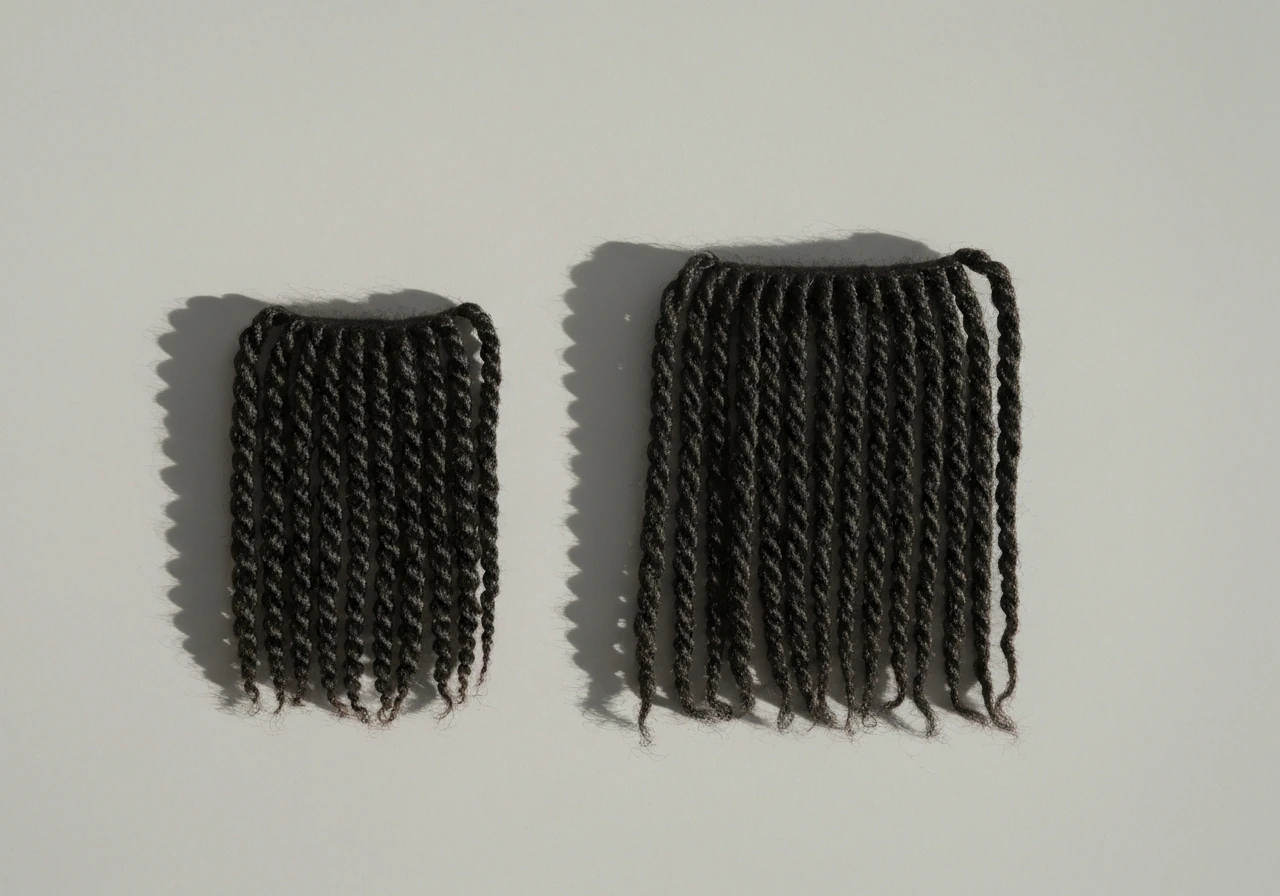
Smaller twists generally last longer and offer more definition, but they also take longer to install and can cause more tension if you are working with a lot of sections on fine or fragile hair. Medium-sized twists are the most practical balance for most people. Mini twists are popular for their longevity and low daily manipulation, though they require careful installation to avoid tension buildup at the root. Larger twists are faster but tend to unravel sooner and offer less protection for the ends.
Technique
Detangle fully before you start. Any knots or tangles locked inside a twist will become worse over time and create breakage when you take the style down. Work on damp, moisturized hair, apply a leave-in or light moisturizer to each section before twisting, and seal with a light oil or butter to hold moisture in. Twist in a consistent direction on each section, keep the tension even from root to tip, and make sure to tuck or twist the ends under so they are protected rather than left exposed.
How long to keep twists in, and how to care for them
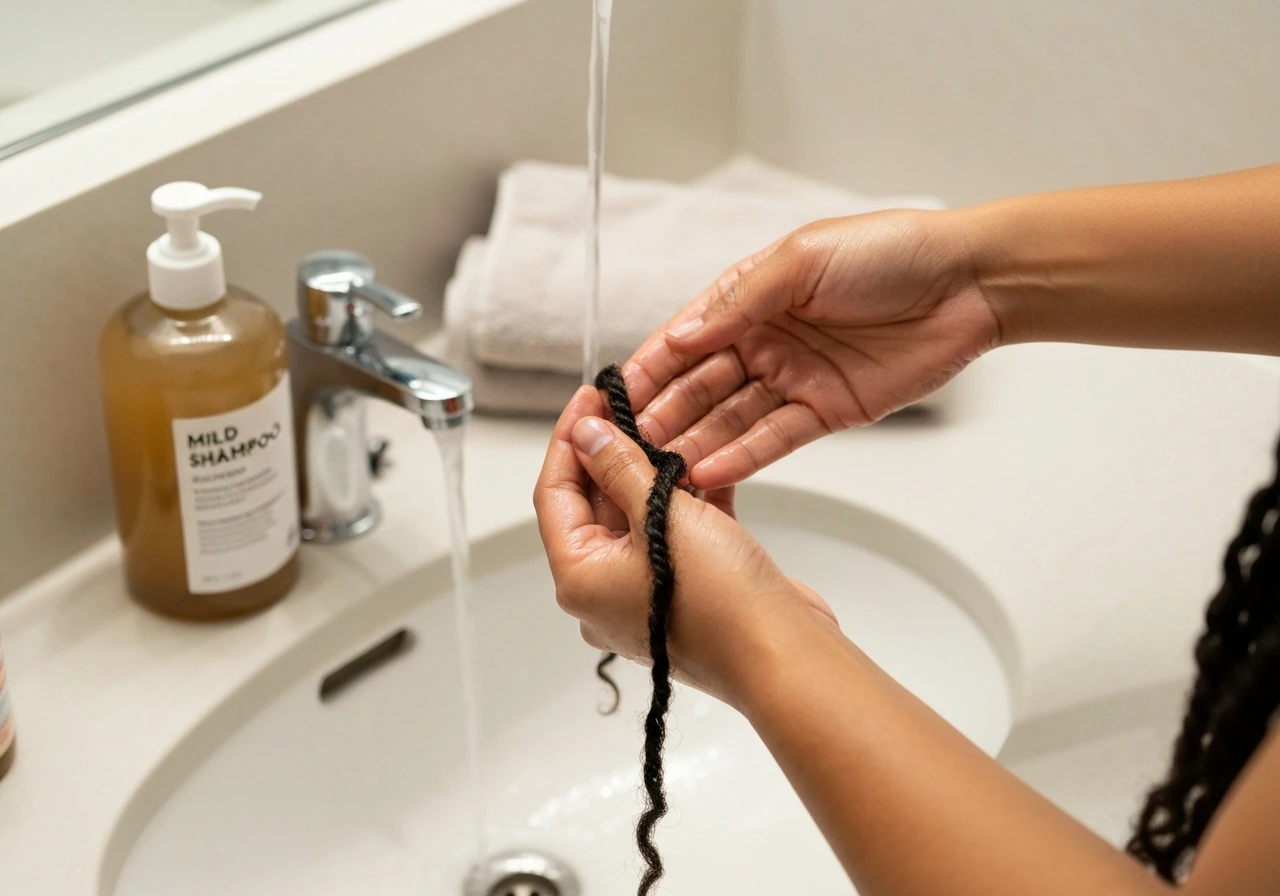
Most people get the best results keeping twists in for two to six weeks. Beyond six weeks, new growth at the root can cause the twist to mat or loc at the base, and product buildup makes the scalp harder to clean. Under two weeks, you are taking down and reinstalling so frequently that you lose the low-manipulation benefit entirely.
While the twists are in, your scalp still needs to be washed. A dirty, itchy, flaking scalp is not a healthy environment for hair growth, and neglecting it is one of the most common mistakes people make during protective styling. Every one to two weeks, dilute a gentle sulfate-free shampoo or use a scalp wash and apply it directly to the scalp in sections. Work it in with your fingertips, not your nails, rinse thoroughly, and let the twists air dry. Follow with a light moisturizer applied along the parts and edges, then seal.
Taking twists down carefully is just as important as putting them in. Work on one twist at a time, unravel gently from tip to root, and apply a detangling conditioner or light oil before you start. Rushing the takedown is where a huge amount of breakage happens. After removal, do a deep conditioning treatment before you restyle.
Hair type considerations
Natural textured and Black hair
Twists are particularly effective as a retention strategy for tightly coiled natural hair because that hair type is structurally more prone to dryness and mid-shaft breakage. The protective benefit is real and meaningful. That said, some natural hair textures, especially very fine 4C hair, can be more vulnerable to tension damage during installation, so a light hand matters even more. Kinky twists and mini twists are both popular within this community for good reason, though the same rules apply regardless of variation: tension must stay low, and moisture must stay consistent.
Relaxed hair
Relaxed hair has had its natural protein bonds altered, which makes it more fragile than unprocessed hair, especially at the line of demarcation where new growth meets relaxed hair. The research on traction alopecia specifically flags the combination of tight braiding and relaxer treatments as particularly risky. If you have relaxed hair, twists can still be protective, but keep the tension very low, avoid pulling at the line of demarcation, and prioritize protein treatments in your routine to reinforce the strand structure.
Men with natural or textured hair
The biology is exactly the same. Men with natural or textured hair benefit from the same retention principles: low tension, moisture, and reduced manipulation. The main practical difference is often style preference and hair length. Two-strand twists work well even on shorter hair, and the same scalp care rules apply. If anything, men are less often told that scalp health and moisture matter, so it is worth saying directly: dry, neglected hair breaks regardless of who it belongs to.
Myths worth calling out directly
- Twists do not stimulate the follicle to grow hair faster. The follicle operates on a genetically controlled cycle. No topical style, massage, or product overrides that cycle in any meaningful way beyond basic scalp health.
- Tight twists are not better. Tighter does not mean more retention. It means more risk. Traction alopecia from tight styles can start as reversible hair loss and become permanent scarring alopecia if the tension continues long enough.
- Leaving twists in longer than six to eight weeks does not maximize growth. Past that point you are risking matting, scalp buildup, and mechanical damage during removal, all of which increase breakage.
- Twists alone cannot overcome poor hair health. If your hair is severely dry, protein-deficient, or you are dealing with a health issue affecting the follicle, twisting will not fix the underlying problem.
- Product buildup inside twists does not condition the scalp. Piling on heavy butters and gels and leaving them for weeks creates buildup that can clog follicles and cause scalp issues. Less product, applied consistently, is better than heavy application at install and nothing after.
Your practical growth plan alongside twists
If your goal is noticeably longer hair, twists are one tool in a broader strategy. Here is what that strategy actually looks like.
- Moisturize consistently while in twists. Apply a water-based leave-in or moisturizer to your scalp and along your twists every three to five days. Dry hair breaks. That is the core equation.
- Seal after moisturizing. A light oil like jojoba, argan, or grapeseed applied over a water-based moisturizer helps lock hydration in without heavy buildup.
- Wash and condition on a schedule. Every one to two weeks while in twists, clean your scalp. Do not skip this to preserve the style. A healthy scalp is a prerequisite for healthy growth.
- Deep condition at takedown. Every time you remove your twists, follow with a deep conditioning treatment for 20 to 30 minutes before restyling. This restores moisture and elasticity after weeks in a set style.
- Detangle gently, always. Use a wide-tooth comb or your fingers with slip from a conditioner. Work from tips to roots. Rushing detangling causes more breakage than almost anything else.
- Trim when needed. Split ends travel up the strand and cause more breakage over time. A small dusting trim every three to four months protects the length you have worked to retain.
- Support growth from the inside. Hair grows from living tissue. Adequate protein intake, iron, zinc, biotin, and vitamins D and B12 all support the hair cycle. If your diet is consistently lacking or you are under chronic stress or sleep-deprived, those factors limit growth regardless of what you do with your hair.
- Protect at night. A satin or silk bonnet or pillowcase reduces friction while you sleep, which preserves both the twist style and the hair itself.
If you are exploring variations like mini twists or kinky twists, the fundamentals above apply across all of them. The twist style itself matters less than the consistency of your moisture routine, your tension discipline, and your scalp care habits. Get those right, and protective styling with twists genuinely works as a retention strategy, which is the closest thing to growing longer hair faster that actually exists.
FAQ
If twists do not speed up hair growth, how do I know my hair is actually benefiting from them?
No. Twists only help you retain length by reducing breakage from daily handling. If you get slower growth month to month, the usual culprits are low moisture, buildup that causes dryness and shedding, or too much tension at the roots, not the absence of a specific twist style.
How tight should twists feel, and what are the warning signs they are too tight?
The healthiest sign is scalp comfort plus no visible pulling. If you notice soreness that increases after the first day, swelling, bumps that look inflamed, or your hairline looks shiny and stretched, loosen them right away and consider fewer sections or larger twists to reduce root tension.
How often should I wash my scalp while I have twists installed?
It depends on your scalp and product use, but a common safe pattern is washing every 1 to 2 weeks. If you have dandruff, very oily skin, or heavy product buildup, you may need more frequent scalp cleansing even while twists are in, as an unclean scalp can worsen itching and shedding.
Can I rinse or get my twists wet, and what’s the safest way to dry them?
Yes, but do it carefully. Use dampening and lightweight products at the scalp (diluted shampoo or scalp wash), then dry thoroughly. If your twists stay damp for long periods, you can increase odor, flaking, and scalp irritation.
Do I need to wear a bonnet or scarf when I have twists in?
Usually. For many people, the biggest retention win comes from minimizing friction at the hairline and ends. A satin bonnet or scarf at night helps prevent tangling and reduces rubbing, especially if your twists are larger or your hair is longer.
My twists look frizzy, does that mean they are damaging my hair?
If you are seeing frizz at the ends only, that can be normal. If frizz is accompanied by thinning at the roots, shedding from the base, or a lot of new tangles near the scalp, the issue is often tension during installation or trapped knots that worsen over time. In that case, you may need to reinstall looser and detangle better before twisting.
What if I miss a small knot before installing twists, is it still worth trying to keep them in?
Don’t. If knots or tangles are locked inside a twist when it is installed, detangling later becomes much more breakage-prone. The practical rule is to detangle fully before you start and keep the hair section smooth as you twist.
How do I choose twist size if I’m getting tension at my scalp or breakage at the ends?
Two extremes can backfire. Very small twists can create more cumulative tension points, especially on fine or fragile hair, while very large twists may unravel sooner and expose ends to more friction. If you are getting root soreness or thinning, try fewer sections, medium size, or a different installation pattern that spreads tension.
How can I tell the difference between normal shedding and tension-caused hair loss with twists?
Yes, and it can help identify the cause. If shedding happens mainly during takedown, it can be normal loose-hair shed, but if you are losing strands during the weeks in (especially from the root), that points to tension damage, dryness, or scalp irritation. Adjust tension first, then moisture and scalp cleansing.
What moisturizers or sealing products are safest so my twists don’t get buildup?
Use moisturizing products that match your hair and do not overload. Common approach is light moisturizer on the parts and edges, then seal lightly. If you use thick heavy butters or too much product, you can increase buildup, which makes the scalp harder to clean and can worsen flaking and itching.
Are twists riskier for relaxed hair, and what should I do differently?
If you have relaxed hair, be extra cautious at the line of demarcation because it is more vulnerable to stress. Keep tension low, avoid styling that tugs right at that boundary, and prioritize protein and moisture balance so new growth transitions without becoming brittle.
Do twists work for men the same way, or are there special considerations?
Yes. The same retention principles apply, the key differences are technique comfort and how your scalp reacts. Many men benefit from shorter, simpler two-strand twists that reduce manipulation, plus a consistent scalp moisture routine to prevent dryness-related shedding.
Next Article
How to Grow Black Women’s Hair: Length and Growth Guide
Step-by-step guide to grow and retain Black women’s hair, boost length via breakage control, and avoid traction damage.