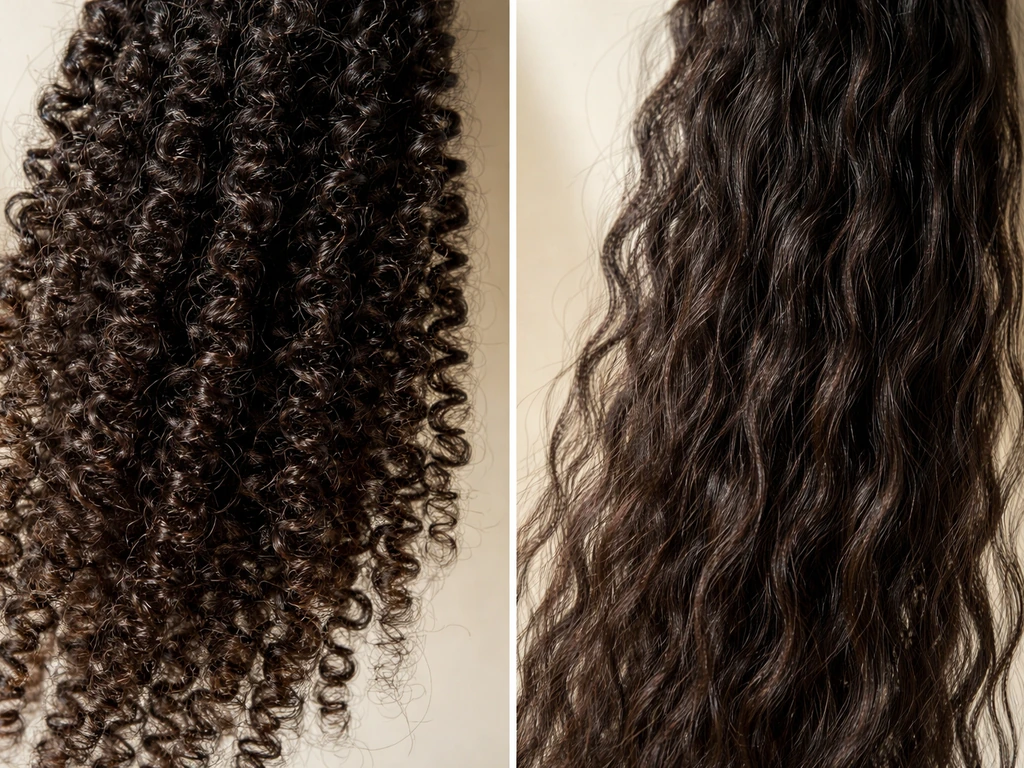
Yes, Black women's hair absolutely can grow long. There is no biological ceiling that stops textured or coily hair from reaching significant lengths. The reason so many people believe otherwise comes down to two things: shrinkage and breakage. Shrinkage makes hair look shorter than it actually is, and breakage means length is being lost at roughly the same rate it is being gained. Solving the length problem is almost always about retention, not growth itself.
Can Black Women’s Hair Grow Long? Truth, Myths, Routine

Simone Okonkwo
24 Apr 2026
Growth vs. length: why they are not the same thing
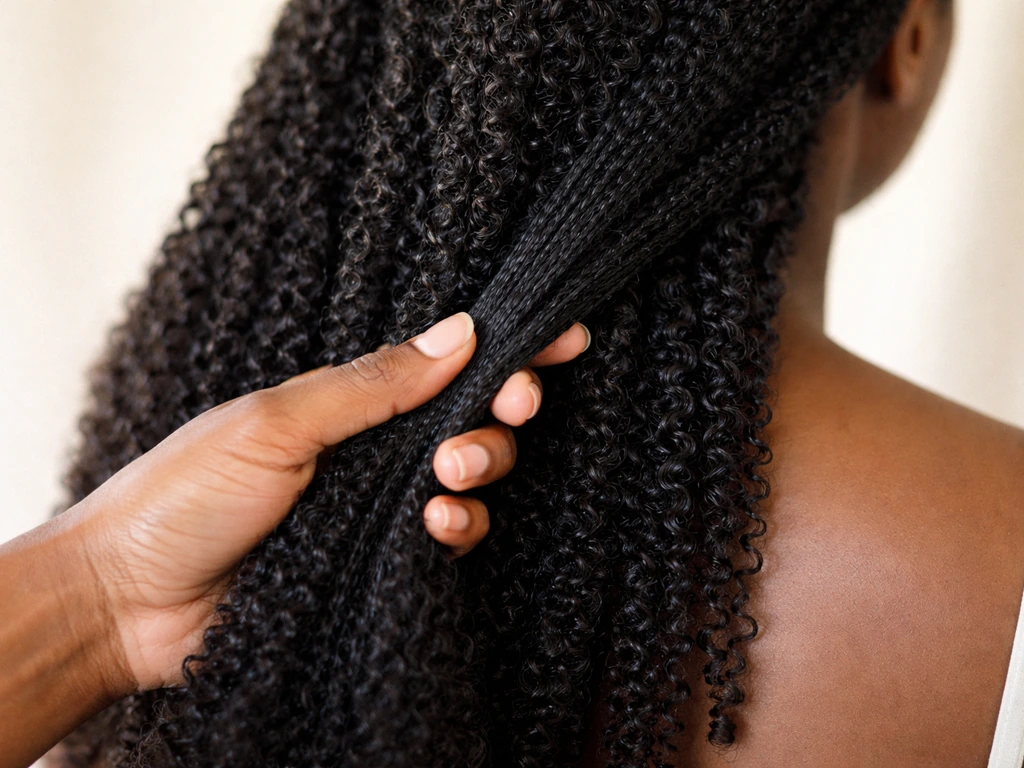
Your scalp is growing hair right now. Trichology research consistently shows that scalp hair grows at roughly 1 cm per month, or about 0.3 to 0.35 mm per day, regardless of race or hair texture. That is up to 12 cm (around 5 inches) of new growth per year if every strand stays intact. The problem is that coily and kinky hair textures have a tightly curved shaft structure that coils back on itself, sometimes shrinking to less than half the actual length when dry. A woman with 10 inches of actual growth might see only 4 to 5 inches in the mirror. That is not a growth failure. That is just shrinkage.
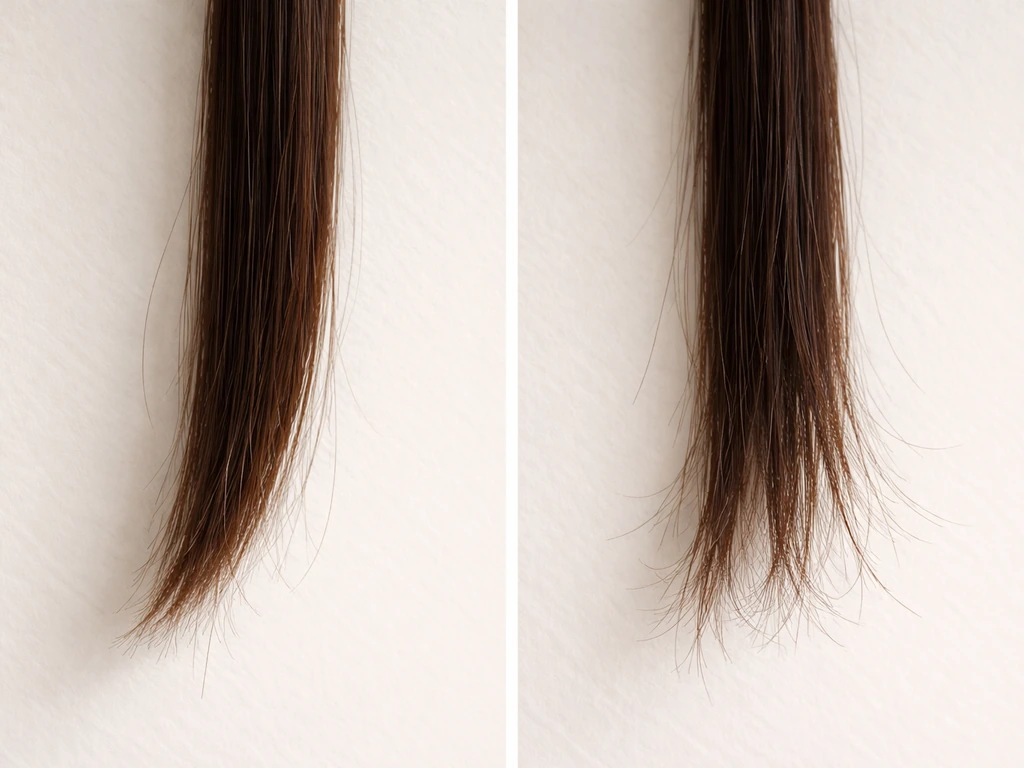
Breakage is the other half of the equation. If your ends are snapping off at roughly the same rate your roots are producing new hair, your length appears frozen even though growth is happening every single day. This is why the phrase 'my hair won't grow' is almost always more accurately described as 'my hair is breaking before I can see the length. This is why people who say their natural hair will not grow often get more results by focusing on preventing breakage and retaining the length they already have. If you are wondering can black people grow straight hair, the same growth versus length idea applies, so focus on preventing breakage rather than assuming growth has stopped natural hair will not grow. ' Understanding this distinction changes everything about how you approach your routine.
What actually determines how long your hair gets
Three factors set the upper limits of your length: genetics, the length of your growth cycle, and how healthy your scalp and hair shaft are. Genetics determines your anagen phase, which is the active growth stage of the hair cycle. Someone with a long anagen phase might grow hair for six or more years before it sheds; someone with a shorter anagen phase might have a two-year cycle. Since about 85 to 90 percent of follicles are in anagen at any given time, most of your hair is always actively growing. But if your anagen phase is naturally short, terminal length will be shorter regardless of how good your routine is. That is a real genetic variable, and it is worth being honest about.
Scalp health matters more than most people realize. A congested, inflamed, or chronically dry scalp can slow follicle function and contribute to excessive shedding. Normal daily shedding is roughly 50 to 100 hairs. Telogen effluvium is associated with higher-than-normal shedding, and people may lose far more than typical daily shedding Normal daily shedding is roughly 50 to 100 hairs.. When shedding spikes well above that range consistently, that is worth paying attention to. Hormonal changes, nutritional deficiencies (iron and ferritin are common culprits), and chronic stress can all push more follicles into the resting phase at once, a condition called telogen effluvium, temporarily reducing density and apparent growth.
Hair shaft health is the third pillar. Textured hair has a naturally elliptical cross-section and tightly coiled structure, which means the cuticle layers experience more stress at each curve. This makes coily hair more prone to dryness and breakage than straighter textures under the same conditions. It does not mean the hair is weaker by design, but it does mean the routine needs to account for those structural realities.
The real story on protective styles: braids, twists, locs, and weaves
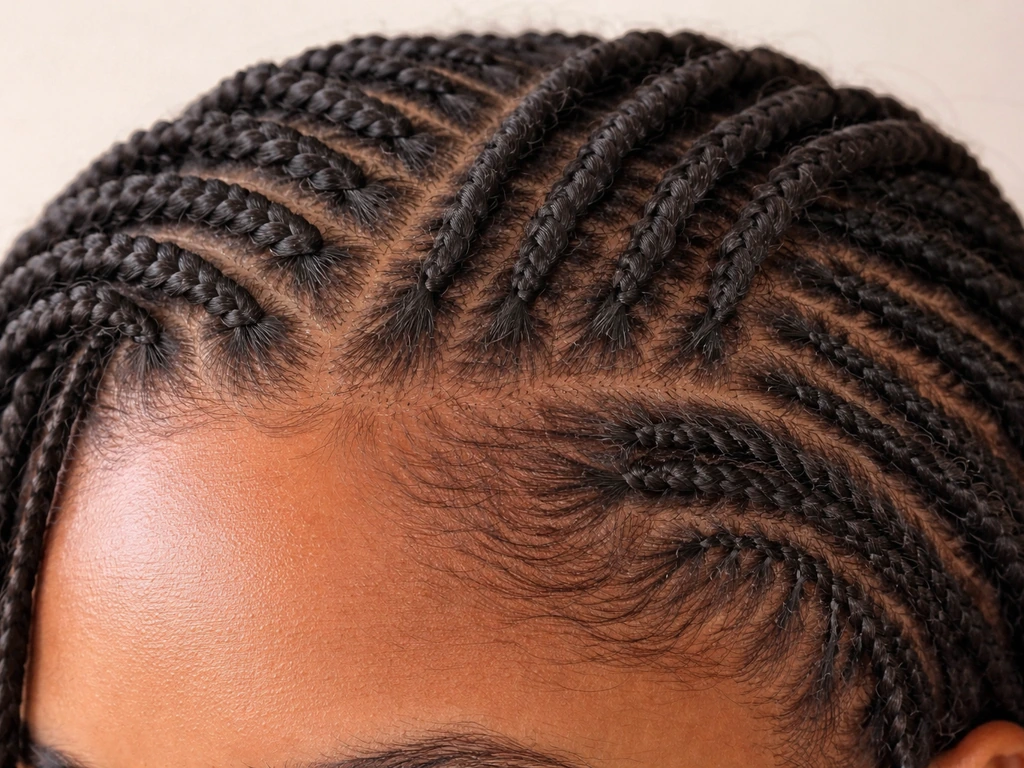
Protective styles do not make your hair grow faster. Nothing applied externally changes your growth rate in any meaningful way. What protective styles can do is reduce mechanical manipulation, minimize tangles, and shield your ends from friction and environmental damage. Less breakage means more of the length your scalp produces actually stays on your head. That is the mechanism, and it is a genuinely useful one.
The caveat is tension. Traction alopecia is a real and well-documented condition caused by chronic pulling stress on the hair root, and it is most commonly associated with tightly curled hair and high-tension styles like tight cornrows, box braids, weaves sewn into tight tracks, and tight locs. Research in dermatology describes it as a biphasic process: in the early stages it is reversible, but with prolonged tension the follicle can be permanently scarred, and that damage cannot be undone. If you notice thinning along your hairline, at your temples, or at the nape, tight styles are the most likely cause and reducing tension is urgent.
The practical rule is this: if a style hurts when it is installed, it is too tight. Tight styles should be worn occasionally rather than back to back without rest periods. Weaves and extensions add weight and pull risk, particularly when installed over relaxed hair. Locs can be protective over time once mature, but tight retwists applied too frequently create cumulative traction. The protective benefit only works when the style is genuinely low-tension.
Build a routine that actually retains length
A retention-focused routine does not need to be complicated. It needs to be consistent, gentle, and built around the specific needs of textured hair, which include managing moisture, minimizing mechanical stress, and keeping the cuticle as intact as possible.
Cleansing
Wash frequency is a personal call, but cleansing regularly enough to keep your scalp free of buildup is important for follicle health. For most people with coily hair, that means every one to two weeks with a sulfate-free or low-sulfate shampoo. Skipping washes for too long allows product and sebum buildup to accumulate on the scalp, which can irritate follicles. Always follow a shampoo with a moisturizing conditioner, and consider a deep conditioning treatment every two to four weeks.
Moisture and sealing
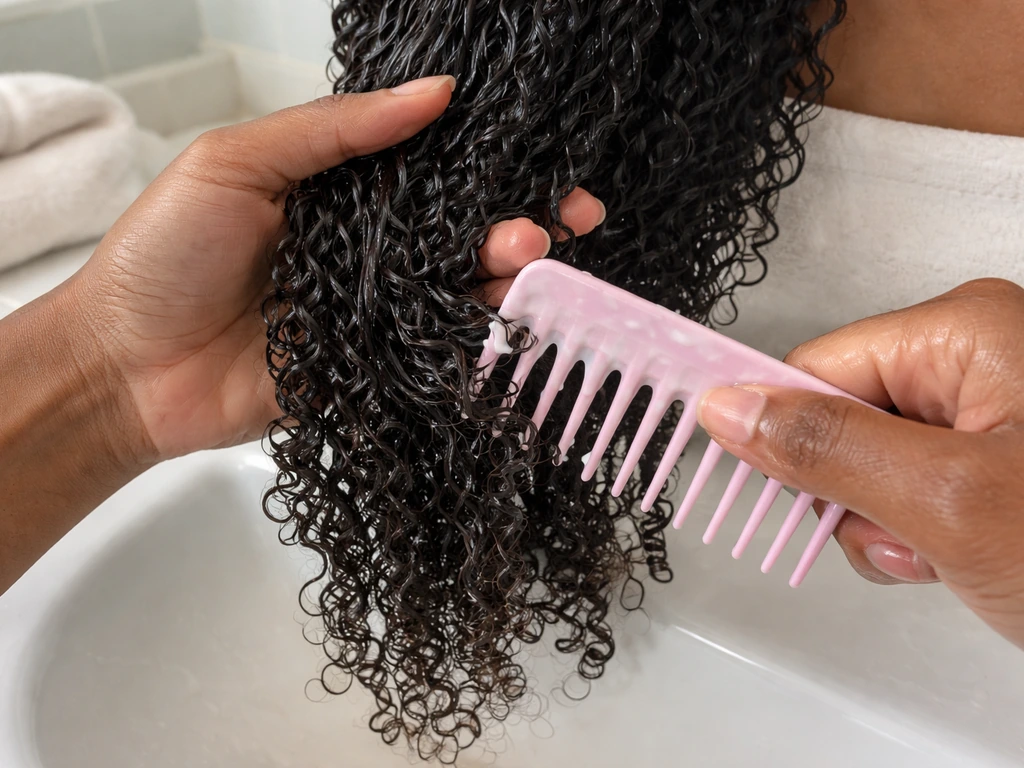
Coily hair loses moisture quickly because the natural oils from your scalp have a harder time traveling down a tightly coiled shaft. This is why dryness and brittleness are so common. A leave-in conditioner applied to damp hair, followed by a butter or oil to seal in that moisture, is a simple and evidence-supported approach. Cosmetic research confirms that sealing agents reduce water loss from the hair shaft and decrease interfibrillar friction, both of which directly reduce breakage. Heavier oils like castor, shea butter, and jojoba work well as sealants; lighter oils like argan or grapeseed can be used for daily refreshing.
Detangling
This is where a lot of breakage happens. The American Academy of Dermatology recommends wetting textured hair thoroughly, applying a leave-in conditioner, and then detangling with fingers first, followed by a wide-tooth comb if needed. Always work from ends to roots. Never detangle dry coily hair, and never use a fine-tooth comb or paddle brush on dry textured strands. The goal is to separate knots without snapping the shaft, which is exactly what rushing a dry detangle does.
Scalp care
A healthy scalp supports healthy growth. Gentle scalp massage during washing increases circulation and helps clear buildup without mechanical trauma. If you are experiencing persistent itching, flaking, or soreness, that is worth addressing directly rather than masking with products. A dermatologist or trichologist can identify whether you are dealing with seborrheic dermatitis, scalp psoriasis, or something else entirely.
The biggest blockers to avoid
If your hair is not retaining length despite a decent routine, one of these is almost always involved:
- Excessive heat: Flat irons and blow dryers used frequently at high temperatures disrupt the cuticle structure, increasing the hair's vulnerability to protein and moisture loss. Research on heat-damaged hair models shows that cuticle damage is the primary pathway to increased breakage. If you use heat, use a heat protectant and keep temperatures below 350°F (175°C) for coily textures.
- Chemical relaxers and overlapping treatments: Relaxers chemically break the bonds in the hair shaft to permanently straighten it. They work, but they make the hair more fragile. Overlapping relaxer applications onto already-processed hair is one of the fastest routes to trichorrhexis nodosa, a shaft disorder where weak nodes form along the hair and cause it to snap easily. Bleaching on top of relaxed hair compounds the risk significantly.
- Tension from tight styles: As covered above, chronic traction is the most common cause of hairline thinning and permanent follicle damage in Black women. It is preventable and worth treating as the serious issue it is.
- Rough handling when wet: Wet coily hair is at its most elastic and vulnerable. Towel-scrubbing, aggressive combing, or pulling through knots without slip causes the most mechanical damage.
- Skipping trims: Splits and single-strand knots travel up the shaft if left untreated, turning small damage into significant breakage. Trimming every eight to twelve weeks keeps your ends clean and reduces the upward creep of damage.
How to track progress and set realistic expectations
Measuring shrunken length tells you almost nothing useful. Instead, stretch your hair gently when measuring, pulling a section taut from root to tip against a ruler or tape measure. Do this in the same spot every month, ideally the same day each month, to get a consistent comparison. Some people photograph their stretched length against a measurement reference. Taking photos in the same lighting and pose every four to six weeks can also help you see gradual changes that are easy to miss in the mirror.
Realistic timelines matter here. At roughly 1 cm of growth per month, you can expect about 6 cm (around 2.5 inches) of retained length every six months if breakage is well managed. Going from a short cut to shoulder length can realistically take one to two years. Going from shoulder to mid-back can take two to four years or more depending on your genetics. Progress is slow enough that impatience is the enemy of consistency.
| Timeframe | Expected growth (at 1cm/month) | Realistic retained length (with good retention) |
|---|---|---|
| 3 months | ~3 cm (1.2 in) | 2–3 cm depending on breakage |
| 6 months | ~6 cm (2.4 in) | 3–5 cm with consistent retention routine |
| 1 year | ~12 cm (4.7 in) | 5–10 cm depending on style, damage, genetics |
| 2 years | ~24 cm (9.4 in) | Shoulder to mid-back range realistic for many |
If you are doing everything right and still not seeing any retained length after three to six months, it is worth getting a professional evaluation. A dermatologist or trichologist can use trichoscopy and clinical examination to differentiate between traction alopecia, telogen effluvium, alopecia areata (an autoimmune condition that causes patchy loss), and other scalp disorders that may need targeted treatment. Some of these conditions are reversible when caught early. Others, particularly scarring alopecias, become permanent if left alone. Do not wait years before getting it checked.
Putting it all together
Black women's hair grows. The biology is the same, the rate is essentially the same, and the potential for long hair is absolutely there. What separates the people who retain length from those who do not is almost entirely down to how they handle breakage, tension, moisture, and chemical stress. You do not need expensive products or miracle treatments. You need a consistent routine that keeps the cuticle intact, the scalp healthy, and the ends protected. Get those things right, measure your stretched length monthly, and give it real time. The growth is already happening.
FAQ
How long should I expect my hair to get if I’m focusing on retention, not just growth?
If you’re truly managing breakage well, the math usually lands around retained length increasing by roughly 2 to 3 inches over 6 months, since new growth is about 1 cm per month. If your “retained” progress is much slower than that, check for hidden breakage from detangling (especially dry), rough towel drying, or tight styles that cause traction near the hairline.
If shrinkage makes my hair look short, how do I know I’m actually growing?
Measure stretched length monthly, consistently in the same spot and method (gentle stretch from root to tip against a ruler or tape). Mirror length is useful day-to-day, but it is not a reliable growth metric because moisture level, product buildup, and humidity can change how much your hair shrinks.
Can I grow long hair if I use heat or relaxers?
Yes, but you have to treat heat and chemical processing as additional breakage risks, not as neutral “style tools.” Expect more frequent cuticle stress, so prioritize lower heat settings, limit frequency, and use a protein and moisture balance plan (not protein overload). If you notice increased shedding plus shorter regrowth pieces, that’s a sign your hair may be snapping mid-shaft.
Is it possible that my hair is growing but I’m losing length from shedding?
Yes. Shedding counts change by season, stress, and hormones, but true loss of length is usually from breakage. A quick clue is this: if you see full hairs with intact bulbs coming out, that’s shedding. If strands are broken shorter with frayed ends, that’s breakage. If both are happening, address scalp inflammation and reduce mechanical stress at the same time.
How often should I detangle to prevent breakage without losing my curl pattern?
Detangle when your hair is fully moisturized, usually during wash days or refresh days with enough water and slip from conditioner. Detangling too frequently dries the hair out and increases snapping, but detangling too rarely can lead to severe tangles that require aggressive pulling. Many people do best with finger detangling first, then a wide-tooth comb only where knots remain.
Should I avoid protective styles entirely to prevent traction?
Not necessarily. Protective styles can help retention if they are genuinely low-tension and not painful. Avoid any style that causes tenderness or headache during installation, and give your scalp rest between tight installs. Also consider that extensions add weight, so lighter installation and careful monitoring of thinning at the temples or hairline are important.
What signs mean I should switch my routine because my scalp health is the bottleneck?
Look for persistent itching, thick flakes that return quickly, soreness, burning, or visible redness, especially if cleansing and basic moisturizing do not improve it. If shedding is higher than your normal range for weeks, treat the scalp as the main problem and get evaluated, since issues like seborrheic dermatitis or psoriasis can indirectly reduce apparent growth.
How do I know whether I’m dealing with telogen effluvium or a traction problem?
Telogen effluvium often starts after a clear trigger (stress, illness, major diet changes, postpartum period, or medication changes) and shows more generalized shedding, not just along the hairline. Traction shows thinning or breakage patterns near edges, temples, and nape, matching the areas stressed by tight styles. If the pattern is localized, traction is more likely.
If my ends keep breaking, what should I change first?
Start with detangling method and dry handling. Never detangle dry coily hair, avoid fine-tooth combs and paddle brushes on dry strands, and stop rubbing with a towel. Next, check moisture sealing consistency, then reassess tight hairstyles and over-manipulation, because those three areas account for most end snapping.
Do I need expensive products to make long hair possible?
Usually no. The biggest drivers are consistent moisture management, low-tension styling, and gentler handling that protects the cuticle. You can get good results with a solid wash routine, a reliable leave-in plus sealant approach, and a repeatable measurement system. Expensive products do not fix frequent breakage or harmful tension.
When should I see a dermatologist or trichologist even if I’m doing my routine correctly?
Consider a professional evaluation if you have no meaningful retained length progress after about 3 to 6 months despite careful retention, or if you notice patchy bald spots, widening parting, smooth thinning, or scalp pain. Early diagnosis matters because some causes of hair loss are treatable, while scarring conditions can become permanent if delayed.
Next Article
Can Black People Grow Straight Hair Naturally? Facts and Tips
Can black people grow straight hair naturally? Learn facts, real outcomes, safe methods, and tips for straighter growth.