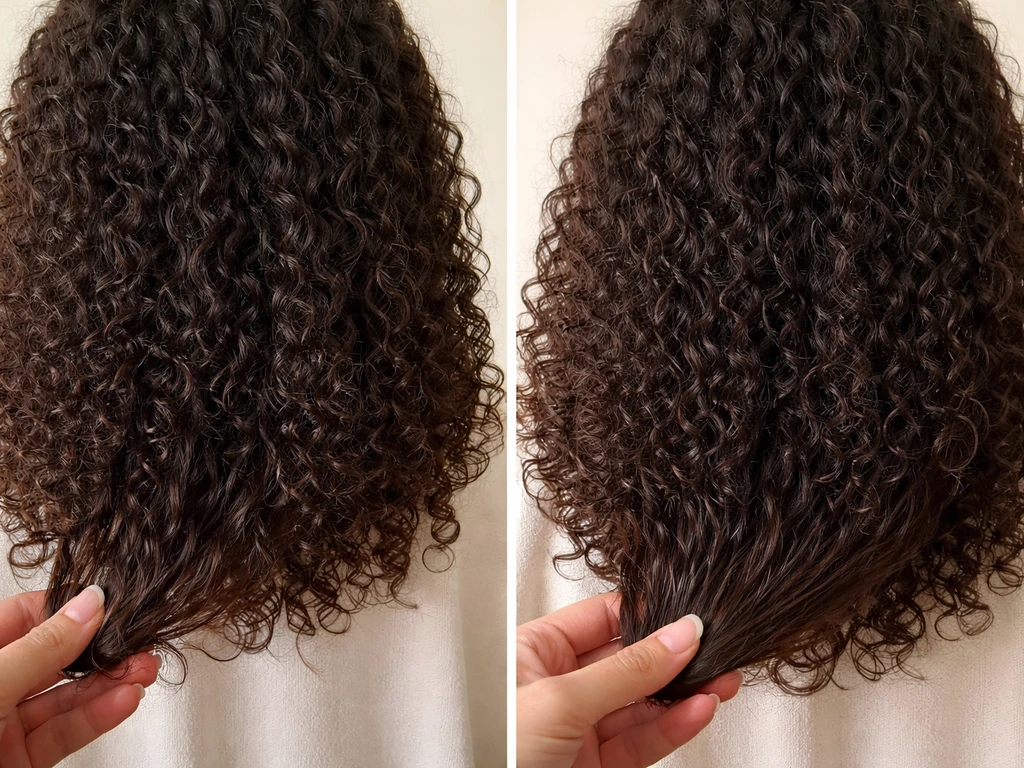
Black and textured hair grows at roughly the same rate as any other hair type: about 1 centimeter per month, or half an inch, while the follicle is in its active growing phase. The reason many Black and textured-hair wearers struggle to see length gains has almost nothing to do with how fast the follicle produces hair and everything to do with how much of that hair survives long enough to stay on your head. Understanding that distinction, growth rate versus retention, is the single most useful thing you can take from this guide.
How Does Black Hair Grow: Biology, Limits, and Retention Tips

Simone Okonkwo
5 Aug 2026
What this guide covers (and what it won't promise)
This article is written for Black and textured-hair wearers, community stylists, and anyone curious about why their hair seems stuck at the same length year after year. It's also relevant if you wear locs, protective styles, or have chemically processed hair and want to understand the biology behind the advice you keep hearing. I've spent years reading the dermatology literature, talking with stylists, and testing routines on my own hair, and I want to give you what I wish someone had given me early on: the actual science, honestly framed, without the marketing fluff.
What this guide won't do is promise you that any single product, style, or supplement will double your growth speed. It won't dismiss traditional practices just because a lab hasn't formally studied them, and it won't pretend there's a universal routine that works for everyone. What it will do is explain the biology clearly, sort the evidence on common styling methods, and give you practical retention plans you can actually follow.
- Hair biology primer: structure, the growth cycle, and typical growth rates for textured hair
- Real factors that set your maximum length: genetics, hormones, nutrition, scalp health
- Breakage versus slowed growth: how to tell them apart
- Styling methods evaluated: braids, twists, locs, weaves, relaxers, bleaching
- Step-by-step daily, weekly, and monthly care routines for retention
- 3-, 6-, and 12-month retention programs with realistic timelines
- Tools, techniques, and product ingredients worth using or avoiding
The biology of textured hair: structure, cycles, and growth rates
How the hair follicle actually works
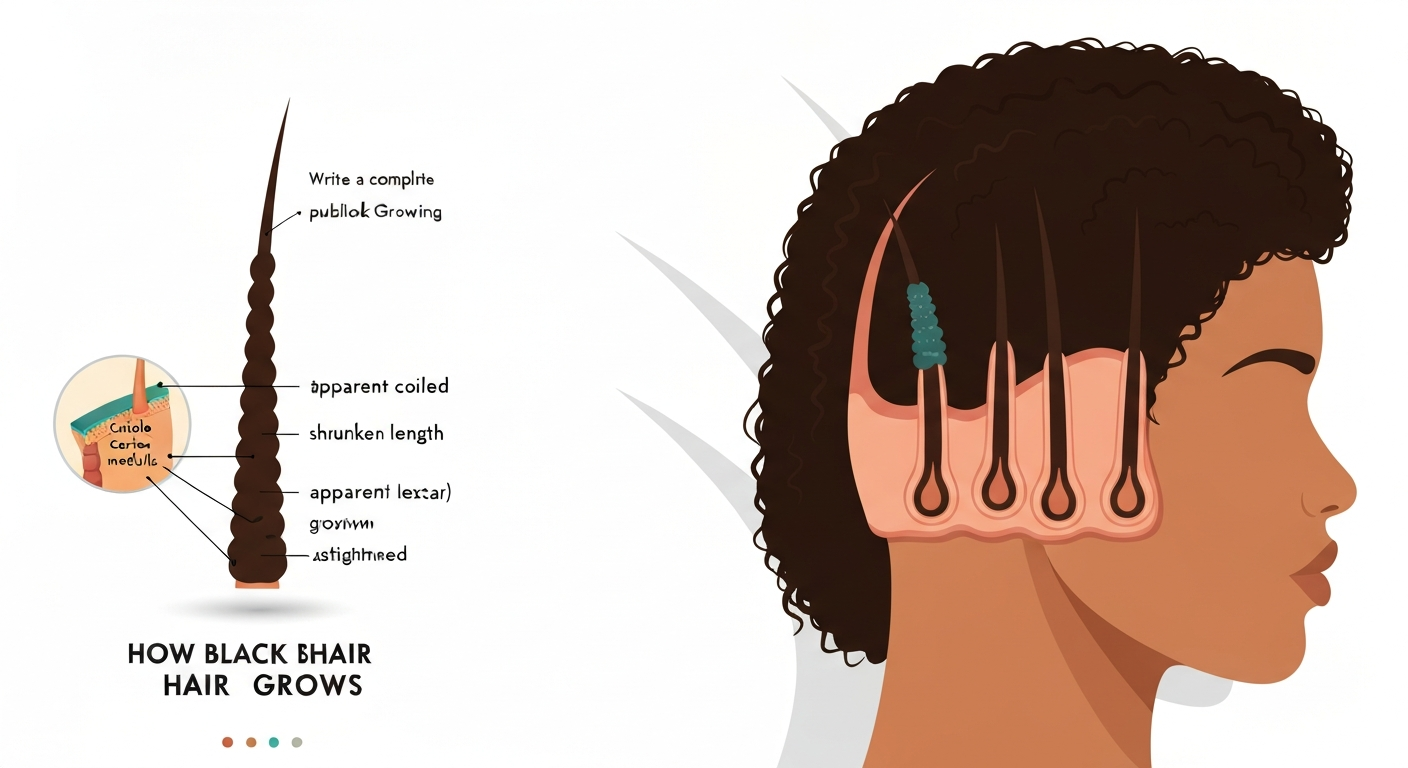
Each strand of hair grows from a follicle, a small but surprisingly complex mini-organ embedded in your scalp. The follicle has distinct compartments: the dermal papilla at the base drives growth signals, the matrix cells above it divide rapidly to produce the hair shaft, and the shaft itself is made up of three layers. The outermost layer is the cuticle, a series of overlapping scale-like cells that protect the shaft. Beneath it sits the cortex, which contains the fibrous proteins (mainly keratin) and melanin that give hair its strength and color. In thicker strands, there's a central medulla too. The cuticle is essentially your hair's armor, and for textured hair, keeping it intact is everything.
The growth cycle: anagen, catagen, and telogen
Every follicle runs on a repeating cycle with three main phases. Anagen is the active growth phase, when the follicle is producing a new hair shaft. This phase typically lasts two to six years for scalp hair, and the length your hair can reach is directly tied to how long your personal anagen phase runs. During anagen, the hair grows at roughly 0.3 mm per day, which works out to about 1 cm (just under half an inch) per month. Catagen follows: a brief two-to-three-week transition where growth stops and the follicle shrinks. Then comes telogen, a resting phase lasting around two to four months, after which the old hair is shed (in what researchers call exogen) and a new anagen cycle begins. All your follicles run this cycle asynchronously, meaning they're at different stages at any given moment, which is why you don't go bald in waves.
Textured hair morphology: the curl geometry that changes everything
Research consistently shows that Afro-textured hair has a more elliptical cross-section compared to straight hair, which has a rounder profile. Micro-computed tomography studies have quantified the larger difference between the major and minor diameters in highly curled African-type hair, and this elliptical geometry directly affects how mechanical stress is distributed along the shaft. Put simply, the tight curl introduces bending stress at every turn. At each curve in the spiral, the outer edge of the fibre is under tension while the inner edge is compressed. This isn't a flaw, it's just physics, but it does mean that textured hair demands more careful handling than straighter hair types. The curl geometry also means that even though hair is growing at roughly 1 cm per month in linear terms, visible length measured from root to tip in a stretched state accumulates more slowly because of the coiled structure shrinking the apparent length.
Porosity: why it matters more than most people realize
Porosity refers to how easily moisture and products move in and out of the hair shaft, and it's determined by the condition of the cuticle layer. When cuticle scales lie flat and tight, the hair has low porosity: moisture is harder to get in but stays in longer once it's there. When cuticles are raised, damaged, or missing entirely, you have high porosity: moisture absorbs quickly but evaporates just as fast, and the weakened structure is far more prone to breakage. Lab methods like scanning electron microscopy (SEM), dynamic vapor sorption, and water uptake assays confirm that chemically processed or heat-damaged hair shows measurably higher porosity and lower tensile strength. If you've bleached or relaxed your hair, you're very likely dealing with elevated porosity, and your routine needs to account for that.
What actually determines how long your hair gets
There's a useful way to frame this: your follicle determines your potential, and your hair care practices determine how much of that potential you actually realize. For a focused discussion on why won't my hair grow black female, see our guide on common causes and retention strategies. Maximum length comes from two things working together, anagen duration (set largely by genetics) and retention (how much of the produced shaft avoids breaking off before you can see it). For a focused explanation of how black chana grow, see the related internal article titled how black chana grow. Most people who feel stuck at a length ceiling are hitting a retention wall, not a growth wall.
Genetics and anagen duration
The single biggest biological ceiling on your hair length is how long your anagen phase runs. Someone with a two-year anagen phase can grow about 24 cm of hair before that follicle rests; someone with a six-year anagen can theoretically grow over 70 cm. This is genetic and varies significantly between individuals and across populations. It also explains why some people can grow hair to their waist effortlessly while others genuinely cannot, no matter what they do. There is no currently available over-the-counter product that extends anagen duration with solid clinical proof.
Hormones
Hormones regulate follicle cycling. Androgens (particularly dihydrotestosterone, DHT) can shrink follicles in genetically susceptible individuals, progressively shortening anagen and producing finer, shorter hairs over time, which is what happens in androgenetic alopecia. Thyroid hormones, cortisol, estrogens, and insulin sensitivity all influence the hair cycle too. Postpartum shedding, for example, happens because the high-estrogen environment of pregnancy extends anagen unusually, and then the drop in estrogen after delivery pushes a large cohort of follicles into telogen at once. Stress-related shedding (telogen effluvium) follows a similar mechanism via elevated cortisol. These hormonal influences are real and can be significant, but they're also largely addressable by working with a dermatologist or endocrinologist when something seems clinically off.
Nutrition: what the evidence actually supports
Nutritional deficiencies can genuinely slow or disrupt the hair cycle. The strongest evidence links iron deficiency (specifically low ferritin) and vitamin D deficiency to non-scarring hair loss. Multiple systematic reviews and meta-analyses show that women with telogen effluvium and other diffuse hair loss diagnoses have significantly lower mean ferritin levels than controls. Some clinical guidance suggests aiming for ferritin levels in the 40 to 70 ng/mL range for hair recovery, though researchers note the exact threshold isn't definitively settled. Vitamin D has also come up repeatedly in alopecia research, with consistently lower serum levels found in several non-scarring alopecia conditions. Getting tested and correcting a real deficiency is a legitimate and worthwhile step. What the evidence doesn't support is taking high-dose supplements as a growth booster when your levels are already normal.
Scalp health and the microbiome
A healthy scalp is the foundation your follicles live in, and it matters more than a lot of hair care content lets on. Emerging research on the scalp microbiome has identified Malassezia, Cutibacterium, and Staphylococcus as dominant microbial residents. When the balance of these shifts, you can get dandruff, seborrheic dermatitis, and follicular micro-inflammation, all of which can interfere with healthy hair cycling. Chronic scalp inflammation is also a concern for wearers of tight protective styles because tension and occlusion can change the local environment. Keeping your scalp clean, managing buildup from heavy products, and treating dandruff promptly all support the follicle environment your hair needs.
Breakage vs. slowed growth: how to tell the difference
This is one of the most practically important distinctions in hair care, and it's one that gets glossed over constantly. If your hair isn't getting longer, you have two possible problems: the follicle isn't producing hair as fast or as long as it used to (a growth issue), or the hair is growing fine but breaking off before you can retain the length (a breakage issue). These require completely different solutions.
Textured and Afro-type hair is documented in multiple laboratory studies to be more susceptible to mechanical breakage than less curly hair types. Tensile testing, cyclic fatigue tests, and scanning electron microscopy imaging all show greater incidence of internal crack initiation, surface fissures, and reduced resistance to repeated combing and manipulation. Single‑fibre tensile testing (clamped strand stretched to failure) and cyclic fatigue/moving‑loop tests are standard laboratory methods to quantify hair tensile strength, yield, elongation and fatigue life; these metrics are primary laboratory proxies for breakage susceptibility, see The biomechanics of splitting hairs - PMC (review of hair mechanical testing methods). This mechanical vulnerability at the curves of the curl is the primary reason textured hair struggles to retain length, not a slower growth rate.
| Sign | Likely Breakage | Likely Slowed Growth |
|---|---|---|
| Short pieces in your comb/brush | Yes, very common | No |
| New growth visible at roots | Yes, roots growing fine | Roots may look sparse |
| Hair stays same length for years | Yes, breaking as fast as it grows | Possible if anagen shortened |
| Scalp shedding (full strand with bulb) | No, these are shed hairs | Elevated shed count possible |
| Hair feels weak, snaps under gentle tension | Yes | No, texture feels normal |
| Consistent thinning over time | Can contribute | More indicative of follicle issue |
| Responds to gentler handling | Yes, improvement visible | No change with handling alone |
A simple at-home check: look at the short pieces coming out when you detangle. If they're mid-shaft fragments without a white bulb at the end, that's breakage. If you're seeing full strands with a small white or slightly pigmented bulb at the root end, those are normal shed hairs. Everyone sheds 50 to 100 strands daily as part of the normal cycle. Consistent shedding far above that, or dramatic changes after stress, illness, or hormonal shifts, is worth discussing with a dermatologist.
Styling methods: which ones actually help and which ones are just retention tools
No styling method makes hair grow faster. I want to be very direct about that because the marketing around protective styling often implies otherwise. What these methods can do, when done correctly, is reduce the daily manipulation and mechanical stress that cause breakage, allowing you to retain more of the length your follicles are already producing. Here's an honest assessment of each major option.
Braids and twists
Braids and two-strand twists are probably the most widely used protective styles in the Black hair community, and when installed and maintained properly, they genuinely help with retention by reducing daily manipulation. The key phrase is 'when installed properly.' Braids that are too tight, particularly box braids, cornrows, or feed-in styles with excessive tension at the hairline or nape, cause traction alopecia. This is a well-documented, clinically recognized form of hair loss caused by chronic mechanical tension, and it can become permanent if the tension is maintained long enough. Early-stage traction alopecia is often reversible when you stop the tension, but repeated scarring over years can permanently close follicles. Protective styling is a tool, not a license to pull hard.
Locs
Locs are a long-term commitment that, once established, are one of the lowest-manipulation styles available. Because the hair is locked together and not combed or brushed in the conventional sense, daily mechanical breakage is dramatically reduced. Many loc wearers do achieve notable length retention over time. The main concerns are tension during retwisting (same traction alopecia risk applies), product buildup causing scalp issues, and ensuring the loc itself stays moisturized internally since the condensed structure can make moisture delivery more challenging. Regular cleansing is essential for scalp health, more frequently than many people realize, typically every one to two weeks.
Weaves and extensions
Weaves and extensions can be excellent protective styles when installed without excessive tension and worn for reasonable periods, generally no longer than six to eight weeks without a break to assess scalp and natural hair health. The risks are tension alopecia (same as braids), scalp access for moisturizing, and the potential for natural hair to matt or break around the weft or braid base. Heavy extensions add load to the root, increasing the mechanical stress on the follicle over time. The weight matters, and regularly massaging and moisturizing the scalp through the style is non-negotiable.
Relaxers and chemical straightening
Chemical relaxers permanently alter the disulfide bonds in the hair's cortex to straighten the curl. The result is a hair shaft with significantly reduced tensile strength and elevated porosity compared to virgin hair. This doesn't mean relaxed hair can't grow long, many people do maintain long relaxed hair, but it requires a more intensive approach to moisture, protein balance, and handling. The highest-risk periods are overlapping a new relaxer onto previously relaxed hair (over-processing) and combining relaxers with heat styling or other chemical services. Research also documents that the combination of chemical relaxing and tight tension styling significantly increases traction alopecia risk compared to either alone.
Bleaching
Bleaching does the most structural damage of any common hair chemical process. Oxidative bleaching systems erode the cuticle, dissolve melanin granules, create cortical porosity, and produce longitudinal fissures in the shaft. Studies using scanning electron microscopy confirm that damage scales with bleach concentration and the number of bleaching sessions. Tensile strength and elasticity drop measurably, meaning bleached hair is both more prone to breakage and less able to recover its shape under tension. Growing long bleached hair is possible but requires treating the hair as genuinely compromised: bond-building treatments (like those using maleic acid or bis-aminopropyl diglycol dimaleate), protein treatments to temporarily fill shaft gaps, rigorous moisture maintenance, and absolute avoidance of additional chemical processes during the same period.
| Style / Process | Affects Growth Rate? | Affects Retention? | Main Risks |
|---|---|---|---|
| Braids / Twists | No | Yes, positive when low-tension | Traction alopecia if too tight |
| Locs | No | Yes, strong positive | Buildup, tension at retwist |
| Weaves / Extensions | No | Positive if well-managed | Tension, scalp access, weight |
| Relaxers | No | Can be positive or negative | Weakness, over-processing |
| Bleaching | No | Negative without intervention | Severe shaft damage, breakage |
| Protective styles (general) | No | Positive when low manipulation | Neglect of scalp under style |
Daily, weekly, and monthly care routines for retention
The goal of any retention routine is to minimize mechanical damage, maintain adequate moisture in the shaft, keep the scalp clean and healthy, and reduce the cumulative stress that leads to breakage. Here's how I think about structuring this across different timeframes.
Daily habits
- Protect your hair at night: sleep on a satin or silk pillowcase, or wrap your hair in a satin scarf or bonnet. Cotton pillowcases create friction that roughens the cuticle and causes breakage overnight. This is one of the highest-return, lowest-effort changes you can make.
- Avoid dry manipulation: never detangle, style, or handle dry textured hair aggressively. Dry hair is at its most fragile state. If your style needs refreshing, lightly mist with water or a water-based leave-in first.
- Apply a light oil or sealant to exposed ends if your hair is worn out, especially in dry climates or during winter months. Ends are the oldest part of the hair shaft and need the most protection.
- For protective styles (braids, twists, weaves), apply a lightweight scalp oil or spray to the scalp through the style and massage gently. Don't skip scalp care just because your hair is 'put away.'
Weekly habits
- Re-moisturize using the LOC or LCO method (Liquid, Oil, Cream or Liquid, Cream, Oil): apply a water-based leave-in first, then a light oil to seal, then a cream or butter if needed. Which order works better depends on your porosity: high-porosity hair often benefits from LCO to lock moisture in faster.
- Assess your scalp: look for flaking, tenderness, or buildup. Address any signs of dandruff or seborrheic dermatitis promptly with an appropriate shampoo (zinc pyrithione or ketoconazole are clinically supported options).
- If wearing a style, check the tension at the edges and nape. Any style that causes soreness more than 24 hours after installation is too tight. Remove it or loosen it.
Wash day protocol (every 1 to 2 weeks for most)
- Pre-poo (optional but beneficial for low-porosity and chemically processed hair): apply a penetrating oil like coconut oil or olive oil to dry hair 30 to 60 minutes before shampooing to reduce hygral fatigue (the swelling and deswelling of the shaft during wetting).
- Shampoo: use a sulfate-free or gentle sulfate shampoo in sections, working from scalp to ends in a downward motion. Avoid circular scrubbing that tangles the hair.
- Deep condition: apply a moisturizing deep conditioner with heat (a hooded dryer or heat cap) for 20 to 30 minutes. Heat opens the cuticle slightly and allows better penetration. For bleached or relaxed hair, alternate between moisturizing and protein-based deep conditioners.
- Detangle: always detangle on wet, conditioned hair. Start at the ends and work upward in small sections. Use a wide-tooth comb, a detangling brush, or your fingers depending on your texture and what causes least breakage.
- Rinse with cool water to help close the cuticle.
- Apply leave-in conditioner while hair is still damp, then layer your sealant (oil or butter).
- Air dry or use a diffuser on low heat. Avoid high-heat blow drying directly on the highest heat setting.
Monthly care
- Assess ends: look for splits, single-strand knots (fairy knots), and dryness. Trim as needed rather than on a rigid calendar. For most textured hair wearers, trimming every 8 to 12 weeks is reasonable, but if breakage is severe, trimming more frequently removes damaged ends before they split further up the shaft.
- Evaluate your protective style tenure: don't leave braids, weaves, or twists in longer than 6 to 8 weeks without a break. Take down, assess, wash, and re-moisturize before reinstalling.
- Check in on scalp health: any persistent tenderness, thinning at the hairline, or scaling that isn't resolving with your routine warrants a visit to a dermatologist.
Practical retention plans: 3, 6, and 12 months
These timelines assume your follicles are healthy and producing hair at a normal rate. If you suspect a growth issue rather than a retention issue (based on the distinction above), see a dermatologist before investing heavily in a retention program.
3-month starter plan
The goal of the first three months is to stop the most common breakage causes and establish a consistent baseline routine. At this stage, don't chase length. Just stop the losses.
- Weeks 1 to 2: audit your current routine. Identify every point of mechanical stress (tight styles, dry detangling, cotton pillowcase, heat use). Eliminate or replace each one.
- Week 2 onward: implement satin protection every night without exception.
- Establish a wash day routine every 7 to 14 days. Deep condition every single wash day for the first three months.
- Take a photo of your stretched hair length at the start of month 1. Repeat at the end of month 3 to see actual retained growth.
- Trim split ends at the start of month 1 so you're starting from a clean baseline.
- If you use heat, limit to once per week maximum on low settings, always with a heat protectant.
6-month intermediate plan
By months four through six, you should be seeing some retained length and your hair should feel noticeably stronger and more moisturized. Now you can start building more intentional strategies.
- Month 4: introduce a protein treatment once per month if your hair feels limp or overly elastic (stretches too much before breaking). Use a light protein conditioner, not a hard protein treatment, unless you've confirmed high porosity.
- Month 4 to 6: incorporate a low-manipulation protective style for at least two weeks per month. Braids, twists, or a stretched style that keeps ends tucked.
- Month 5: reassess your moisturizing method. Does your hair stay moisturized between wash days or does it feel dry by day two? Adjust the sealant or cream layer accordingly.
- Month 6: take another length photo and compare to month 1. Typical retained growth in a solid routine should be approximately 2.5 to 5 cm over three months, which is 5 to 10 cm over six months if breakage has been significantly reduced.
12-month advanced plan
Months seven through twelve are about consistency and refinement. The major structural changes in your hair are already happening; now it's about sustaining them and addressing anything that's still stalling retention.
- Maintain trimming every 10 to 12 weeks unless breakage assessment indicates more is needed. Avoid the temptation to skip trims to 'save length' when ends are clearly damaged.
- If you're transitioning from relaxed to natural hair, the line of demarcation (where relaxed meets natural growth) is your most fragile point. Handle that zone with extreme care and consider a trim schedule that removes it gradually.
- Continue monitoring nutritional status. If you haven't already, get ferritin and vitamin D checked. Correcting a real deficiency in months one to three can show up as noticeably improved density and reduced shedding by month nine to twelve.
- For loc wearers: by 12 months, locs should be past the budding stage into the teenage/maturation phase for most textures. Keep retwisting tension low, cleanse every one to two weeks, and focus on scalp health over loc aesthetics.
- By month 12, document your growth through a full stretched-length comparison. Most people who follow a consistent retention routine see four to six inches of retained growth over twelve months, which is close to the biological expectation for healthy follicles.
Tools, techniques, and products that actually help retention
Detangling tools and methods
The detangling method you use makes a significant difference in how much hair you lose every wash day. For tightly coiled 4c hair, finger detangling on saturated, conditioned hair causes the least breakage for most people. Wide-tooth combs are a reasonable next step. Fine-tooth combs and paddle brushes should generally be reserved for looser textures or very well-stretched hair. Detangling brushes with flexible bristles (like the Denman or similar) work well for type 3 and looser 4a hair but can cause excessive breakage on tighter coils if forced through tangles. Always start at the ends and work toward the roots, never the reverse.
Heat use
Heat styling creates temporary changes in hydrogen bonds within the keratin structure to straighten or smooth the hair, but repeated high heat causes cumulative cuticle damage that increases porosity and breakage susceptibility. For textured hair, limiting heat to once a week or less at temperatures under 375°F (190°C), always with a quality heat protectant containing silicones or film-forming humectants, is a reasonable general rule. Heat-trained hair (hair repeatedly straightened with high heat until the curl pattern is loosened) is a form of heat damage that requires the same treatment approach as chemically damaged hair.
Satin and silk protection
This is simple and effective. Cotton and most synthetic pillowcase materials create friction against the hair cuticle overnight. Satin and silk have a smooth surface that lets hair glide rather than snag. If you regularly wear your hair out at night, this single switch can meaningfully reduce mechanical breakage. Satin bonnets, silk scarves, and satin-lined sleep caps all accomplish the same thing. For loc wearers, a loose satin bonnet or pillowcase protects the surface texture of locs from lint and friction.
Tension management for protective styles and locs
The traction alopecia research is unambiguous: chronic tension at the hairline, nape, and temples causes hair loss that can become permanent. For protective style wearers, this means refusing installs that feel painful at the root, avoiding styles that use very small sections at the edges, taking styles down before the recommended maximum wear time if you notice thinning or tenderness, and never combining tight tension styles with a fresh relaxer. For loc wearers and stylists, this means using gentle two-strand twists or interlocking techniques for maintenance rather than tight palm rolling under tension, especially at the hairline. New growth between maintenance sessions is normal and healthy. Retwisting too frequently (more often than every four to six weeks) can also create repetitive stress at the same point on each loc.
Ingredients to seek out and avoid
| Category | Seek Out | Be Cautious With or Avoid |
|---|---|---|
| Moisturizers | Glycerin, aloe vera, hyaluronic acid, panthenol | Alcohol denat. (drying alcohols) in high concentrations |
| Sealants | Coconut oil, jojoba oil, avocado oil, shea butter | Petrolatum/mineral oil (fine for sealing but blocks penetration if used first) |
| Protein | Hydrolyzed keratin, silk amino acids, wheat protein (in moderation) | Overuse of hard proteins on low-porosity hair |
| Cleansing | Sulfate-free or gentle cleansers, tea tree or zinc for dandruff | High-sulfate shampoos used daily on textured hair |
| Bond building (for bleached/relaxed) | Maleic acid, bis-aminopropyl diglycol dimaleate, succinic acid | Skipping entirely after chemical processing |
| Heat protection | Silicone-based protectants, dimethicone, cyclomethicone | Applying heat to product-free hair |
| Scalp health | Salicylic acid (for buildup), zinc pyrithione, ketoconazole (for dandruff) | Heavy butters and waxes directly on scalp |
One thing I want to emphasize on products: the most expensive product on the market is not automatically the best, and most of what drives retention is technique and consistency rather than specific brands. The ingredient label tells you more than the marketing copy ever will. Focus on hydration, shaft integrity, minimal mechanical stress, and a clean scalp, and the length will follow at the rate your follicles allow. For those curious about what celebrities use and whether those routines are replicable, or whether bleached hair can truly reach significant lengths with the right approach, those questions have their own detailed answers worth exploring alongside this guide. For a look at common celebrity routines and what Black celebrities use to grow their hair, see our summary of celebrity hair routines for practical, evidence-informed takeaways what do black celebrities use to grow their hair. For a focused walkthrough on maintaining and growing bleached hair, see our guide 'can you grow bleached hair long'.
FAQ
Can Black and textured hair grow long like other hair types?
Yes. Follicles on Black and textured scalps produce hair via the same growth cycle (anagen, catagen, telogen, exogen). Anagen length primarily determines maximum potential length; textured hair typically grows about 0.6–1.0 cm per month on average, with individual variation. The appearance of 'not growing' is usually due to breakage or retention issues rather than an inability of follicles to produce new shaft.
What is the basic biology of hair growth I should know?
Hair is produced by the follicle mini‑organ. The shaft has three compartments: cuticle (outer protective layer), cortex (strength and pigment), and sometimes a medulla. Growth occurs during anagen when the shaft elongates; catagen is a brief regression phase, telogen is rest, and exogen is shedding. Hair cycles asynchronously across follicles, so scalp hair is a continual mix of phases. Maximum length from one follicle equals anagen duration × growth rate.
Do genetics and hormones control length, or can care change it?
Genetics and hormones set baseline anagen duration and hair characteristics (curl, cross‑section, growth rate). Care and environment don’t typically extend anagen but strongly influence retention — how much of the produced hair survives to be long. Good care reduces breakage and traction that otherwise shorten visible length. Nutritional and hormonal deficits can shorten anagen or increase shedding, so addressing those can restore follicular activity in affected people.
What actually limits length for Black/textured hair?
Primary limits are: (1) anagen duration (biologic ceiling), (2) tensile strength and structural vulnerability from curl geometry and cuticle/cortical integrity, (3) external damage — mechanical (combing, tight styles), chemical (relaxing, bleaching), thermal (heat), and (4) metabolic/hormonal/nutritional factors (iron, vitamin D, thyroid, systemic illness). Porosity and cumulative damage accelerate breakage and reduce retained length.
Do braids, twists, locs, weaves, relaxers or bleaching make hair "grow" faster?
No — these methods do not increase follicular growth rate. They can improve apparent length by improving retention (protective low‑manipulation styles) or worsen retention if done improperly (tight braids, heavy extensions, rough install/removal). Chemical relaxers and bleaching do not stimulate growth; they weaken cuticle and cortex, increasing breakage risk. Proper, low‑tension protective styling helps retention; chronic high tension causes traction alopecia and can permanently damage follicles.
How does bleaching affect growth and what safety measures help if I bleach?
Bleach oxidatively removes pigment and damages cuticle/cortex, causing higher porosity, fissures, and lowered tensile strength — increasing breakage and making retention harder. To grow long, bleached hair safely: space bleaching sessions, use professional-level protocols (strand tests, bond‑rebuilding treatments), avoid overlapping previous bleach, use lower peroxide/longer timing when appropriate, follow with protein‑moisture balanced care, reduce mechanical stress, and plan realistic timelines for recovery between sessions.
Next Article
How to Grow Black Women’s Hair: Length and Growth Guide
Step-by-step guide to grow and retain Black women’s hair, boost length via breakage control, and avoid traction damage.