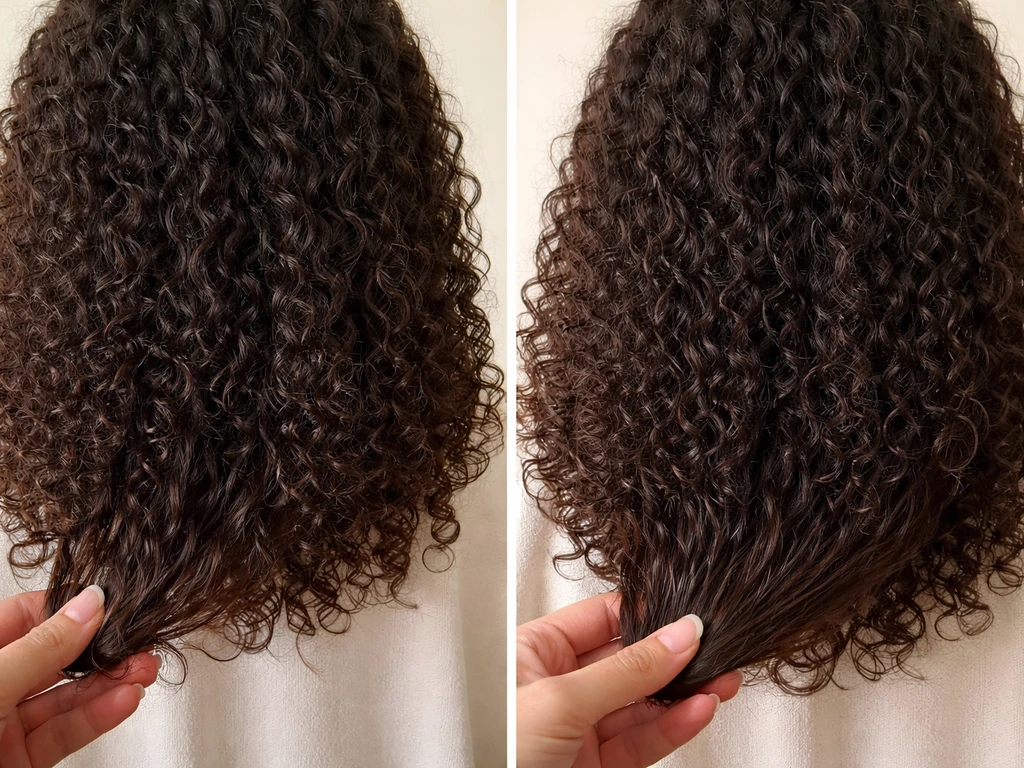
Waist-length Black hair is absolutely achievable, but the path there is mostly about keeping the hair you grow, not about making it grow faster. Your follicles are already doing their job. The real work is reducing breakage, protecting the ends, and staying consistent with a routine that suits your specific texture over the 5 to 7 years it realistically takes to get there.
How to Grow Waist-Length Black Hair: Evidence-Based Guide

Simone Okonkwo
8 Aug 2026
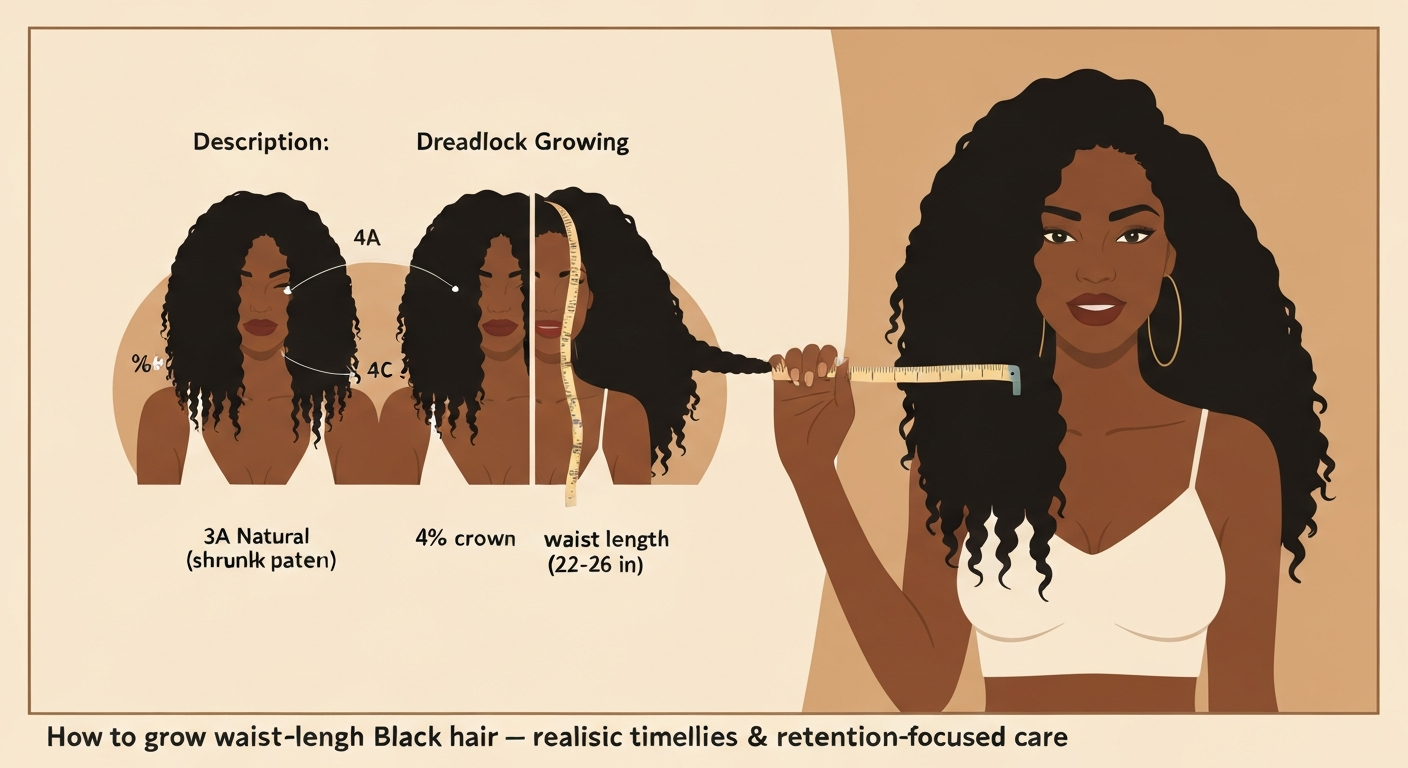
Who this guide is for and what you can realistically expect
This guide is written for Black and textured-hair readers of any gender, caregivers of infants with natural hair, and anyone who has been told their hair "doesn't grow" and wants a science-grounded explanation of why that narrative is wrong and what to do about it. Whether your hair is 4C coils, 3A waves, chemically relaxed, in locs, or somewhere in between, the core biology applies to you. What changes is the specific care routine, the protective strategies, and the products that work best for your texture.
Waist length, as defined by most hair-length charts used in the industry, sits at roughly 22 to 26 inches (about 56 to 66 cm) from the scalp. Where exactly that lands on your body depends on your height and your torso length, but as a physical target it is a real and measurable goal. Because tightly coiled hair shrinks visibly when dry, your hair can actually measure past waist length when stretched while appearing much shorter in its natural state. That shrinkage is not breakage; it is just your curl pattern doing what it does.
Growth vs. retention: the single most important concept on this page
Most people who struggle to grow long natural hair are not dealing with a growth problem. They are dealing with a retention problem. Your follicles produce new hair continuously. The issue is that for many textured-hair routines, breakage at the older, more fragile ends keeps pace with or outpaces that growth, so the overall length stays flat or creeps up only slowly. I think of it like filling a bathtub with the drain slightly open: the water is flowing, but the level never rises. Closing the drain, meaning reducing breakage, is where the real progress comes from.
Common barriers to length retention in textured hair include mechanical damage from aggressive detangling, friction from cotton pillowcases and rough fabrics, heat damage from flat irons and blow dryers, chemical damage from relaxers and color, chronic tension from tight braids and heavy extensions, and dryness from inadequate moisturizing. Nearly all of these are controllable. The goal of this guide is to help you identify which barriers apply to you and give you evidence-based strategies to address them.
The biology: hair growth cycles, genetics, and how texture changes the picture
Each hair on your scalp grows in a cycle with three main phases: anagen (active growth), catagen (transition), and telogen (resting/shedding). The anagen phase is the one that matters most for length. It typically lasts between 2 and 6 years, with most people sitting in the 3 to 5 year range. The longer your individual anagen phase, the longer your theoretical maximum hair length can be, because the follicle simply has more time to produce shaft before the hair sheds naturally. Genetics is the primary driver of your anagen duration, and there is not currently a proven way to extend it.
Texture affects the picture in two ways. First, tightly coiled (4A to 4C) hair has a flattened, elliptical cross-section and curves repeatedly along its length. That shape creates natural stress points, particularly at the bends, that make coiled hair more susceptible to mechanical breakage than straighter hair with the same tensile strength at the fiber level. Second, sebum (your scalp's natural conditioning oil) travels down straight hair readily but struggles to coat coiled strands evenly all the way to the ends, which is why textured hair tends to feel drier faster. Neither of these features means your hair cannot grow long; they just mean your routine needs to compensate.
Realistic growth rates and what the research actually says
Average scalp hair growth across healthy adults is about 1 cm per month (roughly 0.3 to 0.4 mm per day), with ranges in the published literature from about 0.6 to 1.4 cm per month depending on scalp region and individual. Research including work by Loussouarn and referenced in multiple hair-science reviews reports a mean daily growth for African-textured hair samples of approximately 256 micrometers per day, which works out to about 0.77 cm per month, compared to roughly 0.99 to 1.19 cm per month for European-textured samples in the same studies. That difference is real, but the individual overlap between groups is wide. Some 4C-haired people grow faster than some straight-haired people. Your genetics, not your hair type alone, set your personal rate.
What this means practically: at 1.0 cm per month of net retained growth, reaching 56 to 66 cm (waist length) takes roughly 4.5 to 5.5 years from a shaved head. At the lower end of the African-textured cohort average (0.77 cm per month), the same math gives you about 6 to 7 years. Those timelines assume you are retaining essentially all growth with no breakage offsetting it, which is the ideal, not always the reality. Building in some breakage loss is wise, which is why I tell people to plan for 5 to 8 years as a realistic window depending on starting length, texture, and care quality.
Month-by-month and annual timetable to waist length
The table below gives approximate timelines from common starting lengths to waist length (targeting 22 to 26 inches/56 to 66 cm from scalp), using two growth-plus-retention scenarios: a well-optimized routine with strong retention at about 0.75 inches (1.9 cm) of net retained length per month, and a lower-retention routine at about 0.4 inches (1.0 cm) per month. These are not growth-rate differences; both assume the same follicle output. The difference is how much breakage subtracts from that output.
| Starting length | Inches to waist (mid-estimate) | Strong retention (~0.75 in/mo net) | Lower retention (~0.4 in/mo net) |
|---|---|---|---|
| Shaved / TWA (1 in) | ~23 in | ~2.5–3 years | ~5–6 years |
| Ear length (~4 in) | ~20 in | ~2–2.5 years | ~4–4.5 years |
| Neck / APL (~8 in) | ~16 in | ~1.5–2 years | ~3–3.5 years |
| Shoulder length (~12 in) | ~12 in | ~1–1.5 years | ~2.5–3 years |
| Armpit / BSL (~18 in) | ~6 in | ~7–9 months | ~1–1.5 years |
These are estimates, not guarantees. Individual anagen duration, genetics, health status, and the quality and consistency of your routine all shift the timeline. Use this table to set expectations, not to grade yourself. If you are not hitting the strong-retention column, the rest of this guide explains exactly where the leaks tend to be.
Setting milestones and measuring your progress accurately
The most reliable way to measure natural or textured hair length is with a soft tape measure on fully stretched (not pulled hard, just gently extended) hair from the scalp at the crown to the ends. Take this measurement at the same location, under the same conditions (hair fully dry, same time of day), at least every 3 months. Wet or freshly conditioned hair can temporarily appear longer due to weight and slip. Photos are equally valuable: take a front and back shot in the same clothing, same lighting, same posture every 8 to 12 weeks. The visual record is motivating and also helps you spot breakage patterns before they become serious.
Useful milestone checkpoints on the way to waist length include ear length (roughly 4 inches), neck length (about 6 inches), armpit or arm-pit length/APL (around 10 to 12 inches on many body frames), bra-strap length/BSL (roughly 14 to 16 inches), and mid-back length (around 18 to 20 inches). Each milestone confirms you are retaining. If you stay at the same milestone for more than 6 months without a major cut, your breakage is likely matching your growth, and it is time to audit your routine.
Why your hair grows but doesn't seem to get longer
This is the question I hear more than any other. Research from African school-population studies found that under typical grooming conditions, average natural hair length reached a steady state of about 5. A cross-sectional survey in African schoolchildren reported a steady-state mean combed natural length of about 5.1 cm within roughly one year, interpreted as breakage roughly equaling growth under typical grooming conditions. 1 cm within roughly a year, with breakage essentially equaling growth. The follicles were producing new hair; the ends were just snapping off at the same rate. This is not a genetic ceiling; it is a care problem. Textured hair ends are the oldest, most weathered, most dehydrated part of the strand. Without deliberate moisture and protection, they fracture at the natural stress points in the curl pattern. Fixing this is the entire mission of a good retention routine.
Daily, weekly, and monthly care routines for textured hair
There is no single universal routine that works for every texture, but the principles are consistent across 3A through 4C hair. For a step-by-step practical plan on how to grow Black women's hair, see the dedicated guide. Moisture management is the core of everything. The structure that follows is a framework you customize to your texture and lifestyle, not a rigid prescription.
Daily habits
- Sleep on a satin or silk pillowcase, or wear a satin-lined bonnet or scarf. Cotton wicks moisture and creates friction that causes breakage overnight.
- Do not detangle dry hair, especially 4A to 4C types. If you need to refresh or redefine, lightly mist with water or a diluted leave-in first.
- Apply a light leave-in or moisturizing mist to any areas that feel dry, concentrating on the ends.
- Avoid high-tension styles as your default daily look. Loose twists, low buns, or pineapple methods are lower-stress alternatives.
Weekly habits
- Co-wash or rinse with a conditioner-only wash 1 to 2 times per week for drier 4B and 4C textures, or shampoo weekly if you use heavy products, work out heavily, or have scalp concerns.
- Deep condition with a moisturizing mask for 20 to 45 minutes under a plastic cap. Heat from your scalp alone is sufficient; steamers add extra benefit but are not required.
- Detangle gently, finger-first, then a wide-tooth comb starting from the ends and working toward the roots. Never start at the root.
- Apply your leave-in, oil, and sealant (LOC or LCO method depending on your porosity) while hair is still damp.
Monthly habits
- Do a protein treatment if your hair shows signs of excess elasticity or feels mushy when wet (more on protein vs. moisture balance below).
- Assess your ends visually and by feel. Rough, splitting, or tangled ends need a trim or dusting.
- Take your length measurement and a progress photo.
- Evaluate your protective style plan for the coming month.
Sample wash-day schedule by texture
| Hair type | Shampoo frequency | Deep condition | Co-wash option | Detangling method |
|---|---|---|---|---|
| 3A–3C (loose to medium curls) | Every 5–7 days | Weekly | Optional between washes | Wide-tooth comb, damp hair |
| 4A (tightly coiled, defined) | Every 7–10 days | Weekly | 1–2x per week | Finger detangle first, then comb |
| 4B (z-pattern, less defined) | Every 7–14 days | Weekly | 1–2x per week | Finger detangle in sections |
| 4C (very coiled, high shrinkage) | Every 10–14 days | Weekly | As needed between washes | Finger detangle only on most sessions |
Protective styling: what the evidence actually supports
Protective styles work for length retention by reducing the daily manipulation, friction, and environmental exposure that causes breakage. The keyword is "low tension." A loose two-strand twist-out or a bun where the hair is tucked away gives the ends a break from daily handling. A heavy sew-in weave installed too tightly, or micro braids kept in for 12 weeks without moisturizing, does the opposite. The style category is not what determines whether a protective style helps or hurts; it is the tension level, install quality, maintenance during wear, and how long you keep it in.
Loose braids, twists, and flat twists installed without extreme tension and worn for 4 to 8 weeks maximum are among the most retention-friendly options available. Wigs worn over a flat-tucked or braided foundation are similarly effective when the wig cap is not excessively tight around the edges. Box braids with extensions become higher-risk when the extensions are very heavy (creating traction) or when they are left in longer than 6 to 8 weeks without re-moisturizing the natural hair underneath. Locs are a long-term protective style with their own retention dynamics, and their growth is subject to the same biology; locs can absolutely reach waist length given the same principles of scalp health and low tension.
Traction alopecia: recognizing and preventing it early
Traction alopecia (TA) is hair loss caused directly by sustained mechanical tension on the follicle. It is well documented in dermatology literature and is particularly common in populations where high-tension styles are culturally prevalent. Early signs include a progressively receding or thinning hairline (especially at the temples and nape), small bumps or papules at follicular openings where braids begin, tenderness or soreness on the scalp after styling, and thin or broken hairs around the hairline. TA caught early, before there is scarring, is often reversible by stopping the tension and allowing the follicle to recover.
To prevent traction alopecia, make sure braids and extensions are never so tight that they cause pain or create visible puckering of the scalp skin. Ask your stylist to leave the edges and hairline slightly looser than the rest. Alternate between styles that put tension on different parts of the hairline. Avoid sleeping in very tight styles without something to buffer the tension. If you notice any of the early signs listed above, taking a break from tension styles for at least 8 to 12 weeks is the most important immediate step, and booking a consultation with a dermatologist who specializes in hair is a smart next move for anything that does not resolve.
Heat, relaxers, and chemical processes: real risks and how to navigate them
Heat damage is cumulative and temperature-dependent. Laboratory research shows that repeated flat-iron treatments at around 200 degrees Celsius and above cause measurable reductions in keratin protein denaturation temperature and visible cracking of the hair cuticle. Laboratory studies show hot-tool thermal damage is cumulative and temperature/time-dependent, with keratin denaturation and measurable loss of mechanical strength after repeated flat-iron treatments at roughly 180–232 °C and visible cuticle cracking reported at ≳200 °C (Correlation between Mechanical and Thermal Properties of Human Hair). The practical translation: the more often you use high-heat tools and the higher the temperature, the weaker and more breakage-prone your hair becomes over time. Safer heat use means keeping flat irons below 180 degrees Celsius (around 350 degrees Fahrenheit) for most textured hair, limiting direct heat to once every few weeks at most, always using a heat protectant that creates a physical barrier between the tool and the shaft, and never applying heat to hair that is already damaged or over-processed.
Chemical relaxers and straighteners alter or cleave disulfide bonds in the hair's protein structure, which is what allows the strand to adopt a straighter shape. Research documents decreased tensile strength and increased susceptibility to breakage after chemical straightening. This does not mean relaxed hair cannot reach waist length; many people with relaxed hair retain excellent length with the right routine. It does mean relaxed hair needs consistent deep conditioning, careful protein-moisture balancing, gentle handling, and a low-heat approach because the chemical process has already depleted some of the strand's structural resilience. Stretching relaxer applications to every 10 to 12 weeks (rather than every 6 to 8) and applying carefully to only the new growth reduces cumulative chemical exposure.
Regarding conditions like central centrifugal cicatricial alopecia (CCCA), a scarring form of alopecia more prevalent in Black women, the evidence around chemical relaxers as a direct cause is mixed. Larger case-control studies have not found a simple one-to-one relationship, and current expert reviews emphasize a multifactorial model involving genetic susceptibility, chronic inflammation, traction, and other factors. What is clear is that any styling practice causing visible scalp irritation, pain, or burns should be stopped immediately, and early dermatologic evaluation is essential because scarring alopecia can become permanent if not treated promptly.
Protein vs. moisture: how to read your hair and balance both
Healthy hair needs both protein (for structural integrity) and moisture (for flexibility and elasticity). The balance between them is not a fixed ratio; it shifts based on how much damage your hair has accumulated, your natural porosity, and your current product regimen. An easy way to assess your needs: take a single shed strand when hair is damp and gently stretch it. Healthy hair stretches slightly and returns. Hair that stretches very far and then breaks with little resistance is protein-deficient and overly pliable (hygral fatigue). Hair that feels brittle, snaps immediately with minimal stretch, and has almost no give likely needs moisture, or it may have too much protein and not enough moisture. Neither extreme is ideal.
For most people with textured hair who are not chemically treated and not using heavy heat, a schedule of one light protein treatment per month and moisturizing deep conditioner every week is a reasonable starting point. For chemically relaxed or heavily heat-styled hair, a slightly higher protein frequency (every 2 to 3 weeks) may be needed. Protein treatments should never be applied back-to-back without a moisturizing session in between; overloading the strand with protein without moisture creates brittleness. When in doubt, go moisturizing first and add protein only if you see the signs of deficiency described above.
Products that actually help: categories, ingredients, and what to avoid
Product choice matters, but it matters far less than technique and routine consistency. Here is what is worth understanding by category.
| Product category | What to look for | What to avoid or limit |
|---|---|---|
| Shampoo / Cleanser | Sulfate-free or low-sulfate formulas; gentle surfactants like cocamidopropyl betaine, sodium cocoyl isethionate | Sodium lauryl sulfate (SLS) as the first surfactant; high-alcohol formulas |
| Conditioner (rinse-out) | Slip agents like cetyl alcohol, cetearyl alcohol; humectants like glycerin, aloe vera; proteins like hydrolyzed keratin or silk at low concentrations | Formulas with silicones only and no humectants if you co-wash frequently |
| Deep conditioner / Mask | Shea butter, mango butter, or plant oils high in oleic acid; hydrolyzed proteins; panthenol (provitamin B5) | Products with heavy petrolatum as the first ingredient if you want actual penetration rather than coating |
| Leave-in conditioner | Water as first ingredient; lightweight humectants; light film-forming polymers for curl definition | Heavy butters or waxes if your hair is fine or low-porosity |
| Oils and sealants | Penetrating oils (coconut, olive, avocado) used before styling; sealing oils (jojoba, castor, grape seed) used after to lock in moisture | Mineral oil and petrolatum are not harmful but sit on the surface; not ideal as your only moisturizer without water underneath |
| Protein treatments | Hydrolyzed proteins small enough to enter the cortex (wheat, keratin, silk, collagen); look for these in the first 5 ingredients | DIY egg-only masks without a moisturizing follow-up; overusing strengthening treatments back-to-back |
The LOC method (liquid/water, oil, cream) and LCO method (liquid, cream, oil) are layering techniques designed to push moisture into the hair shaft and then seal it there. High-porosity hair (often chemically or heat-damaged, or naturally high porosity) tends to respond better to LOC because it needs the oil layer before the cream to slow down water escape. Low-porosity hair often does better with LCO because it needs the cream to hold the water open at the cuticle before the oil seals. Experiment with both and pay attention to whether hair stays moisturized for 2 to 3 days or dries out within hours.
Trimming and split-end strategy: keeping length while losing damage
Split ends (trichoptilosis) do not travel up the entire strand overnight, but they do progressively split further up the shaft if not addressed, eventually causing the strand to break off at a point higher than the original split. Trimming is not the enemy of length; untreated splits are. The goal is to remove damaged material before it causes more breakage than the trim itself would.
Dusting is the practice of removing only the very tips of the hair (a quarter-inch or less) to clear visible splits without sacrificing noticeable length. This can be done more frequently, every 6 to 8 weeks, as a maintenance trim. Full trims that remove half an inch to an inch are appropriate every 3 to 6 months depending on how much damage has accumulated, your heat use, and your chemical processing level. If you are protective styling consistently, using low heat, and keeping moisture up, you may find that 2 dustings and 1 fuller trim per year is sufficient. The key tool is sharp haircutting shears, never kitchen scissors or nail scissors, which crush the cortex and create new split points immediately.
Nutrition, supplements, and medical factors
Hair follicles are metabolically active structures that need adequate nutrition to function optimally. Deficiencies in iron, ferritin (stored iron), zinc, vitamin D, and B vitamins (particularly biotin and B12) are among the most commonly documented nutritional contributors to hair shedding and slowed growth in clinical practice. Low ferritin levels, even when hemoglobin appears normal, are associated in some studies with diffuse telogen effluvium (excess shedding). If your hair is shedding more than the normal 50 to 100 strands per day and your diet or health history suggests deficiency risk, bloodwork to check these levels is a practical first step.
Biotin supplements are heavily marketed for hair growth, but the honest picture is that biotin supplementation only improves hair health in people who are actually deficient in biotin, which is not common in people eating a balanced diet. For everyone else, extra biotin does not measurably speed hair growth. Collagen peptides, omega-3 fatty acids, and a general multivitamin with iron are more broadly useful for overall hair and scalp health and have somewhat more supportive evidence than biotin alone. That said, no supplement replaces a nutrient-dense diet. Protein intake also matters: hair is almost entirely keratin, a protein, and chronically low dietary protein intake can reduce hair growth and quality over time.
When to see a dermatologist or trichologist
Most hair growth challenges are care-related and can be addressed with the strategies in this guide. But some situations genuinely require medical evaluation. The following warrant a dermatologist or trichologist consultation without delay:
- Visible thinning or bald patches that are growing in size, particularly at the crown or around the hairline
- A hairline that has visibly receded over the past year despite stopping tight styles
- Scalp pain, persistent tenderness, burning, or itching that does not resolve with a scalp-care routine change
- Shedding of significantly more than 100 strands per day for more than 2 to 3 months
- Hair that snaps off at the scalp level rather than showing gradual taper toward the ends
- Any scarring, pustules, or inflammation on the scalp
- Hair loss following pregnancy, major illness, surgery, or significant stress that has not begun recovering after 6 months
A trichologist can assess hair fiber quality and scalp health through dermoscopy and pull tests. A dermatologist is the appropriate professional for diagnosing and treating conditions like CCCA, traction alopecia with scarring, alopecia areata, and scalp infections. For suspected nutritional deficiencies, your primary care doctor can order the relevant bloodwork. Early intervention in scarring alopecias is critical because follicle destruction is irreversible once inflammation has progressed.
Special section: growing and caring for infant and toddler hair
Baby hair is finer and more fragile than adult hair, and the same biology applies: the goal is keeping whatever grows intact. For infants, the gentlest possible routine is best. Use a gentle, sulfate-free baby shampoo once or twice a week, followed by a light conditioner. After washing, apply a very light moisturizer or oil to the scalp and strands before air drying. Avoid any tight hairstyles on infants and toddlers, both because their follicles are still developing and because they cannot communicate scalp discomfort. Simple two-strand twists, flat twists, or loose puffs with soft, seamless hair ties are the safest styling options. See our guide on how to grow Black infant hair for age‑specific routines and gentle techniques.
Cotton headbands worn tightly or for extended periods can cause friction loss around the hairline in infants. Satin-lined bonnets at night protect baby hair just as they do adult hair. Caregivers should also resist the urge to comb baby hair dry. Detangle gently with a wide-tooth comb or a soft-bristle baby brush only on damp, conditioned hair. Hair growth in infants is highly variable and does not reflect long-term hair density; many babies shed their birth hair in the first few months and grow a completely different texture in its place.
Special section: growing long hair as a Black man with 4A–4C texture
The biology is identical: the same growth rates, the same retention principles, the same breakage risks apply. What differs for men is often the social context and the available styling options. For men growing out 4A to 4C hair, the awkward in-between phase (roughly 2 to 6 inches) is the hardest part psychologically. Protective styles that work well for this phase include loose twists, flat twists, and short locs. Once past the 4 to 5 inch mark, more options open up. For a practical step-by-step plan tailored to Black men, covering moisture routines, protective styles, and grooming and barbering tips, see our guide on how to grow long curly hair Black male.
Grooming habits that commonly cause breakage in men include picking out hair dry with a metal pick, using high-heat blow dryers with metal comb attachments without a heat protectant, and using wave-training methods that involve hard brushing without moisture. Moisturizing the scalp and strands regularly, detangling with a wide-tooth comb on damp hair, and wrapping hair in a durag or wave cap lined with satin at night are simple, high-impact retention habits. Barber visits should shift from shape-up-focused to maintaining length: communicate clearly that you are growing out and want fades only on the sides and back without taking from the top length.
Tracking your progress with simple tools
A hair journal does not have to be complicated. A notes app on your phone with monthly entries works perfectly. What to record each month: your stretched length measurement (in inches or cm from crown to longest point), a front and back photo, a brief note on your current routine and any products you changed, an honest assessment of breakage (how much hair was in the drain or on your hands during washing), and how your hair felt that week (dry, moisturized, too soft, too stiff). Over 6 months this log will tell you more about what is working than any product review online. You will also be able to spot patterns, for example, that your hair always stalls in dry winter months or after a particular styling method.
Myth-busting: the most common growth misconceptions
The biggest myth in the Black hair space is that specific styles make your hair grow faster. Braids do not make hair grow faster. Locs do not make hair grow faster. Protective styles work by reducing breakage so more of the growth your follicles are already producing gets retained. The follicle output (growth rate) is not changed by the style. What changes is how much of that output reaches a measurable length. This distinction matters because if you install braids and then undo them 8 weeks later and your hair breaks off, you have lost the retention benefit entirely.
- Myth: Cutting your hair makes it grow faster. False. Cutting only affects the ends, which are already dead tissue. The follicle at the scalp has no communication with the cut end. Trimming helps retain length by preventing splits from causing higher-shaft breakage, not by accelerating growth.
- Myth: Grease and petroleum products moisturize your hair. Partially false. Petroleum-based products seal the cuticle and reduce moisture loss, but they do not add moisture. Applying grease to dry hair just seals in the dryness. Water or a water-based product must go on first.
- Myth: Black hair doesn't grow long naturally. False. Black hair grows at roughly comparable rates to other hair types (with some measured variation in research that still shows wide individual overlap). The length challenge is almost entirely a retention problem, not a growth-rate problem.
- Myth: You need expensive products to grow long hair. False. The fundamentals, sulfate-free cleansing, regular deep conditioning, moisture layering, gentle handling, and protective styling, can be done with affordable products. Ingredient quality matters more than brand name or price.
- Myth: More frequent washing leads to more breakage. Nuanced. Washing itself does not cause breakage. Improper technique during washing (rough towel drying, detangling dry or without enough slip, skipping conditioner) causes breakage. Washing frequency should be determined by scalp health needs.
Your actionable plan: 3, 6, 12, and 24 months
First 3 months: build the foundation
- Assess your current routine honestly: note your shampoo frequency, heat use, protective style habits, and sleep practices.
- Switch to a sulfate-free shampoo and add a weekly deep conditioning session.
- Start sleeping on satin or with a satin bonnet every night.
- Stop combing dry hair. Begin all detangling on damp, conditioned hair.
- Take your baseline length measurement and a front and back photo. This is your starting point.
- If you regularly use flat irons, reduce frequency to once every 2 to 3 weeks and drop the temperature to below 180 C / 350 F.
- Start a simple hair journal entry each month.
3 to 6 months: refine and troubleshoot
- Do a stretch test on damp hair to assess protein vs. moisture balance and adjust your product use accordingly.
- Incorporate protective styling for 4 to 8 week stretches, making sure styles are low-tension.
- Do your first trim or dusting to remove any split ends that have accumulated.
- Take your 3-month length measurement and photo and compare to baseline.
- Audit your nutrition: are you getting enough iron, protein, and vitamin D from food? Address obvious gaps before spending money on supplements.
6 to 12 months: sustain and optimize
- Review your hair journal for patterns: what months did you retain most? What changed in those months?
- If you have noticed hairline thinning or scalp tenderness, book a dermatologist consultation now.
- Refine your protective style rotation to alternate tension placement and give different follicle areas rest.
- Adjust wash-day frequency based on your scalp's actual needs and seasonal changes.
- Take a 6-month and 12-month measurement and compare to your starting point.
12 to 24 months: the long game
- By now your routine should feel automatic. The main work is consistency, not discovery.
- Schedule trims every 3 to 6 months based on your damage level and heat/chemical use.
- Reassess your protective style options as your length increases; longer hair needs more careful protective care because the ends are older.
- Continue your monthly length checks and photo log.
- If you are not seeing the retention you expect by month 18 despite consistent care, schedule a medical consultation to rule out health or hormonal factors.
Troubleshooting common problems
| Problem | Likely cause(s) | What to try |
|---|---|---|
| Constant breakage despite good routine | Protein-moisture imbalance, hidden heat damage, or structural damage from past chemical processes | Do a stretch test; add or reduce protein; assess heat and chemical history; consider a trichologist visit |
| Length stays the same for months | Breakage equaling growth at the ends; splits traveling up the shaft | Dust ends every 6 to 8 weeks; increase moisture for the last 2 inches of hair; re-evaluate protective style tension |
| Scalp dryness and flaking | Product buildup, seborrheic dermatitis, or overwashing/underwashing imbalance | Clarify with a gentle low-sulfate shampoo; if flaking persists after 4 weeks of routine adjustment, see a dermatologist |
| Thinning at the hairline or temples | Traction from tight styles or tight wig caps | Stop all high-tension styles immediately; use only very loose styles for 8 to 12 weeks; consult a dermatologist if no recovery |
| Hair feels stiff and won't absorb moisture | Too much protein, silicone buildup, or low porosity | Use a clarifying shampoo to clear buildup; reduce protein; focus on humectant-rich products and steam or warm water to open cuticle |
| Excessive shedding (more than 100 strands/day) | Stress, nutritional deficiency, hormonal change, or scalp condition | Track shedding for 2 to 4 weeks; check diet for iron, ferritin, vitamin D; see a doctor for bloodwork if it does not resolve in 6 weeks |
Video tutorials and additional guides worth your time
Video tutorials can be enormously useful for visual learners, especially for techniques like two-strand twisting, flat twisting, the LOC/LCO method, and proper detangling technique. When evaluating a tutorial, look for creators who demonstrate on hair similar to yours in texture and density, explain the why behind each step rather than just showing the result, disclose when they are in a paid sponsorship (so you can weigh product recommendations accordingly), and do not promise growth from a single product or style. For step-by-step visual guidance, check curated YouTube playlists on how to grow long Black natural hair that demonstrate techniques on similar textures. The most trustworthy tutorials focus on technique, retention, and scalp health rather than selling a transformation.
Within this site, you will find dedicated guides covering protective-styling specifics for braids, twists, wigs, and locs; deeper dives into product categories by hair type; and separate focused articles for those growing hair for the first time past shoulder length, for women navigating specific growth challenges, and for men with curly and coiled textures. For a step-by-step plan specifically on how to grow Black hair past shoulder length, see the dedicated guide. If you are newer to natural hair care and trying to understand the basics of long hair for Black females more broadly, exploring those guides alongside this one will give you a complete picture.
Maintaining waist-length hair after you get there
Getting to waist length is one milestone. Staying there is the next challenge, and in some ways it is harder. Very long natural hair has more surface area, older and more weathered ends, and requires more deliberate end care than shorter hair. The routine that got you to waist length is largely the same one that maintains it, but with a few adjustments: more emphasis on moisturizing and protecting the ends specifically, more frequent dusting (every 4 to 6 weeks rather than every 8), and more protective styling since your ends are now at their most vulnerable. Single-strand knots (also called fairy knots) become more common at longer lengths; keeping the hair stretched or in twists when not styled reduces their frequency.
Most importantly, waist-length Black hair is not a destination where the work stops. It is a long-term practice. The people who maintain significant length over years are not the ones who found a magic product or a miracle style; they are the ones who built a consistent, evidence-informed routine and stuck with it through seasons, stalls, and setbacks. That is entirely within reach, and the biology is on your side.
FAQ
What realistic monthly and yearly hair‑growth ranges should I expect for Black and textured hair?
Average linear scalp‑hair growth in healthy adults is roughly 0.6–1.4 cm/month in the literature; many studies place a typical range near ~0.8–1.2 cm/month. Using those rates: expect ~7.5–14 cm per year (≈3–5.5 in/year). Because some African‑textured cohort averages measure lower (~0.77 cm/month), plan conservatively: ~9–10 cm (≈3.5–4 in) per year is a practical median estimate for many textured‑hair wearers. Individual variation is large and depends on genetics, age, health, and scalp anagen duration.
How long will it take to reach waist length?
‘Waist length’ is typically ~56–66 cm (22–26 in) measured from the scalp. At 1.0 cm/month you need ~4.5–5.5 years of net positive length accumulation. At ~0.77 cm/month it requires ~6–7 years. These are ‘ideal’ estimates that assume minimal breakage; realistic timelines must include retention strategies because breakage can erase gains.
What is the difference between hair growth rate and length retention?
Growth rate is the biological speed of new hair produced at the follicle (cm/month). Retention is the net increase in a strand’s measured length after accounting for breakage and shedding. You can have a perfectly normal growth rate but poor retention if hair breaks off at the ends or mid‑shaft. Successful long‑hair plans focus primarily on improving retention—reducing mechanical, thermal, chemical, and traction damage—rather than magically increasing intrinsic growth rate.
What biological limits determine maximum hair length?
The anagen (growth) phase duration primarily sets the maximum terminal length: typical scalp anagen is ~2–6 years (commonly ~3–5 years). People with longer anagen phases can achieve greater terminal lengths at the same linear growth rate. Genetics largely determine anagen duration and follicle behavior; nutrition, hormones, and medical conditions can modify but not fully override genetic limits.
What daily care routine helps retain length for textured hair?
Daily routine (evidence‑framed, practical): - Minimize friction: sleep on satin/silk or use satin bonnet/liner. - Keep hair moisturized using water or water‑based leave‑ins plus a light occlusive (shea butter, sealing oil) to slow transepidermal water loss. - Avoid excessive manipulation: detangle only when necessary using fingers or a wide‑tooth comb and work in sections. - Limit daily heat and rough styling. These steps reduce mechanical damage and keep hair pliable; randomized trials are lacking but clinical and laboratory data support reduced friction and consistent moisture to reduce breakage.
What weekly and monthly routines are recommended?
Weekly: - Co‑wash or shampoo as tolerated with a sulfate‑free cleanser if using many products/heavy build‑up; follow with a moisturizing conditioner. - Detangle gently while conditioned using sections. - Low‑heat or no‑heat styling for the week; protective styling (loose twists/braids) can reduce manipulation. Monthly (or every 4–8 weeks): - Deep‑condition with a moisturizing mask; add a protein treatment only if hair shows porosity/damage (brittleness, excessive stretch loss). - Trim or dust split ends (see trimming strategy). Frequency should be adjusted to hair condition: more trimming/stronger protein if damage is evident; more moisturizing if hair is dry and brittle.
Next Article
How to Grow Black Women’s Hair: Length and Growth Guide
Step-by-step guide to grow and retain Black women’s hair, boost length via breakage control, and avoid traction damage.