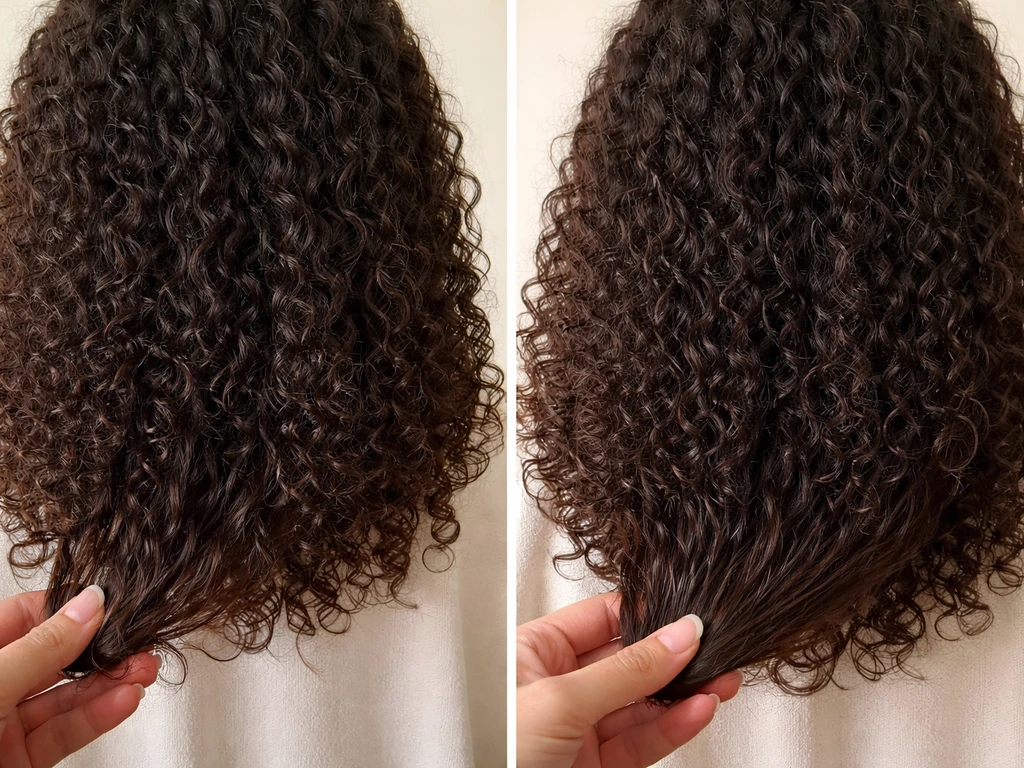
Yes, white people can grow an afro-style hairstyle, but how close the result gets to a classic afro depends almost entirely on your natural curl pattern, which is genetic. If your hair is naturally curly or coily, you can absolutely grow it out into a full, rounded shape that fits the afro definition. If your hair is straight or only slightly wavy, you can grow it long, but it won't naturally form that rounded, voluminous shape without chemical texturizing, which is a different conversation entirely. The honest answer is: hair grows from follicles regardless of race, but the afro look is driven by curl genetics, not just length.
Can White People Grow Afros? A Practical Guide to Results

Simone Okonkwo
2 May 2026
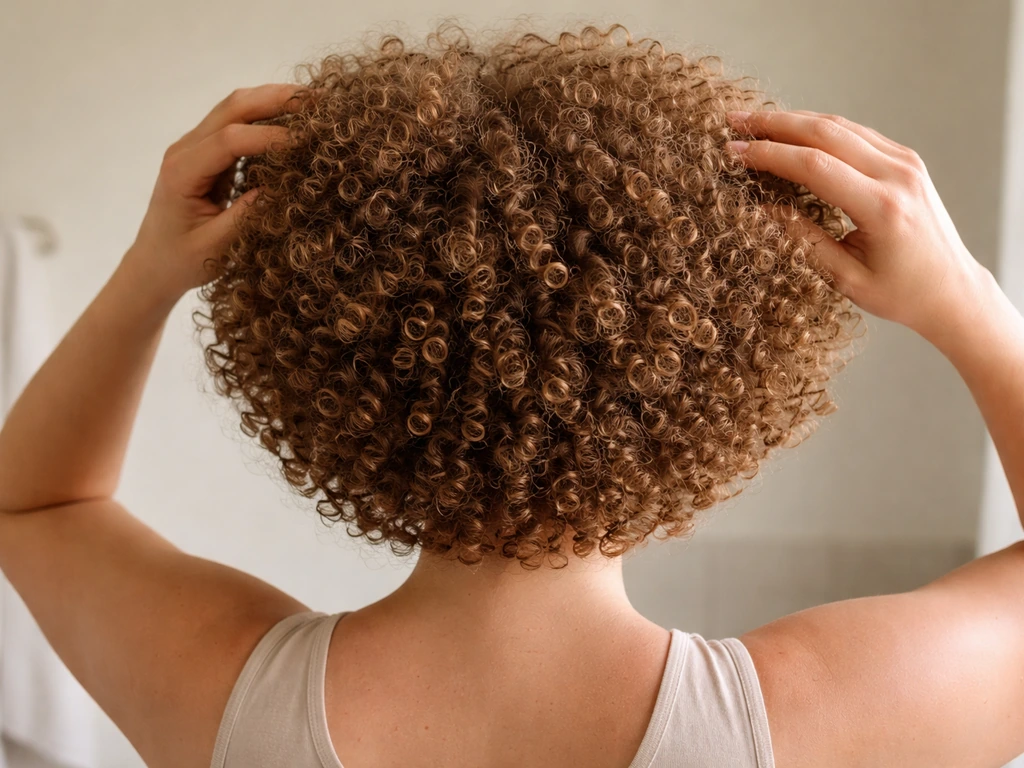
Is it possible? The evidence on afros for non-Black hair
The word "afro" describes a hairstyle shape: a rounded, voluminous cloud of hair that stands away from the scalp. That shape is produced by tight curl or coil patterns that cause hair to expand outward rather than fall downward. Research is clear that curl pattern is primarily genetic. A twin study found that 85 to 95 percent of variation in self-rated hair curliness in people of European ancestry was explained by genetic factors, and a genome-wide association meta-analysis has identified at least eight genetic loci associated with hair shape. So curl pattern isn't something you can simply decide to have.
That said, plenty of white and non-Black people do have naturally curly or coily hair. People of Mediterranean, Middle Eastern, Eastern European, South Asian, and mixed heritage often have curl patterns tight enough to produce a genuine afro shape when grown out. If that's you, then yes, growing an afro is entirely possible and this guide covers exactly how to do it well. If your hair is naturally straight, the structure needed to form that shape isn't there without chemical alteration, and no routine or product is going to change that biology.
Hair biology basics: follicles, texture, curl pattern, and shrinkage
Every hair on your head grows from a follicle embedded in your scalp. The follicle goes through three phases: anagen (active growth), catagen (brief transition), and telogen (resting and shedding). The length your hair can ultimately reach is determined by how long your follicles spend in the anagen phase, not by what products you use. Average scalp hair grows about half an inch per month, or roughly six inches per year. That rate is relatively consistent across people, but anagen duration varies considerably between individuals and even between different areas of your scalp.
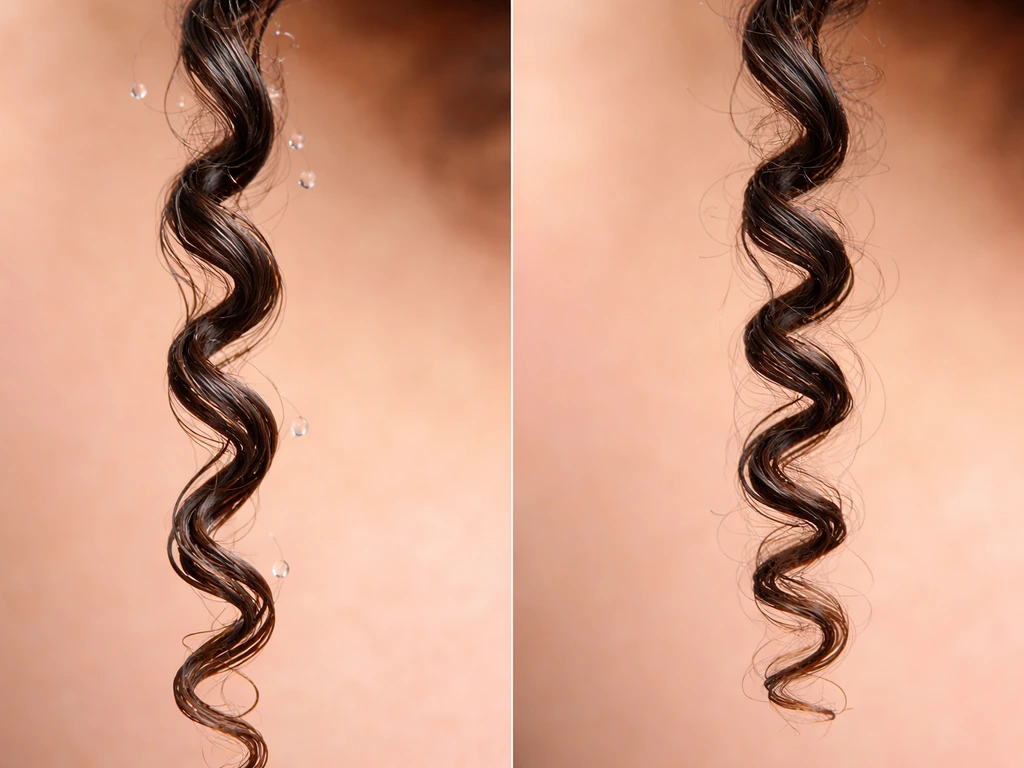
The curl shape itself is programmed at the follicle level. Research published in the British Journal of Dermatology describes hair curliness as something "programmed from the bulb," driven by asymmetry in how the hair fiber differentiates as it forms. The cross-sectional shape of the hair shaft also plays a role: rounder cross-sections tend to produce straighter hair, while more elliptical cross-sections are associated with curlier hair. This is why curl pattern is so consistent for an individual and why it doesn't change meaningfully with products or diet.
Shrinkage is one of the most misunderstood parts of afro hair. Tightly coiled hair can appear to be just a few inches long while it's actually many more inches when stretched. Someone with a 4c curl pattern might have eight inches of hair that looks like three inches when dry. This matters practically because your hair may be growing well and retaining length even when it doesn't look like it. Measuring stretched length, not unstretched length, gives a more accurate picture of your progress.
What changes the look of an afro: genetics vs styling and cut length
Genetics set your curl pattern, density, and maximum potential length. Styling choices and hair care shape how that potential actually shows up. In general, choosing the right products and styling methods can help you get the most out of your natural curls Styling choices and hair care. Two people with the same curl type can have very different-looking afros depending on their density (how many follicles per square centimeter), the diameter of their individual hair strands, and how they care for their hair. Dense, fine-stranded curly hair produces a fuller, fluffier afro. Sparse or thick-stranded curly hair might produce a looser, more open shape.
Cut shape matters more than most people realize. A strategic haircut that removes weight from the perimeter and adds shape to the silhouette can make a two-inch afro look more defined and intentional than six inches of uncut, shapeless growth. If you're working with naturally curly hair and want an afro aesthetic, periodic cuts by a stylist familiar with curly and afro textures can dramatically improve the shape without sacrificing length. The cut doesn't need to remove length from the top or center, just the weight and unevenness at the sides and bottom.
How to grow an afro: routine for wash, detangle, moisturize, and scalp care
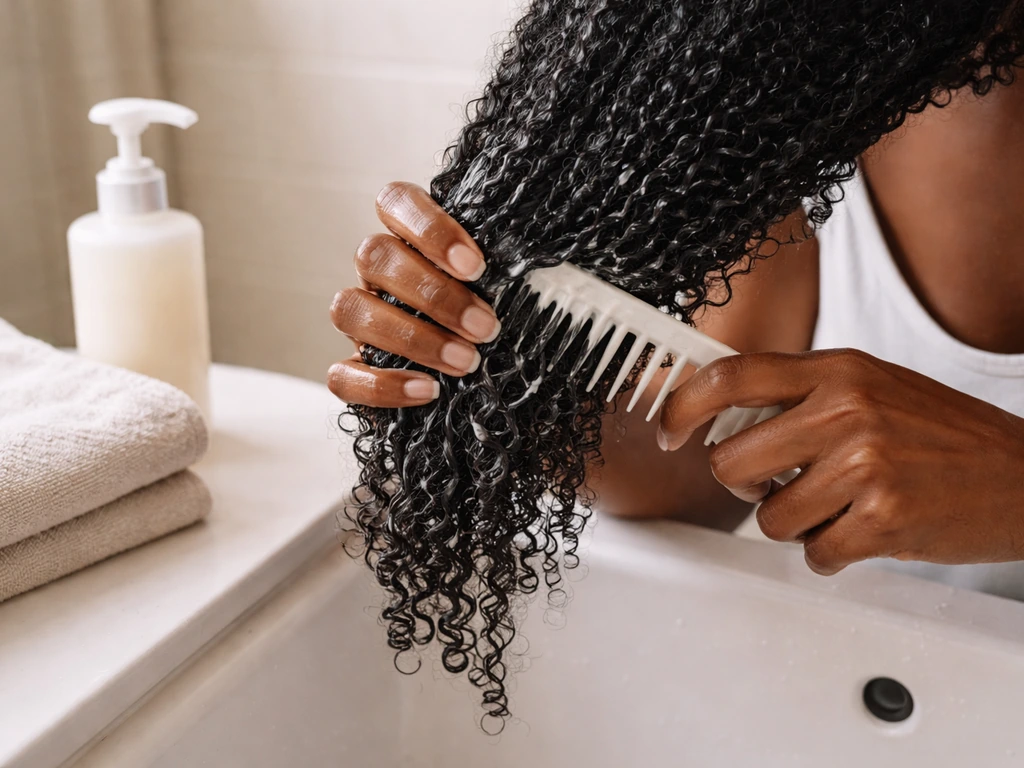
The goal of your routine should be simple: keep the scalp healthy so follicles can do their job, and keep the hair moisturized and handled gently enough that it doesn't break before it can grow long. How quickly your afro grows is still mostly about genetics, but a gentle routine can help you retain the length you are already growing. Here's what that looks like in practice.
Washing
For curly and coily hair, washing once a week or every one to two weeks is usually appropriate. Over-washing strips natural oils and dries out already moisture-sensitive curl patterns. Use a sulfate-free or low-sulfate shampoo, focus it on the scalp rather than the length, and let the rinse water carry it through the ends. The AAD specifically recommends not rubbing hair roughly during shampooing. If you have a straighter curl pattern and oilier scalp, you may need to wash more frequently, but adjust based on how your hair feels rather than following a fixed schedule.
Detangling
Always detangle on wet or damp hair loaded with conditioner or a leave-in product. Research on hair combing shows that wet hair with conditioner applied breaks significantly less than dry hair combed without product. Start from the ends and work upward in small sections. A wide-tooth comb or your fingers are safer than brushes for curly and coily textures. The AAD specifically advises combing thick or curly hair in the shower before rinsing conditioner out, which is good advice regardless of your ethnicity.
Moisturizing and sealing
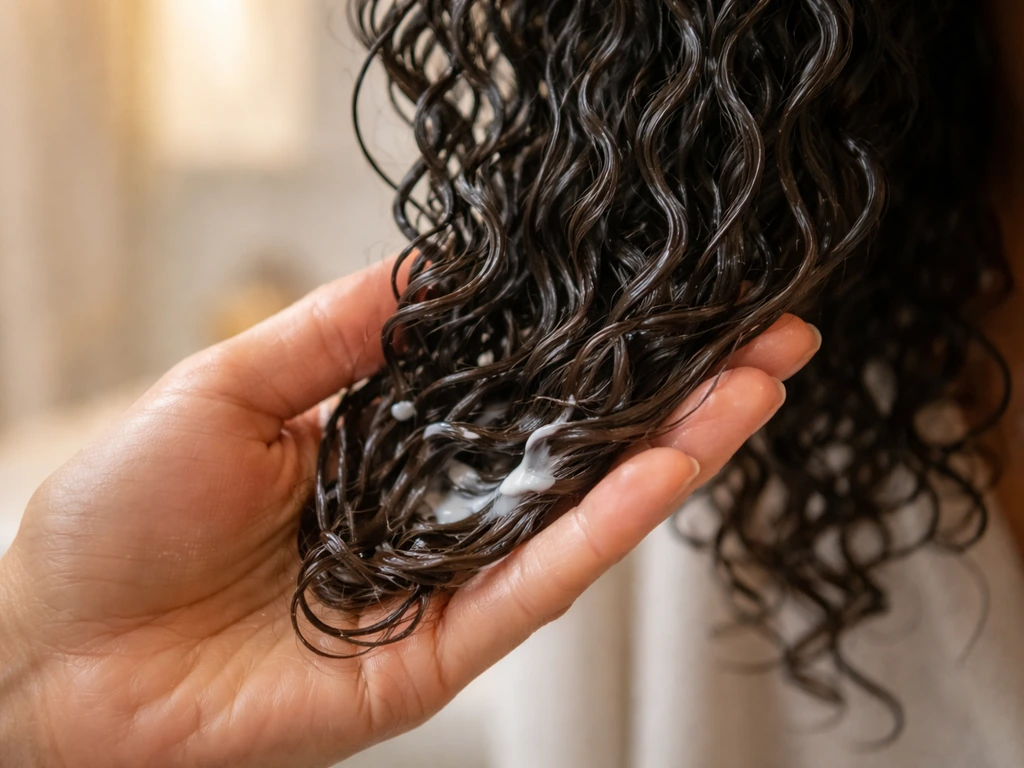
Curly and coily hair dries out faster than straighter textures because the natural oils from your scalp have a harder time traveling down the twists and bends of the hair shaft. Apply a leave-in conditioner after every wash while hair is still damp. The AAD notes that leave-in conditioner makes hair easier to detangle and style, reducing breakage. Follow with a cream or butter to add moisture, then optionally seal with a light oil to help hold that moisture in. This "LOC" or "LCO" method (liquid, oil, cream or liquid, cream, oil) is a practical framework many people with curly and coily hair rely on.
Scalp care
A healthy scalp is non-negotiable. Massage your scalp gently during washing to stimulate circulation and remove buildup. If you use heavy products, make sure you're clarifying occasionally (once a month or so) to prevent buildup that can clog follicles. Watch for signs of scalp issues like persistent flaking, itching, tenderness, or unusual shedding. Those are signals to see a dermatologist, not to add more products.
Protective styling vs breakage: what to do (and avoid)
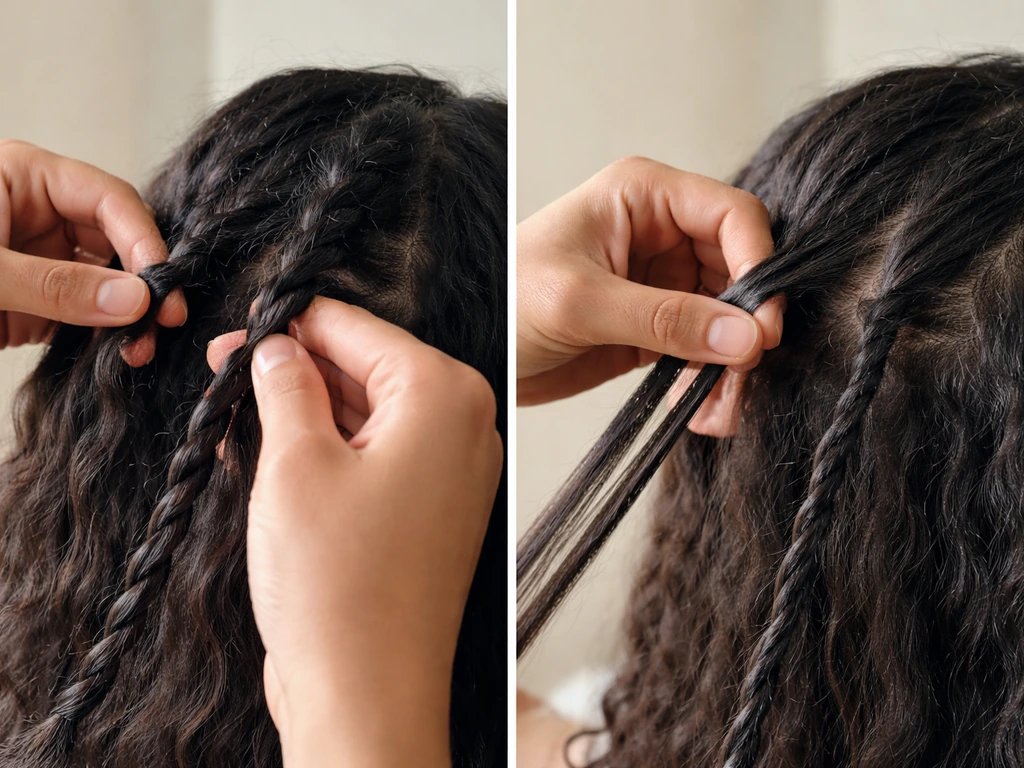
Here's a myth worth clearing up: protective styles like braids, twists, and locs don't actually make your hair grow faster. Hair grows at roughly the same rate regardless of how it's styled. What protective styles do is reduce mechanical damage, meaning your ends aren't rubbing against your clothes, you're not detangling daily, and you're not applying heat regularly. Less breakage means you retain more of the length your hair is already growing. That's the real mechanism, and it's genuinely useful.
The risk is tension. The AAD and multiple clinical sources are very clear that tight hairstyles cause traction alopecia, a form of hair loss that results from continuous pulling on hair roots. Traction alopecia shows up first along the temples, hairline, and sides of the scalp. In early stages it's reversible if you stop the damaging style. In later stages it can become permanent scarring. If any style hurts when you first put it in, or if you notice small bumps, redness, or a receding hairline, take the style down.
For non-Black readers with naturally curly hair, two-strand twists, loose braids, and banding (using soft hair ties spaced along sections to gently stretch hair as it dries) are all low-tension options that protect length while encouraging your curl pattern to develop.
Detangling, trimming, and retention strategies by hair type
| Hair Type | Detangling Approach | Trim Frequency | Key Retention Focus |
|---|---|---|---|
| Straight / Slightly Wavy (1-2a) | Wide-tooth comb on wet hair with conditioner; brush gently when dry | Every 8-12 weeks | Minimize heat damage; use heat protectant |
| Wavy / Loose Curl (2b-3a) | Finger detangle or wide-tooth comb in the shower with conditioner | Every 8-10 weeks | Moisture balance; avoid frizz-causing friction |
| Curly (3b-3c) | Finger detangle in sections, wide-tooth comb optional, always with slip product | Every 10-12 weeks | LOC/LCO method; reduce manipulation frequency |
| Coily / Kinky (4a-4c) | Finger detangle in small moisturized sections; avoid dry combing entirely | Every 12-16 weeks or as needed | Consistent moisture, protective styles, gentle handling |
Trimming split ends is part of retention, not the enemy of length. Split ends travel up the hair shaft if left untrimmed, causing breakage higher up and more length loss than the trim itself would have caused. You don't need frequent trims, but you do need them when ends look frayed or feel rough. For curlier textures, a search-and-destroy method (twisting small sections and snipping visible split ends) can extend time between full trims.
Timeframe and realistic expectations: length, density, and curl development
At an average of half an inch per month, it takes roughly six months to a year to grow enough hair to start forming a recognizable afro shape, assuming you're starting from a short cut. For a fuller, rounder afro with good volume, most people with the right curl pattern are looking at one to three years of consistent growth and retention. Density is largely genetic and doesn't increase with any routine, though scalp health can help you retain the follicles you have and reduce shedding from reversible causes.
Curl pattern itself can become more defined with better moisture and lower manipulation. Some people find their curl clumps improve significantly once they stop over-washing and start using leave-in products consistently. This isn't the hair "becoming curlier," it's the hair expressing the curl pattern it already had but couldn't form properly when dry or damaged. If you're starting from hair that's been chemically relaxed or heavily heat-damaged, you'll need to grow out the damaged portions before you see your natural pattern fully, which can take a year or more depending on length.
On the question of whether afro hair can grow long, the answer is yes, but shrinkage means length is often invisible. People with 4c hair especially experience dramatic shrinkage, sometimes 50 to 75 percent, which means what looks like a three-inch afro may actually be six to nine inches of hair. Measuring stretched length is the most accurate way to track growth progress.
Troubleshooting: uneven growth, dryness, thinning, and when to see a pro
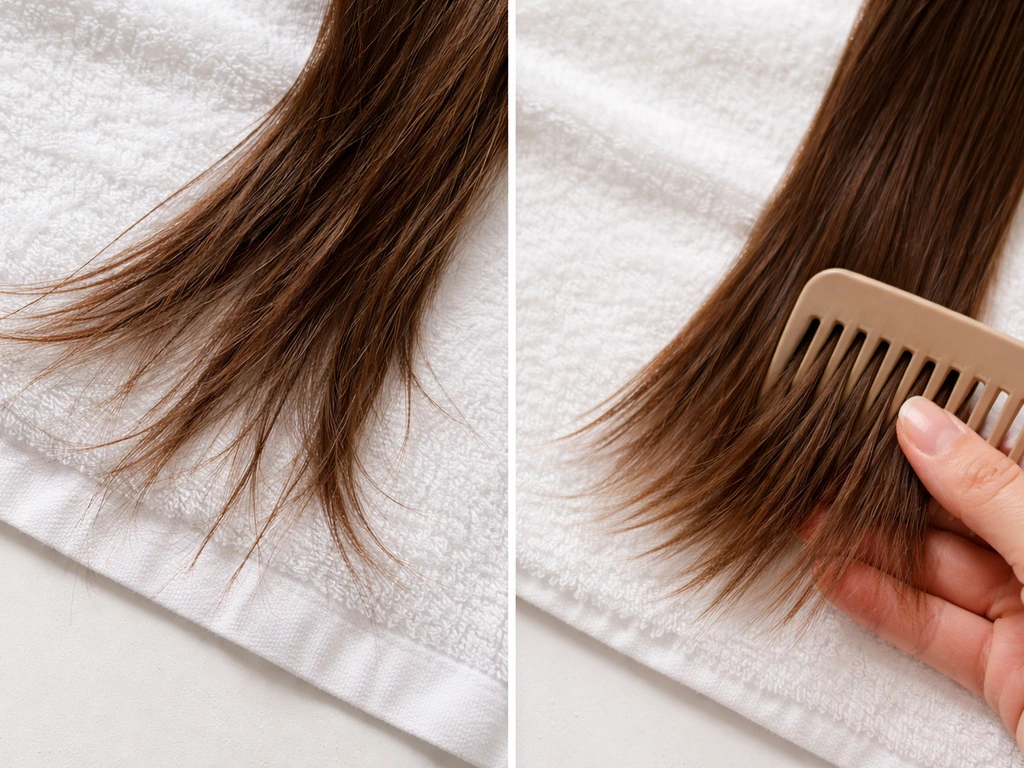
Uneven growth
If one side of your hair seems to grow slower or is noticeably shorter, breakage is almost always the culprit rather than actual growth differences. Consider which side you sleep on, whether one side experiences more friction, and whether your styling or detangling habits favor one side. A satin or silk pillowcase or bonnet reduces friction-related breakage significantly at night.
Persistent dryness
Dryness that doesn't respond to leave-in conditioner and sealing products often signals a protein-moisture imbalance. Hair that's been over-processed with chemicals or heat may need a protein treatment to restore its structure before moisture products can work effectively. Conversely, too much protein can make hair brittle. If your hair feels straw-like even after moisturizing, try a deep conditioning treatment before adding more protein products.
Thinning and shedding
Losing 50 to 100 hairs per day is considered normal for the average person. More than that, especially if it's sudden, can indicate telogen effluvium, which is diffuse shedding triggered by stress, illness, hormonal changes, nutritional deficiencies, or significant weight change. Telogen effluvium is usually temporary and resolves when the underlying cause is addressed. Androgenetic alopecia (pattern hair loss) is a different beast: it's genetic, progressive, and causes follicles to gradually miniaturize rather than shed in a sudden burst.
When to see a dermatologist or trichologist
See a professional if you notice any of the following: a receding or thinning hairline that wasn't there before, scalp pain or tenderness without an obvious styling cause, patchy hair loss, persistent flaking or scaling that doesn't improve with a gentle anti-dandruff shampoo, or shedding that's been heavy for more than three months. A dermatologist can run bloodwork to rule out thyroid issues, iron deficiency, and hormonal causes. A trichologist specializes specifically in hair and scalp disorders and can examine the scalp and hair fiber more closely. Neither of these professionals is excessive to consult. Hair loss is a medical issue, and getting a clear diagnosis is always better than guessing.
Growing an afro, whatever your background, comes down to the same foundation: healthy follicles, consistent moisture, gentle handling, and patience. The genetics determine the shape; the routine determines how much of that potential actually makes it to your shoulders.
FAQ
Can I make my hair grow into an afro using only products and styling, no chemicals?
Yes, but “afro” is a shape, so products can improve definition and fullness only if your hair already has the right curl or coil tendency. For straight-leaning hair, you can often get more volume with styling, but a classic rounded afro usually requires curl pattern support, not just thicker-looking products.
How long will it take to start seeing afro volume if I’m starting from a short cut?
Many people can get an afro silhouette earlier by focusing on stretched length and shape, not just how it looks dry. If you keep your hair moisturized and reduce breakage, clumps and volume can appear sooner, even though the hair is still in the “growing” phase under the shrinkage.
What’s the best way to track afro growth if shrinkage keeps changing how my length looks?
Measure from a consistent point of comparison (for example, stretched with light tension using damp hair and conditioner, or fully dry in the same way each time). Use the same method every few weeks, because shrinkage changes based on dryness and product load, which can make growth look inconsistent.
What if one side of my hair always looks shorter than the other, is it normal?
If one side is shorter, it’s often because that side gets more friction, different tension from hairstyles, or a different sleep position. Before blaming genetics, check which side tangles more easily, which side breaks more during detangling, and whether you’re using the same handling and product amounts on both sides.
Will a damaged or relaxed hair history affect whether I can eventually grow an afro?
If your hair was chemically relaxed or heavily heat damaged, your natural curl pattern may not show until you grow out the treated sections. A helpful approach is to assess curl only on the regrowth closest to the scalp, and be gentler with ends because damage can keep the pattern from forming evenly.
How do I know whether I’m washing too much or too little for afro results?
Yes, wash frequency often needs adjusting to scalp oiliness and sensitivity. If you use heavier leave-ins or oils, buildup can accumulate faster, which can make curls look limp and reduce definition. In that case, stick to your wash schedule but clarify periodically and watch for early signs of residue.
Can protective styles help me grow an afro faster, and when do they become risky?
A “protective” style can still cause problems if it’s too tight. If you want the length benefits, prioritize loose braids or twists, avoid tight edges at the hairline, and remove styles at the first sign of soreness, itching bumps, or a change in hairline density.
What sleep habits reduce breakage when I’m trying to grow a big afro?
Sleep setup can make a noticeable difference in retained length. Satin or silk helps reduce friction, and keeping your hair in loose twists or a pineapple-style bun (high, gentle gather) can reduce matting and breakage compared with letting hair rub freely against fabric.
If my hair strands are fine or my density is lower, can I still build a full afro?
Thin or fine strands can still build a fuller afro, but the strategy is more about reducing tangles and breakage than “thickening” with products. Use adequate conditioning for detangling, avoid harsh mechanical brushing when dry, and consider lighter gels or creams that support clumping without crusting.
Will getting cuts make my afro look worse at first, or can it actually help the shape?
Yes, and it’s usually about shape work, not just length. A stylist who understands curly and afro textures can remove perimeter weight and create a more rounded silhouette, which often makes the afro look fuller even before you’ve grown much more hair.
Can my curl pattern really become curlier over time, or is it just better expression?
Sometimes “curliness changing” is actually better curl expression because the hair is more moisturized and less damaged, so clumps form more readily. If you recently reduced heat or over-washing, definition can improve as the hair reconditions, but your underlying curl pattern still won’t become fundamentally different.
Is heat styling ever worth it when I’m trying to grow a true afro?
Yes, but only if your goal is health and retention rather than chasing growth rate. Heat can temporarily change shape, but frequent heat usually increases breakage and dryness, which can reduce visible growth, especially on high-shrinkage curl types.
My shedding increased, how do I tell normal shedding from a problem when I’m growing my afro?
Heavy shedding can be normal, but sudden increases, persistent shedding beyond a few months, or scalp pain, itching, or patchy loss are warning signs. If shedding is sudden or ongoing, get evaluated because the cause can be telogen effluvium, nutrient or thyroid issues, or pattern hair loss, and each needs a different plan.
Next Article
How to Grow Black Women’s Hair: Length and Growth Guide
Step-by-step guide to grow and retain Black women’s hair, boost length via breakage control, and avoid traction damage.