
Yes, dreadlocks absolutely grow from the scalp the same way loose hair does. Your follicles don't know or care that your hair is locked. What changes is how much of that biological growth actually translates into visible length you can see and measure. Shrinkage, the way hair coils and compresses inside a loc, and how well you retain what grows are what really determine whether your locs look like they're progressing. So the honest answer is: the biology is the same, but the visible results depend on factors specific to how you start, maintain, and care for your locs.
How Do Dreadlocks Grow: Length, Myths, and Growth Tips

Simone Okonkwo
11 May 2026

Do locs "grow" or just stay in place?
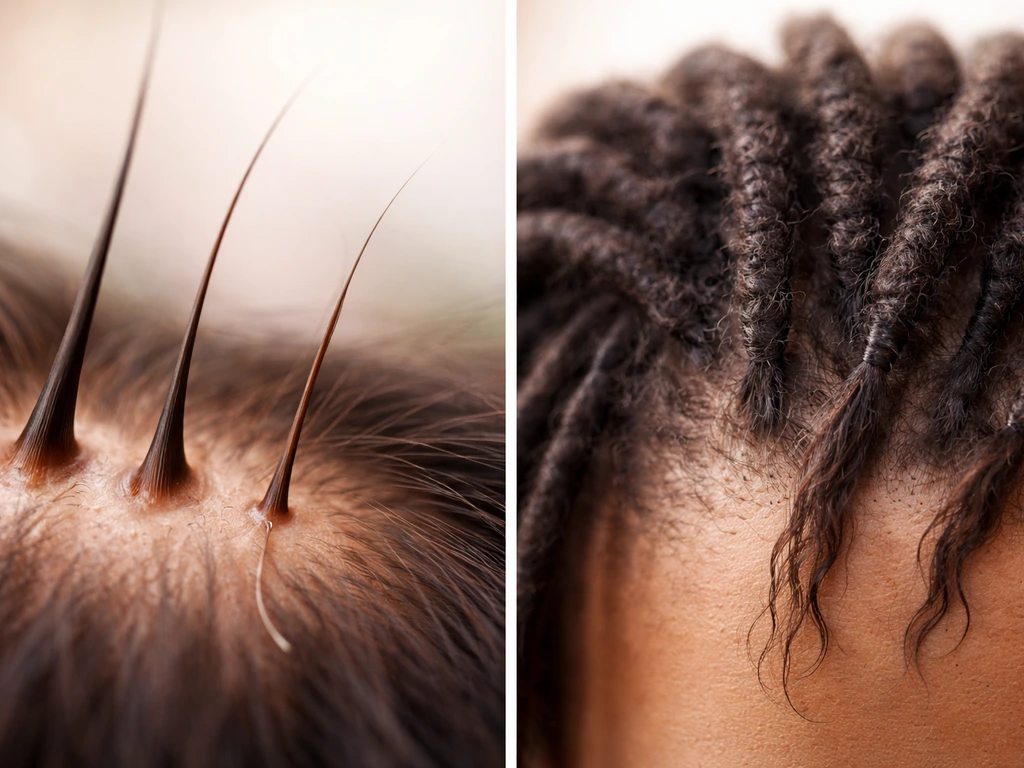
Your scalp hair grows from follicles, and that process follows a repeating biological cycle: anagen (active growth), catagen (transition), and telogen (resting/shedding). At any given moment, roughly 90% of your scalp follicles are in the anagen phase, actively pushing out new hair shaft. The hair shaft itself is made of keratinized, terminally differentiated cells that form continuously from the follicle base. Average growth is about 0.35 mm per day, which works out to roughly 1 cm (just under half an inch) per month, or around 15 cm (about 6 inches) per year. None of that biology changes when your hair is locked.
What does change is what happens to new growth once it leaves the scalp. With loose hair, you can pull a strand straight and measure it. With locs, new growth at the root gets folded, coiled, and eventually incorporated into the loc structure as the months go on. Hair that would normally shed and fall away stays trapped inside the loc instead, which actually adds to the loc's mass and can contribute to length over time. So locs aren't just getting thicker in a random way. They're growing and accumulating length, but some of that length is hidden inside the coiled structure rather than hanging straight down.
Think of it this way: your follicle is doing its job perfectly. The challenge for loc wearers is about retention and visibility, not growth itself.
How you start your locs shapes how they grow out
Starting method matters a lot, both for how quickly your locs form and how visible growth becomes in the early months. Two-strand twists, backcombing, freeform, interlocking, crochet, and palm-rolling all produce different initial structures, and each one affects how hair compresses, shrinks, and eventually matures into a loc.
Two-strand twist starter locs typically take 6 to 24 months to fully lock, depending on your hair type and texture. Interlocking can lock faster, sometimes in as little as 3 to 12 months, because the pattern creates an interwoven structure that holds together more quickly. Freeform and backcombed locs generally fall in a 12 to 18 month range for maturity.
Freeform locs often follow a similar biological growth pattern, but the way they lock and shrink can make the timeline feel different, so it helps to plan around maturity and visibility. The time variation is significant, and hair type is the biggest variable. Tighter coil patterns (think 4b and 4c textures) tend to loc faster than looser curl patterns because the hair naturally interlocks on itself, but they also shrink more dramatically in the early stages.
Crochet locs are a different conversation entirely. They're typically a temporary protective style worn for weeks to a few months, not a method for growing your own locs from scratch. If you're trying to grow your actual hair into locs, you want one of the methods above.
One thing almost every loc wearer is surprised by: the twist or coil pattern you started with often disappears entirely as locs mature, especially around the 12 to 18 month mark. That's normal. It doesn't mean something went wrong. It means your locs are consolidating.
Why your locs don't look like they're growing (shrinkage, retention, and visible length)
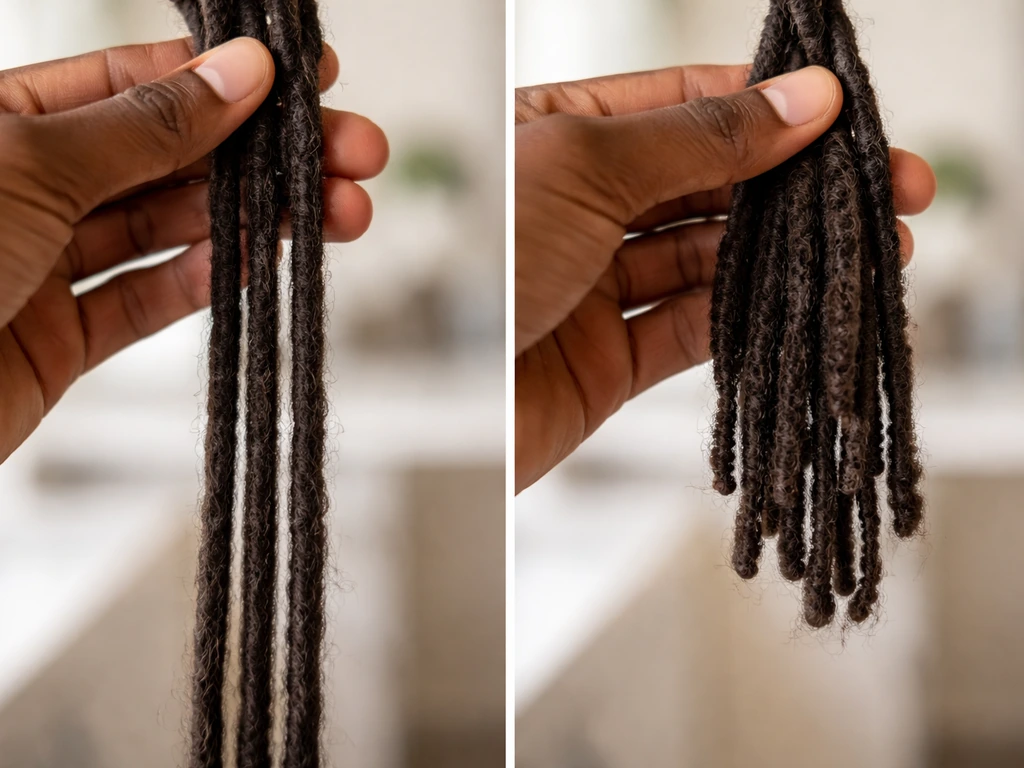
This is probably the most frustrating thing about growing locs: you can be growing perfectly normal amounts of hair and feel like nothing is happening. There are two main reasons for this.
First is shrinkage. Tightly coiled hair shrinks significantly when dry, and when that coiled hair is forming into a loc, the structure can compress even further. Many people experience a secondary shrinkage phase as their locs mature, often around 6 to 12 months in, after the initial shrinkage everyone expects in the first couple of months. Your hair is still growing through all of this. It's just being consumed into the coiling structure of the loc.
Second is how growth moves through a loc. New hair at the root grows outward from the scalp, but inside the loc, growth travels in a zig-zag pattern as it integrates into the existing structure. That horizontal movement inside the loc eats up apparent length even while biological growth is happening normally. It's one of the reasons locs seem to gain length slowly compared to loose natural hair, especially in the first year.
What helps visible length accumulate over time is retention: keeping the hair you grow without breaking it off. Shed hairs stay trapped inside locs rather than falling away, which eventually adds to both mass and length. Good retention habits (covered more below) are the actual lever you have control over.
Scalp health and maintenance basics
Healthy follicles produce hair. That sounds obvious, but it's worth saying clearly because scalp health is where a lot of loc wearers quietly lose ground without realizing it.
Buildup is the most common culprit. Product residue from heavy oils, waxes, and butter-based pomades can accumulate inside locs and on the scalp, creating an environment that clogs follicles and feeds fungal overgrowth. Seborrheic dermatitis, a common inflammatory scalp condition driven by Malassezia yeast, thrives when sebum and product residue go unmanaged.
For seborrheic dermatitis, the American Academy of Dermatology recommends using dandruff shampoos, and many patients use certain dandruff shampoos twice weekly for about 4 weeks, waiting at least 3 days between shampoos using dandruff shampoos twice weekly for about 4 weeks. Shampooing at least twice a week is generally recommended for managing seborrheic dermatitis, though most loc wearers wash less frequently than that.
If you're dealing with flaking, redness, or an itchy scalp, your wash frequency may need to go up, not down.
When you wash, use a residue-free or clarifying shampoo designed for locs. Regular shampoos that contain heavy conditioners or silicones can leave film inside the loc structure that's very hard to remove and contributes to long-term buildup. Work the shampoo into your scalp (that's the target, not the length of the loc), rinse thoroughly, and give your locs adequate time to dry fully after washing. If locs stay damp after shampooing, some people in the r/locs community report mildew and odor concerns. Locs that stay damp for extended periods are a setup for mildew and odor, which is a loc health problem that can indirectly affect retention.
An apple cider vinegar (ACV) rinse is a popular option for addressing buildup, but it has limits. ACV can help with light residue and pH balance, but if there's significant product buildup deep inside locs, an ACV rinse alone won't fully remove it. A dedicated clarifying wash is more effective for that.
Moisture, conditioning, and sealing for textured and Black hair in locs
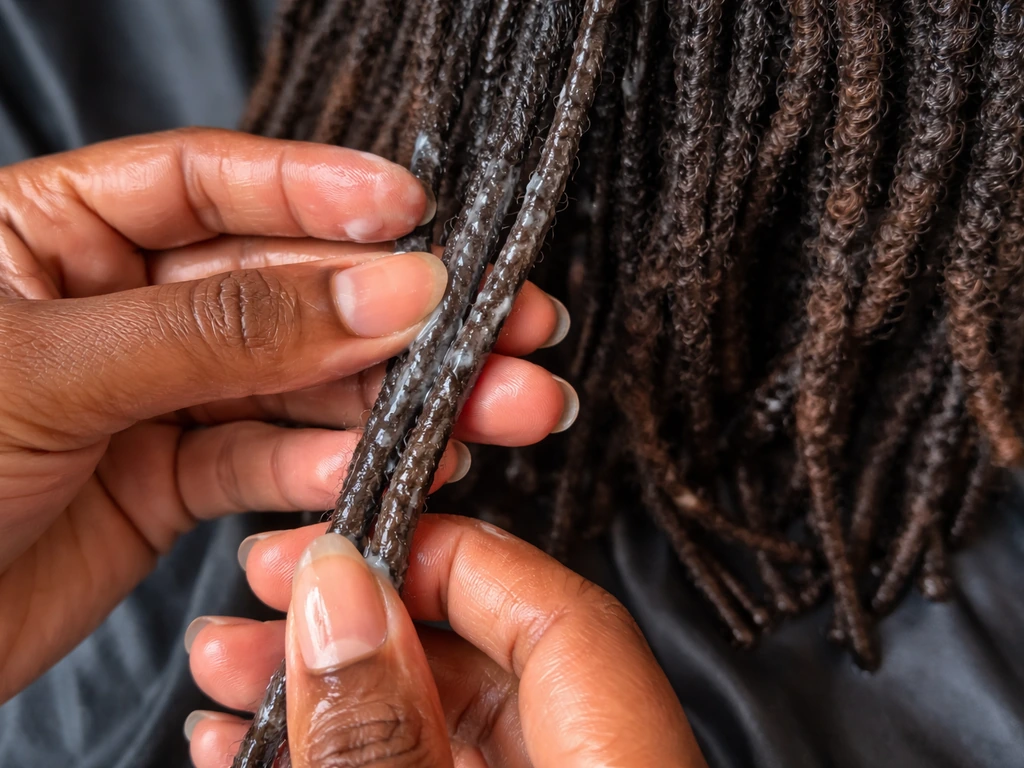
Textured and Black hair in locs needs moisture to stay strong and flexible. Dry locs are brittle locs, and brittleness leads to breakage, which directly cuts into the length retention you're trying to build. The right approach is layered: hydrate first, then seal lightly.
Start with a water-based leave-in conditioner or moisture mist. Water is the only true hydrator for hair, and any product you use should have water as the first ingredient. Apply it from mid-loc to ends, not to the scalp. The AAD recommends applying leave-in conditioner from mid-strands to ends specifically to avoid scalp buildup, and for loc wearers that advice is especially important since product accumulates inside the loc and is hard to fully remove.
After hydrating, seal with a lightweight oil. Jojoba, grapeseed, and sweet almond oil are good choices because they're lightweight enough to absorb or sit lightly on the hair without creating heavy residue. Heavier occlusives like petrolatum and mineral oil are more substantive (meaning they sit on the surface longer), which can work for sealing in dry climates, but they're more likely to contribute to buildup in locs over time. The goal is to lock in the moisture you just applied, not to coat the loc in grease.
Keep your routine minimal. More product does not mean more moisture. One water-based product plus one light oil is usually enough for a standard moisture session. How often you need to moisturize depends on your climate, your hair's porosity, and how dry your locs feel between wash days.
How tension and tight maintenance can slow your growth (or stop it)
One of the underappreciated threats to loc growth is traction. Repeated mechanical tension on the follicle and root causes traction alopecia, a type of hair loss that's largely preventable but can become permanent if it's caught late. Traction alopecia is particularly relevant for loc wearers because tight retwisting, pulling locs back too firmly, and aggressive interlocking techniques can all put sustained tension on follicles.
The follicle structures that support new hair shaft formation, including the dermal papilla and root sheath, are physically sensitive to being repeatedly pulled. When tension is applied regularly and tightly enough, those structures can be damaged to the point where regrowth doesn't happen. Early signs to watch for include pain or stinging during or after maintenance, redness or pimples along the hairline, crusting or scabbing, and noticeable thinning at the edges or part lines.
If you notice any of those signs, change what you're doing right away. Loosen how tightly you're retwisting. Space out your maintenance sessions. The AAD and StatPearls both note that early intervention matters because traction alopecia is largely reversible in the early stages and much harder to treat once the follicle has been permanently damaged.
Chemical relaxers are also a meaningful risk factor. Relaxed or chemically processed hair that has been locked is structurally weaker at the demarcation line between processed and new growth. That's a breakage point, and breakage there sets back visible length progress significantly. If you've got relaxed hair at any point in your locs, handle those sections with extra care during retwists.
The general maintenance principle: retwist and manipulate as infrequently as your hair type allows. For mature locs (18 months and beyond), retwisting every 8 to 12 weeks is a common sweet spot that maintains the look while giving roots time to develop without constant tension.
What progress actually looks like and when to expect it
Realistic timelines help you tell the difference between normal slow progress and a real problem. Here's a general breakdown of what most people experience:
| Stage | Approximate Timeline | What to Expect |
|---|---|---|
| Starter / Baby locs | 0 to 6 months | Locs begin forming; significant shrinkage is normal; may look shorter than when you started |
| Budding stage | 3 to 9 months | Locs start holding their shape; roots look fuzzy between maintenance; some additional shrinkage possible |
| Teen stage | 6 to 18 months | Locs tighten and thicken; original twist or coil pattern fades; length starts becoming more visible |
| Mature locs | 12 to 24+ months | Locs are firm and established; visible length accumulation speeds up as shrinkage stabilizes; shed hair inside locs adds to length |
These timelines vary based on hair type and starting method. Tighter coil patterns (4b/4c) tend to move through the stages faster but with more dramatic shrinkage. Looser textures may take longer to lock but may show length gain earlier because shrinkage is less severe.
Normal shedding during locs is around 50 to 100 hairs a day for most people, and because shed hairs stay in the loc, you won't see them falling out the way you would with loose hair. What you should watch for is thinning at individual locs (especially at the root), visible scalp at part lines that seems to be increasing, or locs that feel weaker and break when handled gently. Those are signs of a problem worth addressing, whether that's tension, dryness, scalp inflammation, or a combination.
The big picture: dreadlocks don't make your hair grow faster than it biologically would (that's a myth worth putting down), but they can support length retention better than many loose styles because the hair isn't being combed, brushed, or manipulated daily. That retained length is what makes locs feel like a growth-positive style for many people, and that's the real mechanism worth understanding.
If you want to go deeper on specific growth strategies, the question of whether locs actually accelerate growth, or how to get visible length faster, those are separate questions worth exploring on their own. If you're trying to grow dreadlocks at home, focus on retention, scalp health, and a simple moisture and sealing routine. If you want practical steps for how to grow dreadlocks faster, focus on retention, moisture, and minimizing tension so the length you gain stays intact.
FAQ
How long should it take before I can clearly see dreadlock growth at my roots?
Most people see a noticeable difference within the first 3 to 6 months, but the “visible” change depends on how much your hair shrinks after drying and how your starter pattern consolidates. If your roots are growing but the locks look the same, check whether you are in a secondary shrinkage phase (often around 6 to 12 months) rather than assuming growth stopped.
Do dreadlocks grow faster in summer or slower in winter?
Hair growth rate from the follicle cycle can fluctuate slightly with overall health, stress, and nutrition, but dreadlocks generally follow the same biology as loose hair. What often changes seasonally is retention, because dry air and less scalp oiling can make locs feel brittle, increasing breakage and making growth look slower.
If shed hair stays trapped in a loc, should I ever feel like my loc is “getting stuck” or not progressing?
Shed hairs can accumulate inside locs and contribute to mass, but true lack of progression usually signals an issue like excessive buildup, inadequate drying time, or breakage at the root. Try a clarifying wash after buildup signs, and gently assess whether roots are weak or thinning rather than assuming hair is not growing.
How can I tell normal shedding from traction or breakage at the root?
Normal shedding shows as many loose hairs staying embedded, not distinct thinning. Traction or breakage tends to show localized weakness at part lines or at the base of individual locs, sometimes with pain or pimples during maintenance. If you notice increasing visible scalp at the same edges over multiple retwists, reduce tension and reassess your technique.
Will retwisting more often make my dreadlocks grow faster?
No, more retwisting does not increase follicle growth. It mainly increases mechanical tension risk and can raise breakage. A practical approach is to retwist as infrequently as your hair type allows, commonly around every 8 to 12 weeks for mature locs, and adjust sooner only if lint, unraveling, or severe frizz threatens root integrity.
What’s the best way to moisturize locs if I get buildup easily?
Use one water-based leave-in or moisture mist on mid-loc to ends, then seal lightly with a lightweight oil. Avoid applying products directly to the scalp, because residue accumulates where it is hardest to fully rinse. If you notice frequent flaking or itching, increase wash frequency rather than adding more leave-in.
Can I use ACV to get rid of buildup, or do I still need clarifying shampoo?
ACV rinses can help with light residue and pH balance, but they are not a complete substitute when buildup is deep inside the loc structure. If you have persistent odor, heavy coating, or frequent flaking, plan a dedicated clarifying wash to actually remove the film that can keep follicles irritated.
How do I wash dreadlocks without causing mildew or long dry times?
Focus on cleansing the scalp thoroughly, then rinse until water runs clear, and dry completely (including the root area) before you go to bed. If your locs stay damp for many hours, shorten the washing schedule, use a drying method that reaches the center of the loc, and consider separating heavier products that slow drying.
If my coil pattern disappears during maturation, is that a sign I’m doing something wrong?
Usually no. The starter pattern often blends and consolidates as the loc ages, and that can happen around the 12 to 18 month range. What to watch instead is whether roots become thin, painful, or overly loose, which points to tension or breakage rather than normal maturation.
Should I worry about visible “zig-zag” growth inside the loc affecting my length goals?
It can feel discouraging early on, because new growth can travel inside the loc while not appearing as extra hanging length. Set your expectations by measuring length from the root area consistently, and judge progress over months rather than weeks, especially during the first year when internal integration and shrinkage are most noticeable.
Next Article
How to Grow Dreadlocks Faster: Length, Thickness, Timeline
Natural plan to grow dreadlocks faster by boosting retention, locking, moisture, scalp care, and reducing breakage.