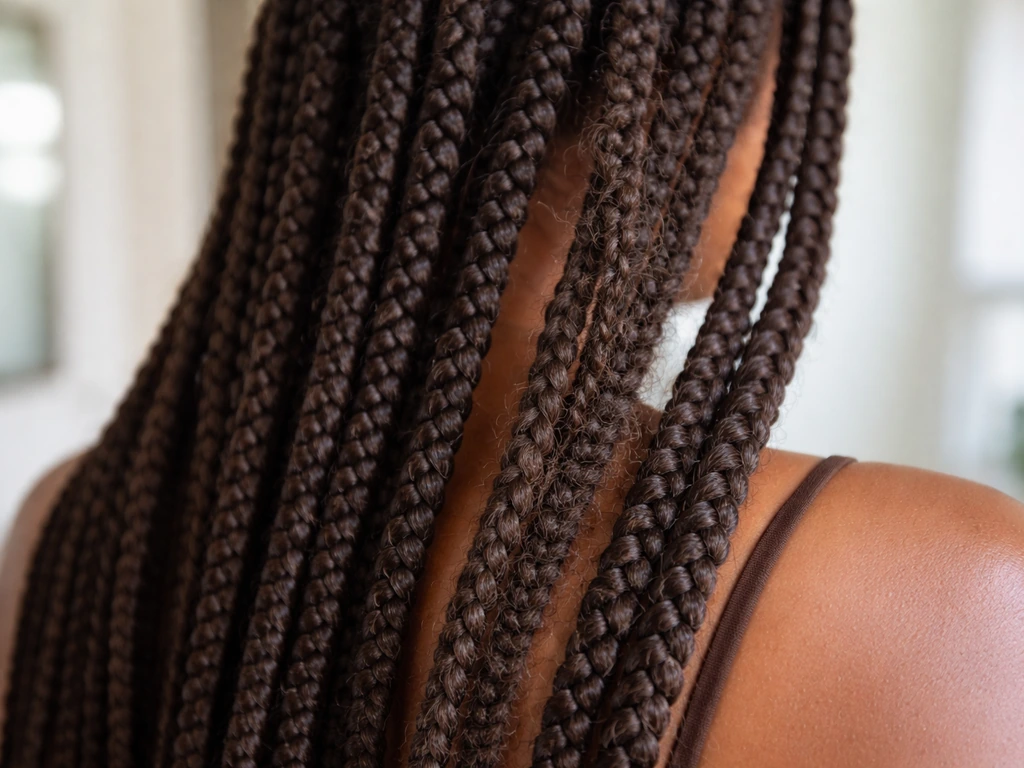
Braiding your dreads does not make your hair grow faster. Your follicles produce new hair at a rate set largely by biology and genetics, and no styling method changes that output. What braiding can do is protect the hair you already have from breaking off, which means more of that growth actually stays on your head as visible length. For most people with textured or loc'd hair, that distinction is everything.
Does Braiding Dreads Make Them Grow? Evidence & Tips

Simone Okonkwo
26 Jul 2026
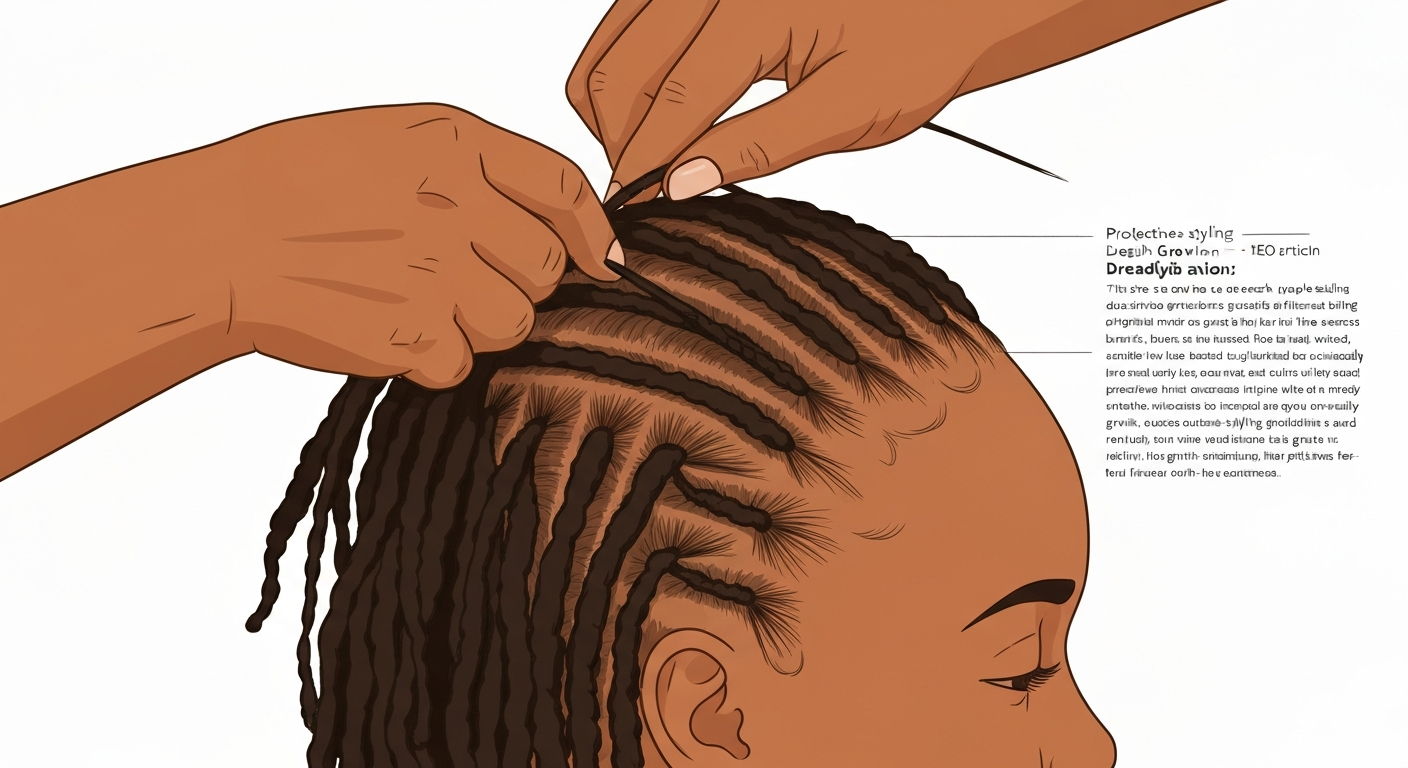
Growth vs. length retention: why the difference matters for textured hair
When people say braiding their locs made their hair grow, what they almost always mean is that their hair got noticeably longer after a period of protective styling. That is real and worth celebrating. But the mechanism behind it is retention, not accelerated production. Hair grows continuously from the follicle whether it is braided, loose, twisted, or locked. The length you actually see depends on how much of that growth survives long enough to accumulate rather than break off at some point along the shaft.
Textured and afro-type hair has a coiled, elliptical shaft and an offset follicle angle that make it structurally more prone to tangling and mechanical stress than straight hair types. That means daily manipulation, friction, dryness, and heat all chip away at the shaft more aggressively. Addressing those variables is where styling choices have real power. Protective styles like low-tension braids reduce how often hair is touched, tugged, and exposed to friction, which directly lowers the rate of breakage. Less breakage means more retained length over time. That is the whole story, and it is a genuinely useful one.
How hair growth actually works
Each hair follicle cycles through three main phases: anagen (active growth), catagen (transition), and telogen (rest/shedding). The anagen phase determines how long a strand can grow before it sheds, and the duration of that phase is largely genetic. During anagen, the dermal papilla at the base of the follicle orchestrates cell division and protein synthesis to push a new shaft upward. That process is not meaningfully changed by whether the hair above the scalp is braided, loose, or locked.
Measured growth rates confirm this. Research by Loussouarn (2001) found that African hair grows at roughly 280 micrometers per day on average, compared to around 367 for Caucasian hair and around 411 for Asian hair. That is approximately 0.9 cm per month at the lower end of those figures. No styling technique shifts those numbers in any meaningful, reproducible way. What varies between individuals and between periods in the same person's life is how much of that growth survives intact rather than how quickly the follicle produces it.
What braiding changes and what it doesn't
Braiding your locs or installing any kind of plait reduces daily mechanical manipulation. You are not detangling, restyling, or applying heat repeatedly while hair is installed, so the shaft experiences far less friction-driven breakage during that period. That is a genuine biological benefit for retention, even if it is not growth stimulation. Some people also note improved moisture retention under braided styles because sealed sections lose less water to the environment, which keeps the cuticle more intact and further reduces breakage. For a comparison with animal hair care, see does braiding horses mane help it grow for discussion of whether braiding affects equine mane growth.
There is one nuance worth mentioning. A small clinical study by Koyama et al. (2016) found that standardized scalp massage over 24 weeks produced a measurable increase in hair thickness and altered gene expression in dermal papilla cells. That is interesting because it shows certain mechanical inputs can modulate follicular biology. But the key word is standardized. Scalp massage involves gentle, stretching pressure applied to follicle cells directly. Braiding applies tensile traction to the shaft above the scalp. These are mechanistically different, and there is no evidence that the tension from braiding or loc maintenance replicates the follicle-stimulating effect seen in controlled massage studies.
The real protective-styling benefit: breakage reduction and retention
For someone with textured hair or developing locs, the practical upside of braiding is hard to overstate once you understand it correctly. Dermatology reviews consistently identify low manipulation and reduced friction as the main modifiable drivers of length retention in afro-textured hair. Installing locs in braided sections or braiding mature locs together keeps the shaft bundled, limits tangling at the tips, reduces exposure to fabric friction overnight, and decreases the number of times you handle the hair per week. Over several months, those small daily wins add up to noticeably longer hair, not because the follicle sped up, but because far less shaft was lost to mechanical damage.
Moisture balance also plays a role here. Braided or bundled sections help retain whatever product you apply, which keeps the cortex hydrated and the cuticle layers lying flat. A dehydrated shaft is more brittle and more likely to snap under even minimal stress. So when braiding is done correctly alongside a good moisture-protein routine, the combined effect on retention can be quite significant.
The risks you cannot ignore: traction, matting, and scalp damage
None of this means braiding dreads is risk-free. The most serious concern is traction alopecia. Tight braids, cornrows, heavy extensions, and high-tension loc installations are well-established causes of this condition. The mechanism is straightforward: chronic tensile force on the follicle triggers inflammation, and if that inflammation is sustained, it can lead to fibrosis and permanent follicular scarring. Once scarring sets in, no treatment reliably restores those follicles. Epidemiological data suggests roughly one third of women in populations with high rates of tight styling report signs of traction-related changes, which makes this one of the more common preventable causes of hair loss in women of African descent.
Early traction alopecia presents as tenderness, small bumps or pustules along the hairline, and fine broken hairs at the temples and edges. If those signs appear, the style needs to come out. Clinical guidance (including from the American Academy of Dermatology) recommends loosening any braids around the hairline immediately and allowing rest periods between installs. See American Academy of Dermatology patient guidance: Hairstyles that pull can lead to hair loss (traction alopecia), AAD patient education for recommendations to loosen braids around the hairline and allow rest periods between installs American Academy of Dermatology patient guidance: Hairstyles that pull can lead to hair loss (traction alopecia) — AAD patient education.. For active inflammation, dermatologists commonly use topical or intralesional corticosteroids; for non-scarring stages, topical minoxidil is also used, though randomized trial data specifically for traction alopecia is still limited.
Beyond traction, braiding locs introduces specific matting risks. If sections are not properly moisturized before braiding, or if the braid is left in past the point where new growth creates congestion at the root, you can end up with severe matting that damages the loc structure when you try to undo it. Product buildup is another issue: heavy butters, waxes, or cream-based products trapped inside braided locs create an environment for mold and bacterial growth, particularly if the hair takes a long time to dry after washing.
Warning signs that your style is doing harm
- Pain or tenderness at the root, especially within hours of installation
- Small pimples, folliculitis-like bumps, or pustules along the hairline or part lines
- Visible thinning or recession at the temples, edges, or nape
- Itching and flaking that does not resolve with normal scalp cleansing
- White or yellowish buildup visible at the root after a few weeks
- Locs that feel stiff, gummy, or unusually heavy after washing
- Persistent redness or scalp tenderness days after installation
Braiding for starting locs vs. braiding mature locs
The role of braiding shifts depending on where you are in your loc journey. For people starting locs, braiding (or two-strand twists) is a common and effective method for establishing sections, coaxing coil patterns to lock together, and encouraging uniform size across the head. At this stage, the hair has not yet locked, so sections are still manipulable and the braid or twist provides the structure that holds the hair in place while locking begins. The key here is low tension, clean sections, and patience. Braiding too tightly during the starter phase is one of the most common mistakes and one of the most common triggers of early-stage traction damage.
For mature locs, braiding serves a different purpose: it is a protective style layered on top of an already-locked structure. Braiding mature locs together reduces the surface area exposed to environmental friction and manipulation, which can help with length retention over time. It also allows you to maintain a neat appearance without frequent re-twisting, which gives the loc body and the follicle a rest from repeated tension. However, mature locs can be heavy, and bunching them into braids adds weight concentrated at the root. That weight is a real traction risk if the braids are too dense or left in too long.
| Stage | Purpose of braiding | Main benefit | Key risk | Recommended wear time |
|---|---|---|---|---|
| Starter locs (0–6 months) | Establish sections, encourage locking | Consistent section structure, reduced unraveling | Tight installation causing early traction | Re-braid/twist as needed; keep tension low |
| Teen/transitional locs (6–18 months) | Maintain sections during locking | Reduced lint and manipulation as locs mature | Over-manipulation of fragile locs mid-lock | Limit installs; allow natural locking between sessions |
| Mature locs (18+ months) | Protective style over locked hair | Reduced breakage, less daily manipulation | Root traction from combined weight of locs | 4–6 weeks maximum; rest periods between installs |
Natural vs. chemically treated hair: different rules apply
Natural, unprocessed textured hair and chemically relaxed or color-treated hair behave quite differently under braiding, and that difference matters for how safely you can install and wear a style. Natural hair has an intact cuticle and cortex, which gives it more elasticity and resistance to mechanical stress. That does not make it invulnerable, but it does mean natural hair can tolerate the minor tension and bundling of braids better than chemically compromised strands.
Relaxed hair has undergone a chemical process that permanently breaks and restructures disulfide bonds in the cortex to straighten the curl pattern. That process weakens the shaft. Braiding relaxed hair, or installing braids over relaxed locs, introduces tension to a structurally weaker strand. The risk of breakage at points of tension (particularly at braid parts and root areas) is higher. The same is true for hair that has been heavily bleached or frequently high-heat styled: the cuticle is compromised, the cortex is weaker, and protective styles that would be safe on natural hair can become a source of mechanical damage.
If you have relaxed or chemically treated hair and want to braid it as a protective style, the principles are the same but the margins are tighter. Larger sections, lower tension, shorter wear periods, and more aggressive moisture care between installs are all non-negotiable. It is also worth noting that locs and chemical relaxers are generally incompatible in the long term because the shaft structure that relaxers alter is part of what allows natural textured hair to lock in the first place. Most people with locs are working with natural hair for this reason.
How to braid dreads safely: practical guidelines
The evidence points clearly toward low tension as the single most important variable. Practical, evidence‑informed precautions include installing braids/locs at low tension, using larger sections and knotless techniques, avoiding heavy or very long extensions, limiting installed wear (commonly advised 4–8 weeks), allowing rest periods between installs, and seeking dermatologic review for persistent pain, erythema, or thinning at the hairline (The art of prevention: It’s too tight, Loosen up and let your hair down) The art of prevention: It’s too tight—Loosen up and let your hair down (practical clinical recommendations).. If a freshly braided style causes pain, tenderness at the roots, or visible pulling at the hairline within the first few hours, it is too tight. That is not a matter of getting used to it. That is your follicles signaling mechanical stress.
- Start with clean, moisturized locs: buildup-free hair braids more smoothly with less force required to manage tangles
- Use larger sections rather than very thin ones: thinner sections concentrate tension at smaller root attachment points
- Choose knotless or braid-down techniques where possible to reduce tension at the root from the first stitch
- Leave at least 1–1.5 cm of new growth at the root unbraided to reduce hairline and edge tension
- Limit installed wear to 4–8 weeks as a general guideline, with shorter windows for those with thinner or more fragile hairlines
- Take rest periods between installs: at minimum, allow your scalp and follicles several weeks of manipulation-free or low-manipulation styling
- Moisturize regularly even while braided: a lightweight water-based leave-in applied at the roots maintains hydration without heavy buildup
- Avoid heavy waxes, thick butters, or non-water-soluble products inside braided locs, as these trap moisture and debris
- Sleep on a satin or silk pillowcase or use a satin bonnet to reduce overnight friction on braided sections
- See a dermatologist or trichologist if you notice persistent hairline thinning, scalp pain, or bumps that do not clear within a week of removing the style
Measuring real growth vs. stretch and shrinkage
One reason people often think braiding made their hair grow is that braids and locs stretch the hair, temporarily revealing length that was hidden by shrinkage. Afro-textured hair can shrink to as little as 40–50 percent of its actual length when left in its natural state. When you unbraid stretched locs or remove a protective style, the hair may appear dramatically longer. Some of that difference is genuine retention. Some of it is simply that the hair is stretched straight rather than coiling back on itself. To accurately measure growth, measure from root to tip along the straightened shaft in a consistent location at regular intervals, rather than comparing how the hair falls naturally before and after a style.
Comparing braids to other protective styles for loc'd and textured hair
| Style | Manipulation level | Retention potential | Traction risk | Best suited for |
|---|---|---|---|---|
| Braided locs | Low once installed | High if low tension | Moderate to high if tight or heavy | Mature locs; length retention phases |
| Two-strand twists | Low once installed | High | Low to moderate | Starter locs; natural textured hair |
| Loose/uninstalled locs | Variable (daily styling) | Moderate | Low | Mature locs with minimal daily manipulation |
| Weaves/sew-ins over natural hair | Low once installed | High if braided base is loose | High if base is tight or long-wear | Natural or relaxed hair; not loc'd hair |
| Loose natural hair (unprotected) | High (daily detangling) | Lower without protection | Very low | Short-term or low-manipulation phases |
A simple maintenance routine to support retention
| Frequency | Task | Why it matters |
|---|---|---|
| Daily | Mist roots and exposed shaft with water-based leave-in or diluted aloe vera | Maintains moisture, prevents brittleness and breakage |
| Weekly | Scalp check: look and feel for tenderness, bumps, or buildup at part lines | Early detection of traction stress or folliculitis |
| Weekly | Gentle scalp massage with fingertips (not nails) for 3–5 minutes | Improves circulation; mechanistically different from traction |
| Every 2–3 weeks | Clarifying rinse or diluted apple cider vinegar rinse on scalp | Removes product buildup without disturbing braided sections |
| Every 4–8 weeks | Remove and rest style; assess scalp and hairline before reinstalling | Prevents chronic traction; allows follicle recovery |
| As needed | Protein treatment on any sections showing elasticity loss or excessive breakage | Restores cortex integrity in weakened sections |
What the evidence actually supports
To be honest about the science: the quality of evidence in this space is uneven. There are no large randomized controlled trials directly comparing different braid types, tension levels, or wear durations for follicular outcomes. Most clinical guidance comes from observational studies, case series, mechanistic understanding of how traction damages follicles, and expert consensus from dermatologists who treat conditions like traction alopecia regularly. That does not make the guidance wrong. It means the overall picture is fairly clear (low-tension protective styles help retention, high-tension styles risk permanent damage) even if the precise optimal parameters are still being refined.
The myth that braiding speeds up follicular hair production is likely born from real observations: people genuinely do retain more length after protective styling periods, and in textured hair where shrinkage is significant, that retention can look dramatic. The mistake is attributing it to faster growth rather than better retention. Understanding the actual mechanism gives you much more useful guidance because it redirects attention to the real variables: tension management, moisture balance, breakage prevention, and scalp health.
When to see a professional
A skilled loctician can assess your scalp, evaluate your existing loc health, and install styles at appropriate tension for your specific hairline and density. If you have already noticed thinning at the edges, persistent folliculitis, or areas where locs have thinned at the root, that warrants a visit to a board-certified dermatologist or trichologist rather than just a stylist. Early-stage traction alopecia is treatable and often reversible if caught before scarring occurs. Waiting until the hairline has visibly receded significantly reduces the options available.
The bottom line is straightforward. Braid your locs if you want a low-manipulation style that can genuinely improve your length retention. If you wonder "will my hair grow if I braid it", the short answer is that braiding doesn't speed follicle growth but can increase visible length by reducing breakage and improving retention. Do it with low tension, appropriate section sizes, a solid moisture routine, and planned rest periods. Your follicles will keep producing hair at their own biological pace regardless. If you’re asking can my hair grow without plaiting it, the answer is yes, follicles will produce hair regardless, though protective styles like braids mainly help by reducing breakage and improving length retention. Your job as someone who wants longer locs is to make sure that hair survives the journey from follicle to visible length, and well-managed protective styling is one of the most reliable tools available for doing exactly that.
FAQ
Does braiding dreads make hair follicles produce more hair (increase biological hair growth)?
No. There is no peer‑reviewed evidence that braiding, plaiting or installing locs increases intrinsic follicular hair production or the biological growth rate. Hair growth rate is largely genetic and biologic; protective styles affect visible length mainly by reducing breakage and improving length retention, not by making follicles create more hair.
If braiding doesn’t increase follicular growth, why do people see longer hair after braiding their dreads?
Observed length gains are usually from improved length retention: braids reduce daily manipulation, friction and environmental breakage. They can also compress/shrink hair (making it appear shorter) while installed and then stretch when released, so measured ‘gain’ can include reduced breakage plus temporary stretching rather than higher follicular output.
How does textured/Black hair biology affect whether braiding benefits length retention?
Textured hair has a coiled shaft and structural features that increase tangling and shaft fragility, so it’s more vulnerable to breakage. Because intrinsic growth rates are typically lower on average than some other hair types, reducing mechanical damage (via low‑tension protective styles like gentle braids/locs) is often the main modifiable way to achieve longer visible hair.
Can braiding or tight loc installations cause hair loss or damage?
Yes—chronic high tension, tight braids, heavy extensions, repeatedly tightened locs or sewn weaves can cause traction alopecia. This is mechanical damage leading to scalp inflammation and possibly permanent follicular scarring if not addressed. The risk is related to tension, weight and duration, not the mere fact of braiding.
Are there differences between starting locs and mature locs regarding braiding and risk?
Yes. Starting locs and newly installed faux locs may be more vulnerable because hair is still forming bonds and may be tensioned during installation. Mature, well‑set locs that are low‑tension and not excessively heavy are generally lower risk for traction. Always avoid overly tight installation and heavy added weight at any stage.
How should braids/locs be installed to maximize retention benefits and minimize risk?
Do: use low tension, larger section sizes, knotless or loose techniques near the hairline, avoid heavy extensions, stagger added weight, and keep wear time reasonable (commonly recommended 4–8 weeks). Don’t: install very tight cornrows/edges, repeatedly tighten styles without rest, or use excessive weight. Ask your stylist about tension and comfort during installation.
Next Article
Will My Hair Grow If I Braid It? Growth vs Breakage
Braid for retention, not new growth: learn how tension, dryness, and care affect breakage and when to stop.