Braiding your hair does not make it grow faster. Your follicles produce new hair at roughly the same rate regardless of what style you wear, typically around half an inch per month. What braids can do, when done right, is protect existing hair from the breakage, friction, and manipulation that cause length to snap off before you ever get to see it. That is the real story: braiding is a retention strategy, not a growth accelerator. Get it right and your hair appears to grow quickly because you are actually keeping the length. Get it wrong and braids can cause more damage than doing nothing at all.
Will My Hair Grow If I Braid It? Growth vs Breakage

Simone Okonkwo
11 Jul 2026
Does braiding actually make hair grow?
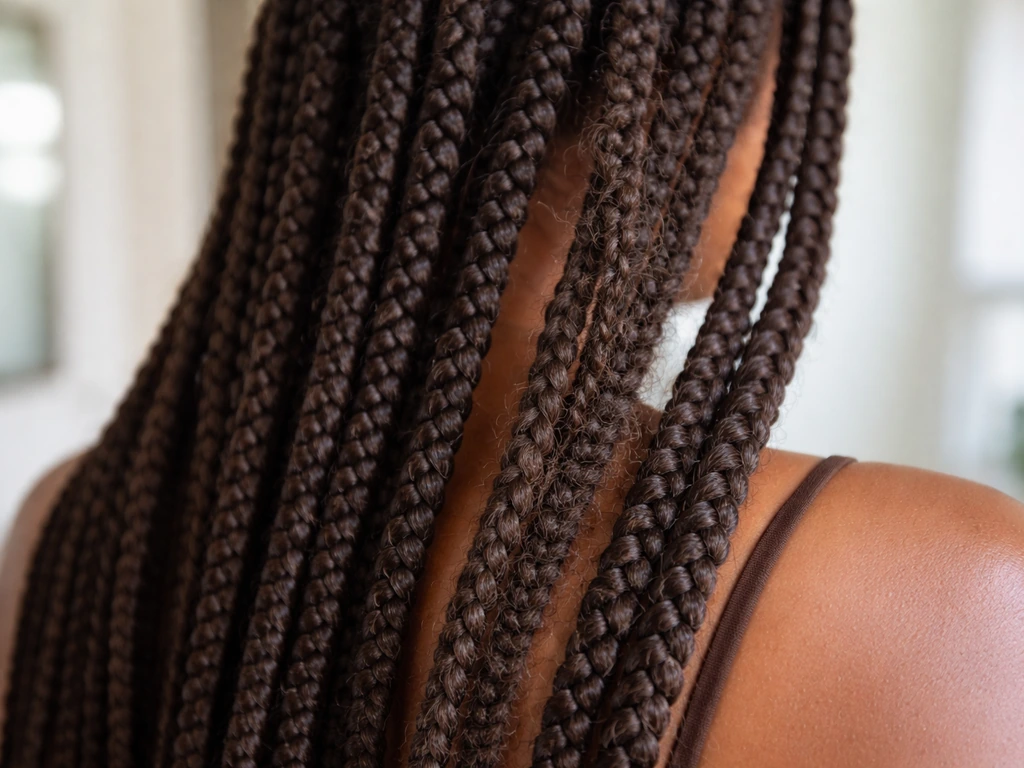
Hair growth happens deep inside the follicle, a structure in your scalp that is not meaningfully affected by whether your strands are braided or loose. The American Academy of Dermatology confirms that tight hairstyles like braids and cornrows do not speed up follicle activity. In fact, they specifically flag these styles as potential contributors to hair loss when worn too tightly or too long. So the growth-versus-retention distinction matters here enormously. If someone tells you their hair grew several inches in box braids, what actually happened is that the style reduced the daily manipulation that was snapping off their ends. Less breakage equals more visible length over time. It is not magic, but it is real.
How braids affect breakage, not the follicle
Everyday handling is one of the biggest enemies of length retention, especially for textured and Afro-type hair. Combing, styling, friction from clothing, sleeping on cotton pillowcases, and interstrand tangling all create mechanical stress that chips away at the hair cuticle and eventually snaps strands. Braiding reduces all of that at once. The strands are tucked together, interstrand friction drops, tangling is minimized, and your hands stay out of your hair. Research on Afro-textured hair specifically notes that protective styles including single braids, knotless braids, cornrows, and two-strand twists can reduce friction and make daily management easier.
The flip side is that braids introduce their own mechanical stress in the form of tension. Pulling on the root is a completely different kind of damage from breakage mid-shaft, and it is far more serious. Tight braids stress the follicle directly. Do that repeatedly over months or years and you get traction alopecia, which is hair loss caused by continuous pulling on the hair root. This is not a rare or extreme outcome. Studies have found signs of traction alopecia in roughly 18 percent of African American girls between the ages of 5 and 14. The same risk applies at any age when styles are consistently too tight.
What braids actually do well: protective styling for retention
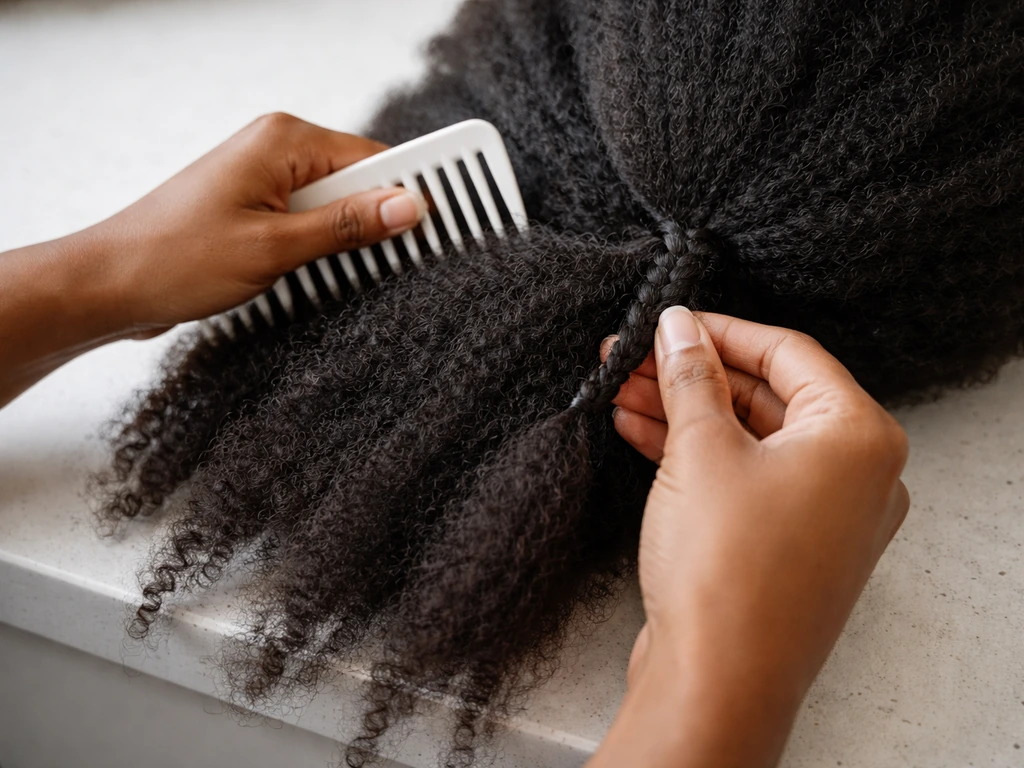
When the tension is appropriate and the style is maintained properly, braids are genuinely one of the best tools for retaining length on textured hair. Here is what a well-executed protective braiding approach delivers:
- Reduced daily manipulation: your hands and combs are not pulling through the hair every morning, which eliminates a major source of mid-shaft breakage
- Lower interstrand friction: strands bundled together create less rubbing than loose hair that tangles, especially for tightly coiled textures
- Moisture retention: braided hair seals moisture into the strand more efficiently than loose hair exposed to air and constant styling
- End protection: tucking the ends (fully or with a small amount of length visible) shields the oldest, most fragile part of the strand from splitting
- Simpler detangling sessions: hair that has been in protective braids for a few weeks generally detangles with far less effort than hair that has been loose and exposed to daily wear
None of these benefits change your biology. They just reduce attrition. If your hair grows half an inch a month but you are also losing a quarter inch to breakage, your net length gain is minimal. Reduce that breakage to near zero with a well-maintained braid and that same follicle output compounds into real visible growth over three to six months.
Common braid mistakes that slow or stop your progress
This is where a lot of people undo their own protective styling efforts. The goal of braiding is to reduce stress on the hair, and every one of these mistakes adds it back. If you are worried about staying in braids too long or using too much tension, you can still focus on retention without plaiting, too, including the question can my hair grow without plaiting it.
Too much tension at the root
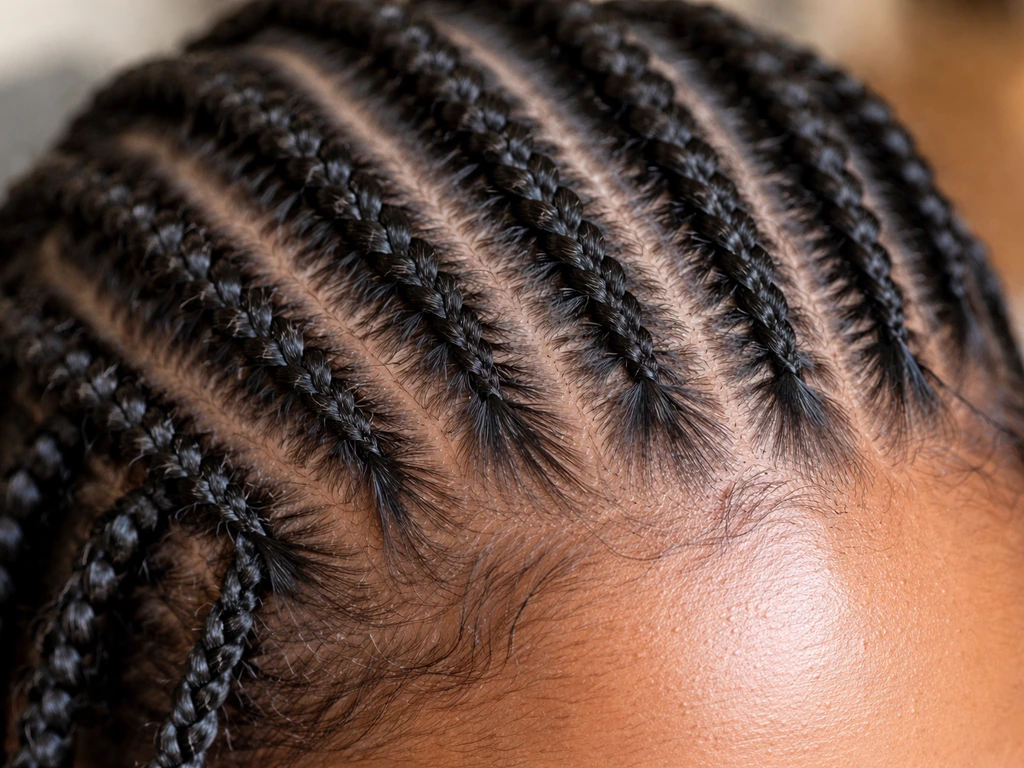
This is the single biggest risk. Tight braids, especially tight cornrows and box braids anchored close to the scalp with added hair, pull on the follicle. The AAD explicitly recommends loosening or removing styles that cause pain, and dermatology research categorizes tight braids as one of the highest-risk styles for traction alopecia. If you feel pain during installation, that is not normal and it is not something to push through. Pain is the follicle telling you the tension is too high.
Leaving braids in too long
The AAD recommends wearing tension-creating hairstyles for no longer than six to eight weeks. For styles involving extensions or weaves the outer limit they reference is two to three months. Beyond those windows, new growth at the root starts to tangle with the braid, putting even more stress on the follicle as the style loosens unevenly. The hair inside the braid also becomes dry and matted, which leads to severe breakage during removal. Longer is not better with braids. Six to eight weeks is a reasonable target for most people.
Skipping moisture
Braids do not hydrate your hair on their own. If you install braids on hair that is already dry and then ignore moisture for six weeks, the strands become brittle and break when the style is removed. You still need to apply a lightweight water-based moisturizer or oil to your scalp and the exposed sections of hair regularly, at least a few times per week.
Not washing your scalp
Product buildup, sweat, and dead skin cells can clog follicles and cause scalp inflammation during a long braid install. Dermatologists recommend cleansing the scalp at least once a week while wearing box braids. Use a diluted shampoo or a scalp-focused cleanser applied directly to the scalp with an applicator bottle, then rinse thoroughly. Neglecting this step is one of the main reasons people end up with itching, folliculitis, or bumps during a braid install.
Rough or impatient removal
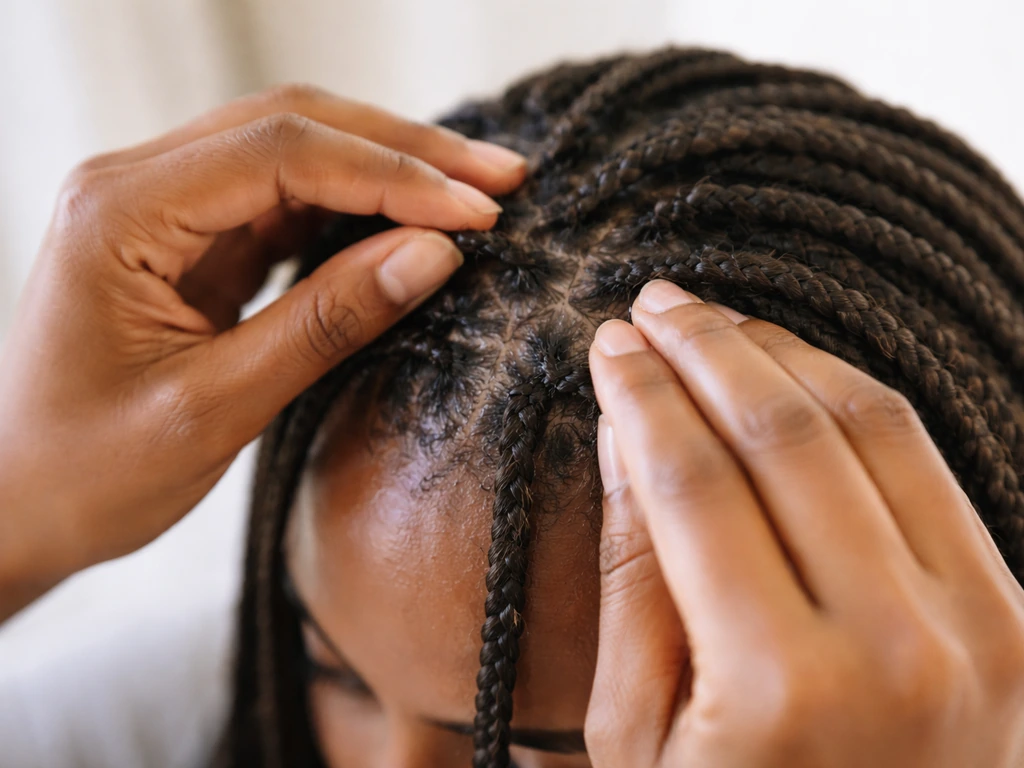
Yanking braids out quickly destroys what you spent weeks protecting. Take down the style with plenty of slip (a detangling conditioner or oil), work in small sections, and detangle from ends to roots. The removal process is when a lot of people see clumps of hair in their hands and panic about shedding. Some of that hair is normal shedding (roughly 50 to 100 hairs per day) that accumulated in the braid because it had nowhere to go. But breakage from rough removal is real and avoidable.
How long to keep braids in and what to do while they are in
Six to eight weeks is the target for most people. If your hair is particularly fragile, fine, or chemically treated, lean toward the shorter end. Here is a practical maintenance routine to follow during that window:
- Wash your scalp once a week with a diluted clarifying or gentle shampoo applied through an applicator bottle; focus the product on your scalp, not the braids themselves
- Follow up with a lightweight leave-in conditioner or braid spray applied to the length of the braids and any exposed hair
- Seal moisture in with a light oil (jojoba, grapeseed, or argan work well) on the scalp and along the braids two to three times per week
- Sleep with a satin or silk bonnet or on a satin pillowcase every night to reduce friction and frizz on the braids
- Check your edges, hairline, and temples weekly for early signs of tension: small bumps, thinning, or pain around the perimeter
- Avoid additional tension on top of the braids, such as tight ponytails, heavy added accessories, or styles that pull the braids back forcefully
After taking the braids down, give your hair and scalp a proper deep conditioning treatment before reinstalling. Skipping a recovery period and immediately redoing tight braids is a fast track to cumulative follicle damage.
Natural hair vs. relaxed hair: what changes about this advice
The core principles apply to both, but the specifics shift depending on your hair's current state. Natural textured and Afro-type hair tends to be more prone to dryness and interstrand tangling, so the moisture-during-braids piece is especially critical. The coil pattern also means that tension reads differently: a style that feels fine on straight hair can be pulling much harder at a natural curl's anchor point because the curl has to stretch to accommodate the braid direction. Knotless braids are generally a lower-tension option than traditional box braids for this reason, since the extension hair is added gradually rather than anchored in one knot at the root.
For relaxed hair, the chemical process has already weakened the disulfide bonds in the strand, which makes the hair more fragile at baseline. This means traction tolerance is lower and the cost of a too-tight install is higher. If your hair is relaxed, be especially cautious about braid tension near the line of demarcation, the point where your relaxed ends meet new growth, because that junction is structurally weaker than either section on its own. Braiding over a fresh relaxer is also not ideal; wait at least two weeks after a relaxer before installing a braid style.
A quick note for anyone exploring locs or locs-adjacent styles: braiding locs down or maintaining locs with braid-like techniques involves similar tension considerations. Braiding dreads can help with retention by reducing breakage, but growth depends on healthy roots and avoiding overly tight tension locs-adjacent styles. Questions about whether locs specifically grow faster are a related but distinct topic from protective braiding of loose hair.
Comparing braid styles by tension risk
| Style | Tension Level | Notes |
|---|---|---|
| Knotless box braids | Low to moderate | Extension hair added gradually, reducing root tension significantly compared to traditional box braids |
| Traditional box braids | Moderate to high | Single large knot at root concentrates tension; depends heavily on how tight the stylist begins each braid |
| Cornrows (loose) | Low to moderate | Flat to scalp but can be done at a comfortable tension; edges and hairline are higher risk regardless |
| Tight cornrows | High | Consistently associated with traction alopecia, especially along the hairline and temples |
| Two-strand twists | Low | Generally low tension, easier to do at home, good option for fine or fragile hair |
| Feed-in braids | Moderate | Tension depends on technique; less bulk at root than traditional box braids when done well |
| Weave (sewn-in, no braids) | Varies | Cornrow base creates same tension risks; extensions add weight that increases pulling over time |
When to stop the style and see a professional
Traction alopecia is preventable if you catch it early, but it can become permanent if you ignore it. The follicle starts as non-scarring damage, meaning the hair can potentially regrow if you reduce tension in time. But prolonged, repeated pulling can destroy the follicle permanently. That is the outcome you are trying to avoid. Know these warning signs and take them seriously.
- Pain or stinging at the scalp during or after installation: take the style down immediately, not in a few days
- Small red or pimple-like bumps along the hairline or scalp (folliculitis or 'braid bumps'): a sign of inflammation and sometimes infection at the follicle
- Thinning along the temples, edges, or frontal hairline (the 'fringe sign' noted in dermatology research): one of the earliest visible signs of traction alopecia
- Crusting, flaking, or oozing on the scalp: this goes beyond normal dryness and needs professional evaluation
- Hairs falling out with a white bulb attached: this indicates the root is being pulled loose from the follicle, not just normal shedding
- Persistent itching that does not resolve with cleansing: can signal buildup, fungal issues, or follicle inflammation
- Patches of noticeably reduced density that do not resolve after the braids come out: this warrants a visit to a dermatologist, specifically one who specializes in hair loss or has experience with textured hair
The AAD's guidance is clear: check your hairline monthly when wearing any style that pulls, and remove the style immediately if you feel pain or irritation. A dermatologist can assess whether what you are seeing is early-stage traction alopecia (treatable), a scalp infection, or another underlying condition. Do not wait months hoping it resolves on its own. The earlier you intervene, the better the outcome.
What to do today if you want to start braiding for growth
If your goal is to retain more length with a braid style, here is a straightforward plan you can start right now. Deep condition your hair before installation to maximize moisture and elasticity. Choose a lower-tension style like knotless braids or two-strand twists if your hair is fine, relaxed, or already showing any thinning. Communicate clearly with your stylist about tension: you should feel little to no pulling at the root during installation.
Set a removal date for six to eight weeks out before you even leave the salon. Commit to a weekly scalp wash and two to three times per week moisturizing during the install. And do a weekly hairline check in a well-lit mirror. Braiding can absolutely be a meaningful part of a length-retention strategy, but the benefit only shows up when the fundamentals are right.
FAQ
Will my hair grow faster if I braid it for months?
Yes, but only in the sense that you might retain more visible length because the style reduces breakage. Hair growth from the follicle rate does not speed up, so if your braids are tight enough to cause pulling, your “net growth” can be worse even though follicles are still producing hair at the same pace.
How long is it safe to keep braids in to still see length retention?
Braid length varies, but a useful benchmark is to plan for 6 to 8 weeks for tension-based styles (and 2 to 3 months for many extension-heavy styles, if your scalp stays comfortable). After that window, new growth at the root can tangle with the braid and increase both tension and matting, raising breakage during removal.
What should I do if my scalp or hairline hurts while getting braids?
If you feel real pain during installation, do not “tough it out.” Pain usually indicates the tension is too high, and continuing increases the risk of traction-related damage at the root. Ask your stylist to loosen, reduce anchoring points, or switch to a lower-tension style.
Is it normal to lose a lot of hair when I take braids down?
Some shedding is normal when you remove braids because hairs that were already in the shedding cycle are trapped inside the braid. A helpful check is to look for lots of short, snapped hairs with blunt ends (more breakage) versus longer, hair-shaft strands that appear to slide out more smoothly (more normal shedding).
Do I still need to moisturize my hair while it’s braided?
Yes, braids can dry out hair, especially at the roots and along the exposed sections. Use a lightweight water-based moisturizer or diluted leave-in on your scalp and any exposed hair several times per week, then seal lightly if needed. If your braids feel crunchy or the scalp is tight, increase moisture.
What’s the best way to wash my scalp without ruining my braids?
Build-up can contribute to itchiness, bumps, or inflammation, which can make you want to scratch or pick (another source of breakage). Plan a gentle scalp cleanse at least once a week during the braid install using a scalp-focused, diluted cleanser applied directly to the scalp, then rinse thoroughly.
How can I tell if my braids are causing traction alopecia versus normal irritation?
Not always. If your braids are loose enough not to pull at the roots, they can reduce breakage for many people. But if you notice new bumps at the hairline, persistent soreness, widening parting, or thinning at the edges, that points to traction risk, and you should remove the style and get your scalp assessed.
Are knotless braids safer than box braids for preventing hair loss?
Knotless braids often feel lower-tension because the extension is added gradually rather than anchored with a single knot at the root. They can be a better option if your hair is fine, relaxed, or you have any early signs of thinning, but you still must monitor tension and comfort.
Can I braid relaxed hair, and what extra caution should I take?
If your hair is relaxed or you recently relaxed it, your strand is more fragile, especially around the junction where new growth meets relaxed ends. Avoid installing too soon after a relaxer, and be extra careful with tension near that line of demarcation.
What should I change if my hair is fine or prone to breakage?
For fine, fragile, or chemically treated hair, shorten your install time and aim for the lower end of the recommended window. Also request spacing and anchoring adjustments, since reducing tension at the root can matter more than braid style name alone.
Do I need a break or recovery routine after taking braids out?
Yes, especially if you go from a tight braid install straight into another without recovery. After removal, deep condition first to restore elasticity and moisture, then reassess how your scalp and hair feel before reinstalling.
Does the same growth versus traction logic apply to locs-adjacent styles?
Yes, but it depends on what you mean by “braid-like.” For locs or locs-adjacent styles, the key factor is still root health and tension. If the style pulls or anchors too tightly, it can trigger traction damage even if the hair is matted into sections.
Next Article
How to Grow Waist-Length Black Hair: Evidence-Based Guide
How to grow and retain waist-length Black hair: realistic timelines, routines, protective styles, and evidence-basedTips