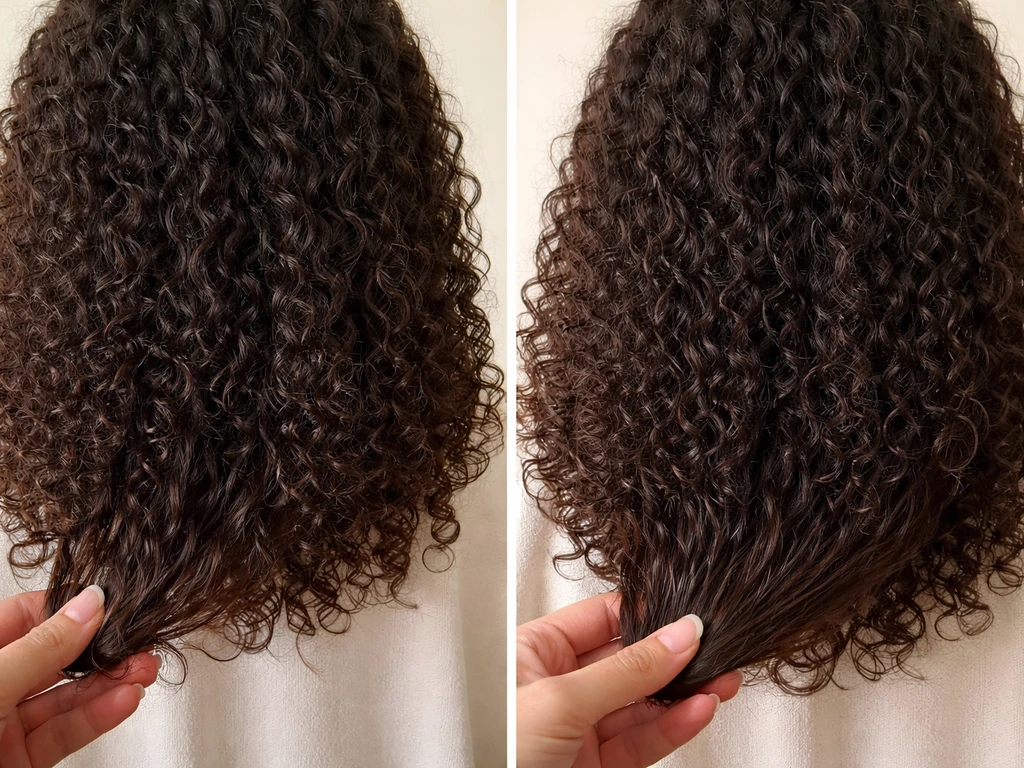
Dreads grow the same way all hair grows: from the follicle, at roughly half an inch per month. The biology doesn't change because your hair is locked. What changes is how that growth looks and where it shows up. During the early months, new growth tends to disappear into the loc rather than visibly adding length, which is why so many people convince themselves their dreads aren't growing at all. If you’re wondering whether dreads can grow naturally, the good news is that they do, because the follicles still follow their normal growth cycle can dreads grow naturally. They are. The real question is whether you're retaining that growth or losing it to breakage, dryness, and poor maintenance habits. Retention and breakage matter because they determine how much of your natural follicle growth stays visible as length, which is what makes dreads seem to grow faster.
How Do Dreads Grow: What Happens and How to Grow Faster


What 'growth' actually means for dreads
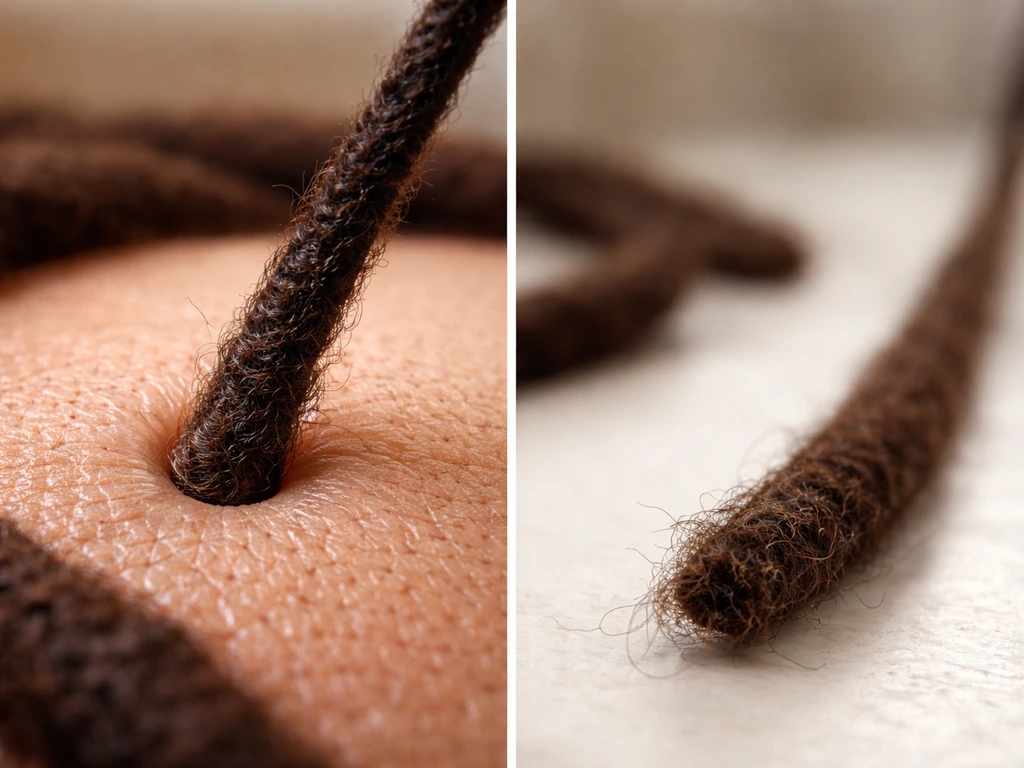
Hair growth happens at the follicle, deep in your scalp, not at the tip of your loc. Each follicle cycles through phases: anagen (active growth, lasting roughly 3 to 6 years), a brief catagen transition phase, and telogen (resting, about 3 months), after which the hair sheds and the cycle starts again. At any given time, around 85 percent or more of your follicles are in the anagen phase, actively pushing out new hair at about 0.35 mm per day, or roughly 6 inches per year.
For someone without locs, that growth is easy to measure at the ends of loose strands. For loc wearers, it's different. New growth first appears as soft, unlocked hair at the root, what people call 'new growth' or 're-growth. For steps on how to dread roots as they grow, focus on creating secure, gentle new-growth incorporation during maintenance new growth first appears. ' That section eventually gets incorporated into the loc body during maintenance. Visible length at the tip of the loc doesn't always increase at the same pace as follicle output because the loc itself is compacting and tightening as it matures. The length is being produced; it just isn't always showing up at the bottom the way you'd expect.
Why dreads sometimes seem like they've stopped growing
This is one of the most frustrating things for new loc wearers, and it almost always comes down to three things: shrinkage, tension, and the maturation process.
Shrinkage
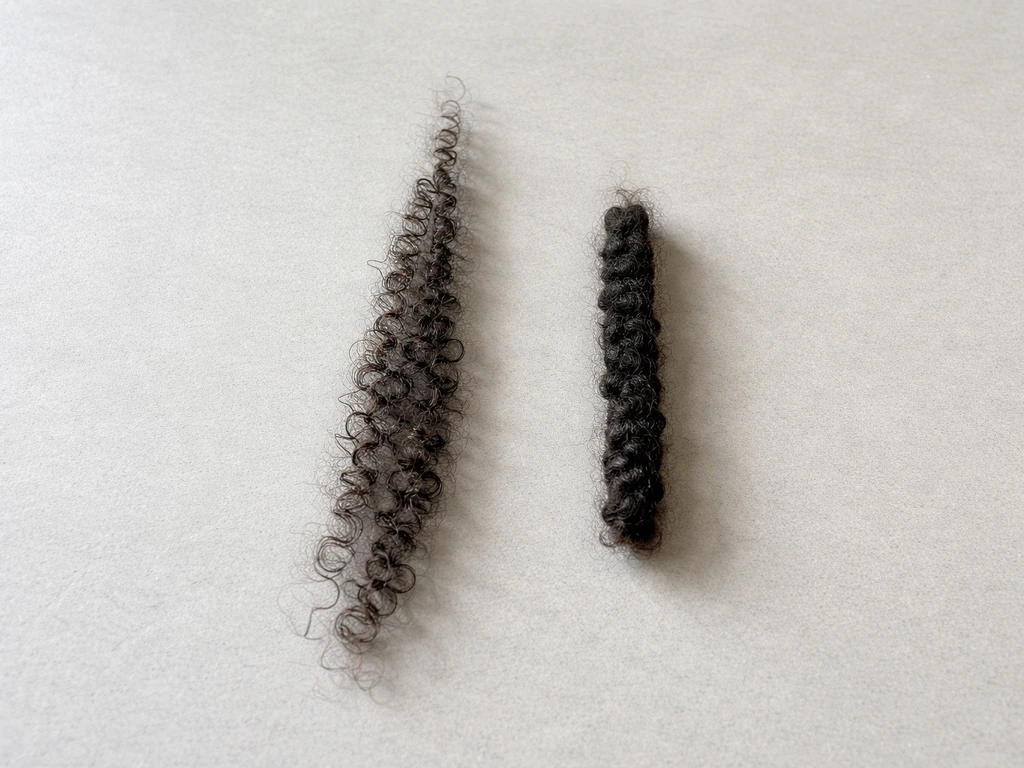
Textured and coily hair has significant shrinkage even in loose form. Once that same hair is being locked, the coiling and interlocking process compacts strands even further. A loc that looks 4 inches long may represent hair that is significantly longer when stretched. As locs tighten and consolidate, especially in the first year or two, the outer measurement can actually decrease temporarily even as your follicles keep producing. This is completely normal and not a sign that something is wrong.
Tension and breakage at the roots
If you're retwisting too tightly or too frequently, you may be causing traction stress at the root. This doesn't stop follicle growth, but it can lead to breakage right where new growth meets the locked section, meaning the length you just grew snaps off before it ever adds to your visible loc. You'll often notice thin, fragile roots or small bumps at the hairline as warning signs.
The maturation process
Early-stage locs go through a period of significant structural change. The loc is essentially trying to figure out its final shape and size, and during that process, length retention can look inconsistent. Once locs mature and the internal structure stabilizes, growth tends to become far more visible at the tips.
What actually makes dreads grow and get thicker

Nothing applied to your locs will make your follicles produce hair faster than their biological rate. That's a hard ceiling set by genetics and physiology. What you can do is make sure that every millimeter your follicles produce actually stays on your head. That's retention, and it's the real lever you have control over.
- Scalp health: A clean, well-circulated scalp keeps follicles functioning properly. Conditions like seborrheic dermatitis, which causes inflammation and flaking, can interfere with the follicle environment and contribute to shedding. Keeping your scalp clean and addressing any persistent itching or flaking early matters.
- Moisture balance: Dry, brittle locs break. Locs need internal moisture, not just surface coating. Light water-based products or diluted leave-in conditioners applied to the shaft (not just the scalp) help prevent mid-shaft and tip breakage, especially on thinner locs.
- Breakage control: Most 'growth problems' are actually breakage problems. Rough handling, over-manipulation, sleeping on a cotton pillowcase (which creates friction), and tight styling all cause breakage that cancels out your follicle's work. A silk or satin pillowcase or bonnet is an easy, immediate fix.
- Nutrition and hydration: Hair is made of protein. Adequate protein intake, iron, zinc, and hydration all support the anagen phase. Deficiencies, particularly in iron, are a documented cause of increased shedding and slowed growth.
Thickness is a related but separate topic. Locs get thicker as they mature because more shed hairs get incorporated into the loc body rather than falling to the floor. This is a natural process, and the rate at which it happens depends on hair density, loc size, and maintenance method. If you're wondering whether dreads get thicker as they grow, that question really comes down to maturation stage and how well you're supporting the locking process over time.
Starter locs vs mature locs: how growth changes over time
The experience of growing dreads changes significantly depending on where you are in the maturation timeline. Here's what you can realistically expect at each stage:
| Stage | Approximate Timeline | What's Happening | Growth Visibility |
|---|---|---|---|
| Starter / Baby | 0 to 6 months | Locs are newly formed; structure is loose and unstable; significant unraveling possible | Low — shrinkage and compaction hide length gains |
| Budding | 6 to 12 months | Locs begin to firm up; the midshaft starts to lock; some texture change visible | Moderate — tips may still look similar but roots show more definition |
| Teenage | 12 to 18 months | Locs are more defined but still settling; frizz and uneven texture common | Moderate to good — some visible length at tips becoming more consistent |
| Mature | 18 months to 3-4 years | Locs are fully locked, firm, and cylindrical; structure is stable | Good — length retention becomes much more consistent and visible |
| Rooted / Fully Mature | 3 to 4+ years | Locs are long, dense, and fully consolidated throughout | Excellent — growth shows clearly at roots and tips |
Two-strand-twist starter locs typically take 6 to 24 months to fully lock, depending on hair texture, density, and how consistently you maintain them. Finer or looser curl patterns generally take longer to lock than tighter coil patterns, which interlock more readily. Patience during the early stages is not optional; it's part of the process.
The wash, dry, and scalp care routine that supports growth
One of the most common mistakes loc wearers make is either washing too infrequently (which lets buildup choke the scalp) or washing so often that they're constantly manipulating fragile starter locs. For most people, washing every two to three weeks is a reasonable baseline, adjusted based on activity level, scalp oiliness, and lifestyle. Sweaty workout routines may push that closer to every one to two weeks, while lower-activity weeks might stretch comfortably to three.
How to actually wash locs
- Use a residue-free or clarifying shampoo. Avoid silicone-based products; silicone coats the shaft and builds up inside the loc over time, making them heavier, harder to dry, and more prone to odor.
- Apply shampoo mainly to the scalp, not worked through the entire loc length. Squeeze gently. The rinse water carries product through the loc body as it runs down.
- Rinse thoroughly. Insufficient rinsing is one of the top causes of buildup and odor. Rinse until the water runs completely clear.
- Squeeze (don't wring) excess water from each loc. Aggressive twisting causes structural stress, especially in starter locs.
- Wrap in a towel for about 10 minutes to absorb surface water, then remove the towel and let locs finish drying completely.
Drying matters more than most people realize
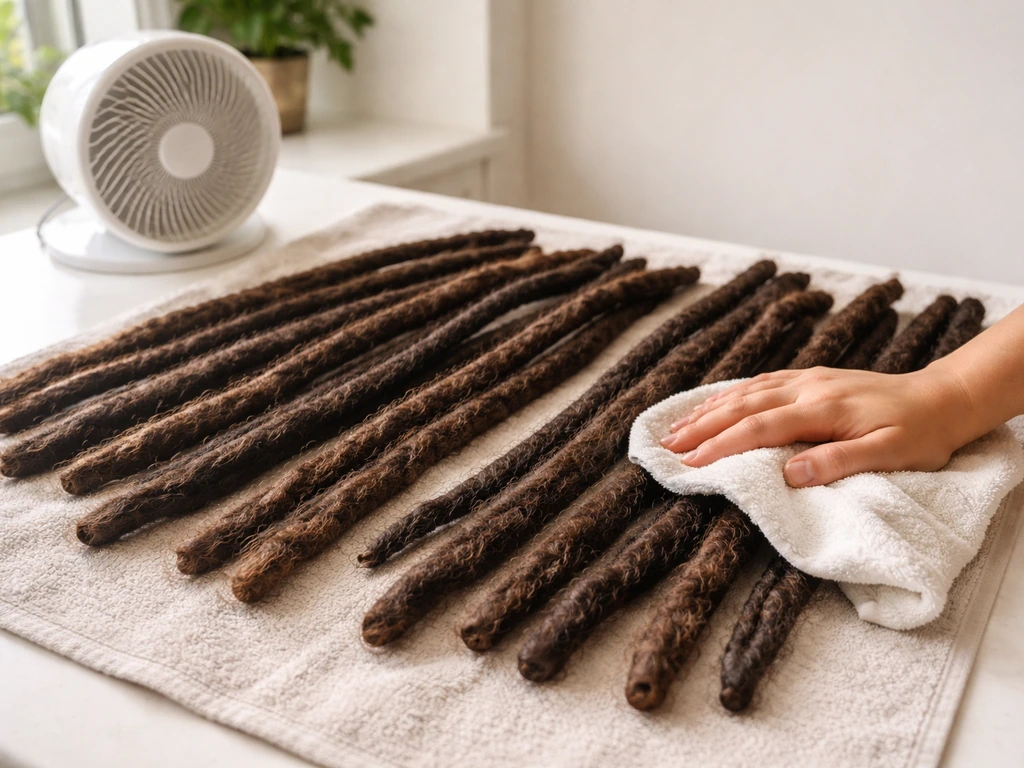
Locs that stay damp for too long are a breeding ground for mildew and bacteria, a condition sometimes called dread rot. Depending on loc thickness and the environment you're in, full drying can take anywhere from a few hours to a full day or more. Thick, mature locs in humid climates are the most vulnerable. Don't wrap freshly washed locs tightly in a scarf or bonnet until they are completely dry all the way through, not just dry on the outside. If you're in a rush or in a humid climate, a hooded dryer or a diffuser attachment on a low-heat setting speeds things up without causing heat damage.
Scalp care between washes
Between wash days, keep the scalp clean and moisturized without overloading it with heavy oils. Light, water-based scalp sprays or diluted oils (like jojoba or a light carrier oil) applied directly to the scalp with an applicator bottle are more effective than heavy butters or greases, which sit on the surface, attract lint, and contribute to buildup inside the loc. If you're dealing with persistent itching, flaking, or irritation, that's worth addressing promptly with a medicated or antifungal shampoo, since ongoing scalp inflammation affects the follicle environment.
Maintenance and styling: retwist frequency, separation, and tension
How often you maintain your locs and how you do it has a direct impact on whether your growth is retained or lost to damage. There is no single correct schedule, but here are solid evidence-based guidelines to work from:
Retwist frequency by stage
| Stage | Recommended Retwist Interval | Notes |
|---|---|---|
| Starter locs (0 to 6 months) | Every 4 to 6 weeks | Enough to maintain shape without over-manipulation; let locs settle between sessions |
| Budding (6 to 12 months) | Every 6 to 8 weeks | Locs are beginning to hold structure on their own; less frequent retwisting supports locking |
| Mature locs (12+ months) | Every 4 to 8 weeks | Adjust based on personal preference and how quickly roots free-form between sessions |
| Interlocking method | Every 6 to 8 weeks | Interlocking places more consistent tension on the root; avoid going tighter or more frequently than needed |
The key principle: more maintenance is not always better. Every retwist session puts mechanical stress on the root. If you're retwisting every week or two because you don't like the look of new growth, you're likely doing more harm than good to your hairline and root health over time.
Separation
Locs naturally want to merge together, especially during the first year. Separating locs regularly at the root prevents two locs from becoming one, which can create a very thick, awkward section that is difficult to manage and places extra tension on both roots. Check your scalp after every wash when hair is damp and easy to work with. Gently pull apart any sections that are starting to connect at the base.
Tension and styling
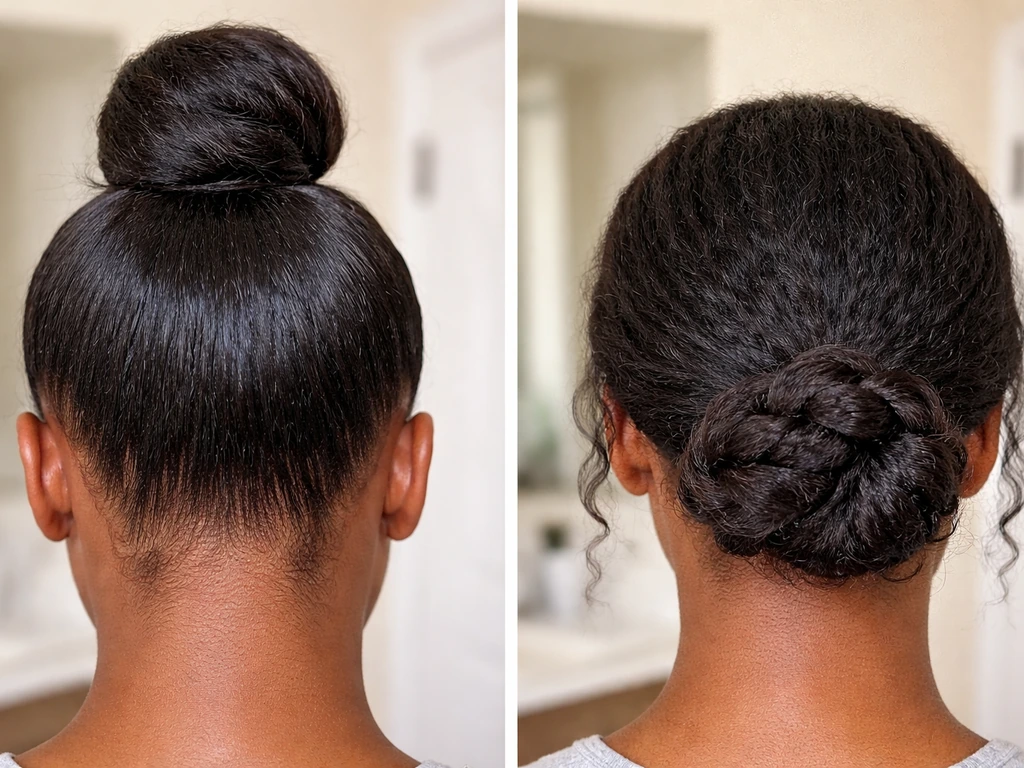
Tight ponytails, updos, and buns can look clean and polished but they put consistent traction on your hairline and perimeter locs. Over time this causes traction alopecia, a form of hair loss that starts as thinning at the temples and edges and can become permanent if the tension continues. Vary your styling, wear your locs down as often as practical, and if you notice your hairline starting to recede or edges getting thinner, back off the tight styles immediately.
Common myths, realistic timelines, and what to expect
Myths worth cutting through
- Myth: Dreads make your hair grow faster. False. Follicle output is fixed by biology. Locs don't accelerate growth; they can improve retention by reducing manipulation and daily handling, but that's a different thing.
- Myth: You shouldn't wash starter locs. False. An unwashed scalp develops buildup, odor, and inflammation, all of which are bad for follicle health. Wash with care and the right products from the start.
- Myth: Heavy grease keeps locs moisturized and promotes growth. False. Heavy petroleum and wax-based products coat the exterior, trap debris, are nearly impossible to rinse out fully, and create the kind of stubborn buildup that can eventually require cutting locs to remove.
- Myth: Locs that are growing in length are healthy. Not necessarily. A loc can be growing in length while also experiencing significant thinning, dryness, and root stress. Length and health are not the same thing.
- Myth: If your edges are thin, it means your hair just doesn't grow there. Often false. Thin edges are frequently a sign of past or ongoing traction damage, not a genetic limit.
A realistic growth and maturation timeline
blank" rel="noopener noreferrer">At roughly 6 inches of follicle output per year, someone starting locs today should expect to see meaningful visible length at the 12 to 18 month mark, assuming good retention practices. The first 6 to 12 months often feel like treading water because so much of what grows is being absorbed into the locking and maturation process. That's not failure; that's the structural work that makes mature locs possible. By the 3 to 4 year mark, fully mature locs show consistent, visible length growth with each passing month, and the retention process becomes much less of an active concern. The question of why dreads can eventually grow so long is really a story of compounding retention over years, not any special growth acceleration.
Your next steps today
- Assess your current scalp health. Is it clean, moisturized, and free of persistent itching or buildup? If not, start there before anything else.
- Check your retwist frequency. If you're retwisting more often than every 4 weeks, dial it back and watch how your roots respond.
- Switch your pillowcase to satin or silk tonight, or start wearing a satin bonnet. This one change reduces nightly friction breakage immediately.
- Audit your products. If anything in your routine contains silicone or heavy waxes, replace it with a residue-free alternative.
- Make sure your locs are drying completely after every wash. If they're staying damp for more than 8 to 10 hours, add a diffuser or hooded dryer to your routine.
- Separate your locs at the root after your next wash while hair is damp. Get into this habit every wash day.
FAQ
Why do my dreads feel like they are stuck at the same length even though I’m sure they’re growing?
No, there is no reliable way to speed up follicle production beyond your natural growth rate. If your dreads look like they are “growing faster,” it usually means you are improving retention (less breakage) or reducing shrinkage (better interlocking and conditioning). A simple reality check is to track new growth at the root with consistent lighting or by marking your starter location, then compare it over 2 to 3 months.
How should I measure loc growth so I’m not judging it wrong?
Measure at the root-to-tip once a month for consistency, but expect early-stage length to be irregular. In the first year or two, new hair often appears as softer regrowth near the scalp and then gets incorporated over time, so the tip may not move much even while follicles are actively producing. Also account for shrinkage by stretching a small section to estimate true length at least occasionally.
Can dreads keep growing if I don’t retwist or separate much?
Yes, but you may not see the “tip” length right away. Early new growth can look like fuzzy hairs or a thicker band near the base, and that portion only becomes visually part of the loc after maintenance. If you avoid retwisting or keep handling minimal, incorporation can be slower, but it doesn’t mean growth stopped.
How do I know if I’m damaging my locs enough that I’m losing the new growth?
Tension breakage is most likely when the new growth is being pulled hard during retwist, palm rolling, or styling. Watch for recurring thin spots right at the hairline or small, snag-prone bumps where the new and locked sections meet. If that happens, loosen the technique and reduce frequency, then focus on gentler root maintenance and moisture.
Can scalp dryness or irritation stop dreads from keeping their growth?
Often, yes. If you keep locs clean but the scalp stays dry, itchy, or inflamed, you can trigger shedding or breakage in the regrowth area, which lowers retention. Aim for light scalp moisture (water-based or diluted oils) and address persistent flaking or irritation promptly so the follicle environment stays stable.
Is it better to wash locs more often or less often for faster growth?
Overwashing can be an issue for some people because it increases manipulation and keeps starter locs repeatedly wet, which can weaken them before they stabilize. Underwashing can be a bigger problem because buildup can trap residue and worsen scalp inflammation. If you’re unsure, use a baseline of every 2 to 3 weeks, then adjust based on sweat level, product use, and how quickly your scalp gets oily.
Why does my locs growth seem to slow down when I use heavy oils or butters?
Heaviness is a retention killer. Heavy butters and greases can leave residue inside the loc, increase lint buildup, and make it harder for roots to breathe, which can lead to itching and breakage at the new growth line. Lighter options (diluted oils or water-based scalp sprays) work more consistently for scalp conditioning.
What makes dread rot more likely, and how can I prevent it after washing?
Not exactly. “Dread rot” risk is mainly about trapped moisture staying wet long enough for mildew and bacteria to set in, especially in humid climates or with thick locs. The practical rule is not just outside dryness, it must dry through the center. If you struggle with drying, use low-heat airflow and avoid re-covering them until fully dry.
Can ponytails and buns actually affect loc growth or only the hairline?
Yes, and it can be subtle. Thinning edges or temples can come from consistent traction due to tight styles, even if the locs themselves look fine. If you notice recession, stop high-tension styles immediately, loosen installation and daily wear, and give your perimeter locs a break before it becomes long-term.
Do different two-strand or starter methods change how fast dreads show length?
It can change how quickly you see “progress,” not how much your follicles grow. If you start in a style that’s harder to interlock for your curl pattern, you may spend longer in the phase where the tip seems stagnant. Your best decision aid is matching expectations to your texture, and maintaining the new growth gently until incorporation improves.
Do dreads get thicker before they get longer, or are those two different processes?
Sometimes, but it’s not the root cause. A loc can get thicker because more hairs are incorporated as it matures, but that doesn’t automatically mean faster length growth. If you want longer visibly, prioritize retention at the roots (gentle handling, stable scalp moisture, and avoiding breakage), since thickness alone doesn’t guarantee less shedding or snapping.
How to Grow Black Women’s Hair: Length and Growth Guide
Step-by-step guide to grow and retain Black women’s hair, boost length via breakage control, and avoid traction damage.