Yes, a white person can grow dreadlocks. The catch is that straight or wavy European-textured hair does not lock on its own the way tightly coiled hair does, so you need a deliberate starter method, realistic patience, and a clear understanding that growing hair length and forming locs are two completely separate processes. With the right technique, proper preparation, and consistent maintenance, people with straight, wavy, or mixed-texture hair can build mature, well-formed locs. It just takes longer, requires more intentional help at the start, and demands you give up a few product habits you probably love.
How Does a White Person Grow Dreads: Guide for Straighter Hair

Simone Okonkwo
23 Jul 2026
How hair texture actually affects locking
Locking happens because of one thing: fiber entanglement. Your hair shaft is coated in overlapping cuticle scales, and when those scales lift, interlock, and grip neighboring strands, the hair begins to knot and bind on itself. The degree to which your hair does this naturally depends heavily on the shape of the follicle and the resulting curl pattern. Tightly coiled, kinky hair (common in people of African descent) has an elliptical follicle that produces fibers that naturally loop back on themselves. Those loops create frequent contact points where cuticle scales catch and lock together without much outside intervention. Straight hair, by contrast, comes from a rounder follicle that produces a mostly cylindrical fiber. When straight strands are side by side, they slide past each other rather than looping and catching. The surface friction between them is lower, the contact angles are less favorable for entanglement, and the result is that straight hair will not lock passively.
Wavy and mixed-texture hair sits somewhere in between. Light waves create slightly more friction and contact between strands than straight hair, so these hair types generally lock faster than fully straight hair but still need a starter method. People with chemically treated (relaxed or permed) hair face an additional hurdle: the chemical process alters both the protein bonds and the cuticle surface, reducing the natural roughness and friction that helps entanglement begin. If your hair has been colored or highlighted significantly, bleach damage actually raises and erodes the cuticle, which paradoxically can help locking begin (damaged cuticles are rougher and more prone to tangling) but also weakens the fiber itself and raises breakage risk. So the starting condition of your hair texture matters as much as your natural pattern.
Hair growth vs. locking: they are not the same thing
This is one of the most important distinctions I want to make clear before anything else. Hair growth is a biological process happening inside the follicle, driven by genetics, nutrition, hormones, and scalp health. The average human scalp grows hair at roughly 0.5 inches per month, or about 6 inches per year. That rate is not meaningfully changed by starting locs. What locs do affect is length retention, meaning whether the hair that grows stays on your head or snaps off before you notice it. Locs can be a good protective option in that sense, because manipulating your hair less (once locs are established) reduces mechanical breakage. But the act of locking itself does not accelerate follicle activity.
The other thing that trips people up is shrinkage. As straight or wavy hair begins to lock, it coils and loops internally, and the visible length of each loc can appear significantly shorter than the actual hair length. Tightly coiled hair types experience dramatic shrinkage (sometimes 50% or more), but even loose-wave textures will see their locs look shorter during the starter and budding phases. Plan for this. A person with 6 inches of straight hair may end up with locs that look 4 or even 3 inches long during early formation. It is not breakage. It is the hair doing what it needs to do to form structure inside the loc.
Length requirements: what do you actually need to start?
There is no single rule, but most professional locticians working with straighter hair types recommend a minimum of 3 to 4 inches of length before starting, and that applies mainly to crochet and backcombing methods that can create structure in shorter hair. At 2 inches or less, it becomes genuinely difficult to retain any method on straight or fine hair because there is not enough fiber to catch and hold itself. At 6 to 8 inches, you have substantially better retention across all methods, and the starter locs are less likely to unravel at the root between maintenance sessions. For men starting with a fade or shorter style, crochet with extensions is often the most practical option for true starter length below 4 inches. More on that in the method section.
Your starter method options, explained plainly
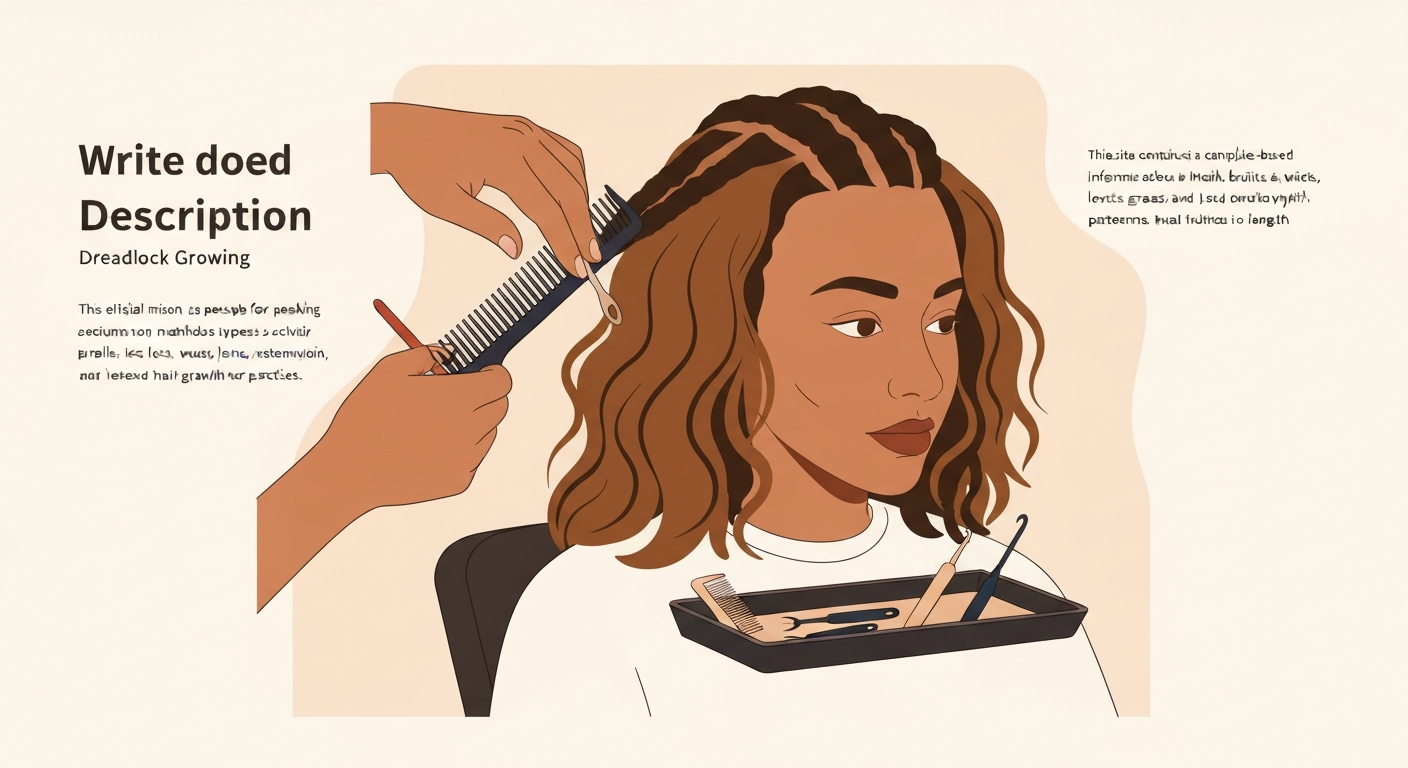
There are six main methods used to start locs on straighter and wavy hair. Professional loctician training curricula (e.g., Loc Academy – loctician training curriculum (Kelatic)) list the main starter methods, freeform, comb coils, backcombing, two‑strand twists/twist‑and‑rip, interlocking, crochet, and starter braids/extensions, and teach their pros/cons, maintenance, and retwist techniques. Each has a distinct approach, a different speed of visible results, and different demands on your time and skill level. Understanding what each one actually does to the hair fiber will help you choose the right fit.
Freeform / neglect
Freeform locs form when you stop combing or brushing and allow hair to naturally tangle and mat over time. On tightly coiled hair, this can happen within weeks. On straight or wavy hair, this process is extremely slow and often results in unpredictable, irregular sections that fuse together into thick flat mats rather than individual rounded locs. Most people with straight hair who attempt pure neglect end up with one large mat or a few thick, uneven sections. Freeform is not inherently wrong for European-textured hair, but you need to accept you have little control over size, shape, or evenness of the result, and it will take significantly longer than other methods.
Backcombing
Backcombing (also called teasing) is the most historically common method for straight-haired people starting locs. You comb the hair backward toward the scalp in repeated strokes to compact fibers into a dense, knotted cylinder. It produces an immediate proto-loc shape, which is visually satisfying and fast. The downside is that backcombed locs on straight hair have a loose internal structure that can unravel, especially at the root, if not maintained regularly. The method also risks mechanical damage if over-worked, and some locticians argue it creates an inconsistent internal foundation. Backcombing works best on fine to medium straight or wavy hair of at least 4 to 5 inches.
Twist-and-rip
Twist-and-rip involves splitting a section of hair into two pieces, twisting them around each other, then pulling them apart repeatedly to create tangles and knots throughout the length. This is gentler on the hair shaft than aggressive backcombing and tends to produce a more natural-looking texture. It is good for wavy and slightly textured straight hair because the splitting action encourages the cuticle scales to engage. The result is less uniform than backcombing but holds better internally on wavy types. It is harder to execute on very fine or slippery straight hair.
Interlocking
Interlocking uses a tool (typically a hook or pin) to pull the tip of a loc through its own root, locking it tightly in place. It produces a very firm, secure root that holds well through washing, exercise, and swimming. It is often used to maintain locs rather than start them from scratch, but on prepared sections of hair it can be used as a starter method. Systems like Sisterlocks are built entirely on interlocking principles and use a precise grid pattern. Interlocking suits people who want a tidy, professional look and are active or swim regularly. It is not ideal for fine hair where the pulling action can create tension at the scalp.
Crochet method
A crochet hook (a very fine, latch-style tool) is used to pull loose hairs back into a section repeatedly, compacting fibers and creating a tight, dense loc from the first session. This is now the most recommended starting method for straight and wavy hair types because it provides immediate structure, even on shorter lengths (around 3 to 4 inches), and produces locs that hold through washing without unraveling quickly. The risk is that improper technique with too much force can fracture hair inside the loc, weakening it over time. When done by a skilled loctician, crochet is probably the most efficient starting method for European-textured hair. It can also be used to repair or tighten locs started by other methods.
Starter braids / extensions
Braiding or twisting existing hair around loc extensions gives an immediate, full-length loc look from day one. This is popular for men with shorter hair or anyone wanting a defined result immediately. The extension hair (typically human hair already in loc form) is installed and your natural hair is braided or wrapped into it, eventually growing and fusing with the extension. It is one of the best options for short hair under 4 inches and for those wanting high-top or specific style shapes. The trade-off is cost (professional installation), the need to eventually transition from extension-backed to fully natural locs, and traction risk if extensions are installed too tightly. Keeping tension at the root low is critical.
Method comparison at a glance
| Method | Pros | Cons | Best Hair Type | OK for Short Hair? | Maintenance Needs | Speed of Results |
|---|---|---|---|---|---|---|
| Freeform / Neglect | Zero manipulation, natural result, low cost | Unpredictable shape, very slow on straight hair, may mat unevenly | Coily / kinky; less ideal for straight | No | Minimal styling; periodic separation | Months to years |
| Backcombing | Fast visible result, DIY-friendly, no tools needed | Loose internal structure, unravels easily, mechanical damage risk | Fine to medium straight or wavy (4+ in) | Not ideal below 4 in | Frequent palm-rolling and retwisting | Immediate proto-loc |
| Twist-and-rip | Gentler than backcombing, natural texture | Difficult on slippery/fine straight hair, less uniform | Wavy, slightly textured straight (5+ in) | No | Moderate; regular separation | Days to weeks |
| Interlocking | Very secure roots, holds through activity/swimming | Scalp tension risk on fine hair, requires skill | Medium to thick, all textures; wavy/straight with care | Possible with enough hair | Low between sessions | Immediate structure |
| Crochet | Fastest tidy result, works on shorter lengths, durable | Fracture risk if over-manipulated; requires skilled hand | Straight, wavy, fine (3–4+ in) | Yes (3–4 in minimum) | Moderate; crochet touch-ups | Immediate full loc shape |
| Starter Braids / Extensions | Instant length and style, good for very short hair | Cost, extension transition needed, traction risk | All types, especially short/fine | Yes, best option under 4 in | High initially; monitoring root growth | Immediate full-length locs |
Choosing the right method for your specific hair
The decision comes down to four factors: your current length, your hair's texture and thickness, how much control you want over the final look, and whether you can see a professional or need to DIY. Here is how I would think through it practically.
If you have straight, fine hair of 4 to 6 inches, crochet done by a loctician is the strongest starting point. The crochet method compensates for the low natural friction of straight hair by physically compacting the fibers, and a professional will do this without over-stressing the shaft. Follow up with backcombing on the length before the crochet pass if you want even more initial density. If you have wavy (type 2a to 2c) hair of at least 5 inches, twist-and-rip or backcombing with crochet reinforcement at the root both work well. Wavy hair holds backcombed structure better than straight hair and will progress through the locking stages faster. If you have fine hair at 3 to 4 inches, starter extensions with braiding are your most realistic path to defined locs without waiting another six months of growth. For men aiming at a specific shape like high-tops or for the structural details of congo locs (where multiple locs are joined), the style goals also feed into method choice. The form of the finished loc matters to the starting decision.
One thing I want to name directly: mixed-texture hair (where the pattern varies between different areas of the scalp, common in people of mixed heritage) often locks unevenly. Coilier sections at the nape or temples may lock fast while straighter sections on top move slowly. Using crochet uniformly across all sections at the start helps even this out and gives you a more consistent starting point across the whole head.
Preparing your hair before you start
The baseline condition of your hair matters more than most people expect before starting locs. Residue, silicones, and conditioning agents left on the hair actually coat the cuticle, reducing the surface friction that helps fiber entanglement. Non-water-soluble silicones (you will find them in most standard conditioners and many smoothing serums listed as dimethicone, cyclomethicone, or amodimethicone) are essentially hydrophobic films. They resist rinsing, trap inside locs over time, cause build-up, and impede the locking process. Starting with a thoroughly clarified baseline is not optional. It is foundational.
Use a clarifying or residue-free shampoo for at least two to three washes before your installation day. Focus the lather on the scalp and work it through the length. Rinse thoroughly with warm water, then cool water to encourage the cuticle to lie flatter. Avoid applying any conditioner or leave-in product after these preparatory washes. Your hair will feel drier and rougher than usual. That is actually what you want, because that surface texture is what helps the locking process get started.
Protein and moisture balance also matters. If your hair is very porous from chemical processing (bleach, highlights, relaxers, perms), it is brittle and more vulnerable to the mechanical stress of backcombing or crochet. A single protein treatment in the week before starting can help reinforce the shaft. But follow it with a light moisture step and rinse well, and make sure there is no residue left on the hair by installation day. If you have a full relaxer still in your hair, be aware that relaxed hair has chemically altered disulfide bonds, which change how the fiber behaves under tension and entanglement. The straight, pliable nature of relaxed hair makes locking harder, and the weakened structural integrity increases breakage risk under aggressive methods like backcombing. Many locticians advise waiting until new growth has come in significantly, or doing a big chop to begin on fully natural hair. That is a real consideration, not a cosmetic one.
A note on color-treated hair
Bleach and high-lift color lift the cuticle and cause protein loss. The resulting hair is more porous, more fragile, and locks faster in one sense (elevated cuticles create more friction) but breaks more easily under mechanical methods. If your hair has been heavily bleached, a deep protein treatment and a gentler method like crochet (rather than aggressive backcombing) is the smarter path. Avoid starting locs immediately after a bleach session. Give the hair at least two to three weeks of recovery and one or two protein-supportive washes first.
Pre-start checklist
- Do 2 to 3 clarifying washes with a residue-free shampoo in the week before installation
- Remove all silicone-based products, waxes, and heavy conditioners from your routine
- If hair is protein-deficient or heavily bleached, do a single protein treatment 5 to 7 days before (rinse fully)
- Trim any significant split ends to reduce unraveling at the tips
- Do not apply conditioner, oil, or leave-in product on the day of installation
- Arrive to your appointment with clean, dry, completely product-free hair
- If you are relaxed, discuss your timeline with a loctician before committing to a method
Step-by-step beginner routine for creating starter locs
Whether you are installing at home or preparing for a loctician appointment, the following process reflects professional best practice for straight, wavy, or mixed-texture hair. I have written this specifically for the crochet and backcombing methods, which are the most practical for European-textured hair, with notes on where the steps differ for other methods.
Step 1: Final clarifying wash
Wash your hair thoroughly with a residue-free or clarifying shampoo. Work the shampoo into the scalp using your fingertips (not nails) in circular motions. Let it travel down the length naturally. Rinse completely. Do not condition. Towel blot gently until the hair is damp but not dripping, then allow to air dry or use a hooded dryer until the hair is fully dry. Do not proceed with sectioning on wet hair. Wet straight hair is heavier, more elastic, and far harder to work with accurately for parting. Starting on fully dry, clean hair gives you clean section lines and better control.
Step 2: Sectioning and parting
Parting (sectioning) determines how many locs you will have, how thick each one will be, and how tension is distributed across the scalp. Professional tutorials like Mastering Dreadlocks: Sectioning & parting guidance – ShunSalon (tutorial) explain that sectioning patterns (square/box, triangular, brick‑lay/diamond, freeform) determine loc size, fall and tension distribution and recommend choosing a pattern by desired final thickness to reduce root tension. Three patterns are most commonly used: the square or box grid (straight rows and columns), the brick-lay or diamond pattern (rows offset like brickwork), and triangular sections. The brick-lay pattern distributes tension more evenly than a strict grid and reduces the visibility of the parting lines at the root. For most people with straight or wavy hair starting medium-thickness locs, a brick-lay or diamond grid with sections roughly 1 to 1.5 cm square produces a natural result. Larger sections (2 cm+) give thicker locs; smaller sections give finer, more numerous locs. Use a rat-tail comb to part clean, consistent sections, and clip or twist away completed sections as you work from the nape upward toward the crown. Keeping section sizes consistent throughout is important for an even final look and for balanced tension distribution.
Step 3: Method-specific starter steps
For backcombing: hold the section taut at the tip, then use a fine-tooth comb to comb strokes firmly back toward the scalp in short, rapid passes from about 1 inch above the scalp working downward. Do not rip or yank. The goal is a compacted, cylindrical knot along the length. Once the body is backcombed, palm roll the section between your palms in one direction to encourage the fibers to coil together. For crochet reinforcement at the root: insert the fine crochet hook horizontally into the section near the scalp and pull loose strands through the body of the section repeatedly, working around the circumference. This compacts the root and prevents unraveling. Do not over-insert the hook; 5 to 10 passes per root section is sufficient at the start.
For twist-and-rip: split the section into two equal strands. Twist them around each other two or three times, then pull the two strands gently apart perpendicular to each other. Repeat this twisting and ripping motion moving down the length of the section until you reach the tips. The repeated shearing creates random knots throughout the length that help the loc form internally. Palm roll afterward to encourage cylindrical shape.
For shorter hair or men starting with less than 4 inches: if you are going the extension route, a loctician will braid your natural hair flat against the scalp in small sections, then wrap or braid pre-formed loc extensions over each section. Make sure the attachment tension at the root is comfortable. You should not feel continuous pulling pain at the scalp. If you do, the extensions are too tight and that tension risks traction alopecia over time. This is not a hypothetical risk. Traction alopecia is a genuine and documented outcome of chronically tight loc installations, and it can become permanent if the follicle is repeatedly stressed.
Step 4: Final checks before you leave or finish
Run through each loc at the root and tip. The root should be secure and not slip when you gently tug it; the tip should be folded or tucked in (many people use a small rubber band temporarily at tips, which is removed after the first few washes). Spray lightly with plain water to add a touch of moisture if sections feel bone dry during install; do not apply any oil, wax, or cream product. Confirm that no two adjacent sections are accidentally merged at the root. Separating locs at the root while they are young (in the first weeks and months) is far easier than pulling apart fused locs later.
Ongoing maintenance: what to do and what to avoid
Maintenance of locs on straight and wavy hair centers on three things: keeping the scalp clean, encouraging the internal locking process, and preventing the build-up that unravels and weakens your locs. For a practical, step-by-step guide on ongoing care, see our detailed advice on how to maintain dreads as they grow out. In terms of washing frequency, most locticians working with straight-haired clients recommend washing every 1 to 2 weeks during the starter phase. Washing too often can unravel very new locs, especially in the first 4 to 8 weeks. Washing too infrequently allows scalp oils, dead skin, and product residue to accumulate and can cause odor and microbial problems inside the locs. Always use a residue-free or loc-specific shampoo. Lather at the scalp, squeeze the shampoo through the loc lengths, and rinse extremely thoroughly with warm water followed by cool water.
Drying completely after every wash is non-negotiable. Locs that stay damp inside create a warm, dark, moisture-rich environment that can support bacterial and fungal growth. Case literature documents folliculitis and other scalp infections associated with persistent moisture in dense hair. Sit under a hooded dryer until locs are thoroughly dry at the core, or use a blow dryer on a low-heat setting working section by section. Do not go to sleep with damp locs. This is especially important during the thicker, denser budding and maturation phases when drying time increases.
Palm rolling (rolling each loc between your palms in a single direction) encourages the cylindrical shape and helps fibers continue to coil inward. Do this after every wash while locs are still slightly damp. Retwisting at the root can be done every 4 to 6 weeks in the early stages; doing it more frequently than this on straight hair risks thinning and weakening the root base. Interlocking as a maintenance method (pulling the tip through the root) is an alternative to palm rolling/retwisting and holds better through activity, but requires proper technique to avoid over-tightening.
Products to use and products to avoid
| Product Type | Use It? | Reason |
|---|---|---|
| Residue-free / clarifying shampoo | Yes | Cleans without leaving film; essential for locs |
| Loc-specific shampoo (no silicones, no sulfate-free conditioning agents) | Yes | Formulated to not leave build-up in locs |
| Light, water-based scalp oils (jojoba, argan in small amounts) | Occasionally | Helps with scalp dryness only; apply at scalp, not along locs |
| Regular conditioner | No | Coats fibers, reduces friction, impedes locking, causes build-up |
| Wax (beeswax, hair wax) | No | Non-water-soluble; traps permanently inside locs, attracts debris, is extremely hard to remove |
| Silicone-containing products (dimethicone, amodimethicone) | No | Hydrophobic film; resists rinsing, coats cuticle, prevents locking |
| Heavy butters (thick shea butter) | No | Creates build-up inside the loc body over time |
| Leave-in conditioners | No | Softens and smooths fibers, working against the entanglement needed for locking |
| Aloe vera juice (pure) | Occasionally | Light, water-soluble; can help with scalp soothing without heavy residue |
Realistic timeline: what to expect and when
Loc formation on straight and wavy hair moves through roughly four phases, and the timeline is longer than for tightly coiled hair. People sometimes get discouraged because they compare their progress to images of fully matured locs on coily hair types. The biology is different, and the timeline reflects that.
| Phase | Approximate Timeline (Straight/Wavy Hair) | What It Looks Like | What To Do |
|---|---|---|---|
| Starter | 0 to 6 months | Defined sections, may look rough or fuzzy; some unraveling likely | Minimal washing, careful maintenance, no heavy products |
| Budding | 3 to 9 months | Hair starts looping and knotting internally; locs feel spongy | Regular palm rolling, root separation, patience |
| Teen phase | 9 to 18 months | Locs look frizzy, irregular, possibly uneven; can feel awkward | Do not panic; this phase passes. Continue consistent care |
| Maturation | 18 to 36 months+ | Locs tighten, smooth, and hold their shape; tips seal naturally | Maintain washing, drying, and retwisting routine |
| Mature / established | 3 years+ | Fully formed, solid locs with defined shape and length | Routine maintenance only; enjoy them |
Straight hair on average takes longer to move through these phases than coily hair. Expect the full maturation process to take anywhere from 2 to 4 years for most people with European-textured hair. This is not a discouragement. It is an honest expectation so that you do not abandon the process during the teen phase (which looks the worst and is when most people give up) simply because it looks untidy. The teen phase is evidence of locking happening, not failing.
Scalp health and when to see a professional
Scalp health monitoring should be part of your regular routine from day one. After every wash, once the locs are dry, gently lift and examine sections at the root. Normal signs: some fuzziness and new growth at the root, light scalp flaking if you have naturally dry skin, and some itchiness immediately after washing. Not normal: persistent pustules at the root, painful nodules, rapidly spreading hair loss from the root area, or any combination of redness and oozing. These are clinical signs that need a dermatologist's attention, not a loctician's. Traction alopecia, folliculitis, and scarring alopecias are documented risks of loc styling done with excessive root tension or persistent moisture. Caught early, these conditions are often manageable without permanent damage. Caught late, after the follicle has scarred, the hair loss can be irreversible. Take scalp symptoms seriously and see a dermatologist if something does not resolve after one wash cycle.
When to work with a professional loctician
I think anyone starting locs for the first time, particularly on straight or wavy hair, benefits from at least one professional installation session. A skilled loctician will section your hair more evenly than most beginners can manage on their own, use the crochet tool with proper force control, and assess your hair's current condition before deciding on the best method. After the initial installation, many people maintain their own locs at home with palm rolling, separating, and washing. But revisiting a loctician every few months for a retwist, inspection, and any crochet touch-ups is worthwhile during the first year. It is also useful to get their read on whether your locs are progressing normally for your texture, since they will have seen a much broader range of outcomes than you can observe in yourself.
Cultural respect and honest context
Dreadlocks have deep roots in Black and African diasporic culture, Rastafarianism, and various spiritual traditions from South Asia to sub-Saharan Africa. They carry real meaning for many communities, and for much of modern history, Black people with locs have faced discrimination in workplaces and schools for the same style that is treated as a lifestyle aesthetic when adopted by white people. I am not going to tell you that a white person cannot or should not have locs. That is not my conclusion. But I do think it is honest and respectful to say that acknowledging this context matters. Wearing locs as a white person comes with a responsibility to understand where the style comes from, to support Black hair businesses and locticians, and to engage with the cultural background rather than treating it as purely decorative. Understanding the history does not make the choice for you, but it should inform how you carry yourself in it. If you want an example of a public figure navigating cultural perception around locs, see the piece on why did Jay Z grow dreads for context on celebrity choices and reactions.
Protective styling, damage risk, and traction
Locs can be a genuinely protective style once established. They reduce daily manipulation, minimize exposure to heat styling, and keep fragile ends tucked away from friction. For people trying to grow and retain length on fine or damaged hair, mature locs can support better length retention than wearing hair loose. But in the starter and early formation phases, the reverse is temporarily true. The mechanical stress of creating starter locs (especially backcombing), the tension of extension-based starts, and the early maintenance manipulations all represent elevated breakage risk. Keeping tension low at the root is the single most important protective measure. If your scalp hurts when you touch a loc at the root, the loc is too tight. This is not discomfort to push through. It is a signal to loosen the installation.
For anyone who wants to explore specific style goals beyond the foundational starter process, the ongoing care involved as your locs develop, the distinct approach needed for joining locs together into congos, or the specific considerations for growing locs into a high-top silhouette, those topics each have their own depth worth exploring. For detailed steps on creating and maintaining a high-top dread silhouette, see how to grow high top dreads, 39dc1a28-12d0-438a-bcf1-ff7f788214ae. If you want step-by-step guidance specifically on joining locs into congos, see this detailed guide on how to grow congo dreads. Maintenance in particular is an evolving practice as your locs mature through each phase, and the approach that works in month three is different from what works in year two.
FAQ
Can white/European‑textured (straighter or wavy) hair form dreadlocks, and what affects the process?
Yes. All human hair can mat and form locs, but texture strongly affects how easily and quickly locking occurs. Hair structure (cuticle scale orientation, surface lipids, and curl morphology) determines friction and entanglement. Straighter, fine or wavy European‑type hair generally has lower natural surface friction and fewer natural clumps, so it usually needs more mechanical manipulation (backcombing, crochet, comb coils) or longer time with neglect to form stable locs compared with tightly coiled/ kinky hair. Expect slower formation, more initial slipping/unraveling, and a greater need for starter technique and maintenance to retain sections.
What realistic expectations should I have for timeline and final look?
Timeline varies by texture, length and method. For straighter/wavy hair: • Initial ‘starter’ locs: immediate with mechanical methods (backcombing + crochet, comb coils, extensions) or a few weeks with twist/combine methods. • Noticeable matting/maturation: 6–18 months. • Fully matured, felted locs: often 12–36 months. Hair length and thickness affect appearance: locs can appear shorter than loose hair (shrinking) while locking, and thinner sections mature faster. Be prepared for an early period of fuzz, unraveling at the ends/roots, and periodic maintenance.
Which starter methods work best for straighter or short hair?
Methods commonly recommended for European‑textured hair: • Backcombing + crochet: creates immediate bulk and entanglement—good for short to mid length hair but needs careful tension control. • Comb coils (coil/comb‑twist with a small comb): good for short hair (≈3–4 in). • Crochet (hook) maintenance after a gentle backcomb or neglect: tightens loose hairs and speeds retention. • Interlocking/root‑ripping: creates tight roots and good retention, often used for reinforcement. • Starter braids/extensions: instant loc look and good for very short hair, but adds weight/tension and requires experienced installation. Freeform/neglect and two‑strand twist methods are possible but usually much slower for straight hair and work better when hair is longer (>6 in). Choose method by starting length, desired immediate look, and tolerance for maintenance.
How should I prepare hair and scalp before starting locs?
Preparation best practices: • Clarify: remove product build‑up with a residue‑free clarifying shampoo to expose a clean hair surface. • Assess damage: avoid starting over heavily chemically/thermally damaged hair without professional advice. • Dry: towel blot and partially air dry—starter installs are easiest on hair that’s dry or only slightly damp. • Plan parting: choose size/pattern (box/grid for uniform locs; triangular/brick for different fall). • Minimal oil at the scalp only: single‑ingredient light oils (jojoba, grapeseed) to soothe may be used sparingly. Avoid heavy conditioners, non‑water‑soluble silicones or wax before installation.
What are safe, evidence‑based product recommendations? What to avoid?
Use: • Residue‑free clarifying shampoos (no heavy silicones, waxes, or insoluble oils). • Light single‑ingredient oils at scalp only (jojoba, grapeseed, fractionated coconut) for dryness. • pH‑balanced water‑based sprays for refresh. Avoid: • Non‑water‑soluble silicones (dimethicone, etc.), heavy waxes/beeswax, and rich conditioners—these leave persistent residue inside locs that impedes locking and sanitation. • Products with film‑forming or highly hydrophobic ingredients that trap buildup. The chemistry of the cuticle and known persistence of these materials makes residue avoidance important.
Step‑by‑step for a beginner starter install (basic backcombing + crochet example)
1) Clarify wash and dry hair until slightly damp/dry. 2) Section hair into desired grid and secure each section. 3) Take one section, hold hair taut, and backcomb from tip toward root in small moves to create internal knots/bulk. 4) Using a small‑gauge crochet hook, gently pull loose hairs into the formed proto‑loc to tighten the surface—do not over‑crochet (avoid creating a rigid shell). 5) Repeat for each section. 6) Lightly palm‑roll each loc to smooth shape. 7) Dry thoroughly and sleep on silk/satin to reduce lint. If hair is extremely short, consider comb coils or starter braids/extensions instead.
Next Article
Why Did Jay-Z Grow Dreads? The Real Reasons and Tips
Why Jay-Z grew dreads plus real loc science, maintenance tips, timelines, and mistakes to grow healthy length.