Yes, reattached locs can and do grow from the scalp, but the reattachment itself is not what causes growth. Your hair grows from the follicle, period. What reattachment does is restore a loc that broke off or thinned, so the existing root still connected to a living follicle can keep producing new hair. If the follicle underneath is healthy, new growth will emerge at the root whether the loc is reattached or not. The reattachment simply gives that new growth something to lock into and build on, rather than leaving a stub or a bare patch.
Do Reattached Locs Grow? What to Expect and How to Help

Simone Okonkwo
12 May 2026
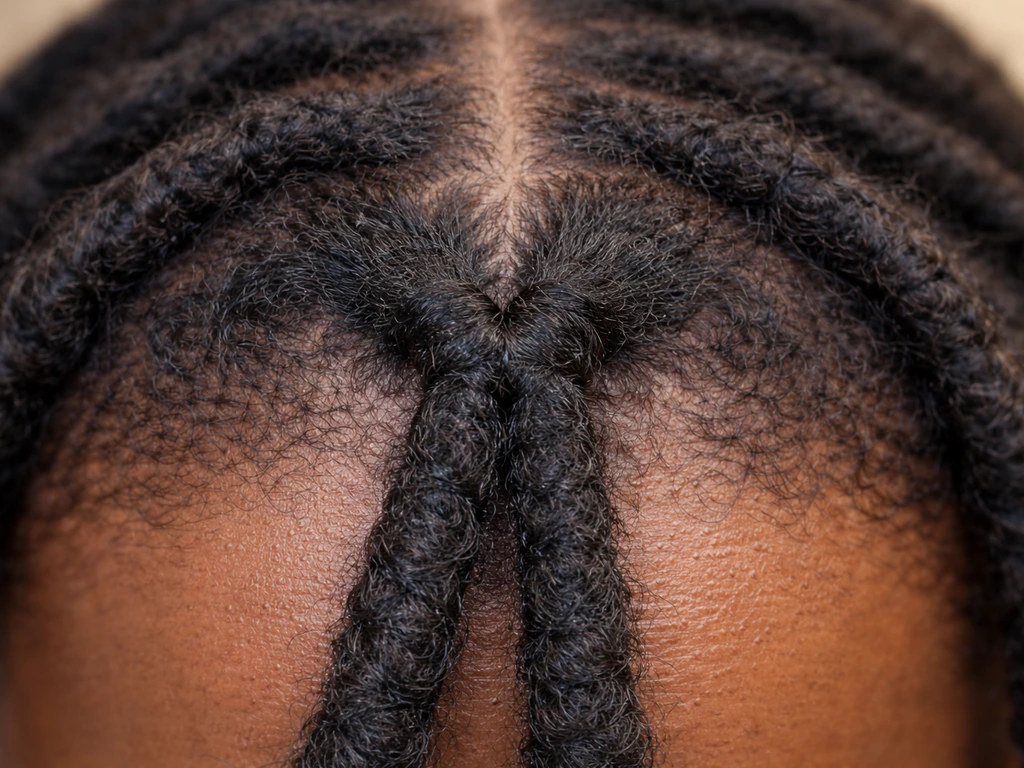
What growth actually looks like when you have locs
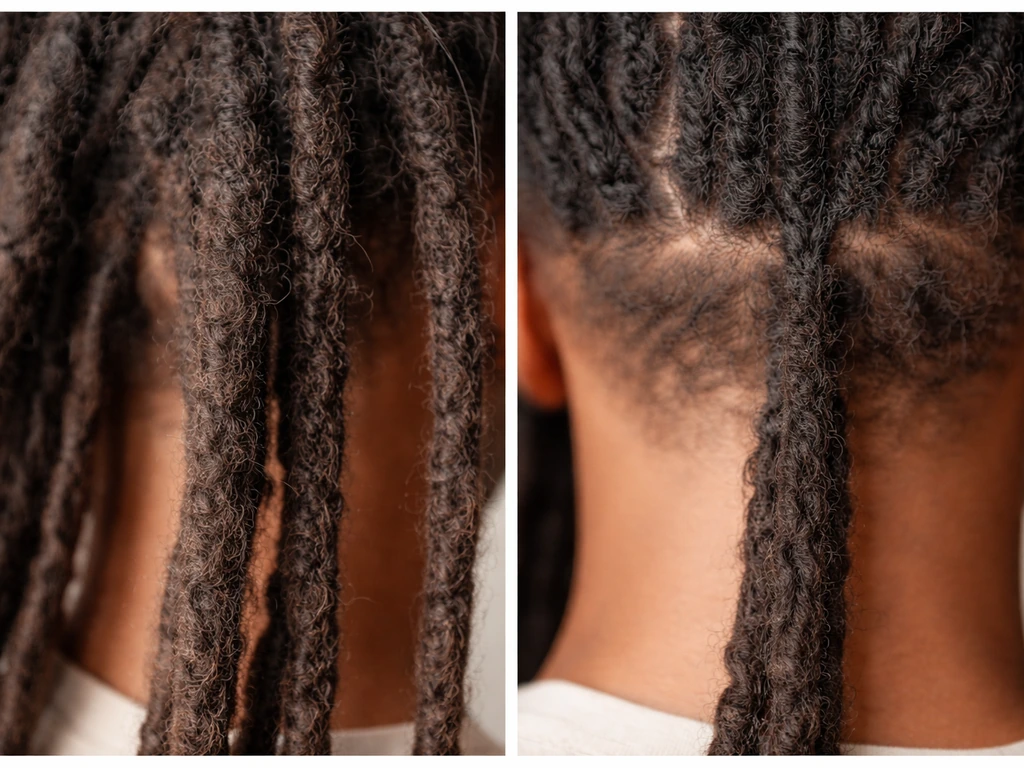
This distinction matters a lot, so let's be precise. Hair grows at roughly 0.35 mm per day, which works out to about 1 centimeter per month or 15 centimeters per year. That growth happens at the dermal papilla, the cluster of cells at the base of each follicle that gets its nutrients from your bloodstream. New cells are produced there, push upward, and eventually become the keratinized hair shaft you can see and feel. The shaft itself, once it leaves the scalp, is dead tissue. It does not get longer on its own. It does not grow outward from the tip or from any point along the loc. Length only comes from the root.
With reattached locs, 'growth' really refers to three separate things that people often conflate: new growth appearing at the scalp (the only true biological growth), retained length that would otherwise have been lost to breakage, and the reattached section looking thicker or more established over time as it locks up with the surrounding hair. All three are worth caring about, but only the first one is driven by your follicles. The other two are driven by how well you maintain and protect what you already have.
Realistic timelines to set right now
In the first month after reattachment, you should expect to see maybe a centimeter of new root growth at most. Your follicles are in anagen phase (the active growth phase) for anywhere from two to six years, so if your hair was actively growing before the breakage, it is still growing. You will start to notice a small band of new, unformed hair at the base of the loc, usually fluffy or frizzy compared to the locked section.
By weeks four to six, that band becomes more visible. By three months, you may have two to three centimeters of new growth. The reattached portion itself will begin to feel more integrated into the loc, less like a patch and more like part of the whole, but this locking process takes longer depending on your texture, the reattachment method used, and how you care for it.
Will a reattached loc actually keep locking and growing?
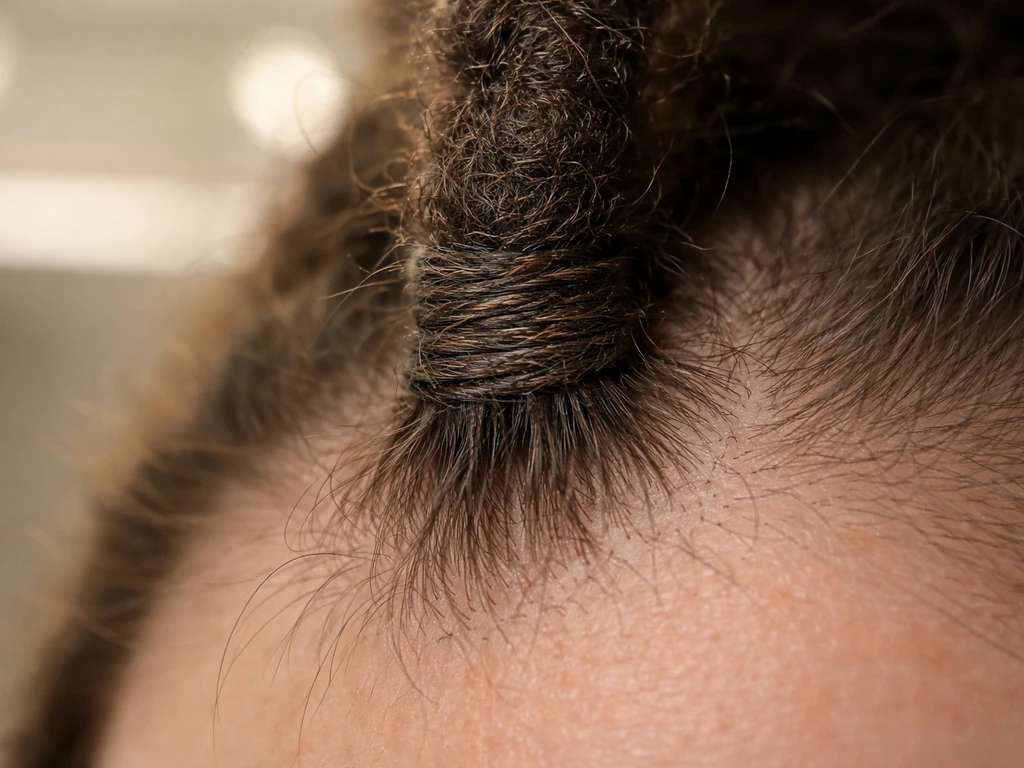
This depends almost entirely on the follicle underneath and the quality of the reattachment, not on the reattachment itself being some kind of growth trigger. Whether your loctician used a latch hook, interlocking, retwisting, or a combination, what matters is whether the method kept enough hair in contact with the scalp to lock naturally as new growth comes in. A sloppy or overly tight reattachment can actually work against you: too much tension at the attachment point can stress the follicle, slow growth, or cause the loc to slip and detach again.
If the original loc broke off very close to the scalp and there is minimal hair to anchor the reattachment, the new growth will need time before it can lock solidly. In this case, the reattached section may feel loose for weeks, and that is normal. What you want to see is new growth gradually interweaving with the reattached portion. If, on the other hand, the breakage happened further down the shaft and there is still a decent nub of loc at the root, the integration happens faster. Either way, the follicle does not care that you reattached anything. It is just doing what it always does: growing at roughly 1 cm a month.
One important myth to address: reattachment does not speed up growth. There is no mechanism by which attaching hair back onto a loc stimulates the follicle to produce more cells faster. If you have seen claims that reattaching locs 'promotes growth,' what they really mean is that it helps you retain the length you had before breakage and protects the new growth as it comes in. That is genuinely valuable, but it is retention, not accelerated growth.
This is the same nuance worth understanding when comparing other protective styles like faux locs or soft locs. Do faux locs grow hair, or do they just sit on top while your follicles do the real work? Soft locs can look different and feel lighter than traditional locs, but they still rely on the same follicle growth for length.
Aftercare for the first 2 to 6 weeks
The first six weeks are the most critical window. The reattached section is vulnerable to slippage, the scalp may be irritated, and new growth is just beginning to emerge. Here is what to actually do during this period:
- Leave the reattached area alone for at least the first two weeks. Resist the urge to manipulate, twist, or check the attachment obsessively. Every time you handle it, you risk loosening the bond.
- Sleep with a satin or silk bonnet or on a satin pillowcase. Cotton pillowcases create friction that pulls at the reattached section all night long.
- Keep the scalp clean but wait at least one week before your first wash, especially if the reattachment involved any bonding agent or if the loc feels fragile at the joint.
- Apply a lightweight oil (jojoba, sweet almond, or grapeseed work well) to the scalp every two to three days. This feeds the scalp without building up on the loc itself.
- Avoid heavy styling tension in the reattached area. No tight updos, no pulling the loc into a ponytail close to that spot.
- Check weekly for slippage by gently holding the loc at the base and feeling whether the reattached portion is still firmly seated. Do not yank.
- Book a follow-up with your loctician at the four-week mark to assess whether the area needs reinforcement or retightening.
Ongoing maintenance after the first six weeks
Once the reattachment has stabilized, you shift into standard loc maintenance, but with a little extra attention to that spot. Retighten the new growth at the base every four to six weeks, not more frequently. Over-retightening is one of the most common causes of traction damage in locs, and it is especially risky in a recently reattached section where the follicle may already be under some mechanical stress. If you use interlocking, limit it to every six to eight weeks. If you use palm rolling or retwisting, four weeks is a reasonable interval for most hair types.
How to wash, moisturize, and avoid buildup
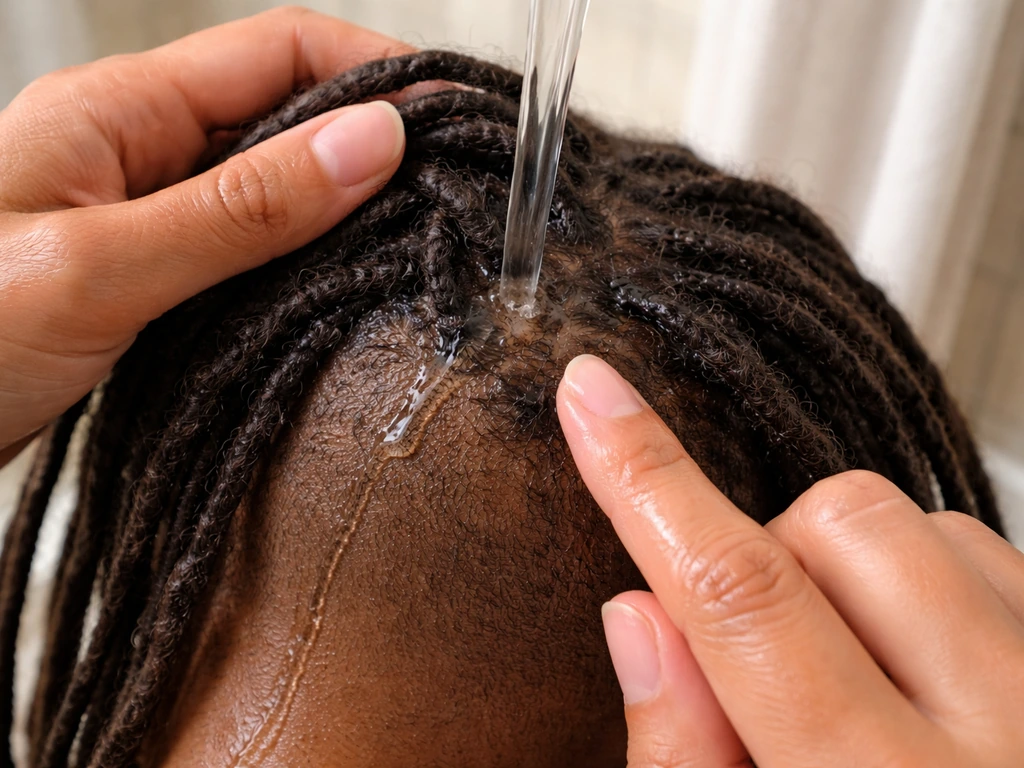
Washing locs with a reattached section requires a bit more care than usual, but it should not be avoided. A clean scalp is a healthy scalp, and a healthy scalp grows hair. Aim to wash every one to two weeks using a residue-free or clarifying shampoo specifically formulated for locs. The American Academy of Dermatology also notes that dandruff or seborrheic dermatitis can be treated with [medicated shampoos](https://www.
aad. org/public/diseases/a-z/seborrheic-dermatitis-treatment), including topical ketoconazole. These shampoos clean without leaving a film that traps debris inside the loc. Apply shampoo directly to the scalp in sections, massage gently with your fingertips (not your nails), and let the rinse water carry the cleanser through the locs.
Avoid scrubbing or piling locs on top of your head, which causes tangling and puts stress on reattached points.
Moisturizing locs is less about product quantity and more about getting water to the scalp and the hair. Lightly mist your scalp and locs with water every two to three days, then seal with a thin layer of oil. Stay away from heavy butters, thick creams, or wax-based products anywhere near the reattached section. These accelerate buildup inside the loc and can cause the loc to feel brittle and break down from the inside over months.
If you are dealing with dry locs and want a conditioning treatment, do an apple cider vinegar rinse once a month: one part ACV to four parts water, applied after shampooing and rinsed out thoroughly. This removes mineral and product buildup while closing the cuticle.
Drying time matters more than most people realize. Locs that stay damp for hours, especially at the base, are prone to mildew and odor, which damages the hair from within. After washing, squeeze (do not rub) excess water out gently, then sit under a hooded dryer for 20 to 30 minutes or allow air drying in a warm space. The reattached section should be completely dry before you go to sleep.
Signs the reattachment is failing
Knowing what to watch for can save you from a second breakage or, worse, permanent follicle damage. These are the warning signs to take seriously:
- Slippage: the reattached section slides or rotates at the joint when you gently touch it. A small amount of movement in week one is normal, but by week three it should feel stable.
- Thinning at the base: if the hair around the attachment point looks sparse or the loc looks noticeably thinner at the root than the shaft, you may be losing hair from the follicle.
- Scalp irritation or persistent tenderness: some sensitivity in the first few days is expected, but ongoing soreness, redness, or raised bumps at the attachment site are signs of too much tension or an allergic reaction to any product used during reattachment.
- Shedding from the root: finding hairs with a white bulb at the tip (telogen hairs) occasionally is normal, but clusters of them coming from the reattached area suggest the follicle is under stress.
- Traction alopecia symptoms: a receding line around the hairline, tiny pimples at follicle openings, or a consistently itchy and flaking scalp near the attachment, especially at edges or temples. This is a medical issue, not a styling issue, and it needs attention quickly.
If you see thinning, persistent pain, or any signs of traction alopecia, stop all tension-creating maintenance immediately and see a dermatologist or trichologist. Do not wait to see if it resolves on its own. Traction alopecia caught early is reversible. Left too long, it can cause permanent follicle scarring and hair loss in that area. A loctician can reassess the technique; a dermatologist can assess whether the follicle itself is affected.
How to actually support hair growth and retention
Reattachment is a protective measure, not a growth solution. If you want your hair to grow as well as it possibly can after reattachment, you need to support the biological process happening inside your body, not just what you put on the outside of your hair.
Nutrition
Your follicles are among the most metabolically active cells in your body. They need a steady supply of protein (hair is mostly keratin, a protein), iron, zinc, biotin, and vitamins D and B12 to stay in anagen phase and produce strong hair. If you are deficient in any of these, your anagen phase shortens, your shed rate increases, and the hair that does grow comes in thinner and weaker. Eat enough protein daily, at least 50 to 75 grams for most adults, and consider getting a basic blood panel to check your ferritin (stored iron) and vitamin D levels. Low ferritin is one of the most underdiagnosed causes of excess shedding, especially in women.
Scalp health
A clean, well-circulated scalp is the single best thing you can do topically for growth. Scalp massage for five minutes several times a week increases blood flow to the dermal papilla and may help keep follicles in anagen phase longer. Use your fingertips, not a brush, and do it gently if you have reattached sections nearby. If you have dandruff, seborrheic dermatitis, or persistent flaking, treat it proactively with a zinc pyrithione or ketoconazole shampoo. Chronic scalp inflammation creates an environment that slows growth and accelerates shedding.
Stress and sleep
Chronic stress elevates cortisol, which can push follicles prematurely from anagen into telogen (the resting and shedding phase). This is the mechanism behind telogen effluvium, a condition where significant physical or emotional stress causes widespread shedding two to three months after the stressor. If your original loc breakage was related to a period of physical or emotional stress, your body may still be recovering. Prioritize sleep (seven to nine hours consistently) and manage stress through whatever practices work for you. This is not soft advice. It is follicle biology.
A comparison of what helps vs. what does not
| Factor | Effect on growth/retention | What to actually do |
|---|---|---|
| Reattachment itself | No direct growth effect; supports length retention | Ensure quality reattachment from a skilled loctician |
| Scalp massage | May improve circulation to follicles | 5 minutes several times per week with fingertips |
| Protein intake | Essential for keratin production and anagen phase | 50–75g of protein daily from food |
| Iron/ferritin levels | Low levels shorten anagen and increase shedding | Get a blood panel; supplement if deficient |
| Tension/traction | Direct cause of follicle damage and hair loss | Avoid tight styles near reattached area; retighten every 4–6 weeks only |
| Product buildup | Weakens shaft, causes internal loc breakdown | Use residue-free shampoo; avoid waxes and heavy butters |
| Chronic stress | Pushes follicles into telogen, causing shedding | Prioritize sleep and stress reduction |
| Scalp inflammation | Disrupts follicle function | Treat dandruff or dermatitis proactively |
Your action plan starting today
If you just had locs reattached or are planning to, here is what to do in the right order:
- Assess the attachment quality today: gently feel around the reattached loc. It should feel secure at the base, not loose or airy. If it is already sliding, contact your loctician this week, not next month.
- Start a scalp care routine immediately: lightweight oil every two to three days, scalp massage on the days between, satin bonnet every night.
- Wait at least seven days before washing, then establish a one-to-two-week wash schedule using a residue-free shampoo.
- Check your diet and, if you have not had bloodwork recently, book a panel to check ferritin, vitamin D, and B12.
- Mark your calendar for a four-week follow-up with your loctician. Do not skip this.
- Document your reattached section with a photo today and every two weeks. Progress in locs is slow and a camera catches what your eyes miss.
- Learn the failure signs listed above and check the reattached area once a week, gently, with intention.
Reattached locs can absolutely continue to grow, lock up properly, and become indistinguishable from the rest of your hair over time. But that outcome depends on healthy follicles, a supportive environment, and consistent low-manipulation care, not on the reattachment being some kind of growth shortcut. The biology is simple: your follicles grow about a centimeter a month regardless. Your job is to keep them healthy and keep the hair they produce attached to your head. Do that, and reattachment is a genuine tool for maintaining your length and your locs.
FAQ
Do reattached locs grow faster than my other locs?
Usually no. The reattached section can look like it’s “catching up” because it’s new and untangled at the base, but biological length growth still happens at the follicle at the same rate (about a centimeter per month). If it seems to grow slower, it’s often tension, dryness, or poor contact at the scalp rather than a lack of follicle activity.
How can I tell new growth from the reattachment settling in?
New growth shows up as a soft, fluffy or frizzy band at the base that gradually becomes more uniform as it forms hair. Settling looks more like the loc tightening and integrating without a consistent band of fresh hair emergence. If you see pain or thinning, treat it as a signal to stop maintenance and get assessed.
What if my reattached loc feels loose after weeks, is that normal?
A little looseness can be normal if the break happened extremely close to the scalp or there wasn’t much remaining anchor hair. The key sign is gradual interweaving of the new growth into the reattached portion. If the loc keeps slipping repeatedly, increases traction tension, or you notice widening gaps, the attachment may need reassessment.
Can I sleep with reattached locs the same way I always do?
You can, but prioritize avoiding movement at the base. Use a satin bonnet or pillowcase and make sure the locs are fully dry before sleep, because dampness plus friction increases breakage risk at reattachment points.
Should I retwist or interlock more often on a reattached loc to make it lock faster?
No, more frequent tightening is a common mistake. In the early window, over-retightening can stress follicles and contribute to traction damage. A safer approach is to follow the usual intervals (around every 4 to 6 weeks for most retwisting, every 6 to 8 weeks for interlocking) and only adjust if a loctician confirms it’s needed.
Will washing make my reattached locs fall off?
Washing should not pull them out if the reattachment is stable. The main risk is tangling and mechanical stress from scrubbing or piling locs. Shampoo by applying to the scalp in sections, use gentle fingertip massage, and allow water to rinse through rather than forcing product through the locs.
What should I do if I see buildup only around the reattached area?
If buildup is localized, it often comes from heavy oils or creams placed near the base. Switch to lighter sealing (thin oil only after misting), stick with residue-free or clarifying loc shampoo on your normal schedule, and rinse thoroughly so product is not trapped at the attachment point.
How dry does the reattached section need to be, and how long can it take?
It should be completely dry before sleep, especially at the root. If the base stays damp for hours, mildew and odor can develop, which can weaken hair over time. If air-drying is slow for your hair type, plan extra hooded dryer time and check the base directly before going to bed.
Do I need a blood test to support growth after reattachment?
Not always, but it can be helpful if you have heavy shedding, fatigue, irregular periods, recent illness, or dietary limits. A basic blood panel that includes ferritin and vitamin D can identify deficiencies that shorten the anagen phase and make new growth come in thinner.
What symptoms mean I should stop maintenance and see a professional immediately?
Stop tension-based maintenance and seek evaluation if you have persistent pain at the reattachment, visible thinning, or signs consistent with traction alopecia. Catching traction damage early is crucial because prolonged inflammation or mechanical stress can lead to scarring and permanent loss.
Next Article
How to Grow Waist-Length Black Hair: Evidence-Based Guide
How to grow and retain waist-length Black hair: realistic timelines, routines, protective styles, and evidence-basedTips