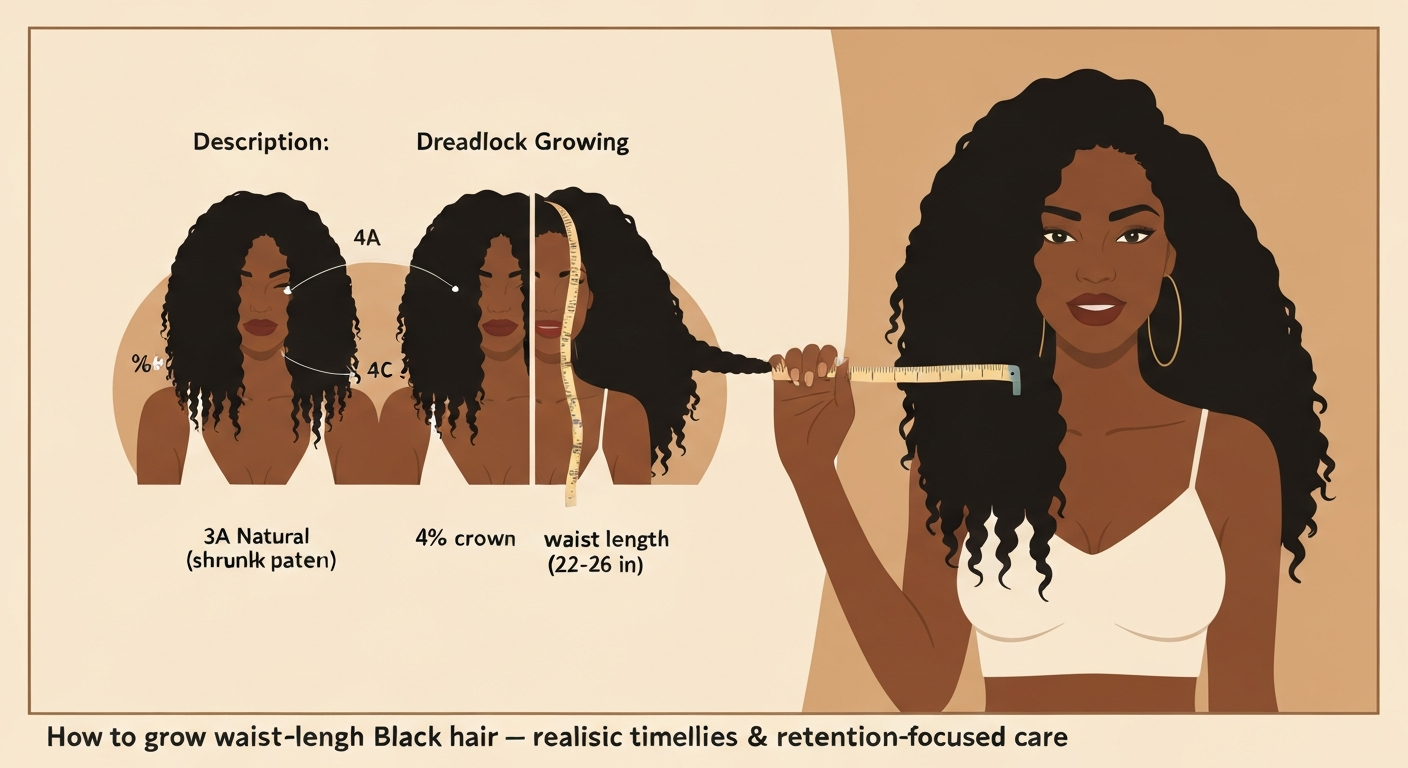
Curly and textured hair grows the same way all hair does: from a follicle in your scalp, at roughly half an inch per month. The biology is identical across hair types. What's different is what happens after that hair leaves the scalp. When you grow it out, your curls keep developing and you will usually see more curl definition as the length increases. Because curly and coily strands grow in a curved, helical path, they coil back toward the scalp as they lengthen, which is why your hair can feel like it's standing still even when new growth is coming in every single month. That's not a growth problem. It's a geometry problem.
How Does Curly Hair Grow and Why Length Can Look Stuck

Simone Okonkwo
13 May 2026
What's actually happening inside your follicle
Every strand on your head is on its own individual timeline, cycling through three main phases: anagen (active growth), catagen (transition), and telogen (rest). During anagen, the hair matrix cells at the base of the follicle divide rapidly and push new hair up and out. This phase lasts roughly 2 to 6 years, with an average around 3 years. That lifespan determines the maximum length your hair can potentially reach before it sheds naturally.
After anagen ends, the follicle enters blank" rel="noopener noreferrer">catagen, a brief wind-down phase that lasts only about 1 to 2 weeks. Then comes telogen, the resting phase, which runs for roughly 3 to 5 months. At the end of telogen, the old hair sheds and the follicle cycles back into anagen to start a new strand. At any given time, about 90% of your scalp hairs are in anagen and around 10% are resting in telogen, which means some shedding every day is completely normal. The American Academy of Dermatology puts normal daily shedding at 50 to 100 hairs. Normal daily shedding is often framed as blank" rel="noopener noreferrer">50 to 100 hairs per day, and when shedding becomes excessive it can be termed telogen effluvium.
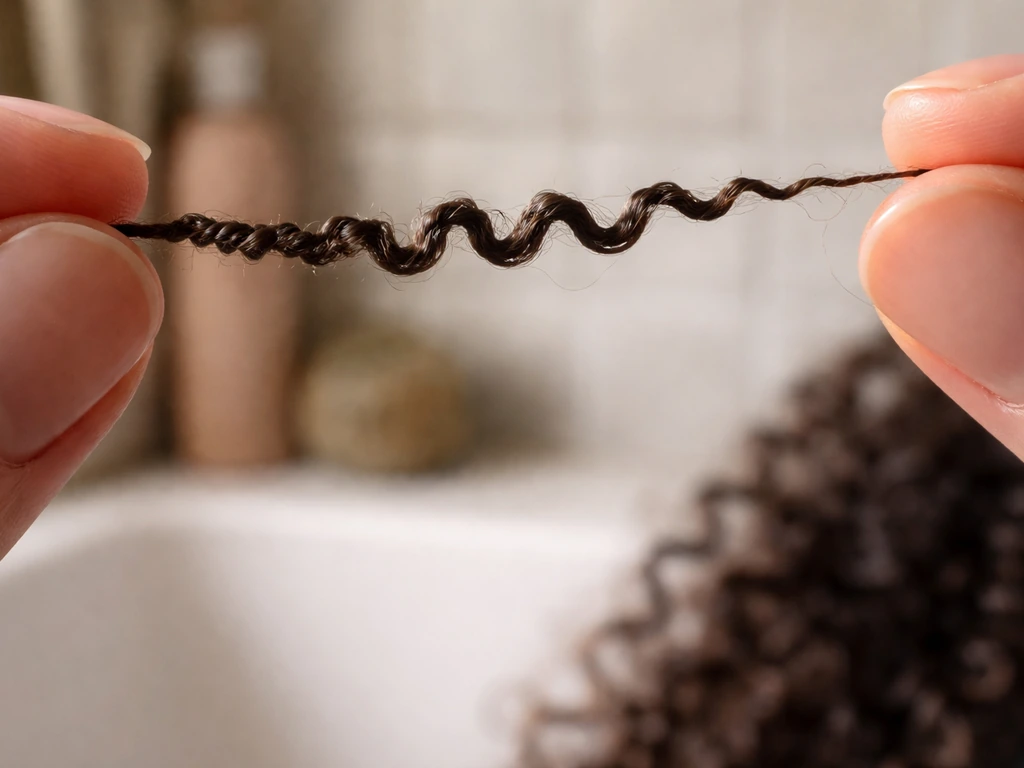
Here's where curl pattern comes in: the shape of your follicle determines the shape of your hair. Straight hair grows from a round follicle that sits vertically in the scalp. Curly and coily hair grows from an oval or asymmetrical follicle that curves at an angle, sometimes dramatically so. That curved follicle is what causes the hair shaft to corkscrew as it emerges. This is genetic. You can temporarily alter the curl pattern with heat or chemicals, but the follicle itself doesn't change, which is why natural curl pattern always returns to what your DNA programmed it to be.
Growth rate vs. what you actually see: the shrinkage reality
The half-inch-per-month average applies to textured hair too, though there's real variation between individuals. The frustrating part is that half an inch of new growth on a 4C coil doesn't look like half an inch. A tightly coiled strand can spring back to 50%, 60%, or even 75% shorter than its actual length. So if your hair grows an inch in two months, it might only appear to add a quarter inch of visible length. You haven't lost growth. The hair is there. It's just coiled.
This is worth really sitting with because it's the root of so much frustration. People with looser curl patterns see their length progress more clearly because stretch is built into the look of their style. People with tighter coils or kinks often can't eyeball their growth at all in everyday styles. The only way to accurately track growth on tightly coiled hair is to measure a stretched strand, not what you see in the mirror on a wash day.
What to expect month by month after a cut or during a grow-out

If you've just had a big cut or you're in the middle of a grow-out, here's a realistic timeline. In the first couple of months, you'll mostly notice your hair filling in and getting denser looking, not necessarily longer. Months three through six is when you'll start to feel the difference in weight and possibly see length on stretched strands. By months nine to twelve, most people with healthy hair and decent retention can expect somewhere between four and six inches of new growth, though tighter textures will experience that as far less visible length due to shrinkage.
One thing that trips people up is the transition phase if they're growing out chemically processed hair. If you perm your hair, the curl pattern can change, but the growth rate still comes from your follicles, so new strands should grow out curly based on the perm’s effect chemically processed hair. A perm can temporarily change the look and feel of your curl pattern, but your natural growth rate still comes from your follicles chemically processed hair. You'll have two different textures meeting at what's called the line of demarcation, where your new natural curl growth meets the relaxed or color-treated section. That junction is structurally weak and prone to breakage. A lot of people think their hair stopped growing during a transition, when really it grew fine but kept snapping off at that weak point. Patience, low manipulation, and moisture are everything during a transition.
Does curly hair grow back after shedding or breakage?
This depends entirely on what's causing the hair loss, and the distinction between shedding and breakage matters a lot. Normal shedding is telogen phase hair falling out from the root, complete with a small white bulb at the base. That follicle is intact and will cycle back into anagen and produce a new strand. Breakage is different. It's the hair shaft snapping mid-strand due to damage, dryness, mechanical stress, or chemical processing. Breakage doesn't have a bulb. It just looks like short, jagged pieces in your brush or sink. Breakage is not the same as losing a hair, but if it happens constantly at the same length, your hair will seem to be stuck at that length no matter how much it grows.
If you're dealing with heavier-than-normal shedding, timing matters. Telogen effluvium, the clinical term for excessive shedding, often starts about 2 to 3 months after a triggering stressor: illness, surgery, significant hormonal shifts, extreme dieting, or prolonged stress. That delay happens because the stressor pushed a bunch of hairs prematurely into telogen, where they sat resting for several months before finally shedding. Acute telogen effluvium usually resolves on its own within 3 to 6 months of the shedding starting, once the trigger is removed. The follicles return to anagen and regrow.
Where things get more serious is when the follicle itself is damaged. Traction alopecia from years of tight styles, scarring from certain scalp conditions, or chemical burns can permanently impair follicles. In those cases, the hair may not grow back, or may grow back thinner. This is why early intervention matters. If you notice consistent thinning at your edges, temples, or crown, see a dermatologist rather than waiting it out.
Why length retention is the real game for textured hair
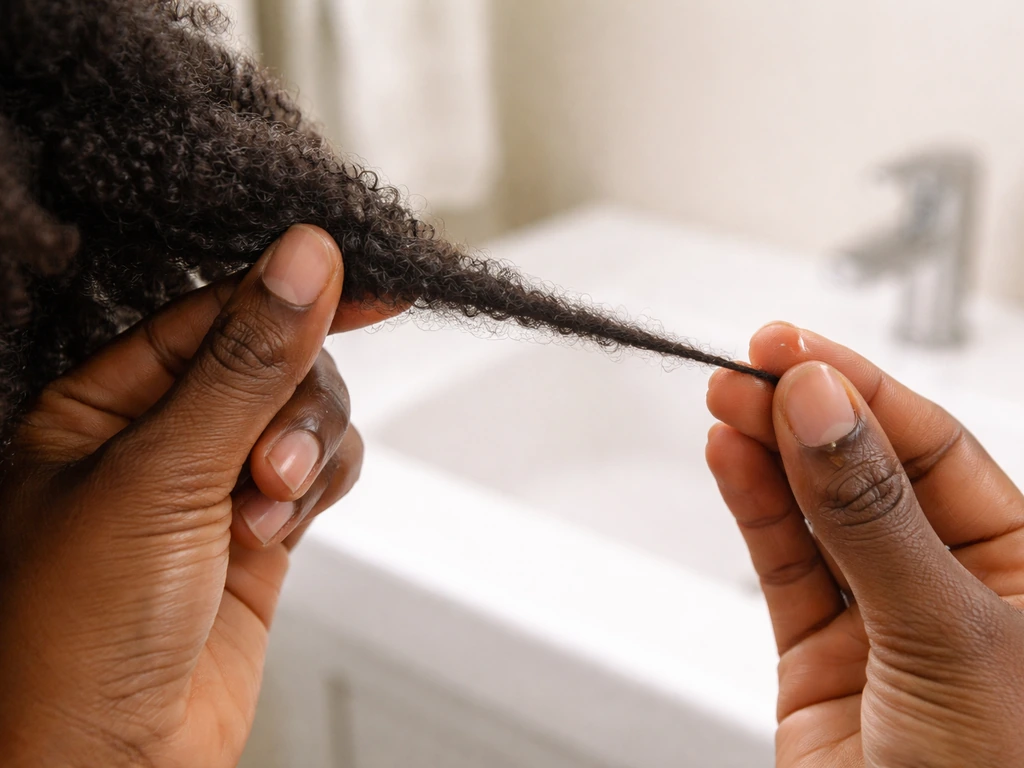
For most people asking how to grow curly hair, the issue isn't actually growth. It's retention: keeping the hair you already grew on your head instead of losing it to breakage. Textured hair, especially tightly coiled hair, has structural characteristics that make it more vulnerable than straight hair. The twists and curves of the hair shaft create points of natural weakness. The sebum from your scalp has a harder time traveling down a coiled shaft, so natural moisture distribution is less efficient. All of this means intentional care is non-negotiable.
Moisture and sealing
Dry hair breaks. It's that simple. Keeping textured hair moisturized, and then sealing that moisture in with an oil or butter, dramatically reduces breakage. The LOC or LCO method (liquid, oil, cream, in some order) is a practical framework a lot of people with natural hair use. The key is water-based products first, then a sealant. What works varies by porosity, so you may need to experiment, but the principle holds.
Gentle detangling
This is where a huge amount of breakage happens for people with curly and coily hair. Detangling dry, or yanking through knots with a fine-tooth comb, causes enormous damage. Always detangle on wet or damp hair with conditioner or a detangling product in it, work from ends to roots, and use your fingers or a wide-tooth comb. Take your time. The few minutes you save by rushing will cost you in inches of broken hair.
Low manipulation and protective styling
Low manipulation styles reduce how often your hands, combs, and products are touching and stressing your hair. Protective styles, like braids, twists, and buns, tuck the ends of your hair away and minimize friction and environmental exposure. Both can meaningfully reduce breakage when done correctly. The emphasis is on when done correctly, which we'll come back to in a moment.
Scalp health
Your follicles live in your scalp. Scalp hygiene matters. Product buildup, dandruff, seborrheic dermatitis, and fungal issues can all interfere with the health of your scalp environment. Wash regularly enough to keep your scalp clean, even if you're in a protective style. Skipping washes for extended periods in the name of retaining moisture can backfire if your scalp becomes inflamed or infected.
Myths worth cutting through
The biggest one: braids, twists, locs, and weaves do not make your hair grow faster. Your hair grows from your follicles at its genetically determined rate regardless of what style you're wearing. What these styles can do is help you retain the length you already grew by reducing manipulation, protecting ends from friction and dryness, and keeping you out of your hair. Retention is real. Accelerated growth from styling is not.
There's an important caveat though. Protective styles only protect when they're installed without excessive tension, maintained with moisture, and taken down before too long. A braided style left in for three months with no moisture and tight enough to cause pulling at the edges is not a protective style. It's traction damage waiting to happen. The edges and temples are the most vulnerable areas, and traction alopecia from chronic tight pulling is one of the more common causes of permanent hair loss in Black women.
The other myth worth naming is the growth stimulator category of products. Scalp oils, caffeine serums, rice water, and various other treatments are heavily marketed as growth accelerators. Some ingredients, like minoxidil, have actual clinical evidence behind them for certain types of hair loss. Most others have minimal or no robust evidence for healthy people without a diagnosed deficiency or condition. If your follicles are healthy and your nutrition is solid, a scalp massage probably isn't going to get you to bra-strap length in six months. What it might do is improve circulation and feel great, which isn't nothing, but manage expectations.
It's also worth addressing the idea that relaxed or chemically processed hair grows slower than natural hair. The follicle doesn't know what you put on your hair shaft. Chemical processing doesn't change your growth rate. It can, however, increase breakage if the hair isn't kept moisturized and handled carefully. Many people who transition from relaxed to natural notice what seems like more growth, when really they're just retaining more length because the structural integrity of the natural strand holds up better under their current routine.
A quick comparison: what affects growth vs. what affects retention
| Factor | Affects Growth Rate? | Affects Retention? | Bottom Line |
|---|---|---|---|
| Genetics / follicle shape | Yes | No | Determines your curl pattern and max growth rate |
| Nutrition and health | Yes (if deficient) | Yes | Deficiencies in iron, protein, and vitamins can slow growth and cause shedding |
| Protective styles (braids, twists, weaves) | No | Yes (if done correctly) | Retain length by reducing manipulation; cause damage if too tight or neglected |
| Heat and chemical processing | No | Yes (negative) | Increases breakage and fragility at the shaft |
| Scalp health | Yes | Yes | Unhealthy scalp environment impairs follicle function |
| Moisture and sealing routine | No | Yes (positive) | Reduces breakage significantly on textured hair |
| Tight hairstyles / traction | Can damage follicle permanently | Yes (negative) | Leading cause of traction alopecia in textured hair |
What to actually do starting now
- Measure stretched length, not shrunk length. Pick a consistent day each month, stretch a few strands near the crown, and note the length. That's your real data.
- Audit your breakage. Check your hands after styling and the bottom of your shower. Short, jagged pieces mean breakage. Long strands with a white tip mean shedding. Each one needs a different response.
- Look at your edges and temples honestly. If they're thinning or receding, take it seriously. Ease tension in your styles immediately and consider seeing a dermatologist before the damage becomes permanent.
- Simplify your routine toward moisture. If your hair is dry and brittle, everything else you do is less effective. Find a moisturizing conditioner and leave-in that works for your porosity, and seal consistently.
- Be realistic about protective style duration. Most hair professionals suggest a maximum of 6 to 8 weeks for most protective styles. Beyond that, new growth tangles with the style, tension accumulates, and the style stops being protective.
- If shedding spiked in the last few months, think back 2 to 3 months. Illness, stress, diet changes? Telogen effluvium typically resolves on its own, but if heavy shedding continues past six months or you notice patterned thinning, see a doctor.
The question of whether curly hair can grow long comes up constantly, and the honest answer is yes, most people with textured hair can grow significant length with a retention-focused routine. The biology is not the obstacle. The practices around the hair are. Get those right, and what you'll see isn't magic. It's just your hair doing what it was already doing, finally being allowed to stay.
FAQ
If curly hair grows half an inch per month, why does my length look like it does not move?
Use a stretched measurement, not what you see after a shrink-prone wash day. A practical method is to lightly stretch one strand (for example, after conditioning and detangling) and measure from root to tip with the same technique every 2 to 4 weeks.
Can my curly hair growth slow down temporarily even if my follicles are healthy?
Half an inch is an average, and your real timeline can vary if your diet, stress level, sleep, illness, or hormones have recently changed. Also, density can increase before visible length because new growth may “fill in” the hair mass while ends still feel short.
How can I tell whether my “stuck” hair is due to slow growth or breakage?
Yes, but only if you are not confusing regrowth with retention. Track shrink and breakage separately: regrowth is how much new fiber is coming out of the scalp, while retention is how much of that fiber survives to the length you can see and measure.
What signs tell me I am shedding from the root versus breaking my hair off?
A shedding count helps, especially if you can identify a bulb at the base of shed hairs. If you see small white bulbs, that points more toward normal telogen shedding. Short jagged pieces without bulbs usually point to breakage from dryness, friction, or chemicals.
If I recently had stress or illness, when would shedding from telogen effluvium show up?
If you had a trigger like major stress, illness, surgery, or significant weight loss, telogen effluvium often starts shedding 2 to 3 months later and then typically improves within 3 to 6 months after the trigger is removed. If shedding continues beyond that window or worsening happens at the same spots, get evaluated.
During a relaxer or perm grow-out, is my hair still growing, and why does it feel weak?
Chemical processing can change how new hair looks as it grows out, but it does not speed up follicle growth. What you should expect is a “new curl” texture meeting older relaxed or color-treated hair at a line of demarcation, which is structurally weaker and often where breakage concentrates.
How do I know whether my protective style is actually protecting my hair or damaging my edges?
Protective styles can help retention, but tension and neglect are the difference between protection and traction damage. Avoid tight installation, keep the style moisturized, and plan a shorter wear window than you would if it were itch-free, loose, and end-protected.
Do scalp oils, caffeine products, or rice water really make curly hair grow faster?
Gentle scalp stimulation is fine, but it is not the same as treating a hair-loss cause. If you have diagnosed issues like androgenetic hair loss, inflammation, or a nutrient deficiency, targeted treatment matters more than oils or “growth” serums.
Why does my hair sometimes seem to grow faster after transitioning from relaxed to natural?
It can look like faster growth because natural curl structure often holds up better than previously relaxed hair, so more length survives your routine. Follicle growth rate is still driven by your biology, but better integrity can reduce breakage and make it seem like you gained length quickly.
If I focus on moisture and my hair is still breaking, what should I adjust next?
Protein balance matters. If your hair is breaking, it is often from lack of moisture, but overdoing protein can also make strands feel stiff and snap more easily. A good next step is to watch for dryness or brittleness and adjust your regimen based on how your hair responds.
Next Article
How to Grow Waist-Length Black Hair: Evidence-Based Guide
How to grow and retain waist-length Black hair: realistic timelines, routines, protective styles, and evidence-basedTips