Growth vs. length retention: why it is not the same thing
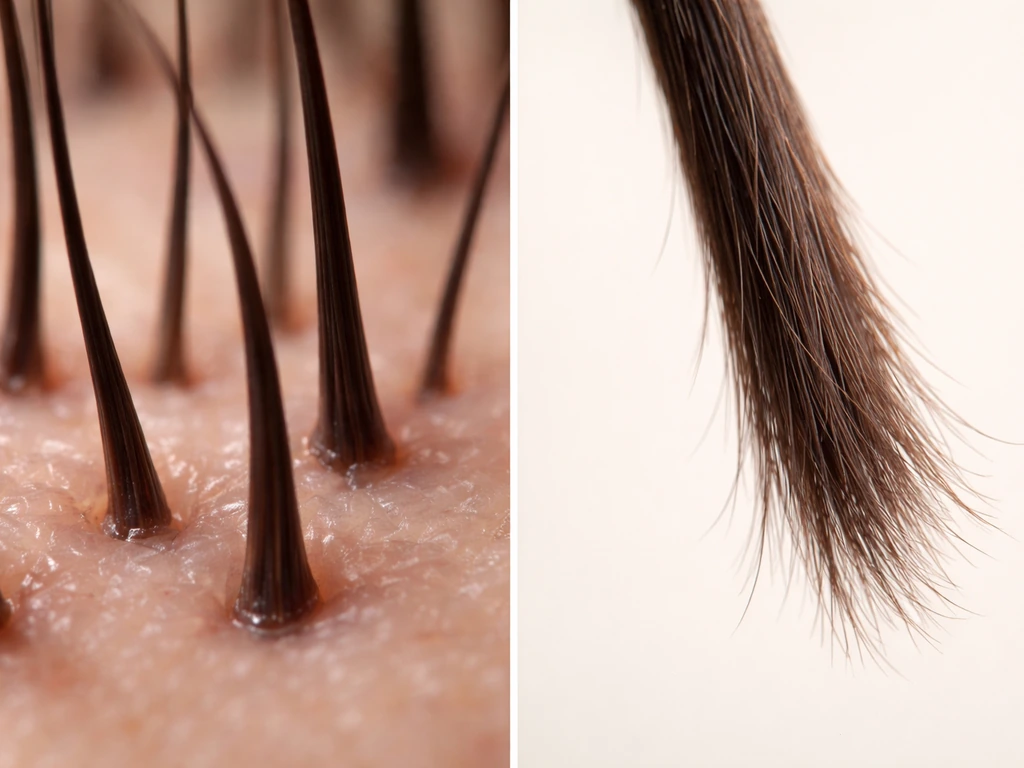
Hair growth happens at the follicle, deep in your scalp. That process is governed by genetics, hormones, nutrition, and scalp health. It runs at about 0.3 mm per day during the active growth phase, adding up to roughly 1 cm per month, though the real-world range is wide: some people average 0.6 cm per month, others closer to 3 cm. A braid sitting on top of your scalp has zero influence on what is happening inside that follicle.
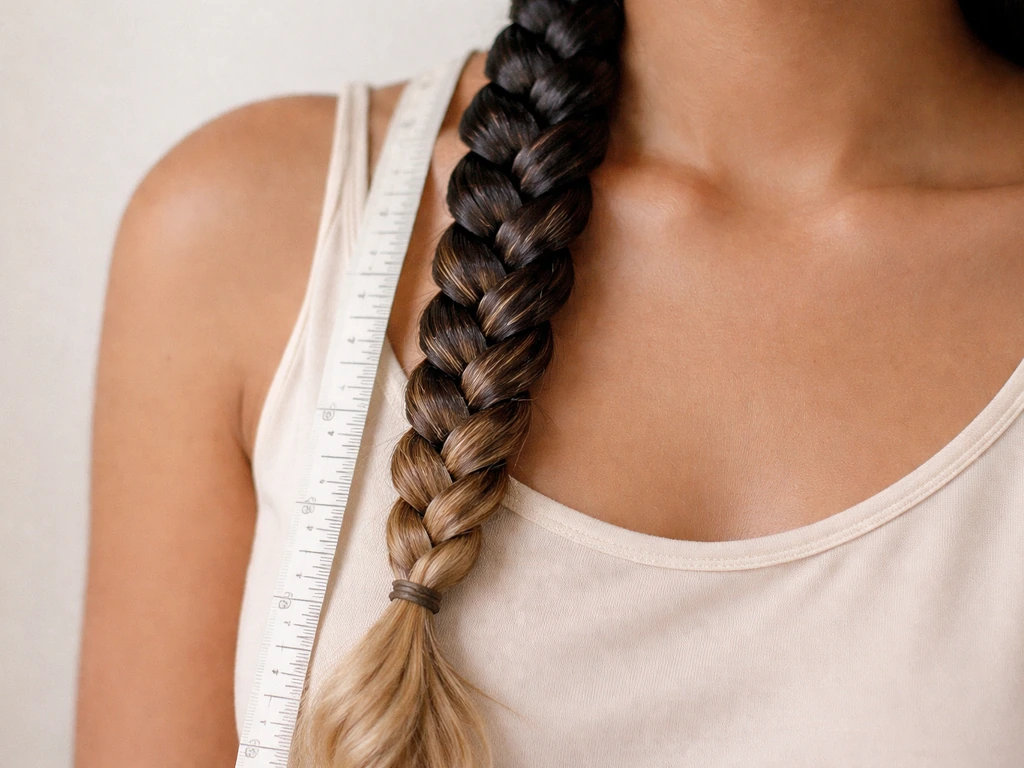
Length retention is a completely different thing. Your hair is constantly being grown from the root, but it is also constantly breaking off at the ends if you are rough with it. When you wear braids, you reduce daily manipulation: no daily detangling, no heat, less friction from pillowcases, less environmental exposure on the ends. The result is that less hair breaks off over the weeks you are in the style, so when you take the braids down, your hair appears noticeably longer. That is not new growth, that is preserved growth. And for people with tightly coiled or kinky hair textures, where shrinkage can mask length and daily manipulation is a major breakage trigger, this difference is huge.
Why braids seem to grow hair (and why that myth sticks)
The myth is persistent for a good reason: the result looks real. Someone puts their hair in braids for six to eight weeks, takes them down, and their hair is noticeably longer than before. It feels like the braids did something. But what actually happened is that shrinkage was reduced (stretched styles reveal length that curl patterns normally hide), breakage was minimized, and weeks of accumulated growth were preserved at the ends instead of snapping off. Add the psychological effect of not seeing your hair every day, and the reveal feels dramatic.
There is also a real indirect benefit worth acknowledging. Reducing chronic manipulation lowers the mechanical stress on your strands. Less stress means less breakage. Less breakage means the hair your follicles produce every month actually stays on your head. So in a roundabout way, protective styling does support the appearance of growth, just not by speeding up the follicle itself.
Which braid styles work best, and how long should you wear them
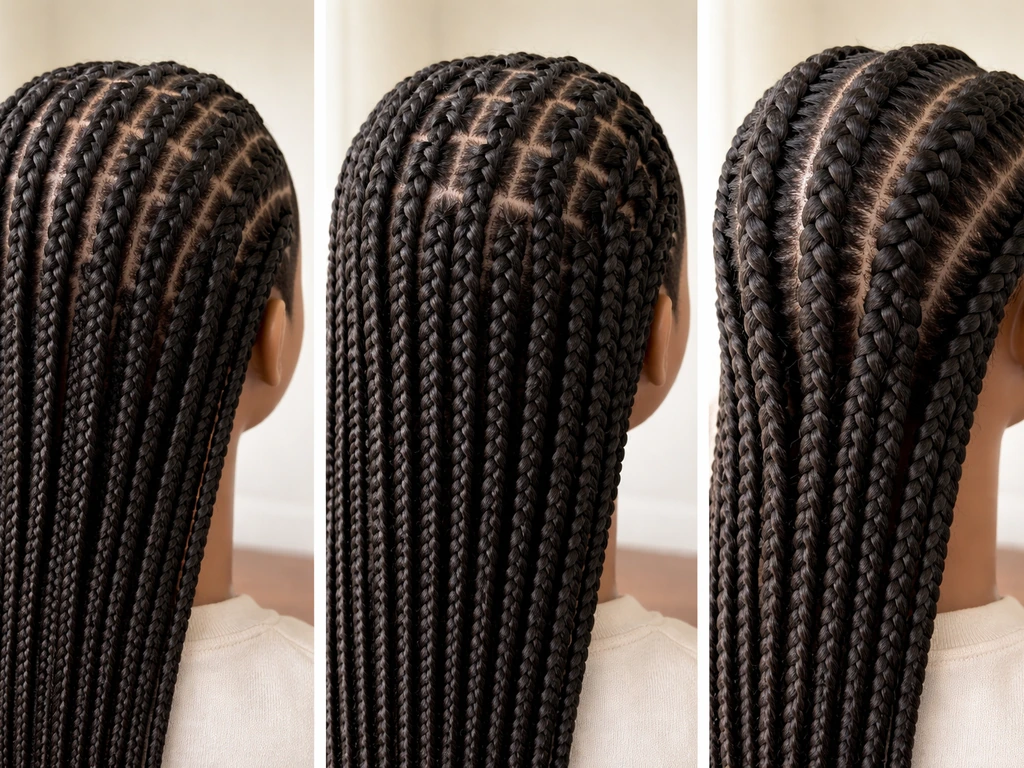
The type of braid matters less than how it is installed and maintained. That said, some styles carry more risk than others by design. Knotless braids, for example, start with your own hair before adding extensions, which distributes weight more gradually and reduces tension at the root compared to traditional box braids where full extension weight is added from the very first knot. If tension on your hairline is a concern, knotless braids for hair growth are worth exploring as a lower-tension alternative.
Feed-in braids (also called Ghana braids) use an incremental extension technique that adds hair gradually along the braid, keeping tension lower at the scalp near the hairline. If you want to understand the specific mechanics behind that approach, the details on feed-in braids and hair growth break down exactly how installation technique affects retention outcomes.
Box braids are among the most popular protective styles, and they can absolutely support length retention when done correctly. For a deeper dive into the specific research and technique considerations behind that style, the breakdown of whether box braids grow your hair is worth reading alongside this guide.
Micro braids create very small, fine sections which can look delicate, but the smaller the section, the more tension concentrated on a thin strand of hair. They can work well for retention when installed loosely with good technique, but the risk of breakage at the parting lines is real. Micro braids and hair growth covers the trade-offs in more detail if you are considering that style.
Stitch braids are cornrow-based with a distinctive horizontal feed pattern. They look sharp but sit flat and close to the scalp, which means the hairline tension question is especially relevant. The article on stitch braids and hair growth covers what to watch for with that style. Goddess braids are chunkier and often looser, which generally means less tension per section, though the weight of thick extensions can offset that if the stylist is not careful. More on that in the guide to goddess braids and hair growth.
As for wear time, six to eight weeks is a widely recommended window. Beyond eight weeks, new growth at the root starts to create a "locking" effect where shed hairs tangle with the braid, leading to matting and mechanical damage during removal. Longer wear also makes it harder to keep the scalp clean, which can affect scalp health and, indirectly, the environment your follicles need to function well.
| Braid Style | Tension Level | Best For | Watch Out For |
|---|
| Knotless braids | Lower (gradual weight) | Sensitive scalps, edges, fine natural hair | Still tight if stylist rushes the base |
| Box braids | Moderate to high | Versatile retention, medium to thick hair | Heavy extensions, tight knots at root |
| Feed-in / Ghana braids | Lower at hairline | Hairline protection, sleek look | Prolonged wear past 6–8 weeks |
| Micro braids | High per strand | Long-term wear, fine detail styles | Breakage at parting lines, over-thin sections |
| Stitch braids | Moderate (flat base) | Neat scalp look, shorter-term wear | Hairline tension, tight cornrow base |
| Goddess braids | Generally lower | Thicker hair, lower manipulation | Extension weight if braids are very thick |
Natural vs. relaxed hair: the results are not the same
If your hair is natural (unprocessed), braids can be an excellent protective tool. The coily and kinky curl patterns common in Type 4 hair are inherently fragile at points of curl, and daily manipulation, detangling, and shrinkage-related tangles are major breakage triggers. Braids reduce all of that. The trade-off is that natural hair needs moisture to stay healthy, and being locked into a style for weeks can mean the hair goes dry unless you are actively maintaining it.
Relaxed hair is a different situation. Chemical relaxers break down the disulfide bonds in your hair to straighten it, which makes each strand structurally more fragile than unprocessed hair. Research has specifically noted that the combination of chemical relaxation and traction is riskier than either one alone, with the damaged cortex offering less resistance to the mechanical stress of tight braiding.
If your hair is relaxed, this means you need to be more conservative about tension at the root, more careful during installation, and more attentive to early warning signs like hairline thinning or tenderness. The recommendation from dermatology sources is clear: braided styles should be placed on natural hair where possible, and if you are relaxed, looser installation and more frequent style rotation are not optional, they are essential.
How to braid for retention without damaging your hair
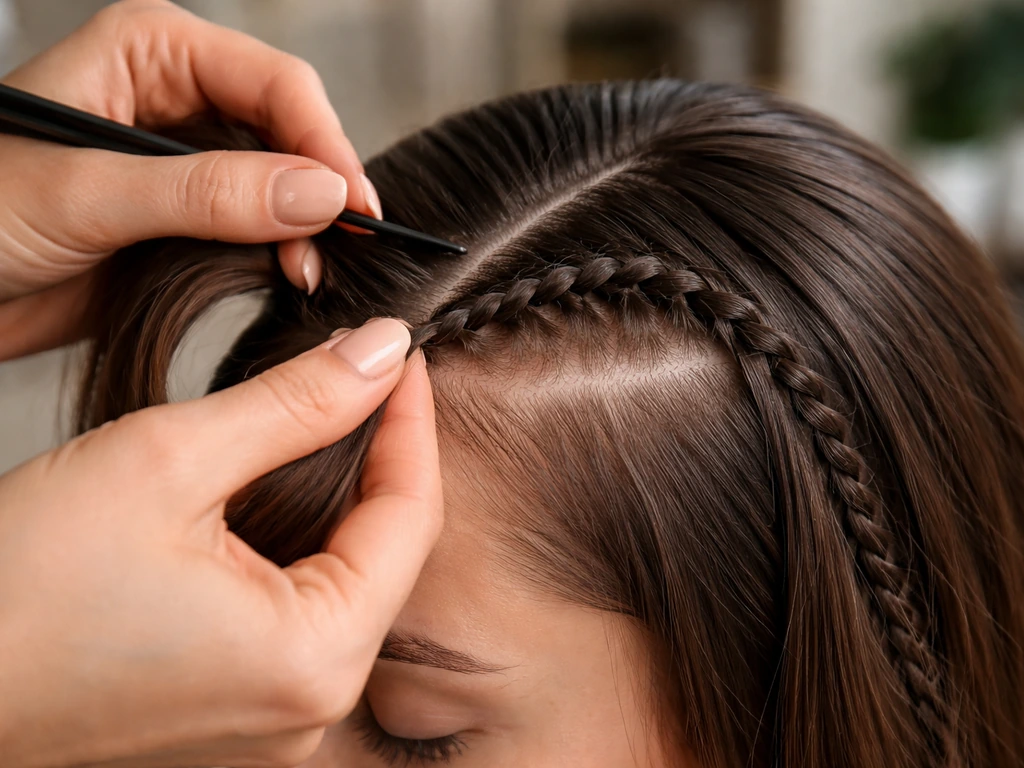
Tightness is the single biggest variable
[Traction alopecia, which is hair loss caused by prolonged or repeated pulling on the hair shaft](https://pmc. ncbi. nlm. nih.
gov/articles/PMC5896661/), is the main risk with braids. It shows up first as thinning along the hairline (frontal, temporal, and sometimes at the nape), often with redness or small bumps at the follicles. A clinical review of traction alopecia notes that early disease may present with hair loss along areas under greatest tension, with traction-related scalp signs such as redness and follicular bumps near the hairline [early-stage traction alopecia can show up as hairline thinning with redness or bumps at follicles](https://pmc.
ncbi. nlm. nih. gov/articles/PMC8530059/).
The practical test used in dermatology contexts is simple: if the style hurts when it goes in, if you feel a headache or tightness after installation, it is too tight. Pain is not a side effect of a good protective style, it is a warning sign. Early-stage traction alopecia can be reversed by removing the tension source, but if the follicles are repeatedly stressed over months and years, the damage can become permanent through scarring.
Ask your stylist to go looser at the hairline specifically. The edges are the most vulnerable area because the hairs there are naturally finer, and they are the first place traction alopecia appears. If you wear extensions, heavier hair adds mechanical weight that compounds root tension, which is one reason lightweight synthetic or human hair options are better for longer-wear styles.
Scalp care while your hair is braided
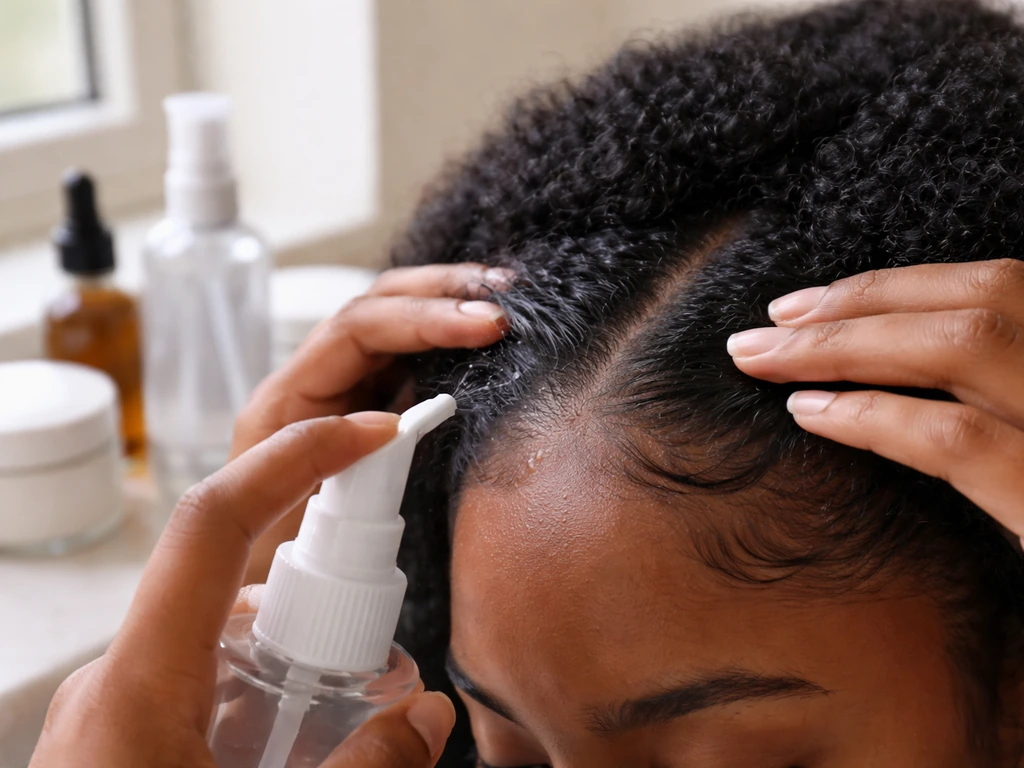
Your scalp still needs to be clean while you are in braids. Buildup of sebum, sweat, and product residue can clog follicles and create an environment that is not optimal for hair health. A diluted clarifying shampoo applied directly to the scalp with an applicator bottle every two to three weeks is the standard approach.
A braid-care guide recommends washing braids every 2, 3 weeks to support scalp health, and that 2, 3 week frequency is a common target for underneath or scalp cleansing wash your scalp every two to three weeks. Follow with a lightweight leave-in or scalp oil (jojoba and tea tree work well for most people) to keep the scalp from drying out.
Avoid heavy butters directly on the scalp as they sit on top of the skin and can contribute to buildup.
Keeping your hair moisturized inside the braid
Braided hair, especially natural coily hair, is prone to drying out because the cuticle on high-porosity or tightly coiled strands does not retain moisture well. A light water-based leave-in sprayed onto the braids (not drenching them) every few days helps. Follow with a light sealant oil like argan or avocado oil to slow moisture loss. Avoid alcohol-heavy products that dry the hair shaft, and do not skip the edges: the hairline hairs are exposed and often the first to dry out and break.
Aftercare and the mistakes that undo all your progress
Taking braids down is when a lot of damage happens. Rushing removal, pulling extensions out without detangling, and skipping a post-takedown treatment are three of the biggest mistakes. Work in sections, use a detangling spray or conditioner, and gently separate shed hairs (which have accumulated over weeks) from your natural hair before pulling anything out. After removal, do a clarifying wash to clean the scalp, follow with a deep conditioning treatment left on for at least 20 to 30 minutes, and then detangle gently with a wide-tooth comb starting from the ends.
Give your scalp and edges a break between installs. Dermatology guidance consistently recommends rotating hairstyles and allowing follicles to recover between tension-based styles. Two to four weeks of low-manipulation, tension-free styling between braid installs is a practical minimum. Wearing the exact same style every time, or always braiding the same sections in the same direction, puts chronic stress on the same follicles repeatedly, which is how traction alopecia develops even in people who think they are being careful.
- Do not leave braids in longer than 8 weeks, even if they still look good
- Never install braids over freshly relaxed or recently heat-damaged hair
- Avoid heavy beads or accessories that add weight and tension to braided sections
- Do not sleep without a satin or silk bonnet or pillowcase to reduce friction on the braid edges
- Do not ignore early signs: soreness, bumps at the follicle, hairline thinning, or redness are all signals to take the style down
- Do not skip the deep conditioning step after every removal
What you can realistically expect
If you install braids correctly, wear them for six to eight weeks, moisturize consistently, keep the scalp clean, and take them down carefully, you will very likely see more length than you would have without the style. That is not a miracle, it is just math: you grew roughly 2 cm of hair during that period, and most of it stayed on your head instead of breaking off. Over a year of consistent protective styling cycles, that adds up significantly, especially for people with textured hair who previously struggled to retain length past a certain point.
The goal is not to find a braid that grows your hair. The goal is to reduce the daily insults to your strands long enough for the growth your follicles are already producing to reach visible length. Braids, when done well, are genuinely one of the best tools for that. Done poorly, they cause more damage than doing nothing. The technique, tension, and aftercare are where the real results live.