Yes, you can absolutely grow your hair while wearing a sew-in, but the sew-in itself is not doing the growing. Your scalp is still producing new hair at roughly 0.8 to 1 cm per month regardless of what style is on top of it. What a well-installed, well-maintained sew-in actually does is protect the hair you already have from the everyday friction, manipulation, and breakage that usually eats up your length gains before you ever notice them. That is the real mechanism: retention, not acceleration. Get that distinction right, and everything else about making a sew-in work for your length goals falls into place.
How to Grow Your Hair with a Sew-In: Safe, Practical Steps

Simone Okonkwo
24 Jul 2026
Will a sew-in grow my hair? The honest, evidence-based answer
A sew-in does not speed up the biology of hair growth. Your follicles cycle through growth (anagen), transition (catagen), and resting (telogen) phases on a schedule largely set by genetics, hormones, and overall health. No style changes that. What a sew-in can do is dramatically reduce the daily wear and tear, heat, combing, rubbing on clothing, that causes breakage at a faster rate than your hair can grow. The net result is visible length that you would not have retained otherwise. Think of your hair like a savings account: the deposits (growth) stay constant, but a good protective style cuts the withdrawals (breakage). You end up with more in the bank. If you want a focused guide, see our detailed article on will sew in grow my hair for practical steps and checklists to maximize retention. For a comparison with other styling claims, see do finger waves grow your hair to learn whether finger waves can offer similar retention benefits.
That said, a sew-in can just as easily destroy your progress if it is installed with too much tension, worn too long, or neglected underneath. Research is consistent on this: traction from tight braids and extensions is one of the most common causes of traction alopecia in people of African descent, and if the pulling is chronic enough, the follicle damage can become permanent. The protective benefit only materializes when installation and care are done right. If you are also curious about whether a similar logic applies to other protective styles, the same growth-versus-retention framework applies there too.
Growth vs. retention: why the difference actually matters
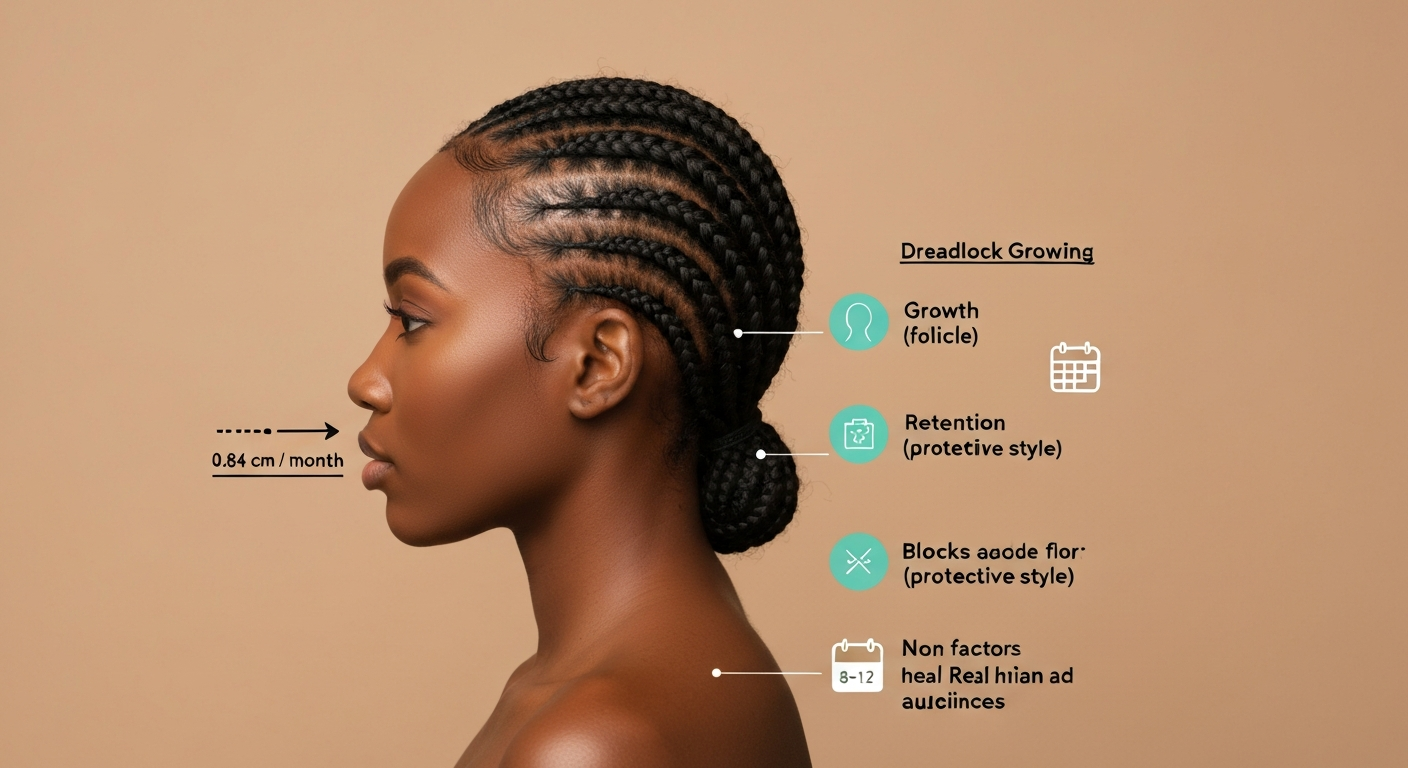
These two words get used interchangeably all the time, and that confusion is responsible for a lot of disappointment. Hair growth is a biological process happening at the follicle, underground, whether you can see it or not. Afro-textured hair grows at around 280 micrometres per day, roughly 0.84 cm per month on average, which is measurably slower than the average rates observed in Asian or Caucasian hair in comparative studies. That rate is mostly fixed by genetics. You can nudge it slightly with optimal nutrition and scalp health, but you cannot dramatically change it through styling.
Length retention is different. It is about how much of that grown hair survives to become visible length at your ends. Afro-textured hair, especially in its naturally coiled form, is structurally more vulnerable to mechanical damage at points of curvature. Combing, brushing, daily manipulation, heat, and friction all cause breakage that can match or outpace your monthly growth, leaving you appearing stuck at the same length for years. A sew-in stops most of that manipulation cold for weeks at a time. For a comparison with wash-and-go styles, see our can wash n go grow hair guide. If you keep the install tension low and the scalp clean, the math works in your favor: your hair grows its 0.84 cm a month and almost none of it breaks off.
The real factors that determine your length
Before you even think about install technique, it is worth being honest about the factors that actually drive whether your hair gets longer. A sew-in only addresses one of them, mechanical breakage. The others are operating in the background no matter what style you wear.
- Genetics: your terminal length (the maximum your hair will grow before shedding) and your growth rate are largely inherited. There is a real ceiling, and no style pushes through it.
- Hormones: estrogen, androgens, thyroid hormones, and cortisol all influence the hair cycle directly. Both hypothyroidism and hyperthyroidism are established reversible causes of diffuse shedding — if your hair seems to stop growing no matter what you do, thyroid testing is worth a conversation with your doctor.
- Nutrition: iron deficiency and low serum ferritin are consistently linked to non-scarring hair loss and telogen effluvium in systematic reviews and meta-analyses. Low vitamin D levels show up repeatedly in studies on alopecia areata, telogen effluvium, and androgenetic alopecia. Eating well and checking your bloodwork when shedding is excessive matters more than any product.
- Scalp health: a healthy scalp environment (good circulation, low inflammation, clean follicle openings) supports the anagen phase. Chronic scalp tension, product buildup, and fungal overgrowth all compromise it.
- Breakage and retention: this is the lever that a sew-in actually pulls. Reducing mechanical damage protects the length your follicles are already producing.
- Tension: excessive pulling at the follicle from tight braids or heavy extensions triggers traction alopecia — initially reversible, but permanently damaging if tension continues long enough. This is not a scare tactic; dermatology literature on Black hair is unambiguous about it.
Pre-install checklist: set your hair up to win
What happens before the sew-in goes in is at least as important as the install itself. I have seen people skip this phase entirely and then wonder why their hair felt like straw at takedown. Here is what to do in the week or two before your appointment.
Clarify and deep condition
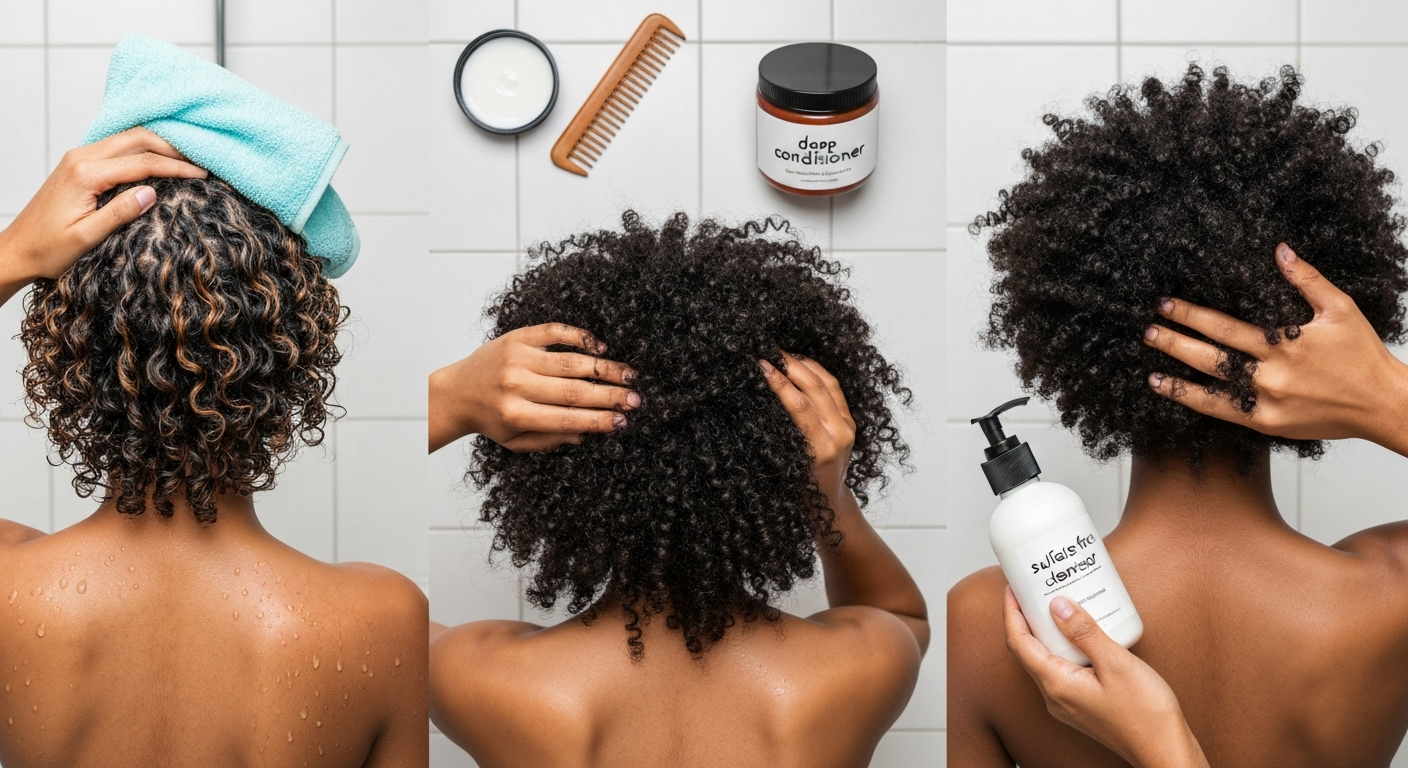
Start with a clarifying shampoo to remove any silicone buildup, old product residue, and hard-water minerals. Silicones in particular sit on the hair shaft and prevent moisture from penetrating, you want your strands as hydrated as possible before they go into braids for weeks. Follow immediately with a protein-moisture balanced deep conditioner, left on under a plastic cap for at least 20 to 30 minutes with heat. If your hair is particularly porous or was recently chemically processed, a light protein treatment first, then a moisturizing conditioner, will help rebuild the cuticle before the tension of braiding is applied.
Trim your ends if needed
A sew-in is not the time to protect split ends, splits travel up the shaft during weeks of enclosure, causing far more damage than a small trim would have. If your ends are visibly frayed, thin, or have been without a trim for more than four months, remove the damage before the install. You do not have to take much off, and you will come out of the sew-in with healthier, stronger ends that have actually retained length rather than fractured off.
Timing and scalp condition
Do not install a sew-in over a freshly relaxed scalp. Chemical straightening and tight braiding is one of the specific risk combinations flagged in British Association of Dermatologists guidance on traction alopecia. Wait at least two weeks after a relaxer before any tension-based style. Similarly, avoid installing over an actively irritated, flaking, or tender scalp, address the underlying issue first. A calm, healthy scalp at install day gives you the best starting point.
Braid pattern choices
The cornrow pattern under your sew-in directly affects tension distribution and scalp access. Straight-back cornrows put maximum stress on the frontal hairline and temples, the exact areas most vulnerable to traction alopecia. A curved or circular (beehive) pattern distributes tension more evenly and leaves the edges under less strain. If you leave a perimeter of natural hair out (sometimes called a leave-out), those edges are exposed to daily manipulation, so the cornrows underneath them need to be especially gentle. Talk to your stylist about the pattern before they start, a good stylist will welcome that conversation.
Installation and tension checklist
The install itself is where a lot of damage is either avoided or locked in for weeks. Practical, repeatedly recommended install and maintenance measures to reduce traction risk for sew‑ins include avoiding excessive braid or track tension, leaving a margin of natural hair at the hairline, reducing the length and weight of added hair, not combining relaxers or chemical straightening with tight extensions, removing the style if the client reports pain or scalp stinging, and limiting continuous wear to roughly 2–3 months between reinstallations, see The art of prevention: It’s too tight, Loosen up and let your hair down (protective style recommendations review) The art of prevention: It’s too tight—Loosen up and let your hair down (protective style recommendations review). These are the non-negotiables.
- Cornrows should be firm enough to hold the tracks but never painful. If it hurts on the chair, say so immediately — pain during braiding is not normal and it is not worth it. Tension that causes discomfort is tension that damages follicles.
- The braid base should not be pulled so tight at the root that the skin puckers or the scalp looks tented. Those are visible signs of excess tension.
- Leave at least a quarter inch to half inch of natural hair out at the entire hairline perimeter — edges, temples, and nape. These are the highest-risk zones for traction alopecia. Do not let anyone sew tracks directly into this margin.
- Needle and thread technique: thread should be sewn through the cornrow, not wrapped tightly around it multiple times. Over-wrapping adds cumulative tension at the base. The thread should hold the track stable, not tourniquet the braid.
- Use silicone-free thread if possible. Silicone-coated thread can cause buildup along the braid base over weeks, making removal harder and increasing the chance of mechanical breakage when the style comes out.
- Extension weight matters. Heavier bundles mean more downward traction on every braid base, every hour the style is worn. Choose a weight appropriate to your natural hair's density and length — excessively long or heavy extensions amplify traction risk over time.
- Do not combine chemical services with installation. No keratin treatments, relaxers, or color on installation day or in the days immediately before.
- Vet your stylist. Ask specifically how they handle edge protection, what braid pattern they recommend for your hair density, and how they respond if a client reports pain. A stylist who dismisses discomfort as normal is a red flag. Look for someone familiar with the specific needs of textured and Black hair, ideally with visible client results over extended wear periods.
Your daily in-wear care routine
Out of sight should not mean out of mind. The biggest mistake people make with a sew-in is assuming the hair underneath is fine because it is not being touched. It still needs moisture, it still needs scalp care, and the leave-out (if any) needs daily attention.
Moisturizing your natural hair under the weave
Every two to three days, apply a lightweight water-based moisturizer to your leave-out and along the exposed parts of your braided base using an applicator bottle or nozzle. The goal is to maintain moisture in the natural hair without saturating the weave or soaking the braid base, which can create a mildew environment. Follow with a small amount of a sealing oil, lighter options like grapeseed, argan, or jojoba work well for most textures without causing heavy buildup. If you have relaxed hair, the balance tips more toward moisture because relaxed strands lose water faster; natural coily hair can often tolerate slightly longer intervals between moisture applications but should never go completely dry for days at a time.
Protecting your hair at night
Sleep with a satin or silk scarf, bonnet, or pillowcase every single night, no exceptions. Cotton pillowcases create friction against both the weave and any leave-out, causing frizz, dryness, and breakage at the worst possible time (when you cannot see it happening). Secure your sew-in loosely, do not pin it so tightly that tension is applied to the braid base for eight hours while you sleep. A loose braid or pineapple of the weave is usually enough to keep it from tangling.
Low-manipulation during the day
Avoid constantly running your fingers through your leave-out. Fingering through hair repeatedly is mechanical damage on a small scale, it adds up over weeks. Style your leave-out once in the morning using minimal tension, and leave it alone for the rest of the day. The less you touch it, the more length you keep.
Scalp cleansing with braids underneath
This is the area I see neglected most often, and it is directly linked to the itching, odor, and scalp inflammation that make people take sew-ins out earlier than planned, or worse, leave them in too long because the process feels overwhelming.
How often to cleanse
Aim to cleanse your scalp every one to two weeks while the sew-in is in. Waiting longer than two weeks allows sebum, dead skin cells, and product residue to build up along the cornrow tracks, which creates conditions for scalp irritation and bacterial or fungal growth. For active exercisers or people with oily scalps, weekly cleansing may be necessary.
Wet cleansing vs. dry cleansing
Wet cleansing means diluting a gentle, sulfate-free shampoo in an applicator bottle and applying it directly to the scalp along the parts between cornrows, then rinsing thoroughly. This is the most effective method for removing buildup. The key is drying completely afterward, leave-in dampness under a sew-in is the number one cause of mildew and odor. Sit under a hooded dryer or use a handheld dryer on a low-heat setting until the braid base is fully dry, not just surface-dry.
Dry cleansing uses witch hazel, a diluted astringent toner, or a dry shampoo spray applied along the scalp parts between washes. This is a useful between-wash option to control oil and odor, but it does not fully substitute for a wet cleanse, it cannot remove buildup at the follicle opening the way water and shampoo can. For textured and relaxed hair alike, the safest approach is alternating a proper wet cleanse every one to two weeks with a dry refresh in between.
Product categories to use (and avoid) under a weave
| Product Type | Use It Or Avoid It | Why |
|---|---|---|
| Sulfate-free clarifying shampoo (diluted) | Use it | Removes buildup without stripping moisture; sulfate-free is gentler on already-manipulated hair |
| Witch hazel or salicylic acid scalp toner | Use it (between washes) | Controls sebum and bacteria on the scalp surface without full wet cleanse |
| Lightweight water-based moisturizer | Use it | Hydrates natural hair without weighing down the braid base |
| Light sealing oils (grapeseed, argan, jojoba) | Use it sparingly | Seals moisture without heavy buildup risk |
| Heavy butters and creams (shea, castor oil undiluted) | Use sparingly or avoid | Build up rapidly on cornrow base, attract lint, and create a difficult-to-remove film |
| Silicone-based serums and glossers | Avoid | Silicones seal the hair shaft against moisture and cause buildup that requires heavy cleansing to remove — counterproductive under a closed style |
| Alcohol-based sprays (denatured/SD alcohol high on ingredient list) | Avoid | Drying to already-enclosed natural hair and can cause scalp irritation over repeated use |
| Anti-dandruff or antifungal shampoos (ketoconazole, zinc pyrithione) | Use if needed | Appropriate if scalp irritation or flaking develops; can be used for one or two washes in the rotation |
Re-moisturize and maintenance schedule: a practical timetable
One of the most useful things I can give you is a concrete schedule, because vague advice like 'moisturize regularly' actually does not tell you anything. Below is a practical 8 to 12 week framework built around an average sew-in wear period. Observational studies on protective styling cohorts report average wear durations around 63 days (roughly 9 weeks), and clinical guidance generally recommends a maximum of 2 to 3 months between reinstallations. This timetable works within that window.
| Week | Task | Notes |
|---|---|---|
| Week 1 | Scalp check and first dry refresh | Apply witch hazel or scalp toner along parts; check edges and nape for unusual tension or redness |
| Week 2 | First full wet cleanse | Diluted sulfate-free shampoo on scalp, rinse thoroughly, dry completely under heat |
| Week 2-3 | Moisturize natural hair every 2–3 days | Water-based moisturizer via nozzle applicator to leave-out and braid parts; seal with light oil |
| Week 3–4 | Dry refresh + edge treatment | Witch hazel refresh on scalp; apply a lightweight edge-safe product to hairline; check for any tension bumps |
| Week 4 | Second full wet cleanse | As above; follow with a diluted leave-in conditioner on the leave-out only |
| Week 5–6 | Continue bi-weekly moisture routine | Increase frequency to every 2 days if leave-out feels dry or crunchy |
| Week 6 | Third wet cleanse | Use an antifungal or anti-dandruff shampoo this week if any scalp itching has developed |
| Week 7–8 | Assess the style honestly | Check: are braids still intact? Is there odor, itching, or lint buildup? Are edges looking thin? If yes to any, plan removal |
| Week 8–9 | Final wet cleanse before removal planning | Fully cleanse and allow to dry; do not install new product before takedown |
| Week 9–12 maximum | Remove, recover, and reinstall only after rest | Take the sew-in out; deep condition; rest hair for at least 1–2 weeks before any new install |
Troubleshooting: signs you need to act now
Wearing a sew-in should not be a gamble. Here are the specific warning signs to watch for, and what each one means.
Traction and tension damage
The earliest and most important sign of traction damage is pain or scalp tenderness at the hairline, temples, or nape, typically within the first few days of install. If tenderness persists beyond day two or three, or if you can see small pimple-like bumps or folliculitis (inflamed follicles) along the parting lines, those are not cosmetic issues, they are inflammation signals. The British Association of Dermatologists is clear that early traction alopecia is potentially reversible if tension is removed promptly, but continued traction causes follicular destruction that becomes permanent. Hairstyles that pull can lead to hair loss, American Academy of Dermatology notes that traction from tight braids and extensions is a recognized cause of traction alopecia and recommends clinician assessment and stopping or reducing traction as first-line management, with medical treatments or specialist referral considered after traction cessation and diagnostic evaluation Hairstyles that pull can lead to hair loss — American Academy of Dermatology. Thin or receding edges, hair that seems to 'snap back' at the hairline, or a visible widening of the parting lines are later-stage signs that demand immediate action: take the sew-in out, do not reinstall under tension, and see a dermatologist.
Excessive shedding
Finding more shed hairs than usual at takedown can be alarming, but some increased shedding is normal because hair that would have shed daily was held in the braid for weeks. Truly excessive shedding, large clumps, patches of visible thinning, or consistent daily shedding that exceeds what is normal for you, can signal telogen effluvium, nutritional deficiency, or thyroid dysfunction, all of which are systemic issues a sew-in cannot cause or fix. If abnormal shedding persists after the style is removed and a rest period has passed, bloodwork checking ferritin, vitamin D, and thyroid function is a reasonable first step before attributing it to anything style-related.
Itching, lint, and odor
Persistent itching is almost always a scalp cleanliness issue, sebum buildup, product residue, or early fungal overgrowth. Do not scratch through the weave with a sharp object, as this creates micro-lacerations on the scalp. Instead, do an immediate wet cleanse and add a zinc pyrithione or ketoconazole shampoo to your next wash. If itching is accompanied by odor, the braid base may have moisture trapped in it (mildew), which means a full wet cleanse followed by very thorough drying under heat, and serious consideration of early removal. Lint in the cornrows is purely aesthetic but indicates the weave is snagging hair fibers, check that your nightly bonnet is secured properly.
Chemical damage
If you used a relaxer close to your install date, or if any chemical service was performed while the sew-in was in, watch for unusual brittleness, breakage at the demarcation line, or scalp burning. Chemical and mechanical damage stack on each other, and the combination is documented as a specific risk factor in traction alopecia literature. If this applies to you and you notice breakage at a consistent point on the hair shaft, remove the sew-in and assess before reinstalling.
When to see a professional
See a board-certified dermatologist (ideally one with experience in textured or Black hair) if: you have visible scalp thinning or bald patches at the hairline or temples that do not resolve within a few months after removing the style; shedding is diffuse and excessive for more than two or three months; there is scalp scarring, folliculitis, or persistent inflammation. Trichoscopy and scalp biopsy can distinguish between reversible non-scarring alopecia and irreversible scarring alopecia, the sooner that distinction is made, the more options remain available. Topical minoxidil is an evidence-based option for intact follicles, but it should be introduced with medical guidance rather than as a first self-treatment step.
Safe removal and post-sew-in recovery
How you take a sew-in out matters almost as much as how you put it in. Cut the thread carefully with small scissors or a seam ripper, working from track to track without pulling. Once the tracks are out, detangle the cornrows from tip to root using a detangling conditioner and wide-tooth comb or your fingers before undoing the braids. Do not pull. The shed hair that releases when you undo the braids represents weeks of normal daily shed hair that was held in place, it will look like a lot, and that is normal.
After removal, do a thorough clarifying wash followed by a protein treatment to rebuild any elasticity that was lost during wear, then follow with a deep moisturizing conditioner. Rest your hair, meaning no braids, no tight styles, and minimal heat, for at least one to two weeks before considering a reinstall. This rest period allows the follicles to decompress from tension, the scalp to fully recover, and gives you an honest look at your actual hair length and health before deciding your next move.
What actually helps hair grow: complementary strategies
A sew-in is one tool. Pair it with these evidence-supported fundamentals and your retention rate climbs significantly.
- Nutrition first: ensure adequate iron (serum ferritin above 30 ng/mL is a common clinical target for hair health), vitamin D, zinc, and protein intake. These are the nutritional factors most consistently linked to hair loss in the literature. Food first, supplements only if bloodwork confirms deficiency.
- Scalp stimulation: regular (but gentle) scalp massage increases blood flow to follicles. Use fingerpads, not fingernails, for 3 to 5 minutes a day — this is compatible with a sew-in if you focus on the exposed scalp between tracks.
- Reduce heat permanently: heat damage is cumulative and irreversible. If you are wearing a sew-in as a break from heat styling, use that time to genuinely reset your relationship with heat tools.
- Topical treatments: if you have concerns about growth rate or thinning, topical minoxidil is the most evidence-supported option for non-scarring cases and is increasingly discussed in dermatology literature for textured hair, though ethnicity-stratified randomized trial data remain limited. Discuss with a dermatologist before starting.
- Medical evaluation: if length seems stuck despite excellent retention practices, rule out thyroid dysfunction, iron deficiency anemia, and vitamin D deficiency with bloodwork. These are reversible systemic causes that a better wash routine will not fix.
- Low-manipulation styling between sew-ins: the weeks between protective styles matter. Loose twists, braid-outs, and wash-and-go styles with minimal combing keep manipulation low even outside a sew-in.
Myth-busting: what the evidence actually supports
| Common Claim | What the Evidence Says |
|---|---|
| Sew-ins make hair grow faster | False. Hair growth rate is biologically determined and not accelerated by any hairstyle. Sew-ins support length retention, not growth acceleration. |
| Tighter braids = better hold = healthier hair | False. Tight braids are a direct mechanical cause of traction alopecia. Firm but comfortable is the target — pain is damage. |
| You can keep a sew-in in for 3 to 6 months to maximize growth | Unsupported and risky. Observational data and clinical guidance point to a 9 to 12 week maximum. Longer wear increases traction, buildup, scalp damage, and matting risk. |
| Natural hair grows faster than relaxed hair | Not clearly supported. The growth rate difference between natural and relaxed hair of the same ethnicity is not well established in controlled studies. Relaxed hair may break more easily, reducing visible retention, but the follicle output is not documented as different. |
| Castor oil makes hair grow | Not proven. No rigorous clinical trials support Jamaican Black castor oil or standard castor oil as a growth stimulant. It may help with moisture sealing but should not be used heavily on a braided base due to buildup risk. |
| Hair grows faster when it is warm | Partially supported in seasonal studies, but the effect size is small and not a practical strategy — you cannot replicate it with a heat cap under a sew-in. |
| Protective styling alone guarantees length | False. Protective styling is one variable. Genetics, nutrition, hormones, and scalp health all operate independently of whatever style is on your head. |
Putting it all together
A sew-in, done well, is genuinely one of the most effective length-retention tools available for textured and Black hair. The science supports the protective mechanism: less manipulation, less breakage, more retained length over time. But it only works when the install is low-tension, the maintenance is consistent, the wear time is capped at around 8 to 10 weeks, and the removal and recovery are handled carefully. The biology of hair growth, driven by genetics, nutrition, hormones, and scalp health, runs in the background regardless of what style is on your head. Optimize both sides of the equation and the results speak for themselves. For regional product questions, for example, "do wavy caps grow in the UK", consult local suppliers or community forums for current availability and practical experience. Skip either side and you will be asking why your hair is not growing, when the real question is why it keeps breaking.
FAQ
Quick answer: can you grow your hair with a sew-in (or under a sew-in)?
Short answer: A sew-in does not speed the intrinsic growth rate of hair, but it can help you retain length if installed and maintained safely. Growth = new hair produced at the follicle (largely genetic, hormonal, nutritional). A well-done, low-tension sew-in protects existing hair from daily manipulation and breakage so more new growth is kept — but tight installs, excessive weight, long continuous wear, or chemical combinations can cause traction alopecia and prevent regrowth.
What’s the difference between hair growth and length retention?
Growth is the biological production of new hair at the follicle (influenced by genetics, hormones, nutrition, medical conditions). Retention is keeping the hair you already have from breaking off. Sew-ins primarily support retention by shielding hair from manipulation; they don’t change follicular growth rate.
What factors determine how long my hair will get while wearing sew-ins?
Key determinants: 1) Genetics/hair‑type baseline growth rate; 2) Hormones and medical status (thyroid, iron status, vitamin D); 3) Nutrition and protein intake; 4) Scalp health and inflammation (traction, dermatitis); 5) Mechanical damage and breakage from tension, combing, or chemical treatments; 6) Weight and length of added hair; 7) Installation technique and maintenance routines.
Pre-install checklist (what to do before getting a sew-in)
1) Scalp and hair health check: look for irritation, sores, patchy thinning — if present, see a clinician before install. 2) Wash and deep‑condition hair; perform a protein‑moisture balance check (avoid installing on brittle, over‑porous hair). 3) Trim obvious split ends to reduce breakage. 4) Clarify scalp to remove product build‑up. 5) Decide braid pattern: flat, close-to-scalp cornrows that distribute weight are better; avoid overly tight micro-braids or single long plaits for the whole head. 6) Agree with your stylist on length/weight of extensions and an upper limit for continuous wear time (commonly 6–12 weeks; many experts advise 8–12 weeks maximum). 7) Avoid combining a fresh chemical relaxer with a tight sew-in install.
Installation and tension checklist (what to tell your stylist and watch for)
1) Braid type & direction: use larger, flat cornrows that follow natural growth direction and distribute tension; avoid knots or braids that pull edges. 2) Leave a margin of natural hair at the hairline when possible; do not sew directly through delicate edges. 3) Needle/track technique: ask for single‑needle/track placements with soft tension, and fewer tracks if you have fragile hair. 4) Reduce weight: choose lighter weft hair and avoid very long, heavy bundles when retention is the goal. 5) Edge protection: ask for protective methods (silk strip, leave‑out, or minimal sew-in at edges). 6) Pain check: installation should not cause persistent pain or scalp stinging—if it does, stop and adjust. 7) Stylist selection: pick someone experienced with textured hair, traction risk, and who demonstrates low‑tension techniques.
In‑wear care regimen (daily and weekly basics)
Next Article
Can Wash n Go Grow Hair? Evidence-Based Guide for Textured
Can a wash‑and‑go grow hair? Evidence-based guide for textured/Black hair: growth vs retention, routine, products.