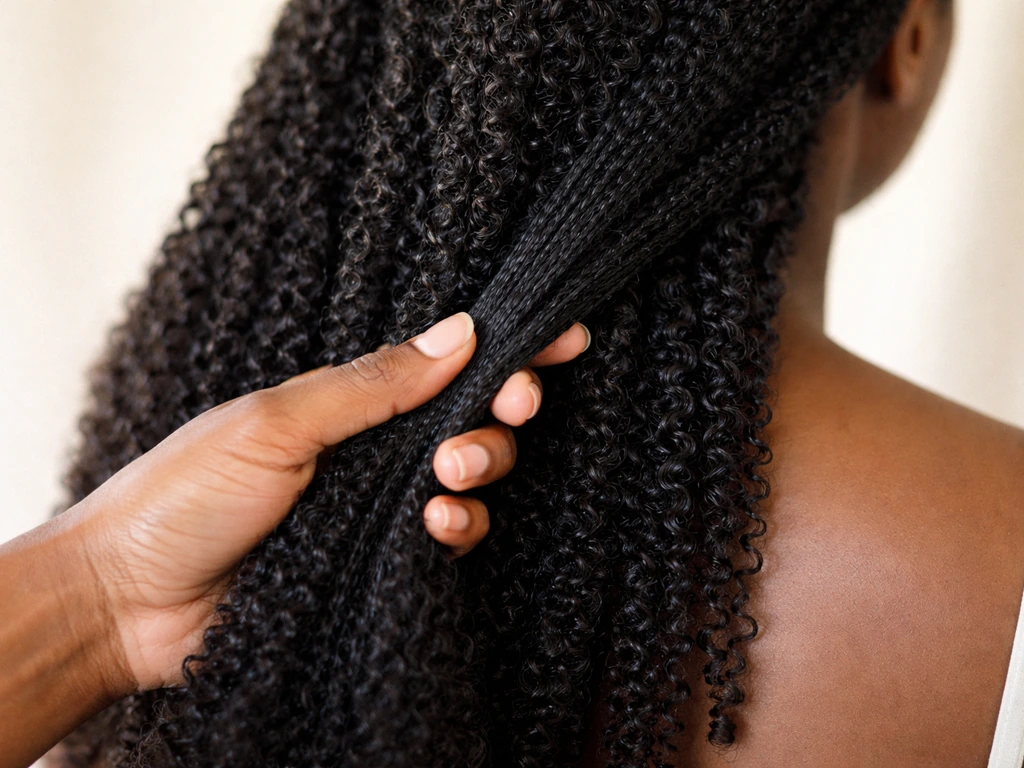
Yes, Black people can absolutely grow long hair. If you feel like your natural hair will not grow, it often comes down to retention, not the growth cycle itself Black hair grows. The biology is straightforward: every healthy scalp follicle produces hair, regardless of race or texture. The real issue is not whether Black hair grows, but whether it survives long enough to show length. Straight hair can look like it grows faster because it sheds less length to breakage, so it helps to focus on retention too can black people grow straight hair. Coily and kinky textures are structurally more fragile, shrink dramatically when dry, and lose moisture faster than straight hair, which means breakage quietly steals the length the follicle already grew. Once you shift focus from 'how do I make my hair grow faster' to 'how do I stop losing the length I already have,' everything changes.
Can Black People Grow Long Hair? Growth and Retention Guide


Yes, Black hair grows, here's why people think it doesn't
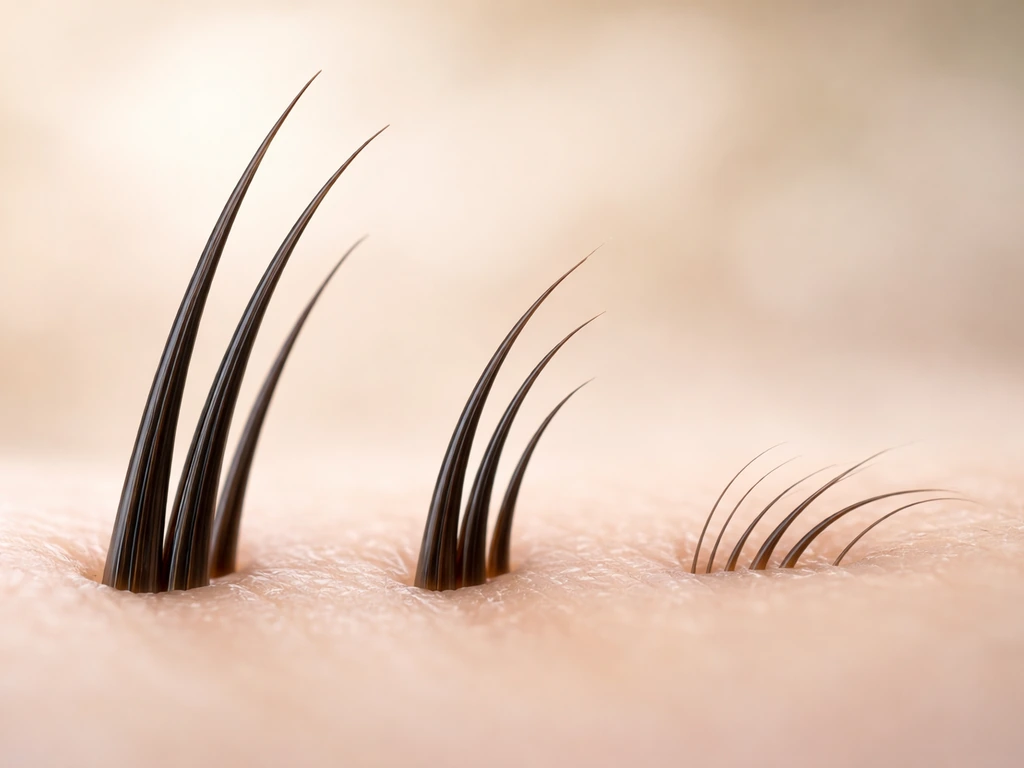
blank" rel="noopener noreferrer">Hair growth happens in a cycle: the anagen (active growth) phase, the catagen (regression) phase, and the telogen (resting) phase. The length your hair can reach is determined almost entirely by how long your follicles stay in the anagen phase, which can last anywhere from 2 to 6 years. During that phase, hair grows roughly 0.3 to 0.4 mm per day, or about 1 cm (just under half an inch) per month, and about 6 inches per year. That number applies across ethnicities. Research does show that African-textured hair tends to grow at a slightly slower linear rate than European or Asian hair, around 256 micrometers per day versus roughly 396 micrometers per day for straighter textures, but 'slower' is not 'absent.' The hair is absolutely growing.
So where does the myth come from? A few real factors combine to create the illusion of no growth. First, coily hair shrinks significantly when dry, which visually disguises length. Second, the tight curl structure creates more stress points along the hair shaft, making it more fragile and easier to break. Third, many common styling and care habits, tight braids, infrequent conditioning, rough detangling, heat overuse, cause breakage at a rate that keeps up with or outpaces growth. The hair is growing out of the scalp just fine; it just isn't surviving to show length. That's a retention problem, not a growth problem.
Growth vs. length retention: why breakage is the real enemy
Think of it this way: if your hair grows half an inch a month but you're breaking off half an inch a month from the ends, your length stays exactly the same for years. That's the cycle many people are stuck in without realizing it. Breakage in coily and kinky hair has some specific drivers that are worth understanding.
- Dryness: Coily hair has a curved shaft that makes it harder for the scalp's natural oils to travel down to the ends. The result is chronically dry ends that become brittle and snap off easily.
- Mechanical damage: Rough detangling, aggressive combing, and friction from cotton pillowcases all cause physical breakage, especially when hair is dry.
- Traction: Tight hairstyles pull on the follicle and on the hair shaft itself, snapping strands at the point of tension — especially around the edges and nape.
- Chemical damage: Relaxers, color treatments, and overlapping chemical processes weaken the hair shaft's structural integrity, making it far more vulnerable to breakage under normal handling.
- Heat damage: Repeated high-heat styling without proper protection degrades the protein structure of the hair shaft, leading to breakage and eventually permanent texture change.
- Lack of protective barrier: Ends are the oldest, most fragile part of the hair. Without regular sealing and protection, they deteriorate quickly.
Clinical dermatology research on African-descended hair specifically notes it is more fragile and difficult to comb than other textures, and that breakage is a defining challenge for length retention. The good news is that breakage is largely preventable with consistent, informed care habits.
Shrinkage, curl pattern, and actually measuring your progress
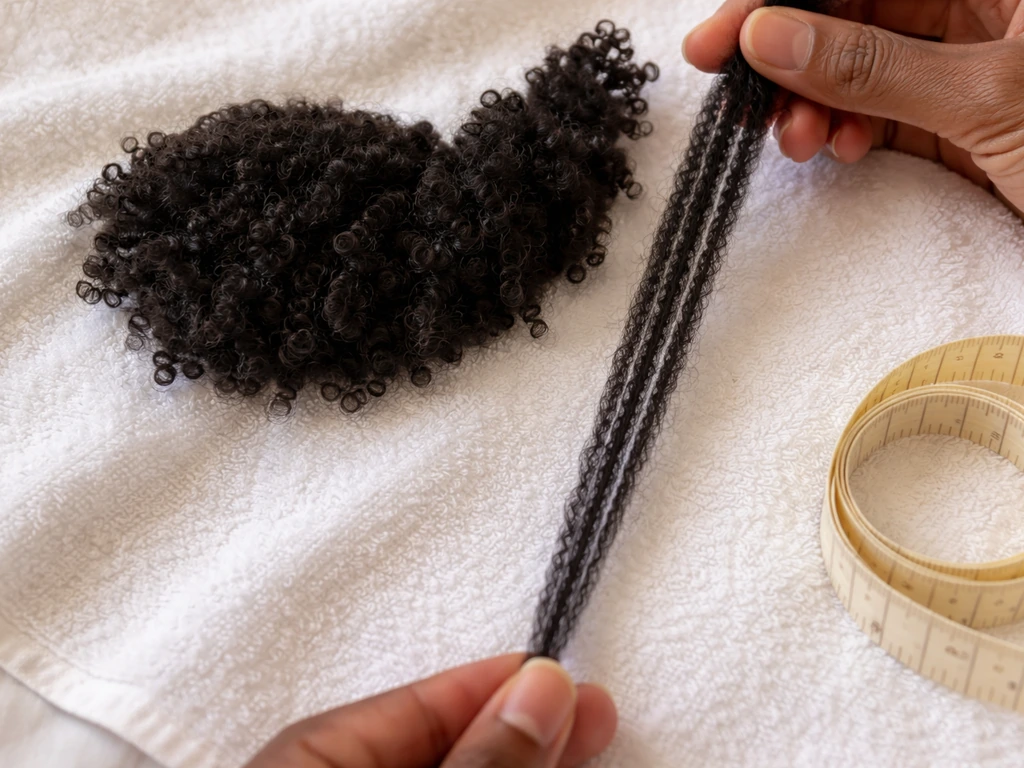
Shrinkage is one of the most discouraging parts of growing coily hair if you don't know what you're looking at. A 4C texture can shrink 70 to 80 percent when dry, meaning hair that is genuinely 10 inches long can look like it's barely 2 to 3 inches. This isn't a problem with your hair, it's physics. The tighter the curl, the more the strand coils back on itself, compressing the length. When the hair is wet, stretched, or straightened, you see the actual length. That's why measuring dry, unstyled hair is almost useless for tracking progress.
To track growth accurately, always measure hair in the same stretched or wet state each time. A practical method: take a small section of freshly washed hair, gently stretch it downward without pulling, and measure from root to tip against a ruler or tape measure. Do this in the same section, same spot, every 4 to 8 weeks. Taking photos under consistent lighting is also useful, not for day-to-day comparisons (too many variables) but for side-by-side comparisons over 3 to 6 month periods where real change shows clearly.
Protective styling: what actually helps (and what to watch)
Protective styles, braids, twists, locs, weaves, and similar styles that tuck ends away and reduce daily manipulation, are genuinely useful for length retention. They reduce the moment-to-moment friction and handling that causes breakage, and they keep ends protected from environmental exposure. But protective styling is not a magic fix, and done incorrectly it can cause serious, sometimes permanent hair loss.
Braids and twists
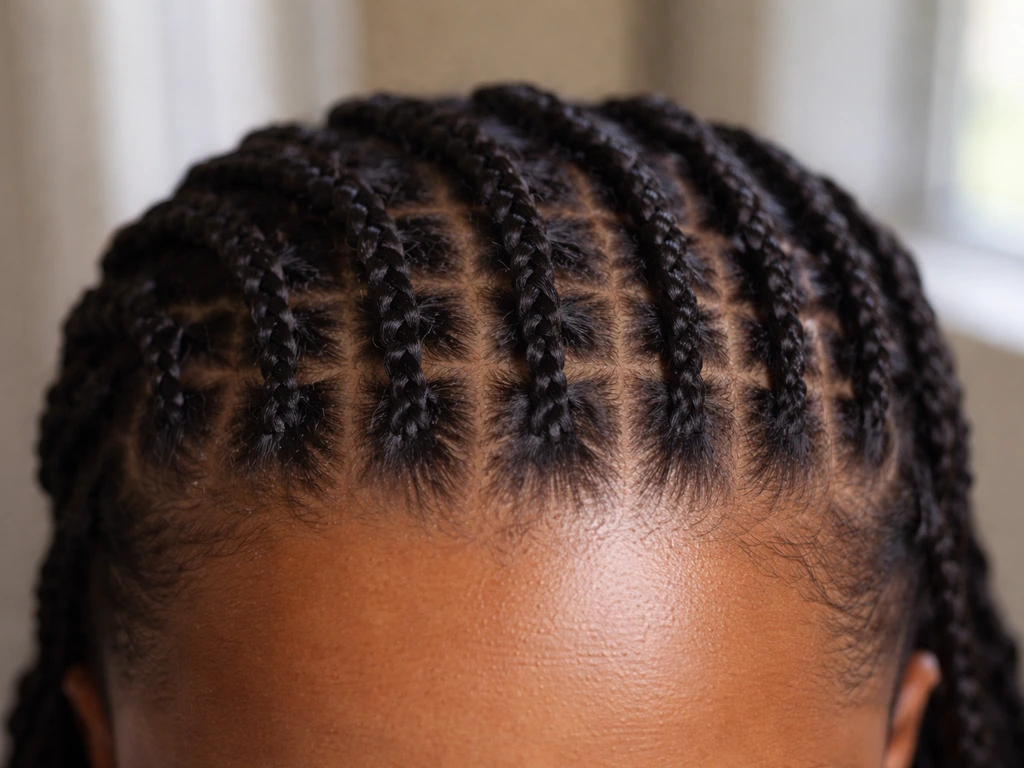
Box braids, two-strand twists, cornrows, and similar styles work well for retention when installed correctly. The British Association of Dermatologists specifically recommends installing braids in alternating directions to avoid applying repeated stress in the same direction on the same strands and scalp areas. The biggest risk is tension. If your edges are tight, your scalp aches after installation, or you see pimples or bumps along the hairline, the style is too tight. Prolonged tension, especially repeated tension in the same direction over time, causes traction alopecia, a form of hair loss that starts as thinning at the edges and temples and can become permanent if the tension isn't stopped early.
Locs
Locs are a long-term protective style and, for many people, one of the most effective for retaining length because manipulation is minimal once locs are established. The risks are similar to other styles: too-tight retwisting, heavy extensions adding weight and tension, and infrequent moisturizing leading to dryness and breakage inside the loc. Locs need moisture just like loose hair, don't skip that step because the style looks 'done.'
Weaves and wigs
Weaves installed over a braided base and wigs can be excellent for retention because your natural hair is completely tucked away and protected from daily styling. The risks: tight cornrow bases can cause the same traction alopecia as any tight braiding, and leaving a weave in too long (generally more than 8 weeks) without proper care of the scalp and natural hair underneath defeats the purpose. Wigs secured with glues or tight bands around the hairline create their own traction and chemical irritation risks. Keep the hairline clean, moisturized, and free of constant tight anchoring.
Natural vs. relaxed hair: the routine adjustments that matter
Both natural and relaxed hair can grow long, but the risks and required care differ enough that it's worth addressing them separately.
| Factor | Natural Hair | Relaxed/Chemically Processed Hair |
|---|---|---|
| Hair shaft integrity | Intact disulfide bonds; fragile at curl stress points | Chemically altered bonds; more uniformly fragile along entire shaft |
| Breakage risk from traction | High, especially at curl bends | Higher — relaxers plus traction is a documented traction alopecia risk factor |
| Moisture retention | Low — coil shape limits oil distribution | Lower — chemical processing opens the cuticle and reduces moisture retention |
| Heat styling risk | Present but reversible if caught early | Higher — already-compromised shaft is less heat tolerant |
| Wash frequency | Every 1–3 weeks typical | Every 1–2 weeks recommended to maintain scalp health and moisture |
| Primary breakage prevention focus | Moisture, gentle detangling, protective styling | Protein-moisture balance, overlap prevention, gentle handling |
| Protective styling caution | Watch for tension at roots | Avoid combining tight braids or traction styles with relaxer-treated hair |
If you're relaxed, the most important thing to know is that relaxers and traction are a dangerous combination. The chemical process already compromises your hair shaft's structural strength, so any tension from tight braids, tight ponytails, or aggressive detangling compounds the damage. Space relaxer applications carefully, always do a strand test before touching up, and never apply relaxer to already-relaxed hair (overlapping). If you're thinking about transitioning from relaxed to natural hair, the line of demarcation where relaxed meets natural growth is especially fragile and needs extra gentle handling.
A practical length-retention routine
This is the core of what actually moves the needle. The routine below is based on what dermatology guidelines and clinical research support for minimizing breakage in coily and textured hair. It isn't complicated, but it does need to be consistent.
Washing (every 1–3 weeks)
The British Association of Dermatologists recommends washing Afro-textured hair every 1 to 3 weeks. Less frequent washing allows natural oils to condition the scalp but can lead to product buildup that clogs follicles. More frequent washing without adequate re-moisturizing strips the hair. Find your personal sweet spot in that range. Use a sulfate-free or low-sulfate shampoo to clean without over-stripping, or use a co-wash (conditioner wash) for weeks when you want to refresh without full cleansing. When shampooing, work in sections and squeeze rather than scrubbing the hair together.
Conditioning (every wash day)
A rinse-out conditioner should be used every single wash day without exception. For coily textures, a deep conditioning treatment with gentle heat (a heated cap or hooded dryer for 15 to 30 minutes) makes a significant difference in softness and manageability, reducing the force needed to detangle. Aim for deep conditioning at least twice a month. The goal is hair that is slippery and soft before you even try to detangle.
Detangling (always on wet, conditioned hair)
Never detangle dry hair if you can help it. Dry coily hair is at its most fragile and most resistant to combing. Always detangle on wet or damp hair that is saturated with conditioner, working in small sections, starting from the ends and working upward toward the roots with a wide-tooth comb or your fingers. Finger detangling first, then a wide-tooth comb if needed, causes significantly less breakage than starting with a fine-tooth comb or a brush on dry hair.
Moisture and sealing (every few days to weekly)
The LOC or LCO method (Liquid, Oil, Cream or Liquid, Cream, Oil) is a widely used layering approach for keeping moisture in coily hair between wash days. Apply a water-based leave-in conditioner first, then layer a cream or oil on top to seal that moisture in. The BAD guidelines specifically recommend applying a leave-in conditioner after washing and drying. For very dry or high-porosity hair, sealing with a heavier butter or oil (shea butter, castor oil, jojoba) over a cream layer helps keep moisture from evaporating. How often you need to refresh moisture depends on your hair's porosity and your environment.
Drying (gentle, always)
Towel friction is a significant and underappreciated source of breakage and frizz. Switch from a regular terrycloth towel to a microfiber towel or a plain cotton T-shirt, and gently squeeze moisture out rather than rubbing. Air drying is ideal when possible. If you use heat, a hooded dryer on low to medium heat is safer than a blow dryer pointed directly at the same section repeatedly. A diffuser attachment reduces direct heat concentration if you do use a blow dryer.
Trims (every 8–16 weeks, as needed)
Trims do not make hair grow faster, that's a myth. What they do is remove split ends before they travel up the shaft and cause more breakage. Trimming on a consistent schedule (roughly every 3 to 4 months for most people, less often if your ends are healthy) prevents single-strand knots and split ends from undoing the length you've worked to retain. Trim on stretched or straightened hair so you can actually see the ends clearly.
Common mistakes, and how to fix them
Thinning edges and traction alopecia
Thinning around the hairline, especially the temples, the front hairline, and the nape, is one of the most common and most preventable hair loss issues for Black women. It's usually traction alopecia from years of tight styles, tight ponytails, heavy braids, or wigs anchored too tightly around the perimeter. The edges and nape have finer, more delicate hair than the rest of the scalp, and they are the first to go. If you catch it early (redness, itching, small bumps, or sparse-looking edges that used to be fuller), stopping the tension source often allows recovery. Caught late or ignored for years, the damage can be permanent. Keep braids and cornrows away from the hairline when possible, avoid sleeping in tight styles, and never sacrifice your edges for a sleeker look.
Persistent dryness
If your hair feels dry even right after washing, the problem is usually porosity-related, product layering that isn't sealing effectively, or washing too frequently with stripping products. Try a deep conditioning treatment before shampooing (pre-poo), check that your leave-in has water as the first ingredient, and make sure you're sealing with an oil or butter on top. If the problem persists, consider getting a professional assessment of your hair's porosity.
Scalp itch under protective styles
Itching under braids or a weave is usually dryness or product buildup on the scalp, not the style itself. Use a diluted leave-in spray or a lightweight scalp oil on the parts to keep the scalp moisturized. Avoid heavy grease-based products that clog follicles. If the itch is accompanied by sores, flaking, or significant pain, take the style down and address the scalp health issue before reinstalling.
Breakage in the middle of the shaft (not just the ends)

If you see a lot of short broken pieces that aren't clearly from the ends, the breakage is happening mid-shaft, which usually points to protein deficiency in the hair (the hair shaft has lost structural integrity) or mechanical damage from combing dry hair. Try a protein treatment followed by deep conditioning (protein without moisture leaves hair stiff and snappy), and commit to only detangling wet, conditioned hair.
Realistic timelines and how to track real progress
Here's what a realistic growth timeline looks like with good retention practices. At roughly half an inch per month, you're looking at about 6 inches per year of potential growth. With very consistent retention habits, many people realistically keep 4 to 5 of those 6 inches, which adds up to significant visible length over 1 to 2 years. Without retention habits, that same 6 inches of growth can produce zero visible length change.
| Timeframe | Expected Growth | Realistic Retained Length (good habits) | What You Might Notice |
|---|---|---|---|
| 3 months | ~1.5 inches | ~1 to 1.25 inches | Subtle length change, visible on stretched hair |
| 6 months | ~3 inches | ~2 to 2.5 inches | Noticeable in stretched photos vs. baseline |
| 1 year | ~6 inches | ~4 to 5 inches | Clear length milestone, visible styling difference |
| 2 years | ~12 inches | ~8 to 10 inches | Significant length change, past-shoulder length possible from ear-length start |
Track progress every 4 to 8 weeks using stretched measurements in the same section each time, plus photos taken from the same angle under consistent lighting. Don't rely on how your hair looks styled or dry, shrinkage will mess with your perception. A side-by-side photo comparison every 3 to 6 months is genuinely motivating and more accurate than daily visual checks.
It also helps to set milestones by texture landmarks rather than inches alone: ear length, chin length, shoulder length, armpit length, and bra-strap length are common markers that feel more meaningful than a ruler number. Because of shrinkage, your hair may be at shoulder length stretched long before it looks that way in its natural state, and that's completely normal. Questions like why Black women's hair seems not to grow, or why natural hair sometimes plateaus, almost always come back to breakage happening faster than retention habits can compensate for. If you're also wondering whether can black women's hair grow long, the key is to protect retention so the growth shows up as visible length why Black women's hair seems not to grow. The biology is on your side; the work is in protecting what grows.
If you've been consistent with all of these habits for 6 or more months and still aren't seeing retained length, it's worth seeing a board-certified dermatologist who has experience with textured hair. There are medical causes of hair loss (scarring alopecia, hormonal factors, iron deficiency, thyroid issues) that look superficially like retention problems but require different solutions. A trichogram or scalp evaluation can tell you whether follicles are actively producing hair or whether something is interrupting the growth cycle itself.
FAQ
If I’m Black and my hair “doesn’t grow,” how do I know whether it’s actually a growth problem or breakage?
Yes, but long hair timelines depend on retention. If you only measure styled or dry hair, shrinkage and breakage can cancel out, making it seem like growth stopped. Use the same stretched or wet measurement location every 4 to 8 weeks (and compare those specific numbers), so you know whether follicles are growing even if the length you see is flat.
How can I tell when my braids, twists, or locs are too tight before they cause permanent damage?
Lightly loosening a protective style before the “end date” is often better than waiting and hoping your scalp tolerates it. If you notice perimeter thinning, persistent edge soreness, or bumps along the hairline, take it down early and reassess, because traction alopecia can progress even when the style is otherwise neat.
What should I do if I see a lot of short broken pieces, but my ends don’t look that bad?
You can, but focus on preventing mid-shaft snapping. If your hair is breaking in the middle (short pieces not clearly from the ends), start by detangling only when hair is saturated with conditioner and consider adding a protein step before your next wash cycle, then follow with deep conditioning (protein without enough moisture can make hair feel stiff and more breakable).
How often should I reapply moisture between washes, and what if my hair dries out too fast?
Try to match your refresh routine to porosity and weather. If your hair feels dry soon after washing, your leave-in and sealing may not be holding, or your water-based product is evaporating too quickly. A practical change is to increase the frequency of spritzing with water-based leave-in, then reseal with a light oil or butter that fits your hair’s dryness level.
Can Black people use heat to achieve long hair faster, or will it hurt retention?
Yes, and the safest approach is to avoid repeated tension and harsh manipulation at the moment you want “length.” If you do heat, consider lower heat settings, minimal passes, and protective styling right after so the ends do not get combed dry. Also remember that trims do not speed growth, they reduce split-end travel that can worsen breakage when you heat style.
Is it possible to grow long hair if I have to protect my edges, especially along the hairline and temples?
Relocating protective styles higher or away from the hairline often reduces risk. If you have baby hairs you protect aggressively, consider styles where the tension is placed farther back, and avoid tight edges for the duration of the style. Early prevention is easier than trying to reverse thinning later.
What does it mean if my scalp itches under braids or a weave, and should I keep the style in?
If you itch under braids or weaves, treat it like a scalp condition first. Common causes are dryness and product buildup at the part lines, not the braids themselves. Use a diluted leave-in spray or lightweight scalp oil on the parts, and if there are sores, significant pain, or heavy flaking, remove the style and address the scalp before reinstalling.
If my hair still feels dry right after washing, what part of the routine should I troubleshoot first?
Yes, and the right way is to aim for consistent retention habits rather than one “miracle” product. A good decision aid is this: if your hair feels stripped after washing, adjust shampoo frequency or switch to low-sulfate options; if it feels dry after conditioning, you may need more heat-assisted deep conditioning and a better sealing step (cream then oil/butter).
When should I stop trying routine changes and see a dermatologist for possible medical hair loss?
If you keep your measurements consistent and you truly see no retained length after 6 months of strong retention, get evaluated. A board-certified dermatologist with textured-hair experience can check whether the issue is traction-related hair loss, scarring processes, or nutrient or hormone contributors. Ask for a scalp exam and, if appropriate, a trichogram to see whether follicles are actively producing hair.
If I’m transitioning from relaxed to natural hair, how do I protect the demarcation area so it can grow long?
It can happen, especially around the transition area in relaxed-to-natural regrowth. That “demarcation line” is often weaker and more prone to snapping if it’s detangled dry, aggressively stretched, or relaxed/processed again too soon. Go gentler at that zone first, and consider periodic strand tests and careful detangling when wet and conditioned.
Can Black Women’s Hair Grow Long? Truth, Myths, Routine
Yes, Black hair can grow long. Bust myths, prevent breakage, and build a protective routine for real length.