Yes, relaxed hair absolutely can grow and reach long lengths. Hair grows from follicles in your scalp, and a relaxer does not touch those follicles or slow that process. Your scalp is still producing about half an inch of new hair every month regardless of what chemistry you put on the shaft. The real issue is not whether relaxed hair grows, it is whether it stays on your head long enough to show up as length.
Can Relaxed Hair Grow Long? Growth and Length Guide

Simone Okonkwo
1 Jun 2026
Breakage, dryness, and overprocessing eat away at that new growth before you ever see it in the mirror. Fix those problems, and long relaxed hair is genuinely achievable. To make it feel faster, focus on minimizing breakage with gentle handling, proper moisture and protein balance, and relaxer overlap avoidance how to grow black relaxed hair long and fast.
Growth vs. length retention: the distinction that changes everything
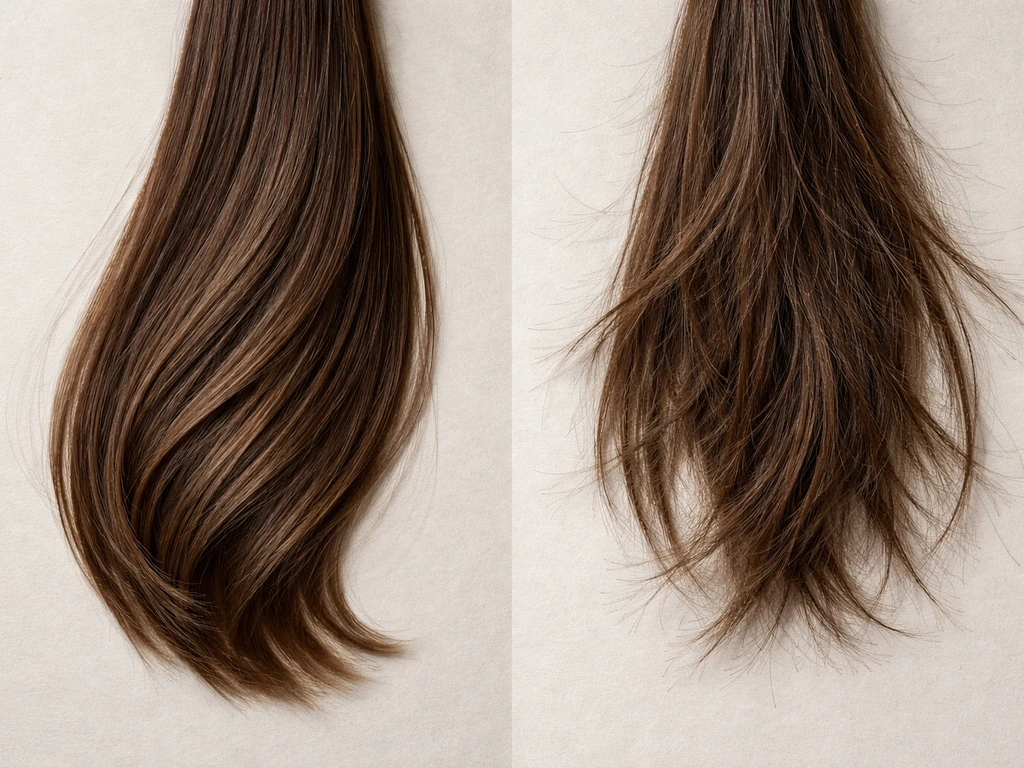
Hair growth and length retention are two completely different things, and conflating them is the source of most confusion around relaxed hair. Growth is a biological process happening at the follicle, deep in your scalp, where the anagen phase of the hair cycle produces new cells that push the shaft upward. That part is on autopilot. Length retention is what happens to the hair after it leaves the scalp. If the shaft is weak, porous, or perpetually dry, it snaps off at roughly the same rate it grows and your length never changes. This is why some people say their hair has not grown in years. It has. It just keeps breaking.
The average scalp hair grows about 1 centimeter per month, or roughly 6 inches per year. On healthy natural hair, most of that sticks around. On damaged or mismanaged relaxed hair, the growth is real but the net gain can be close to zero. All your energy should go toward protecting what is already there.
What relaxers actually do to your hair (and why breakage happens)
A relaxer works by breaking and rearranging the disulfide bonds inside your hair's keratin structure. Lye relaxers use sodium hydroxide at a very high pH. No-lye versions use calcium hydroxide or guanidine carbonate. Both alter the internal bonding architecture of the cortex to permanently straighten the curl pattern. The structural change is irreversible, and it comes with a cost: the hair shaft is measurably weaker after processing than virgin hair. Research comparing tensile strength of chemically straightened hair to unprocessed hair confirms the treated strands require less force to break.
Beyond the shaft, relaxers can irritate the scalp if they contact skin for too long or are applied improperly. Documented effects include burning, contact dermatitis, desquamation, and in some cases, follicular inflammation. A chronically irritated scalp is not a productive environment for hair to thrive, which is why application technique matters as much as the product itself. The relaxer also strips moisture and disrupts the cuticle layer, leaving hair highly porous and prone to dryness after every service.
What actually determines whether relaxed hair grows long
Scalp health
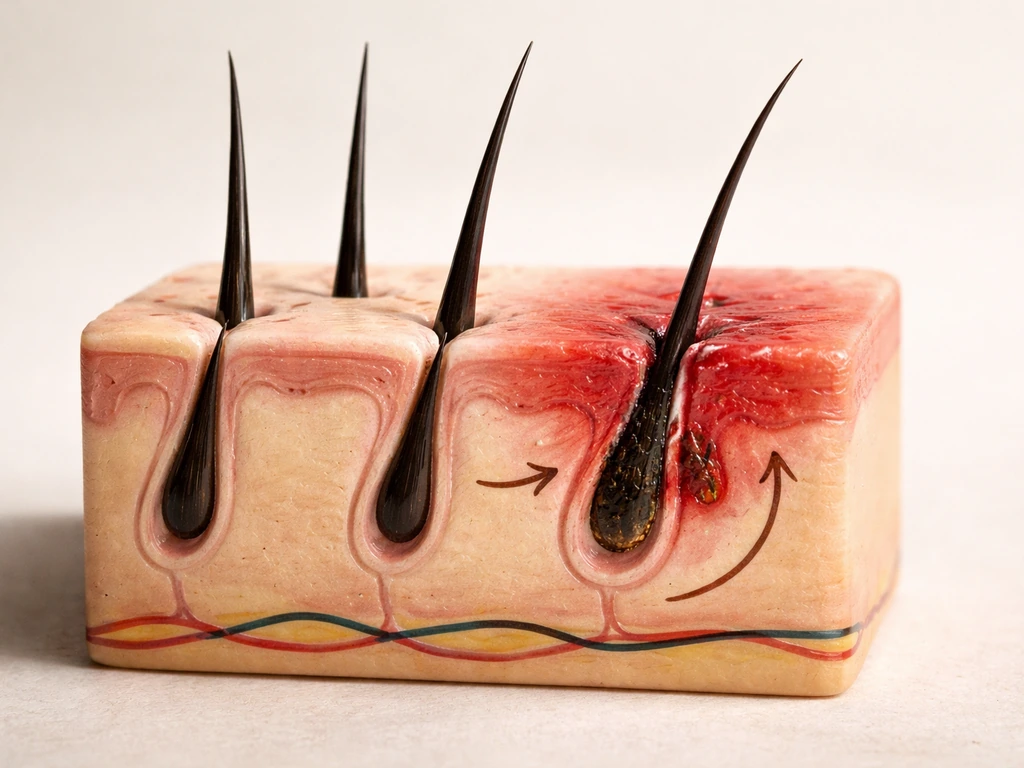
Everything starts at the scalp. If your follicles are inflamed, clogged, or damaged, hair production slows or stops in those areas. Conditions like folliculitis, which can be triggered by product buildup, occlusion, or chemical irritation, create an environment where hair literally cannot grow well. Keep your scalp clean, well-circulated, and free from buildup. If you have chronic itching, flaking, or tenderness between relaxer services, that is a sign something is off and it deserves attention before it becomes permanent.
Minimizing damage from overprocessing
Overprocessing is the single fastest way to destroy your length. When relaxer overlaps onto previously treated hair, you are applying high-pH chemistry to an already weakened shaft. The structural damage compounds, the hair becomes brittle, and it breaks with almost no force. Every stretch between touch-ups, and every careful application that avoids overlap, directly translates to stronger, longer hair.
Moisture and protein balance
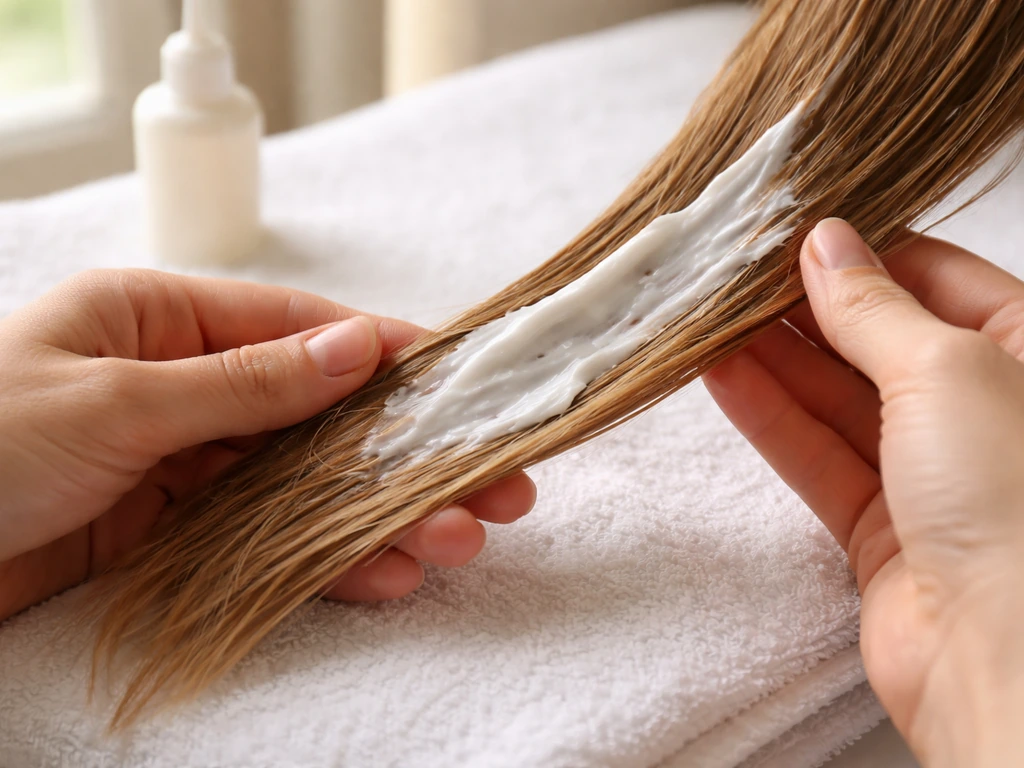
Relaxed hair is high-porosity hair by definition. The chemical process opens and disrupts the cuticle, making it harder to retain moisture. Dryness leads to brittleness, and brittleness leads to breakage. But throwing only moisture at it is not the answer either. Protein-moisture balance is the phrase you need to internalize. Protein treatments temporarily fill gaps in the cortex and reinforce the weakened shaft. Too much protein without moisture and the hair becomes stiff and snaps. Too much moisture without protein and it goes limp and stretches until it breaks. You need both, timed correctly.
Handling and tension
Relaxed hair is at its most fragile when it is wet and when it is transitioning at the line of demarcation between new growth and the relaxed portion. Rough detangling, aggressive combing on dry hair, and tight styles all cause mechanical damage that chips away at your length. Low-tension, low-manipulation habits are not optional for growing long relaxed hair. If you want the best products to grow relaxed hair, prioritize low-tension detangling tools, moisture-and-protein balanced conditioning, and gentle leave-ins.
A practical daily and weekly routine
Consistency beats complexity. A straightforward routine you actually follow every week will outperform an elaborate one you do sporadically. Here is how to structure it.
Wash day (weekly or every 7 to 10 days)
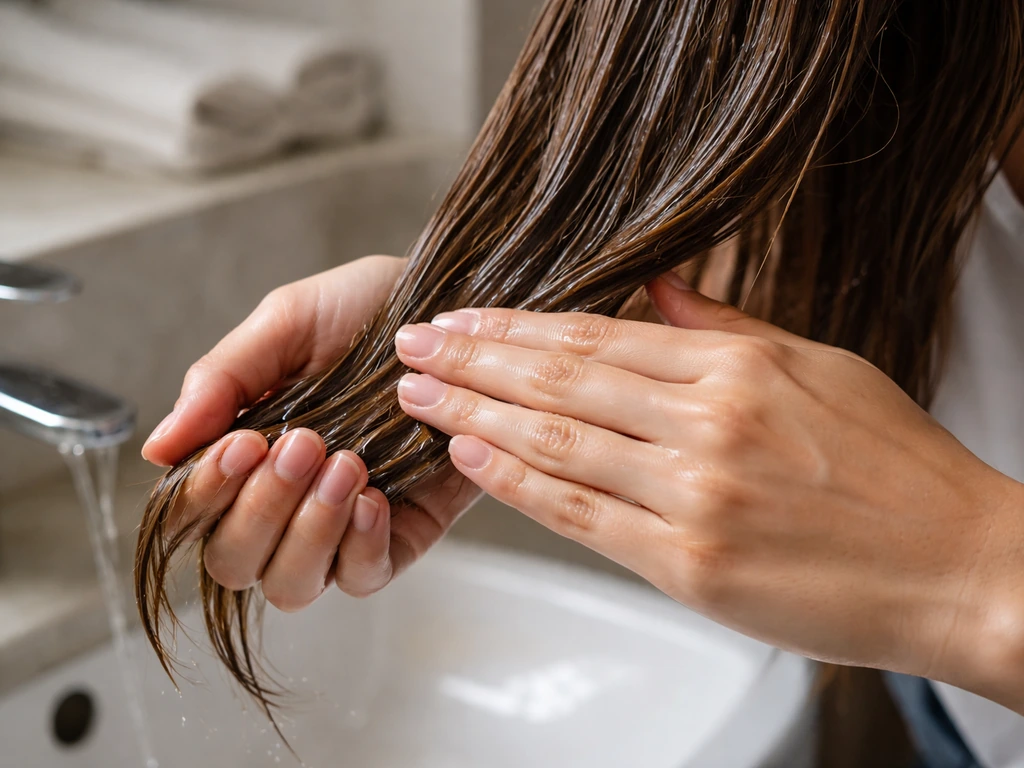
- Pre-poo: Apply a generous amount of a penetrating oil (coconut, olive, or avocado) or a conditioner to dry hair before washing. This reduces hygral fatigue, the swelling and contracting that weakens the shaft every time it gets wet.
- Shampoo: Use a moisturizing or sulfate-free shampoo. If you have product buildup, a gentle clarifying shampoo once a month is fine, but avoid using clarifying formulas every week on relaxed hair.
- Rinse thoroughly: Residue from relaxer-neutralizing shampoos or conditioning products can cause buildup that blocks moisture.
- Deep condition: This is non-negotiable. Apply a moisture-rich deep conditioner, cover with a plastic cap, and sit under a hooded dryer or steam cap for 20 to 30 minutes. Heat opens the cuticle and allows the conditioner to actually penetrate rather than just coat the surface.
- Protein treatment: Alternate or combine with your deep conditioning based on how your hair feels. If it stretches a lot before breaking, lean protein. If it snaps immediately with no stretch, lean moisture.
- Detangle gently: Use your fingers first, then a wide-tooth comb starting from the ends and working upward. Never force a comb through a knot.
Daily maintenance
- Moisturize and seal: Apply a water-based leave-in conditioner to damp or dry hair, then seal with a light oil or butter to lock that moisture in. The LOC or LCO method (liquid, oil, cream or liquid, cream, oil) works well for most relaxed hair.
- Sleep protection: Sleep on a satin or silk pillowcase, or wrap your hair in a satin scarf or bonnet every night. Cotton pillowcases cause friction that wears down the cuticle over time.
- Avoid heat on your roots: Daily heat styling on already-processed hair compounds damage. Save the flat iron for special occasions, not every morning.
Using protective styles to hold onto your length
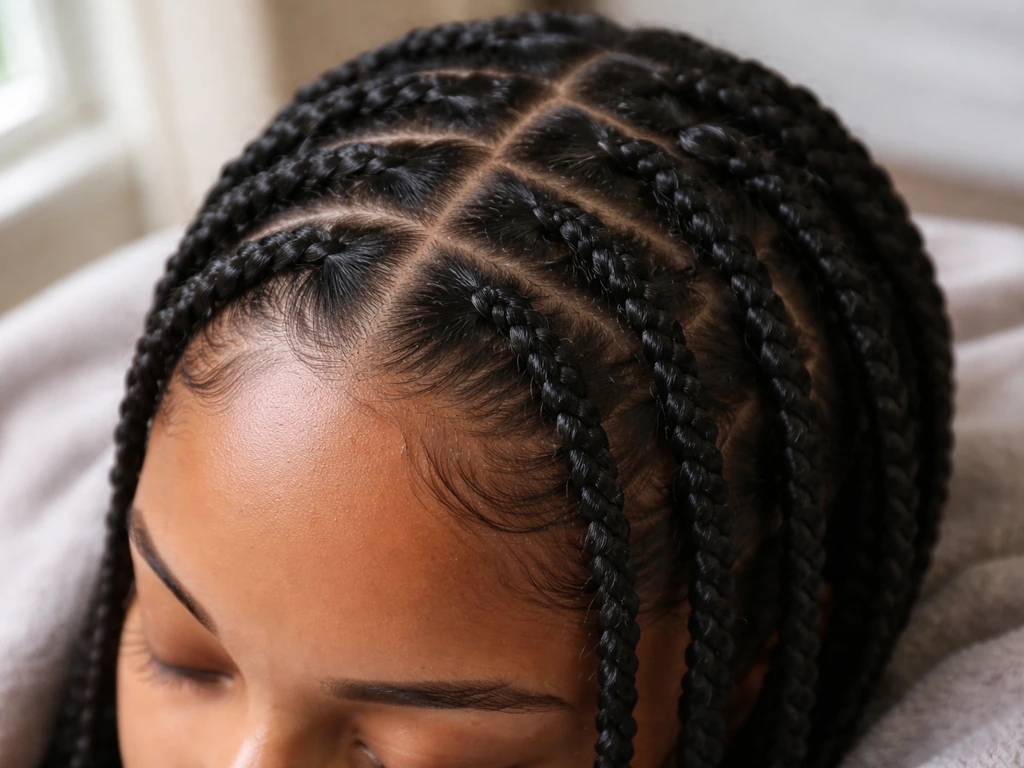
Braids, twists, weaves, and wigs are tools, not magic solutions. The idea that protective styling automatically grows your hair is one of the most persistent myths out there. What protective styling actually does, when done correctly, is reduce daily manipulation so your ends stay intact. If the style is too tight, too heavy, or left in too long without moisture, it can set you back further than no protective styling at all.
Traction alopecia is a real and documented condition caused by repeated tension on follicles from tight hairstyles including braids, cornrows, ponytails, and tight extensions. Early signs include tenderness, perifollicular redness, and thinning along the hairline and temples. If diagnosed early and high-tension styles are stopped, it can be reversible. Chronic traction alopecia can cause permanent follicle damage. The American Academy of Dermatology and clinical dermatology literature are both clear on this: styles that pull are genuinely harmful if done repeatedly and tightly.
For relaxed hair specifically, here are the protective styling rules that actually work:
- Never install braids or extensions so tight that you feel pain or see bumps at the roots.
- Leave styles in for 6 to 8 weeks maximum, then take them down, moisturize, and give your scalp a break.
- Moisturize your scalp and hair while in a protective style, at least two to three times per week.
- Make sure your ends are protected and tucked away, since ends are the oldest, most fragile part of relaxed hair.
- Wigs and loose buns are lower-tension options that still reduce daily manipulation without the traction risk.
- Do not install protective styles on wet relaxed hair. Wet relaxed hair is at its weakest and braiding or weaving it wet causes breakage.
Relaxer timing, regrowth management, and heat safety
How often to relax
The gold standard for minimizing damage is to apply relaxer only to new growth, not to previously processed hair, and to wait a minimum of 8 to 12 weeks between touch-ups. Some people stretch to 12 to 16 weeks or longer. The longer you can stretch your relaxers while keeping your hair moisturized and manageable, the less cumulative chemical damage your hair accumulates over time. Clinical guidance for relaxer application specifically states that the product should go on new growth only, protecting the already-processed length from overlap.
The line of demarcation, where new natural growth meets the relaxed portion, is the most fragile point on the strand. Gentle handling in that transition zone is critical, especially during wash day and styling.
Heat damage basics
Relaxed hair and frequent high heat is a risky combination. Research confirms that repeated wet-dry-heat cycles cause cuticle cracking, and that heat alters protein conformation in the shaft. Using a heat protectant before any thermal styling is not just a marketing recommendation. Pretreatments shown in research to reduce thermal damage work by forming a protective film around the shaft and reducing direct protein degradation from heat.
For flat irons and blow dryers, aim for the lowest temperature that achieves your desired result. Fine or color-treated relaxed hair should stay below 350 degrees Fahrenheit. Thicker strands can tolerate slightly more, but habitual high-heat styling on chemically processed hair is a fast track to breakage. Keep heat styling to once or twice a week at most, and always apply a heat protectant.
Troubleshooting: shedding, breakage, dryness, and porosity
Shedding vs. breakage
These are not the same thing and the solution for each is completely different. Shedding is a normal biological process. Wikipedia’s overview of anagen effluvium describes acute follicle injury that leads to sudden diffuse shedding of structurally damaged hairs, increasing their susceptibility to shaft breakage [acute injury to hair follicles leading to sudden diffuse shedding](https://en. wikipedia.
org/wiki/Anagen_effluvium). Hair that completes its growth cycle exits the follicle as a telogen club hair, meaning a full-length strand with a white bulb at the root. Losing 50 to 100 of these per day is normal. Breakage looks different: shorter fragments without a bulb, found in your comb, on your pillowcase, or snapping off during styling.
If you are consistently finding short broken pieces, not full strands with bulbs, you have a breakage problem, not a shedding problem. The fix is improving moisture, protein balance, and handling, not worrying about a shedding condition.
If you are genuinely shedding excessively (clumps of full strands with bulbs), that points to something systemic: stress, hormonal changes, nutritional deficiency, or a health condition. Telogen effluvium, a temporary diffuse shedding event, typically lasts less than six months and resolves once the trigger is addressed. If heavy shedding persists beyond that, see a dermatologist.
Dryness and high porosity
Relaxed hair is structurally more porous than unprocessed hair because the chemical treatment opens and disrupts the cuticle layer. High-porosity hair absorbs water quickly but loses it just as fast, which is why relaxed hair can feel dry again within hours of moisturizing. The solution is sealing. After applying a water-based moisturizer or leave-in conditioner, lock it in with an oil or butter. Heavier sealants like shea butter, castor oil, or a thick hair butter work well for very porous hair. Products with ingredients like hydrolyzed proteins and humectants (glycerin, aloe vera) help attract and hold water.
Protein-moisture imbalance
If your hair feels gummy or stretches a lot before breaking, it is lacking protein. Do a protein treatment (look for hydrolyzed keratin, silk, wheat, or collagen proteins) and follow up with moisture. If your hair feels stiff, brittle, and snaps immediately, it may have too much protein and needs a deep moisture treatment. Rotate your treatments based on what the hair tells you, not on a fixed schedule.
Itchy or irritated scalp
Chronic scalp itch between relaxers is often product buildup, dryness, or early folliculitis. Regular scalp washing, avoiding heavy occlusive products directly on the scalp, and using diluted apple cider vinegar rinses (to balance pH) can help. If you see papules, pustules, scaling, or hair thinning in patches, see a dermatologist. Do not keep applying relaxers over an actively irritated scalp.
Signs you need professional help
Some things are beyond DIY. See a board-certified dermatologist if you experience scalp burns, persistent patchy thinning, significant hairline recession, pain or prolonged burning after a relaxer service, or if chronic shedding does not resolve within a few months. Overprocessing damage can be difficult to reverse, and waiting too long before seeking care can allow temporary damage to become permanent.
Realistic expectations: how long does this actually take?
At roughly half an inch of growth per month, you are looking at 6 inches of potential new growth per year. If your goal is 12 inches of new length, you are realistically looking at 2 years of good retention, not one. The first few months of cleaning up your routine often feel slow because you are just stopping the breakage, not yet gaining visible length. Give any regimen change at least 3 to 6 months before evaluating whether it is working. Take monthly length check photos in the same lighting and position so you can actually track progress, because it is easy to lose perspective over time.
| Challenge | Likely Cause | Fix |
|---|---|---|
| Constant breakage at the same length | Overprocessing overlap or heat damage at the ends | Stretch relaxers longer, trim damaged ends, reduce heat |
| Hair feels dry within a day of moisturizing | High porosity from chemical damage | Seal with a heavier oil or butter after every moisture application |
| Gummy or overly stretchy hair | Protein deficiency | Add a hydrolyzed protein treatment followed by deep conditioning |
| Stiff, snapping hair after protein treatment | Protein overload | Skip protein, do two or three moisture-only deep conditioning sessions |
| Thinning at the hairline or temples | Traction from tight styles or relaxer overlap | Switch to low-tension styles immediately, see a dermatologist if it persists |
| Full strands with white bulbs shedding heavily | Possible telogen effluvium or systemic issue | Check nutrition, stress levels; see a dermatologist if it lasts more than 2 to 3 months |
If you are curious how this compares to growing natural kinky hair or wondering whether low porosity affects growth differently, those are genuinely different conversations because the structural starting point and the retention strategies shift meaningfully. If you are curious how this compares to growing natural kinky hair fast, that is a different but related discussion focused on curl pattern and retention strategies. Low porosity hair can grow long, but it still depends on how well you retain length by preventing dryness and breakage low porosity affects growth differently. And if you want to go deeper on specific products that support relaxed hair growth or the exact mechanics of timing your touch-ups for maximum length, those details build directly on everything covered here.
FAQ
If my relaxed hair is growing, why doesn’t the length seem to change?
Yes, relaxed hair can grow long, but your first proof of progress should be a reduction in breakage, not immediate length changes. Take comb-through measurements and keep a “broken hair count” for a week, then compare to your monthly length check photos.
How do I know whether I’m stretching relaxers too far or too short?
Aim for a clear schedule that prevents overlap, then adjust based on your root feel and manageability. If your relaxer line is creeping up faster than usual, stretching too long can increase frequent rework, which often leads to more cumulative damage.
Can I use a flat iron on relaxed hair and still grow long?
If you straighten relaxed hair, the safest practice is to keep it dry when using heat and avoid repeated passes on the same section. Detangle gently beforehand, section small, and use the lowest temperature that gets the hair to your desired style in one or two passes.
What’s the right way to moisturize relaxed hair so it actually holds length?
No, not “just because it’s relaxed.” Relaxed hair is typically more porous, so one common mistake is skipping sealing after moisturizer. If your hair feels dry again within hours, try moisturizing, then sealing with an oil or butter (and keep the sealant off the scalp unless your scalp tolerates it).
How often should I use protein on relaxed hair?
Protein timing should match what your hair is doing. If it feels mushy or stretches excessively, use a protein treatment, then follow with a moisture routine. If it feels stiff, rough, or brittle, reduce protein and focus on deep moisturizing with gentler conditioning for the next few washes.
What’s the biggest technical mistake in getting a relaxer that ruins length?
A good target is to treat the relaxation at the root and protect the relaxed portion during the process. Use a barrier strategy, section the hair, and ensure the relaxer does not migrate onto previously processed lengths, because that overlap is one of the biggest drivers of breakage.
Are protective styles like braids always good for growing relaxed hair long?
Protective styles help only if traction stays low. If you feel scalp tenderness, headaches, or see edge thinning, remove or loosen the style immediately, and avoid leaving heavy styles in longer than your comfort level with regular moisturizing.
How can I tell if my scalp irritation is normal or a sign I should see a dermatologist?
Pay attention to the root zone. If you notice itchiness that keeps returning, persistent flaking around the relaxer line, or tiny bumps that worsen over time, stop DIY and get checked, especially if you’re also seeing patchy thinning.
Should I detangle relaxed hair differently at the line of demarcation?
Yes, but you have to prevent re-damage during washing. Use a detangling approach on damp hair with slip, avoid aggressive brushing when the hair is wet or transitioning from relaxed to new growth, and focus on gentle finger detangling at the demarcation.
Is my hair shedding or breaking, and why does that change what I should do?
Watch the ratio of full-length shed hairs (with a bulb) to short snapped pieces. If you are losing full-length hairs in clumps, that suggests true shedding and you may need to address stress, hormones, nutrition, or illness, while snap-offs point back to handling and chemistry.
What should I change if I rely on heat every week to manage relaxed hair?
If you have frequent heat needs, reduce the frequency and “stacking” effect. A common mistake is using high heat more often than intended, then compensating with more moisture but not enough sealing or not enough gentler handling, which still results in breakage.
Next Article
Best Products to Grow Relaxed Hair Longer and Healthier
Best products and routines to grow relaxed hair longer: moisturize, seal, reduce breakage, protect styles, scalp care, t