Natural kinky hair grows roughly half an inch per month on average, which adds up to about six inches a year if none of it breaks off. That last part is the whole game. Most people with type 4 hair are growing plenty of new hair; they just are not keeping it. The real path to longer natural kinky hair is a two-part job: support the biology that drives growth at the follicle, and protect every inch that comes out of your scalp so it stays on your head long enough to actually show length.
How to Grow Natural Kinky Hair Fast: Science-Based Plan

Simone Okonkwo
14 Jul 2026
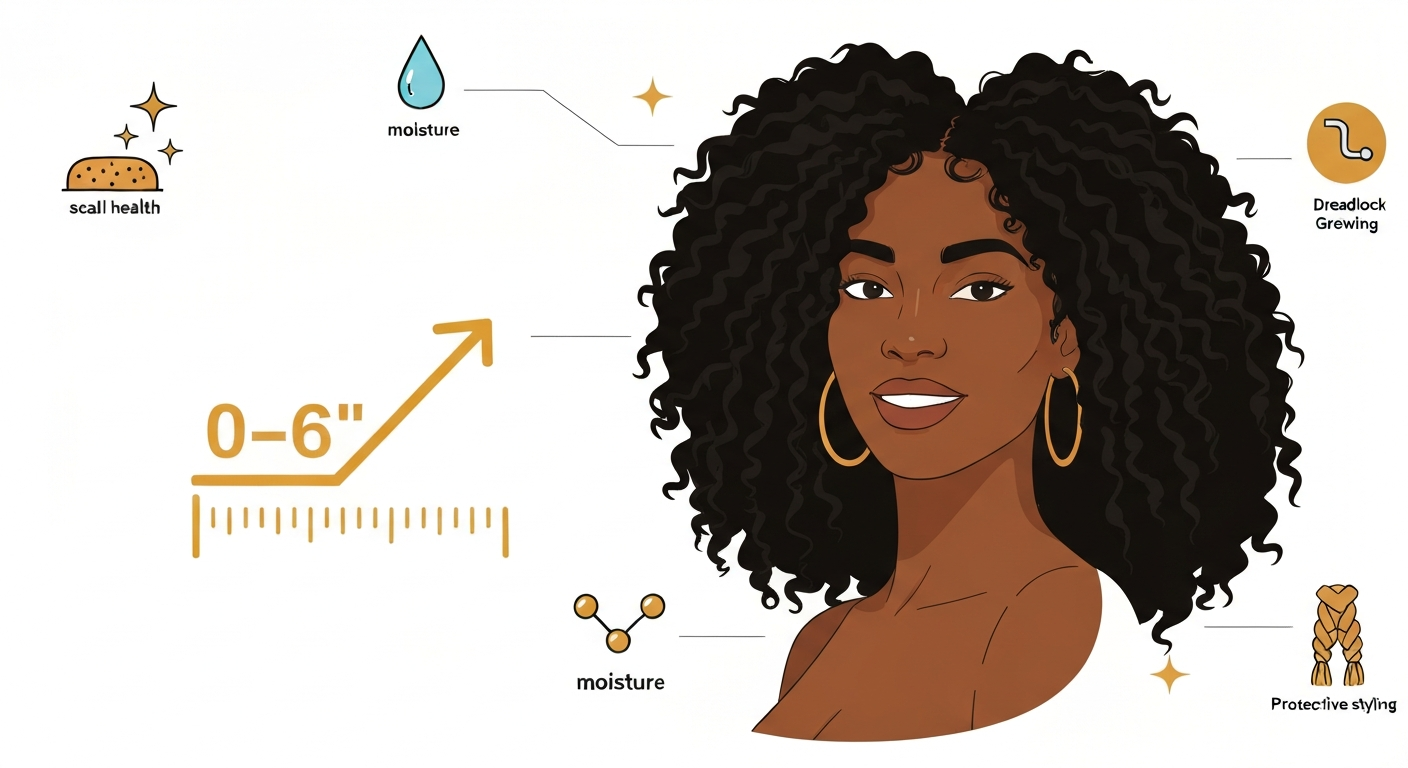
Realistic goals for growing natural kinky hair fast
I want to be honest with you before we go any further, because the internet is full of promises that simply do not hold up. A multi-ethnic in-vivo study by Loussouarn and colleagues (2005) measured actual linear hair growth rates across ethnicities and found that African and Afro-textured hair grows at a mean of roughly 256 micrometers per day, compared with around 396 for Asian hair. Translated into practical terms, that is somewhere between 0.3 and 0.5 inches per month for most people with kinky hair. You can optimize that rate at the margins through nutrition and scalp health, but you cannot double it with a product. What you CAN dramatically change is how much of that growth you retain. If you are currently retaining 3 inches of a 6-inch annual growth, improving your retention habits can effectively 'double' your visible length gains without changing your growth rate at all. That is the realistic fast track.
Growth vs retention: the distinction that changes everything
Hair growth is what happens inside the follicle, driven by cell division in the dermal papilla. Retention is how much of that growth survives mechanical handling, moisture fluctuations, styling stress, and chemical exposure at the shaft. Researchers measure these separately for good reason: phototrichogram techniques and serial hair counts track what the follicle is producing, while tensile strength testing and wet combing breakage assays measure shaft fragility and how much hair is breaking off. A person with a healthy follicle and fragile, over-manipulated hair can appear to have zero growth because retention is near zero. Most people with kinky hair who feel stuck at a certain length are dealing with a retention problem, not a follicle problem.
Practically, this means that for the majority of people asking how to grow natural kinky hair fast, the highest-leverage interventions are on the retention side: gentler handling, moisture balance, low-manipulation styles, and scalp health. Growth-rate interventions (nutrition, certain medications) matter too, but they are secondary unless something is actively suppressing follicle function.
The biology behind your growth rate and thickness
Hair follicles cycle through anagen (active growth), catagen (transition), and telogen (rest/shedding) phases. The length of your anagen phase, which is largely genetic, determines your terminal length ceiling. WNT/beta-catenin and FGF signaling pathways are central to anagen activation and dermal papilla condensation; BMP, SHH, and TGF-beta pathways also regulate follicle morphogenesis and cycling. These are the molecular switches your genetics set. You cannot reprogram them with a shea butter mix, but you can avoid behaviors that shorten anagen prematurely or push follicles into telogen early.
Genetics also determines your hair's shaft geometry. Research by Franbourg et al. (J Am Acad Dermatol, 2003) showed that Afro-textured hair has a more elliptical cross-section, lower tensile strength, and distinct water-swelling behavior compared with Asian or Caucasian hair. This geometry creates more points of potential breakage along the curl, which is why kinky hair requires more intentional moisture management than straighter types. It is not a deficiency; it is a structural reality that informs good care.
Beyond genetics, several other biological factors modulate growth rate and density. Age reduces follicle cycling efficiency over time. Hormonal changes, including thyroid dysfunction, polycystic ovarian syndrome, postpartum hormonal shifts, and perimenopause, can push large numbers of follicles into telogen simultaneously, causing diffuse shedding. Chronic physical or psychological stress elevates cortisol and can similarly trigger telogen effluvium. Certain medications (anticoagulants, some blood pressure drugs, chemotherapy agents, high-dose vitamin A derivatives) are documented causes of hair loss. These factors can all suppress visible growth even when your scalp and shaft care are excellent, which is why I always say: if your hair suddenly stops retaining length despite good practices, look at your body first, not your product shelf.
Scalp health: the foundation that most people skip
Healthy follicles live in a healthy scalp environment. That means a clean, balanced, inflammation-free scalp with adequate sebum circulation. Here is where a lot of people with kinky hair run into trouble: because our hair type tends to be drier and heavier product use is common, product buildup and infrequent washing are widespread. Sebum from the sebaceous gland struggles to travel down a tightly coiled shaft, which means the scalp can simultaneously be oily (near the follicle) and the ends can be completely dry. This is normal and it informs how you should clean.
Cleanse your scalp every one to two weeks at minimum. Use a sulfate-free or low-sulfate shampoo that removes buildup without stripping sebum aggressively. Clarifying shampoos (which typically contain sodium lauryl or laureth sulfate) should be used occasionally, maybe once a month, to remove mineral buildup and heavy silicone layers, but using them weekly on kinky hair accelerates dryness and breakage. When you shampoo, focus friction and product on the scalp itself, not the length of the hair, and rinse thoroughly.
Scalp exfoliation, either chemical (salicylic acid, glycolic acid serums applied to the scalp) or physical (gentle scalp massages with a silicone brush), helps prevent follicular plugging from product residue and dead skin cells. Scalp massage specifically has a small but real evidence base: a Japanese pilot study found that regular standardized scalp massage increased hair shaft thickness over 24 weeks. It is an easy, cost-free addition to any wash routine. Inflammation control matters too. Seborrheic dermatitis (dandruff driven by Malassezia yeast) is common and inflammatory, and chronic scalp inflammation is associated with follicle miniaturization over time. Zinc pyrithione, selenium sulfide, and ketoconazole shampoos all have evidence for managing seborrheic dermatitis and are available over the counter or by prescription.
Nutrition, supplements, and medical options
Food is real medicine for your follicles. Hair is metabolically expensive tissue, meaning it is one of the first things your body deprioritizes when calories or key micronutrients are short. The research here is fairly specific about which deficiencies matter most.
Iron deficiency is the most documented nutritional cause of diffuse hair shedding in women. Multiple systematic reviews and a 2022 meta-analysis specifically linking low serum ferritin to telogen effluvium confirm this. A 2026 meta-analysis further reported significantly lower serum ferritin and vitamin D in telogen effluvium cases versus controls. This does not mean you should self-supplement iron, because excess iron has its own risks, but it does mean that if you are experiencing diffuse shedding, getting a ferritin test (not just a standard hemoglobin/CBC) is a smart first step. Many doctors will only run a basic iron panel unless you specifically ask for ferritin. Vitamin D deficiency is separately linked to hair cycling disruption. Protein is essential: hair is largely keratin, so diets chronically low in protein (below 0.8 grams per kilogram of body weight per day) will reduce shaft diameter and growth rate. Zinc, niacin, and omega-3 fatty acids also support follicle health, though the evidence is strongest for iron and vitamin D among specific micronutrients.
On biotin: I know it is everywhere in haircare marketing, but a 2026 systematic review found no reliable evidence that biotin supplementation improves hair growth in people without a documented biotin deficiency. Biotin deficiency itself is genuinely rare. You are almost certainly not biotin deficient. Save the money unless a blood test says otherwise. Same principle applies to most hair supplement blends, which are largely unregulated and often proprietary.
Medically, topical minoxidil (2% or 5% solution/foam) has consistent randomized-trial evidence for increasing hair count and is used routinely for pattern hair loss including in hair-of-colour populations, though most pivotal trials have underrepresented Black patients. Low-dose oral minoxidil (0.25 to 5 mg per day) is increasingly prescribed off-label for various non-scarring alopecias with observational data showing density improvements, but requires blood pressure monitoring and physician oversight. A 2023 observational study, Changes in Minoxidil Prescribing After Media Attention About Oral Use for Hair Loss, reports increased off‑label low‑dose oral minoxidil prescribing and emphasizes the need for blood pressure monitoring, attention to edema and hypertrichosis, appropriate cardiac screening, and notes limited high‑quality RCT evidence in skin‑of‑colour groups Changes in Minoxidil Prescribing After Media Attention About Oral Use for Hair Loss — observational (2023, PMC). Platelet-rich plasma (PRP) has modest evidence in androgenetic alopecia from systematic reviews, but evidence quality is rated low-to-moderate due to heterogeneous protocols. These are tools to discuss with a dermatologist, not home remedies.
Moisture vs protein: getting the balance right for kinky hair
Kinky hair needs moisture more urgently than any other hair type because of its structure. The tight curl pattern prevents natural oils from coating the shaft evenly, the cuticle layers of 4c hair tend to be more raised and porous, and the numerous bends along the curl create structural weak points. Moisture is what keeps the hair flexible at those bends instead of brittle. But moisture alone is not enough. The hair shaft is made of protein (keratin), and if the protein matrix is damaged by chemical processing, heat, or repeated wet-dry cycling without protection, no amount of conditioning will stop breakage.
The key is reading your hair. Over-moisturized hair without sufficient protein feels mushy, stretches excessively without snapping back, and has no definition. Protein-deficient hair breaks easily when stretched, feels gummy when wet, and sheds in short pieces. Protein-overloaded hair (too many protein treatments without enough moisture) feels hard, stiff, and snaps off in short pieces when dry. Healthy kinky hair should feel soft but have some elasticity; it should stretch a little when wet and spring back without breaking.
Most people with natural kinky hair who are not using heat or chemical processing need light protein support every 4 to 6 weeks rather than heavy weekly protein treatments. Those who are heat styling frequently, transitioning from a relaxer, or who have high porosity damage need protein more regularly, perhaps every 2 to 3 weeks, but always followed by a deep moisture treatment.
Porosity-specific routines: test first, then build your regimen
Hair porosity describes how easily water (and product) enters and exits the cuticle. It is one of the most practical organizing principles for building a kinky hair routine. The float test (dropping a clean shed hair into water and seeing whether it sinks or floats) is a rough guide; more reliable is watching how your hair responds to water during washing. High porosity hair absorbs water immediately, feels saturated fast, and dries quickly but feels dry again soon after. Low porosity hair repels water initially, takes time to wet fully, and takes a very long time to dry.
| Porosity Type | What it looks like | Best product approach | Key tips |
|---|---|---|---|
| Low porosity | Water beads on hair, slow to absorb moisture, prone to product buildup, slow to dry | Light, water-based leave-ins; liquid-heavy LOC (Liquid-Oil-Cream); avoid thick butters as leave-in | Apply products to damp hair with steam or warmth to lift cuticle; clarify regularly; avoid heavy proteins |
| Normal/medium porosity | Absorbs and retains moisture well, minimal frizz with proper products, healthy elasticity | Flexible routine works; standard LOC or LCO method; moderate protein every 4–6 weeks | Maintain with consistent moisture and light protein; this is the goal state |
| High porosity | Absorbs water fast but loses it fast, frizzy, dries quickly, prone to tangles and breakage | Rich creams and butters to seal; heavier oils (castor, avocado); protein treatments every 2–3 weeks | Seal with heavier oils after leave-in; cold water rinses to close cuticle; limit heat; do ACV rinses to smooth cuticle |
It is also worth knowing that porosity can change along a single strand. Ends that have been on your head for two or three years are naturally more porous than new growth because of cumulative mechanical and environmental wear. This is why ends need more sealing attention than roots in most kinky hair routines.
Products and ingredients: what actually works and what to skip
Ingredients that genuinely help
- Humectants (glycerin, aloe vera, panthenol, honey): draw water into the hair shaft; most effective in moderately humid environments; in very low-humidity climates they can pull moisture out of the hair instead, so use lighter amounts in dry winters
- Emollients (shea butter, mango butter, avocado oil, jojoba oil): fill gaps in the cuticle and add softness and slip for detangling; crucial for minimizing mechanical damage
- Coconut oil as a pre-wash treatment: a well-cited lab study (Rele and Mohile, J Cosmet Sci 2003) showed coconut oil penetrates the hair shaft and reduces protein loss during wet combing more effectively than mineral or sunflower oil, making it one of the few oils with actual shaft-penetrating evidence; apply before washing, not just as a sealant
- Hydrolyzed proteins (hydrolyzed keratin, hydrolyzed wheat protein, hydrolyzed silk): temporarily patch and reinforce the cuticle; molecular weight matters — smaller hydrolyzed proteins penetrate the cortex while larger ones coat the surface
- Minoxidil (topical 2%/5%, oral low-dose under medical supervision): the only broadly evidenced medicinal ingredient for hair density
- Ketoconazole (1%–2% shampoo): antifungal with evidence for reducing scalp inflammation and seborrheic dermatitis; some data suggests modest DHT-pathway effects at the scalp
Ingredients to limit or avoid
- Sodium lauryl sulfate (SLS) as a daily cleanser: extremely effective at removing oils, too effective for kinky hair used more than once or twice a month; fine for occasional clarifying
- Drying alcohols (isopropyl alcohol, SD alcohol 40, denatured alcohol) listed high on ingredient lists: these evaporate quickly and strip moisture; fatty alcohols (cetyl, stearyl, cetearyl) are the opposite and are beneficial
- Non-water-soluble silicones (dimethicone, cyclopentasiloxane) without regular clarifying: build up on the cuticle and block moisture entry over time; water-soluble silicones (dimethicone copolyol, PEG-modified silicones) rinse out easily and are less problematic
- Excessive heat (above 400°F/204°C repeatedly): degrades the disulfide bonds in the keratin matrix; the coiled geometry of kinky hair means flat irons and high-heat blow dryers apply stress unevenly at every bend
- Lye and no-lye relaxer chemicals: break disulfide bonds permanently; transitioning hair that still has a relaxed section needs extra protein and gentle handling at the line of demarcation where two very different textures meet
Product-type guidance at a glance
| Product Type | What to look for | What to avoid | Frequency |
|---|---|---|---|
| Shampoo | Sulfate-free or low-sulfate cleansers; scalp-focused formulas with tea tree, zinc pyrithione or salicylic acid for flaky scalps | Daily SLS-heavy formulas; high fragrance on sensitive scalps | Every 1–2 weeks; clarify monthly |
| Conditioner (rinse-out) | Slip agents (cetyl/stearyl alcohol, behentrimonium chloride); hydrolyzed protein; aloe vera | Heavy silicone as first few ingredients without regular clarifying | Every wash |
| Deep conditioner | Rich emollients, panthenol, hydrolyzed proteins; heat-activated formulas for low porosity | Protein-heavy formula every week without moisture follow-up | Weekly to biweekly |
| Leave-in conditioner | Water as first ingredient; glycerin; light oils; anti-humectant sealants in dry climates | Alcohol (drying types) listed in first five ingredients | Every wash day, refreshed as needed |
| Oils | Coconut oil (pre-wash penetrator); castor oil (sealing, scalp stimulation); jojoba (mimics sebum); argan (light sealant) | Mineral oil or petrolatum as primary scalp treatment (can clog follicles if not cleansed regularly) | As needed for sealing or pre-wash treatment |
| Protein treatments | Hydrolyzed keratin, wheat, or silk protein; reconstructor treatments for high-porosity hair | Using heavy protein treatments weekly without moisture balance | Every 4–6 weeks (healthy); every 2–3 weeks (damaged/transitioning) |
Daily, weekly, and monthly regimens
Healthy natural hair
- Daily: Refresh moisture with a water-based leave-in mist or spritz, re-seal with a light oil or cream on the ends, pineapple or loosely bun hair at night on a satin/silk pillowcase or under a satin bonnet
- Weekly (wash day): Pre-poo with coconut oil 30–60 minutes before washing, shampoo scalp with sulfate-free cleanser, apply rinse-out conditioner with slip for detangling (finger detangle or wide-tooth comb from ends to roots), deep condition under heat or steam for 20–30 minutes, apply leave-in and seal with the LOC or LCO method
- Monthly: Clarify with a low-sulfate or sulfate shampoo to remove mineral and silicone buildup, do a light protein treatment followed by a deep moisture treatment, assess your ends and trim single-strand knots or split ends as needed
Dry or damaged hair
- Daily: More frequent moisture refreshing (twice daily if needed), seal ends with a richer butter or castor oil blend, protective style hair to minimize daily manipulation
- Weekly: Pre-poo every wash, prioritize a reconstructing protein treatment followed immediately by a moisture deep conditioner (do not skip the moisture step after protein), reduce wash frequency slightly if over-manipulation is worsening breakage
- Monthly: Full protein-moisture reset (protein treatment, then deep condition under steam, then seal thoroughly), trim visibly damaged ends to prevent further split travel, evaluate whether a protective style period is appropriate
Transitioning hair (relaxed-to-natural)
- Daily: Extra care at the line of demarcation where relaxed and natural textures meet; apply a moisturizing butter or cream to that zone specifically; keep hair in low-tension styles
- Weekly: Gentle detangling in sections while wet and coated with conditioner; start detangling at the ends and work upward in very small sections; protein treatment every 2–3 weeks to reinforce the demarcation zone
- Monthly: Trim to remove relaxed ends progressively or do a large periodic chop based on preference; do not chemically process over the line of demarcation with additional relaxer or aggressive color
Sample 3-, 6-, and 12-month growth plans
| Timeframe | Primary focus | Expected retention target | Key milestones to hit |
|---|---|---|---|
| Months 1–3 | Establish consistent wash-day routine; identify porosity; address scalp inflammation or buildup; start nightly protective styling | 0.75–1.5 inches net retained length gain | No major breakage episodes; scalp is comfortable and balanced; products selected for your porosity |
| Months 4–6 | Introduce a protective style (braids, twists, locs) for 4–8 weeks; nail moisture-protein balance; address any nutritional deficiencies identified by testing | 1.5–3 inches total net retained from start | One completed protective style cycle with minimal shedding at takedown; energy and diet on track |
| Months 7–12 | Alternate protective styling with low-manipulation wear periods; refine protein frequency; do a 6-month length check and photo comparison | 3–5 inches total net retained from start (individual variation is significant) | Visible length difference in photos; reduced breakage on combs/shower floor; ends feel healthier |
These ranges assume average growth biology and improving retention habits. They are not guarantees. Individual genetics, health status, styling history, and starting damage level all affect outcomes. If you are hitting significantly less than these targets despite consistent care, that is a signal to investigate potential medical or nutritional factors.
Protective styling and low-manipulation techniques
Protective styles are styles that tuck the ends of your hair away (the oldest, most fragile portion of each strand) and reduce the daily mechanical stress of styling, detangling, and environmental exposure. Done correctly, they are one of the most powerful retention tools available. Done incorrectly, they cause more damage than they prevent.
Protective style dos and don'ts
| Do | Don't |
|---|---|
| Moisturize and seal hair thoroughly before installation | Install on dirty, dry, or tangled hair |
| Ensure braids, twists, or weave installs are low-tension at the hairline and edges | Allow any tightness that causes bumps at the root or pain that lasts more than 24 hours |
| Keep the style for 4–8 weeks maximum (braids, twists); locs are a different long-term commitment | Leave braids or box braids in beyond 8–10 weeks, which causes severe matting, breakage, and hygiene issues |
| Cleanse the scalp every 2–4 weeks while in a protective style (diluted shampoo or a scalp spray) | Neglect scalp cleansing for the full duration of the style |
| Moisturize the visible hair and edges during the style's wear period | Assume no care is needed once the style is installed |
| Take styles down gently, section by section, with detangling product | Rip or rush takedown, which causes the majority of breakage attributed to 'the style' |
Low-manipulation styles that keep your ends tucked but are not fully installed (like buns, puffs, twist-outs, and braid-outs maintained for several days) also dramatically reduce retention losses compared with daily wash-and-go manipulation. They are a lower-commitment middle ground between fully installed protective styles and open everyday wear.
Safe stretching and heat use
Kinky hair shrinks dramatically when dry, often to 50 to 75 percent of its actual length. This is one reason people underestimate how much they have grown. Stretching methods let you see and manage true length without heat damage. Banding (using small hair ties at intervals down a twist or braid) is one of the safest stretch methods. African threading, a traditional technique using thread wrapped down sections of hair, achieves excellent elongation with no heat. Twist-outs and braid-outs give moderate stretch with no thermal risk.
If you use heat, blow-drying on a medium setting with a tension comb attachment (not the highest heat setting) is lower risk than flat ironing. If you do use flat irons, stay below 380°F (193°C), use a heat protectant with film-forming agents (like dimethicone or cyclomethicone in a leave-in serum), and straighten in fully dry sections only. Heat on wet or damp kinky hair creates steam damage inside the shaft that is severe and permanent. I would recommend heat stretching no more than once every 6 to 8 weeks for healthy natural kinky hair; those with high porosity or fine strands should minimize it further.
Transitioning from relaxers: what your hair actually needs
If you are transitioning from a relaxer to natural hair, you are managing two entirely different textures on one head simultaneously. The line of demarcation, where the chemically altered relaxed portion meets the new natural growth, is structurally the most fragile point on every strand. Relaxed hair has permanently disrupted disulfide bonds in the keratin structure and typically has higher porosity. New natural growth is coiled and springy. When these two textures are connected, every curl in the natural portion creates tension stress at the demarcation line.
The most important practices during transition are: always detangle while wet and thoroughly conditioned, never dry detangle; keep the hair in low-tension styles like two-strand twists, flat twists, or buns; use protein treatments regularly to reinforce the demarcation zone; and avoid any additional chemical processing (including semi-permanent color) on the relaxed section. Many people choose to do a big chop (cutting off all relaxed ends at once) to eliminate the demarcation zone entirely and start fully natural. Those who prefer a gradual transition should do periodic trims every two to three months to progressively remove relaxed length as natural growth accumulates. For a deeper look at relaxed hair care alongside natural approaches, the comparison near the end of this article touches on that, and there is a full companion guide on growing black relaxed hair long and fast elsewhere on this site.
Measuring progress: reliable methods
Because kinky hair shrinks so much, ruler measurements on unstretched hair are nearly useless for tracking progress month to month. Here are the methods that actually give you usable data.
- Stretched length checks: straighten or stretch hair gently (banding or blow-dry) and measure from the scalp to the ends in a consistent set of locations (front hairline, crown, nape, sides); do this every 3 months, not monthly, to see meaningful change
- Photo logs: standardized photos (same lighting, same angle, same clothing reference point) taken every 4 to 6 weeks are the most motivating and useful progress tracking tool; the camera captures density changes and edge health that a ruler misses
- Breakage markers: count the short hairs on your comb, shower floor, or in your detangling section on wash day; a dramatic reduction in these over 2 to 3 months is concrete evidence that your retention is improving
- Hair density assessment: look at your scalp visibility through your hair in the same lighting conditions every few months; increased visibility of the scalp in an area where it was not visible before can signal early thinning
- Reference point method: choose a fixed body reference (chin, shoulder, armpit, bra strap) and note when your hair hits that point when stretched; these milestone markers are easy to track and deeply satisfying
Troubleshooting common problems
Breakage
Breakage shows up as short, snapped pieces of hair (not full-length strands with a white bulb at the end, which is normal shedding). It means the shaft is fracturing. First, check your moisture-protein balance using the stretch test described above. Examine your manipulation habits: are you detangling dry hair, using fine-tooth combs, or rushing through sections? Look at your heat frequency. Review your protective style tension. Most breakage is mechanical and corrects within four to eight weeks of adjusting these factors.
Thinning and diffuse shedding
If you are losing full-length strands with a white bulb (telogen hairs) at a rate that seems high, that is shedding, not breakage. Shedding 50 to 100 hairs per day is normal. Beyond that, diffuse shedding is usually systemic: check your ferritin, vitamin D, thyroid function, and any recent major stressors, illnesses, or medication changes. Postpartum shedding (telogen effluvium) typically resolves within six to twelve months after delivery without intervention. If diffuse thinning is accompanied by scalp itching, tenderness, or visible scarring on the scalp, see a dermatologist urgently.
Split ends and single-strand knots
Split ends are permanent structural damage that travel up the shaft if not trimmed. No product seals them; products only temporarily make them look smoother. Trim them. Single-strand knots (fairy knots) are nearly universal in kinky hair due to the coil pattern and are best managed by keeping hair stretched and moisturized, not by trying to untangle them, since attempting to remove them usually causes more breakage than trimming them.
Traction alopecia
Traction alopecia is hair loss caused by chronic tension on the follicles, most commonly along the hairline, temples, and edges. Early signs include a receding hairline, broken hairs at the edges, and follicular papules (small bumps). It is extremely common in women who frequently wear tight ponytails, braids, weaves on tight wefts, or heavy extensions. The key intervention is removing the tension source immediately. Styles that pull the hairline should be avoided entirely until the hairline recovers. If edges have not returned after 3 to 6 months of tension-free styling, topical minoxidil applied to the affected area is a documented medical option to discuss with a dermatologist.
When to consult a dermatologist or trichologist
Not every hair concern needs a medical appointment, but some absolutely do. The red flags that warrant prompt professional evaluation are: sudden rapid shedding that is not clearly tied to a known trigger (illness, postpartum, medication); patchy bald areas; a hairline that has receded from its baseline; scalp tenderness, itching, burning, or visible scaling that does not respond to OTC anti-dandruff treatments; thinning that worsens progressively over six months despite good care; and any symptom combination suggesting a systemic illness (fatigue, weight changes, joint pain alongside hair loss).
When you see a dermatologist for hair loss, expect a scalp examination (possibly with a dermatoscope), a pull test, and a blood panel that should include at minimum: ferritin, complete blood count, thyroid function (TSH, free T4), vitamin D (25-OH), and consideration of ANA and androgen levels depending on your history. A scalp biopsy may be recommended if scarring alopecia is suspected. Central centrifugal cicatricial alopecia (CCCA), the most common primary scarring alopecia in women of African ancestry with prevalence estimates ranging from 2.7 to 5.6 percent in published series, requires early anti-inflammatory treatment to prevent permanent follicle loss. PADI3 gene variants have been associated with CCCA susceptibility. Variant PADI3 in Central Centrifugal Cicatricial Alopecia, NEJM (2019) reports PADI3 variants associated with CCCA and discusses prevalence estimates and the implications for genetic susceptibility Variant PADI3 in Central Centrifugal Cicatricial Alopecia — NEJM (2019). Early diagnosis matters enormously for scarring alopecias because follicle destruction is irreversible once established.
Questions worth asking your clinician: Is this scarring or non-scarring? What blood tests do you recommend for me specifically? What does the evidence say about the treatment you are proposing for someone with my hair type? Is topical or oral minoxidil appropriate for my situation? What are realistic expectations for recovery or improvement with treatment?
Natural vs relaxed hair growth: what actually differs
A common question I get is whether natural kinky hair grows faster or slower than relaxed hair from the same person. The follicle does not know whether the strand it is producing will be straightened later. Growth rate at the scalp is identical whether the hair is relaxed or natural. The difference is entirely in how the two textures behave at the shaft level and how that affects retention. Relaxed hair is chemically straightened, which means its disulfide bonds are permanently broken. This makes it more fragile in a different way from natural kinky hair: relaxed hair is prone to moisture-related hygral fatigue, over-processing at the line of demarcation, and breakage from protein-moisture imbalance. Natural kinky hair retains its structural integrity at the molecular level but faces mechanical stress from its tight curl geometry and the manipulation required to style it.
Both textures can reach long lengths with the right care. Neither is inherently superior for growth. The care strategies diverge significantly though, which is why a product or regimen designed for relaxed hair may not serve natural kinky hair well, and vice versa. If you are navigating relaxed hair care alongside this, the site's dedicated guides on whether relaxed hair can grow and the best products for relaxed hair growth address the specifics of that texture's needs directly. For a focused discussion on whether low porosity hair can grow long and practical routines, see the guide titled "can low porosity hair grow long.". See the guide Can relaxers grow your hair for a detailed look at how relaxers affect retention and growth. For product recommendations, see our guide to the best products to grow relaxed hair. Porosity is a factor in both natural and relaxed care, and low porosity specifically presents its own challenge regardless of texture, which the low porosity hair growth guide covers in more depth.
Your practical starting checklist
If you want to start today, work through these in order. Each one is sequenced by impact relative to effort. For another relevant comparison, see can relaxed hair grow.
- Switch to a sulfate-free shampoo and commit to washing every 7 to 14 days, no longer; dirty scalp is a follicle enemy
- Start wearing a satin bonnet or sleeping on a satin pillowcase tonight; nighttime friction is one of the simplest sources of preventable breakage
- Test your hair's porosity and moisture-protein balance using the stretch and float tests this week, then adjust your product selections accordingly
- Add a pre-poo with coconut oil before every wash day; the evidence for protein-loss reduction is solid
- Start deep conditioning every wash day, not occasionally; if time is a constraint, a 20-minute sit under a hooded dryer or a steam cap is sufficient
- Get a ferritin and vitamin D blood test if you have been experiencing diffuse shedding or feel your growth rate has slowed; address documented deficiencies with your doctor before buying supplements
- Choose one low-manipulation or protective style to wear for the next 6 to 8 weeks; make sure it has zero tension at the hairline
- Set a 3-month length check date with a photo taken today as your baseline; stretched measurement at the crown, nape, and sides
- If you have traction alopecia symptoms or progressive scalp thinning, book a dermatologist appointment rather than waiting to see if products fix it
FAQ
What is the realistic rate of true hair growth for natural kinky and kinky‑curly hair?
Linear follicle production (true growth) varies by individual and ethnicity; studies show African/Afro‑textured hair typically has a lower mean linear growth rate than Asian/European hair (commonly cited differences ≈100–150 μm/day). A practical expectation is roughly 0.25–0.35 mm/day (≈0.75–1.0 cm/month) for many with kinky hair, but individual rates vary. Measuring growth accurately requires objective methods (phototrichogram/TrichoScan) rather than just single‑strand length changes.
What’s the difference between growth and retention, and which matters more for getting longer hair fast?
Growth = follicle production (length added at root). Retention = hair remaining unbroken on the shaft. For most people with kinky hair, retention (preventing breakage) is the limiting factor for length attainment. Improving retention (reducing breakage and shedding) often yields faster visible length gains than trying to change innate follicle growth rate.
Which biological factors determine growth rate and hair thickness I can’t change?
Intrinsic factors: genetics, follicle density (hairs/cm2), hair‑shaft diameter, and molecular regulators of the follicle cycle (WNT/β‑catenin, FGF, BMP, SHH, TGF‑β). These set your baseline growth capacity and shaft caliber. Age, hormones and systemic health also influence cycle length and anagen duration. While you cannot change genetics, some medical and lifestyle interventions can optimize the follicle environment and retention.
Which scalp/medical checks should I do if I’m losing hair or not retaining length?
Baseline workup for diffuse shedding or poor retention: ferritin (iron stores), 25‑hydroxyvitamin D, TSH, CBC and other labs guided by history (e.g., pregnancy). If localized/central thinning or scarring features (pain, pustules, shiny/atrophic scalp) or traction pattern, see a dermatologist/trichologist early—conditions like CCCA require prompt anti‑inflammatory management. Consider phototrichogram or dermatologist evaluation for objective assessment if uncertain.
What nutrition or supplements are evidence‑based to support hair retention and growth?
Evidence supports correcting documented deficiencies: low ferritin and low vitamin D correlate with telogen effluvium and should be corrected. Biotin supplementation has no proven benefit unless a laboratory biotin deficiency exists. Use targeted supplementation only when labs or diet indicate deficiency; excess/non‑indicated supplements are unlikely to help and may waste money.
What topical or medical treatments have evidence for increasing hair production?
Topical minoxidil has consistent RCT evidence for increasing hair counts and slowing pattern hair loss; low‑dose oral minoxidil is used off‑label in select cases with medical monitoring. Treatments like platelet‑rich plasma show modest benefit but variable evidence quality. For inflammatory/scarring conditions (e.g., CCCA), topical/intralesional corticosteroids and other anti‑inflammatories are first‑line to prevent progression. Always consult a dermatologist before starting prescription therapies.
Next Article
Can Relaxed Hair Grow Long? Growth and Length Guide
Yes, relaxed hair can grow long. Learn real growth vs retention, causes of breakage, and a simple routine to keep length