Crochet styles do not make your hair grow faster. Your follicles run on their own biological clock, and no hairstyle changes that. Crochet or yarn braids can help with length retention, but they do not actually make your hair grow faster do yarn braids grow hair. What crochet braids can do is help you retain the length you're already growing by tucking your ends away and reducing daily manipulation. That distinction matters, because a lot of people install crochet styles, take them down eight weeks later, and think the style "grew" their hair. It didn't. But it may have stopped them from breaking off the growth they would have lost otherwise. That's still worth something.
Do Crochets Grow Your Hair? Growth vs Retention Guide

Simone Okonkwo
12 Jun 2026
Hair growth vs. length retention: why these are not the same thing
Hair grows from follicles, tiny structures in your scalp that cycle through phases: anagen (active growth), catagen (transition), and telogen (resting/shedding). The anagen phase is where the actual shaft elongation happens, and your genetics largely determine how long that phase lasts and therefore how long your hair can get. On average, hair grows about half an inch per month. No style, product, or technique speeds up that cycle in any meaningful way.
Length retention is a completely different thing. It's about how much of that growth you actually keep on your head. Hair breaks from friction, dryness, over-manipulation, heat, and chemical damage. Textured and coily hair in particular is more vulnerable to breakage at the points where the hair bends and coils, which is why many people with 4c hair feel like their hair "doesn't grow" when it actually does grow but breaks off just as fast.
Protective styles like crochet braids address retention, not growth rate. When they work, it's because your hair is sitting in a low-manipulation state long enough for you to accumulate length instead of breaking it off. Protective styles like crochet braids address retention, not growth rate do braids grow african american hair.
Where the "crochet grows hair" idea actually comes from
The experience is real, even if the explanation is off. Someone installs crochet braids, wears them for six weeks, takes them down, and their hair is noticeably longer than before. They conclude the style grew their hair. What actually happened is that they stopped the daily brushing, detangling, re-styling, and heat that was snapping off their ends. The growth was always happening; they just finally stopped breaking it at the same rate.
This same logic applies to other protective styles. Yarn braids, mini braids, and box braids with extensions all get credited with "growing hair" for the same reason. Blocking can change how yarn behaves, so cotton yarn may grow or shrink slightly depending on how it’s handled. The style itself is not stimulating follicles. It's just keeping your hands and your tools out of your hair long enough for you to see what your follicles were already doing. The protective benefit is real, but the biological mechanism is retention, not accelerated growth.
The risks you need to know before you install
Here's the irony: if a crochet install is done wrong, it can cause the exact opposite of what you're hoping for. Tight tension at the roots is the primary culprit. When cornrow bases are braided too tightly, or when too much extension hair is looped through a single braid, the mechanical pull on the follicle causes traction alopecia. Protective styles meant to reduce breakage can instead cause blank" rel="noopener noreferrer">traction alopecia and pain if the hair is placed too tightly, due to follicle or root trauma. This is not a rare edge case. It's one of the most common causes of hair loss in Black women, and it's largely preventable.
Traction alopecia starts as a mechanical problem. The follicle is being pulled repeatedly, which causes inflammation, then follicle damage, and eventually hair loss, first at the hairline and temples where tension is usually highest. Early on it's reversible. If you catch it and remove the tension source, the hair can come back. Leave it chronic and the follicle scarring can become permanent. That's why the American Academy of Dermatology is clear: remove any style that causes pain or scalp irritation immediately, not eventually.
Warning signs to take seriously
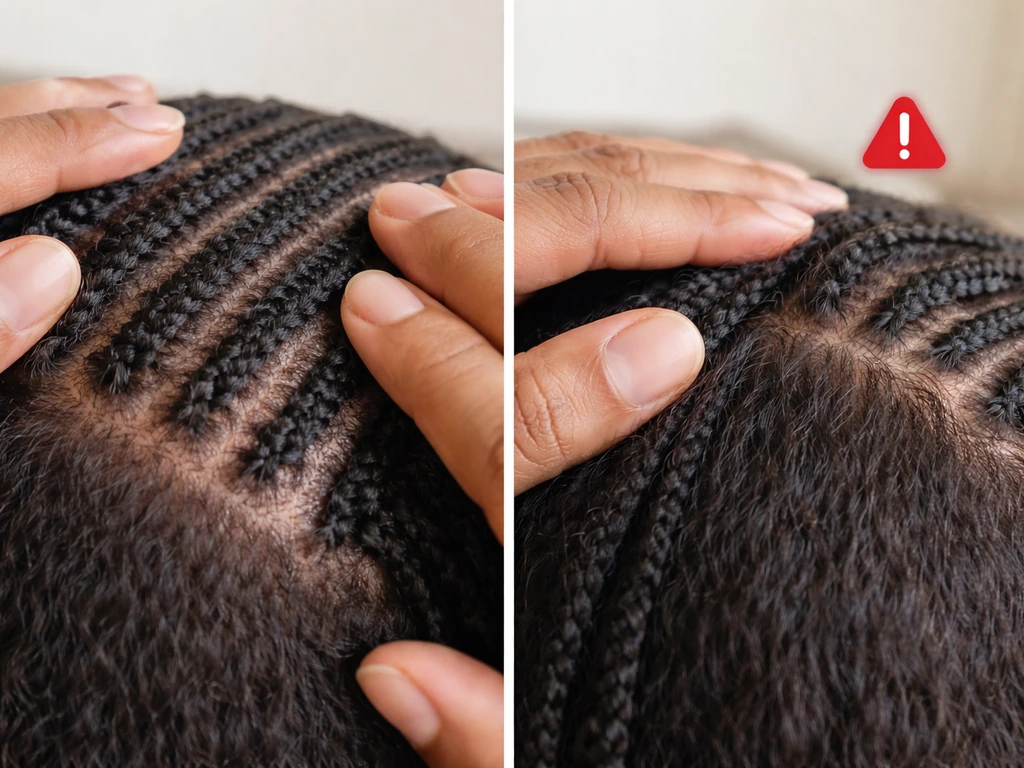
- Pain, stinging, or soreness at the scalp right after installation (some tenderness is normal for a day, but sharp or persistent pain is not)
- Itching or burning that doesn't settle within the first 24 to 48 hours
- Redness, swelling, or small bumps and pimples along the braid line
- Broken hairs or baby hairs missing around the hairline and temples
- Visible thinning at the edges or a hairline that seems to be creeping back
- Crusting or any oozing at the roots
Any of these is your signal to loosen the style or take it down. Waiting to see if it "settles" when you're experiencing pain or inflammation is how early traction becomes permanent traction.
How to install crochet styles so they actually protect your hair
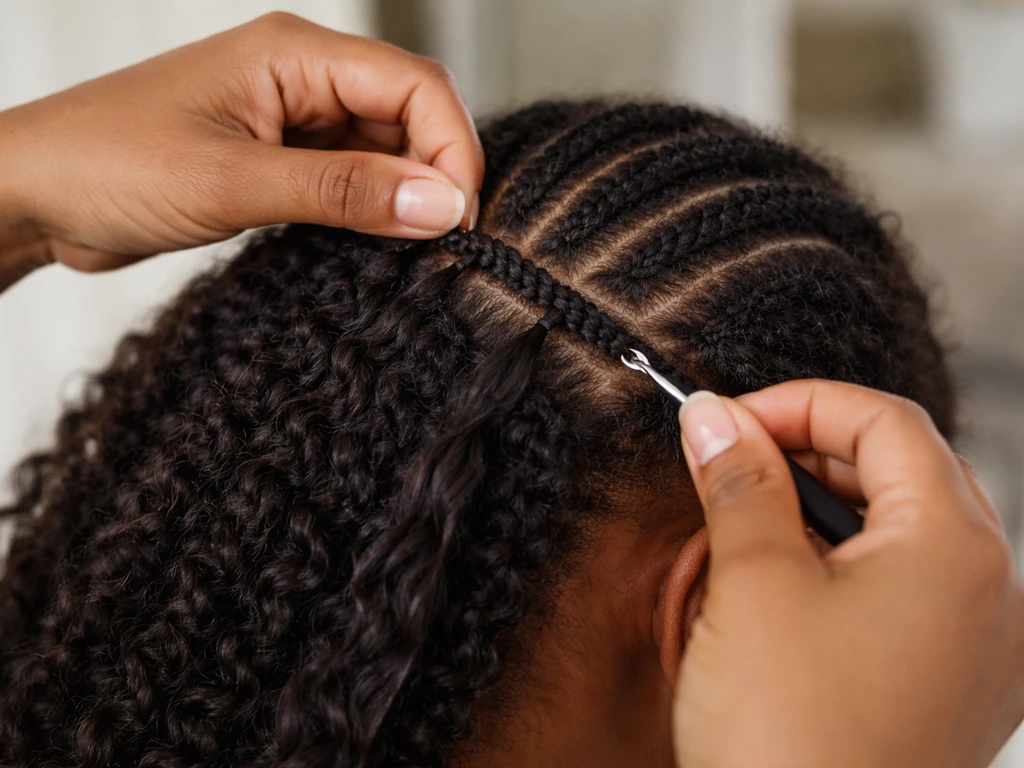
The biggest variable is tension, and tension comes down to three things: how tight the cornrow base is braided, how much hair is loaded per braid, and how close to the edges the style is pulled. All three are controllable.
Getting the foundation right
- The cornrow base should lie flat and feel comfortable immediately after braiding. If it feels tight, it is tight. Ask your stylist to redo it. Your scalp should not be tented or lifted.
- Braid size matters. Larger, chunkier cornrows distribute tension more evenly than very small, fine braids. Very small braids under heavy crochet hair put a lot of load on a little amount of natural hair.
- Avoid pulling the cornrows too tightly at the nape and hairline. These are the most vulnerable areas and the first to show traction damage.
- Do not overload a single braid with too much extension hair. The weight and the pull of heavy extensions is cumulative, especially after washing when extensions get heavier.
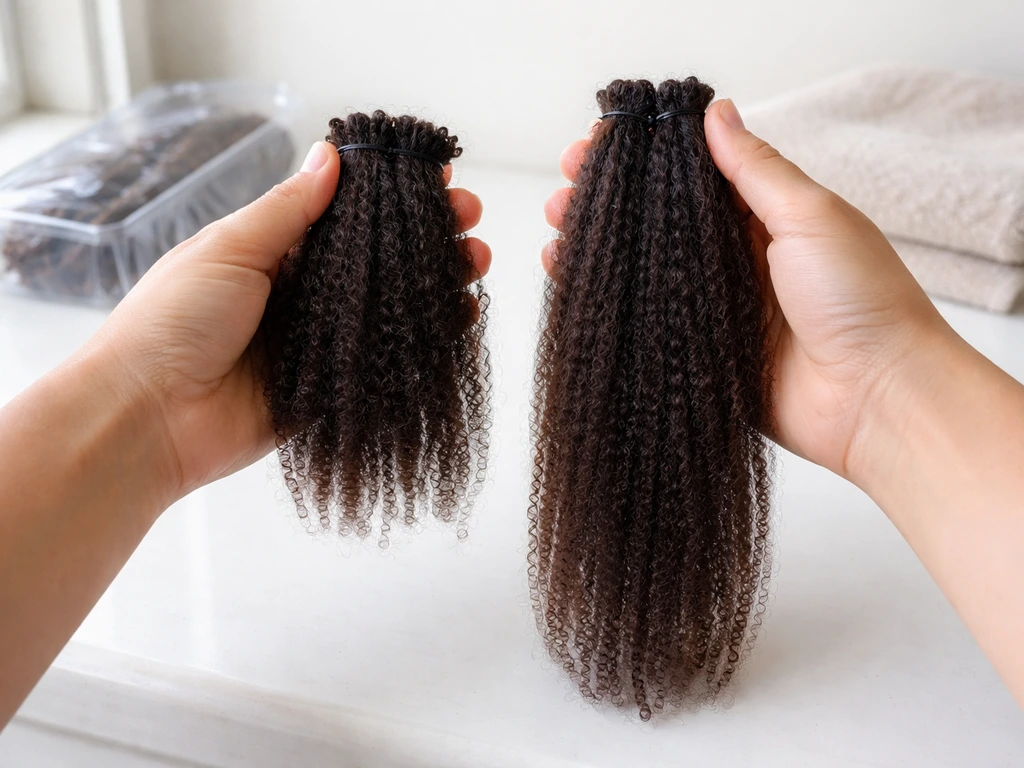
- The total weight of the extensions matters. Lightweight extensions are safer than dense, heavy ones, especially for fine or low-density hair.
How long should you keep them in
A common recommendation for protective styles is 2 to 4 weeks, with breaks in between. For crochet braids specifically, many people go 4 to 8 weeks, which can be fine if the install is not too tight and you're maintaining the scalp. Going beyond 8 weeks raises the risk of matting at the roots, product buildup, and the kind of tangling that causes breakage on removal.
Healthline also warns that protective styles should not be kept so long that they cause tangling or matting, scalp buildup, and breakage, noting that they are typically worn around 2 to 4 weeks risk of matting at the roots, product buildup, and tangling that can cause breakage on removal. Longer is not always better.
The protective benefit stops when the risks start outweighing it.
Maintenance routine while your crochet style is in
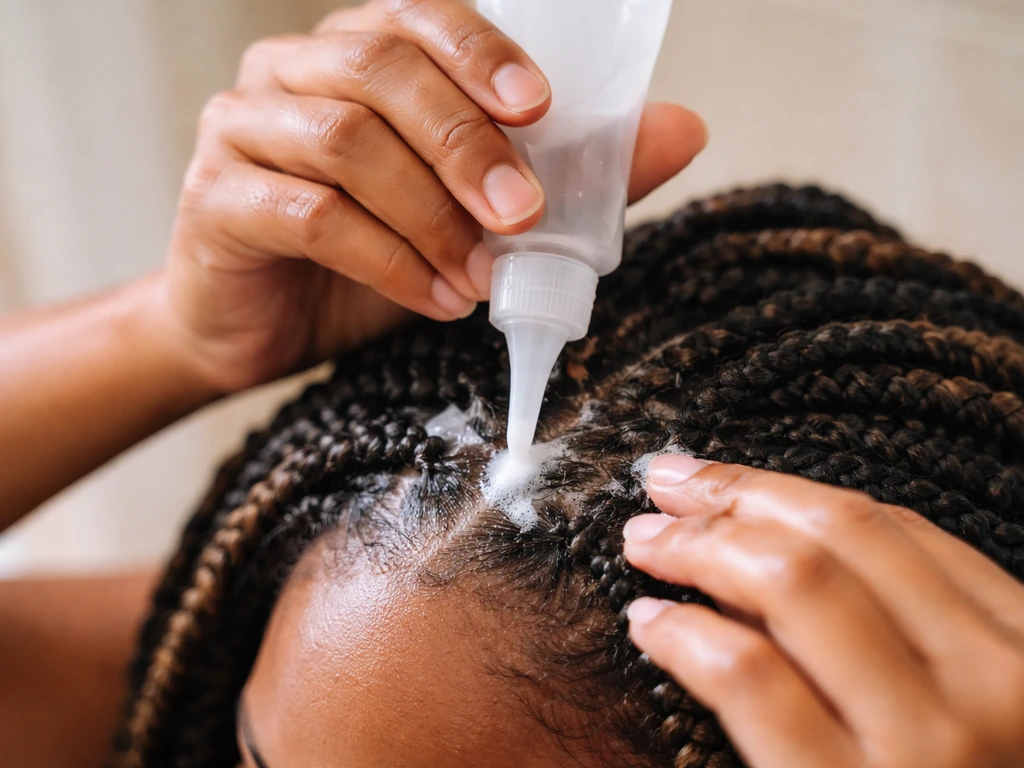
A lot of people install a protective style and then ignore their natural hair underneath for weeks. That approach defeats the purpose. Your scalp still produces sebum, sweat, and buildup, and your natural hair still needs moisture. Neglect it long enough and you'll take the style down to find dry, matted, broken hair regardless of how well it was installed.
Washing
Wash your scalp at least once a week while wearing crochet braids. Use a diluted sulfate-free shampoo or a targeted scalp cleanser applied directly with an applicator bottle. Focus on the scalp, not the extensions. Squeeze and press rather than scrubbing with your fingernails, which can disturb the braids and cause frizz. Rinse thoroughly because product left in the base will build up fast and cause itching and inflammation.
Moisturizing and sealing
Coily and textured hair needs regular moisture even when it's tucked away. A lightweight water-based leave-in conditioner applied to the scalp and the visible parts of your natural hair (at the root and along the braid) is the foundation. Follow with a light oil like jojoba, sweet almond, or a spray oil to seal. Avoid heavy butters and thick grease right on the scalp, which can clog follicles and cause buildup. Focus on the edges and nape especially, since those areas tend to be drier and more fragile.
Detangling on removal
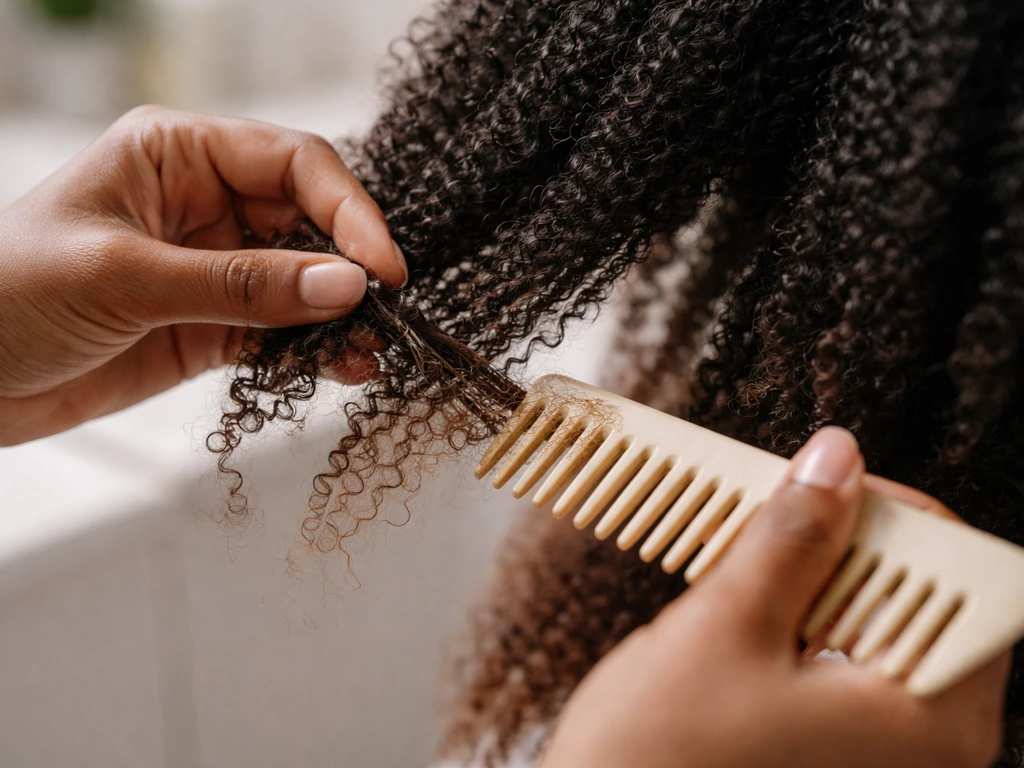
How you take the style down is as important as how it's put in. Work in sections. Detangle with your fingers first, then a wide-tooth comb, starting from the ends and working up. Apply a detangling conditioner or a slippery oil before you start. Do not rush. The shed hairs that accumulated during the weeks of wearing will come out during this process, and that's normal. What you want to avoid is ripping through tangles and snapping off healthy hair along with them.
Product picks for textured hair
| Product type | What to look for | What to avoid |
|---|---|---|
| Scalp cleanser | Sulfate-free, clarifying but gentle; tea tree or salicylic options for itchy/flaky scalps | Heavy conditioning shampoos that leave residue on the scalp |
| Leave-in conditioner | Water-based, lightweight; ingredients like aloe vera, glycerin, or hydrolyzed proteins | Thick creams that sit on the scalp rather than absorbing |
| Sealing oil | Lightweight carrier oils: jojoba, sweet almond, argan, or a blend | Mineral oil or petroleum-heavy products that block moisture |
| Detangling aid | Slippery conditioners with slip; water plus conditioner mix in a spray bottle | Alcohol-based products that dry out the hair shaft |
When crochet braids are not the right move
Crochet braids are not for every season of your hair journey, and it's worth being honest about that. If your edges are already thin, your hairline is already receding, or you've had previous traction alopecia, adding more tension with cornrows and extensions is likely to make things worse, not better. A genuinely protective style needs healthy enough hair and scalp to tolerate the install. If yours isn't there right now, loose styles, wigs on a wig cap, or simply low-manipulation natural styling will serve you better.
You should also skip or modify the style if your scalp has an active condition: seborrheic dermatitis, psoriasis, open sores, or an infection. Braiding over inflammation traps it, makes it harder to treat, and creates an environment for the condition to worsen. Get the scalp stable first.
When to see a professional
See a dermatologist or trichologist if you notice persistent thinning or bald patches, especially at the hairline and temples, that don't fill back in after a few months of low-manipulation styling. Early traction alopecia is treatable. A dermatologist may recommend topical minoxidil, anti-inflammatory treatments, or other interventions depending on how far along the damage is. Do not wait until the loss is extensive. The earlier you address follicle trauma, the better the chance of recovery. If a stylist has repeatedly told you that tightness is normal or dismissed your pain during an install, get a second opinion from someone with experience in protective styling for textured hair.
The bottom line: crochet braids can be a genuinely useful tool for retaining length, but only when the install is done with low tension, the style is maintained properly, and it comes down before it does damage. The growth was yours all along. The style's only job is to not get in the way of it.
FAQ
How long do crochet braids need to be in to help with length retention?
Many people do best with a shorter window, 2 to 4 weeks for starters, or 4 to 8 weeks for crochet specifically if the install is not tight and your scalp stays comfortable. If you notice itchiness, matting at the roots, or increased shedding when you touch the braids, that’s your cue to remove earlier rather than “pushing through.”
If my hair looks longer after taking out crochet braids, did the style really cause growth?
Usually it did not increase follicle growth rate. The “longer” look typically comes from reduced breakage because your ends were protected from daily friction and heat. If you see new growth at the roots, you may also be retaining more of it, but the total monthly growth still follows your genetics and typical anagen cycle.
Can I wear crochet braids longer than 8 weeks without damage?
Longer wear increases the chance of tangling, root matting, and product buildup, which can create breakage during removal. Even if the braids still look neat, the scalp can be accumulating debris. A practical check is whether you can separate the braid roots easily without pulling or snagging.
Does the type of yarn or extension hair affect whether crochets grow hair?
It can affect texture and how the hair behaves, for example cotton yarn may feel different and may hold or release tangles more quickly depending on handling. But none of these materials change follicle activity, so they influence retention and comfort, not true growth speed.
How tight is too tight for a crochet install?
If you feel pain, burning, throbbing, or pressure at the roots during and after installation, it is too tight. Mild tightness that goes away as swelling settles is different from ongoing soreness. Treat pain as a warning sign, and ask for an immediate loosening rather than waiting for it to “set.”
What signs mean I’m developing traction alopecia from crochets?
Watch for increased shedding, thinning at the hairline or temples, scalp tenderness, bumps, or redness that doesn’t settle. Early traction alopecia is often reversible when tension is removed, but leaving chronic pulling in place can lead to scarring and permanent loss.
How often should I wash my scalp while wearing crochet braids, and what should I avoid?
A common approach is washing the scalp at least once weekly. Apply a diluted sulfate-free shampoo or targeted scalp cleanser to the scalp using an applicator bottle, press and squeeze rather than scrubbing, rinse well, and keep product out of the base to reduce buildup that triggers itching and inflammation.
Should I moisturize my natural hair underneath, or is that unnecessary because it’s protected?
You still need moisture, especially for coily and textured hair. Use a lightweight water-based leave-in on the scalp and the visible natural hair near the roots, then seal lightly if needed (for example with jojoba or sweet almond). Heavy butters or thick grease directly on the scalp can worsen buildup and irritation.
Why does my hair shed a lot when I take down crochet braids, and is it always bad?
Some shedding during removal is normal because shed hairs accumulate while your hair is not being detangled daily. What is not normal is ripping through tangles or snapping healthy strands due to rushing. Detangle in sections with a slippery conditioner or oil, start from the ends, and take your time.
I have thin edges or a history of traction alopecia, can I still wear crochet braids?
If your hairline is already thinning, your safest plan is to avoid tension-heavy setups that pull cornrow bases and extensions near the edges. The article’s protective logic depends on having enough scalp and hair health to tolerate the install. Consider looser styles, wigs on a secure but non-tension cap, or low-manipulation natural styles instead.
What should I do if I have scalp conditions like psoriasis or seborrheic dermatitis?
If you have active inflammation, it’s usually better to stabilize the scalp first rather than braiding over it. Protective styles can trap the issue and make it harder to treat. If symptoms are active or you have sores or infection, get medical guidance before installing.
Next Article
Does Cotton Yarn Grow After Blocking? What to Expect
See whether cotton yarn really grows after blocking, what changes length and width, and how to measure and prevent shrin