
Cotton yarn does not truly 'grow' after blocking in the sense that the fiber itself gets longer. What you can measure after a proper wet block is a change in dimensions caused by loop relaxation, moisture swelling, and how the piece dries. Depending on your yarn, construction, and technique, that change can go either direction: a small net gain in width or length, a small shrink, or almost no change at all.
Does Cotton Yarn Grow After Blocking? What to Expect

Simone Okonkwo
7 Jun 2026
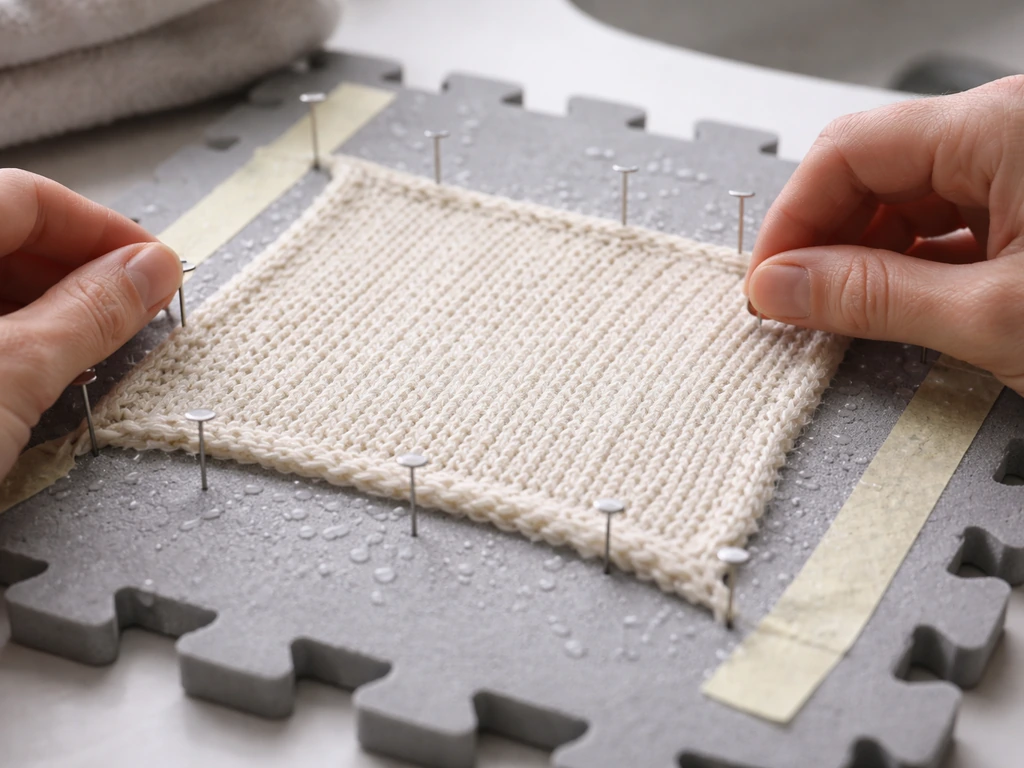
The key thing to understand going in is that cotton has no elastic memory, so any size you stretch it to while wet is not reliably held once dry. What you set while blocking is what you'll get, more or less, but it won't stay 'grown' the way a wool piece would.
What blocking actually does to cotton yarn
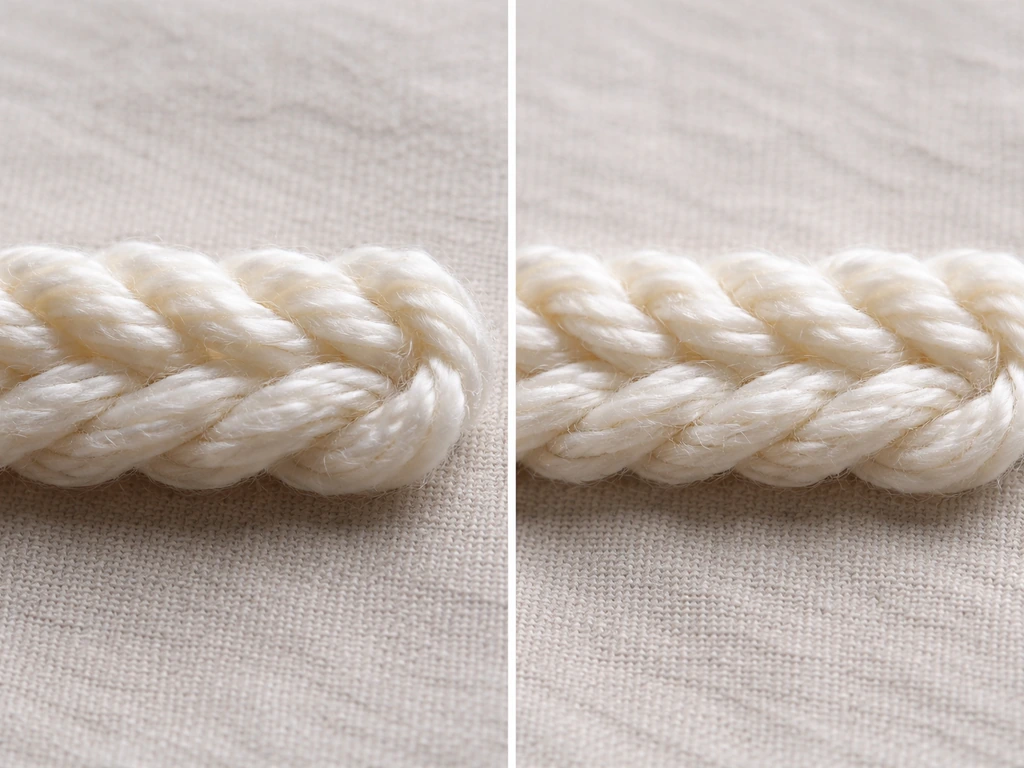
When you wet a piece of cotton knitting or crochet, the cellulose fibers absorb water and swell. That swelling temporarily makes the individual yarn loops more pliable and allows them to shift position relative to each other. Think of it like loosening a tight braid: the structure relaxes, and the individual strands can settle into a more natural geometry. As the piece dries, those loops 'deswelling' and consolidate into whatever position they ended up in during drying. That final geometry is your new measured dimension.
This swelling-and-deswelling cycle is the physical engine behind blocking. It is not the fiber growing longer; it is the structure rearranging. Cotton Incorporated's shrinkage research makes this explicit: dimensional changes in cotton knit fabrics during wet processing come from loop and structure rearrangements, not from any permanent lengthening of the fiber itself. The drying stage is just as important as the wetting stage, because how and where the fabric sits as it dries directly determines what you measure at the end.
Steam blocking works on the same principle but without full saturation. The heat relaxes fiber tension, and the brief moisture from steam allows a small amount of loop movement. Cotton responds to steam, but the effect is shallower than a full wet soak, so dimensional changes tend to be more modest with steam alone.
Does cotton yarn actually grow after blocking? What 'grow' really means here
Let's be direct about the myth first: the fiber does not grow. Cotton is a plant-based cellulose fiber. It has no protein memory, no curl pattern, no biological growth cycle. When knitters and crocheters talk about a project 'growing' after blocking, they almost always mean one of two things: the piece measured bigger after blocking than before, or the piece looked more even and open, making it seem larger. Does mini braids grow hair? The same idea applies: hair growth is biological, but styles can affect how long hair appears to look or how much breakage you notice project 'growing' after blocking. Both can happen with cotton, and neither is permanent fiber growth.
In measurement terms, 'growth' after blocking usually means you are seeing the loops relax from the tension of knitting or crocheting. A freshly made cotton fabric is often slightly compressed and distorted from the working tension applied during construction. Wetting allows those loops to find a more natural rest position, which can add a centimeter or two in some directions. That is real, measurable dimensional change.
If you are also thinking about styling like braids, note that braids do not permanently grow hair either, because hair growth is biological rather than a temporary rearrangement. It is also the same mechanism that causes cotton to shrink when you throw it in a hot wash without blocking: the loops rearrange, just in the other direction.
The other important point: because cotton has no elastic memory, stretching it while wet and pinning it wider does not reliably make it stay that way. Modern Daily Knitting puts it plainly: cotton won't remember a stretched-out size once it dries. You may gain a centimeter or two from natural relaxation, but if you pin it three inches wider than the natural rest dimension, much of that extra width will pull back as it dries. Plan accordingly.
The variables that actually control your result
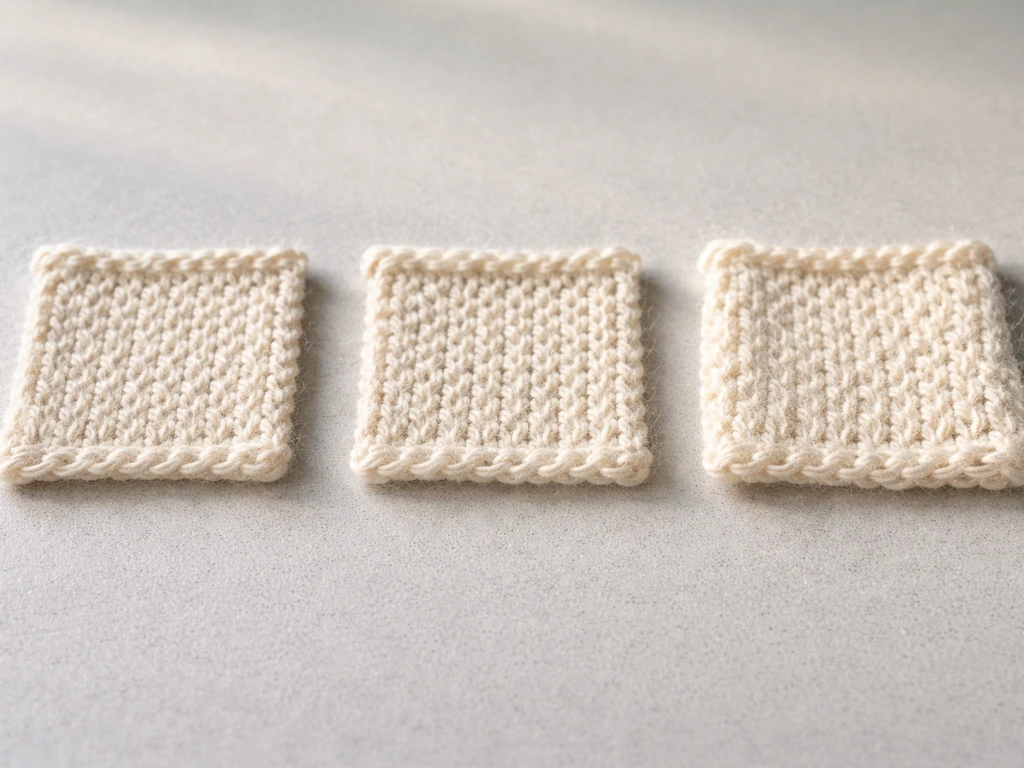
Not all cotton yarn behaves the same way, and the gap between a tiny dimensional shift and a frustrating surprise shrink often comes down to a few specific factors. CottonWorks defines dimensional change as any change in width or length and notes that shrinkage and skew depend on construction parameters such as fiber type, yarn type and structure, stitch type and length, and finishing techniques construction parameters including fiber type, yarn type/structure, stitch type/length, and finishing techniques. Here is what matters most:
| Factor | How it affects blocking outcome |
|---|---|
| Yarn twist (tightly twisted vs loosely spun) | Tightly twisted cotton resists loop rearrangement more; loosely spun or chainette-style cotton can shift more significantly under wet conditions |
| Fiber blend (100% cotton vs cotton/acrylic vs cotton/spandex) | 100% cotton has the most dimensional movement; acrylic blends reduce change; cotton/spandex blends use spandex recovery to resist both shrink and stretch |
| Gauge and stitch density | Denser, tighter fabric has less room for loop rearrangement and typically changes less; open lacework or loose gauge pieces can shift noticeably |
| Blocking method (wet vs steam) | Full wet soak allows maximum fiber swelling and loop movement; steam produces lighter relaxation with less dimensional shift |
| Water temperature | Warmer water speeds swelling but can also loosen structure more; cool or room-temperature water is gentler and more controlled |
| Soak time | Longer soaks (15–30 minutes) allow full fiber saturation; shorter soaks may not fully relax the structure |
| Applied tension while drying (pinning) | How tightly you pin determines what position loops consolidate in; over-pinning cotton can distort rather than expand |
| Drying conditions (flat vs hanging, ventilated vs not) | Hanging a wet cotton piece causes gravity-driven lengthening that is not representative of true blocked dimensions; always dry flat |
Fiber blend deserves special attention. If your yarn is labeled something like '80% cotton, 20% acrylic,' the acrylic component provides a small amount of structure and memory that pure cotton lacks. That blend will often hold a blocked shape more reliably than 100% cotton. A cotton/spandex blend behaves differently still, using spandex recovery to snap back toward its original dimensions after stretching, which means aggressive pinning is actively counterproductive with those yarns.
Mercerized cotton is worth knowing about too. Mercerization is a chemical finishing process applied to some cotton yarns (look for 'mercerized' on the label) that improves dimensional stability and reduces the tendency to shrink after wet treatment. Mercerized cotton yarns often block more predictably and hold their dimensions better than untreated cotton because the treatment has already stabilized the fiber structure to some degree.
Test before you block the whole piece
This is the step most people skip, and it is the one that saves projects. Block a swatch before you block your finished piece. This takes maybe 20 minutes of active work and overnight drying, and it gives you the actual data you need instead of hoping for the best.
- Make a swatch of at least 6 inches by 6 inches in the same stitch pattern, gauge, and yarn you used for your project.
- Measure the swatch before blocking: record the width and length in centimeters or inches and write it down.
- Wet the swatch fully (room-temperature water, 15–20 minute soak), gently press out water without wringing, and lay it flat on a towel.
- Pin or arrange it the way you plan to block your finished piece: natural relaxation only, or pinned to a specific target dimension.
- Allow it to dry completely (at least overnight, longer in humid conditions). Do not measure while it is still damp.
- Measure again after fully dry and rested. Record width and length.
- Calculate the percent change: (new measurement minus original measurement) divided by original measurement, multiplied by 100. This is your expected dimensional change for the project.
If your swatch grew 3% in width and shrank 2% in length, you can apply those percentages to your finished piece's current measurements to predict what you will get. This is the same logic used in industrial cotton processing, where dimensional stability testing (following standards like AATCC 135) measures percent change in length and width after laundering to predict real-world behavior. You are just doing a home version of the same thing.
Also wash the swatch after blocking, then measure again. This tells you whether your blocked dimensions hold after a normal wash or whether the piece will shift again in use, which is important if you are making a garment.
The safest blocking method to minimize shrink and hold your size
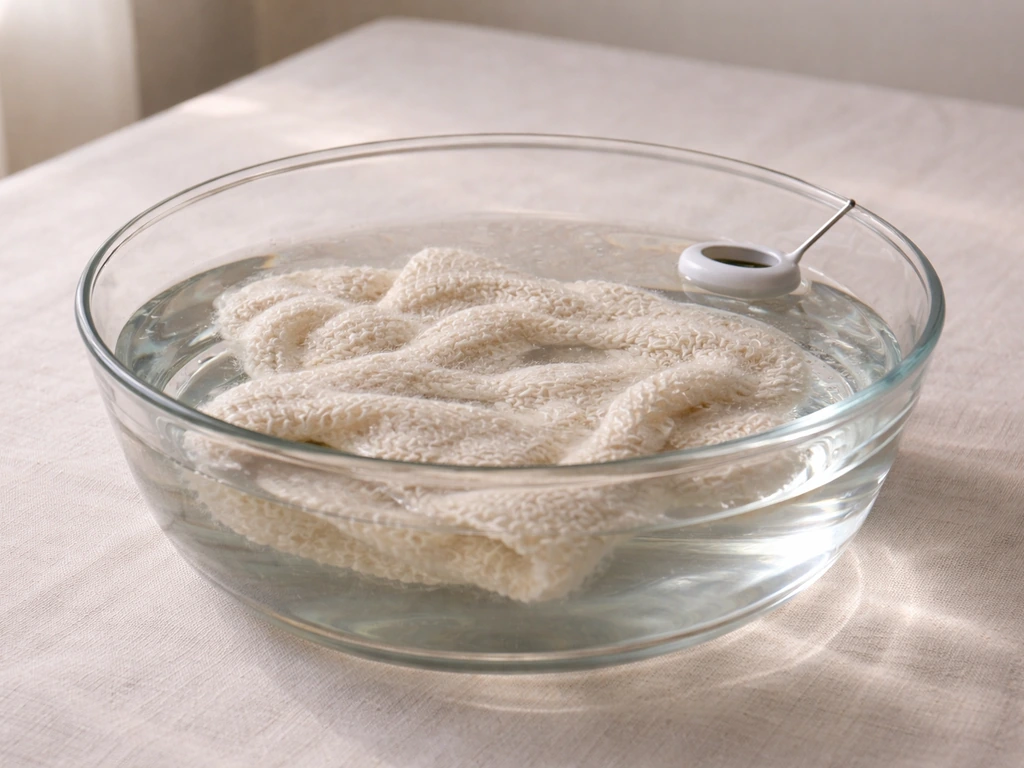
For most 100% cotton knit or crochet projects where you want to minimize unwanted shrink while still getting a clean, even shape, wet blocking with room-temperature water and natural-relaxation drying is the most controlled approach. Here is how to do it without surprises:
- Fill a basin with cool or room-temperature water. Hot water accelerates swelling and increases the risk of loop rearrangement toward shrinkage, especially in loosely constructed fabric.
- Submerge the piece and let it soak for at least 15 minutes. Do not agitate or rub. Let the water do the work.
- Lift the piece supporting its full weight (do not pull from one corner), and gently press water out between your palms or by rolling it in a clean dry towel. Never wring.
- Lay it flat on a blocking mat or dry towels. Allow it to relax into its natural shape first, then make small adjustments by gently easing and patting rather than pulling.
- Pin only to hold the natural relaxed shape, or to make small corrections (straightening edges, opening up a lace pattern). Do not pin to aggressively stretch beyond what relaxation gives you, because cotton will not hold it.
- Let it dry completely at room temperature with good airflow. Do not use direct heat or a dryer. Measure only after fully dry.
If you want to use steam instead, hold the iron or steamer above the fabric surface (never press down onto cotton knit) and work in sections. After steaming, let the piece cool completely before removing pins or moving it. Annie's Attic's guidance on this is solid: the piece needs to stay undisturbed until fully cool and dry, because fibers are still consolidating their position during that cooling period. Moving it early undermines the whole process.
For cotton/acrylic blends, steam blocking often works particularly well because the steam relaxes the cotton component while the acrylic provides a bit of shape retention. Avoid high heat with blends, as acrylic can melt or distort permanently under a hot iron.
When things go wrong: troubleshooting common blocking results
It shrunk when you expected it to grow
This is the most common disappointment, and it usually comes from one of three things: water that was too warm, agitation during soaking or pressing, or a loosely twisted yarn that was not pre-shrunk by the manufacturer. Untreated cotton can shrink 3 to 8 percent in length or width under normal laundering conditions, and blocking with warm or hot water can trigger that same mechanism. If this happens, try re-wetting the piece gently in cool water and easing it back toward your target dimensions while damp, then re-pin and dry flat. You may recover some of the loss, especially if the piece has not been heat-dried.
It stretched out and won't hold its shape
If you pinned aggressively and the piece dried looking great but then relaxed back toward a smaller size, cotton's lack of elastic memory is the reason. You were holding it in a stretched position during drying, but once the pins came out the structure had nowhere to anchor. For future projects, stop over-pinning and let natural relaxation do the work. For the current piece, you can try re-blocking with very light pinning, accepting the natural post-relaxation size as your true working dimension.
One section grew more than another (uneven blocking)
Uneven dimensional change usually traces back to uneven pinning tension, drying in a position where one area was thicker (more layers), or variations in your knitting or crochet tension across the piece. Re-wet the piece, take your time distributing it evenly on the mat, and measure across multiple points before pinning. A tape measure across multiple width and length points before you start pinning catches asymmetry early.
The texture feels stiff or different after blocking
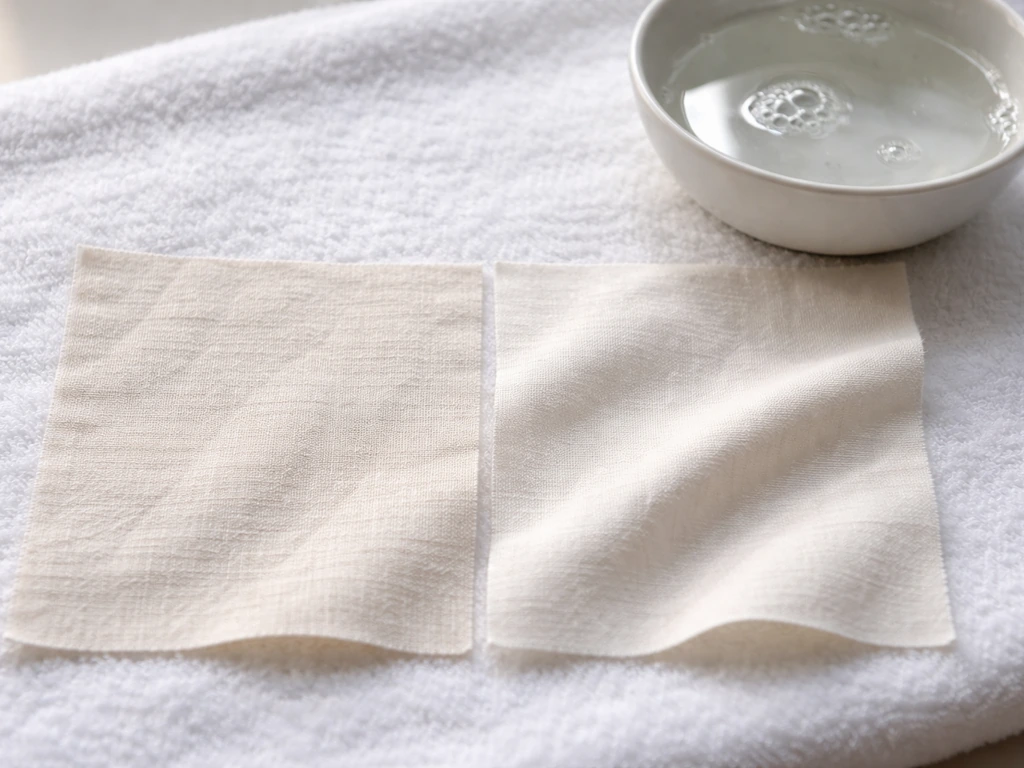
Cotton can stiffen slightly after wet blocking, especially if the water had minerals in it or if the piece dried very slowly in a non-aerated space. Try a second gentle soak in clean cool water with a tiny drop of fabric conditioner, then dry flat again with better airflow. Mercerized cotton tends to stay softer post-blocking than untreated cotton. If stiffness is a recurring problem with your yarn, that is a signal to switch to a mercerized or combed cotton for future projects where drape and hand are important.
One last practical note: if you are making a project where size precision is critical, like a fitted garment or a piece that needs to match a pattern schematic closely, treat the pre-block swatch step as non-negotiable. The myth that blocking is a fix-it magic trick applies to cotton no more than the myth that a specific styling method automatically grows hair. Do crochet braids grow your hair in the long run, and what actually happens to your scalp and strands during wear? In both cases, what you get out depends heavily on the starting conditions, the process, and realistic expectations of what the material can actually do.
FAQ
How can I tell whether my cotton yarn “grew” from blocking or just relaxed into a different shape?
Compare pre-block and post-dry measurements taken at the same points (for example, stitch gauge across a centered row and row gauge across a fixed vertical section). If the yarn count and stitch spacing change together and the piece looks more open and even, that is loop relaxation. If only length changes while width stays similar (or vice versa), it is more likely construction tension or uneven pinning during drying.
Does cotton yarn expand after blocking more if I stretch it harder while pinning?
Usually not in a stable way. Cotton lacks elastic memory, so aggressive pinning can create an impressive “temporary size” at the dry stage, then a partial pullback once pins come out. For garments, pin to your swatch-based target, then stop rather than chasing the largest possible measurement.
Is there a difference between wet blocking and blocking with a spray bottle for cotton?
Yes. Spray blocking dampens only the surface and often does not fully swell the internal loop structure, so dimensional shifts tend to be smaller and less predictable. For cotton where you need consistent gauge correction, a proper soak or at least a thorough saturation for the same time as your swatch gives more reliable results.
Can blocking make cotton grow in width but shrink in length (or the opposite)?
It can. Because the driving mechanism is loop rearrangement plus moisture cycling, the net change can differ by direction depending on stitch pattern, fabric density, and how the piece is pinned. Use your swatch’s direction-specific percentages to predict the final outcome rather than assuming “bigger everywhere” or “smaller everywhere.”
What temperature should I use when blocking cotton to avoid unexpected shrink?
Use room-temperature water for the most controlled, low-risk approach when the goal is shaping without triggering wash-style shrink. Warm or hot water can activate the same loop rearrangement that causes typical laundering shrink, especially for non-mercerized cotton.
Should I wash cotton again after blocking, even if I’m making a blanket or scarf?
It depends, but it is a good idea if the item will be laundered later or if you want to confirm dimensional stability. A second wash-and-dry measurement from a swatch is especially helpful if the finished piece must keep specific dimensions over time.
Does steam blocking change cotton dimensions as much as wet blocking?
Often less. Steam can relax tension and provide a smaller amount of moisture movement without full saturation, so gauge and size changes tend to be more modest. If your swatch shows large wet-block shifts, steam alone may not correct enough and may leave you with a persistent gauge mismatch.
How long should I leave pins in place on cotton after blocking?
Keep it pinned until the piece is fully cool and completely dry. Cotton fibers consolidate during drying, and removing pins early can allow the fabric to settle back toward its pre-block geometry.
Will cotton yarn that is twisted or loosely plied behave differently during blocking?
Yes. Loosely twisted yarns can rearrange more easily during wet treatment, which can increase the chance of uneven stretching or later relaxation. If your swatch shows large variance, consider pre-washing the yarn or using gentler, more uniform pinning and drying conditions.
What’s the best way to fix “it looked bigger when dry but shrank after pin removal”?
Re-wet gently in cool water, re-pin with light, swatch-based tension, and let it dry undisturbed. The key adjustment is reducing the over-stretch you applied during the first block so cotton can settle into the new rest position rather than pulling back when released.
Next Article
Do Crochet Braids Grow Your Hair? Retention vs Growth
Crochet braids don’t speed growth but can boost hair length by improving retention; learn risks, care, and next steps.