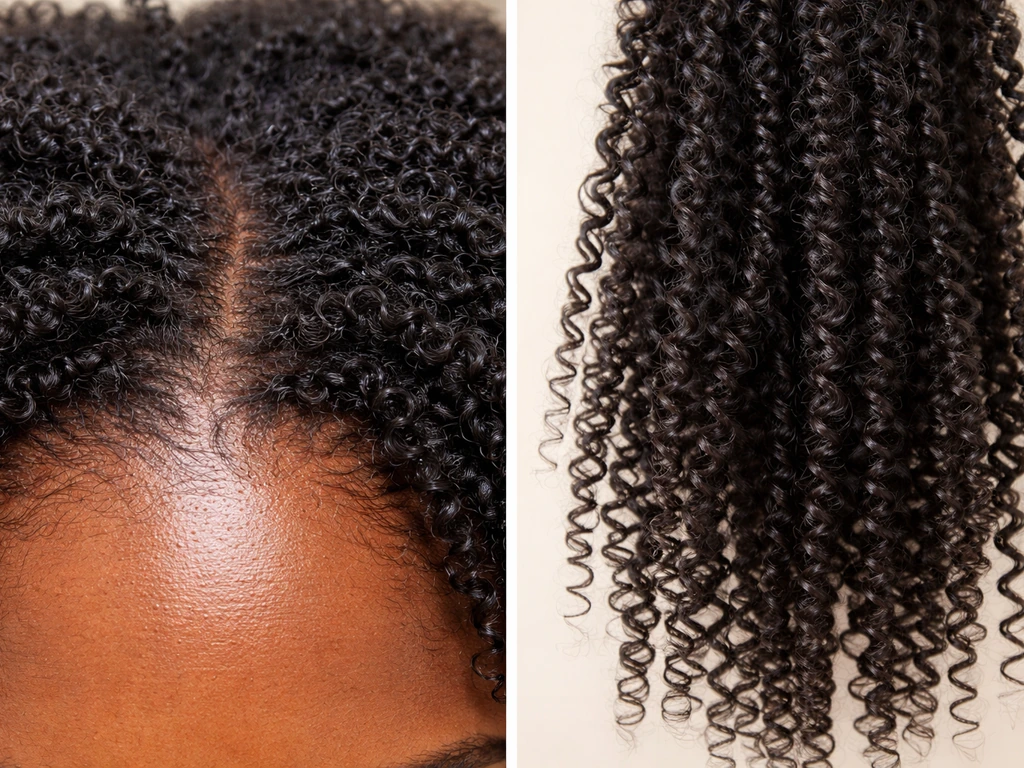
Growing thicker, longer hair as a Black person comes down to two things: keeping what grows out of your scalp from breaking off, and making sure your scalp environment is healthy enough to support the growth cycle in the first place. Your hair is almost certainly growing right now at roughly half an inch per month. The real problem, for most people, is that it's breaking off at roughly the same rate it grows, so length never accumulates and the hair looks thinner than it actually is. Fix the breakage and scalp health, and the growth you already have starts to show.
How to Grow Thick Hair for African American Hair

Simone Okonkwo
6 Jul 2026
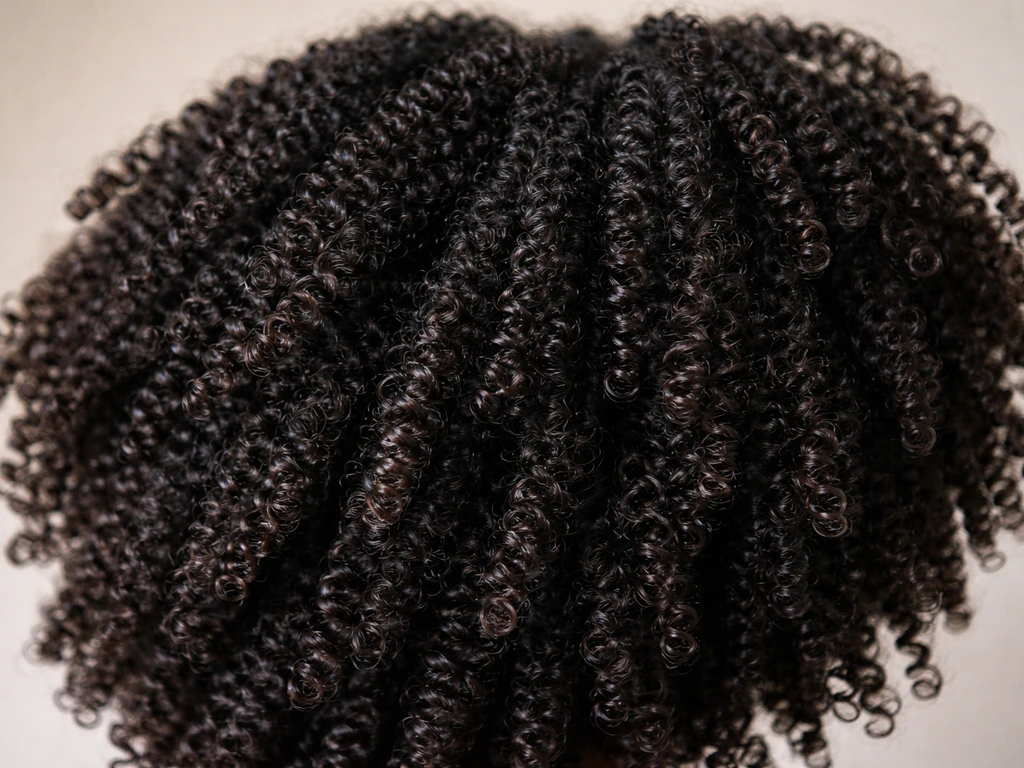
Why your hair might look thinner than it really is
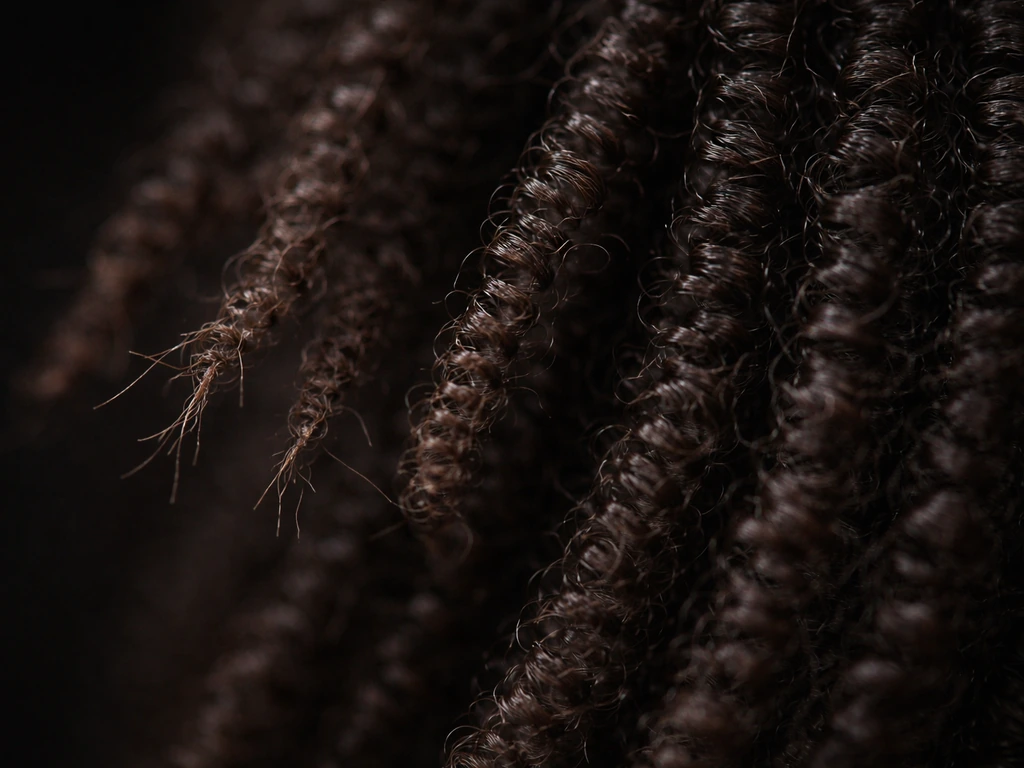
A lot of people come to this question convinced their hair isn't growing, when what's actually happening is the hair is growing but snapping off before it gets long enough to notice. That's a fundamentally different problem than true thinning, and it requires a different fix. True thinning means fewer hairs per square centimeter on your scalp, either because follicles have gone dormant, been damaged, or are producing thinner strands over time. Breakage means the strands are leaving the follicle fine but snapping somewhere along the shaft due to dryness, manipulation, tension, or chemical damage.
African American hair, especially type 4 coils, has a higher natural risk of breakage than straighter hair types. The tight curl pattern creates stress points along the shaft, and studies using microscopy have found higher rates of knotting and combing-induced breakage in natural African hair compared to other textures. If you're wondering how to grow coarse African hair, focusing on reducing knotting and breakage is a great place to start natural, African hair compared to other textures.
One condition that shows up a lot in this context is trichorrhexis nodosa, where the hair shaft develops weak nodes that break off easily. It makes hair look short and thin even though the follicles are working perfectly. If your hair feels gritty or you can see tiny white nodes on individual strands, that's likely what's going on.
The visual difference between breakage and true thinning matters because breakage leaves short, uneven ends throughout the hair and typically shows up evenly or where you manipulate most. True follicle-level thinning tends to have a pattern: crown-centered diffuse thinning (female pattern hair loss), patches (alopecia areata), or a progressive loss spreading outward from the crown (which can signal CCCA, more on that below). NIAMS (NIH/NIAMS) notes that alopecia areata often begins with sudden loss of round patches, with edges that may show short broken hairs that look like “exclamation point” hairs patches (alopecia areata). Learning to tell these apart is the first step to actually solving the problem.
How hair growth actually works (and what 'thicker' really means)
Every strand on your head is in one of three phases: anagen (active growth), catagen (transition), or telogen (resting/shedding). On a healthy scalp, roughly 85 to 90 percent of follicles are in anagen at any given time, growing at about half an inch per month. Anagen can last anywhere from 2 to 6 years per strand, which is why some people can grow hair to their waist and others seem to have a built-in length limit.
Once a follicle hits the end of its anagen phase, that strand sheds and a new one eventually grows in its place. When the cycle gets disrupted by stress, inflammation, hormonal shifts, or nutritional gaps, more follicles than usual drop into telogen at once, and you shed more than normal.
When people talk about wanting thicker hair, they usually mean one of two things: more strands per square inch (density) or thicker individual strands (diameter). These are genetically determined to a large degree. African hair strand diameter typically falls around 60 to 90 micrometers. African threading primarily affects retention and breakage patterns, so hair growth depends more on keeping the scalp healthy and avoiding tension than on the thread itself African hair strand diameter.
You can't meaningfully change your follicle count or your natural strand diameter, but you can absolutely change how much of that hair you're retaining and how healthy each strand looks and feels. A head of hair where every strand is moisturized, intact, and growing to its full potential length looks dramatically thicker than the same hair with dry, broken, split ends.
Scalp health: the thing most people skip
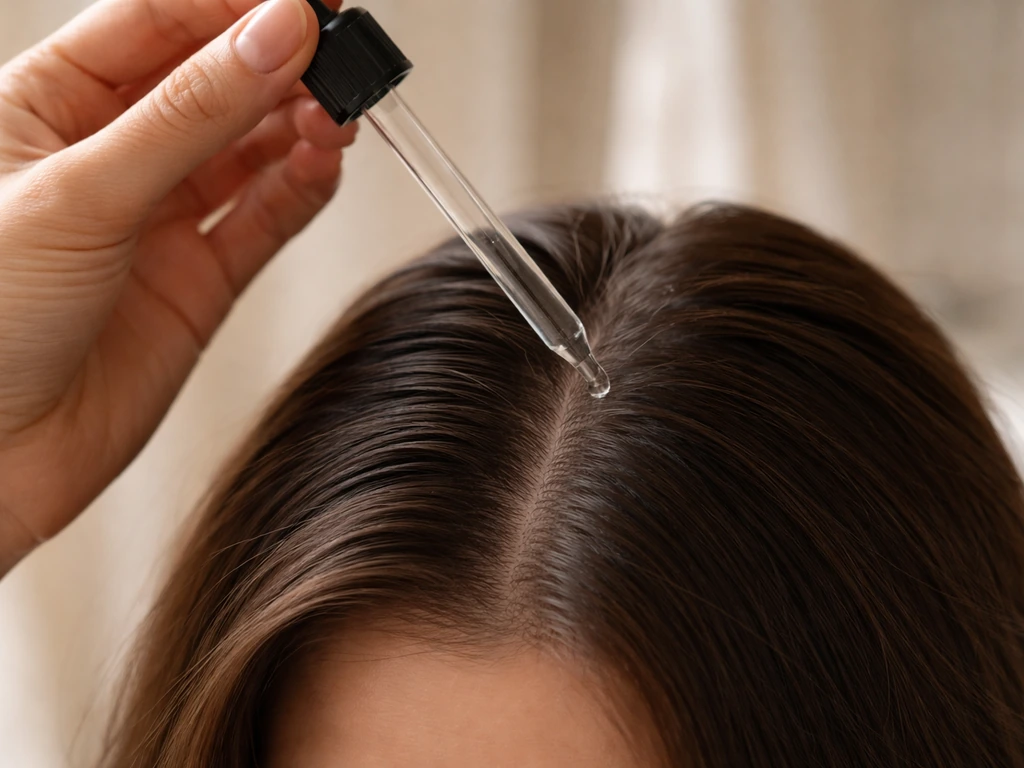
Your scalp is skin, and it behaves like skin. It can get inflamed, congested, dry, or infected, and all of those things affect how well your follicles function. The most common scalp issues I see overlooked in the Black hair community are seborrheic dermatitis (dandruff-type scaling with inflammation), product buildup from heavy oils and butters, and traction-related inflammation from tight styles. None of these will stop your hair from growing outright, but chronic scalp inflammation absolutely shortens the anagen phase and increases shedding over time.
Seborrheic dermatitis and scalp inflammation
If you have flaking, an itchy scalp, or visible scale buildup along your parts and hairline, seborrheic dermatitis is the likely culprit. It doesn't cause permanent hair loss on its own, but the chronic inflammation it creates is not good for retention. The first line of response is a zinc pyrithione or selenium sulfide dandruff shampoo used consistently.
If you are choosing your routine, pick the best shampoo to grow African American hair by focusing on scalp health and your specific buildup or dryness needs dandruff shampoo. If that doesn't clear it up within a few weeks, a ketoconazole shampoo (available OTC as Nizoral) is more targeted. Persistent or severe cases warrant a dermatologist visit because prescription-strength antifungal or mild corticosteroid formulations are sometimes needed.
Traction and tension at the scalp
Traction alopecia is one of the most preventable forms of hair loss, and it's unfortunately common because of how tight many protective styles are installed. It shows up first along the hairline and temples, which is where styles pull hardest. The AAD is direct about this: if a style causes pain, stinging, bumps, or crusting at the scalp, the tension is too high. Early traction alopecia is reversible if you stop the pulling.
Leave it long enough and the follicle damage becomes permanent. A clinical sign called the fringe sign, where a short row of retained hairs remains along the marginal hairline where the braids end, is a classic indicator. If you're noticing thinning temples or edges, that pattern needs to stop immediately.
Scarring alopecias: what to know about CCCA
Central centrifugal cicatricial alopecia (CCCA) is the most common scarring alopecia in Black women, with some community studies estimating prevalence between 6 and 15 percent. It starts at the crown and spreads outward, destroying follicles as it progresses. Because it's a scarring alopecia, the follicle loss is permanent if it's not caught and treated early. Signs include progressive crown thinning, scalp tenderness or itching, perifollicular scaling, and a smooth, shiny appearance where hair has been lost. If you're seeing this pattern, you need a dermatologist, not a new deep conditioner. CCCA has been associated with both traction hairstyles and chemical processing, though the exact causes are still being studied.
Protective styles and length retention: what actually helps
Protective styles (braids, twists, locs, weaves, wigs) genuinely do help with length retention when done correctly. The mechanism isn't magic: they work by reducing daily manipulation, limiting exposure to environmental damage, and tucking the fragile ends away. The key phrase is 'when done correctly,' because done poorly, these same styles are a direct path to traction alopecia and breakage.
Installation and tension
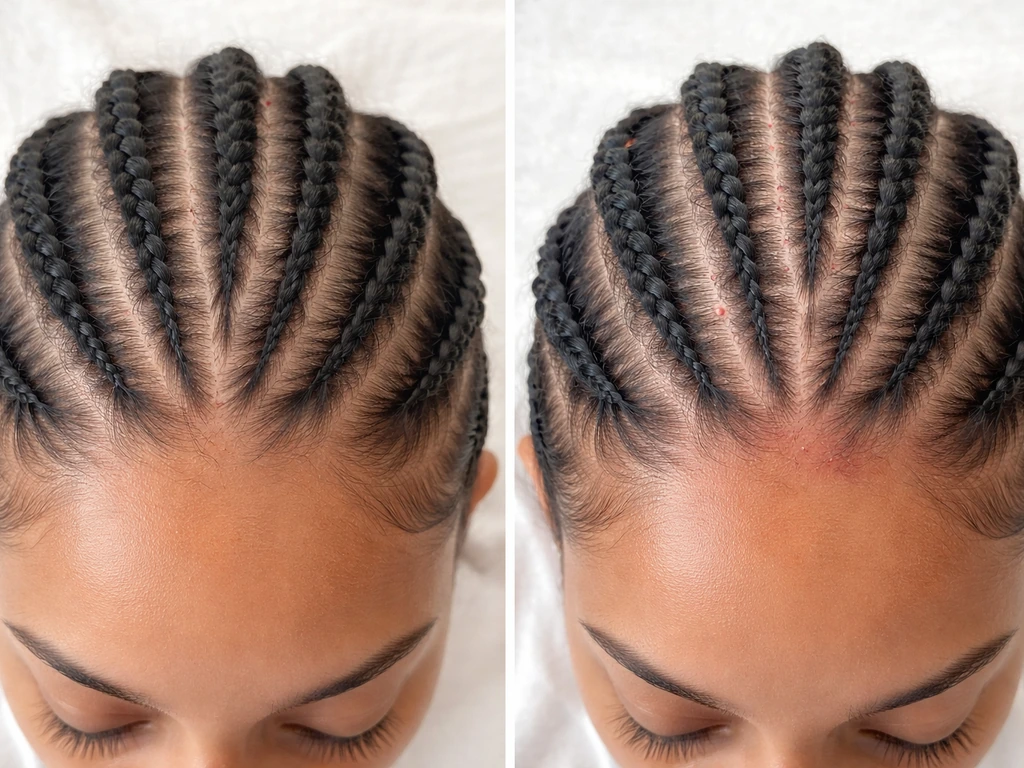
The number one protective style mistake is installing too tight. You should not feel pulling, stinging, or have visible pimples or bumps along the parts after getting braids or cornrows. Pain is not normal and not a sign the style will 'last longer.' It's a sign you're creating traction injury. The University of Iowa guidelines specifically recommend loose braids and cornrows as lower-risk alternatives to tight pulling styles. If a style hurts, take it out or loosen it. That's not an overreaction, it's damage prevention.
Wear time and maintenance
Most protective styles should be worn for 2 to 4 weeks. Leaving them in longer creates problems: the new growth at the root starts to tangle into the style, and when you take it out, the matting and removal process can cause significant breakage. While your hair is in a protective style, don't neglect scalp care. Diluted shampoo applied directly to the scalp (not scrubbed through the braids), followed by a rinse, is enough to keep buildup and inflammation at bay. Moisturize the scalp and any exposed hair regularly.
Weaves and wigs
Sew-in weaves and wig units can be excellent retention tools because they remove your natural hair from daily manipulation almost entirely. The risks are tension from braiding the natural hair underneath (the same traction concerns apply), and allowing the natural hair to go without moisture for too long. For wigs, a properly fitted, breathable unit on a protective style underneath is one of the lower-risk options for growing longer hair. The hair under the wig still needs to be moisturized, cleansed regularly, and taken out for a few days between install periods.
Locs
Locs are often cited as a great growth strategy, and they can be. The matured loc protects the hair shaft from manipulation and retains length effectively. The risks are tension during the early locking phase (sisterlocks and starter locs can be installed too tight), and heavy locs that pull on the roots over time. The retwisting frequency also matters: retwisting too tightly or too often can cause traction at the scalp. Locs that are healthy and properly maintained genuinely do support length retention over the long term.
Your actual routine: wash, moisturize, handle gently
Growing thicker, longer African American hair requires a consistent routine. This is where the day-to-day work happens, and it doesn't need to be complicated.
Cleansing
Wash your scalp every 1 to 2 weeks. Going longer than 2 weeks leads to product buildup and scalp inflammation, both of which are detrimental to the follicle environment. Use a sulfate-free or low-sulfate shampoo if your hair is natural and on the drier end. If you have scalp buildup, a clarifying shampoo once a month helps reset the scalp without over-stripping. Don't skip washing because you're in a protective style: apply a diluted shampoo or a scalp cleanser directly to the scalp in sections.
Moisture and sealing
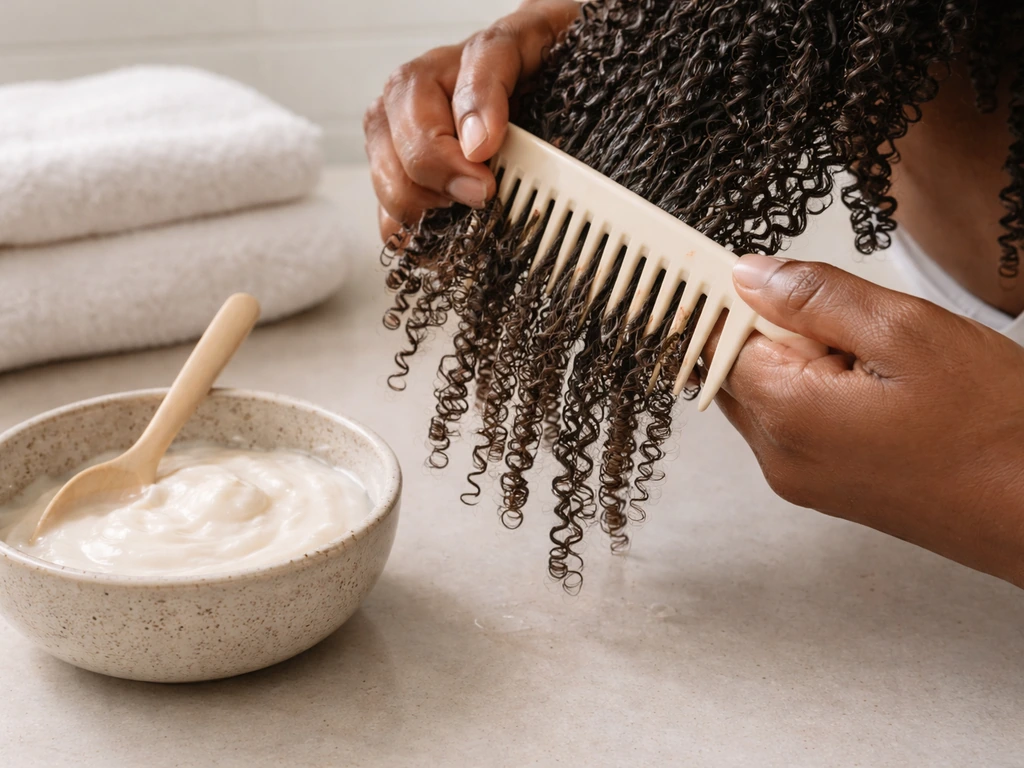
Dry hair breaks. It's that straightforward. African American hair, particularly tightly coiled textures, has a harder time retaining moisture because the natural oils from the scalp can't travel down the curved shaft as easily as they can on straighter hair. The moisture-seal approach works: apply a water-based leave-in conditioner first, then follow with a butter or oil to lock that moisture in. Lightweight oils like jojoba, argan, and grapeseed work well for most hair types without causing buildup. Heavier butters (shea, mango) are better for very dry or chemically treated hair. Deep condition with a penetrating conditioner (look for hydrolyzed protein and humectants like glycerin) at least every 2 weeks.
Gentle handling and detangling
Rough detangling causes a significant portion of the breakage most people experience. If you suspect your hair is damaged, focus on reducing breakage while you support scalp health and moisture so length can actually grow damaged hair. Always detangle on wet, conditioner-saturated hair. Start at the ends and work your way up toward the roots. Use a wide-tooth comb or your fingers rather than fine-tooth combs or brushes on dry hair. When hair is dry and unprotected, limit manipulation as much as possible. Every unnecessary comb-through is a potential breakage event.
Trimming
Regular trims don't make hair grow faster (growth comes from the scalp, not the ends) but they do prevent split ends from traveling up the shaft and causing more breakage higher up. Trim every 3 to 4 months, or when you see significant split ends and single-strand knots. Trimming a quarter inch of healthy hair to prevent an inch of breakage is always the right trade.
Products and ingredients that actually support growth and thickness
The hair product market is flooded with claims. Here's a straightforward breakdown of what the evidence supports and what you should actually be looking for on ingredient labels.
| Ingredient/Product Type | What It Does | Look For |
|---|---|---|
| Sulfate-free shampoo | Cleanses without stripping natural oils | Sodium lauryl sulfoacetate, cocamidopropyl betaine |
| Clarifying shampoo | Removes buildup; use monthly | Ammonium lauryl sulfate (once-monthly use) |
| Hydrolyzed protein (keratin, wheat, silk) | Temporarily strengthens and fills gaps in damaged shaft | In conditioners and treatments |
| Humectants (glycerin, aloe vera, panthenol) | Draw moisture into the hair shaft | In leave-ins and conditioners |
| Penetrating oils (coconut, olive, avocado) | Reduce protein loss; increase elasticity | In pre-poo treatments and conditioners |
| Scalp actives (minoxidil, ketoconazole) | Minoxidil extends anagen; ketoconazole addresses scalp inflammation | OTC minoxidil 2–5%; Nizoral shampoo |
| Lightweight sealant oils (jojoba, argan, grapeseed) | Seal moisture without buildup | As a final step in moisturizing routine |
| Biotin/Vitamin supplements | Supports growth only if you're deficient; minimal effect otherwise | Only useful if labs confirm deficiency |
A quick note on pH: conditioners and rinses with a pH around 4.5 to 5.5 help keep the hair cuticle closed, which reduces moisture loss and makes the hair feel smoother and stronger. This is why apple cider vinegar rinses (diluted heavily) have a real logic behind them even if the marketing around them is often overblown.
On minoxidil: this is the most evidence-backed topical ingredient for stimulating hair growth. The 2% solution is approved for women, and the 5% foam is now widely used by women as well. It works by extending the anagen phase. It's not a quick fix (you won't see results for 3 to 6 months) and it requires consistent use to maintain results, but if you're dealing with diffuse thinning that isn't responding to routine changes alone, it's worth discussing with a dermatologist.
Natural, relaxed, or locs: your growth plan by hair type
The core principles of growth and retention are the same regardless of your hair's current state, but the specific risks and adjustments differ quite a bit depending on whether you're natural, relaxed, or in locs.
Natural hair
Natural (unrelaxed) African American hair has the most curl-related stress points and is most vulnerable to mechanical breakage from combing and styling. Your priorities are moisture retention, gentle detangling, and protective styling with proper tension. Natural hair also responds well to protein-moisture balance treatments: too much protein makes it stiff and prone to snapping, while too little leaves it limp and mushy. Learn to read your hair's response and adjust accordingly. If you're growing out from a big chop or transitioning, be extra gentle at the line of demarcation where two textures meet, because that junction is the most fragile point on the strand.
Relaxed hair
Relaxed hair has been chemically restructured, which permanently alters the disulfide bonds in the shaft and makes it more fragile than virgin hair, especially at the point where new growth meets the relaxed portion. Studies have found that chemical procedures can cause severe breakage and even create alopecic-looking patches when breakage is extensive. Your key priorities are extending the time between relaxer applications (stretching 10 to 16 weeks minimum), never overlapping relaxer onto previously processed hair, deep conditioning consistently, and using protein treatments regularly to reinforce the shaft. Heat use on relaxed hair should be minimal and always with a heat protectant.
Locs
Loc maintenance requires balancing cleanliness (buildup is a real problem in locs), hydration, and avoiding overly frequent or tight retwisting. Locs that aren't washed regularly develop product residue inside the loc structure that attracts mildew and weakens the hair. Wash every 1 to 2 weeks with a residue-free shampoo formulated for locs. Moisturize the scalp with lightweight oils rather than thick butters that don't penetrate the loc. Allow retwists to dry completely before tying or covering to prevent mildew and breakage.
Realistic timelines and how to track progress
At half an inch of growth per month, you're looking at 6 inches per year if you retain everything. Realistically, with good habits, retaining 4 to 5 inches per year is a strong result for most people. Significant visible thickness and length change takes 6 to 12 months of consistent effort. Don't measure progress by what you see week to week. Instead, take monthly photos in the same lighting and position, and measure length from root to tip in stretched or straightened hair every 4 to 6 weeks.
Track not just length but breakage rate: how much hair is coming out in your brush or in the shower? Losing 50 to 100 strands per day is considered normal shedding. If you're consistently losing more than that, or if you're seeing short broken hairs throughout rather than full-length strands with a bulb at the root, your breakage rate is outpacing your retention.
When to see a dermatologist
A lot of hair concerns can be addressed with routine adjustments alone. But some situations genuinely require a dermatologist, and waiting too long can mean the difference between reversible and permanent loss.
- Progressive thinning or baldness spreading from the crown outward, especially with scalp tenderness or itching: this pattern is a red flag for CCCA and needs evaluation immediately
- Sudden patchy hair loss with smooth, round bald patches: classic alopecia areata presentation, which is autoimmune and needs medical management
- Hairline recession at the temples and edges that isn't recovering after stopping tight styles: may indicate traction alopecia that has progressed beyond self-management
- Scalp inflammation, pustules, crusting, or significant scaling that doesn't respond to OTC dandruff shampoo within 4 weeks
- Diffuse thinning across the entire scalp without an obvious cause: could be androgenetic alopecia, thyroid issues, iron deficiency, or other systemic causes
- Any pattern of hair loss that is asymmetric, unusual, or accompanied by other symptoms like fatigue, weight changes, or joint pain
A dermatologist can use trichoscopy (a magnified scalp examination) to distinguish between scarring and non-scarring alopecia, identify follicle health, and confirm whether what you're seeing is breakage, shedding, or true follicle loss. If scarring alopecia like CCCA is found, early treatment is everything because follicles destroyed by scarring don't regenerate. This is not a situation to take a wait-and-see approach with.
Start here: your immediate next steps
- Assess whether your main issue is breakage (short broken hairs, uneven lengths, ends feeling dry and snapping) or true thinning (fewer hairs overall, scalp showing through, a clear pattern to the loss)
- Check your scalp: look for flaking, tenderness, bumps, or thinning edges. Address inflammation first before anything else
- Audit your styling tension: if any of your current or recent styles caused pain, bumps, or thinning at the hairline, stop them and give your scalp recovery time
- Set up a consistent wash and moisture routine: cleanse the scalp every 1 to 2 weeks, deep condition every 2 weeks, and moisturize and seal on non-wash days
- Switch to gentle detangling only on wet, conditioned hair using fingers or a wide-tooth comb
- If you want to use a protective style, confirm it's installed without pain and plan to take it out by 4 weeks maximum
- Take a baseline photo and length measurement today so you have something real to compare against in 3 months
- If you see any of the dermatologist red flags listed above, book the appointment now rather than trying to style your way through a medical condition
For additional context on growing African American hair longer alongside thicker, and on what specific ingredients in shampoos and conditioners make the most difference, those topics are worth digging into as companion reads to this one. The fundamentals covered here apply broadly, but the details shift depending on whether you're dealing with coarse hair, damaged hair, or starting from scratch after significant loss.
FAQ
How can I tell if my hair is breaking more than it is thinning?
Look at the roots of shed strands and the end shape. Breakage usually produces short, uneven pieces with no clear bulb at the end, and you will often find them after detangling, styling, or taking down a protective style. True shedding tends to include full-length hairs with a visible root bulb, and it often feels “even” across the scalp rather than clustered where you manipulate most.
What should I do if my hair still doesn’t feel thicker after fixing dryness and breakage?
Check for scalp inflammation and density loss separately. If you have persistent itching, scaling, or tenderness at the crown, your follicles may be spending less time in the growth phase. If the pattern is crown-centered or spreading outward, book a dermatologist visit to rule out conditions like CCCA, because changing conditioners alone will not reverse scarring.
How often should I wash my hair when I’m wearing braids, twists, or locs?
For most protective styles, plan on cleaning your scalp every 1 to 2 weeks rather than letting the interval stretch beyond that. In braids or twists, focus the diluted cleanser on your scalp and rinse well, you do not need to shampoo through the lengths. In locs, residue management matters more, use a residue-free loc-appropriate shampoo on schedule.
Is it better to air dry or blow dry to reduce breakage for African American hair?
Air drying is fine if your hair stays moisturized and protected while it dries, but minimize friction. If you blow dry, do it on low heat with a heat protectant and avoid rough towel rubbing, use a microfiber towel or soft t-shirt instead. The main goal is avoiding tangling and snagging while hair is damp and most fragile.
How do I know if I need protein or more moisture?
Do a simple strand test after your routine: if hair becomes stiff, tangly, or snaps more easily, you likely used too much protein or did it too frequently. If hair feels mushy, overly stretchy, or doesn’t hold shape after conditioning, you may need more protein balance. Many people need protein less often than they think, especially during periods when they are already using protein-rich treatments.
Can minoxidil help if my issue is mostly breakage and not thinning?
Minoxidil is meant to extend the growth phase of follicles, it will not fix shaft damage from dryness or tension. It can be useful if you have diffuse thinning or shedding that is outpacing normal shed cycles, but if your shedding is mostly full-length hairs from ongoing breakage rather than follicle loss, prioritize scalp health and retention before starting treatment.
What’s the safest way to install protective styles if I want thick hair retention?
Use a pain-free fit as your decision rule. You should not have stinging, bumps, or crusting along the part lines after installation. If you feel pulling, loosen or remove the style, and avoid “tight for longer” as a strategy, because traction injury at the hairline can become permanent.
How long can I keep protective styles in before they start causing damage?
A practical window for many people is 2 to 4 weeks. Going longer increases the chance that new growth tangles into the style, and the removal process can cause a surge in breakage. If your style naturally needs longer due to your hair behavior, keep a close eye on tangling at the root and plan a gentler takedown.
What should I do if my scalp gets itchy or flaky even when I wash regularly?
If flaking and itch persist, you may need a targeted antifungal shampoo approach rather than just changing conditioners. Start with a dandruff-active option consistently, and if it does not improve within a few weeks, ask a dermatologist about a stronger antifungal such as ketoconazole or about short-term anti-inflammatory treatment.
When should I stop trying to self-treat and see a dermatologist?
Go sooner if you see a clear pattern of progressive thinning (especially crown-centered spreading), scalp tenderness, perifollicular scaling, or a smooth shiny area where hair is lost. Also seek care if shedding is much higher than usual for more than a few weeks, because trichoscopy can help distinguish breakage, shedding, and scarring alopecia.
Next Article
What Helps African American Hair Grow: Growth vs Length
Learn what helps African American hair grow and keep length: retention tips, protective styles, moisture, and breakage p