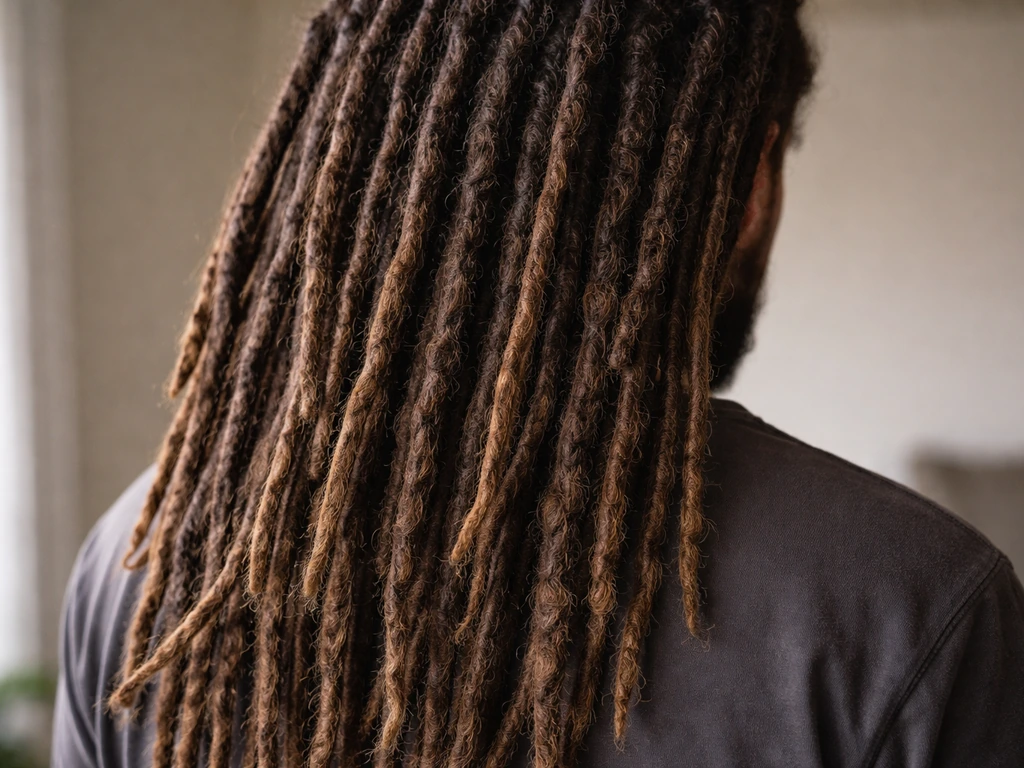
Dreadlocks do not make your hair grow faster. Your follicles grow hair at the same rate whether your hair is locked, loose, braided, or shaved to the scalp. What locs can do, when maintained well, is help you keep more of the length your scalp is already producing. That distinction matters a lot, because confusing the two leads people to expect things locs simply cannot deliver.
Do Dreadlocks Make Your Hair Grow Faster? What Helps

Simone Okonkwo
15 May 2026
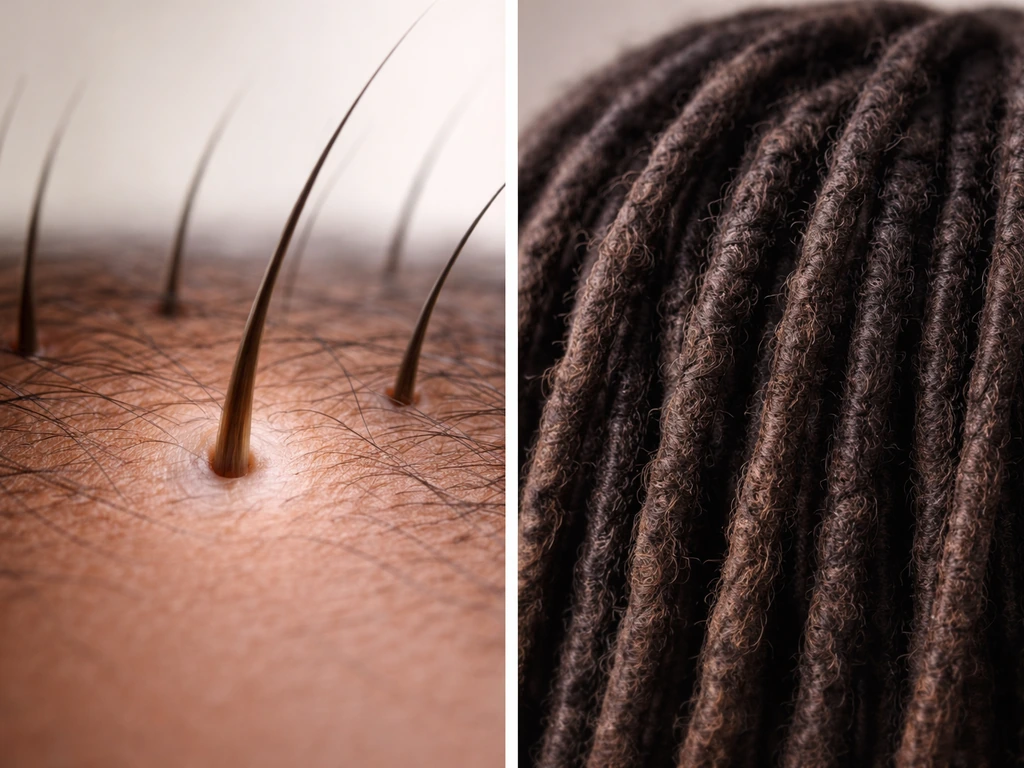
Growth rate vs. length retention: the real difference
Hair growth happens inside the follicle, driven by your hair cycle. The anagen (active growth) phase determines how long your hair can get, and your individual biology sets how fast it moves. Scalp hair grows roughly 0.35 mm per day, which works out to about 1 cm (just under half an inch) per month, or around 6 inches per year. That rate can vary quite a bit from person to person. According to ATSDR data, the real-world range runs from about 0.6 cm to 3.36 cm per month depending on genetics, age, health, and other individual factors. No hairstyle changes any of this.
What hairstyles do influence is how much of that growth you actually get to keep. Textured and coily hair is particularly prone to breakage at the ends during daily manipulation: detangling, combing, brushing, and restyling. Every time a strand snaps before it reaches your shoulder, you lose length that your follicle spent months growing. Locs reduce that daily manipulation almost entirely. Shed hairs (you normally lose 50 to 100 per day) get trapped inside the loc instead of falling out on a comb, which also means the total volume you see stays higher over time. That trapped growth and reduced breakage is what creates the impression of faster growth. It is really just better retention.
What actually changes when you start locs
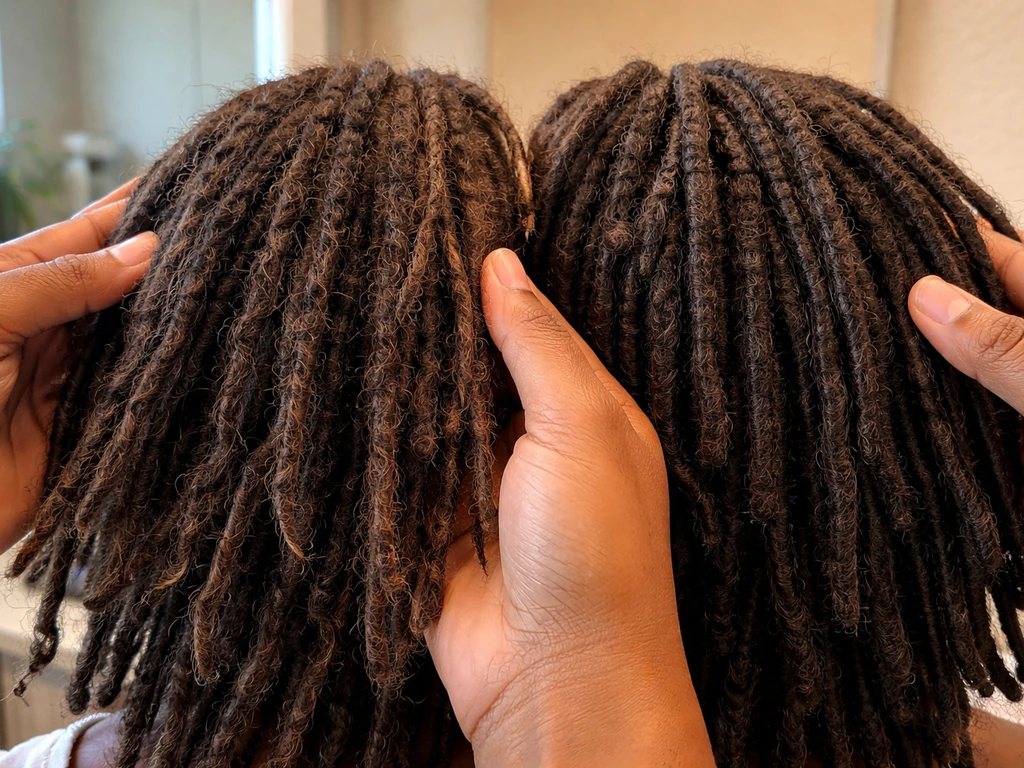
The early stages of a loc journey can feel unpredictable. During the starter phase (roughly the first three months), locs are fresh and can unravel easily. They go through distinct stages: starter, budding, teen, and mature. In the budding stage you will notice small knots forming near the tips and a frizzy, unruly appearance because the hair is not yet fully interlocked. That is normal, not damage. The loc structure is doing exactly what it is supposed to do.
Shedding looks different with locs too. Because shed hairs get caught inside the loc rather than leaving your head, you may not notice gradual hair loss until wash day. This is worth paying attention to: the trapped shedding is not a problem itself, but it means you need to watch for other signals of damage rather than relying on what you see in a brush or on the floor. Breakage at the root from over-manipulation or tension is a real concern that can quietly undo all the retention benefits locs are supposed to provide.
How to actually get more length with locs
If your goal is noticeable length, the practical work happens in maintenance, not in the decision to loc. If you are wondering how to grow dreadlocks at home, the key is sticking to a routine that supports retention and avoids breakage. Here is what actually moves the needle.
Keep your scalp healthy
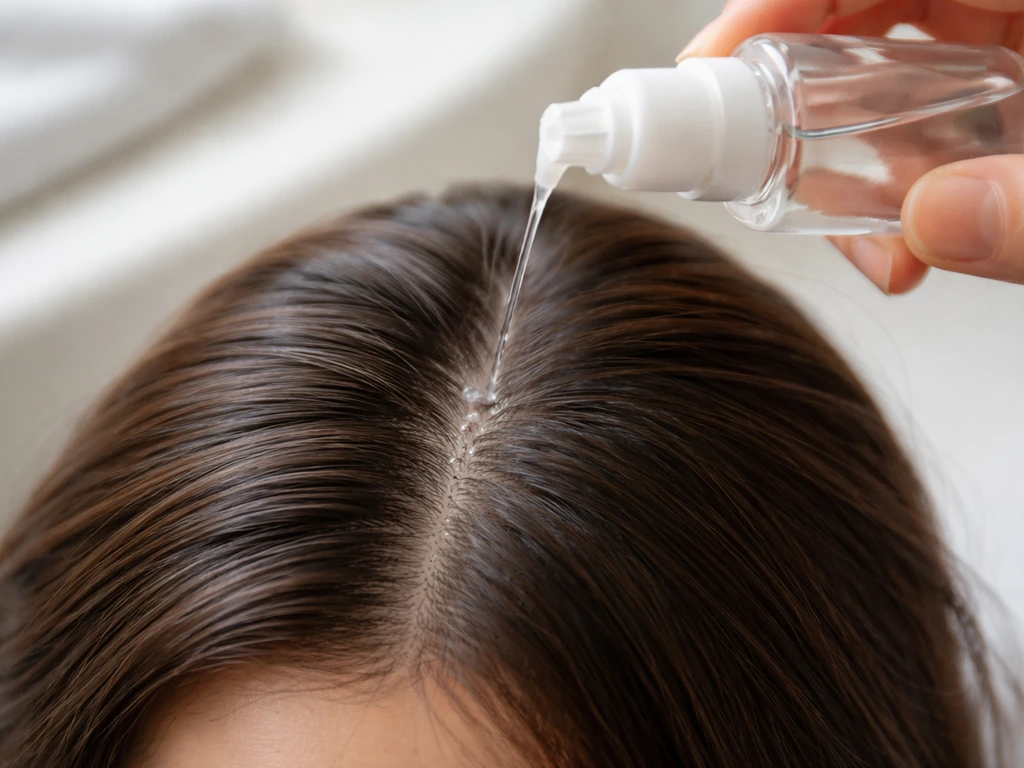
Hair grows from the scalp, so scalp health is non-negotiable. An unhealthy scalp with buildup, chronic dryness, or inflammation is working against you at the follicle level. Wash frequency should be personalized based on your activity level, how oily your scalp naturally is, the products you use, and where you are in the loc journey. There is no single right answer, but neglecting washing entirely is a common mistake. Buildup from heavy products can block follicles and create an environment that slows healthy growth.
Be careful with product choice
Heavy, oil-based products are one of the biggest culprits for buildup inside locs. Sisterlocks training material is explicit about this: avoid oil-based products during the locking process because they cause residue to accumulate inside the loc structure. This applies broadly to most loc types. Stick to lightweight, residue-free products and shampoos designed for locs. Thorough drying after washing matters too. Locs that stay damp for long periods after washing are more prone to mildew and scalp issues, both of which can impair growth.
Moisturize without overloading
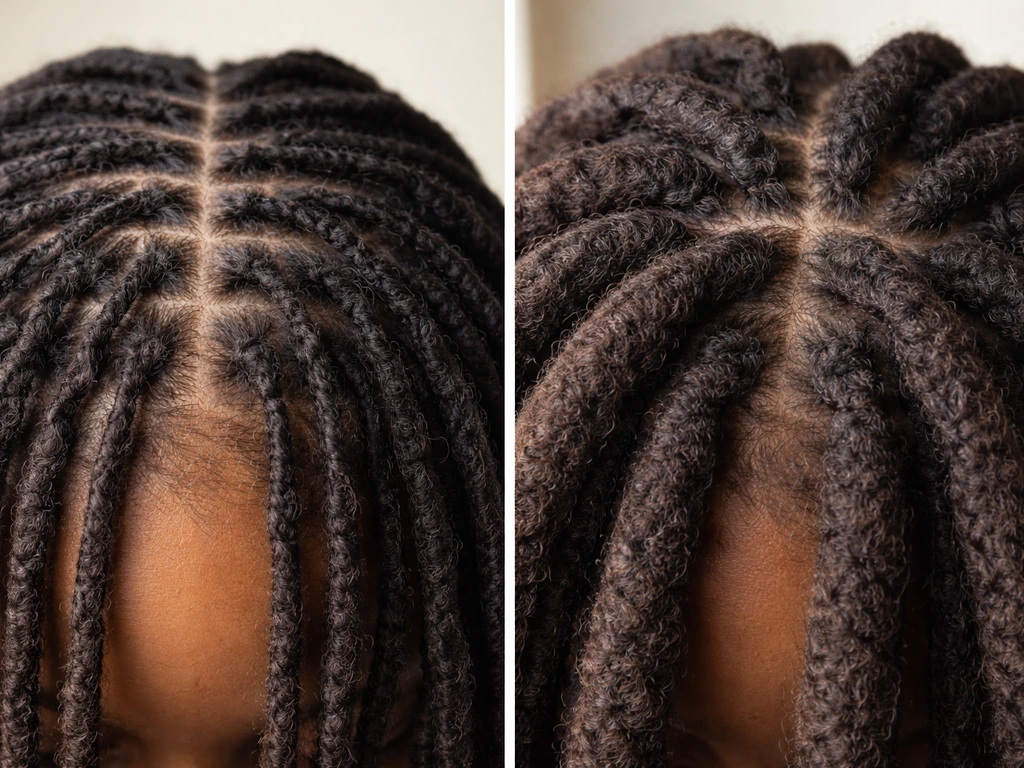
Textured hair needs moisture to stay flexible and avoid breakage. The challenge with locs is that moisture needs to reach the hair without leaving behind heavy residue. Light water-based moisturizers or loc sprays work better than thick butters or oils piled on top. Focus especially on your roots and ends, which are the most vulnerable points for dryness and breakage.
Watch loc size and tension at the root
Loc size affects how quickly and evenly your hair locks. Very thin locs (like sisterlocks) take longer to fully form but give you more versatility. Thicker locs form more quickly but can feel heavier at the root. Either way, the root attachment point is where tension-related damage happens.
Maintenance methods matter here. Palm rolling can smooth and shape locs but does not always tighten new growth at the root the same way interlocking does. Even though interlocking can change how quickly locs lock up, it does not change the follicle’s built-in hair growth rate does interlocking make dreads grow faster. Understanding your method and its mechanical effects on your scalp helps you avoid over-stressing the follicle.
Tight retwisting too frequently is one of the fastest ways to cause traction damage.
Protect your ends and sleep setup
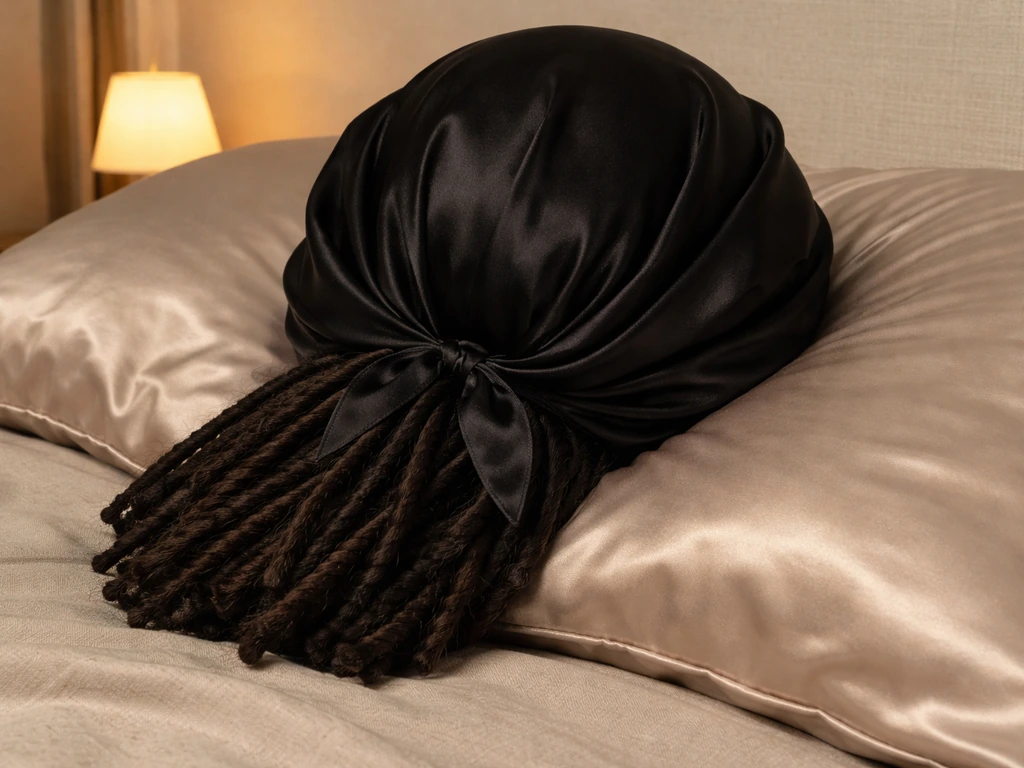
Ends are the oldest, most fragile part of your hair. Sleeping on a satin or silk pillowcase, or wrapping locs in a satin bonnet or scarf, reduces friction that causes end breakage overnight. It is a small habit with a real cumulative effect on length retention over months.
Myths worth clearing up
The belief that dreadlocks make hair grow faster is one of the most persistent myths in the loc community, and it is easy to understand why. People start locs, stop the daily manipulation, and then measure their hair six months later and see more length than they have ever had. They credit the style itself rather than the change in routine. The loc did not speed up the follicle. Reduced breakage and manipulation did the work.
Another common claim is that locs are inherently healthier than combing or chemical treatments. That is only true if the locs are maintained responsibly. Poorly maintained locs with chronic tension, heavy buildup, and infrequent washing can cause just as much damage as an aggressive relaxer routine. Traction alopecia, which is hair loss caused by prolonged or repetitive tension on the follicle, is documented specifically in people with tight locks, braids, and other protective styles. The style being "natural" does not make it automatically safe.
There is also a myth that daily combing is uniquely damaging compared to loc maintenance. In reality, both manipulation-heavy combing and tight retwisting can cause breakage. The question is how much tension and friction you are applying, not which method sounds more natural.
A practical routine for loc growth on textured and Black hair
Here is a realistic, evidence-grounded routine framework. Adjust the frequency based on your scalp type, activity level, and how far along you are in your loc journey.
| Step | What to do | Why it matters |
|---|---|---|
| Washing | Every 1 to 2 weeks with a residue-free or clarifying shampoo formulated for locs | Removes buildup, keeps follicles clear, maintains scalp health |
| Drying | Dry thoroughly after every wash, using a hooded dryer or diffuser if needed | Prevents mildew inside locs and scalp issues from prolonged dampness |
| Moisturizing | Use a lightweight water-based loc spray or mist on roots and ends every few days | Keeps hair flexible and reduces end breakage without causing residue buildup |
| Product selection | Avoid heavy oils and butters directly on locs; use residue-free formulas | Heavy products trap inside locs and clog follicles over time |
| Scalp care | Massage scalp gently during washes; address itching or flaking promptly | Promotes circulation and catches early signs of scalp problems |
| Maintenance spacing | Space out retwisting or interlocking sessions; do not over-manipulate roots | Reduces traction risk and follicle stress |
| Sleep protection | Wear a satin bonnet or use a satin pillowcase nightly | Reduces friction and end breakage while you sleep |
For products specifically, look for shampoos labeled "clarifying" or "residue-free" that are designed for natural or locked hair. Avoid anything marketed as heavy moisturizing butters or oils to apply directly to the loc itself. For scalp treatments, light oils like jojoba or tea tree diluted in water can address dryness and flaking without the same buildup risk as thick oils applied generously to the hair shaft.
Realistic timelines and when to worry
At roughly 1 cm of growth per month, you can expect about 6 inches of new growth per year from the follicle itself. If you are retaining most of that (minimal breakage, good maintenance), locs genuinely can help you accumulate visible length faster than a loose style with heavy daily manipulation. In terms of loc formation, most people move through the starter phase in the first three months, with locs maturing somewhere between 18 and 24 months, though finer or looser hair textures can take longer.
If your locs seem to not be growing or gaining length at all after several months, the most likely culprits are breakage at the root, chronic dryness, buildup stressing the follicle, or maintenance habits that create too much tension. Stalling is usually a retention problem, not a growth problem. Your follicles are almost certainly still producing hair. The question is whether that hair is surviving long enough to add visible length.
Stop and reassess immediately if you notice any of these warning signs:
- Stinging, burning, or pain at the scalp during or after maintenance
- Tenting: your scalp is being pulled upward visibly when locs are manipulated
- Thinning edges, temples, or hairline, which are early traction alopecia signs
- Itching or soreness that does not resolve after washing
- Crusting, flaking, or open sores on the scalp near loc bases
- Excessive breakage or locs snapping at the root with minimal pulling
- Persistent frizz and unraveling well past the first three months without any tightening
Traction alopecia from tight locs is real and documented in dermatology literature. The American Academy of Dermatology is clear: if a hairstyle causes pain or stinging, remove the tension source. Caught early, traction alopecia is often reversible. Left unchecked, the follicle damage can become permanent. No length goal is worth that outcome.
If you are just starting out and wondering how to set yourself up well, the foundation is the same whether you are doing freeform dreads, two-strand twist starter locs, or a professionally installed method: minimize tension, keep the scalp clean, and give the hair time to lock at its own pace. The biology is working in your favor whether or not the style is. Your job is just not to get in the way of it.
FAQ
If dreadlocks do not speed up growth, why do people often measure more length after starting locs?
No. Hair growth speed is determined by your follicle and hair cycle, so locks do not change the rate of production. What changes is how long the new hair stays attached and unbroken, which is why people may see more “length” over time even when growth is the same.
My locs seem like they are not growing. How can I tell if it is breakage or a true growth slowdown?
If your locs look flat or slow, check retention first. Common causes include dryness at the roots and ends, heavy residue buildup that irritates the scalp, and tension from retwisting. Once breakage and scalp issues are addressed, the same monthly growth becomes visible.
Can retwisting too often make my hair grow slower?
Not if the tension is managed. The key issue is traction on the root attachment point. If retwisting feels tight, causes stinging, or you see thinning near the root, loosen the schedule or switch methods, and give the scalp time to recover.
How often should I wash starter or mature locs, and can too much or too little washing affect growth?
It can. Damp locs that stay wet for long periods after washing increase the risk of mildew and ongoing scalp irritation, which can interfere with healthy follicle function. Thorough drying is especially important in thick locs and in humid climates.
What is the safest way to moisturize dreadlocks if oils cause buildup?
Focus on residue-free hydration. Heavy oils and butters can coat the loc interior and contribute to buildup, which can irritate the scalp and increase the chance of breakage. If you use anything, keep it light, water-based, and targeted to dry areas rather than saturating the whole loc.
Why do I not see shedding in the brush after I start locs?
Expect visible shedding to be different. With locs, shed hairs can remain trapped inside the locs, so you may not see gradual loss between washes. That is not automatically a problem, but it should not distract you from watching for signs of breakage, scalp pain, or thinning.
Are locs always healthier than other hairstyles, like braids or a weave, for hair growth?
Yes, if the scalp is inflamed or you have increased tension, they can contribute to traction or irritation even when your hair is not combed daily. “Low manipulation” is only helpful when tension is low, scalp cleaning happens, and you do not over tighten.
Which gives better length retention for textured hair, locs or leaving hair loose?
It is usually a lot smaller than you think, but the loss you keep matters. If the loc process reduces daily combing and friction, you can retain more of each month’s growth. If the method involves high breakage or very tight attachments, you lose length no matter how slowly you “handle” the hair.
Can adding loc extensions or heavy locs affect whether I keep my growth?
Possibly. If you use very tight extensions or incorporate added weight that pulls on the root, you can trigger traction damage. Any extension that changes pulling force at the scalp should be monitored for pain, stinging, or new thinning.
What should I do first if my locs are stuck for months, change styles, or change my routine?
It depends on the cause of “stalling.” If you see no length after several months, look for traction at the root, chronic dryness, and buildup. If the scalp is painful, stings, or you notice patchy thinning, address tension immediately rather than trying more frequent retwists or stronger products.
Next Article
How Do Dreadlocks Grow: Length, Myths, and Growth Tips
Learn how dreadlocks grow, the science behind length and shrinkage, and routines to boost healthy growth and retention.