
Growing dreads comes down to two things that people often confuse: actual hair growth at the root (which is biology) and loc formation and maturation (which is technique and patience). Your hair grows about half an inch per month regardless of whether it's in locs or not. That rate is set by your follicles, your genetics, your nutrition, and your scalp health. What you control is how much of that growth you retain, how well your locs form and mature, and whether your habits are helping or quietly working against you. This guide walks through all of it, from starting your dreads from scratch to maintaining them through every stage so they actually thrive.
How Do I Grow Dreads: Step-by-Step Guide to Healthy Locs

Simone Okonkwo
24 Mar 2026
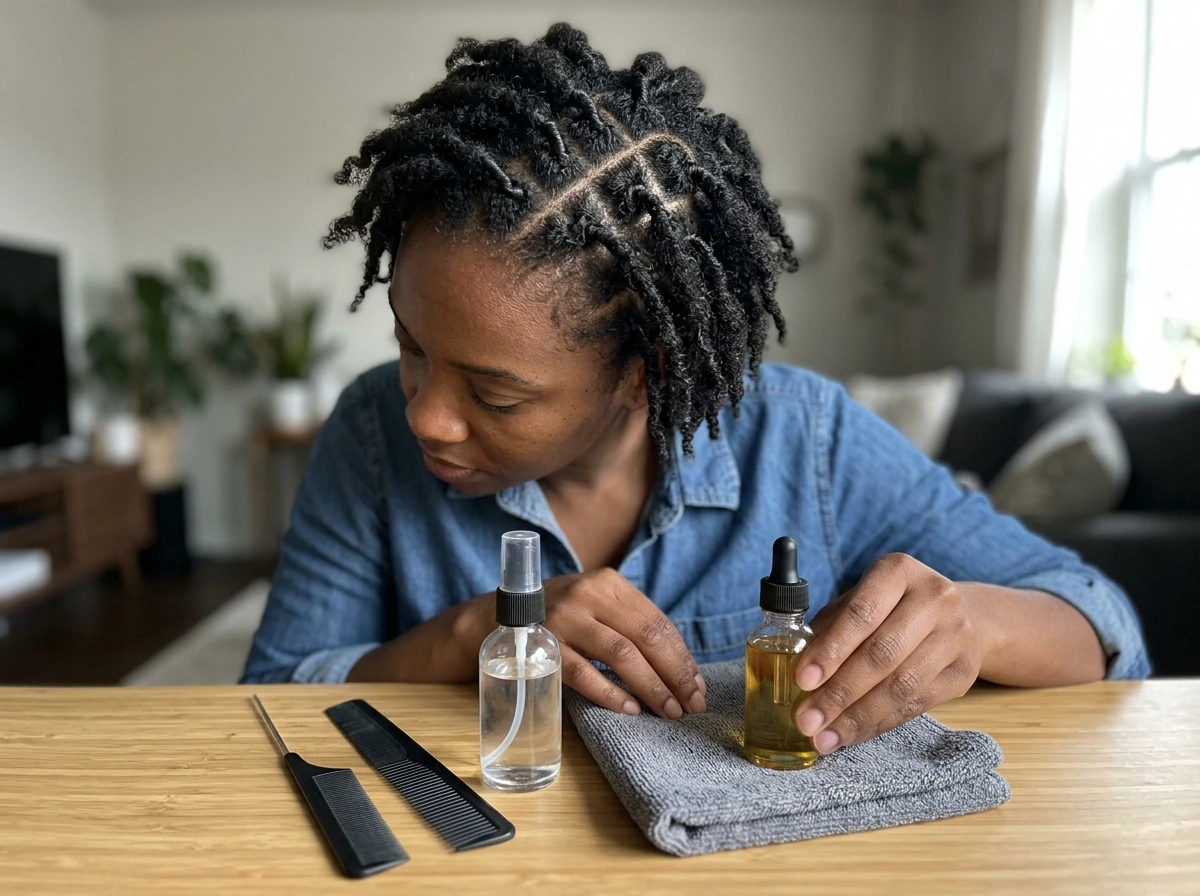
What dreadlocks are and how they actually grow
A dreadlock is a section of hair that has matted, coiled, and compressed itself into a single cord-like structure. It is not a braid or a twist you can undo. Once a loc matures, the hairs inside are permanently interlinked. New hair growing from your follicle at the root is the only true growth happening, and that root growth feeds into the existing loc over time, slowly lengthening it.
Hair grows in cycles. The active growing phase (called anagen) lasts two to six years, during which each hair strand grows roughly 0.3 mm per day, or about 1 cm (just under half an inch) per month. After that, the hair rests and eventually sheds. On a healthy scalp, you shed about 50 to 100 hairs per day, which is completely normal. With locs, this shed hair often gets trapped inside the loc instead of falling out, so you might notice loose hairs accumulating inside your locs over time. That is not your loc breaking or your growth stalling. It is just normal shedding that has nowhere to go.
What people often mean when they say they want their dreads to "grow" is actually a mix of things: they want longer locs, they want the roots to tighten and mat properly, and they want their hair to look and feel healthy. All three goals have different solutions. Longer locs come from retaining the growth you already have (not breakage, not thinning). Tighter roots come from the right maintenance routine. Healthy-looking locs come from scalp care and moisture management. Keep those three goals separate in your head, because chasing one with the wrong strategy can hurt the others.
Starting dreads from scratch: prepping your hair and picking a starter method
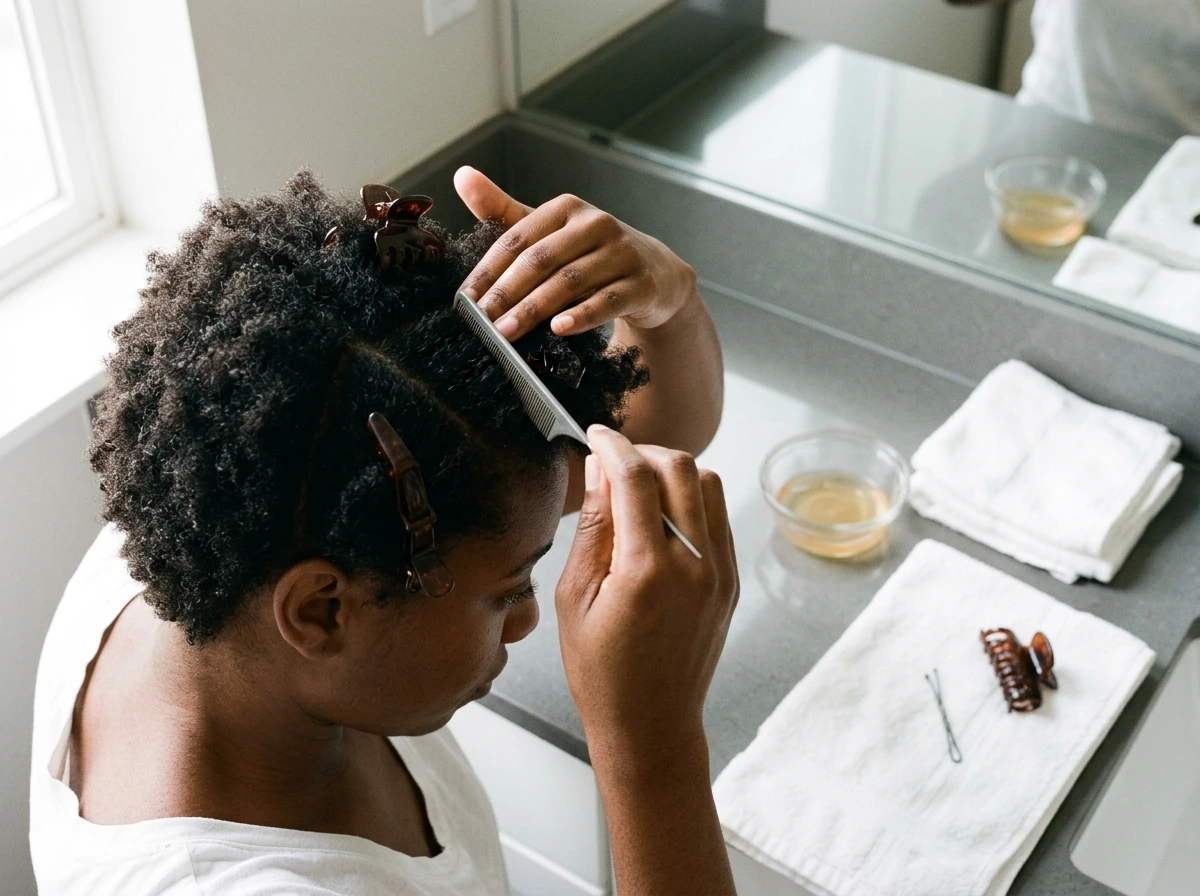
Before you start, your hair needs to be clean, product-free, and dry. Residue from conditioners, oils, or styling creams makes it harder for the hair to lock because those products coat the strand and reduce friction. Use a clarifying shampoo a day or two before you start, and skip the conditioner that wash. From there, your starter method matters a lot, and the best choice depends on your hair texture.
The main starter methods explained
- Comb coils (two-strand twists for coily hair): Best for type 4 textured hair. A loctician uses a fine-tooth comb to coil small sections into tight spirals. These coils naturally mat together over time because of the hair's curl pattern. This is one of the most common and effective starting points for Black and textured hair.
- Backcombing: Works on straighter or looser textures. Hair is teased backward toward the root to create a tangled, meshed core that becomes the basis of the loc. Often followed by palm rolling or crochet work to tighten the shape.
- Twist-and-rip: A gentler starting method for straighter hair. Two sections are twisted together, then pulled apart to create texture and tangling. Repeated until the section starts to hold its shape.
- Braids: A simple, low-manipulation start. Braided sections slowly mat over time. Takes longer to fully loc than coils or backcombing, but less initial tension on the scalp.
- Interlocking: A root-maintenance method often used at start too, where a tool threads the loc through itself at the root. Very secure, but requires precision.
- Freeform (no manipulation): You simply stop combing and let the hair mat on its own. No defined sections, organic shape. Takes the longest and produces the most uneven look. If you're curious about this path specifically, the freeform locs approach is worth exploring in more depth separately.
- Crochet method: A small crochet hook is used to pull loose hairs into the loc structure, creating a neater, tighter look faster. Often used in combination with backcombing or to refine coils in early stages.
For most people with type 4 coily hair, comb coils or two-strand twists are the go-to starting method because the curl pattern does a lot of the work. The hair naturally wants to intertwine. For looser textures (type 2 or 3), you typically need backcombing or twist-and-rip to create the friction that makes locs form. A professional loctician can assess your specific texture and recommend what will give you the cleanest, most even start.
One thing to be honest about: starter locs are not real locs yet. They are temporary shapes (coils, twists, braids) that will slowly mat and compress into actual locs over months. If you go in expecting to have fully formed locs in the first few weeks, you will be disappointed. Think of the first six months as the setup phase.
Growing out dreads: retention, new growth, and realistic length timelines
Here is something worth repeating: <a data-article-id="049EC6A9-3C09-492B-82A5-21225BB3FC3C">your hair is already growing</a>. Your hair is already growing. The question is whether you are keeping that growth. how to grow freeform dreads Breakage is the single biggest enemy of loc length. how to grow freeform dreads. If your hair is breaking at the same rate it is growing, your locs will never get longer even though your follicles are doing exactly what they should. That means retention is the job. <a data-article-id="6910F7D2-5DDA-4F57-8F74-6185BBA1C647"><a data-article-id="6910F7D2-5DDA-4F57-8F74-6185BBA1C647"><a data-article-id="6910F7D2-5DDA-4F57-8F74-6185BBA1C647">how to grow dreads naturally</a></a></a>
At roughly half an inch of growth per month, a year of solid retention gives you around six inches of new root growth feeding into your locs. If you want a different approach that leans even more on low-intervention habits, also see how to grow dreads naturally. Over two years, you could reasonably expect ten to twelve inches of length added, assuming minimal breakage. But most people see less than that because of preventable damage: too-tight retwisting, dryness, improper drying after washing, and excessive manipulation.
The key habits for length retention with locs are: keeping the scalp healthy so follicles perform well, moisturizing the hair to prevent dryness and breakage, protecting the ends (the oldest and most fragile part of each loc), minimizing mechanical stress from over-manipulation, and retwisting at the right intervals rather than too often.
Getting short dreads to mature: stage by stage, here is what to expect
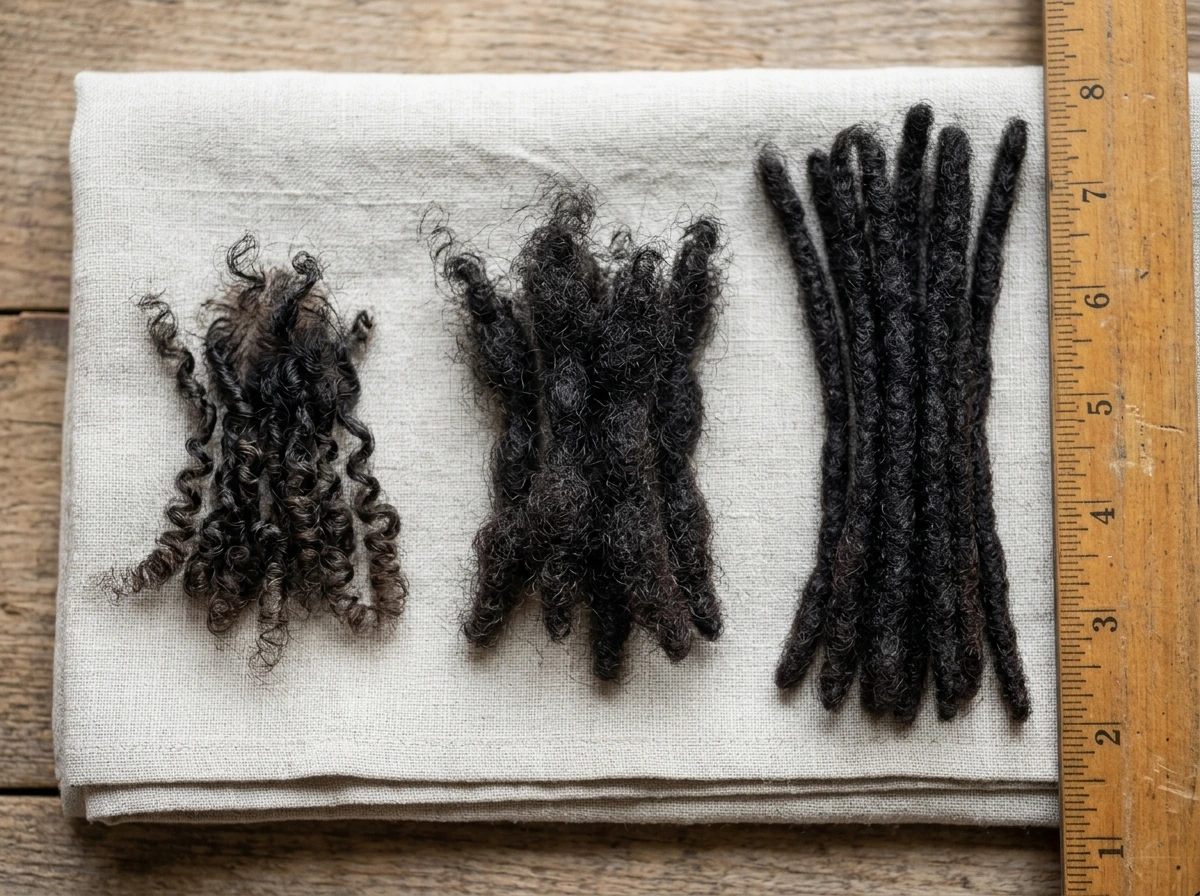
Loc maturation follows a pretty predictable arc, even if the timing varies by texture. Most people move through three broad stages: starter/baby locs, the teenage (or "budding") phase, and mature locs. The total journey from fresh start to fully mature locs typically takes 18 to 24 months, sometimes longer for finer or looser hair types.
| Stage | Approximate Timeline | What's Happening | What to Do |
|---|---|---|---|
| Starter / Baby Locs | Months 1–3 | Coils or twists hold their shape but can unravel if disturbed too much. Root area is loose. Hair may look and feel fuzzy or puffy. | Be gentle. Avoid over-washing or over-manipulating. Let the shape settle. Resist the urge to retwist constantly. |
| Budding / Teenage Phase | Weeks 6–16 into months 10–18 | Hair starts matting and swelling inside the loc. Locs may look thicker, uneven, or frizzy. This is the messiest phase and the one most people panic through. | Stay the course. Separate locs at the root during washing to prevent joining. Retwist every 4–8 weeks. Do not over-tighten. |
| Mature Locs | Months 18–24+ | Locs compress, smooth, and solidify. They feel firmer and look more cylindrical and defined. Roots tighten more easily and hold longer between retwists. | Maintain your routine. Focus on moisture, scalp health, and ends. Less frequent retwisting may be needed. |
The budding phase is where most people lose motivation or make mistakes. Locs get swollen and uneven, some sections try to merge with neighboring locs, and the whole thing can look chaotic. This is not a sign that something is wrong. It means your locs are actually locking. The key at this stage is to separate locs at the scalp gently during and after washing, keep up with retwisting on a consistent schedule (not too often, not too infrequently), and avoid products that cause buildup because buildup in the budding phase creates texture that interferes with natural loc compression.
Signs you are making real progress: the root area tightens faster between retwists, locs feel more firm and solid when you squeeze them, the body of the loc looks smoother and more cylindrical rather than fuzzy, and new growth at the root is clearly visible and matting in. If you hit a plateau, examine your washing routine, your retwisting frequency, and your moisture practices before assuming your hair has stopped growing.
Hair health for healthy dreads: scalp care, moisture, and breakage prevention
Healthy locs start at the scalp. If your scalp is dry, flaky, or inflamed, your follicles are working in a compromised environment and your growth and retention both suffer. Dandruff is one of the most common scalp issues people with locs deal with, partly because it is easy to miss under dense locs and partly because infrequent washing can let flakes accumulate. If you are dealing with persistent flaking and itch, an anti-dandruff shampoo containing ingredients like ketoconazole or zinc pyrithione is a good starting point. For anything that does not respond to over-the-counter options after a few weeks, it is worth seeing a dermatologist, as prescription-strength shampoos or topical treatments are available and more effective for moderate to severe scalp conditions.
Moisture is the other big piece. Locs, especially mature ones, can be deceivingly dry because the dense structure traps product and debris but does not always let moisture penetrate evenly. Dry hair is brittle hair, and brittle hair breaks. Focus on moisturizing from the inside out: drink enough water, eat enough protein (hair is made of keratin, a protein), and use water-based moisturizers at the roots and along the length of the locs. Then seal with a lightweight oil like jojoba, argan, or coconut oil to slow moisture loss. Avoid heavy waxes and butters, especially in the first year, because they leave residue inside the loc that is nearly impossible to remove and disrupts natural loc formation.
Traction alopecia is a real and serious risk with locs that does not get talked about enough. It is hair loss caused by repeated, prolonged tension on the follicles. Early signs include redness at the hairline, small pimples or bumps around follicles, and thinning at the temples or nape. If you or your loctician is retwisting too tightly, installing with too much tension, or pulling your locs back into tight styles too regularly, you are creating cumulative stress on the follicles that can eventually cause permanent damage. The fix is simple but requires discipline: keep tension low, never retwist until the root is pulled tight against the scalp, and give your hairline styles that do not strain it.
- Keep retwisting tension low: you should never feel pain or pulling during a retwist
- Do not wear locs in tight updos or ponytails constantly; vary your styles
- Check your hairline regularly for thinning, redness, or follicle bumps
- If you notice early traction signs, reduce manipulation immediately and consult a dermatologist
- Protect your locs at night with a satin or silk bonnet or pillowcase to reduce friction breakage
What to expect with coily, textured hair: a note for Black men and anyone with type 4 hair
If you have type 4 coily hair, the good news is that your texture is actually well-suited to forming locs naturally. The tight curl pattern creates friction and interlinking between strands that looser textures have to work harder to achieve. Comb coils or two-strand twists at the start produce defined, even sections that mat into locs efficiently. You do not need wax, heavy gels, or backcombing to get things moving. Your hair will do most of the work.
The challenge with type 4 hair is shrinkage. Your locs will look significantly shorter than they actually are until they reach maturity and the weight of the loc starts to pull them down. A loc that is technically four inches long might look like two inches because of shrinkage. This is not a growth problem. It is just how tightly coiled hair behaves. As locs mature and gain weight and density, they gradually elongate and the shrinkage becomes less pronounced. Try not to measure progress by what you see in the first year, because shrinkage is masking a lot of real length.
Density also plays a role. Black and textured hair scalps often have high follicle density, which means more locs and more total hair mass. That is generally a good thing for fullness and appearance, but it also means washing and drying takes longer, and making sure every loc dries thoroughly is more important and more effort. Never let your locs air dry incompletely, especially in the center of dense sections. Trapped moisture leads to mildew inside the loc, which causes odor that is very difficult to eliminate.
For Black men specifically, locs are also a popular and culturally significant style choice across many communities, and the maintenance expectations can vary a lot by community, loctician, and personal preference. Whether you are going for manicured, uniform locs or a more freeform natural look, the health fundamentals are the same. The styling choices differ, but clean scalp, retained moisture, low tension, and consistent care are non-negotiable regardless of the aesthetic you are after. If you're exploring more specific variations like freeform locs or wick dreads, those approaches have their own distinct growth patterns and expectations worth reading about separately.
Products and maintenance: washing, retwisting, drying, and the do's and don'ts
How often to wash
Washing frequency is one of the most debated topics in the loc community, and the honest answer is: it depends on your scalp. A good general starting point for most people with locs and textured hair is every seven to ten days. Some locticians recommend washing every two to three weeks, particularly for starter locs in the first few months, to give the sections time to begin matting without constant disruption. What you want to avoid is going so long between washes that product, sweat, and debris build up on your scalp and inside your locs. Use a residue-free, loc-friendly shampoo. For buildup removal, a clarifying shampoo used once a month is a solid habit. If you live in a hard water area, mineral buildup in your locs can be a real issue, so a chelating or clarifying wash becomes even more important.
Retwisting and interlocking
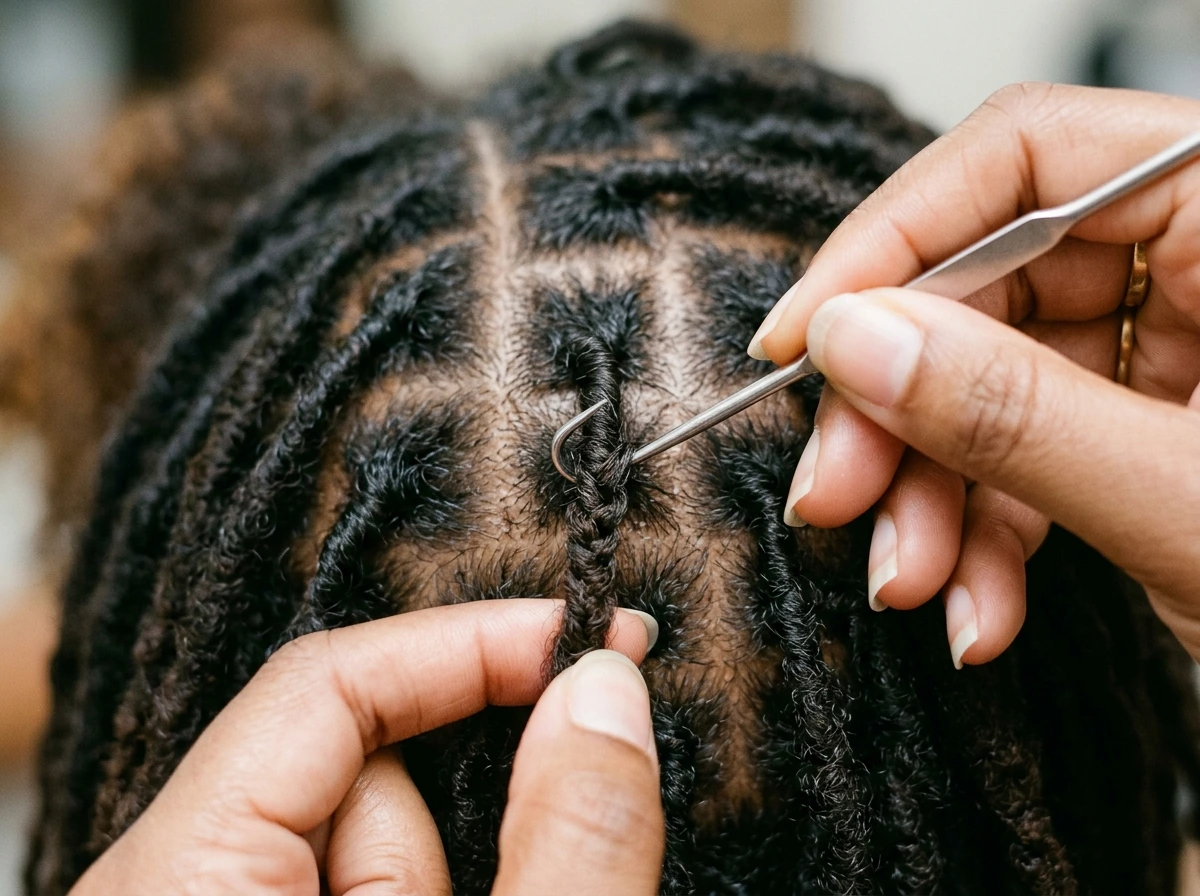
Retwisting every four to eight weeks is the most commonly recommended range, and where you fall in that window depends on your texture, how fast your roots mat naturally, and your personal preference for neatness. Fine, straighter textures often need more frequent retwisting because the hair does not grip itself as readily. Coarser, coilier textures can often go longer between retwists because the curl pattern holds the root more naturally. What you should avoid is weekly retwisting. That frequency over-manipulates the root, creates excessive tension on the follicle, and increases traction alopecia risk without giving any real benefit to growth or loc formation. When you do retwist, focus only on the new growth at the root, not the entire length of the loc.
Interlocking is an alternative to palm-roll retwisting where a small tool is used to thread the loc through itself at the root, creating a more mechanical lock. It is more durable between maintenance sessions and does not require product to hold, which makes it lower residue. It is a good option for very active people or those who want longer intervals between appointments. However, it requires precision: interlocking done incorrectly can create tension points in the loc structure that weaken it over time. If you are new to locs, have a professional loctician do your interlocking until you understand your specific root pattern.
Drying: the step people skip and regret
After every wash, your locs need to dry completely all the way through, not just on the surface. Locs are dense and hold water deep in the core. If you go to bed with damp locs, that moisture sits inside a warm, enclosed environment for hours and mildew grows. Loc mildew (sometimes called "dread rot") creates a persistent musty smell that regular washing does not fix because the source is inside the loc itself. Use a hooded dryer, a bonnet dryer, or a diffuser on medium heat after washing. Give your locs enough time to fully dry before covering them or going to sleep. In humid climates or during summer, this matters even more.
Product principles to live by
- Use residue-free, loc-specific shampoos: regular shampoos and conditioners can leave coating that traps inside locs and interferes with locking
- Avoid wax: heavy waxes are extremely difficult to remove from locs, accumulate over time, and attract dirt; they do not help locs form faster
- Use lightweight oils (jojoba, argan, grapeseed) to seal moisture after washing, not as a primary moisturizer
- Apply a clarifying wash once a month to break down buildup from hard water, sweat, or products
- Use diluted tea tree oil on the scalp if you are prone to dandruff or itchiness (a few drops mixed into your shampoo works well)
- Less is more: you do not need to apply product constantly; over-application is one of the fastest ways to create buildup inside your locs
The full do's and don'ts list
| Do | Don't |
|---|---|
| Wash every 7–10 days (or every 2–3 weeks for starter locs) | Go weeks without washing your scalp; buildup stalls follicle health |
| Dry locs completely after every wash using heat | Sleep on wet or damp locs; this causes mildew inside the loc |
| Retwist every 4–8 weeks, focusing on new root growth only | Retwist weekly; this over-stresses follicles and increases traction alopecia risk |
| Keep retwist tension low and comfortable | Retwist so tightly that you feel pulling or pain at the hairline |
| Moisturize with water-based products and seal with lightweight oil | Use heavy waxes, butters, or creamy conditioners inside locs |
| Separate locs at the root during and after washing to prevent joining | Let sections grow together unintentionally during the budding phase |
| Protect locs at night with a satin bonnet or pillowcase | Sleep on rough cotton or go without any protection |
| Use clarifying shampoo monthly to remove buildup | Rely only on regular shampoo if you use styling products |
| See a dermatologist for persistent scalp issues (dandruff, thinning, follicle bumps) | Ignore early signs of scalp irritation or traction alopecia |
| Be patient through the budding phase; messiness is progress | Restart your locs because the teenage phase looks uneven |
Growing healthy dreads is not complicated, but it does require consistency. Your hair is already growing. Your job is to create the conditions where that growth is retained, your scalp is healthy, and your locs can mature without interference from tight tension, poor washing habits, or product buildup. Start with the right method for your texture, maintain a realistic retwisting schedule, keep your scalp clean and moisturized, and let the process take the time it needs. The locs that last and look best are almost always the ones that were built slowly and maintained thoughtfully.
FAQ
How long does it usually take before my dreads look like they are actually “growing”?
The first months are mostly loc formation, not visible length. Expect noticeable tightening and matting around 3 to 6 months, while real length gain becomes easier to see closer to the 12 to 18 month range when shrinkage starts to reduce and the locs gain weight.
Why does my loc look longer under certain lighting but shorter in photos?
Shrinkage and dryness both change how a loc lays. If your locs are dry, they feel and look more “puffed,” while properly moisturized and fully dried locs hang with more uniform weight. Take progress photos on the same day after drying to reduce the illusion of length changes.
Can I grow dreads faster by retwisting more often?
More frequent retwisting usually does not increase root growth. It increases mechanical stress, and the benefit you might notice is only temporary neatness. Aim for the interval your roots need to tighten naturally, typically within the 4 to 8 week range.
What should I do if my roots are tightening unevenly?
Uneven locking is common, especially during budding. Separate and maintain individual locs at the scalp after washing, and adjust your retwisting only at the root (not the full length). If the same sections stay loose while others mat, check for residue or poor drying in those areas.
How often should I wash if my scalp gets oily quickly?
Use your scalp as the guide, but start with a weekly wash as a baseline and move toward every 5 to 7 days if oil and buildup happen fast. If you are in the first few months, you may benefit from slightly longer gaps only if your scalp remains comfortable and residue-free.
What’s the safest way to handle shedding when I wash my locs?
Shedding during washing is normal, especially early on, because hairs get trapped inside the loc. If you are suddenly losing entire locs, that’s usually breakage or overly tight installation, not normal shedding. Use gentle separation, avoid tugging on the loc body, and focus on retaining the new growth at the root.
How do I prevent buildup if I’m using moisturizers and oils?
Choose water-based moisturizers, use only a light amount of oil to seal, and keep oils off areas that tend to accumulate product. If you notice the locs feel coated, look dull, or smell musty even after drying, add a clarifying wash (about monthly) and review whether your routine is too heavy.
What should I do if my scalp is itchy or flaky but I don’t see dandruff?
With dense locs, dandruff can be hidden, and irritation can come from buildup, hard water minerals, or scalp inflammation. Try an anti-dandruff shampoo with an active ingredient like ketoconazole or zinc pyrithione for a few weeks, and if symptoms persist, see a dermatologist to rule out conditions that need prescription treatment.
Is it okay to use wax or heavy gel to make my starter locs tighten?
It can make loc formation harder because residue interferes with how the hair compresses over time. In the first year, lean toward residue-light products, and if you want a hold-based option, ask your loctician for low-buildup methods instead of relying on heavy waxes.
My locs started merging during the budding phase, is that a problem?
Merging during budding can happen as locs lock, and it does not automatically mean damage. Separate at the scalp gently during and after washing if you want individual locs, and be consistent with your maintenance so the merged areas do not continue to grow unevenly.
How can I tell if I’m plateauing because of growth versus breakage?
Look at the root: if you can see new growth forming but the loc length is not increasing, breakage is likely. Check for dryness, rough handling during washes, and overly tight retwisting. Also confirm you are fully drying each loc after washing.
What’s the correct way to measure loc growth so it is meaningful?
Measure from the same reference point at the root to the same point on the tip, and do it when the locs are fully dry. In the first year, shrinkage can mask changes, so track across months rather than week-to-week.
Can I dry my locs with a regular towel or should I use a dryer?
Do not rely on a towel alone, because dense locs hold moisture deep inside. Use a hooded dryer, bonnet dryer, or a diffuser on medium heat, then ensure the center feels dry before sleeping or covering your hair.
What causes dread rot odor and how do I fix it?
It usually comes from trapped moisture inside the loc, especially when locs are not fully dried. Fixing it is harder than prevention, so focus on thorough drying after every wash, and consider getting professional help if the smell persists.
How do I reduce traction alopecia risk while still keeping locs neat?
Keep tension low, never retwist until the root is pulled tight against the scalp, and avoid regularly installing or styling with pulling at the hairline. If you see redness, bumps, or thinning at the temples or nape, stop high-tension styles and consult a professional.
Are comb coils and twists equally good for starting dreads on type 4 hair?
They can both work well, because coil patterns create natural friction and intertwining. The better choice is the one that makes consistent, clean sections for your hair pattern, and that reduces uneven roots and future breakage. If you’re unsure, get a loctician to assess your shrinkage and root pattern.
Should I use interlocking instead of retwisting for better growth?
Interlocking can extend the time between maintenance sessions and reduce residue needs, but it must be done precisely to avoid tension points. If you are new, have a professional perform the first few sessions, then continue only if your root feels secure without stress.
What’s the most common mistake that stops locs from getting longer?
The biggest cause is breakage from dryness, rough manipulation, and excessive tension at the root. Even if your follicles are growing normally, breakage prevents visible length gain, so prioritize gentle washing, thorough drying, and retention.
Next Article
How to Grow Dreadlocks: Natural Growth, Thickness & Care
Step-by-step guide to grow dreadlocks naturally, grow longer, thicken, and retain with beginner routines and realistic t