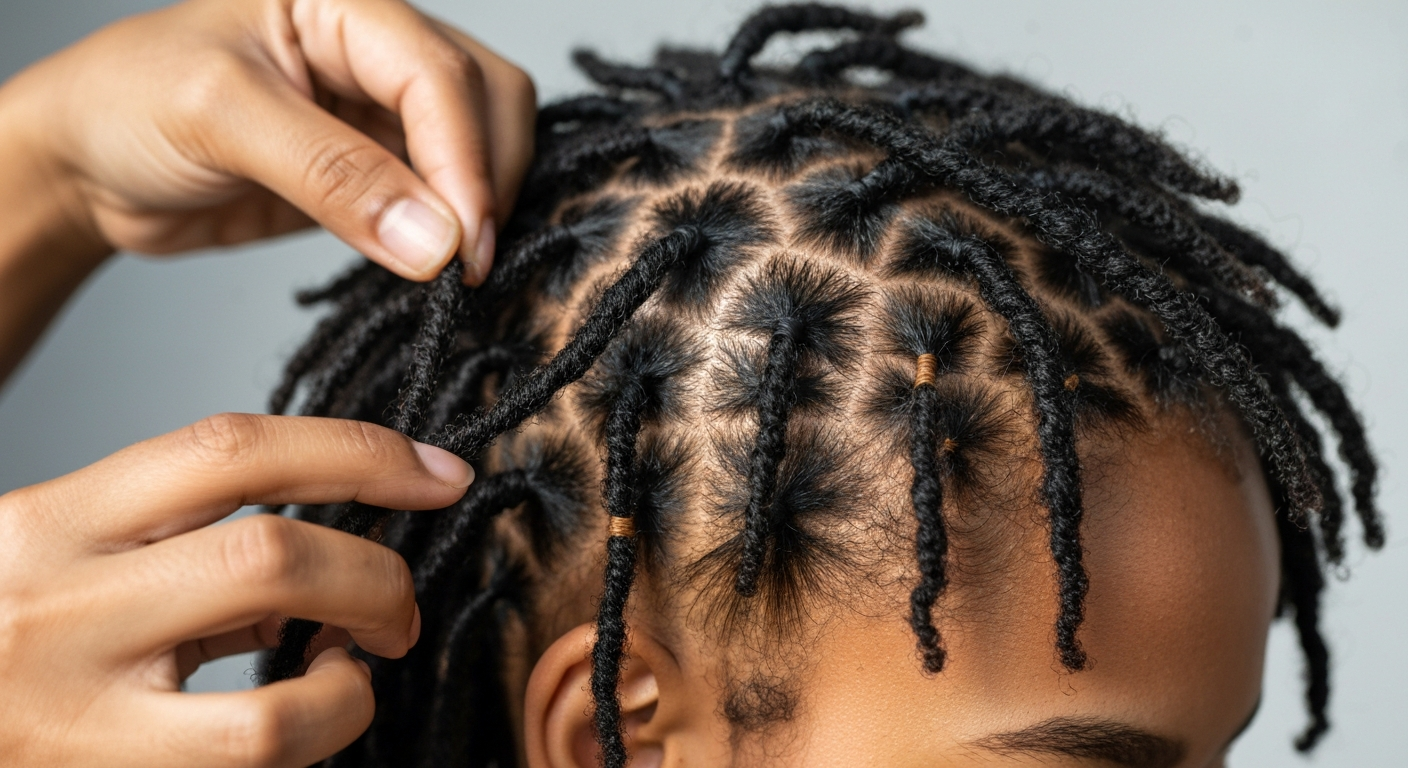
Growing dreads is worth doing if your goal is long-term low-manipulation styling that protects your ends, reduces daily breakage, and gives your hair the best chance to retain length, but it is not a good fit if you have active scalp inflammation, significant thinning at the roots, or are unwilling to commit to months of patience before the style matures. Afro-Ethnic Hairstyling Trends, Risks, and Recommendations (MDPI review) notes that Several reviews/reporting series note that artificial extensions and sewn/glued weaves produce higher rates of follicular injury and CCCA than natural long hair styles (including some forms of locs), likely because added weight and attachment points increase traction. That is the honest framework. Locs are one of the most protective styles available for textured hair, but they are also permanent enough that starting with the wrong scalp conditions or installation approach can cause real, sometimes irreversible damage.
Should I Grow Dreads? Decision Guide for Textured Hair

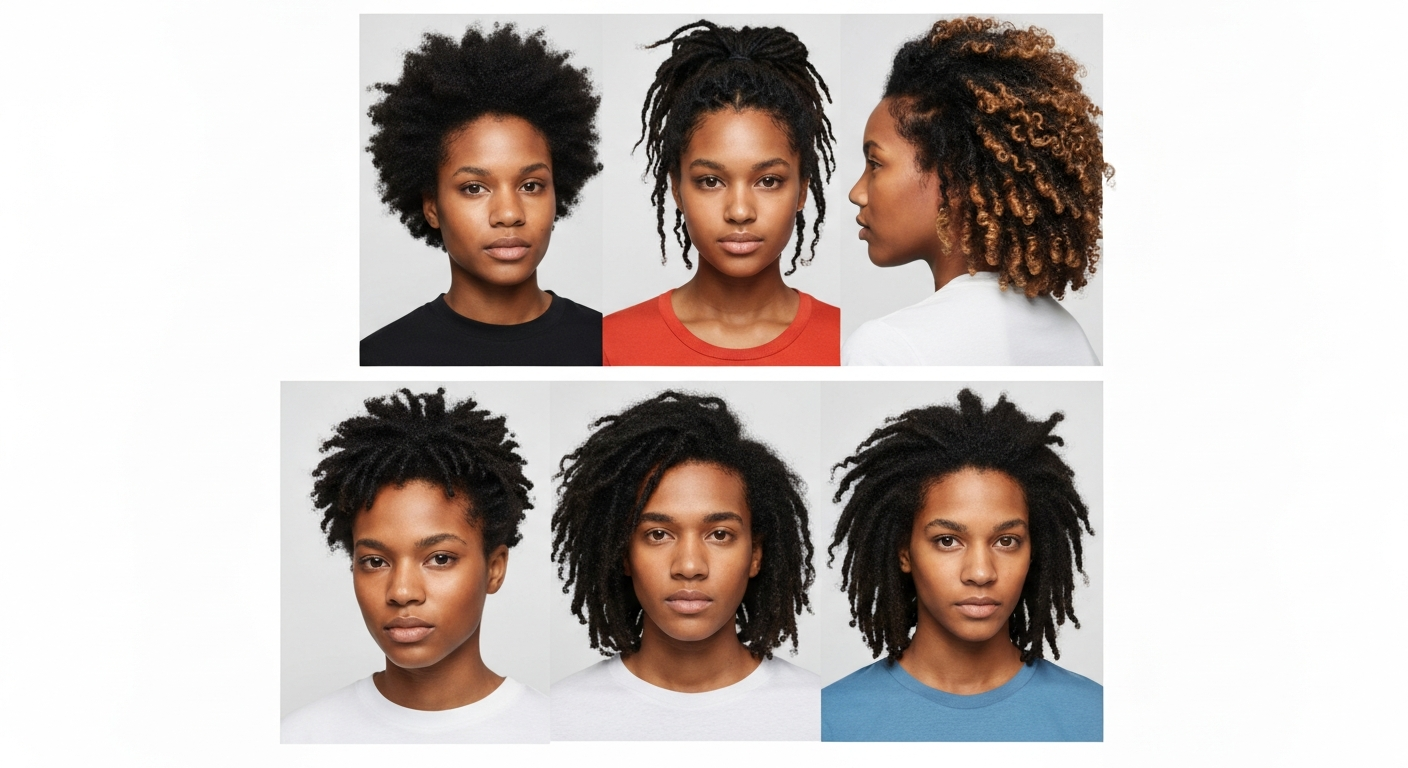
Should you grow dreads? A quick decision framework
Before you book a loctician or reach for the comb, it helps to run through a few honest questions. Locs are a long-term commitment that take most people 12 to 24 months to fully mature, and they require consistent (if relatively simple) maintenance throughout. The good news is that the vast majority of people with healthy scalps and textured or curly hair are strong candidates. The concerns arise around existing scalp conditions, hair density, and installation method, not around locs as a concept.
Who generally benefits from growing locs
- People with Type 3c–4c natural hair who experience chronic breakage from daily manipulation, combing, or heat styling
- Anyone looking to retain more length over time without relying on extreme protective styling rotations
- People who want a low-daily-manipulation routine once the locs are established
- Those willing to commit to proper moisture balance, scalp care, and periodic professional or careful self-maintenance
- People who have researched installation methods and understand the difference between low-tension and high-tension starts
Who should pause before starting
- Anyone with active scalp infection (tinea capitis, folliculitis) — a dermatologist needs to treat and clear the infection first
- People with ongoing seborrheic dermatitis flares that are not yet managed with medicated shampoo
- Anyone experiencing unexplained shedding, widening parts, or thinning at the hairline — get a trichology or dermatology evaluation before committing to locs
- People with significant chemical relaxer damage or breakage at the demarcation line — the hair needs stabilizing first
- Anyone whose goal is purely to make hair 'grow faster' — locs do not increase your intrinsic growth rate
Hair growth vs. hair retention: why the difference matters
This is probably the biggest myth I see repeated across hair communities, and it is worth addressing directly. Locs do not make your hair grow faster. Your follicles operate on a biological schedule that styling simply cannot override. During the active growth phase (anagen), human scalp hair grows roughly 0.6 to 1.5 centimeters per month, with most research landing around 1 cm as a central estimate. That rate is set by genetics, nutrition, hormonal status, and scalp health, not by whether your hair is in a bun, braids, or locs.
What locs (and other protective styles) genuinely do is reduce breakage. When hair is left loose, daily manipulation, friction against clothing, heat styling, and environmental dryness all cause the hair shaft to snap before it reaches its potential length. Protective styles minimize that mechanical damage, so more of the hair your follicles produce actually stays on your head. That is length retention, and it is real and meaningful, it just is not the same thing as growing faster. A narrative review published in PMC in 2026 on Afro-textured hair care confirmed this distinction clearly: no peer-reviewed trials have shown that any protective style increases the intrinsic mitotic (cellular) rate of the hair follicle.
Density (thickness) is similarly driven by follicle count and health. You cannot create new follicles through styling, but you absolutely can damage existing ones through chronic traction. That is the trade-off locs ask you to manage carefully.
Pros and cons of dreadlocks for hair growth and retention
| Factor | Potential Benefit | Potential Risk |
|---|---|---|
| Manipulation | Dramatically reduced daily combing and detangling once locs mature | Installation phase can involve high-tension techniques if done carelessly |
| Length retention | Ends are tucked, protected, and less exposed to friction and breakage | Weak or already damaged ends may break during the budding/locking phase |
| Scalp health | Scalp is more accessible than in weave/extension styles; easier to clean and oil directly | Poor drying technique can lead to mildew or odor inside mature locs |
| Traction risk | Lower daily tension than tight bun, high ponytail, or sewn-in weaves once established | Interlocking too tightly or too frequently concentrates tension at the root, raising traction alopecia risk |
| Product buildup | Simple, light-product routines work well and keep locs clean | Heavy waxes, petrolatum, and non-water-soluble silicones accumulate inside locs and are very difficult to remove |
| Chemical interaction | None if hair is fully natural and transition is managed carefully | Combining tight locs with chemical relaxers significantly increases follicular injury risk |
| Reversibility | Freeform or starter locs can sometimes be combed out early in the process | Mature locs are generally permanent; attempting to comb them out causes significant breakage |
The bottom line from the research and from practical experience: locs are genuinely protective when installed with low tension and maintained with lightweight, water-soluble products. No high-quality randomized trials compare different installation methods; most guidance comes from observational dermatologic series and loctician experience that emphasize minimizing root tension and weight (Dermoscopy of Traction Alopecia in Black Scalp Patients: literature review (PMC)). They become a risk when tightness, heavy products, or chemical damage is added to the equation.
Cultural context: locs as more than a style
Locs have deep roots across multiple cultures, in West African tradition, Rastafari spiritual practice, South Asian ascetic traditions (Jata), and Indigenous communities across the world. For Black communities in particular, choosing locs is often a reclamation of natural hair identity that has been historically policed or stigmatized. That cultural weight is real, and it deserves acknowledgment alongside any conversation about biology and hair health.
If you are not from a culture with deep ties to locs, that is not a reason to avoid the style, but it is worth educating yourself on that history, understanding the terminology (many people prefer 'locs' over 'dreadlocks' because of the pejorative origin of the latter), and approaching the community with respect rather than treating a centuries-old tradition as a trend. If you are getting locs for the first time, seeking out a loctician from within the Black natural hair community is both practically wise (they have the most hands-on experience) and a meaningful way to support the communities that have preserved this knowledge.
How locs interact with different hair types
Not all hair locs the same way or at the same speed. Your hair's texture, curl pattern, and porosity all shape how quickly your hair will bud, tighten, and mature, and which starting method makes the most sense.
Type 4 (coily) and Type 3c (tightly curly) hair
This is the most naturally loc-friendly hair type. The tight coil pattern means strands interlock with minimal encouragement, and budding can begin within weeks of installation. Comb coils, two-strand twists, and palm-rolled sections are all excellent starting points. The coarser the texture, generally the faster the locking process progresses, though individual variation is significant. One practical note: very dense 4c hair can be harder to dry thoroughly, so investing in a hooded dryer or sitting time in indirect sunlight after washing is genuinely important to prevent mildew inside the locs.
Type 3a–3b (loose curl) hair
Looser curl patterns take considerably longer to lock, sometimes 18 to 36 months compared to 12 to 18 months for tighter textures. The locking journey tends to require more intentional maintenance because the looser curl does not naturally knot as efficiently. Two-strand twists and interlocking are both used, but patience is the real requirement here. If you have looser curls and want to explore this further, the guidance specific to curly hair starting methods is worth reading in detail.
Wavy (Type 2) hair
Wavy hair can loc, but the process is slow and the texture often needs more mechanical help, backcombing, crochet methods, or interlocking, to begin and maintain the budding phase. Many people with Type 2 hair also find that their locs have a softer, more flowing appearance rather than the rounded, rope-like locs of coarser textures. This is not a problem, just a different result. The key is managing expectations and understanding that freeform methods are unlikely to produce defined locs quickly on wavy hair.
Relaxed hair
Starting locs on chemically relaxed hair is possible but significantly more complicated. The chemical process straightens the hair's protein structure, which means it does not coil and tangle the way natural hair does. Relaxed hair can loc via interlocking, backcombing, or crochet methods, but the strands are more fragile, and the risk of breakage at the line between relaxed and natural new growth is real. Clinical evidence consistently shows that combining chemical relaxers with tight styling significantly increases the risk of traction alopecia. Most experienced locticians recommend transitioning to natural growth (either through a big chop or a gradual grow-out) before starting locs, but if you choose to start on relaxed hair, go with a very light-tension method and keep root maintenance gentle.
Fine or low-porosity hair and locs: what you need to know
Fine hair (small diameter strands) and low-porosity hair (tightly closed cuticle) both present specific challenges in the loc journey. Fine hair has less structural mass per strand, which means individual locs will be thinner and more prone to breakage under tension. If you have fine hair, sectioning matters a great deal, too small a section creates a loc that may not survive the manipulation of regular maintenance. Aim for slightly larger sections than you might with coarser hair, and be especially cautious with interlocking, which concentrates force at the root.
Low-porosity hair repels moisture at the surface because the cuticle does not open easily. This means standard leave-in conditioners and heavy oils sit on top of the strand rather than penetrating it. For loc wearers with low-porosity hair, lightweight humectants (glycerin, panthenol, aloe vera) applied to slightly damp hair work better than thick butters or petrolatum. Research on coconut oil shows it can penetrate the hair shaft better than mineral or sunflower oil in experimental models, making it a reasonable choice for low-porosity loc wearers who want an oil rather than a butter. The key principle is: light, water-soluble products that rinse clean. Heavy waxes and non-water-soluble silicones accumulate inside loc structures and are extremely difficult to remove, leading to buildup, odor, and potential mildew.
Starting dreads from short hair: methods, timeline, and a startup checklist
Short hair is a legitimate and actually very common starting point for locs. If you need step-by-step guidance starting from very short or bald areas, see our guide on how to grow dreads from bald for methods, timelines, and a realistic checklist. The hair does not need to be long, it needs to be long enough for the starting method to grip. For most methods, a minimum of about 3 to 4 centimeters (roughly 1.5 inches) works, though some methods like crochet can work on shorter lengths. For step-by-step instructions and a starter checklist on how to grow dreads from short hair, see our detailed guide. Starting from short hair means the early stages look less polished for longer, but many people find this part of the journey more manageable because there is less hair to section and handle at installation.
Starting methods compared
| Method | Minimum Length Needed | Best For | Tension Level | Notes |
|---|---|---|---|---|
| Two-strand twists | ~4 cm | Type 3c–4c natural hair | Low | Gentle start; twists unravel before locking, so patience needed |
| Comb coils | ~3 cm | Type 4 coily hair | Low–Medium | Fast to install; unravel easily when wet initially |
| Palm rolling | ~5 cm | Type 3c–4 hair | Low | Good for round, uniform locs; lower tension than interlocking |
| Interlocking (tool pull-through) | ~5 cm | All textures, especially looser curl types | Medium–High | Holds roots tightly; higher tension risk if done too frequently or tightly |
| Backcombing | ~5–7 cm | Wavy to loosely curly hair (Type 2–3a) | Medium | Common for Caucasian or wavy hair textures; requires more shaping |
| Crochet method | ~2.5–3 cm | Any texture looking for fast budding | Medium | Faster locking but requires skill to avoid excessive tension |
| Freeform (no manipulation) | Any length | Type 4 hair, cultural/spiritual practice | None | Slowest and least predictable result; no tension risk |
Realistic timeline from short hair
Starting from a length of about 3 to 5 cm, you can expect the starter phase to last roughly 3 to 6 months, during which the locs bud and begin to tighten but look uneven and are easily disturbed by washing. The budding and teenage phase follows from around month 4 to month 12, when locs begin to swell, look fuzzy, and feel like they are going backward, this is completely normal and the most common point at which people give up unnecessarily. Full maturity for most Type 4 hair is between 12 and 24 months. Looser textures often extend this to 2 to 3 years.
Startup checklist before installation
- Clarify and deep condition the hair at least one week before installation to start with clean, well-moisturized strands
- Resolve any active scalp conditions — treat seborrheic dermatitis flares with ketoconazole 2% shampoo used twice weekly until the scalp is calm; treat any confirmed fungal infection with systemic antifungal therapy under medical guidance before installing long-term styles
- See a dermatologist or trichologist if you notice thinning parts, persistent shedding, or scalp tenderness before installation
- Choose your installation method based on your hair type and tension tolerance, not speed or aesthetics alone
- Select a residue-free, wax-free starting product (a light aloe-based gel works well for most textures)
- Discuss section size and loc count with your loctician — too-small sections on fine hair increase breakage risk
- Plan your first 8 to 12 weeks of maintenance: how you will wash, how you will dry, and how often you will retwist or palm roll
- Accept that the style will look least polished precisely during the first 6 to 9 months — this is the process, not a sign of failure
Thinning hair and locs: how to protect density and avoid making it worse
Thinning hair and locs is one of the most important conversations to have honestly, because this is where real, permanent harm can happen if decisions are rushed. If you're asking "can I grow dreads with thinning hair", read the guidance on protecting density and when to get a medical evaluation before starting locs. There are two very different scenarios here: thinning caused by previous traction damage or styling stress (potentially reversible), and thinning caused by androgenetic alopecia, scarring alopecia, or another medical condition (requires medical evaluation before any styling decision).
Traction alopecia (TA) is the most common styling-related hair loss in Black women and is directly linked to chronic tension from tight styles, including locs, especially when installed tightly at the hairline. If you have a receding hairline, ask 'can you grow dreads with a receding hairline' and get both a loctician and dermatologist assessment, they can recommend lower-tension starting methods, larger sections, or alternative styles to protect the hairline. Dermatology research shows that early TA is potentially reversible if traction stops promptly, but chronic TA can progress to permanent scarring (cicatricial) alopecia. The clinical red flags to watch for are: pain or tenderness at the root for more than 24 hours after styling, stinging at the hairline, scalp pustules or crusting, visible 'tenting' of the skin around the follicle, or a widening part. Any of these warrants stopping the style and seeing a dermatologist, not trying a different installation technique.
If your thinning is diffuse (all over the scalp rather than concentrated at the hairline), or if you are seeing widening parts, significant shedding beyond the normal 50 to 100 hairs per day, or bald patches, these are signs to seek medical evaluation before starting locs. A dermatologist can determine whether androgenetic alopecia, alopecia areata, CCCA (central centrifugal cicatricial alopecia), or another condition is present. For androgenetic alopecia specifically, topical minoxidil is the evidence-based first-line medical treatment with clinical trial support across diverse populations. Importantly, minoxidil can be used while wearing locs with careful direct scalp application and allowing it to dry before avoiding heavy occlusive products that would increase buildup.
Safer loc strategies for people with thinning hair
- Get a dermatology evaluation to identify the cause of thinning before any installation — this is not optional if thinning is significant
- Choose freeform or very low-tension starting methods; avoid interlocking entirely on thinning areas
- Use larger section sizes in thinning zones to reduce individual loc weight at the root
- Avoid loc extensions or added hair in thinning areas — the added weight increases traction
- Keep hairline locs loose; never allow the locs at the perimeter to pull tightly enough to see skin tenting
- Wash regularly (every 1 to 2 weeks) to maintain scalp health and avoid inflammation that compounds follicle stress
- Continue any medically prescribed hair loss treatment alongside loc maintenance, applying topicals directly to the scalp as directed
- If thinning progresses after starting locs, seek evaluation promptly — do not wait until the damage is advanced
Maintenance routine and product guidance
A simple, consistent maintenance routine does more for your loc health than any single product. The core principles are: keep the scalp clean, keep the hair moisturized without buildup, dry thoroughly after washing, and minimize root tension during retwisting or palm rolling.
| Routine Task | Frequency | Product/Approach | Notes |
|---|---|---|---|
| Scalp washing | Every 1–2 weeks | Residue-free or clarifying shampoo diluted in a bottle | Do not go longer than 2 weeks; buildup and sebum promote inflammation |
| Scalp moisturizing | Every 2–4 days | Light oil (jojoba, grapeseed) or aloe-based spray | Apply directly to scalp, not mid-shaft or ends where buildup accumulates |
| Loc moisture | Every 2–4 days | Water-based leave-in or glycerin/aloe mist | Avoid petrolatum, beeswax, and heavy silicones inside locs |
| Retwisting / palm rolling | Every 4–8 weeks | Aloe gel or light water-soluble gel | Never retwist on dry hair or with heavy product; overly frequent retwisting increases TA risk |
| Deep conditioning | Monthly | Penetrating conditioner (avoid heavy silicone coatings) | Focus on ends and length; rinse completely to avoid buildup |
| Clarifying treatment | Every 3–6 months | Apple cider vinegar rinse or clarifying soak | Essential for removing mineral and product buildup inside mature locs |
| Scalp check | Monthly | Visual and tactile self-exam | Look for thinning, persistent redness, or tenderness — flag to dermatologist if present |
On the product front, the chemistry is fairly clear. Coconut oil is a reasonable choice for loc wearers because it has more experimental evidence for shaft penetration than heavier oils, and it stays light enough to avoid significant buildup when used in small amounts. Glycerin and panthenol are excellent humectants for moisture without residue. What to avoid is equally important: beeswax, petrolatum, non-water-soluble silicones (ingredients ending in -dimethicone or -siloxane that are not water-dispersible), and heavy shea butter applied inside the loc rather than to the scalp. These accumulate in the dense loc structure over time, are very difficult to remove, and create conditions for odor and mildew, especially in thicker, more mature locs.
DIY vs. salon: when to go professional
Many people start and maintain their locs entirely at home, and for Type 4 natural hair using two-strand twists or comb coils, this is very achievable. Where professional help genuinely pays off: the initial installation (proper sectioning and sizing set the foundation for everything that follows), the early retwisting sessions while you are learning tension management, and any point where you notice thinning, scalp irritation, or locs that are not progressing normally. A good loctician will also catch early signs of buildup, improper sizing, or tension issues that a first-timer might miss.
If you notice any of the medical red flags discussed above, persistent scalp pain, widening parts, pustules, or visible thinning, a loctician is not the right first call. That is a dermatologist or trichologist situation. The distinction matters because a loctician can optimize your style, but only a clinician can diagnose and treat conditions like traction alopecia, CCCA, or androgenetic alopecia before they become permanent.
The real answer: is this right for you?
If your scalp is healthy, your hair is natural or transitioning, and you are ready for a genuine low-manipulation commitment rather than a quick fix, then yes, locs are one of the most effective ways to retain length and reduce daily damage over time. They are not magic, and they do not override your biology. But they work with the hair you have in a way that very few other styles can match over years, not months. The people who get the most out of locs are the ones who go in without shortcuts: who address scalp health first, choose a gentle starting method, use lightweight products, and stay attuned to what their scalp is telling them. That patient, informed approach is exactly what this style rewards.
FAQ
Core question — Should I grow dreads?
There is no one‑size‑fits‑all answer. Growing locs (dreads) can be a good choice if your goals are low‑manipulation styling, cultural expression, and improved length retention from reduced daily manipulation. Locs do not reliably increase the hair’s intrinsic growth rate; visible gains come mainly from reduced breakage and better retention. Consider your hair health, scalp condition, styling tolerance, and willingness to maintain proper care and tension management before deciding.
Who most commonly benefits from growing locs?
People who benefit most: those with healthy scalps, stable hair density, and goals of low‑manipulation protective styling; people seeking cultural or aesthetic expression; those who want fewer daily styling steps and improved length retention by reducing combing/thermal damage. Textured and Afro hair types often see length retention benefits from protective styles, including locs, provided traction and product buildup are managed.
Who should avoid or postpone growing locs?
Avoid or delay locs if you have active scalp infection (eg, tinea capitis), inflamed seborrheic dermatitis not controlled, significant thinning or scarring alopecia, a history of traction alopecia from tight styles, or you cannot manage maintenance or foresee heavy‑weight extensions. If you have symptoms like scalp pain, pustules, tenting of follicles, or rapidly widening parts, consult a clinician before starting.
What does the science say about hair growth versus retention with locs?
Follicular mitotic growth (anagen) averages ~1 cm/month (range ≈0.6–1.5 cm/month). No quality evidence shows locs increase intrinsic follicle growth. The main mechanism for longer visible hair with protective styles is reduced mechanical breakage (better retention). Therefore, locs help length mainly by minimizing manipulation and protecting ends, not by changing how fast hair follicles produce hair.
Pros of growing locs for hair growth/retention
Pros: reduced daily manipulation (less combing/heat), protection of ends leading to length retention, fewer chemical/thermal exposures if you commit to natural care, culturally meaningful styling, and simplified daily routine. With appropriate moisturization and lighter products, locs can help preserve existing length.
Cons and risks of locs related to growth and scalp health
Cons: risk of traction alopecia from tight installation or maintenance, potential product buildup inside dense locs (leading to odor or difficult cleansing), possibility of concentrated tension from certain methods (interlocking, heavy extensions), and difficulty treating scalp conditions once locs are matured. Improper technique and heavy extensions increase follicular injury risk.
How to Grow Dreads with Curly Hair: Science-Based Guide
How to grow dreads with curly hair: science-backed start methods, care schedule, tools, and realistic timelines.