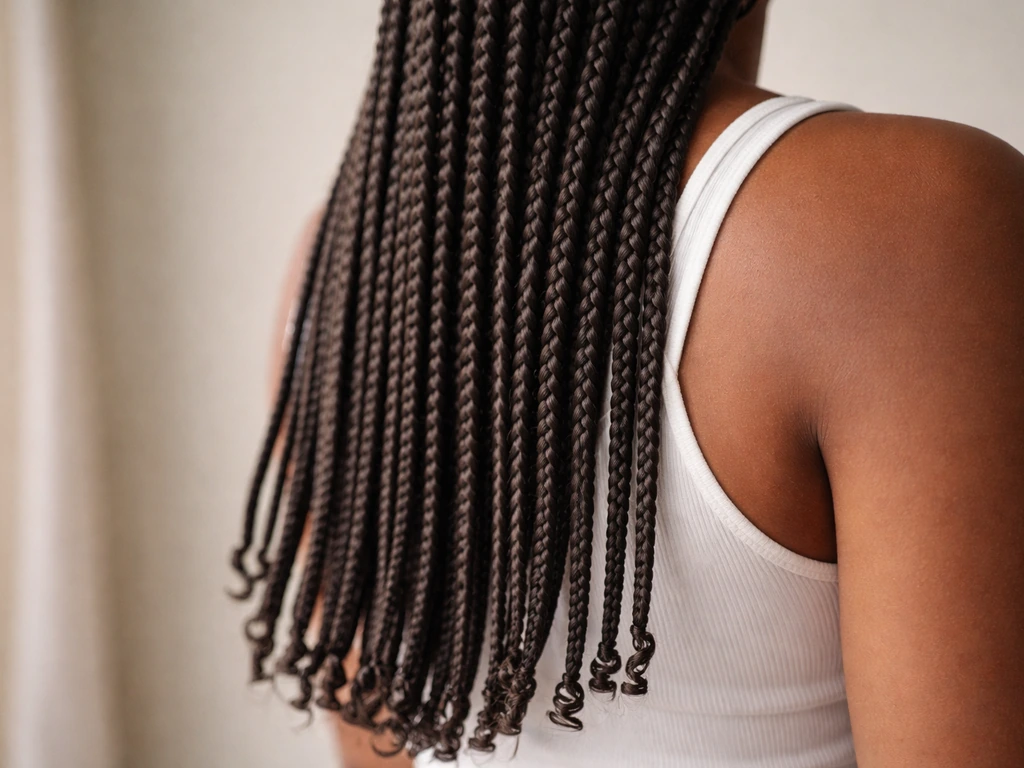
Knotless braids don't grow your hair, but they can absolutely help you keep more of the length your hair is already producing. That distinction matters more than most people realize. Your follicles grow hair at a genetically set rate, roughly half an inch per month, no matter what style you're wearing. What braids change is how much of that growth you actually get to see, because protective styles reduce the daily manipulation, friction, and breakage that quietly steal your length before you ever notice it's gone.
Do Knotless Braids Grow Your Hair? Length Tips and Truth

Simone Okonkwo
14 May 2026
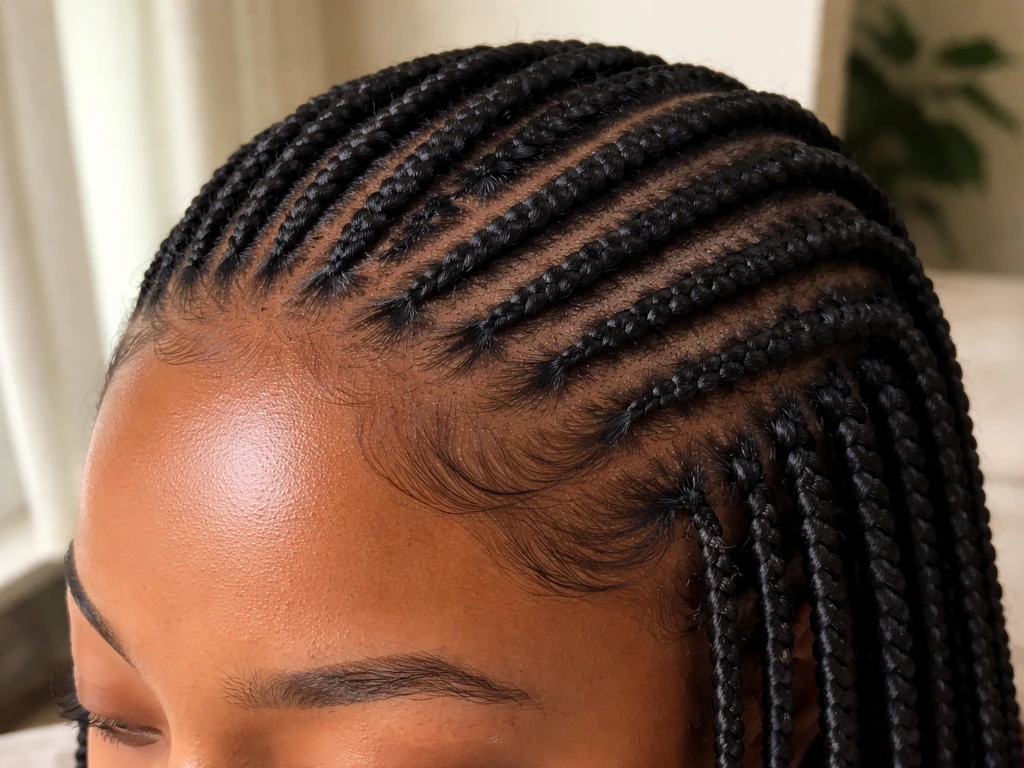
Hair retention vs. hair growth: what braids can and can't do
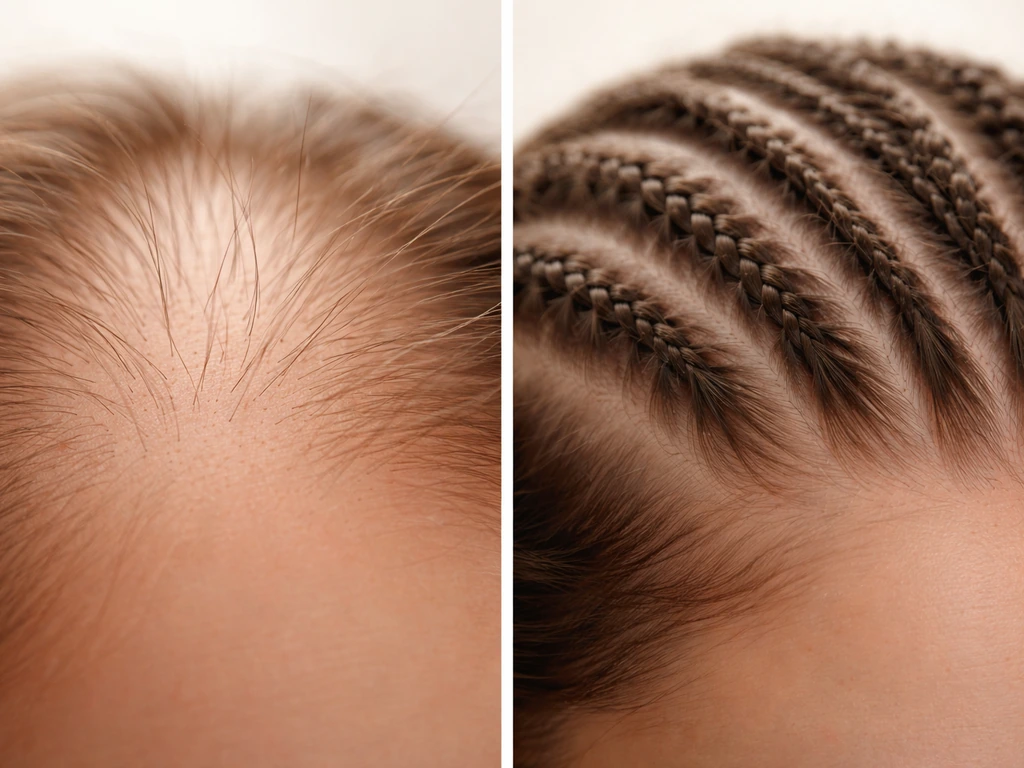
Hair growth happens at the follicle, underground. Your scalp produces new hair continuously regardless of what style you're rocking. No braid, no oil, no product changes that rate in any meaningful way. What changes above the scalp is whether that new growth survives long enough to show up as visible length. That's retention, and it's where knotless braids actually earn their reputation.
When your hair is loose or in styles that require daily combing, heat, or manipulation, it's constantly exposed to the things that cause breakage: friction against pillowcases, snagging on clothing, repeated tension from detangling. Tucking your ends away in a protective style like knotless braids takes most of that off the table. You retain more of what your follicles produce, and after eight or ten weeks you take the braids down and notice noticeably longer hair. It feels like the braids "grew" your hair. They didn't. They just stopped it from breaking off.
This same principle applies to other protective styles, whether you're comparing knotless braids to box braids, feed-in braids, or even goddess braids. The style itself isn't the growth engine. Your scalp is. The style is just the environment you create for your hair while growth happens on its own.
How knotless braids affect your scalp and strands
This is where knotless braids have a real, documented advantage over traditional box braids. With a standard box braid, the extension hair is anchored at the root with a knot, which concentrates a lot of tension and weight right at the base of the braid. Knotless braids start with your natural hair and gradually feed in extension hair as the braid progresses. There's no knot at the scalp, which means the weight is distributed more evenly along the braid rather than sitting all at the root.
That tension difference isn't trivial. Traction alopecia, which is the hair loss that shows up at your edges and temples, is driven by repeated mechanical stress on the follicle. Dermatologists at StatPearls describe it as a mechanical injury to the hair follicle and the dermal papilla, the structure your hair literally grows from. The American Academy of Dermatology puts it plainly: if a style feels painful or tight, it's too tight. Pain is the signal that tension has crossed from styling into damage territory.
Knotless braids, when installed correctly, produce less of that root-level tension. That's protective. But they're not a free pass. If the braids are too heavy (think very long or thick braids loaded with extension hair), too small in section size, or pulled tight to achieve sleekness at the hairline, you can still create exactly the same kind of traction damage. Johns Hopkins Medicine specifically identifies tight braids as a contributing factor to hair loss in Black women, alongside heat and chemicals. The style name doesn't guarantee safety. The technique does.
Warning signs your braids are causing damage
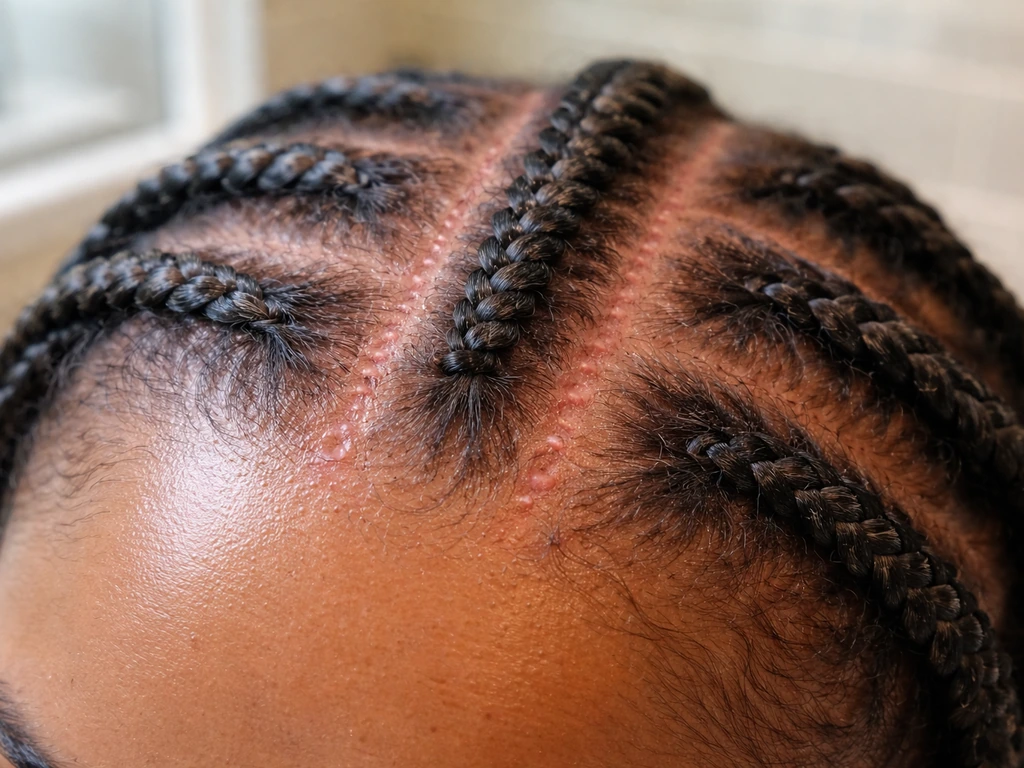
- Pain or tenderness at the scalp immediately after installation or within the first few hours
- Headaches that seem to originate from your scalp or hairline
- Bumps, pimples, or pus-filled spots along the parts or hairline (a sign of folliculitis)
- Itching or burning that doesn't ease after the first day or two
- Visible tenting or "tufting" of skin at the root when you look closely at the parts
- Thinning or breakage along the hairline or temples that wasn't there before
GoodRx notes that warning signs from tension can show up within hours of getting a style installed. If you feel any of the above, don't wait it out hoping it'll settle. Loosening or removing the style early, before follicle damage accumulates, is always the right call. The British Association of Dermatologists is clear that traction alopecia can improve if tension is caught and stopped early, but prolonged damage can become permanent.
Best practices for getting the most length retention from knotless braids
Before you sit in the chair
Deep condition your hair before installation. Well-moisturized hair is more flexible and less prone to snapping when it's being manipulated. Avoid braiding over hair that's already dry and brittle. If your hair has visible breakage or your edges are already thinning, it might be worth giving your scalp a rest from braids entirely until things stabilize.
Choose a stylist who has specific experience with knotless techniques and who will respect your feedback about tension. This is non-negotiable. A rushed installation or a stylist who dismisses your discomfort is a real risk factor. Ask to see their work on similar hair textures and ask directly how they manage tension at the hairline.
During installation
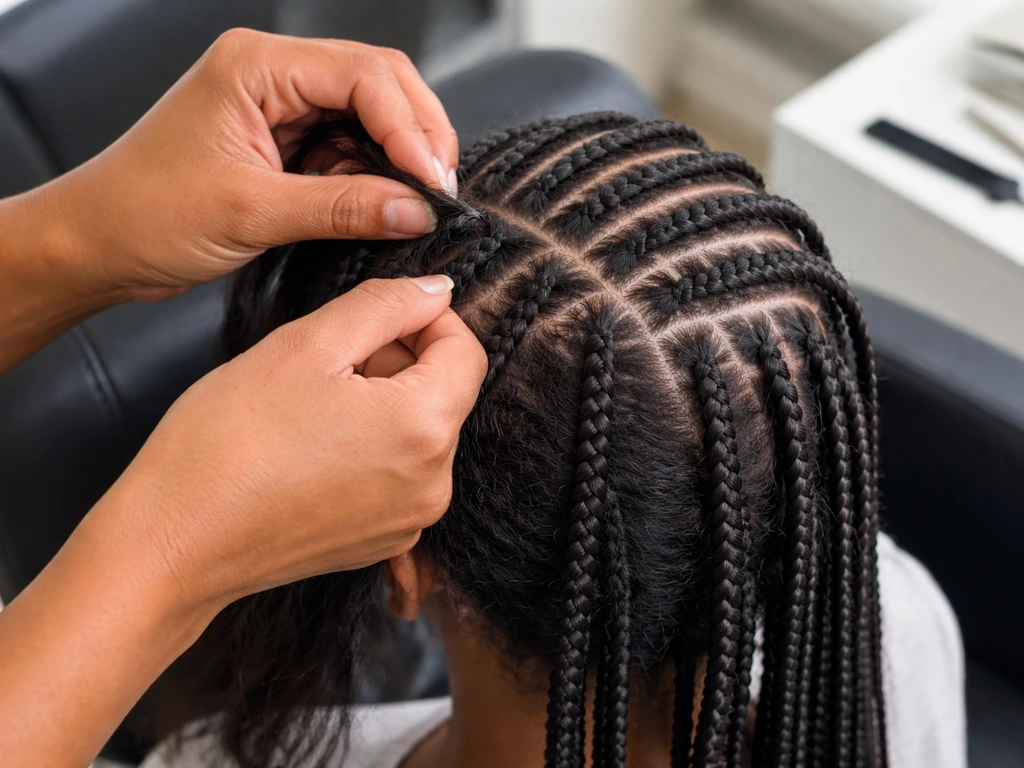
- Opt for medium-sized braids rather than very small ones. Micro-sized knotless braids multiply the number of tension points on your scalp.
- Request that edges and baby hairs are braided more loosely or left out entirely if your hairline is already fragile.
- Keep braid length and extension weight reasonable. Very long, heavy braids increase the downward pull on the root even with a knotless start.
- Speak up if anything hurts during installation. A good stylist will adjust without making you feel like you're being difficult.
While wearing the braids
Moisturizing your scalp and the length of your hair matters during the entire wear period, not just at installation. Use a lightweight oil or a water-based moisturizing spray along your parts every few days. Jojoba, argan, and sweet almond oil are good choices because they absorb without building up as quickly as heavier options. Avoid applying heavy butters or thick products directly to your scalp while braided, as buildup under braids creates an environment for irritation and folliculitis.
Protect your braids at night with a satin or silk bonnet or scarf. This reduces friction on the braids themselves, keeps the style looking fresh longer, and minimizes frizz at the parts. A satin pillowcase works as a backup, but a bonnet is more reliable.
How long to keep knotless braids in
The general sweet spot recommended by dermatologists and stylists sits between four and six weeks. L'Oréal Paris advises taking knotless braids down around the six-week mark as the safer outer limit. WebMD notes that braids are commonly worn for four to eight weeks depending on tension levels and maintenance. Healthline's protective styling guidance recommends taking protective styles down after two to four weeks and giving your scalp a break in between.
Realistically, most people get six to eight weeks out of a knotless braid set if they're maintaining their scalp and the style still looks presentable. What I'd say personally is this: six weeks is a reasonable maximum, not a goal to hit every time. If your scalp is itching constantly by week four, or your edges are showing stress, take them down. The braids aren't worth sacrificing your hairline.
Specific signs it's time to remove them now
- Persistent scalp itching or irritation that doesn't respond to cleansing
- Visible buildup or flaking at the parts that won't clear
- Braids have grown out significantly at the root, increasing the lever arm and tension pull on the follicle
- Noticeable thinning or gaps at the hairline or temples
- Pimples, tenderness, or any sign of folliculitis that isn't resolving
- The braids themselves have frizz or matting that makes detangling during removal more likely to cause breakage
Myths worth busting about braids, oils, and hair growth
The biggest myth is the one we've already covered: that the style itself is growing your hair. It isn't. Your hair grows from the follicle at a rate your genetics determined before you were born. Braids, including knotless braids, can protect what's already growing. That means you can enjoy knotless braids without expecting them to do stitch braids grow your hair. They can't accelerate the process.
The second biggest myth involves oils. Castor oil in particular has a massive following in natural hair communities, and while there's nothing wrong with using it to moisturize your scalp and soften your hair, Healthline is direct that scientific evidence does not support castor oil significantly accelerating hair growth beyond your typical rate. Same goes for most oils applied topically. They support scalp health and help with moisture sealing, both of which matter for retention, but they aren't growth accelerants. Using an oil while in braids can help keep your scalp moisturized and reduce itching, which is genuinely useful. Just don't expect it to double your growth rate.
Third myth: knotless braids are automatically safe for everyone's edges. They're safer than traditional knot-based box braids in most cases, because the tension mechanism is different. But if the installation is sloppy, the braids are too heavy, or you're wearing them back-to-back without breaks, you can still develop traction alopecia. The style is less risky by design, but not risk-free by default. Styles like micro braids carry similar caveats regardless of whether they're knotless, because the sheer number of attachment points multiplies the tension exposure. Do micro braids grow your hair? They can help you retain the length you already have by reducing breakage, but they do not speed up hair growth at the follicle.
Aftercare: what to do when you take them down
Washing while still in braids
Allure recommends cleansing your scalp at least once a week during a braid install to prevent product buildup and allow the scalp to breathe. WebMD suggests using a diluted, sulfate-free shampoo every one to two weeks while braided. The method that works best: apply diluted shampoo directly to your scalp along the parts, massage gently with your fingertips (not your nails), and let the water rinse it through the braids. Follow with a lightweight leave-in conditioner or spray applied to your scalp and the length of the braids. Let them air dry fully before putting them in a bonnet. Braids that stay damp are a setup for mildew and scalp irritation.
Removing the braids
Take your time. Rushing braid removal is one of the most common causes of breakage at the end of a protective style period, which defeats the whole purpose. Work in sections, snip the extension hair lower on the braid before attempting to unravel, and use a detangling spray or conditioner on each section as you go. Don't pull. If you feel resistance, add more conditioner and work through it gently.
Wash day after removal
- Pre-poo with a penetrating oil like coconut or olive oil applied to dry hair before shampooing. This reduces the protein loss that happens during washing.
- Clarify with a gentle clarifying or sulfate-free shampoo to remove the weeks of buildup from your scalp.
- Deep condition with a moisture-rich treatment and apply heat if possible. Your hair will be thirsty after weeks under braids.
- Detangle in sections while the conditioner is still in, working from ends to roots with a wide-tooth comb or your fingers.
- Seal your moisture with a lightweight oil or butter after applying a leave-in conditioner.
- Give your hair and scalp a genuine break before your next install, ideally two to four weeks, to let your follicles and edges recover.
Caring for your edges after removal
Pay specific attention to your hairline and temples after taking down any braid style. If they look thinner than before, massage the area gently daily to stimulate circulation. Keep the area moisturized and avoid pulling styles on those sections for at least a few weeks. If thinning is significant or doesn't improve after several weeks, it's worth seeing a board-certified dermatologist who specializes in hair. The British Association of Dermatologists notes that traction alopecia caught early can improve once tension is removed, but early intervention matters.
So, are knotless braids right for your length goals?
If you want to retain more length and your natural hair growth isn't showing up because breakage keeps cutting it short, yes, knotless braids are one of the better tools available to you. They reduce manipulation, protect your ends, and carry less tension risk than traditional knot-based styles when installed properly. That's a real benefit, especially for coily and kinky hair textures that are particularly prone to dryness and breakage.
The honest framework here is this: braids are a retention strategy, not a growth accelerator. Braids can help you retain the length your hair is already growing, but they do not change how fast your follicles produce new hair braids are a retention strategy. If you wear them correctly (low tension, good scalp care, appropriate wear time, proper removal), you'll likely see more length over time because you're protecting what your body is already producing. If you wear them incorrectly (too tight, too long, back-to-back without breaks), you can end up worse off than if you'd never braided at all, because follicle damage from traction alopecia can become permanent.
| Factor | Knotless Braids | Traditional Box Braids |
|---|---|---|
| Tension at root | Lower (no knot anchor) | Higher (knot at base) |
| Weight distribution | Distributed along braid | Concentrated at root |
| Traction alopecia risk | Lower when installed correctly | Higher, especially at hairline |
| Length retention potential | High with proper care | High with proper care |
| Scalp access for washing | Similar to box braids | Similar to knotless |
| Installation time | Usually longer | Usually faster |
| Cost | Often higher | Often lower |
Your next steps are straightforward. Find a skilled stylist who understands knotless technique and tension management. Go in with moisturized, healthy hair. Keep them in for four to six weeks maximum, wash your scalp weekly, and moisturize your parts regularly. Take them down carefully, do a solid wash-day routine after removal, and give your scalp a genuine break before you reinstall. Do that consistently, and you will see more length over time. Not because the braids grew your hair, but because you stopped getting in the way of the growth that was always happening.
FAQ
If my hair is already growing, will knotless braids make it look longer sooner?
They can, but only indirectly. If you already have short hair because ends keep snapping, knotless braids reduce daily friction and detangling stress, so you keep more of the length you grow. If your goal is faster growth at the roots, no braid type will change that rate.
How long do knotless braids need to be in for me to notice actual length retention?
Yes, but think retention, not acceleration. Visible “length” usually appears after a few weeks because growth has time to travel from the scalp to where breakage no longer happens. A useful check is your end feel after removal, if your ends are smoother and less dry, you retained more.
Can I wash my scalp while keeping knotless braids in, and how often?
Frequent wash is usually safer than skipping. You can shampoo your scalp while braided if you dilute a sulfate-free cleanser and massage along the parts with your fingertips, rinse well, then dry completely before covering with a bonnet. Letting braids stay damp is a common reason for ongoing itching and irritation.
What itching or discomfort is normal during knotless braids, and when should I remove them?
If itching is mild and occasional, it may be from dryness or product, but constant itching, burning, or tenderness are tension warning signs. Don’t wait it out, loosen or remove early, especially if your hairline or temples start to look thinner.
How can I tell if my knotless braids are too heavy for my hairline?
Heavier isn’t only about length, it’s also about how much extension hair is added per braid and how large the sections are. If the style feels “weighted” at the hairline, ask the stylist to reduce thickness or use smaller installs with better distribution so tension isn’t concentrated at the roots.
Is it okay to get knotless braids back-to-back if they’re done knotless?
Try to avoid repeated tight reinstall cycles. A practical rule is to give your scalp a break before the next install if your edges look stressed or if you have persistent shedding that lasts more than a couple of weeks after removal. This helps you recover retention before you protect again.
What’s the best way to moisturize my scalp during knotless braids without causing buildup?
You can moisturize your scalp and parts, but avoid heavy, waxy products that build up under the braids. Stick to lightweight sprays or diluted liquids on the scalp, and if you feel buildup or flaking, increase scalp cleansing rather than adding more product.
How do I protect knotless braids at night if they keep getting frizzy or slipping?
For most people, your bonnet or scarf should fully cover the braids and keep them from rubbing against fabric overnight. If frizz and part fuzz are severe, your issue is often fit and coverage, not the braids themselves. Replace worn elastics and adjust so the braids don’t shift.
Why does my hair shed more right after taking knotless braids down?
Yes. Removal done too fast, or detangling without product, can cause unnecessary shedding that looks like “braid damage.” Plan to loosen by sections, apply conditioner or detangling spray as you go, and stop if you feel hard resistance.
What should I do if my hairline looks thinner after removing knotless braids?
If your edges look thinner, focus on gentle recovery for several weeks, keep your hairline moisturized, and avoid pulling styles that tug the same areas. If thinning is progressing or doesn’t improve after a short break, a board-certified dermatologist can help you rule out traction alopecia or other causes.
Next Article
Does Box Braids Grow Your Hair Faster? What to Expect
Box braids do not speed follicle growth, but they can increase length by protecting hair, reducing breakage, and aiding