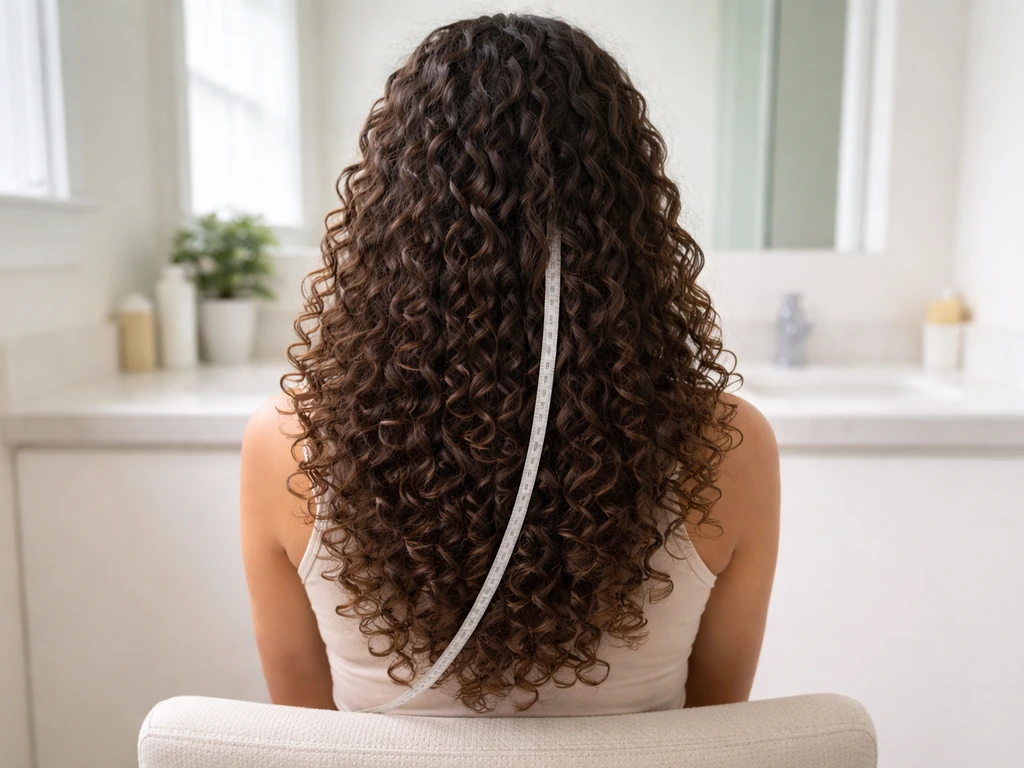
Your coily hair is already growing about half an inch per month, the same rate as every other hair type. The real problem is not growth, it is retention. Coily hair loses length to breakage, shrinkage, friction, and dryness faster than almost any other texture, so the gap between what grows out of your scalp and what you actually see gets wide quickly. Fix the retention side of that equation and you will see noticeably more length without doing anything exotic. If you are trying to grow curly hair to waist length, focus on retention first so the growth you get does not keep breaking off.
How to Grow Coily Hair: A Routine for Length and Growth

Simone Okonkwo
10 Jun 2026
What 'fast growth' really means for coily hair
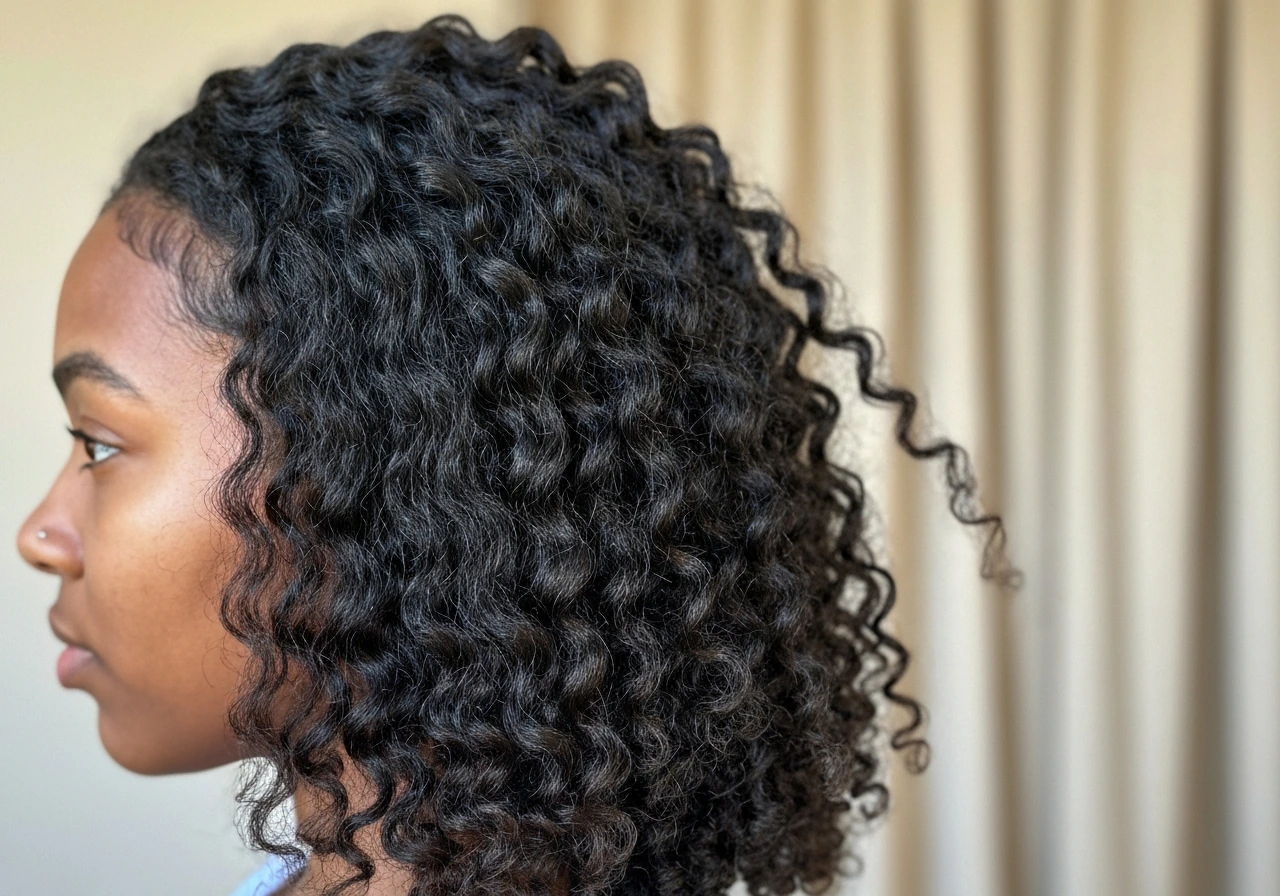
Hair grows from follicles in your scalp at roughly 0.35 mm per day, which works out to about half an inch per month or six inches a year. StatPearls (NCBI Bookshelf) commonly cites scalp hair growth at about blank" rel="noopener noreferrer">0.35 mm per day, which adds up to roughly 0.5 inch per month (about 6 inches per year). That number is pretty consistent across hair types. What is not consistent is how much of that growth survives long enough to add visible length. Coily hair, especially type 4 textures, is naturally drier, more fragile at the curl bends, and shrinks dramatically when it dries, sometimes by 50 to 75 percent of its actual length. So when someone tells you their coily hair 'just does not grow,' what is almost always happening is that it grows and then breaks off at roughly the same rate. If you are dealing with damaged curly hair, focus on retention first so what grows stays attached Coily hair, especially type 4 textures.
This matters because it completely changes your strategy. Chasing 'faster growth' through scalp serums and supplements will only get you so far. The bigger lever is stopping the breakage. When you protect what is already there, even the standard half inch per month starts to add up visibly. A realistic expectation: with a solid retention-focused routine, many people with coily hair go from seeing almost no length change year over year to gaining two to four visible inches in six to twelve months, not because growth sped up, but because they stopped losing what grew.
Hair-growth basics: scalp health, hair cycle, genetics, and shrinkage
Every strand goes through a growth cycle with three phases. Anagen is the active growth phase, lasting roughly three to four years on the scalp (some sources cite up to 1,000 days). Catagen is a short regression phase lasting a few weeks. Telogen is the resting phase, about three months, during which the hair eventually sheds. In the telogen phase, a hair follicle is resting and hair shaft growth does not occur until it re-enters anagen StatPearls. At any given time about 85 to 90 percent of your scalp follicles are in anagen, which is why losing up to 100 hairs a day is normal, not alarming. Your follicles are cycling constantly.
Genetics sets the ceiling for how long your anagen phase runs, which determines your maximum possible length. You cannot extend anagen indefinitely through products. What you can do is make sure nothing shortens it, things like chronic scalp inflammation, nutrient deficiencies, and severe tension on follicles can push hairs into telogen early. Scalp health is not a bonus step; it is foundational. An unhealthy scalp environment, whether from buildup, dryness, inflammation, or infection, literally interferes with follicle function.
Shrinkage deserves its own mention here because it messes with your head more than almost any other coily hair reality. Your hair can be genuinely several inches longer than it looks when dry. That is not a problem to fix, it is just how coily curl patterns behave as they contract. Tracking length on stretched hair rather than shrunken hair gives you a much more accurate picture of real progress.
Moisture routine for coil definition and breakage prevention
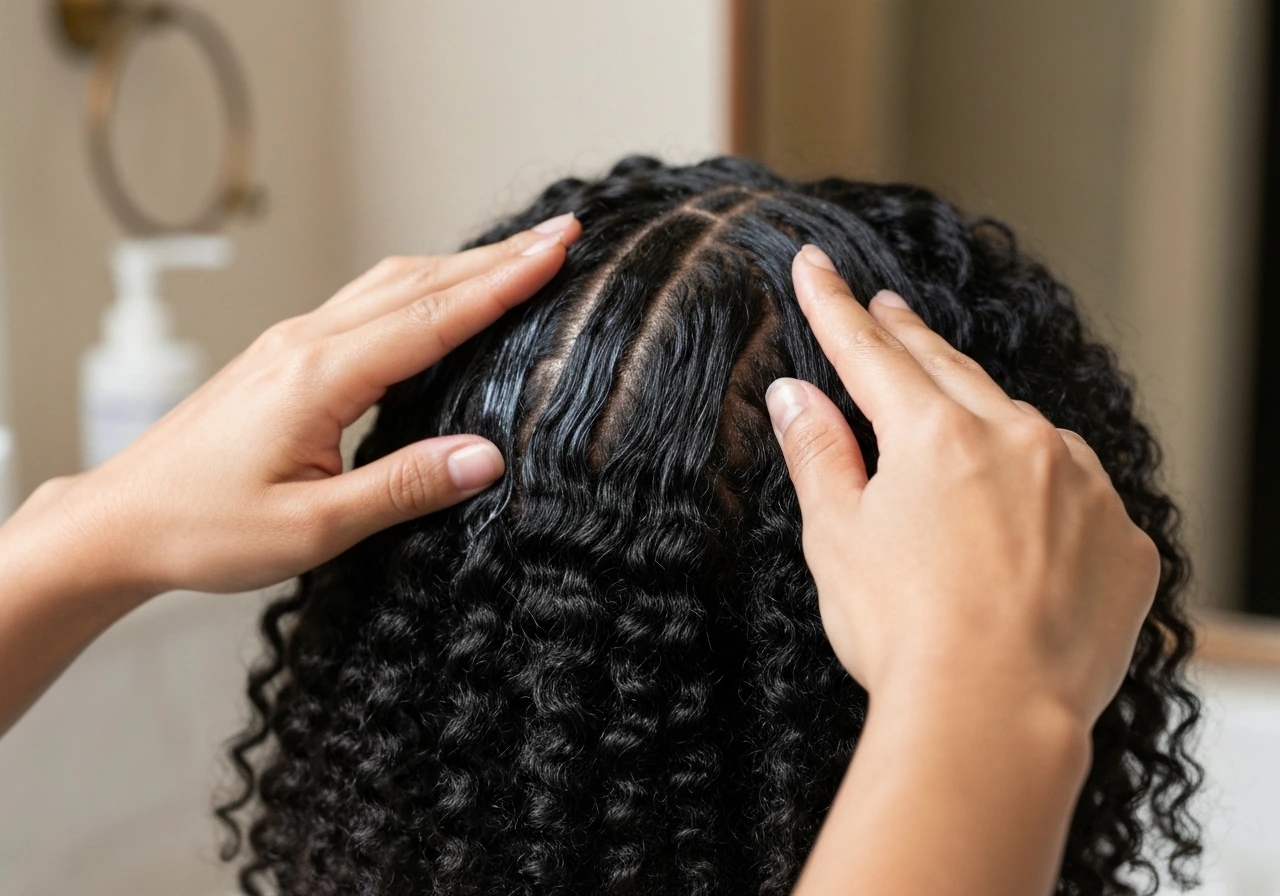
Coily hair is structurally more prone to dryness than straighter textures because the natural oils from your scalp have a harder time traveling down the curved shaft. That dryness is the root cause of most breakage, so your moisture routine is your single most important daily or near-daily habit.
The LOC or LCO method works well for most coily textures. LOC stands for Liquid, Oil, Cream, applied in that order. You start with a water-based leave-in conditioner as the actual moisture source, add an oil to help seal that moisture in, and finish with a cream to lock everything down and add definition. LCO (Liquid, Cream, Oil) works better for finer coils that get weighed down easily. Neither is universally correct; you have to experiment to see which layering order your hair responds to.
How often you need to moisturize depends on your climate, your porosity, and how protective your styling is. Low-porosity hair resists moisture uptake but holds it well once it gets in. High-porosity hair absorbs moisture easily but loses it fast. If your hair feels dry and brittle within a day or two of washing, you likely need to moisturize more frequently and focus on better sealing. Deep conditioning once a week with a product that contains humectants like glycerin or honey alongside emollients like shea butter makes a significant difference in softness and elasticity.
Washing, detangling, and protective handling
How you handle coily hair mechanically matters as much as what products you use. Coil bends are stress points where the hair shaft is thinner and more likely to snap. Every time you manipulate dry, tangled hair, you create micro-damage that accumulates into breakage.
Wash frequency for coily hair is personal, but many people find that once a week or every ten to fourteen days with a sulfate-free or low-poo shampoo works well. Sulfates strip natural oils aggressively, and coily hair cannot afford that. Wash in sections (four to eight twists or braids, depending on density) to prevent tangling during the process. Apply conditioner generously and use it to finger-detangle before reaching for any tool.
When you do detangle, always start from the ends and work upward toward the roots. Never drag a comb or brush from root to tip through coily hair, that technique is a direct cause of breakage. A wide-tooth comb or a detangling brush with flexible bristles on wet, well-conditioned hair is far less damaging than any tool on dry hair. Be patient and methodical rather than fast and rough.
- Wash in sections to minimize tangling and make the process more manageable
- Use a sulfate-free or gentle low-poo shampoo to preserve natural oils
- Apply conditioner generously before any detangling attempt
- Always detangle from ends to roots, never root to tip
- Stick to wide-tooth combs or flexible detangling brushes on wet hair
- Skip detangling entirely on days when hair is dry; refresh with water and conditioner first
- Pat or squeeze dry with a microfiber towel or cotton T-shirt instead of rubbing
Protective styles: what actually helps growth vs what hurts
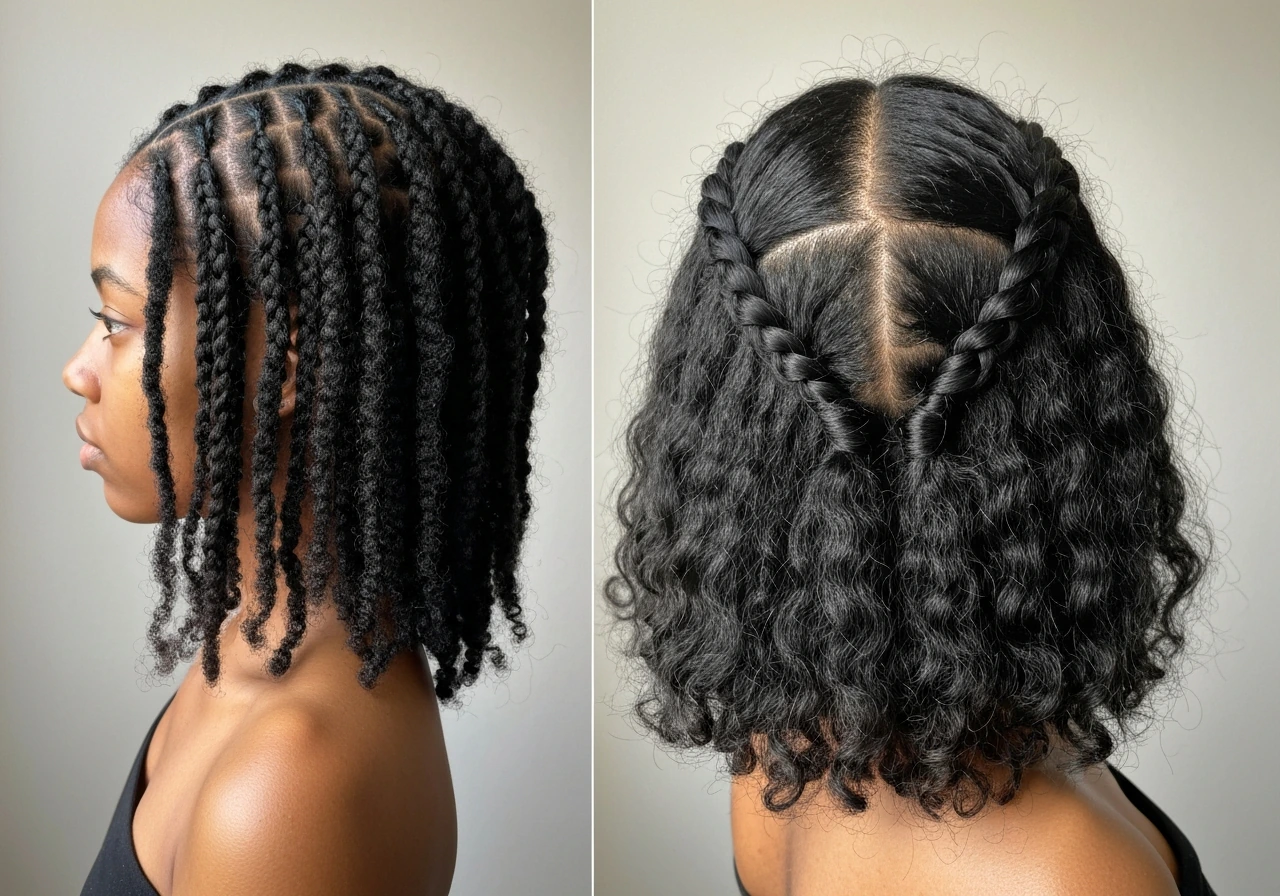
Braids, twists, locs, and weaves get a lot of credit for 'making hair grow.' To be precise: they help you retain length by keeping ends tucked away, reducing manipulation, and limiting friction. The follicle underneath is still doing the same work. But retention is exactly what coily hair needs most, so protective styles are genuinely useful when done correctly.
The critical qualifier is tension. Styles that pull tightly at the hairline or part lines, especially box braids, cornrows, or sew-in weaves installed too tight, create traction. Repeated traction causes traction alopecia, which is progressive and can become permanent if it goes on long enough. You should never feel pain after a protective style is installed. If your scalp aches or you see bumps along the hairline, that style is too tight and needs to be loosened or redone.
Duration matters too. Braids and twists left in for eight to twelve weeks are generally the sweet spot. Longer than that and the shed hairs that could not fall naturally start to mat inside the style and cause tangling and breakage at takedown. Weaves and sew-ins should be removed and the natural hair moisturized and assessed every six to eight weeks. Locs are a longer-term commitment with their own maintenance rhythm, but even loc'd hair benefits from regular scalp care and moisture.
What happens between protective styles matters as much as the style itself. Moisturize your scalp and leave-in your edges regularly even while in a protective style. Take the style down gently rather than rushing, use a detangling spray, work in sections, and never rip out shed hair that has wrapped around the style. That takedown phase is when a lot of preventable breakage happens.
| Style | Retention benefit | Main risk | Recommended duration |
|---|---|---|---|
| Box braids | High: ends tucked, low manipulation | Tension at roots and hairline if too tight | 6 to 8 weeks |
| Two-strand twists | Moderate to high: gentle installation possible | Tangling and matting if left too long | 4 to 6 weeks |
| Cornrows | High with extensions, moderate without | Scalp tension, traction alopecia risk | 4 to 6 weeks |
| Sew-in weaves | High: natural hair fully protected | Tension on leave-out, scalp neglect underneath | 6 to 8 weeks |
| Locs | Very high long-term retention | Moisture neglect, product buildup inside locs | Ongoing with regular maintenance |
| Wigs (on braided base) | High: least manipulation of all | Wig cap friction on edges if worn daily | Flexible, swap regularly |
Products and ingredients worth your money
The natural hair product market is enormous and full of overpriced options that promise growth but deliver very little. Here is what the evidence and practical experience actually supports for coily hair.
For moisture and conditioning, look for products with humectants (glycerin, aloe vera, panthenol, honey) that draw water into the hair shaft, and emollients (shea butter, mango butter, avocado oil, castor oil) that soften and coat the strand. For sealing, heavier oils like Jamaican black castor oil, avocado oil, and olive oil work well for thicker, drier coils. Lighter oils like jojoba or argan oil are better for finer textures that go limp easily.
Protein treatments are useful but need to be balanced with moisture. Coily hair with high porosity often benefits from occasional protein treatments (hydrolyzed keratin, silk amino acids, or rice water rinses) because they temporarily fill in gaps along the hair shaft and improve strength. Do not overdo protein; hair that gets too much becomes brittle and snaps. If your hair feels stiff and rough after a treatment, follow immediately with a deep moisture conditioner.
Scalp health products are an underused category. A clean scalp with good circulation is genuinely supportive of healthy follicle function. Peppermint oil diluted in a carrier oil has some evidence behind it for circulation. Tea tree oil helps with flaking and itching from seborrheic dermatitis. Avoid letting heavy styling products build up on your scalp; that buildup can clog follicles and cause inflammation. A clarifying shampoo once a month removes buildup that regular washing misses.
- Humectants (glycerin, aloe, panthenol): core moisture ingredients in leave-ins and conditioners
- Shea butter and mango butter: excellent emollients for thick, dry coils
- Jamaican black castor oil: popular sealing and scalp oil with strong anecdotal support
- Hydrolyzed keratin or silk amino acids: protein sources for high-porosity hair
- Peppermint oil (diluted): scalp stimulation with some research support
- Tea tree oil (diluted): anti-fungal and anti-inflammatory for flaky or itchy scalps
- Clarifying shampoo (monthly): removes buildup that sulfate-free shampoos leave behind
Heat, chemicals, and tailoring your approach for natural vs relaxed hair
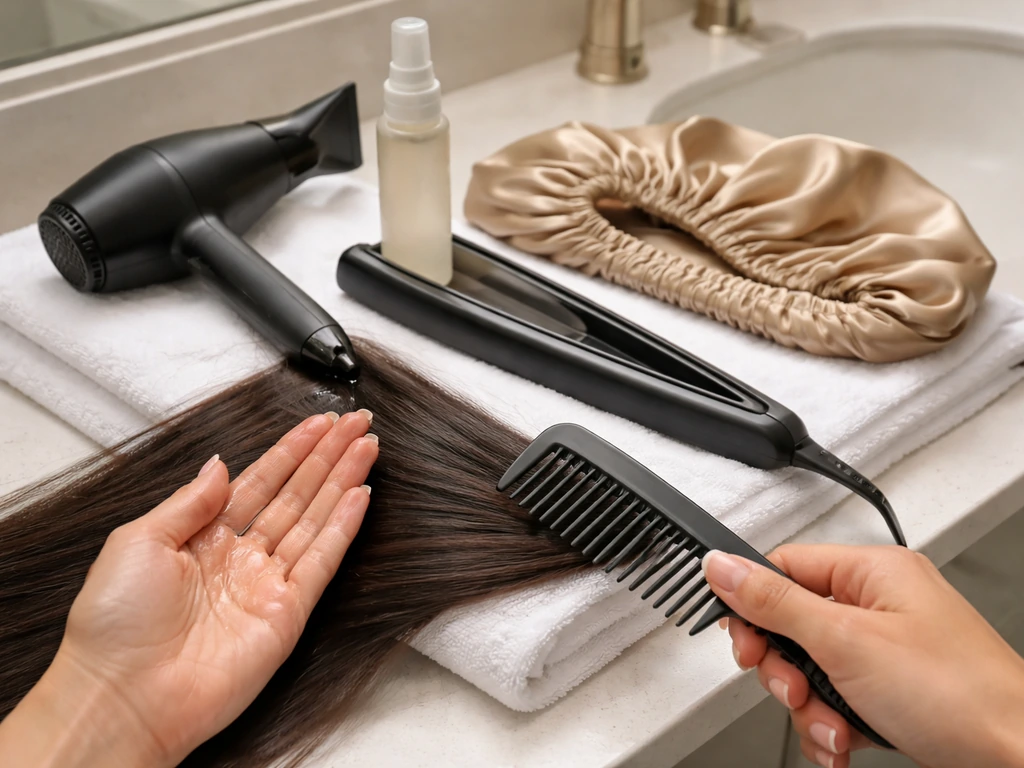
Heat and chemical processing do not automatically destroy growth, but they do raise the breakage risk significantly if used carelessly, and coily hair has less margin for error than straighter textures.
If you use heat, always apply a heat protectant before and use the lowest effective temperature. For coily hair, direct heat above 400 degrees Fahrenheit causes irreversible structural damage to the curl pattern, a condition called heat damage, where the curl simply does not reform. If you are heat styling occasionally to check length or change things up, keep it under 380 degrees, stretch hair gently first rather than forcing a hot tool through wet coils, and do not repeat within the same week.
Relaxers chemically break and restructure the hair bonds to reduce curl. Relaxed coily hair can absolutely grow long and retain length well, but the chemical process itself weakens the hair temporarily, and the line where new growth meets relaxed hair (the line of demarcation) is a common breakage point. If you are relaxed, stretching your relaxer application to every ten to twelve weeks rather than every six to eight reduces the number of demarcation lines and stress points. Deep conditioning after every relaxer is not optional.
For natural coily hair, the absence of chemical processing means the strand structure is intact, but natural hair is not invincible. High-manipulation styles, tight braiding, and chronic dryness cause just as much breakage on natural hair. Natural hair also needs regular trims, roughly every eight to twelve weeks, to remove split ends that travel up the shaft and cause further damage. Avoiding trims to preserve length almost always backfires.
Transitioning from relaxed to natural is its own challenge because you are managing two very different textures at once. The demarcation line is extremely fragile. Protective styling, lots of moisture, and minimal heat are essential during this period. Many people find it easier to do a big chop (cutting off the relaxed ends entirely) rather than managing the transition for a year or more, but that is a personal choice, not a requirement.
Tracking your progress and troubleshooting setbacks
Coily hair progress is notoriously hard to eyeball because of shrinkage. If you want a clear, step-by-step routine for how to grow curly hair longer, start by focusing on retention so your coily hair progress reflects real length, not just shrinkage. Set yourself up to actually see results by tracking stretched length, not shrunken length. Once a month, gently stretch a section of hair (or measure after a blowout) and mark the length against a consistent reference point. Take photos in the same spot with the same lighting. Three months of data will tell you far more than daily guessing.
Give any new routine change at least 60 to 90 days before judging it. Hair growth cycles are measured in months, not weeks. If you overhaul your whole routine at once, you will not know what actually helped. Change one variable at a time: try a new deep conditioner for six weeks, assess, then add or change something else.
Common blockers and what to do about them:
- Chronic dryness: increase deep conditioning frequency, check your sealing method, and try a pre-poo oil treatment before shampooing
- Breakage despite moisturizing: consider whether you have protein/moisture imbalance; add a light protein treatment and see if hair feels stronger
- Scalp flaking or itching: use a tea tree or salicylic acid scalp treatment; persistent symptoms may be seborrheic dermatitis and warrant a dermatologist visit
- No visible length gain after three to four months: audit your protective style tension, your detangling habits, and your trim schedule
- Thinning edges or bald patches: stop any styles that pull at the hairline immediately; if edges do not recover within two to three months of tension-free styling, see a dermatologist to rule out traction alopecia or other causes
- Excessive shedding (well over 100 strands daily for more than two months): this can signal a telogen effluvium episode from stress, illness, or nutritional deficiency; get bloodwork checked before spending money on products
If you want a place to start today: pick one thing. The highest-impact first move for most people with coily hair is committing to a weekly deep conditioning session and switching to a sulfate-free shampoo. If you want the best products to grow curly hair, start with a deep conditioner that supports moisture and reduces breakage deep conditioning. Do that consistently for 90 days while keeping your other habits steady, measure your length at the start and at the end, and you will have real data on whether your retention has improved. From there, add protective styling, tighten up your detangling technique, and layer in scalp care. None of this is complicated, but it does require consistency over time, and that patience is really what separates people who see growth from people who stay stuck.
The journey for coily hair is genuinely different from what you might read in guides written for looser curl patterns. Readers exploring growth for curlier textures more broadly will find that many of the principles here overlap with guidance for 3b and wavy hair, but the intensity of moisture need, the fragility at curl bends, and the shrinkage factor make coily hair its own category that deserves its own dedicated approach.
FAQ
If my coily hair “is growing” but I do not see length, how can I tell whether it is breakage or just shrinkage?
Compare two measurements the same day: stretched length (after a gentle blowout or by stretching a section with your fingers) and dry length. If stretched length stays flat while dry length changes, you are likely losing length to breakage. If stretched length increases but dry length looks the same, shrinkage is masking progress.
How often should I deep condition to grow coily hair faster, and what if I do it but my hair still feels dry?
A weekly deep conditioner is a strong baseline, but the “right” frequency depends on porosity and how protective your styling is. If hair feels dry or rough within 24 to 48 hours, try increasing sealing after conditioning (more cream or oil on top) and check for overly light layering that does not trap moisture.
Should I do protein treatments for coily hair even if I want maximum growth?
Yes, but use them strategically. If your hair feels stretchy like taffy, protein can help temporarily strengthen. If it feels stiff, wiry, or harsh after protein, scale back and follow immediately with a deep moisture conditioner. Most people need protein only occasionally, not every week.
What is the safest way to detangle so I do not cause breakage while trying to retain length?
Detangle only when hair is fully saturated with conditioner or slip-rich product, and always start from the ends. Work in small sections, pause to finger-detangle before using a comb, and stop if you feel snagging instead of forcing it through knots.
Can I grow coily hair without protective styles, and will my shedding rate affect growth?
You can grow without protective styles, but you must be extra consistent with moisture, gentle detangling, and friction control (like using a bonnet and reducing rough towel drying). Normal shedding (often around 85 to 90 percent of hairs not in active growth) is not the problem, breakage is. Track stretched length rather than how much hair you see in the shower.
How long should protective styles stay in, and what is the risk if I keep them longer?
Braids and twists commonly work best around eight to twelve weeks. Going longer increases the chance shed hair mats inside the style, leading to tangling and breakage during removal. For weaves or sew-ins, plan for assessment and takedown roughly every six to eight weeks.
How do I know if a protective style is too tight for my scalp?
Pain after installation is the clearest red flag. Also watch for tenderness that worsens over 24 to 48 hours, bumps along the hairline, or increased shedding at the edges. If you notice these, loosen or redo the style promptly to reduce traction risk.
Does washing less often help coily hair grow, or can too much buildup hurt follicles?
Going longer between washes can help some coils retain moisture, but buildup can still inflame the scalp and interfere with follicle function. Aim for a schedule you can sustain, and consider a clarifying wash about once per month if you use heavy products or notice flaking, itch, or persistent residue.
What should I do if my hair mats or tangles quickly after I moisturize?
Mats often mean moisture is not being sealed or your styling is not protective enough. Try switching your layering order (LOC to LCO for finer coils), increase the amount of cream for slip and hold, and detangle in smaller sections. Also check for product buildup by simplifying for a wash cycle.
Is it okay to trim my coily hair while trying to grow it longer?
Yes, trims support growth goals by removing split ends that travel upward and create ongoing breakage. Many people need trims about every eight to twelve weeks. Focus on removing splits, not cutting drastically, and keep your retention routine consistent after trimming.
How long should I wait before changing my routine if I want to grow coily hair?
Give one change at least 60 to 90 days before judging it, because growth and breakage respond over months. Change one variable at a time (for example, a new deep conditioner or a new shampoo), measure at the start and end, and keep the rest of your routine stable so you know what actually helped.
What is the best way to track progress when coily hair shrinks so much?
Track stretched length once a month using the same method each time, and take photos at the same spot with consistent lighting. Mark against a stable reference point (like from root to a fixed point on your hair) so your measurements are comparable from month to month.
If I use heat occasionally, what is the biggest mistake that ruins coily hair growth goals?
Repeated high heat or heat applied to wet or under-stretched hair is a common mistake. Use a heat protectant, keep temperature as low as possible, gently stretch first, and avoid repeating the same area within the same week to reduce irreversible curl pattern damage.
For transitioning from relaxed to natural, do I have to do a big chop to see growth?
No. A big chop is one option, but not a requirement. If you keep both textures longer, the demarcation line is fragile, so prioritize consistent moisture, low manipulation, and minimal heat. Protective styles can help, but traction still matters, especially near the edges.
Next Article
How to Grow Curly Hair Longer Faster: Evidence-Based Guide
Evidence-based steps to grow curly hair longer faster by reducing breakage, balancing moisture and protein, and smart pr