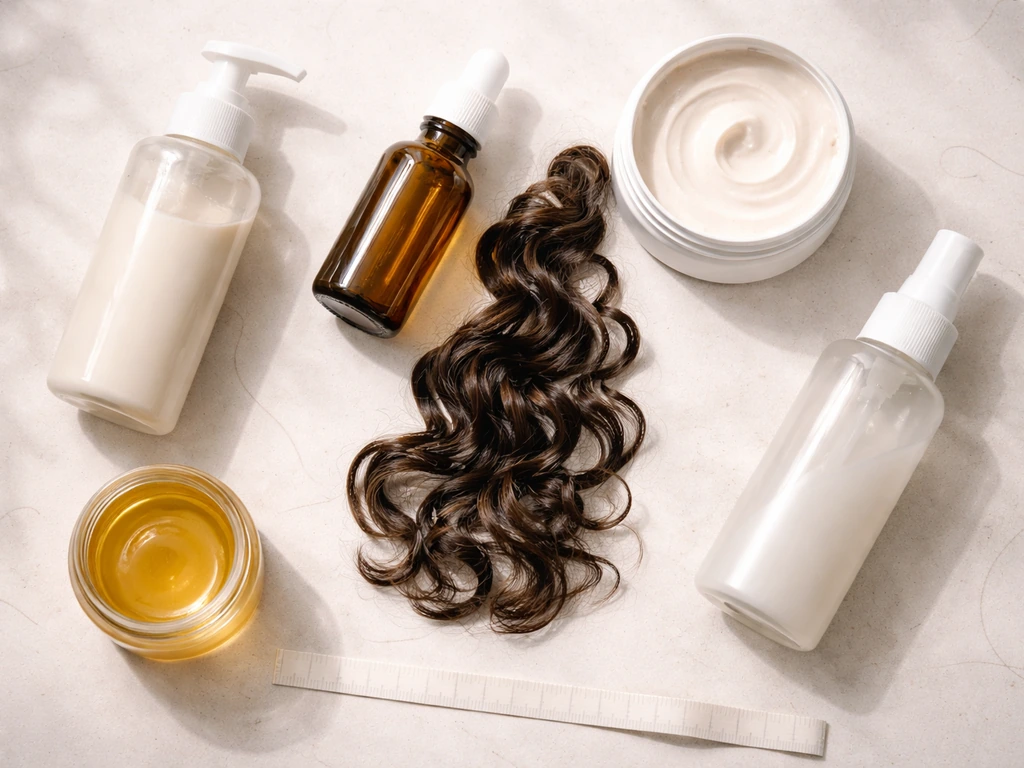
Growing damaged curly or textured hair longer is mostly a retention problem, not a growth problem. Your scalp is almost certainly producing new hair every month. The issue is that damaged, fragile strands are breaking off faster than that new growth can accumulate. Fix the breakage first, and the length will follow. This guide walks you through exactly how to do that, whether your hair is 3B, 4C, relaxed, natural, chemically treated, or heat-damaged. For a focused routine on how to grow 3B curly hair, see the step-by-step retention and repair plan in this guide.
How to Grow Damaged Curly Hair: Evidence-Based Repair Guide

Simone Okonkwo
30 Jul 2026
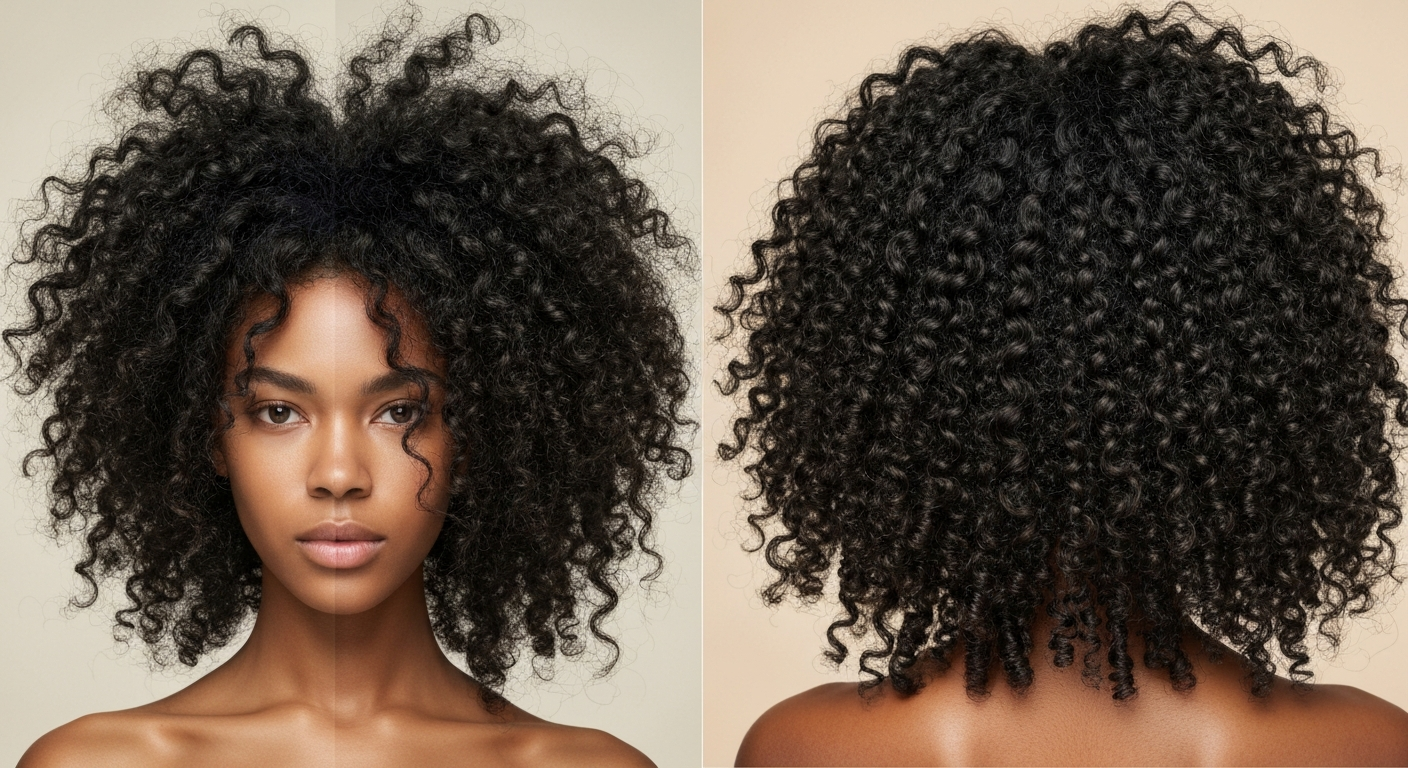
Who this guide is for
This is written for anyone with curly, coily, or textured hair in the 3B-to-4C range, including relaxed and transitioning hair, who is dealing with active breakage, stalled length, or visible shaft damage. The science here applies equally to natural and chemically processed hair, though some sections call out specific differences. If you have been stuck at the same length for months, or you are seeing more hair on your fingers during wash day than you think you should, this guide is for you. Work through it in order. The diagnostic sections come first because throwing products at hair without knowing what is actually wrong tends to make things worse, not better.
What damaged curly and textured hair actually looks like
Damage in curly and coily hair has some visual signatures that are easy to miss if you do not know what you are looking at. The first thing most people notice is uneven length across sections, where some parts of the head seem significantly shorter than others. That is almost always breakage, not growth variation. Other signs include split ends that extend up the shaft rather than just at the tip, sections that feel rough or porous (like velcro catching on itself), and curl definition that has gone flat or misshapen in specific areas.
Frizz is a more nuanced signal. All curly hair has some frizz, but when the cuticle layer is lifted or partially lost due to weathering, heat, or chemical processing, you get a different quality of frizz: it is wiry, does not respond to hydration the way it used to, and sits above the curl pattern rather than integrating with it. Sections that feel spongy or matted when wet, or that absorb water almost immediately but then dry out very fast, are showing signs of high porosity caused by cuticle damage.
- Split ends that travel up the shaft, not just at the tip
- Sections that feel rough or "grabby" when you run a strand between your fingers
- Curl definition loss in specific areas, often ends first
- Uneven length across sections that were last trimmed at the same time
- Hair that absorbs water instantly but dries out quickly (high porosity pattern)
- Wiry, unresponsive frizz that does not lay down with product
- Visible thinning along the length of individual strands
- Single-strand knots forming constantly along the shaft
Afro-textured and coily hair has a distinct elliptical shaft geometry, meaning the cross-section of the strand is not round but oval or ribbon-like. This shape creates natural stress points along the curl, which is why 4A-4C hair is structurally more prone to shaft fracture than straighter hair types. That is not a flaw in the hair. It is just biology that requires specific handling. Research published in PMC on Afro-textured hair care confirms that the combination of this shaft geometry, higher cuticle complexity, and common grooming stresses makes breakage the primary driver of length loss in textured hair.
Breakage versus slow growth: how to tell which one you are dealing with
This distinction matters enormously because the fix is completely different. Breakage is a shaft problem. Slow growth (or no apparent growth) is a follicle problem. Most people with textured hair who feel like their hair is "not growing" are actually experiencing breakage faster than retention, not a failing follicle.
Signs you are dealing with breakage
- Short, broken-off pieces on your collar, pillow, or in the sink during washing, with no bulb (root) attached
- Hair length staying the same or shrinking despite months of growth
- Ends that are visibly thinner than the roots
- Different lengths across the same section, giving a "chewed" look to the ends
Signs you may be dealing with shedding from the root
- Hairs that come out with a white or dark bulb attached at the root end
- Noticeably more hair in the shower or on the brush over a period of weeks
- Thinning at the scalp level, not just at the ends
- Diffuse thinning across the whole head rather than in specific sections
Dermatologists and trichologists treat these as three separate categories: structural shaft damage, active breakage (shaft fragmentation), and active shedding from the root (telogen or anagen effluvium). Each has a different diagnostic pathway. Shed hairs have a root bulb and are typically 2-6 inches or longer with intact structure. Broken hairs have no bulb, are often short (under 2 inches), and may show frayed or split ends under a hand lens.
Traction damage from consistently tight styles, braids, or weave tension sits in its own category. It can cause both breakage at the hairline and temples and follicle damage over time if the tension is chronic. If you are noticing thinning specifically at the edges, nape, or temples, and you regularly wear tight styles, traction is likely a contributing factor and the styling practice needs to change before any product routine will help.
Chemical damage from relaxers, color, or bleach works differently. Alkaline chemicals cleave the disulfide bonds in keratin, which weakens the shaft structurally. This is not reversible on the damaged portion of the strand. What you can do is stop further weakening and give the new growth healthy conditions to grow out and replace the damaged hair.
Simple at-home tests you can do right now
I want to be upfront with you about these tests: they are not laboratory-grade diagnostics. Real porosity and elasticity measurements require SEM imaging, tensile meters, or water-uptake equipment. What these home tests give you is a useful rough picture that can inform your routine, as long as you interpret them with some humility.
The float/sink porosity test
Drop a clean, shed strand into a glass of room-temperature water and watch what happens over 2-4 minutes. If it sinks quickly, it is commonly interpreted as high porosity (water rushing in because of cuticle gaps). If it floats for a long time, it is interpreted as low porosity (water has trouble penetrating a very flat, tight cuticle). This test is not validated scientifically, product residue, strand density, and surface tension all affect it. Validated laboratory porosity assessments use water‑uptake/swelling measurements, AFM/SEM imaging, TOF‑SIMS mapping, or liquid‑displacement metrics, as reviewed in Brief descriptions of the principles of prominent methods used to study the penetration of materials into human hair, IJCS (review of measurement techniques). But I have found it useful as one data point among several. Use it alongside the other tests below.
The wet elasticity/stretch test
Wet a strand thoroughly, then hold it at both ends and gently stretch it. Healthy hair should stretch roughly 30-50% of its length before snapping, and it should spring back reasonably when you release it. Hair that snaps almost immediately with very little stretch is protein-deficient or severely damaged. Hair that stretches far but feels mushy, does not snap back, and feels gummy is over-moisturized or has lost its structural protein integrity. This test is grounded in real materials science: published data on human hair tensile properties consistently reports wet elongation at break in the range of up to about 50%, with damaged hair showing significantly lower values.
The strand diameter and breakage check
Hold a shed strand up to a white background in natural light. Compare the diameter near the root to the diameter near the mid-shaft and ends. If the ends are noticeably thinner, that is progressive weathering. Look for sections that look "pinched" or narrowed, those are weak points called Pohl-Pinkus constrictions, caused by repeated mechanical or chemical stress, and they will break at those points. You can also test by running a single strand between two fingernails with light pressure from root to tip. Rough texture, bumps, or immediate breakage under that minimal friction signals significant cuticle damage.
The hair pull test (use carefully)
Grasp about 50-60 hairs near the root between thumb and forefinger and slide firmly from root to tip. Losing more than 4-6 hairs with bulbs attached from multiple areas of the scalp on the same day, outside of washing, may suggest active root shedding worth monitoring. Evidence-based trichology guidance has moved away from the old "more than 10 hairs equals positive" rule and recommends more conservative interpretation. A few hairs is normal. Consistent multi-region shedding is not. If you are seeing this pattern, keep a count for a week and consider a visit to a dermatologist.
Realistic growth rates and timelines
Let me set expectations honestly. African and Afro-textured hair has been measured in large in-vivo studies at approximately 256 micrometers per day, compared to around 396 micrometers per day for European-textured hair. That translates to roughly 0.75-0.9 cm per month (about a third of an inch) for many people with tightly coiled hair, versus closer to 1.2 cm per month for straighter hair types. These are population averages with real individual variation, genetics, age, hormones, and health all affect your personal rate. But no product, supplement, or treatment meaningfully overrides your genetic growth rate. What you can control is how much of that growth you retain.
| Timeframe | Realistic goal | What to focus on |
|---|---|---|
| Weeks 1-4 | Stop active breakage | Identify and eliminate damage sources; begin protein-moisture balancing |
| Months 1-3 | Stabilize the hair's condition | Establish deep treatment routine; adjust styling practices |
| Months 3-6 | Noticeable length retention and improved texture | Protective styling, trim damaged ends, continue treatment cycle |
| Months 6-12 | Visible growth (2-4 cm or more depending on retention) | Maintain routine, scalp health, monitor progress |
| 12 months+ | Significant length change (waist length possible for some, with consistent retention) | Long-term protective styling strategy, nutrition, annual trichologist check-in if needed |
Waist-length goals for tightly coiled hair are achievable, but the shrinkage factor means your actual hair length when stretched can be dramatically longer than it appears. A person with 4C hair at shoulder length when stretched may appear to have collar-bone-length hair at most due to shrinkage. The retention work you do in the next 12 months is what determines whether you reach waist length in 2-3 years or keep cycling back to the same point.
Your first 12 weeks: a step-by-step repair-to-retain plan
The first three months are not about dramatic growth. They are about stopping the bleed. Every week that you continue with practices causing breakage is a week of new growth that gets lost before you ever see it. Here is how I would structure the first 12 weeks. For a focused regimen on length retention and repair, see our detailed guide on how to grow coily hair. For a focused protocol on how to grow curly hair longer, see this step-by-step plan.
- Week 1-2: Audit and eliminate active damage sources. This means identifying heat use above 350°F (177°C), tight hairstyles pulling at the hairline, manipulation-heavy detangling, cotton pillowcases, and any chemical treatment planned in the near future. Stop these or modify them before anything else.
- Week 1-2: Do your at-home diagnostics. Run the stretch test, check your ends, assess porosity, and determine whether you are dealing primarily with breakage or shedding.
- Week 2: Do a single clarifying wash to remove buildup, followed immediately by a deep conditioner. Do not skip the deep conditioner after a clarifying wash because clarifying strips natural oils and leaves the cuticle temporarily more vulnerable.
- Week 2-4: Begin a protein-moisture cycling routine (detailed in the next section). Most damaged textured hair needs a protein treatment first, followed by moisture work.
- Week 4: Get a trim if your ends are visibly split, rough, or uneven. I know this is hard to hear when you are trying to grow. But split ends travel up the shaft, and keeping them costs you more length over time than a small trim does now.
- Week 4-8: Introduce a protective style if your hair is long enough, something low-manipulation and low-tension. Loose twists, braid-outs allowed to rest, loose flat twists, or a satin-bonnet-protected wash-and-go all count.
- Week 8-12: Reassess with your tests. Is the stretch test showing more elasticity? Are you seeing fewer broken pieces? Is the hair feeling less rough? If yes, continue. If not, adjust the protein-moisture balance or evaluate whether an underlying scalp issue needs attention.
- Week 12: Do a second trim only if needed. Healthy ends growing out of a stabilized shaft do not need frequent trimming. Trim when there is a reason, not on a calendar schedule.
Restoring protein-moisture balance
This is the most misunderstood aspect of repairing damaged curly hair, and getting it wrong is one of the main reasons people stay stuck. Hair needs both structural protein integrity and adequate hydration to behave elastically. Swing too far toward protein without moisture and the hair becomes brittle and snaps. Swing too far toward moisture without protein and the hair stretches but does not spring back, becomes mushy, and is prone to breakage under normal handling.
When protein comes first
If your stretch test shows the hair snapping quickly with almost no give, or if you have recently had chemical services (relaxer, color, bleach, keratin treatment), or if your ends feel gummy and mushy rather than springy, protein treatment should be your first move. Hydrolysed proteins, including keratin, wheat, silk, and rice protein, can deposit on and partially penetrate the cuticle, temporarily filling gaps and improving tensile properties. Bench and controlled studies, including a 2025 paper in Molecules, show hydrolysed keratin maintains tensile strength after UV exposure compared with untreated hair. A 2025 study (Performance and Mechanism of Hydrolyzed Keratin for Hair Photoaging Prevention, Fan et al., Molecules, PMCID) reported that hydrolysed keratin maintained tensile strength after UV exposure compared with untreated hair A 2025 study (Performance and Mechanism of Hydrolyzed Keratin for Hair Photoaging Prevention — Fan et al., Molecules, PMCID) reported that hydrolysed keratin maintained tensile strength after UV exposure compared with untreated hair.. Look for these in your deep conditioners or as standalone treatments.
When moisture comes first
If your hair feels dry, brittle, and rough but the stretch test shows some elasticity (it stretches a little before breaking), moisture is the more urgent need. High-porosity hair that loses water quickly after washing needs humectants (glycerin, aloe vera, panthenol) plus heavier sealants to slow water loss. Low-porosity hair that repels water needs heat or steam to help moisture penetrate the tight cuticle.
How to cycle them
Most people with damaged textured hair do well starting with one protein treatment followed by two to three moisturizing deep conditioning sessions, then reassessing. This is not a rigid formula. Your hair will tell you when it needs to shift. Monitor the stretch test every 3-4 weeks to guide the balance. For relaxed hair, avoid protein overload in the weeks immediately following a fresh relaxer application because the hair is already in a stressed state and the combination of chemical processing plus protein stiffness can increase breakage.
Targeted deep treatments and how often to use them
Not all deep treatments are the same, and using the wrong type for your current hair state can actively set you back. Here is a breakdown of the main categories, what they do, and recommended frequency by damage level and curl type.
Hot oil treatments
Pre-wash hot oil treatments, particularly with coconut oil, have real science behind them. A landmark 2003 study by Rele and Mohile found that coconut oil, applied before washing, significantly reduced protein loss from the hair compared with mineral oil or sunflower oil on both damaged and undamaged hair. This is because coconut oil has a small enough molecular structure and sufficient lauric acid content to penetrate into the cortex rather than just sitting on the surface. Apply to dry or damp hair 30-60 minutes before shampooing. For high-porosity or severely damaged hair, you can leave it on overnight under a plastic cap. Other oils like argan and jojoba provide surface-level conditioning and slip but do not have the same penetration evidence.
Frequency recommendation: once per week for high-damage hair, once every 2 weeks for moderate damage, once monthly for maintenance once hair is stabilized.
Moisturizing deep conditioners
These work primarily on the hair surface, increasing water content, reducing friction, and temporarily smoothing the cuticle. They do not rebuild damaged protein bonds. Look for ingredients like glycerin, aloe vera juice, shea butter, cetyl alcohol, and panthenol. Apply on freshly washed hair with heat (a hooded dryer or heated cap) for 20-30 minutes. Heat opens the cuticle slightly and allows conditioning agents to penetrate further.
Frequency recommendation: every wash day for high-damage hair (weekly), every other wash for moderate damage, every 2-3 weeks for maintenance.
Protein treatments and bond-repair products
Hydrolysed protein treatments (keratin, silk, rice, wheat) temporarily patch cuticle damage and can improve tensile properties. Bond-repair treatments, such as those containing maleic acid or bis-aminopropyl diglycol dimaleate (the active in Olaplex-style chemistry), work differently: they reconnect broken disulfide bonds in the cortex, addressing some of the structural damage caused by chemical processing. Bond-repair products have a stronger evidence base for chemically damaged hair than for heat-damaged hair, where the damage mechanism is different (denatured keratin rather than cleaved disulfide bonds).
Frequency recommendation: protein treatments every 4 weeks for high-damage hair (or per stretch-test feedback), every 6-8 weeks for moderate damage. Bond-repair products can be used more frequently (every 1-2 wash sessions) as an in-shower step without the brittleness risk of heavy stand-alone protein treatments, because their mechanism is restorative rather than depositing.
| Treatment type | Best for | Key ingredients to look for | Frequency (high damage) | Frequency (maintenance) |
|---|---|---|---|---|
| Hot oil (pre-wash) | All damaged textured hair; protein loss prevention | Coconut oil (lauric acid) | Weekly | Monthly |
| Moisturizing deep conditioner | Dry, brittle, high-porosity hair | Glycerin, aloe vera, panthenol, shea butter | Every wash day | Every 2-3 weeks |
| Protein treatment | Post-chemical, mushy/over-stretched hair, split ends | Hydrolysed keratin, wheat, rice, or silk protein | Every 4 weeks | Every 6-8 weeks |
| Bond-repair treatment | Bleached, relaxed, or color-damaged hair | Maleic acid, bis-aminopropyl diglycol dimaleate | Every 1-2 washes | Every 3-4 washes |
Protective styling: what actually helps retention and what can cause damage
Protective styles get a lot of credit for hair growth, and there is real value in them, but the relationship is more nuanced than the community conversation often suggests. Protective styling does not make your hair grow faster. Your follicles do not care whether your hair is in braids or loose. What protective styles can do is reduce daily mechanical manipulation, friction, and environmental exposure, which reduces breakage and improves retention. The hair you are growing still grows at your biological rate. You just keep more of it.
Braids, twists, and locs all have genuine protective value when installed correctly with appropriate tension. The word "appropriate" is doing a lot of work there. Tight braids, especially with extensions, are a well-documented cause of traction alopecia. A study landscape consistently identifies excessive tension at the hairline and temples as the driver. If your stylist's braids hurt, if your edges are thin or receding, or if you see redness or follicular papules after installation, the tension is too high. Insist on looser installation or find a different stylist.
Weaves and sew-ins protect natural hair underneath but introduce their own risks: tension from the weft, infrequent cleansing underneath, and potential for moisture deprivation. The standard guidance of 6-8 weeks maximum between takes is grounded in the reality that scalp health deteriorates with extended neglect. Locs, when maintained and not twisted too tightly, can be excellent for long-term retention because they virtually eliminate daily manipulation.
Heat styling: the actual risk profile
Heat damage is cumulative and the shaft effects are permanent. Thermal processing at high temperatures removes bound water from the keratin structure and can denature the protein itself, leading to flat, limp areas that no longer curl. Research confirms that repeated thermal exposure causes progressive shaft weakening beyond what any conditioning treatment can reverse on the affected length. If you must use heat, stay below 350°F (177°C) on fine or damaged hair, always use a heat protectant (film-formers like dimethicone or cyclomethicone provide a barrier), and limit frequency to once every 4-6 weeks at most.
Scalp health and the nutrition piece
Your scalp is where growth actually happens, and it is surprisingly easy to ignore it while obsessing over product layering on the shaft. A clean, well-circulated scalp with healthy follicles is the foundation of growth. Scalp massages have been studied in small trials and show some evidence of increased dermal papilla size with consistent practice (4 minutes daily in a Japanese pilot study), though the effect size and generalizability are still being established. They are low-risk and plausibly useful. Weekly scalp massages with a lightweight oil during your pre-wash routine are worth incorporating.
On nutrition: iron deficiency, low ferritin, zinc deficiency, and inadequate protein intake are among the most well-documented nutritional contributors to hair shedding and poor growth. If you are experiencing diffuse shedding alongside breakage, bloodwork checking ferritin (not just hemoglobin), zinc, vitamin D, and thyroid function is worth requesting from your doctor before spending money on hair supplements. Addressing a deficiency with targeted nutrition will do more than any topical product.
As for the oral keratin supplements marketed for hair growth, the evidence is modest but not nothing. Randomized double-blind trials for products like Cynatine HNS have reported improvements in hair and nail parameters versus placebo over 60-90 days. The effect sizes are not dramatic, but they are real. If your diet is already adequate, a high-quality supplement is unlikely to produce dramatic change. Fix deficiencies first.
Daily maintenance to minimize breakage
Most hair damage happens during the small daily moments, not during big styling sessions. Sleeping on a cotton pillowcase, rough towel drying, dry detangling, and aggressive combing from root to tip are cumulative sources of cuticle abrasion and shaft fracture. Switching to a satin or silk pillowcase or bonnet is one of the lowest-effort, highest-return changes you can make. Use a microfiber towel or a cotton T-shirt to blot rather than rub wet hair. Detangle from ends to roots, in sections, with a wide-tooth comb or your fingers on damp, conditioned hair.
How often you wash matters too. Very frequent washing without adequate conditioning increases mechanical damage and strips natural sebum. For most people with damaged 3B-4C hair, washing once a week or every 10 days, with a co-wash or water rinse between if needed, strikes a balance between scalp cleanliness and shaft preservation. Relaxed hair may need slightly more frequent moisturizing between washes because it has lost some of its natural water-retention capacity.
What to look for in products (and what to avoid)
Ingredients worth seeking
- Hydrolysed proteins (keratin, wheat, silk, rice) for tensile strength and temporary cuticle repair
- Glycerin and panthenol as humectants that pull moisture into the shaft
- Fatty alcohols (cetyl, cetearyl) for slip and moisture retention
- Coconut oil as a pre-wash penetrating treatment for protein loss prevention
- Maleic acid or bis-aminopropyl diglycol dimaleate for disulfide bond repair in chemically processed hair
- Aloe vera juice for lightweight hydration and scalp-soothing properties
- Dimethicone or cyclomethicone as heat protectant film-formers (in styling or heat-prep products)
Ingredients and practices to be cautious about
- High-pH shampoos (above 5.5) that lift the cuticle excessively — look for sulfate-free or mild formulas with a lower pH
- Protein overload: heavy protein treatments more frequently than the hair needs, especially on low-porosity hair, will cause brittleness
- Alcohols like SD alcohol, denatured alcohol, or isopropyl alcohol in leave-in products, which are drying rather than conditioning
- Formaldehyde and formaldehyde-releasing agents in some smoothing treatments — a legitimate health concern beyond just hair damage
- Mineral oil as a pre-wash treatment — the research shows it does not penetrate the shaft the way coconut oil does and adds surface-only coating
Community tips versus what the evidence actually supports
A lot of the most popular advice circulating in forums and social media groups is partially right but missing important context. Rice water, for example, has been heavily promoted based on anecdote and one study on a Japanese village. The inositol content may offer some surface-level conditioning, but the protein content is not hydrolysed and penetrates poorly, and some people with fine or low-porosity hair experience significant brittleness from it. It is not useless, but it is not the universal growth miracle it is marketed as. For community-sourced routines and ongoing discussions, see threads titled "how to grow curly hair reddit" where users share experiences and real-world results. See our guide to the best products to grow curly hair for curated, evidence-informed product recommendations.
Castor oil for growth is another pervasive claim. Castor oil is thick, sits on the surface of the hair, and there is no strong clinical evidence that it stimulates follicle activity. It can be useful as a scalp moisturizer and sealant, especially for dry scalp, but calling it a "growth oil" overstates the case considerably. The same skepticism applies to most oils marketed as growth-promoting. Oils condition and protect, they do not grow hair.
The inversion method (hanging your head upside down) has no credible mechanism for sustained growth benefit. Brief increases in scalp blood flow from inversion do not translate to accelerated follicle activity. Minoxidil, on the other hand, has decades of randomized trial data supporting follicle stimulation, and a 5% topical formulation is now widely available over the counter. If your issue is genuinely slow growth rather than breakage, and you have ruled out nutritional deficiencies, it is worth discussing with a dermatologist.
How to track your progress
Consistent tracking keeps you honest and helps you identify what is and is not working. Take monthly photos under the same lighting, same position, with hair fully stretched. Mark a reference point on a T-shirt or against a ruler. Keep a simple log of what treatments you used and when. Repeat your stretch test every 4 weeks. Write down how many broken hairs (no bulb) you lose on an average wash day. These numbers create a feedback loop that product labels cannot give you.
If after 3 months of consistent, well-executed routine you are still seeing the same level of breakage, or if you have diffuse shedding that is not improving, that is when a trichologist or dermatologist visit is warranted. Trichoscopy, a non-invasive dermoscopic tool that can identify shaft patterns, broken hairs, follicular changes, and inflammatory processes without a biopsy, is one of the most useful diagnostic tools available. You cannot get that from a product swap. Some hair loss is driven by medical conditions that require medical management, and the sooner those are identified, the better the outcome.
A realistic checklist to grow damaged curly hair
- Run your diagnostics: stretch test, visual check, shed versus broken hair audit
- Identify and eliminate your top damage source (heat, tension, chemicals, manipulation)
- Do a clarifying wash followed immediately by a moisturizing deep conditioner
- Begin protein-moisture cycling based on your stretch-test results
- Add a weekly pre-wash coconut oil treatment
- Trim any severely split or uneven ends, even if it is just a small amount
- Switch to a satin pillowcase or bonnet and a microfiber or T-shirt towel
- Start detangling ends-first on damp, conditioned hair only
- Introduce low-tension protective styling and monitor your edges
- Track progress monthly with stretched-length photos and stretch-test reassessment
- Check nutrition: ferritin, zinc, vitamin D, protein intake
- Consult a dermatologist or trichologist if breakage or shedding does not improve after 8-12 weeks of consistent effort
FAQ
What does “damaged curly hair” look and feel like compared with normal curly/texture hair?
Damaged curly/ textured hair commonly shows raised or missing cuticles (rough, dull surface), increased tangling, visible split ends and shaft fractures (short broken lengths along the strand), uneven curl clumping, and higher porosity (absorbs water fast but dries quickly). Mechanically you’ll notice reduced elasticity (breaks with less stretch), greater fuzz/halo, and more shedding when the problem is shaft breakage rather than true root loss. These signs differ from scalp/follicle disease, which presents with patchy loss, scalp inflammation, or changes in follicular openings.
How do I tell breakage (shaft damage) apart from slow growth or active shedding at the root?
Quick checks: 1) Inspect lengths — broken hairs have uneven, short jagged ends distributed along the shaft; active shedding yields whole hairs with intact bulbs. 2) Hair‑pull test — gently tug a small bundle from multiple regions; many hairs coming free across sites suggests active effluvium (root issue) and warrants evaluation. 3) Microscopic/trichoscopic signs — broken hairs, cuticle loss and split ends indicate shaft damage; trichoscopy can show exclamation‑mark hairs, black dots or loss of follicular ostia indicating scalp pathology. If unsure or pull test is positive across areas, see a dermatologist/trichologist.
Are home porosity and elasticity tests reliable? Which simple tests are useful at home?
Common home porosity tests (float/sink or simple wetting time) are not validated quantitative measures. Useful home checks: 1) Wet‑strand stretch: wet a 4–6 cm segment and gently stretch — normal wet elongation is noticeably higher than dry; if strands snap quickly or show little wet stretch, that suggests weakened cortex. 2) Visual/feel test: excessive frizz, very quick water uptake but still brittle when wet implies high porosity. Use these as screening tools; lab measures (water uptake, SEM) are required for precise porosity quantification.
What realistic timelines should I expect for repair vs length goals (e.g., 3 months vs waist length)?
Scalp growth averages ~0.25–0.4 mm/day (~0.75–1.2 cm/month), with inter‑individual and ancestry variation. Short‑term repair (improving hair feel, reducing breakage) can show measurable change in 4–12 weeks if damaging practices stop and treatments are applied. Substantial length goals (e.g., waist length) take years—count on multiple years depending on starting length and individual growth rate. Crucially, visible length gains come from retaining existing hair (reducing breakage) rather than accelerating follicular growth markedly.
What’s the step‑by‑step care plan to repair damaged curly hair and retain length?
1) Stop or drastically reduce major ongoing damage (bleach, relaxer repeats, daily high heat, tight mechanical styling). 2) Diagnose: self checks (pull test, strand stretch), and if concerns persist get trichoscopy/dermatology. 3) Restore protein–moisture balance: use targeted protein treatments (hydrolysed keratin/wheat/silk) intermittently and hydrating conditioners/oils between protein treatments. 4) Deep treatments: cyclical deep conditioning (heat‑assisted where safe) and occasional low‑pH reconstructors. 5) Trimming strategy: dusting or minimal trims to remove obvious fractured ends; larger shape trims if needed—prioritize retention over dramatic short cuts unless damage is severe. 6) Scalp health & nutrition: ensure adequate protein, iron, vitamin D, and treat inflammatory scalp conditions. 7) Protective daily maintenance: low‑manipulation detangling, wide‑tooth combs, satin/silk at night, avoid wet combing when hair is weakest. 8) Monitor and adjust: track breakage metrics, photos, and routine dates for deep treatments.
How do I restore protein–moisture balance without over‑proteinizing hair?
Alternate hydrating/moisture treatments and protein treatments. Start with a moisture‑focused routine (sulfate‑free cleansers, humectant‑rich conditioners) and add a light protein treatment (hydrolysed keratin or small‑molecule proteins) every 2–6 weeks depending on damage. Signs of too much protein: hair feels stiff, dry, brittle—then hold protein and emphasize moisture and emollients (oils, butters). Use coconut oil for pre/post‑wash when appropriate since studies show it penetrates and reduces protein loss; rotate with non‑penetrating oils (e.g., argan) for surface conditioning.
Next Article
Best Products to Grow Curly Hair: Starter Set + Routine
Starter set and routines for curly growth and length retention: scalp care, moisture, breakage reduction, and protective