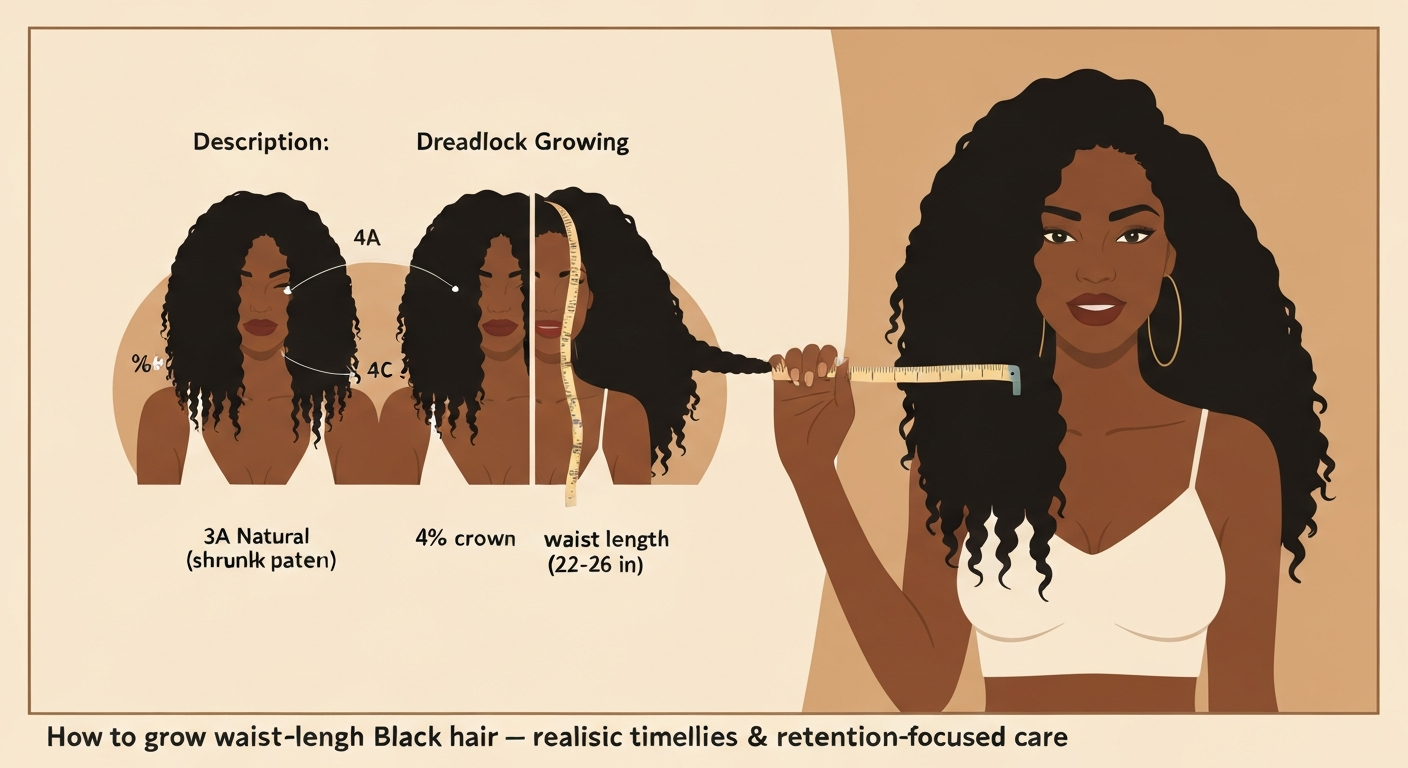
If you want to "grow good hair" like Cardi B, the honest answer is this: your hair is almost certainly already growing. The real problem is that it breaks off, snaps at the ends, thins at the edges, or gets damaged faster than it can show length. Fixing that, not chasing some miracle growth serum, is exactly what gets you the results you're looking for.
Grow Good Hair Like Cardi B: Evidence-Based Steps

Simone Okonkwo
29 May 2026

What "grow good hair" actually means (and why the distinction matters)
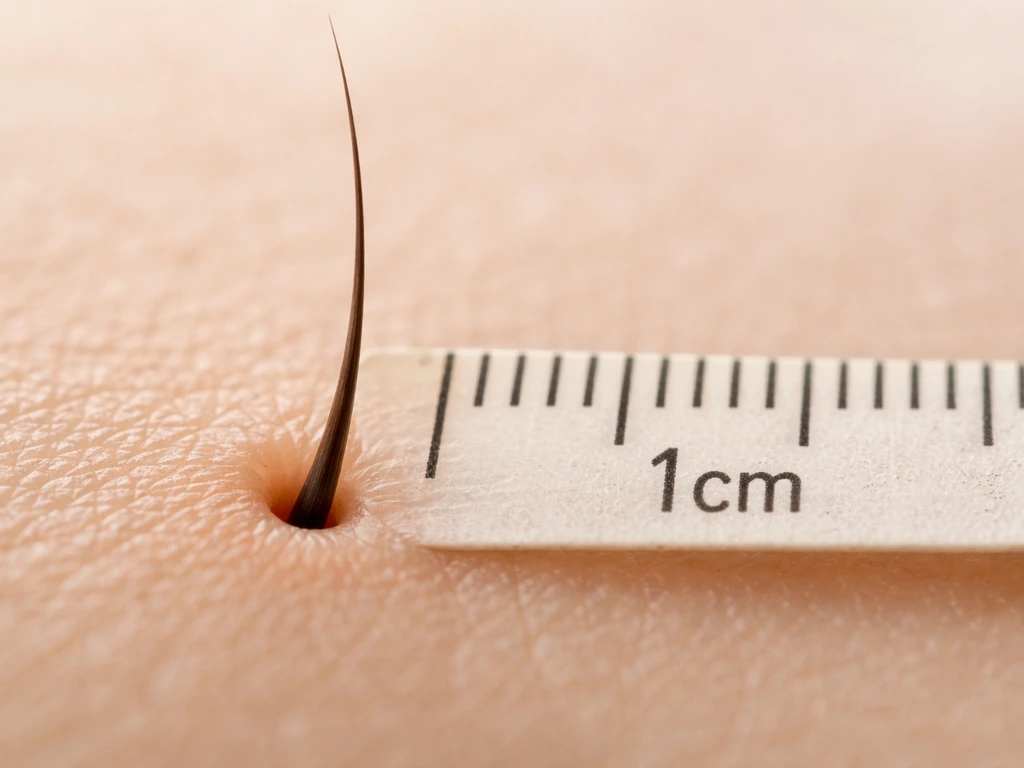
Hair grows from the follicle at roughly 1 centimeter per month, or about half an inch. That rate doesn't vary wildly from person to person. What does vary enormously is how much of that growth you actually keep. Growth is happening at the root; retention is what determines whether you see it at the ends. Most people asking how to grow hair like Cardi B are really asking how to retain length, and that's actually good news because retention is far more in your control than your biology.
The other factor that genuinely affects how long your hair can get is the length of your anagen phase, which is the active growing phase of the hair cycle. Anagen can last anywhere from two to over ten years. The longer your anagen phase, the more length potential you have before a strand sheds naturally. About 85 to 90 percent of your follicles are in anagen at any given moment, with only about 5 to 10 percent resting in telogen and preparing to shed. Shedding 25 to 100 hairs a day is completely normal. When you're shedding noticeably more than that, something is disrupting the cycle, and that's when you need to pay attention.
Cardi B's routine claims vs. what actually drives hair growth
Cardi B launched her Grow Good hair care line and has talked publicly about a DIY mask she swears by: avocado, mayo, eggs, and castor oil, applied to wet hair and left on for at least 20 minutes, followed by a rice water spray. She also leans heavily on wigs as a protective style, with her stylist Tokyo Stylez emphasizing keeping her natural hair moisturized underneath and maintaining the ends. If you're wondering how SZA grew her hair, the biggest takeaway is usually less about a specific celebrity trick and more about retention strategies that protect ends and reduce breakage. The wig-as-protective-style approach is genuinely smart and we'll get into why. The mask ingredients are more complicated.
Avocado, eggs, and mayo are rich in fatty acids and proteins that can temporarily coat and strengthen the hair shaft, reducing breakage from handling. That's real conditioning benefit. Castor oil, often credited with making hair grow faster, has no strong clinical evidence for stimulating follicle growth, but it's an occlusive that helps seal moisture into the shaft and scalp, which does support retention. Rice water has become enormously popular, but Cleveland Clinic is direct about the evidence: it's largely anecdotal. There's no robust science showing it accelerates growth. It may add a temporary protein-like coating that reduces friction, but calling it a growth treatment is a stretch.
One ingredient worth taking seriously, even though it's not in Cardi B's public mask recipe, is rosemary oil. A randomized trial published in the literature compared rosemary oil directly to 2% minoxidil for androgenetic alopecia over six months and found both groups showed improved hair counts. This is for pattern hair loss specifically, but it's the kind of evidence that should make you take rosemary oil seriously as a scalp treatment. Incorporate it if you like, but keep your expectations calibrated: it supports scalp health and may help with density, not magic length gains.
The most evidence-backed growth and retention strategies are far less glamorous than a celebrity mask: consistent moisture, reduced manipulation, gentle handling, protective styles done correctly, a clean scalp, and minimizing tension and heat. If you're specifically looking for how did a2 grow her hair, start by treating retention like the main goal, since keeping growth at the ends is what makes length show up. These are the non-negotiables.
Protective styles: what helps and what quietly causes damage

Braids, twists, locs, and weaves can absolutely support length retention by keeping ends tucked away and reducing daily manipulation. The problem is that the same styles can become the source of damage if done incorrectly or worn too long. Traction alopecia is a real and common result of tight protective styles, and it disproportionately affects Black women.
If you have been wondering how Viola Davis grew her hair, start by focusing on protective styles that avoid traction and help you retain length. It typically presents first at the temples and frontal hairline, the exact spots most people are trying to grow, and it starts with follicle stress. Caught early, when follicles are still intact, backing off the tension can reverse it. Left too long, the follicle scarring can become permanent.
Common pitfalls by style type
| Style | Main Benefit | Main Risk | Key Rule |
|---|---|---|---|
| Box braids / knotless braids | Low daily manipulation, ends protected | Tension at root if too tight, too heavy extensions | Go knotless when possible; avoid extensions that pull |
| Twists (two-strand, flat) | Very low manipulation, gentle on edges | Buildup if scalp isn't cleaned regularly | Cleanse scalp every 1–2 weeks even with style in |
| Locs | Minimal daily handling once mature | Buildup inside loc body, traction in early stages | Scalp cleansing is essential; avoid over-tightening retwists |
| Weaves / sew-ins | Hides and protects natural hair | Tension on leave-out, neglected natural hair underneath | Limit to 2–3 months max; moisturize natural hair underneath |
| Wigs (Cardi B's go-to) | Zero manipulation on natural hair | Friction on edges if wig band is too tight | Use a wig band/liner; moisturize and care for hair underneath |
The American Academy of Dermatology recommends wearing weaves and extensions for blank" rel="noopener noreferrer">two to three months at most. The bigger issue is that many people put in a protective style and then completely ignore the hair underneath. Scalp buildup, dryness, and tangling accumulate while the style looks fine on the outside. Taking a protective style down to a dry, matted mess that sheds excessively is not protective at all.
Scalp health: the actual foundation of good hair
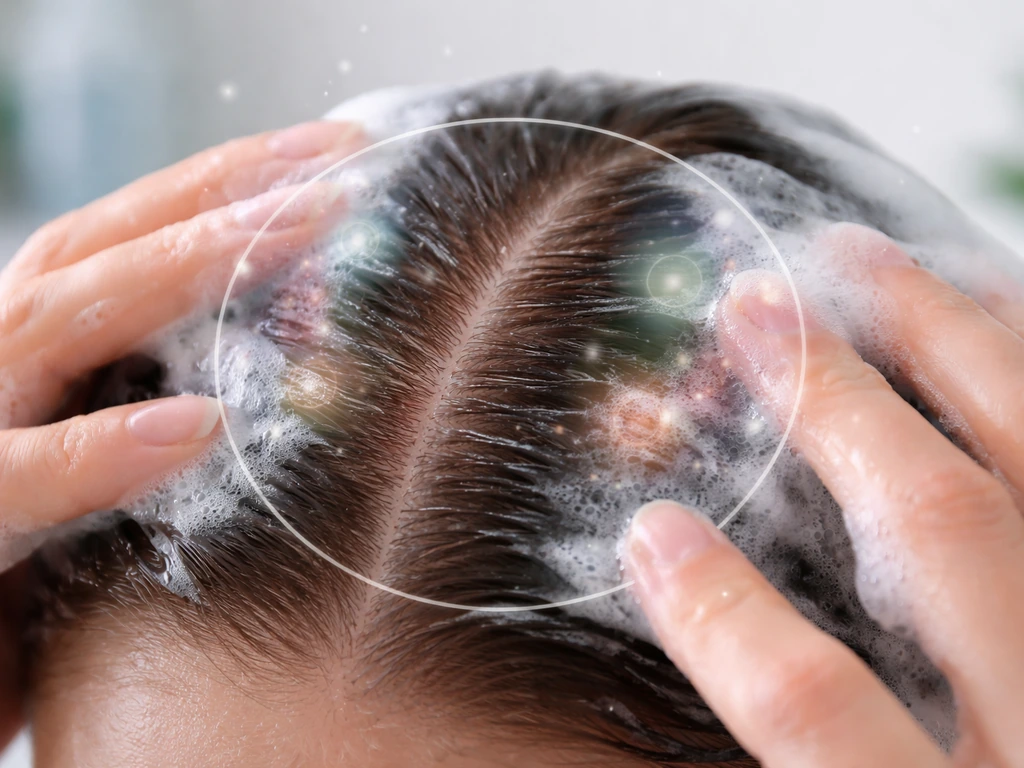
A healthy scalp is a non-negotiable. Hair grows from follicles embedded in the scalp, and anything that disrupts the scalp environment, whether inflammation, fungal overgrowth, product buildup, or chronic dryness, can interfere with that process. This is often the most overlooked part of a growth plan.
Washing frequency and seborrheic dermatitis
Research on Black women's washing habits found that those in non-traction styles washed about every 14 days on average, while those in braids or weaves washed every 18 to 32 days. Going that long between washes can enable Malassezia fungus (the organism behind seborrheic dermatitis) to overgrow, causing flaking, itching, and inflammation. [The Merck Manual recommends washing at least twice weekly for seborrheic dermatitis control](https://www. merckmanuals.
com/professional/dermatologic-disorders/dermatitis/seborrheic-dermatitis? qt=seborrheic+dermatitis), though for textured hair that frequency may not be realistic with certain styles. The practical middle ground: cleanse your scalp at minimum every two weeks, and use a diluted shampoo or scalp-focused cleanser between full wash days if you're in a protective style. Antifungal shampoos with ketoconazole are highly effective if you're dealing with persistent flaking.
Shedding: what's normal and what's a warning sign
Losing 25 to 100 hairs a day is normal. If you notice a significant increase in shedding, think back two to three months: stress, illness, crash dieting, hormonal changes, and surgery can all trigger telogen effluvium, a condition where follicles shift prematurely into the resting phase. The hair falls out about two to three months after the trigger, which is why people often can't connect the dots.
The good news is that telogen effluvium is usually self-limiting, with shedding stabilizing once the trigger is removed and noticeable regrowth appearing three to six months later. Cosmetically significant regrowth can take 12 to 18 months. If shedding is heavy and you can't identify a clear trigger, that's a reason to see a dermatologist.
A texture-specific growth plan for Black and textured hair
Black and textured hair has a naturally coiled structure that creates multiple points of vulnerability along the shaft. Bends and coils are physically weaker than straight stretches of hair, which means moisture loss, friction, and mechanical stress all translate to breakage faster. Low-porosity hair (common in tightly coiled textures) absorbs water slowly and is prone to product buildup sitting on the surface rather than penetrating the shaft. High-porosity hair takes in moisture quickly but loses it just as fast. Knowing your porosity changes how you approach hydration.
- Low porosity: use heat (warm water, a hooded dryer, or steam) to open the cuticle before conditioning; avoid heavy butters and oils on wet hair that can block water entry; use lightweight water-based leave-ins first
- High porosity: use protein treatments monthly to temporarily fill gaps in the cuticle; seal aggressively with heavier butters or oils after moisturizing; avoid over-washing which strips the cuticle further
- All textures: the LOC or LCO method (liquid, oil, cream or liquid, cream, oil) remains one of the most reliable frameworks for layering moisture and sealing it in
- Mechanical handling: detangle from ends to roots, always with a wide-tooth comb or your fingers, never dry, never in a rush
- Heat: if you use it, use a heat protectant every single time and keep temperatures under 350°F for natural hair; frequent heat is one of the fastest ways to introduce breakage
Your practical week-by-week regimen
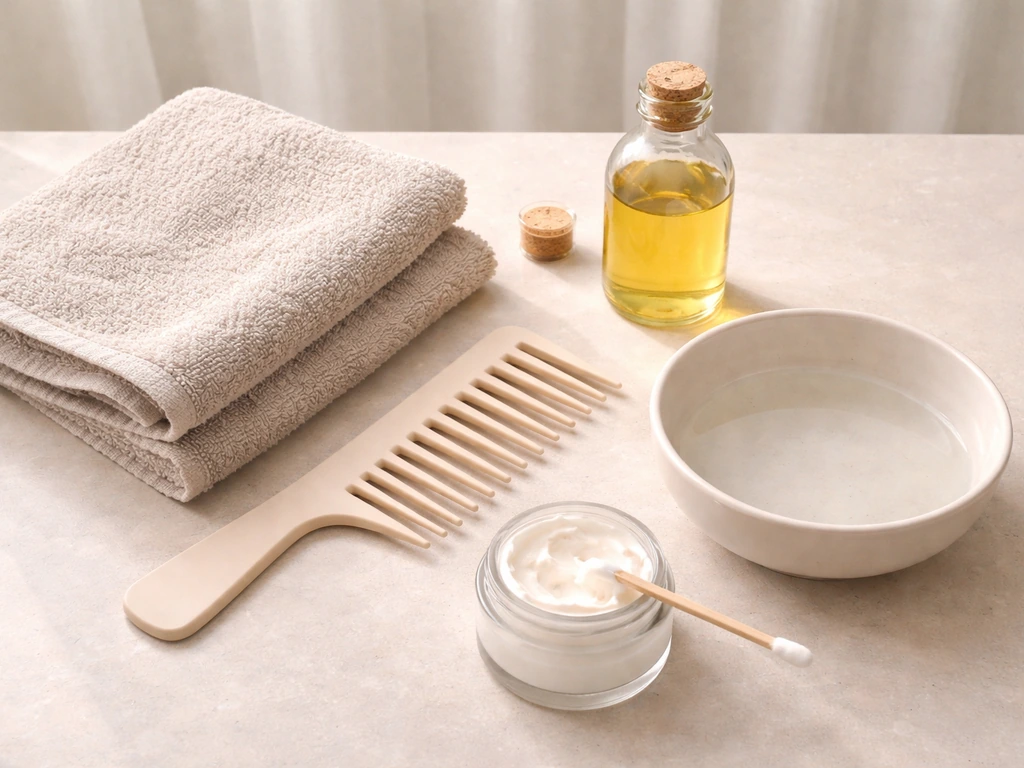
You don't need a 12-step routine. You need a consistent, simple routine that covers the fundamentals: clean scalp, moisturized strands, low manipulation, and protected ends. Here's what that looks like practically.
Wash day (every 1–2 weeks)
- Pre-poo: apply a penetrating oil (coconut or olive oil) or conditioner to dry hair 30 minutes before washing to reduce hygral fatigue (swelling from water absorption)
- Cleanse: use a sulfate-free or low-sulfate shampoo; focus product on the scalp, not the lengths; rinse thoroughly
- Deep condition: apply a moisturizing deep conditioner for 20–30 minutes with heat; if hair is feeling weak or stretchy when wet, alternate with a protein treatment every 3–4 weeks
- Leave-in and seal: apply a water-based leave-in conditioner while hair is still damp, followed by a light oil or butter to seal
Between wash days
- Refresh moisture with a water-based spray or aloe vera mix; follow with a light oil to seal
- Sleep on a satin or silk pillowcase, or use a satin bonnet or scarf every night without exception; cotton pillowcases pull moisture out and cause friction breakage
- Do not manipulate your hair daily; keep it tucked, twisted, or in a low-manipulation style
- If in a protective style, use a scalp serum or diluted conditioner to address dryness at the scalp without disturbing the style
Edge care
Edges are the most vulnerable area on your head. They have finer, more delicate strands and they bear the most tension from tight styles. Never let a stylist pull your edges tight. Edge control products are fine for laying edges down, but if you're using them every single day with tight styles on top, you're compounding the stress.
Apply edge gel with a light hand, don't slick edges down into styles that pull them, and give your edges actual days off from product and tension. A simple overnight castor oil or rosemary oil scalp massage a few times a week can support circulation in that area without the risk.
If you’re curious how Oprah has approached her hair journey, the biggest takeaway is still the same: protect your hair, keep it healthy, and focus on retention Oprah’s hair growth.
Styling frequency
Protective styles should stay in for two to six weeks maximum for braids and twists, two to three months maximum for weaves and sew-ins. After removal, give your hair at least one to two weeks in a free, low-manipulation style before reinstalling. This rest period matters and most people skip it entirely.
Realistic timelines, tracking progress, and when to see a doctor
At 1 cm of growth per month, you're looking at roughly 6 cm (about 2.5 inches) of new growth every six months if you retain it all. In reality, most people retain a portion of that due to some breakage, so measuring progress at six-month intervals is far more useful than checking every few weeks. Take a photo and a flat measurement from the scalp to the ends at the same spot every six months. If you're retaining well, you'll see it.
Cardi B, like Beyoncé, SZA, and other artists with notable hair journeys, has had the benefit of professional stylists, access to quality products, and the resources to protect and maintain her hair consistently. If you are wondering how did Beyonce grow her hair, the short answer is that the same foundations like moisture, low manipulation, and protective styling are doing most of the work.
Nicki Minaj grew her hair by focusing on protective styling, moisture, and gentle handling over time. Viola Davis also built her look over time, focusing on moisture, protective styling, and consistent scalp care rather than chasing quick fixes. You can also look at how did SZA grow her hair as another example of what keeps length over time.
Understanding what drives results in Cardi B's hair growth routine can help you build a plan that fits your own scalp and texture. If you're also wondering how did Cardi B grow her hair, keep the focus on retention: moisture, low manipulation, scalp health, and protective styling done properly. The principles, though, are accessible to everyone: moisture, low manipulation, scalp health, and protective styling done properly. If you want to compare celebrity approaches, you can also look up how did Oprah grow her hair for an example of a different routine focus.
If you want to model that kind of progress, focus on moisture, low manipulation, scalp health, and protective styling done properly. The timeline for seeing real length retention is six months to a year of consistent practice. Not six weeks.
When to see a dermatologist
Some hair and scalp issues can't be fixed with a better routine. See a board-certified dermatologist if you experience any of the following:
- Shedding significantly more than 100 hairs per day for more than three months with no obvious trigger
- Bald patches, especially circular ones (possible alopecia areata) or patches with scaling and broken hairs (possible tinea capitis, a fungal infection that requires prescription antifungal treatment)
- Thinning or recession at the temples and hairline that isn't improving after reducing tension for two to three months (possible traction alopecia requiring early intervention)
- Persistent itching, flaking, or scalp pain that doesn't respond to antifungal or medicated shampoos
- Any sudden, dramatic increase in overall shedding with no identifiable cause
A dermatologist can evaluate your scalp with a trichoscopy exam, order a KOH prep or fungal culture if infection is suspected, or diagnose conditions like telogen effluvium, alopecia areata, or traction alopecia definitively. If traction alopecia is caught early while follicles are still intact, reducing tension and sometimes adding a topical treatment can support regrowth. Waiting too long risks permanent follicle damage, so don't let months of denial cost you your edges.
The bottom line: "grow good hair" is not a product you buy or a mask you mix. It's a practice. Protect what's already growing, keep your scalp clean and healthy, handle your hair gently, and be consistent for at least six months before you judge the results. That's what actually works, for Cardi B and for you.
FAQ
How can I tell if my hair is growing but just not getting longer?
Track both length and breakage. Use two measurements every six months (scalp-to-end and a strand test you mark on a clean, detangled section). If length stays the same but the “test mark” moves up, you are still losing progress to snapping.
Is castor oil enough to grow good hair like Cardi B, and how do I use it without causing buildup?
Do not “stack” multiple sealing products if your scalp gets buildup easily. If you use castor oil or heavy creams, switch to lighter moisturizers on scalp and keep oils mostly on the lengths, then clarify regularly to avoid dryness and follicle irritation.
How should I use rosemary oil safely if I want to support density and scalp health?
Rosemary oil is a scalp treatment, so focus it on your roots, not the ends. Dilute properly (most people aim for a low percentage in a carrier oil), patch test first, and stop if you get burning, redness, or worsening shedding.
What’s the quickest way to know whether my extra shedding is normal or telogen effluvium?
When shedding suddenly increases, stop guessing and look for timing. If the trigger (stress, illness, surgery, major diet change, new medication) happened 2 to 3 months before the shed, it fits telogen effluvium. If shedding is relentless beyond 3 to 6 months or you see patchy loss, get evaluated.
How do I maintain a protective style so it doesn’t turn into damage?
A protective style can be protective only if the hair underneath stays detangled, moisturized, and not tightly pulled at the perimeter. Plan a maintenance routine, check edges often, and avoid installing when your hair is already dry or matted.
Should I buy a “growth serum” if I want the Cardi B look, or is that usually a waste?
Yes, but do it with the “root problem” in mind. For pattern shedding or true hair loss, growth-only products are less likely to help, and you may need a dermatologist-led plan. If you mostly have breakage, prioritize moisture, detangling, and end protection first.
What if I’m in braids or weaves and my scalp keeps getting itchy or flaky?
If you experience itching, flaking, burning, or oily scales that keep returning, treat it as a scalp issue, not a routine issue. Consider a ketoconazole-based approach for seborrheic dermatitis with guidance, and keep wash intervals realistic for your style.
How can I prevent traction alopecia if my stylist insists on tight installs?
If you feel tension during install, you already have a warning sign. Communicate immediately, loosen the style, and ask for a “no tight pull at temples/front hairline” placement. Persistent edge pain is not normal and can predict traction injury.
What measurement routine actually works for judging hair retention?
Use photos the same way each time (same lighting, same part, hair fully dry and detangled) and measure from the same reference point near the scalp. Avoid judging weekly progress, since hydration and shrinkage can make hair look shorter even when it is growing.
What should I do during the 1 to 2 week “rest” period after removing a weave or braids?
If you removed a style and your hair is tangly, dry at the roots, or shedding more than usual, fix the scalp first (gentle cleanse, thorough detangle, then moisturize). If shedding is heavy or you see thinning patches, get checked before reinstalling.
Next Article
How to Grow Waist-Length Black Hair: Evidence-Based Guide
How to grow and retain waist-length Black hair: realistic timelines, routines, protective styles, and evidence-basedTips