When people search 'how Indians grow their hair,' they're almost always asking about traditional South Asian hair-care practices: the oiling routines, Ayurvedic herbs, henna treatments, and scalp massage rituals common across India, Pakistan, and Sri Lanka. Some searchers are Native American and mean something entirely different. Either way, the honest answer is the same, no single ingredient or ritual unlocks faster growth at the follicle. What these practices do, and do remarkably well when used consistently, is reduce breakage, improve scalp health, and help your hair retain the length it's already growing. That distinction changes everything about how you should approach your routine.
How Indians Grow Their Hair: Traditions, Science, Routines

Simone Okonkwo
17 Jul 2026
Who people mean when they say 'Indians', and why it matters
The word 'Indian' carries two distinct meanings in English, and they're worth separating cleanly. In a global or ethnic beauty context, 'Indian' almost universally refers to people from the Republic of India or the broader South Asian subcontinent. That's the Ayurvedic oil-and-herb tradition most searchers are asking about. In the United States, federal agencies like the Bureau of Indian Affairs use 'American Indian' or 'Alaska Native' to refer to Indigenous peoples of North America, and 'Native American' is a widely preferred alternative. Hair-care traditions exist in both communities, and some online forums conflate them, particularly when Caribbean 'Indian' heritage, referring to Indo-Caribbean communities descended from South Asian indentured laborers, enters the conversation.
This article primarily covers South Asian (Indian subcontinent) practices because that's where the bulk of documented research and cultural practice sits. But I'll also draw comparisons with Native American and Afro-Caribbean traditions, because the underlying goals, retaining length, maintaining scalp health, reducing damage, overlap significantly across all three. If you landed here looking specifically for Native American hair guidance, that community's practices are covered more thoroughly in a dedicated resource on how to grow Native American hair.
How hair actually grows: the biology you need to know
Every strand of hair grows from a follicle that cycles through three phases: anagen (active growth), catagen (transition), and telogen (rest/shedding). On a healthy scalp, roughly 80 to 90 percent of your follicles are in anagen at any given time. The average quoted growth rate sits around 1 cm per month, formal research puts the range at about 0.6 to 1.5 cm per month depending on the individual and ethnic background. Anagen duration, meaning how long each follicle stays in its growth phase before cycling out, is what sets your maximum potential hair length. If your anagen phase runs for six years, your hair can theoretically grow to around 60 to 72 cm from that follicle before it sheds.
What most products, oils, and rituals cannot do is meaningfully extend your anagen phase or speed up the rate of cellular division inside the follicle. That's largely genetic and hormonal territory. What they can do is protect the hair shaft after it emerges, and that's where real-world length gains happen for most people.
The hair cycle at a glance
| Phase | What's happening | Duration (scalp hair) |
|---|---|---|
| Anagen | Active growth — matrix cells dividing, shaft being produced | 2 to 7 years (genetically determined) |
| Catagen | Transition — follicle shrinks, growth stops | 2 to 3 weeks |
| Telogen | Resting — old hair held in follicle before shedding | 3 to 4 months |
| Exogen | Active shedding of telogen hair | Overlaps with telogen |
Growth rate vs. retention: the most important distinction in hair care
This is the concept that changed how I think about nearly every hair-care claim I've ever evaluated. Your follicles might be producing 1 cm of new hair per month reliably, but if that same hair is snapping off at the ends due to dryness, rough handling, or chemical damage, your measured length stays the same. You're growing hair, you're just not retaining it. Dermatology researchers make this distinction explicitly: long retained hair length comes from both adequate anagen duration and low breakage, and these are independent variables. Interventions that reduce mechanical or chemical damage can dramatically increase the length you see in the mirror without touching your growth rate at all.
This is why traditional Indian hair practices, evaluated honestly, do seem to 'work' for many people, not because amla or bhringraj is stimulating follicles to produce hair faster, but because consistent oiling, protective styling, and gentle handling reduce the daily breakage that was previously erasing months of growth. Validated research tools like the phototrichogram and TrichoScan can actually separate these variables in clinical settings, measuring growth rate and anagen-to-telogen ratios independently from shedding and breakage counts.
Traditional Indian ingredients: what the evidence actually says
South Asian hair care draws from Ayurvedic medicine, which classifies certain herbs and oils as 'Keshya', meaning supportive of hair health. Classical texts like the Charaka Samhita and Sushruta Samhita list formulations built around amla, bhringraj, hibiscus, shikakai, reetha, and sesame or coconut oil bases. Modern research has started to evaluate some of these ingredients with controlled methodology, though the overall evidence base is still thin compared to pharmaceutical interventions. Here's an honest summary of each major ingredient.
Coconut oil
This is the best-studied of all traditional Indian hair oils, and the evidence for it is genuinely solid at the mechanistic level. A landmark study by Rele and Mohile (Journal of Cosmetic Science, 2003) showed that coconut oil, unlike mineral oil or sunflower oil, actually penetrates the hair shaft. It reduces protein loss from hair when applied both before and after washing. The mechanism is straightforward: coconut oil is rich in lauric acid, a medium-chain fatty acid with a molecular structure small enough to diffuse into the cortex. Less protein loss means less structural weakening of the shaft, which means less breakage over time. Applied as a pre-wash treatment or light leave-in, coconut oil is one of the few traditional hair ingredients with genuine laboratory backing.
Amla (Emblica officinalis / Phyllanthus emblica)
Amla, the Indian gooseberry, is perhaps the most celebrated herb in Ayurvedic hair care. It's used as an oil infusion, a powder mixed into hair masks, and increasingly in oral supplement form. The evidence is building: a 2023 triple-blind randomized controlled trial found that an oral amla syrup improved the anagen-to-telogen ratio in women with female androgenetic alopecia over 12 weeks compared with placebo. That's a meaningful result, it suggests amla may have some actual effect on the hair cycle, not just on the shaft. The study authors correctly note that larger trials are needed before this becomes a firm clinical recommendation. Topically, amla oil is rich in vitamin C and tannins, which may provide antioxidant protection to the scalp environment. It's a reasonable addition to a routine with low risk and moderate plausible benefit.
Bhringraj (Eclipta alba)
Bhringraj is often called 'the king of hair' in Ayurvedic literature. Preclinical studies and small prospective trials exist, one 24-week trial using standardized bhringraj extract tablets reported reductions in hair-fall metrics, but the evidence is limited by small sample sizes, variable extract standardization, and publication in smaller specialty journals. I don't want to dismiss it entirely; the mechanistic rationale around its wedelolactone content and potential effects on follicular activity is plausible. But I also won't claim it's proven. If you want to try bhringraj oil as a scalp treatment, the risk is minimal. Just don't expect it to do the heavy lifting alone.
Castor oil
Castor oil has enormous cultural traction across South Asian, Afro-Caribbean, and African American communities as a hair-growth treatment. The honest assessment: rigorous human clinical evidence for castor oil specifically stimulating hair growth is sparse. Its very high viscosity means it coats and conditions the shaft effectively and can reduce moisture loss, which helps with breakage. Some practitioners apply it to the scalp to moisturize and reduce flaking. It's not a growth accelerant in any proven sense, but as a conditioning and sealing agent it has practical value, particularly when diluted with a lighter carrier oil for easier application and removal.
Henna (Lawsonia inermis)
Henna is used across South Asia, the Middle East, and North Africa both as a hair dye and a conditioning treatment. Its active molecule, lawsone (2-hydroxy-1,4-naphthoquinone), binds to hair keratin and deposits color. Research confirms measurable pigment uptake and some reports of improved fiber morphology after treatment. For conditioning purposes, henna temporarily coats and fills the cuticle, which can make hair feel thicker and reduce frizz. The main cautions: pure henna is generally safe, but 'black henna' products sold commercially often contain para-phenylenediamine (PPD), which causes contact dermatitis and sensitization in some people. If you're using henna, stick to pure, natural henna powder. Also note that repeated application builds up on the shaft and can make hair more brittle over time, so moderation matters.
Scalp massage
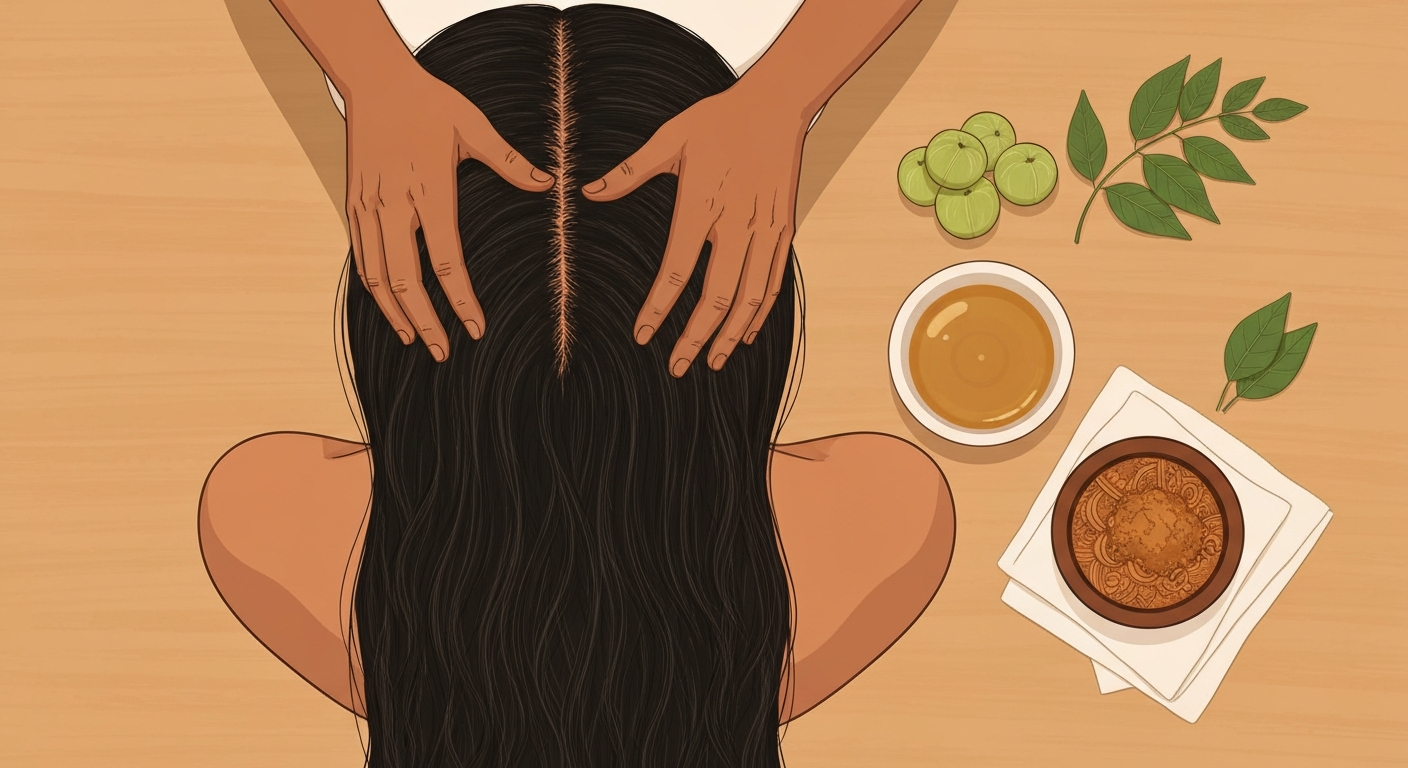
Shiro Abhyanga, the Ayurvedic practice of warm oil scalp massage, has a small but interesting research basis. A pilot study (Koyama et al., 2016) found that standardized scalp massage over 24 weeks increased hair thickness in a small group of Japanese men. The proposed mechanism involves mechanical stimulation of dermal papilla cells and potentially increased circulation to the follicle. The evidence base is thin, but the risk is essentially zero and the practice helps with scalp health and stress reduction, both genuinely relevant to the hair cycle since chronic stress is a documented trigger for telogen effluvium.
Evidence summary by ingredient
| Ingredient | Primary use | Strength of evidence | Likely mechanism | Practical recommendation |
|---|---|---|---|---|
| Coconut oil | Pre-wash / leave-in oil | Moderate (lab + in vivo) | Shaft penetration, reduces protein loss | Apply pre-wash 30–60 min before washing |
| Amla | Oil infusion / oral supplement | Moderate (early RCT data) | May improve anagen:telogen ratio; antioxidant | Use topically in oil or try oral amla; larger trials pending |
| Bhringraj | Scalp oil treatment | Limited (small trials) | Possible follicular activity support | Low risk; try as a scalp oil, but don't rely on it alone |
| Castor oil | Sealing / conditioning | Weak (no strong growth RCTs) | Occlusive coating, moisture retention | Dilute with lighter oil; use as a sealant, not a growth agent |
| Henna | Color / conditioning | Moderate for conditioning | Lawsone binds keratin, fills cuticle | Use pure natural henna; avoid black henna; don't overdo frequency |
| Sesame oil | Scalp and shaft oil | Limited | Antioxidant compounds, skin barrier support | Suitable as a carrier in traditional oil blends |
| Scalp massage | Circulation / mechanical stimulation | Limited (small pilot study) | Dermal papilla stimulation, stress reduction | 4–5 min daily; combine with oil application |
Why these practices may actually help: the science behind the ritual
Even where direct clinical evidence is thin, traditional Indian hair practices have logical mechanisms that connect to modern hair science. It helps to understand why, not just whether, something works.
- Moisture and lubrication: oils coat the hair shaft and reduce friction between strands and between hair and textiles (pillowcases, scarves, clothing). Less friction means less cuticle damage and less mechanical breakage over time.
- Reduced friction during detangling: pre-washing with coconut or sesame oil reduces the force required to comb through hair, which directly lowers breakage counts during grooming — one of the most common sources of length loss.
- Scalp health: a healthy scalp microbiome and skin barrier supports optimal follicular function. Anti-inflammatory and antifungal compounds in herbs like amla and neem (also traditionally used) may support scalp health by reducing dandruff and irritation.
- Mechanical stimulation: scalp massage increases local blood flow, at least transiently, and may stimulate dermal papilla cells through mechanical force — the proposed mechanism behind the Koyama thickness study.
- Stress reduction: the ritual of regular self-care, including warming oil and massaging the scalp, may reduce chronic stress, which is a genuine trigger for excess telogen shedding (telogen effluvium).
- Protein protection: coconut oil specifically reduces the protein loss that occurs when hair swells repeatedly during washing — a process called hygral fatigue — by penetrating the shaft and limiting water absorption.
How other cultural traditions compare: Jamaican, Afro-Caribbean, and Native American approaches
The search intent behind 'how Indians grow their hair' sometimes overlaps with questions about Jamaican and Caribbean hair practices, particularly because Indo-Caribbean communities (descended from South Asian indentured laborers who arrived in Jamaica and Trinidad in the 19th century) blend South Asian and Afro-Caribbean traditions. The goals across these communities are strikingly similar, and the underlying science applies equally.
Jamaican and Afro-Caribbean communities have their own robust tradition of growth-supporting practices: Jamaican Black castor oil (JBCO) is a culturally iconic product, processed differently from regular castor oil (roasted and ash-added), and used as a scalp treatment and edge strengthener. Protective styling, braids, twists, and locs, is central to length retention across these communities, operating on exactly the same breakage-reduction principle as traditional South Asian oiling. If you want to go deeper on what Jamaicans specifically use, that's a topic worth exploring in its own right through resources specifically addressing Jamaican hair practices. If you want specifics on what Jamaicans use to grow their hair, see our guide on what Jamaicans use to grow their hair. For practical, texture-specific advice, see our guide on how to grow Afro-Caribbean hair.
Native American hair traditions vary enormously across nations and regions, but several common threads include the use of plant-based oils (bear grease historically, jojoba and other plant oils in modern practice), minimal heat manipulation, and an emphasis on scalp health through herbal rinses. Many Native American communities historically kept hair long as a cultural and spiritual practice, which required effective retention strategies, again, the same fundamental logic applies. The underlying hair biology for straight to wavy Native American hair types is generally closer to East and South Asian hair in terms of fiber structure, with high linear growth rates and relatively lower breakage susceptibility compared to tightly coiled hair types.
Across all three traditions, South Asian, Jamaican/Afro-Caribbean, and Native American, the practices that hold up scientifically are the ones that reduce mechanical damage, maintain scalp health, and keep hair moisturized and protected. The specific ingredients differ; the mechanisms don't. Mixed-heritage readers drawing from multiple traditions will find that the principles are additive, not contradictory.
How styling choices affect what you retain, and what you lose
Styling choices are often underestimated as drivers of apparent hair length. The difference between someone who retains 12 cm of growth per year and someone who retains only 4 cm often comes down entirely to styling habits, not follicle function.
Protective styles: braids, twists, weaves, and locs
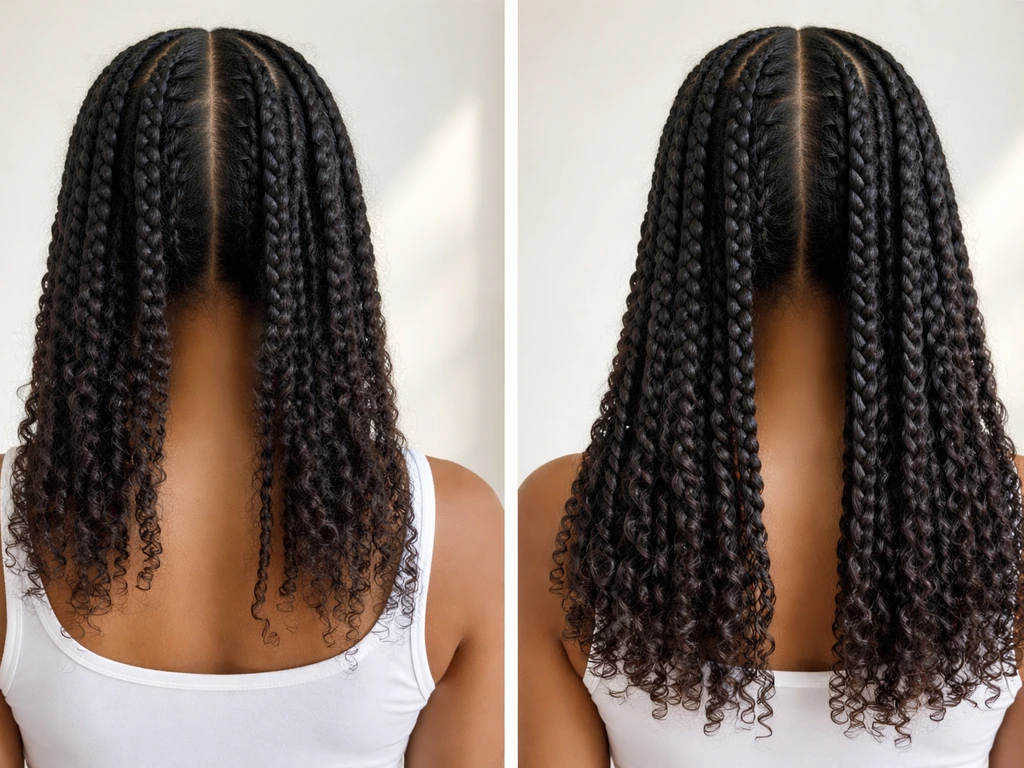
Protective styles reduce the exposure of hair ends, the oldest, most fragile part of the shaft, to friction, manipulation, and environmental damage. When hair is braided, twisted, or otherwise tucked away, it's not rubbing against clothing collars, not being combed daily, and not exposed to the same level of drying air. This directly reduces breakage and allows retention to accumulate. Braids and twists are low-manipulation styles that keep hair protected for days to weeks at a time. Weaves and wigs, when installed and removed carefully with a healthy foundation, serve the same purpose.
Locs (dreadlocks) are a permanent form of protective styling that essentially locks the shed hairs into the loc structure rather than losing them to daily shedding. This creates the visual illusion of very dense, retained hair over time. The growth rate at the follicle is the same, it's retention that produces the length and density that loc wearers see.
Important caveats: protective styles can cause damage when applied too tightly (traction alopecia), left in too long without moisturizing the scalp, or removed carelessly. Braids that pull at the hairline, box braids installed with too much tension, and weaves with tight bonding are among the most common causes of hairline recession and traction-related hair loss. The protective benefit only holds when the style is done and maintained thoughtfully.
Heat and chemical relaxers
Both heat styling and chemical relaxers alter the protein structure of the hair shaft, and both increase breakage risk when used frequently or without adequate care. Relaxers permanently break and reform the disulfide bonds in the cortex to straighten curly or coily hair. Done with a professional and followed by intensive conditioning, relaxed hair can be healthy and retained well. But repeated overlapping of chemical applications, processing on already damaged hair, or skipping protein and moisture treatments post-relaxer leads to cumulative damage that shows up as breakage and reduced length retention.
Heat tools, flat irons, blow dryers, curling irons, cause protein denaturation when used at high temperatures on dry hair without thermal protection. For straight to wavy hair types common in South Asian and Native American communities, occasional heat use with a quality heat protectant is manageable. For tightly coiled hair, the same level of heat use carries a higher damage risk because the fiber's structural characteristics make it more vulnerable. Reducing heat frequency and using the lowest effective temperature are the simplest retention-protective moves available.
Best practices to reduce styling damage
- Detangle gently from ends to roots, never roots to ends, using a wide-tooth comb or fingers on conditioner-coated wet hair.
- Apply a heat protectant to dry hair before any hot tool use and keep temperatures below 180°C (356°F) where possible.
- Moisturize hair before installing any braided or twisted protective style, and re-moisturize the scalp every 1 to 2 weeks while the style is in.
- Never leave braids, weaves, or extensions in for longer than 8 weeks without a maintenance check.
- Avoid styles that create visible tension at the hairline or temples.
- Sleep on a silk or satin pillowcase, or use a satin-lined bonnet or scarf, to reduce overnight friction.
- Do a protein treatment every 4 to 6 weeks if your hair is chemically processed or heat-styled regularly.
Texture-specific guidance: building a routine that fits your actual hair
Hair texture fundamentally shapes which practices and products work best. Research by Loussouarn and colleagues and subsequent ethnic hair studies confirm that hair fiber characteristics, cross-section shape, curvature, diameter, and biomechanical properties, vary meaningfully by biogeographic origin. The PubMed article 'Diversity in human hair growth, diameter, colour and shape (in vivo study across ethnic groups)' reports measurable differences by biogeographic origin, Asian groups often show faster mean linear growth rates and larger fiber diameter, while African-descent hair commonly shows slower growth and structural features that increase shaft fragility and susceptibility to breakage blank" rel="noopener noreferrer">Diversity in human hair growth, diameter, colour and shape (in vivo study across ethnic groups) — PubMed. South Asian hair tends toward straight to wavy with a relatively large fiber diameter and higher linear growth rate. blank" rel="noopener noreferrer">Afro-textured hair typically shows higher curvature, a more elliptical cross-section, and greater structural vulnerability to breakage. Mixed-heritage hair can express any combination of these characteristics, sometimes on the same head.
Straight to wavy hair (common in South Asian, East Asian, and many Native American hair types)
This hair type generally has the best natural breakage resistance but can become dry and brittle from protein overload, harsh shampoos, or excessive heat. Lightweight oils like coconut, sesame, or argan work well as pre-wash treatments without weighing the hair down. Sulfate-based shampoos can be used but should be balanced with a good conditioner. Heat styling is manageable with proper protection. The Ayurvedic practice of regular oiling translates well to this texture, a weekly pre-wash oil treatment, a gentle shampoo, and a moisturizing conditioner covers most needs.
Curly to coily hair (common in Afro-Caribbean and mixed-heritage textures)
This hair type retains moisture poorly due to the curvature of the fiber, which makes it harder for sebum to travel down the shaft. A moisturize-and-seal approach works best: apply a water-based moisturizer first, then seal with a heavier oil or butter (shea, castor, or coconut). Low-manipulation and protective styling are critical because this texture snaps more easily under mechanical stress. Co-washing (washing with conditioner only, no shampoo) between full wash days helps maintain moisture. Protein treatments are important but must be balanced against moisture, too much protein on already dry coily hair causes brittleness.
Mixed and biracial hair
Mixed-heritage hair often presents with different textures at the crown, sides, and nape, sometimes several curl patterns on one head. For practical, step-by-step routines tailored to mixed-heritage children, see how to get my mixed daughter's hair to grow. The guiding principle here is to treat each zone according to its actual needs rather than applying one blanket approach. If your roots are tightly coiled but your ends are wavier, the coily sections need more moisture and sealing; the wavier sections may not need as heavy a product. For detailed, zone-specific routines and product recommendations for mixed-heritage heads, see our guide on how to grow mixed race hair (covers treating multiple textures on one scalp). This also means reading ingredient labels carefully: heavier butters and thick creams that serve coily hair can cause flat, greasy buildup on straighter sections. Readers managing biracial or mixed-race hair textures will find more detailed guidance in resources specifically addressing how to grow biracial hair and how to grow mixed race hair.
Product selection principles by texture
| Texture | Shampoo type | Conditioner weight | Best oils | Key concern |
|---|---|---|---|---|
| Straight / wavy | Gentle sulfate or sulfate-free | Light to medium | Coconut, sesame, argan | Avoid heavy build-up; balance protein and moisture |
| Curly (loose to medium) | Sulfate-free or low-poo | Medium to rich | Coconut, jojoba, sweet almond | Maintain curl definition; minimize frizz and mechanical damage |
| Coily / afro-textured | Moisturizing, sulfate-free | Rich, creamy | Castor, shea butter, coconut | Moisture retention and breakage prevention are top priority |
| Mixed / biracial | Gentle sulfate-free | Varies by section | Lightweight for straighter zones, heavier for coily zones | Zone-specific application; avoid one-size-fits-all products |
Troubleshooting: when your hair isn't responding
If you've been consistent with a retention-focused routine for three to six months and still aren't seeing length progress, it's worth working through a checklist before assuming the problem is your product choices.
- Check for excessive shedding: losing more than roughly 100 hairs per day consistently may indicate a systemic issue — iron deficiency, thyroid dysfunction, or stress-related telogen effluvium are common culprits.
- Evaluate your diet: hair is made of protein (keratin), and the follicle is one of the most metabolically active tissues in the body. Protein deficiency, low ferritin (stored iron), and deficiencies in zinc, biotin, and vitamin D are all documented causes of increased shedding or reduced growth.
- Audit your styling: are you applying heat frequently? Wearing tight styles repeatedly? If your ends are consistently snapping off, that's a mechanical retention problem, not a growth problem.
- Reassess your wash routine: over-washing strips natural oils; under-washing allows product buildup that can block follicles and irritate the scalp. For most hair types, washing every 5 to 10 days is a reasonable range.
- Rule out scalp conditions: dandruff (seborrheic dermatitis), psoriasis, and fungal infections can all impair the follicular environment and should be treated before expecting improved retention.
- Consider a hormonal check: androgenetic alopecia (hereditary hair thinning), polycystic ovary syndrome, thyroid disorders, and post-partum hormonal shifts all affect the hair cycle and will not respond to topical or nutritional interventions alone.
When to see a dermatologist or trichologist
See a clinician if you notice sudden diffuse shedding that lasts more than three months, visible patchwork hair loss (which may indicate alopecia areata), progressive hairline recession or thinning at the crown, scalp pain, itching, or inflammation that doesn't resolve with over-the-counter treatment, or if your hair has stopped growing to its previous length despite good retention practices. A dermatologist can perform a trichogram or scalp biopsy if needed, check your ferritin and thyroid panels, and confirm whether prescription treatments like minoxidil or finasteride are appropriate for your situation. Traditional and cultural hair practices are genuinely useful for retention and scalp health, but they are not treatments for clinical hair loss, and knowing that boundary is part of taking your hair health seriously.
Putting it all together: a simple framework
Traditional Indian hair care, oiling, herbal treatments, gentle handling, scalp massage, works primarily by reducing the damage that erases your hair's natural growth. The ingredients most supported by evidence are coconut oil for shaft protection, amla for potential follicular support, and scalp massage for mechanical stimulation and stress management. Bhringraj and castor oil have plausible mechanisms and low risk, even if robust clinical evidence is still developing. Across all ethnicities and hair textures, the fundamentals are the same: protect your ends, maintain a healthy scalp, minimize mechanical and chemical trauma, and give your body the nutritional support it needs to keep follicles cycling efficiently. For a practical, ethnicity-aware routine focused on maximizing retention and visible speed, see a companion guide on how to grow ethnic hair fast. Your hair is almost certainly growing at exactly the rate your biology allows, the question is how much of it you're keeping.
FAQ
Who do people mean when they search “how Indians grow their hair” and why does that matter?
“Indian” is ambiguous. In global/popular use it most often refers to people from the Indian subcontinent (South Asian). In North American government/academic contexts it can mean American Indian/Alaska Native (Native American). Online threads also mix in Afro‑Caribbean/Jamaican practices. Clarifying which cultural group you mean matters because hair texture, traditional ingredients, and routine goals differ—so do the likely effective tactics for growth versus retention.
What is the biology of scalp‑hair growth — growth rate versus retention?
Scalp hair grows in a cyclical follicular process. Linear growth is driven by anagen (active) phase length and speed; a typical average is roughly 1 cm per month but ranges by individual and population. “Growth rate” means how fast the follicle produces shaft; “retention” means how much of that shaft remains unbroken and untrimmed. Long hair results from sufficiently long anagen duration plus good retention (low breakage). Many interventions that look like they increase “growth” actually improve retention.
Which traditional South Asian ingredients are commonly used and what does the evidence say?
- Coconut oil: lab and clinical work show it penetrates hair shaft and reduces protein loss, lowering combing damage—useful for reducing breakage. - Amla (Emblica officinalis): traditional tonic; limited randomized trials suggest potential benefit for anagen:telogen ratio but larger trials are needed. - Bhringraj (Eclipta alba): some small clinical and observational studies report reduced shedding, but evidence is preliminary. - Henna (Lawsonia inermis): effective natural dye and can condition hair surface; beware allergic reactions and “black henna” adulterants. - Castor oil: high ricinoleic acid content; widely used as a sealant and to increase lubrication but robust clinical trials for growth are limited—benefit likely via improved retention/moisture sealing rather than changing follicle biology. - Sesame, sunflower and other oils: vary in lipid profile; some (coconut) penetrate better, others act mainly as surface emollients. Overall: several traditional ingredients plausibly reduce shaft damage and improve appearance; strong, large randomized evidence for hair‑growth (follicular) claims is limited.
Does scalp massage help hair growth?
Scalp massage can increase local circulation transiently and may improve scalp health and product penetration. Some small studies suggest it can increase hair thickness or perceived growth over time, but high‑quality large RCTs are limited. Mechanistically, regular gentle massage reduces mechanical stress, distributes oils, and can improve retention more than changing anagen length.
How do related practices (Jamaican, Native American, mixed‑heritage) overlap or differ?
There is overlap in aims—using oils, plant rinses, and protective styling—but ingredients and hair textures differ. Afro‑Caribbean/Jamaican traditions emphasize heavy emollients (castor, coconut), scalp ointments, and protective styles for fragile, curly hair. Native American practices historically used plant rinses and minimal chemical alteration. Mixed‑heritage routines blend approaches. The key is matching practices to hair texture and breakage risk rather than copying ingredients blindly.
How do styling choices (braids, locs, weaves, chemical relaxers) affect apparent hair growth and retention?
Protective styles (braids, twists, wigs, weaves, locs) can improve retention by reducing daily manipulation and friction when done gently and not overly tight. However, tension from tight braids, heavy extensions, or improperly installed weaves can cause traction alopecia and increased breakage. Chemical relaxers and harsh heat/bleaching weaken shaft structure and raise breakage risk; repeated chemical processing shortens retained length even if follicles keep growing at baseline rates.
Next Article
How to Grow Biracial Hair: A Step-by-Step Routine
Step-by-step routine to grow biracial hair, boost scalp growth, reduce breakage, and improve retention with moisture and