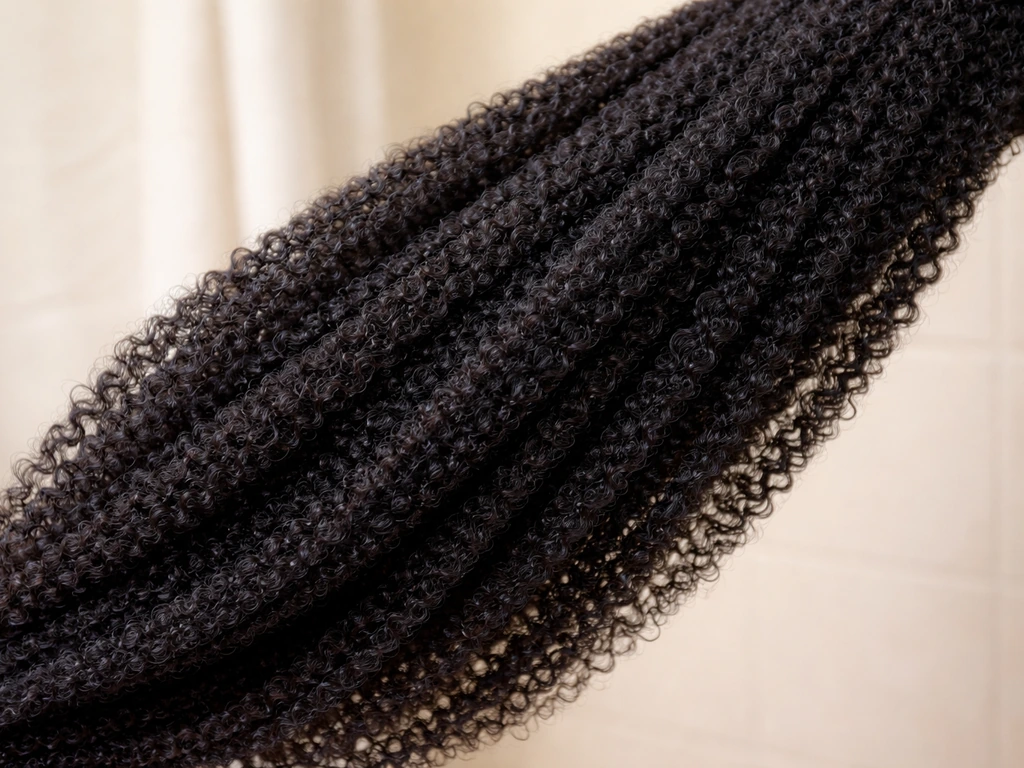
Growing mixed or biracial hair longer comes down to one thing more than anything else: keeping the hair you already grow. Your scalp is already producing roughly half an inch of new hair every month regardless of what you do. The real problem is that textured, coily, or curl-mixed hair is prone to dryness and breakage, so strands snap off almost as fast as they grow. Fix the breakage, and length follows. That's the whole game.
How to Grow Mixed Race Hair Longer Faster Without Breakage

Simone Okonkwo
22 Jun 2026
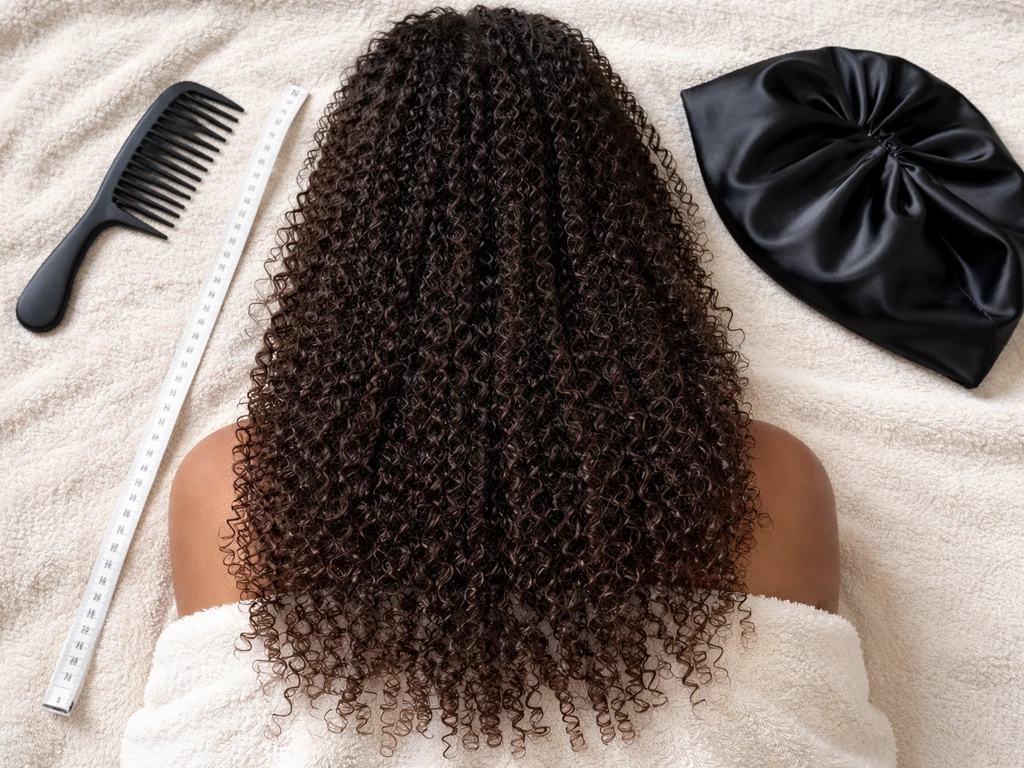
Mixed hair is not one hair type, and that matters
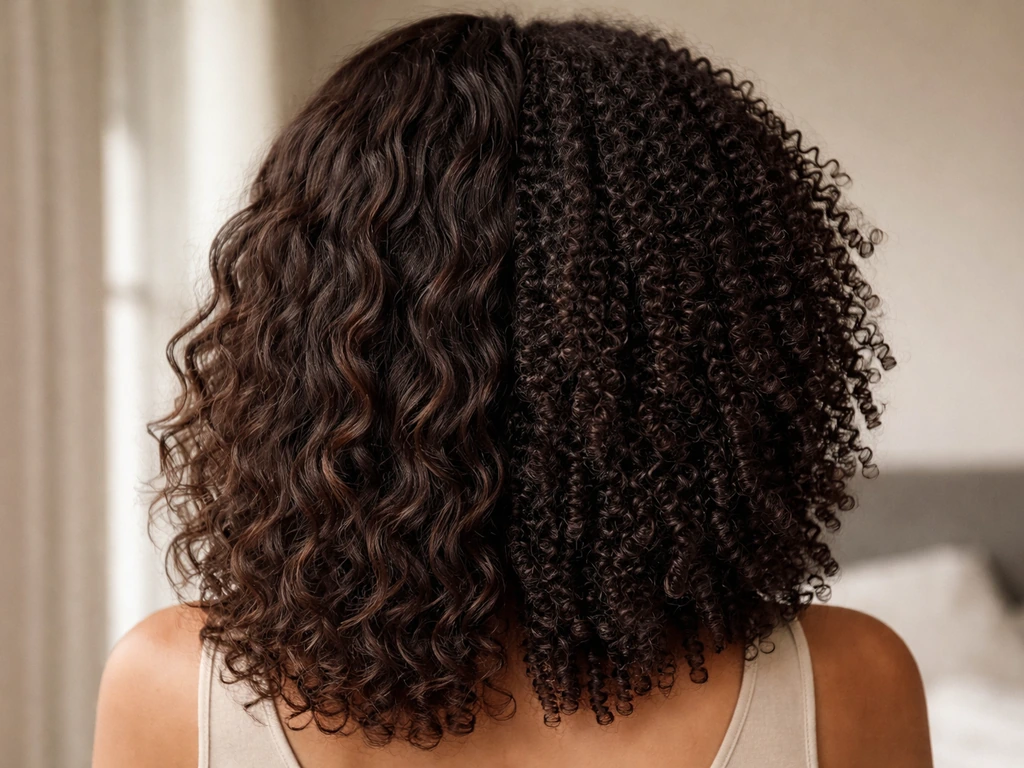
If you've ever searched for a routine and found it works perfectly for someone else but not for you, this is why. 'Mixed race hair' covers an enormous range: loose waves sitting next to tight coils on the same head, fine strands mixed with coarser ones, high-shrinkage sections next to low-shrinkage sections. Some people with biracial backgrounds have hair that behaves like type 3 curls. Others have predominantly type 4 coils. Many have both on the same scalp. Curl pattern charts are a starting point, but they don't capture porosity, density, or how your specific strand-protein structure handles moisture and manipulation.
Porosity is arguably more useful to understand than curl type. Low-porosity hair has tightly packed cuticles that resist absorbing product, meaning water and conditioner tend to sit on top rather than penetrate. High-porosity hair has raised or damaged cuticles that absorb quickly but also lose moisture fast, which is why it tends to feel dry within hours of washing. Many people with mixed textures have different porosity zones across their scalp, especially if any heat or chemical processing has been done. Knowing where your hair falls on that spectrum tells you which products will actually work and which will just build up or slide off.
One quick note: the popular float test for porosity (dropping a strand in water and seeing if it sinks) has real scientific limitations and isn't especially reliable. A better approach is to pay attention to how your hair behaves: how quickly it absorbs water, how fast it dries, whether it feels weighed down with light products or needs heavy ones to feel moisturized. Those observations will guide you more accurately.
Growth rate vs. retention: what 'growing faster' actually means
Your follicles are already working. Average scalp hair grows about half an inch per month, or roughly six inches per year. On average, scalp hair grows about blank" rel="noopener noreferrer">half an inch per month, or roughly six inches per year, which is why speeding up follicle growth beyond biology is difficult. Some people fall slightly below that, some slightly above, and genetics set the ceiling. What you genuinely cannot do is force follicles to produce hair faster than they're biologically programmed to. What you absolutely can do is stop losing the length they're already producing. For many people asking how Indians grow their hair, the key is focusing on retention so you keep more length as your hair grows hair retention.
When someone says their hair 'won't grow,' it's almost always a retention problem, not a growth problem. Breakage from dryness, split ends traveling up the shaft, mechanical damage from rough detangling, traction from tight styles, and heat damage can all eat away at length faster than the scalp replaces it. The practical goal is to create conditions where the hair growing from your scalp can survive long enough to become visible length. That's what every section below is designed to help you do.
Build a wash routine that doesn't wreck your hair
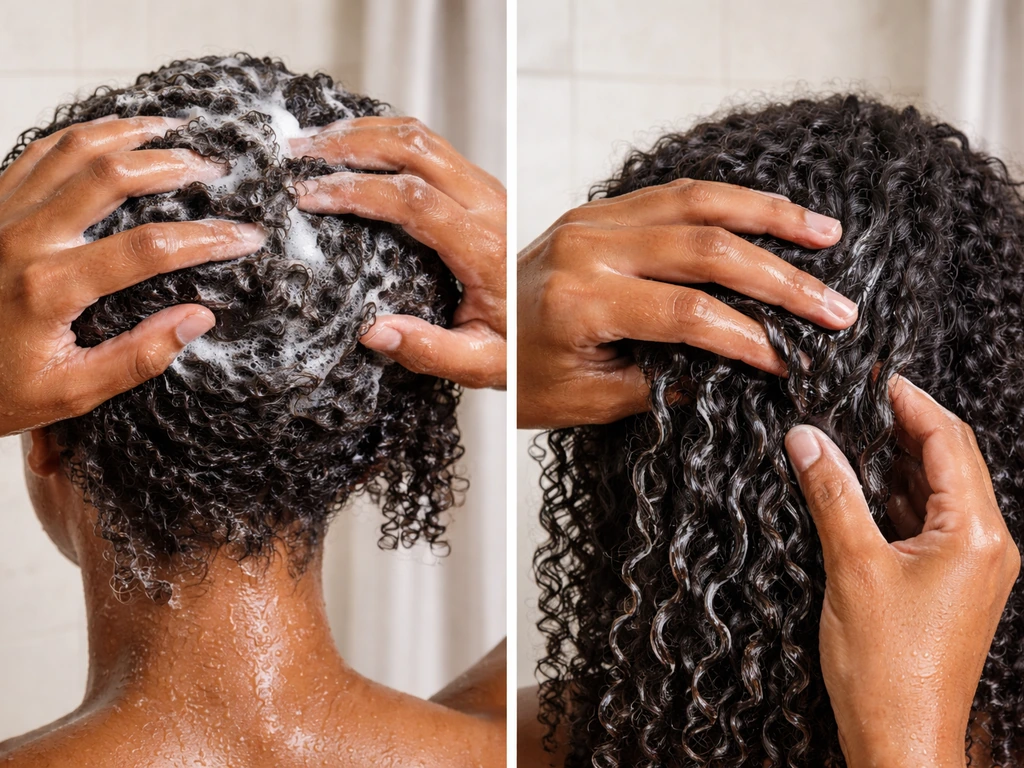
Textured and coily hair produces sebum just like any other hair, but the natural oils have a harder time traveling down a curled or coiled shaft compared to straight hair. This means curly and coily hair tends to run drier, which makes over-washing genuinely damaging.
If you want to grow native American hair successfully, focus on the same core needs: moisture, protein balance, gentle detangling, and a routine that matches your porosity textured and coily hair tends to run drier. The American Academy of Dermatology recommends washing textured or thick hair at least once every two to three weeks as needed, rather than on a rigid daily or weekly schedule. That said, 'as needed' is the key phrase.
If your scalp feels itchy, sweaty, or products are building up, wash sooner.
When you do wash, use a sulfate-free or low-lather shampoo. Harsh sulfates clean effectively but strip the cuticle of moisture, which is the last thing already-dry textured hair needs. Focus the shampoo on your scalp and roots, not the lengths, and let it rinse through the ends. Follow every single wash with conditioner, no exceptions. Conditioner replenishes moisture, smooths the cuticle, and dramatically reduces the friction that leads to breakage during detangling.
Co-washing, or using conditioner instead of shampoo, works well for some people with very dry, high-porosity hair between regular wash days. The science on optimal frequency is still limited, and it can cause issues if you have a tendency toward scalp buildup or seborrheic dermatitis. If you try it, pay attention to how your scalp responds over a few weeks rather than committing to it blindly.
How to detangle without breaking everything off
Detangling is where a massive amount of breakage happens, especially for mixed textures where different curl patterns can mat together. Always detangle on wet, conditioner-saturated hair. Start from the ends and work your way up in sections. Use your fingers first to remove major knots, then follow with a wide-tooth comb if needed. Never rip through dry, tangled hair. Dividing hair into four to eight sections before washing makes the whole process more manageable and less damaging.
Getting moisture and protein in the right balance
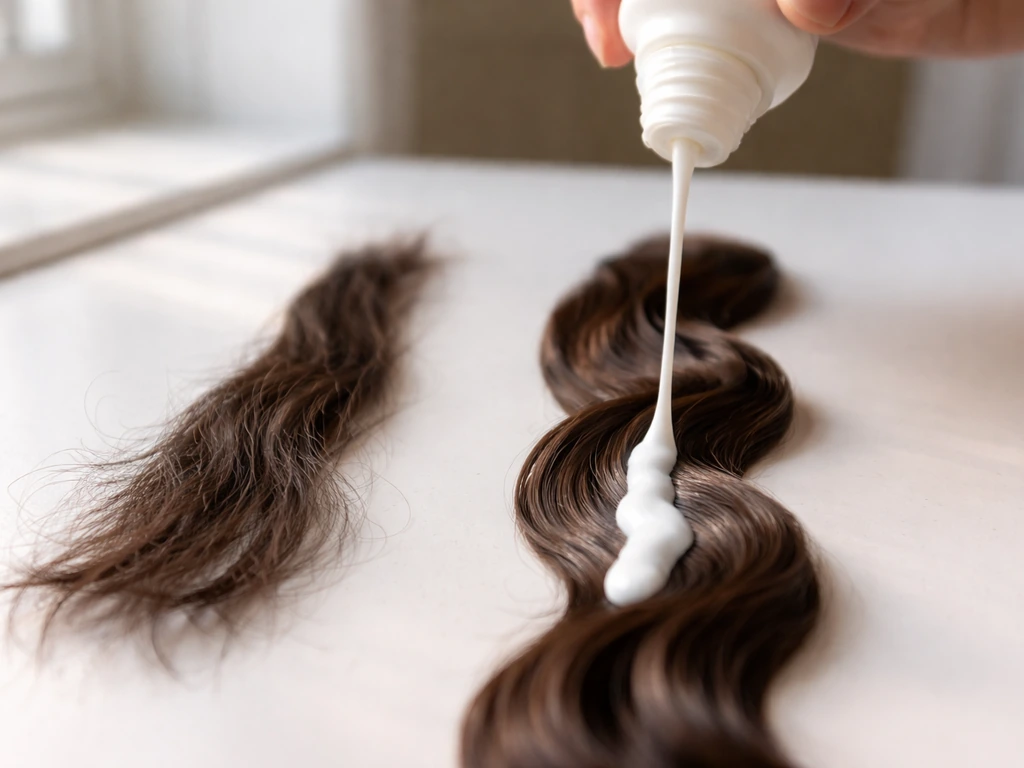
Hair needs both moisture and protein to stay elastic and strong. Too little moisture and hair snaps. Too much protein without enough moisture and hair becomes brittle and snaps differently. Finding the right balance for your specific hair is one of the most practically useful things you can do, and it depends heavily on porosity.
| Porosity Type | What it looks like | Product strategy | Ingredients to prioritize |
|---|---|---|---|
| Low porosity | Takes forever to get wet, products sit on top, hair feels fine but looks dull | Lightweight products, heat to open cuticle during deep conditioning | Humectants (glycerin, aloe vera), light oils like argan or jojoba |
| Medium porosity | Absorbs and retains moisture well, most balanced behavior | Moderate moisture and occasional protein treatments | Balanced mix: shea butter, coconut oil, hydrolyzed proteins as needed |
| High porosity | Soaks up water fast but dries out quickly, frizzy, feels dry even after conditioning | Heavier butters and oils to seal moisture in, regular protein treatments | Protein (hydrolyzed keratin, wheat protein), sealing oils like castor or avocado oil |
If you notice your hair feeling mushy, stretchy, or limp when wet, that's a sign of protein deficiency. If it snaps with no stretch and feels straw-like, that's protein overload or moisture deficit. A good deep conditioning treatment once a week or every two weeks is one of the single highest-impact things you can add to your routine. For high-porosity hair, apply it with a little gentle heat (a hooded dryer or steam cap works well) to help it penetrate. For low-porosity hair, apply to damp hair and use a heat cap for the same reason.
Protective styling done right: when braids, twists, weaves, and locs help (and when they hurt)
Protective styles like braids, two-strand twists, locs, and weaves can be genuinely powerful for length retention because they tuck away the ends of your hair, reduce daily manipulation, and limit moisture loss from environmental exposure. People with Afro-Caribbean, Black, and mixed-Black backgrounds have used these styles for generations, and there's real practical value in them. But they only help if they're done correctly.
The biggest risk with protective styles is traction. Braids, cornrows, weaves, and extensions that are installed too tightly place chronic tension on the follicle, and over time that can cause traction alopecia, a form of hair loss that starts at the edges and temples. The American Academy of Dermatology specifically flags tight hairstyles around the hairline as a significant risk, and dermatology research confirms that high-tension styles including tight braids, cornrows, ponytails, and weaves are the primary cause. Traction alopecia often starts at the frontal and temporal hairline and can become permanent with repeated damage.
The good news is it's entirely preventable. Here's how to use protective styles without sacrificing your edges:
- Insist that any braider, loctician, or stylist does not install styles so tight that they cause pain, bumps, or a visible lifting of the scalp skin at the roots
- Keep individual styles in for no longer than six to eight weeks; hair that's left in too long begins to mat and breaks on removal
- Moisturize your scalp and any exposed hair weekly while in protective styles, braids or locs don't mean you stop caring for your hair
- Avoid adding extremely heavy extensions to fine or fragile hairlines
- Alternate between protective styles and looser, lower-manipulation styles to give your hairline a break
- If a style feels tight on day one, ask for it to be redone; the tension does not 'loosen up' adequately on its own before damage is done
Locs are a somewhat different category since they're a permanent or semi-permanent commitment rather than a temporary style. When maintained correctly, with consistent moisture and no excessive tension during re-twisting, locs can be excellent for retention. The same traction risks apply during installation and early stages when styles are re-done too tightly or too frequently.
Daily habits, nighttime protection, and avoiding heat and chemical damage
What you do between wash days matters just as much as the wash routine itself. Loose hair rubbing against a cotton pillowcase overnight creates friction that causes frizz and, over time, real breakage. Switching to a silk or satin pillowcase is one of the easiest, cheapest changes you can make. The lower friction surface significantly reduces the mechanical stress on your strands while you sleep. A satin bonnet or silk scarf works equally well if you don't want to change your pillowcase.
For loose hair during the day, avoid constantly touching or manipulating it. Protective styles reduce the temptation, but even with loose styles, the less you pull, twist, or re-style throughout the day the better. Pulling your hair tightly back before putting on a hat or scarf also adds tension to an already vulnerable hairline area, so try to keep any base style loose if you're adding a covering.
Heat styling without the damage
If you use heat tools, two rules will save you years of setback. First, always apply a heat protectant before using any direct heat. Second, keep the temperature as low as possible. The AAD recommends using flat irons on a low or medium heat setting and no more than every other day. Research into how heat affects hair structure shows that temperatures above what's needed to style the hair cause measurable changes to the hair's cuticle and cortex. For most mixed textures, that means staying under 380°F and ideally lower for fine or already-damaged strands. If you can achieve your style at 300°F, there's no reason to use 450°F.
Chemical straighteners and smoothing treatments carry their own risks. Some hair smoothing products that use heat to activate can release formaldehyde, which the International Agency for Research on Cancer classifies as a human carcinogen. If you're considering any chemical relaxer, keratin treatment, or smoothing service, research the specific product and ingredients thoroughly before committing.
Track your progress and troubleshoot the common problems
Mixed and biracial hair comes with a specific set of recurring frustrations. Most of them are solvable once you understand what's causing them.
Dryness that never seems to go away
If your hair feels dry constantly, start by looking at what's in your products. Alcohols like SD alcohol or denatured alcohol near the top of an ingredient list will dry out your hair. Switch to products with water-soluble or fatty alcohols (cetyl, cetearyl, stearyl), which are actually moisturizing. If you have low-porosity hair and products are sitting on top rather than absorbing, try applying your leave-in and styler to soaking-wet hair (not just damp) and use a gentle heat source after applying your deep conditioner.
Tangles and knots that won't quit
Chronic tangling is usually a sign of either too much dryness (hair cuticles snag on each other) or too much manipulation. Single-strand knots, sometimes called fairy knots, are very common in tighter curl and coil patterns. Keeping hair in stretched or gathered styles more often, doing regular trims to remove split ends before they travel, and never skipping conditioner will reduce these significantly over time.
Uneven curl behavior or shrinkage across sections
This is normal for mixed textures and not something to 'fix' with heat or chemicals. Different sections of your hair may have genuinely different curl diameters, shrinkage rates, and porosity levels. Working in sections and using slightly different amounts of product on different zones is a completely valid approach. The sections that have the most shrinkage often just need more moisture and a curl-defining cream or gel to elongate them without heat.
Hairline thinning or edge loss
If you're noticing thinning around your hairline or temples, stop all tight styles immediately and give that area a full break from tension for at least several months. Traction alopecia caught early is largely reversible. If it's been happening for years or the areas look smooth and shiny rather than just thin, see a dermatologist, because prolonged tension can cause scarring at the follicle that makes recovery much harder.
How to actually measure your progress
Take a photo and measure a specific section of stretched hair on the same date each month. A section at the crown, the nape, and one side works well for mixed textures since growth can vary by zone. Mark a reference point (a small part of the hairline works) so your comparison is consistent. Most people are surprised to find they're retaining an inch or more per month once they've reduced breakage, compared to perceiving no growth before because damage was erasing it as fast as it came in.
Your starting plan for this week
You don't need to overhaul everything at once. Start with the changes most likely to make an immediate difference and build from there.
- Switch to a silk or satin bonnet or pillowcase tonight. It's the fastest, lowest-effort win on this list.
- Do a deep conditioning treatment on your next wash day and pay attention to whether your hair feels stretchy (needs protein) or stiff (needs moisture) afterward.
- Audit your current products for drying alcohols and harsh sulfates. Replace the worst offenders first.
- If you're in a tight protective style right now and it's pulling, loosen it or remove it. Protecting length means nothing if the edges are being damaged.
- Set a monthly photo check-in on your calendar. You need data to know if your routine is working.
- Identify your most pressing issue (dryness, breakage, traction, tangles) and address that single problem before adding more steps.
If you have a mixed-background child whose hair you're managing, the same principles apply but with even gentler handling, lower manipulation, and extra attention to scalp comfort during styling. And if you're coming from a tradition of specific cultural hair practices, whether Jamaican, Afro-Caribbean, South Asian, or Native American, many of those approaches align well with what the science supports. The core principle is the same across all of them: protect the strand, keep it moisturized, and avoid anything that causes chronic tension or breakage.
Length retention is a slow game measured in months, not days. But if you're consistent with even half of what's outlined here, you should see a noticeable difference in three to four months. The hair was growing the whole time. Now you're just keeping more of it.
FAQ
How long should it take to see progress if my main issue is breakage, not slow growth?
If you reduce manipulation and you’re washing, conditioning, and detangling gently, many people notice a visible difference in 3 to 4 months. If you don’t see any change by then, the most common reason is that breakage is still happening in the same step (often detangling, friction at night, or too-tight protective styles). Recheck those first before changing everything else.
What’s the best way to tell if I’m dealing with porosity mismatch across my head?
Look for zone-based behavior: one area may absorb and dry quickly, feel dry soon after washing, and need heavier moisture, while another may feel coated or take a long time to dry. You can confirm with simple timing notes after washing (minutes to lose surface water, hours to fully dry) and then match product type by zone rather than treating all hair the same.
Should I detangle before washing or after?
For most mixed and coily textures, detangling after washing is less damaging because the conditioner makes slip so strands separate with less force. If knots are severe, you can gently finger-detangle in the shower while conditioner is on, but avoid dry detangling or combing through when hair is tangled, because that’s where breakage spikes.
How do I know my wash frequency is too often or not often enough?
Use scalp signals. Wash sooner if you have itch, sweat, or product buildup, and extend the time if your scalp feels calm but your hair is getting stripped or frizzy from over-washing. Also consider climate and activity, in hot or humid conditions you may need more frequent washes even with the same hair routine.
Can protein be harmful if I use it but my hair still feels dry?
Yes. If your hair feels straw-like, snaps with little stretch, or feels rough immediately after protein-heavy treatments, you may be overdoing protein or missing moisture. Adjust by spacing protein deeper treatments out and pairing them with a strong moisturizing conditioner, then watch whether elasticity returns at the next wash cycle.
What if my hair feels mushy or stretchy only in certain areas?
That often points to uneven moisture or protein penetration, or a porosity difference zone. Treat those areas separately during deep conditioning (more time or lighter rinsing pressure) and apply leave-in and sealants more consistently by section rather than relying on one product pattern across your whole head.
Are protective styles always safe for length growth?
Not automatically. They can improve retention by limiting daily manipulation, but they become risky when installed too tightly, kept in too long, or re-done repeatedly with tension. If you feel scalp pulling, especially at the hairline, or you notice new edge thinning, loosen your approach immediately and give that area a break.
How tight is too tight for braids, twists, or extensions?
A practical rule, if you can pull your fingers under the style without forcing, that’s a safer sign. If the installation causes pain during or after, if you see lifted bumps at the hairline, or if you experience persistent soreness, treat it as too tight. Chronic discomfort usually predicts traction issues later.
How do I prevent my hair from drying out between washes?
Focus on targeted moisture refresh and sealing. Instead of heavy rewashing, use a water-based mist or light rinse on dry sections, then reapply leave-in or curl cream and seal lightly if needed. If your hair dries within hours, that usually means either too little water content in the refresh or product mismatch for your porosity.
What’s the best way to reduce single-strand knots and fairy knots?
They usually form from tangling due to dryness and friction. The fastest improvement comes from keeping hair conditioned with regular conditioner use, reducing manipulation, and storing or styling hair in ways that minimize rubbing. Regular trims also matter, because split ends can snag and multiply knots over time.
If I use heat tools, how do I lower damage besides using a lower temperature?
Use heat only on properly moisturized hair, with a heat protectant and minimal passes. Let sections cool before touching, and avoid re-styling the same area repeatedly in a single day. Also prioritize occasional deep conditioning around heat weeks so the hair regains elasticity before the next styling cycle.
Is a satin bonnet enough, or should I switch to a satin pillowcase?
Either works, but choose based on your sleep habits. A bonnet can slip or cause rubbing if it moves during sleep, while a satin pillowcase reduces friction across the whole head area. If you wake up with frizz concentrated where the bonnet shifted, a pillowcase may be more effective for you, or you may need a better-fitting bonnet.
How often should I trim if I’m trying to grow mixed race hair longer?
Trim frequency depends on how fast splits travel for your hair, but the key is to remove split ends before they climb up the shaft. If you see frequent splitting, consider shorter intervals and focus the trim on the edges and ends that are separating most. If you don’t develop new splits often, you can stretch trims further while maintaining your routine.
I’m seeing thinning at my hairline, what should I do first?
Stop any tight styles immediately and remove the source of traction for at least several months. During that break, keep the area moisturized and avoid aggressive styling tools on the edges. Because prolonged tension can lead to scarring, if the area is smooth and shiny or thinning has been present for years, it’s important to see a dermatologist early.
Can different curl patterns on the same head be normal, and should my routine change by zone?
Yes, it’s common for mixed textures to have different shrinkage, curl diameter, and moisture needs on different parts of the scalp. A zone-based routine often works better than one uniform product amount, for example using more moisture or a curl-defining gel on higher-shrinkage sections to elongate without heat.
Next Article
How to Grow Ethnic Hair Fast: Growth and Retention Plan
Fast growth plan for ethnic hair: stop breakage, hydrate scalp, detangle gently, and use protective styles safely