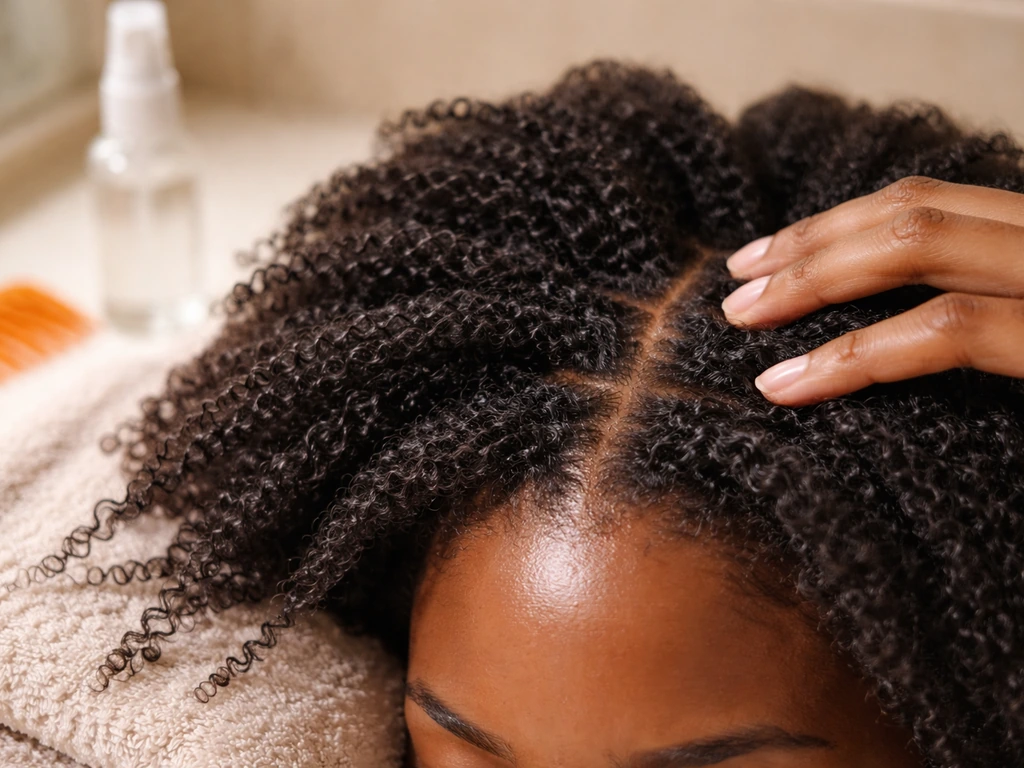
Growing natural hair in Nigeria is absolutely achievable, but the honest truth is that what most people call 'growing' their hair is really about retaining the length that already grows from your scalp every month. Your follicles are doing their job. The problem is almost always breakage, damage, and scalp issues quietly stealing the progress before you ever see it. Fix those, and your hair will grow.
How to Grow Natural Hair in Nigeria: A Practical Guide

Simone Okonkwo
21 Jul 2026
Who this guide is for
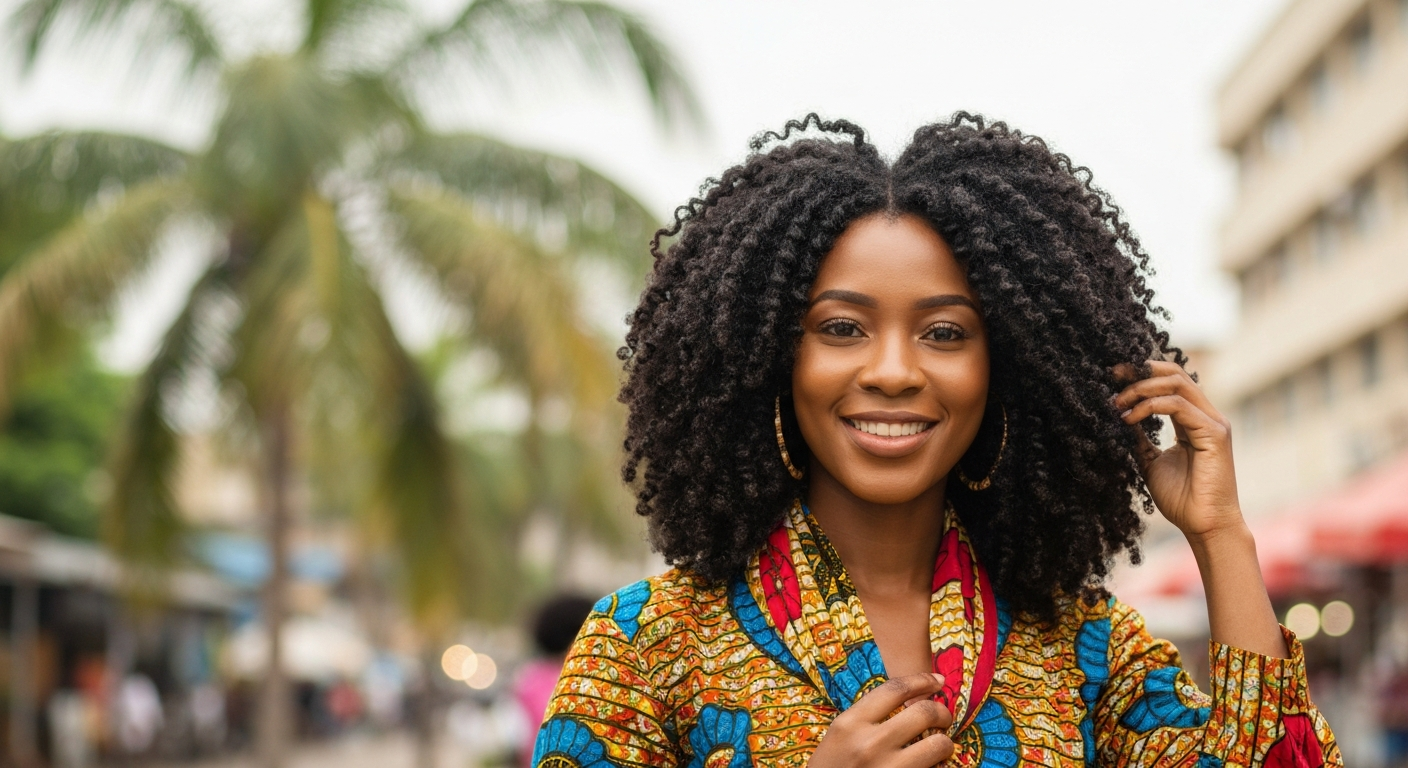
This article is written for Nigerians and residents with textured or 'Naija' hair: whether you are fully natural, transitioning from a relaxer, wearing braids, twists, locs, or weaves, or trying to keep your virgin hair in the best shape possible. I have tried to make this as evidence-based as possible, pulling from actual dermatology research rather than YouTube hair-growth myths. You will find sections on how hair biology works, what local factors in Nigeria specifically affect your growth, how to build a simple but effective routine, what products to look for and what to avoid, and when a problem in your scalp needs a doctor rather than a new product.
How your hair actually grows
Each hair on your scalp grows from a follicle that cycles through three phases: anagen (active growth), catagen (a short transition period where the follicle regresses), and telogen (a resting phase where the old hair sits until it sheds to make room for a new one). At any given time, roughly 85 to 90 percent of your follicles are in the anagen phase, which can last two to six years. The catagen phase lasts just a couple of weeks. Telogen lasts around three months, and it is during this phase that the hair eventually sheds. Losing 50 to 100 hairs a day is completely normal and is not a sign that your hair 'is not growing.'
One simple way to check whether your shedding is within a healthy range is a hair pull test. Grasp about 50 to 60 hairs between your fingers and gently but firmly pull from root to tip. A 2017 clinical guideline published in the Journal of the American Academy of Dermatology confirmed that releasing more than 2 hairs per pull is a flag for active shedding worth investigating. If you are consistently pulling out fistfuls, that is a real signal, not just normal shedding.
In terms of measurable growth rate, studies using phototrichograms and other in-vivo measurement tools report that scalp hair grows roughly 0.8 to 1.4 centimetres per month across populations. A large multicontinental study of 2,249 young adults across 24 ethnic groups found that African hair tends to grow at around 0.9 cm per month on average, which is slower than Caucasian hair (around 1.2 to 1.3 cm per month) and Asian hair. This is not a reason to despair. It is just a baseline for setting realistic expectations. With good retention practices, that 0.9 cm per month adds up to roughly 10 to 11 cm a year, and many people with healthy natural hair practices far exceed this because they keep more of what grows.
Genetics and realistic expectations for Naija hair
Your genetics determine your follicle density, growth rate, and the length your hair can potentially reach before it naturally sheds. Research using quantitative trichoscopic analysis has found that people of African descent tend to have a mean hair density of around 148 to 160 hairs per square centimetre, compared to 214 to 230 in Caucasian groups. That does not mean your hair is 'weaker' by nature. It means the way you care for it has to account for its structure: highly coiled strands have more points of curvature, which are points where the hair can snap if it is dry, tangled, or pulled aggressively.
If your mother, grandmother, or aunts all have hair that plateaus at a certain length, your genetics may set a similar ceiling. But a significant portion of what many people interpret as 'my hair doesn't grow past this point' is actually the point where their hair gets long enough to experience more friction, manipulation, and breakage. Genetics sets the range. Your routine determines where within that range you land. This is the core argument that the 'Naija hair can grow' conversation is built on.
Scalp health: the foundation you cannot skip
Healthy hair starts at a healthy scalp. Your scalp has sebaceous glands that produce sebum, a natural oil that lubricates the hair shaft as it exits the follicle. The challenge with highly coiled hair is that sebum has a harder time travelling down the spiral of the strand, which means the scalp can sometimes become oily at the roots while the mid-shaft and ends stay dry. This imbalance is part of why moisture management is such a central theme in natural hair care.
Dandruff and seborrheic dermatitis
Seborrheic dermatitis, the clinical name for persistent, flaky, itchy dandruff, is caused by an overgrowth of a yeast called Malassezia on the scalp. It is not caused by dryness, despite what product labels sometimes suggest. The inflammation it causes can affect your scalp environment and, if left unmanaged, contribute to diffuse shedding. Randomized trials and clinical reviews consistently support antifungal shampoos as the first-line treatment: ketoconazole 2% (brand name Nizoral, available in most Nigerian pharmacies), selenium sulfide, and zinc pyrithione shampoos are all evidence-backed options. For a flare, using one of these two to three times a week for a few weeks usually gets things under control. A short course of a mild topical corticosteroid can help with severe inflammation, but that warrants a visit to a dermatologist.
Tinea capitis and scalp infections
Tinea capitis, or scalp ringworm, is a fungal infection that causes patchy hair loss and is unfortunately common in children in Nigeria. It cannot be treated with shampoo alone. It requires a course of oral antifungal medication (griseofulvin is commonly prescribed; terbinafine is an alternative depending on the causative organism). If you or your child has a scaly, circular patch of hair loss with broken hairs, go to a doctor. Bacterial folliculitis, which presents as small pustules around follicle openings, can also cause localised hair loss. Mild cases respond to topical antiseptics; more widespread infection may need oral antibiotics. Neither of these conditions improves with a better shampoo and conditioner routine.
Traction alopecia: the styling problem nobody talks about enough
Clinical and population studies of women of African descent have clearly established that prolonged tight traction (very tight braids, heavy extensions, tight weave knitting) significantly raises the risk of traction alopecia. Clinical series have linked chronic traction and folliculitis with central centrifugal cicatricial alopecia, Hair grooming practices and central centrifugal cicatricial alopecia, PubMed (case–control series) Hair grooming practices and central centrifugal cicatricial alopecia — PubMed (case–control series). The hair loss is first noticeable along the hairline and temples. In its early stages it is reversible if you stop the tension. Left untreated for years, it can progress to scarring alopecia (central centrifugal cicatricial alopecia, or CCCA), which is permanent. If your edges are thinning, the style is too tight. Full stop.
Nutrition and lifestyle: what the science actually shows
Hair follicles are among the most metabolically active cells in the body, which makes them sensitive to nutritional deficiencies. The strongest evidence links low iron stores and low vitamin D to diffuse hair shedding. Multiple meta-analyses report that women with telogen effluvium (a type of diffuse, sudden shedding often triggered by stress, illness, or nutritional deficiency) have significantly lower serum ferritin than women without the condition. Ferritin is the storage form of iron. If you have been shedding excessively for more than three months, ask a doctor to check your ferritin, full blood count, and vitamin D levels before spending money on supplements you may not need.
On the biotin question: biotin (vitamin B7) deficiency genuinely does cause hair loss, but true dietary deficiency is rare in people eating a varied diet. The NIH Office of Dietary Supplements is direct on this point: there is very little high-quality evidence that biotin supplements help hair growth in people who are not actually deficient. The majority of biotin-for-hair marketing is not backed by strong science. By contrast, ensuring you eat enough protein (hair is made of keratin, which is a protein), iron-rich foods like beans, dark leafy vegetables, offal, and fish, and vitamin D from sunlight or diet is genuinely useful.
- Protein: eggs, beans, fish, chicken, offal (liver is particularly iron-rich)
- Iron: red meat, liver, cowpeas (ewa), dark leafy greens like ugwu and efo; pair with vitamin C to improve absorption
- Vitamin D: sunlight exposure (15 to 30 minutes on arms and legs on most days in Nigeria is usually sufficient), oily fish, eggs
- Zinc: pumpkin seeds, beef, shellfish; zinc deficiency is associated with hair shedding in some studies
- Water: staying well hydrated supports scalp health and overall cellular function
- Sleep: poor sleep elevates cortisol, which can disrupt the hair cycle over time
- Stress management: chronic psychological stress is a documented trigger for telogen effluvium
Nigerian-specific factors that affect your hair growth
Growing hair in Nigeria comes with a set of local variables that many generic hair guides do not address. For readers in neighbouring countries, see our guide on how to grow natural hair South Africa for region-specific tips and adaptations to local climate and water conditions. The tropical climate brings high humidity for most of the year, especially in the south, which can actually help coily hair retain moisture compared to dry temperate climates. However, the harmattan season (roughly November to February) brings dry, dusty air that can strip moisture aggressively, causing increased breakage if you are not adjusting your routine seasonally.
Water quality is a real and underappreciated factor. Many parts of Nigeria have hard water, meaning it contains high levels of dissolved minerals like calcium and magnesium. Hard water deposits can build up on the hair shaft over time, making it rough and more prone to tangling and breakage. If your hair feels rough and dull after washing even with a good product, hard water is a plausible culprit. Rinsing your hair with filtered water or a diluted apple cider vinegar rinse (one tablespoon in a cup of water) at the end of washing can help reduce mineral buildup.
Air pollution, particularly in Lagos, Kano, and other major urban centres, can deposit particulate matter on the scalp that may contribute to scalp irritation with repeated exposure. Covering hair or washing more frequently during periods of high pollution is a reasonable precaution. On the product availability front, the Nigerian market has improved considerably. A wider range of genuinely useful natural hair products from local and imported brands is now accessible in physical stores and online. That said, the market is also full of products making exaggerated claims. Learning to read labels is not optional.
Choosing products in Nigeria: what to look for and what to avoid
The most important product categories for natural hair maintenance are: a gentle sulfate-free or low-sulfate shampoo, a rinse-out conditioner, a deep conditioner (used weekly or biweekly), a leave-in conditioner, a sealant oil or butter, and a protein treatment used monthly or as needed. You do not need every product on the shelf. You need the right few used consistently.
Ingredients to look for
- Humectants (draw moisture into the hair): glycerin, aloe vera, honey, panthenol
- Emollients (smooth the cuticle and add slip): shea butter, mango butter, avocado oil, olive oil, castor oil
- Proteins (strengthen and repair the strand): hydrolyzed keratin, hydrolyzed wheat protein, silk amino acids — use in moderation if your hair feels stiff after protein
- Fatty alcohols (moisturising, not drying): cetyl alcohol, cetearyl alcohol, stearyl alcohol
- Antifungal actives for dandruff shampoos: ketoconazole, zinc pyrithione, selenium sulfide
Ingredients and practices to be cautious about
- Sulfates (sodium lauryl sulfate, sodium laureth sulfate) in daily shampoos: perfectly safe in occasional use but can over-strip coily hair if used too frequently
- Mineral oil and petrolatum as primary moisturisers: they seal the hair shaft but do not add moisture; useful as a sealant over water-based products but not as a standalone moisturiser
- Products labelled 'fast hair growth' with no ingredient transparency: these are marketing, not science
- Relaxers: sodium hydroxide-based (lye) and guanidine-based (no-lye) relaxers permanently break the disulfide bonds in the hair shaft. This is not inherently incompatible with hair growth, but chemically straightened hair requires careful moisture management and protein balance to avoid breakage
- High-heat styling without heat protection: repeated high-temperature heat causes cumulative protein degradation in the strand
Local product options in Nigeria
Locally made shea butter (ori) remains one of the most useful and affordable sealants available in Nigeria and is widely sold in markets from north to south. Raw African black soap (dudu osun) can be used as a clarifying wash, though it can be quite alkaline so it works best diluted or followed by a conditioner. Brands like ORS, Cantu, and Shea Moisture are stocked in most large supermarkets and beauty shops in Lagos, Abuja, and Port Harcourt. Locally developed Nigerian brands have also grown in recent years and often formulate specifically for the Nigerian climate. When choosing any product, flip it over and check the ingredients list before buying based on the label claims.
Pre-poo, clarifying, and deep conditioning: when and how to use them
These three steps get talked about a lot in natural hair spaces, but there is real confusion about what each one does and how often you actually need them. Here is a practical breakdown.
Pre-poo (pre-shampoo treatment)
A pre-poo is a treatment applied to dry or damp hair before shampooing, typically for 15 to 30 minutes (or overnight under a plastic cap). Its purpose is to reduce the hygral fatigue and friction that shampooing can cause: when coily hair swells with water rapidly, strands can stretch and break more easily, especially if tangled. Applying a penetrating oil like coconut oil, or a conditioner, before washing helps reduce moisture uptake from the shampoo, making detangling easier and reducing mechanical breakage during the wash. This step is optional but genuinely useful, especially if your hair is fine, fragile, or very tangled. A simple application of coconut oil or conditioner to dry hair before your wash day is enough.
Clarifying
Clarifying means using a stronger cleanser to remove product buildup, mineral deposits, and excess sebum that a regular shampoo cannot fully shift. You do not need to clarify every wash. Most natural hair types do well with clarifying once a month, or whenever your hair starts feeling weighed down, dull, and unresponsive to your usual products. A sulfate-containing shampoo (yes, the regular kind) used once a month for clarifying purposes is fine. Apple cider vinegar diluted in water (one part ACV to three parts water, left on for five minutes before rinsing) is a gentler clarifying option that also helps with hard water residue. Always follow clarifying with a deep conditioning treatment because a clarify strips the hair more thoroughly.
Deep conditioning
A deep conditioner is a thicker, more concentrated conditioning treatment left on the hair for 15 to 45 minutes, ideally under a plastic cap or hooded dryer to allow heat to open the cuticle and improve penetration. It can be moisture-focused (containing humectants and emollients to replenish softness and elasticity) or protein-focused (containing hydrolyzed proteins to fill gaps and cracks in the cuticle). Most natural hair types benefit from weekly or biweekly deep conditioning. If your hair feels gummy or stretches excessively before breaking, it needs protein. If it feels brittle, hard, and snaps without stretching, it needs moisture. Do not use both a heavy protein treatment and a heavy moisture treatment in the same session; do one and assess your hair's response before doing the other.
| Step | Frequency | Key purpose | When to skip |
|---|---|---|---|
| Pre-poo | Every wash day (optional) | Reduce friction and breakage during shampooing | If your hair is not prone to tangling or breakage |
| Clarifying wash | Monthly or as needed | Remove buildup, hard water minerals, excess oil | If hair feels balanced and clean after regular shampoo |
| Rinse-out conditioner | Every wash day | Restore moisture, reduce tangling, smooth cuticle | Never — always condition after shampooing |
| Deep conditioner (moisture) | Weekly or biweekly | Replenish elasticity and softness | If hair already feels soft and moisturised |
| Protein treatment | Monthly or when hair feels weak/stretchy | Strengthen strand, reduce breakage | If hair already feels hard or stiff |
Protective styling: what actually helps retention
Protective styles (braids, twists, cornrows, locs, weaves) work for retention because they tuck the fragile ends of your hair away from friction, cold or dry air, and constant manipulation. The style itself does not make your hair grow faster. It protects what is already growing. The distinction matters, because people often blame their hair when a protective style 'does not work,' when the problem was actually the installation or the neglect of the hair underneath.
Keep styles in for no more than six to eight weeks before taking them down, refreshing moisture, and either reinstalling or wearing your hair loose for a week. Scalp care does not stop when you are in a protective style. Use a light oil or scalp spray to keep your scalp moisturised, and make sure braids and twists are installed without excessive tension at the roots. If your scalp hurts after installation, the style is too tight. Pain is not a price of getting a neat look; it is an early warning of follicle damage.
For those wearing weaves or extensions, the health of your natural hair underneath depends on how well it is prepped, moisturised, and allowed to breathe. Do not leave a sew-in or bonded weave in for more than eight weeks. Avoid gluing extensions directly to your natural hair, as removal always causes mechanical damage. And be careful with very heavy extensions: the added weight creates constant downward tension on your follicles, which is exactly the kind of prolonged traction that research has linked to hairline recession and traction alopecia.
Daily and weekly routine: a simple framework
You do not need a 10-step routine. You need a consistent, appropriate one. Here is what a practical routine looks like for most Nigerian natural hair types:
- Wash day (once a week or biweekly): Pre-poo with coconut oil or conditioner for 30 minutes. Shampoo with a gentle sulfate-free shampoo (or clarifying shampoo once a month). Rinse out conditioner in sections. Deep conditioner under a plastic cap for 20 to 30 minutes. Rinse, apply leave-in conditioner, then seal with a light oil or butter (LCO method: leave-in, cream, oil — or LOC: leave-in, oil, cream). Style as desired.
- Daily moisture: Spritz hair lightly with water or a water-based leave-in and seal with a small amount of oil, especially on ends. During harmattan, do this more often.
- Nightly protection: Wrap hair in a satin or silk scarf, or sleep on a satin pillowcase. Cotton absorbs moisture and causes friction that breaks hair overnight. This one habit alone makes a measurable difference.
- Scalp care: Lightly oil or massage the scalp two to three times a week. A scalp massage with the fingertips for four to five minutes per session is associated with improved scalp circulation and, in one small study, modestly improved hair thickness over 24 weeks.
- Trimming: Trim split ends every three to four months, or whenever you feel significant knotting at the ends. Regular trimming does not make hair grow faster, but it prevents split ends from travelling up the shaft and causing more breakage.
Troubleshooting common problems
Excessive breakage
If you are seeing a lot of short broken pieces rather than long shed hairs with a white bulb at the root, the problem is breakage, not shedding. Common causes in Nigerian natural hair include: too little moisture (harmattan is a frequent culprit), too much or too little protein, aggressive detangling on dry hair, tight protective styles, and heat damage. Start by increasing moisture, detangle only on wet or damp hair with a wide-tooth comb working from ends to roots, and check whether your last few products have contained a lot of protein.
Slow growth perception
If your hair feels like it has been the same length for years, the growth is almost certainly happening but the length is breaking off at roughly the same rate. Measure your hair with a tape measure or take monthly photos of stretched hair to track progress objectively rather than going by feel. Many people are surprised to find their hair has grown centimetres that they never retained to visible length.
When to see a doctor
Some hair and scalp conditions genuinely need medical attention and do not respond to better products. See a dermatologist if you notice: circular bald patches (possible alopecia areata or tinea capitis), diffuse sudden shedding over more than three months (possible telogen effluvium, thyroid issues, or anaemia), a receding or thinning hairline that does not improve when you stop tight styles (possible early CCCA or traction alopecia requiring intervention), scalp pustules or painful bumps that do not clear with antiseptic washes, or if you are shedding more than 100 hairs a day consistently. The wash test (standardized wash/shampoo collection) and phototrichogram/trichogram can quantify shedding and telogen:anagen ratios and are used clinically to track telogen effluvium and treatment response over months The wash test (standardized wash/shampoo collection) and phototrichogram/trichogram can quantify shedding and telogen:anagen ratios and are used clinically to track telogen effluvium and treatment response over months.. These are not product problems. They are medical problems.
Measuring progress and setting realistic timelines
Expect roughly 10 to 11 centimetres of growth in a year at the average growth rate for African hair. With good retention, some people see more. Progress is almost never linear, and different sections of your scalp may grow at different rates. Track monthly with stretched length measurements from a consistent reference point (hairline to a fixed point on the back of your head, for example). If you are comparing month to month, changes under a centimetre are hard to see visually but add up significantly over six months.
The biggest mindset shift that actually helps people grow longer natural hair in Nigeria is moving from chasing a 'growth product' to building a retention system: consistent moisture, gentle handling, scalp health, satin protection at night, careful protective styling, and good nutrition. That is the evidence-based version of what 'Naija hair can grow' looks like in practice. For practical tips on what can grow natural hair and step-by-step routines tailored to Nigerian hair, see our guide on what can grow natural hair. For a practical step-by-step plan on how to grow Nigerian hair, see this guide.
FAQ
How does hair growth actually work and what determines how fast my hair grows?
Scalp hair cycles through anagen (growth), catagen (short regression) and telogen (rest). Average growth varies by ancestry and individual—studies report ~0.8–1.4 cm/month overall, with many people of African descent averaging ≈0.9 cm/month. Genetics set follicle number, diameter and baseline growth rate; environment, health, hormones, nutrition and local scalp conditions modify actual visible length over time.
What realistic length timelines should Nigerians expect when growing natural/‘Naija’ hair?
Expect about 0.7–1.0 cm/month on average for textured hair—so roughly 8–12 cm (3–5 in) per year of raw growth. Visible length retention depends on breakage: with good care you can keep most growth; with high breakage you may see much less net length. Measure progress with monthly photos under consistent lighting, a tape measure on a defined strand, and periodic hair‑pull or wash tests to track shedding.
Which daily and weekly routines best help growth and retention in Nigeria’s climate?
Daily: scalp check, gentle moisturising (light water-based spray + sealant like shea or light oil), satin bonnet/pillowcase at night, avoid tight edges. Weekly/biweekly: cleanse scalp with a gentle shampoo or co-wash when soiling occurs, clarify monthly if product build-up/hard water, deep condition or protein-moisture treatments every 2–4 weeks depending on hair state. Pre-poo with oils/conditioning before washing to reduce tangling. Reduce manipulation frequency to minimise mechanical breakage.
How should I balance protein and moisture?
Textured hair needs both. Use a protein-rich treatment (eg. egg, store protein masks, or commercial protein conditioners) when hair feels mushy, overly stretchy or limp after wetting—typically every 4–8 weeks. Use moisturizing deep conditioners more often (2–4 weeks). Rotate protein and moisturizing treatments: heavy protein too often causes brittleness; too much moisture without protein causes over‑stretching and breakage.
What are evidence-based protective styling tips — which styles help retention and which cause breakage?
Helpful styles: loose braids, twists, bantu knots, gentle updos, low-tension cornrows and well-maintained wigs/locs when done loosely and with scalp access. Harmful: very tight braids/pony tails, heavy extensions, constant edge tension, and styles left in for extremely long periods without care. Change styles every 4–8 weeks, inspect and clean the scalp while styles are in, and keep tension light (no scalp pain).
Are braids, twists, locs and weaves safe for growth?
Yes if installed and maintained gently. Braids/twist/locs: avoid tight parts, heavy extensions, and prolonged tension—these raise risk of traction alopecia. Weaves/wigs: protect natural hair by braiding loosely underneath, avoid glues on the hairline, choose well-fitting caps and give scalp breaks. Regular scalp cleaning and moisturizing are essential with any protective style.
Next Article
How to Grow Nigerian Hair Fast: Retention Routine
Realistic, fast Nigerian hair growth routine focused on retention: scalp care, moisture, gentle detangling, and protecti