
Nothing grows natural hair faster than your genetics allow. Your follicles run on a biological clock that no braid, oil, or supplement can override. What you can do, and what actually makes a real difference, is protect the hair you are already growing from breaking off before it reaches usable length. For people with Black and textured hair, that distinction between true growth and length retention is the single most important thing to understand. Get that right, and you will see longer, healthier hair in a matter of months.
What Can Grow Natural Hair: Evidence-Based Guide for Naija

Simone Okonkwo
27 Jul 2026
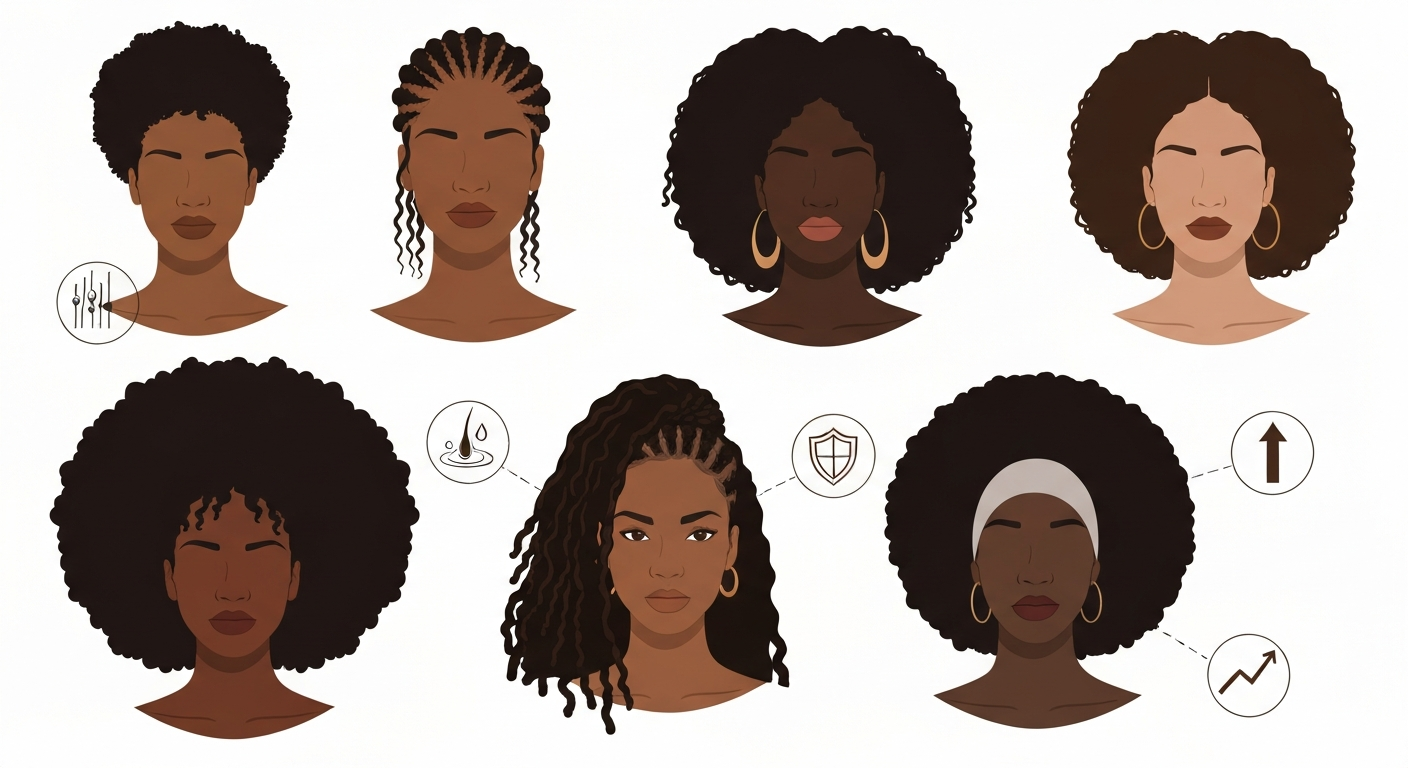
What actually grows natural hair: a quick answer for readers in Nigeria and South Africa
Your hair is always growing from the follicle. The question is whether that growth survives long enough to become visible length. For most people with tightly coiled or kinky hair, especially across West Africa, Nigeria, and South Africa, the problem is not a slow scalp but a fragile strand. For readers in Nigeria, this article includes a practical section on how naija hair can grow with locally relevant tips and routines. For region-specific tips, see a practical guide on how to grow natural hair in Nigeria for local advice on climate, water quality, and styling practices. Coily hair has more points of curvature along the shaft where breakage starts, it is naturally drier because scalp oil travels down the curl more slowly, and it is often subjected to high-tension styling from childhood onward. The practical answer to what grows natural hair, therefore, covers four areas: a healthy scalp, low-manipulation styling, consistent moisture and protein balance, and enough nutrition to support the follicle from the inside. Everything else is secondary.
How hair actually grows (explained without the jargon)
Every strand on your head is produced inside a follicle that runs through its own cycle independently of what you put on it. That cycle has three phases: anagen, the active growth phase that can last anywhere from 3 to 6 years; catagen, a short regression phase lasting 1 to 2 weeks; and telogen, the resting phase of about 2 to 4 months before the strand sheds and the cycle restarts. At any given moment, roughly 80 to 90 percent of your scalp follicles are in anagen, actively producing hair. This follicle biology runs on genetics. External styling cannot push a follicle deeper into anagen or speed up its internal clock in any clinically demonstrated way.
Research by Loussouarn and colleagues, comparing hair across 24 ethnic groups in a large in-vivo study, found measurable differences in growth rates between populations. On average, African hair tends to have a slower measured linear growth rate than Asian hair, and the proportions of hairs in each phase differ across groups. The commonly quoted figure of about 1 cm per month is a population average. Many people of African descent fall in the range of 0.6 to 0.9 cm per month of actual follicular growth. That is still real growth, producing 7 to 11 cm of new hair per year, but it means you need every centimetre to survive on the strand.
Two other things genetics controls are density (how many follicles per square centimetre of scalp) and shaft diameter (how thick each strand is). Both together determine visible fullness. People of African ancestry tend to have lower average follicular density than some other groups, which means fullness and apparent thickness come largely from maximising the length and health of the hairs you have, not from producing more of them. Knowing this removes a lot of the frustration when comparing your progress to someone else.
Retention vs growth: why keeping your length matters more than speeding it up
This is the concept I wish someone had explained to me years ago. Your scalp is already producing hair. The reason many people with textured hair struggle to gain visible length is not that growth has stopped; it is that the rate of breakage is roughly equal to the rate of growth, so the hair appears to stay the same length. When you reduce breakage through protective styling, moisture management, and gentler handling, you are not growing hair faster. You are simply allowing more of what is already being grown to remain on your head. No high-quality randomised trial has demonstrated that any protective style increases the follicular anagen rate. What protective styles demonstrably do is reduce mechanical manipulation and therefore reduce breakage, improving length retention so that more net length accumulates over time.
Practically, this means your routine should be evaluated on two questions: is my scalp environment healthy enough to support continuous follicle activity, and is my styling and product routine damaging the strands I already have? Both matter equally.
Realistic growth expectations for textured hair
If your follicles are healthy and your retention is good, here is what a realistic timeline looks like. Growing from a short fade or TWA (teenie-weenie afro) to shoulder length, accounting for shrinkage on 4c coils, typically takes two to three years. Mid-back length for densely coiled hair, genuinely maintained without excessive breakage, is a multi-year project for most people. Shrinkage compounds this: a strand that has grown 10 cm in length can appear as short as 3 to 4 cm when fully moisturised and coiled, which makes progress hard to measure visually.
Use stretched measurements, such as pulling a section straight with a flat twist or blow-dry on low heat, to track real length over time. Clinical researchers use tools like phototrichograms and TrichoScan, which clip a small section and use serial imaging to count hairs and measure growth objectively. Phototrichogram-based methods such as TrichoScan are validated clinical tools that use serial imaging with hair clipping and software counting to provide objective measurements of hair growth rate and density Phototrichogram-based methods such as TrichoScan are validated clinical tools that use serial imaging with hair clipping and software counting to provide objective measurements of hair growth rate and density.. You do not need that at home, but the principle is sound: measuring the same section in the same state every 8 to 12 weeks is far more useful than comparing day-to-day shrinkage and getting discouraged.
- Average follicular growth for textured hair: roughly 0.6 to 1.0 cm per month
- Shrinkage on 4c coils can make hair appear 50 to 75 percent shorter than its actual length
- Breakage at a rate equal to growth produces no visible length gain, regardless of how fast follicles work
- Track length by measuring stretched, dry hair every 8 to 12 weeks, not by eye-balling shrunk coils
- Maximum length potential is largely set by anagen phase duration, which is genetic
Common claims about what grows natural hair: what the evidence actually says
A lot of what circulates in natural hair communities about growth is well-intentioned but unsupported by evidence. Let me go through the most common claims honestly.
| Claim | What the evidence shows | Verdict |
|---|---|---|
| Braids and twists grow hair | They reduce mechanical manipulation and breakage, improving retention. No evidence of follicular growth acceleration. | Retention benefit, not growth stimulus |
| Locs grow hair faster | Locs reduce daily manipulation. Some users see more retained length over time due to less breakage at the tips. | Retention benefit; same follicular rate |
| Weaves and wigs grow hair | When properly installed with low tension, they protect natural hair from manipulation. Poorly done installs cause traction alopecia. | Protective if done correctly, damaging if not |
| Relaxers stop hair growth | Relaxers damage the shaft and increase fragility; they do not directly stop follicular growth, but chronic chemical + traction stress raises scarring alopecia risk. | Not a growth blocker but a breakage and damage risk |
| Virgin hair products grow your hair | "Virgin hair" refers to unprocessed extension hair. No topical product applied to extensions affects your own follicles. | No direct effect on natural hair growth |
| Scalp oiling with coconut or castor oil grows hair | Coconut oil reduces protein loss from the shaft pre/post wash. Castor oil lacks strong clinical evidence for follicular stimulation. Oils support shaft health, not follicle speed. | Shaft protection benefit; no proven follicle stimulation |
| Minoxidil grows hair | Topical 2–5% minoxidil is FDA-approved and has Cochrane-level evidence for non-scarring pattern hair loss. It genuinely extends anagen and increases follicular activity. | Proven for pattern/traction hair loss; see a clinician first |
| Rosemary oil grows hair | Small RCTs suggest modest benefit comparable to 2% minoxidil in androgenetic alopecia, but evidence is limited and not replicated at scale. | Promising adjunct; not a replacement for proven therapies |
Braids and twists: the benefits, the real risks, and how to do them right
Braids and twists are among the most culturally significant and practically effective protective styles available for textured hair, and I say that as someone who grew up watching them done on every corner in Lagos and Johannesburg alike. When installed correctly, they tuck the fragile ends of your hair away from daily manipulation, reduce dryness from constant touching, and let you go days without a complex routine. The length retention benefit is real and meaningful. But the risks are just as real, and they are far too common.
Traction alopecia (TA) is caused by repeated tension at the follicle. A Nigerian school-based survey found a TA prevalence of approximately 46 percent among adolescent girls, which is a striking number that reflects how common tight braiding is from a young age. Early TA is non-scarring and usually reversible if you catch it and stop the tension. Chronic TA that goes unaddressed can become permanent (cicatricial), meaning those follicles are gone for good. The fringe sign, a band of shorter, finer retained hairs just inside a thinning or receding hairline, is one of the earliest clinical clues.
Braids and twists: do this
- Install on well-moisturised, freshly washed hair to reduce friction on the shaft
- Keep individual braids at a size that does not put excessive weight or tension on the root
- Leave your edges and hairline with minimal to no tension, even if it looks less neat
- Take down and reinstall after a maximum of 6 weeks (British Association of Dermatologists guidance)
- Deep condition before reinstalling to restore moisture and protein balance
- Moisturise the scalp under braids every 5 to 7 days with a light water-based spray or diluted oil
Braids and twists: avoid this
- Any installation that causes pain or headaches for more than 24 hours after sitting down
- Braiding dry, brittle, or previously damaged hair without a conditioning treatment first
- Leaving braids in longer than 6 to 8 weeks, which risks matting and severe breakage on removal
- Tight tension at the hairline and temples, the zones most vulnerable to traction alopecia
- Scratching with sharp tools directly on the scalp (causes micro-wounds that can lead to infection or scarring)
- Covering braids with tight satin caps that also pull the hairline while sleeping
Locs: what they actually do for length and how to maintain them safely
Locs are one of the most misunderstood styles when it comes to hair growth. They do not make hair grow faster. What they do is virtually eliminate daily manipulation and end-breakage, which for many people produces the most net length retention they have ever experienced. Once locs are fully matured (typically 12 to 18 months in, depending on your method and texture), the hair is essentially sealed inside the loc, protected from breakage at the ends. That is a genuine structural advantage for retention.
The risk with locs comes at two points: tension during retightening, and neglect. Retightening sessions that are done too frequently or too tightly at the root are a primary cause of traction alopecia in loc wearers. Equally, locs that become too heavy from length or product buildup put mechanical stress on the follicle around the clock, not just during styling. Central Centrifugal Cicatricial Alopecia (CCCA), the most common scarring alopecia affecting women of African descent, is associated with a combination of high-tension styling and chronic scalp inflammation. Heavy, neglected locs can contribute to that inflammatory environment.
Locs: do this
- Space retightening sessions at least 4 to 6 weeks apart to avoid chronic root tension
- Keep locs clean: wash every 1 to 2 weeks depending on scalp oiliness and activity level
- Use residue-free, lightweight shampoos to prevent product buildup inside the loc
- Moisturise the scalp (not the length of the loc) regularly with a light, water-based mist
- Monitor the hairline and part lines for thinning, tenderness, or reduced density
- Consider thinning or removing very long, heavy locs if scalp tension is noticeable
Locs: avoid this
- Retightening more often than every 4 weeks, especially with painful tension at the root
- Heavy waxes, butters, and petroleum-based products that build up inside the loc and are nearly impossible to fully wash out
- Neglecting scalp hygiene in the belief that locs should not be washed often
- Ignoring early warning signs: tenderness at parts, pustules, or visible thinning at the crown
- Installing locs with added hair extensions at very high tension to create the initial style
Weaves, wigs, and virgin hair: the honest picture for Nigerian and South African shoppers
Weaves, wigs, and what is sold as virgin hair in markets across Lagos, Accra, and Johannesburg are extensions. They are not your hair. Nothing you apply to a weave or wig, and no property of the extension itself, will stimulate your own follicles to grow faster. What these styles can legitimately do is protect your natural hair from daily manipulation while you wear them, but that benefit depends entirely on how they are installed and cared for.
The term virgin hair in the Nigerian and broader West African market typically means unprocessed, chemically untreated human extension hair. It is valued for its durability and natural appearance. It does nothing for your scalp biology, but a good-quality virgin hair bundle is less likely to tangle and mat against your natural hair, which reduces the mechanical damage during removal. That is an indirect benefit worth considering if you wear weaves regularly. For practical steps on how to grow virgin hair in Nigeria, see our guide on sourcing, caring for, and installing virgin bundles to minimise damage and maximise retention.
The real risks with weaves come from the installation method. Sewn-in weaves braided onto cornrows that are too tight, glued wefts that deposit adhesive on the scalp, and weaves left in beyond 8 weeks are among the most common causes of traction alopecia and hairline recession I see documented in clinical literature and hear about from readers. The British Association of Dermatologists specifically flags sewn-in and weave extensions as carrying a limit of 8 weeks maximum. Glue-based adhesives deserve a particular warning: they can cause allergic contact dermatitis, chemical burns on the scalp, and mechanical damage when removed incorrectly, stripping hair and even follicles from the scalp.
For readers in Nigeria and South Africa who rely on weaves as a regular style, the most protective approach is a well-braided cornrow base (not too tight, not too flat), a sewn-in or closure install that leaves your edges free, a maximum 6 to 8 week wear period, and a proper protein and moisture treatment for your natural hair immediately after removal before reinstalling. Give your scalp at least one to two weeks between installs if your hairline is already showing signs of stress.
Weaves and wigs: do this
- Install on clean, well-conditioned natural hair with a low-tension cornrow base
- Leave your natural hairline and edges free of direct tension wherever possible
- Remove sewn-in weaves by 8 weeks maximum
- Wash your scalp through the weave every 1 to 2 weeks to prevent buildup and scalp inflammation
- Remove your wig at night and allow your scalp to breathe, especially if wearing daily
- Choose a lace closure or frontal over glue application when possible to reduce adhesive-to-scalp contact
- Deep condition your natural hair immediately after every weave removal
Weaves and wigs: avoid this
- Gluing wefts directly to the scalp or hairline
- Cornrow bases that are so flat and tight they cause scalp pain or visible scalp showing at the parts
- Leaving weaves in beyond 8 weeks, by which point the shed hair trapped in the cornrows can cause severe matting and breakage on removal
- Applying heavy adhesive-based products near the hairline under lace frontals
- Reinstalling immediately after removal without a conditioning and rest period
- Buying extension hair treated with harsh chemical coatings (often present in cheaper synthetic or chemically processed bundles) that can deposit residue onto your scalp
What actually supports hair growth: the foundational factors
With all the styling context in place, here is what the evidence actually supports as genuine contributors to healthy hair growth and retention.
Scalp health and cleanliness
The follicle lives in the scalp. An inflamed, product-clogged, or chronically dry scalp environment is hostile to optimal follicle function. Washing regularly with a gentle sulphate-based or low-sulphate shampoo (not daily for most textured hair types, but at least every 1 to 2 weeks) removes buildup that can occlude follicles. Avoid harsh surfactant concentrations that strip the scalp's natural lipid barrier completely. If you are in a hard-water region (common in many parts of Nigeria and South Africa), a chelating shampoo used monthly helps remove mineral deposits that dull and stiffen the shaft.
Moisture and protein balance
Textured hair loses moisture faster because its structure means scalp sebum takes longer to travel down the coiled shaft. A routine that layers a water-based leave-in conditioner, seals with a lightweight oil or butter, and refreshes with water mid-week (the LOC or LCO method) keeps the strand pliable and less prone to snapping at points of curvature. Coconut oil is backed by actual lab and clinical data: Rele and Mohile's research showed it penetrates the shaft and measurably reduces protein loss compared with mineral or sunflower oil when used as a pre-wash treatment. That matters because protein loss is a structural breakage risk. Protein treatments (hydrolysed keratin or silk amino acid products) used every 4 to 6 weeks restore internal strand strength, but over-use causes brittleness. Balance both.
Nutrition and internal health
The follicle is a metabolically active structure that needs adequate protein, iron, zinc, and B vitamins (particularly biotin) to function well. Deficiencies in any of these are documented causes of diffuse hair shedding. Before spending money on hair supplements, check whether your diet already covers these through legumes, eggs, leafy greens, and whole grains, all of which are accessible in West and Southern Africa. If you suspect a deficiency, a blood panel (ferritin level in particular) is worth doing before self-supplementing.
Stress and systemic health
Telogen effluvium, the sudden diffuse shedding that happens 2 to 4 months after a significant physical or emotional stressor (illness, surgery, crash dieting, childbirth), is very common and widely misread as "my hair stopped growing." The follicles are fine; they have been prematurely pushed into the resting phase by the stressor and will re-enter anagen on their own once the trigger resolves, typically within 6 months. Managing chronic stress, thyroid conditions, and hormonal changes (including postpartum shifts and perimenopause) through a doctor has a more direct effect on your hair than any topical product.
When to see a dermatologist or trichologist
Some hair loss requires professional assessment, not a better product routine. Seek evaluation if you notice: a rapidly receding or thinning hairline that has not responded to removing tension within 3 months; central crown thinning or breakage with scalp tenderness, pustules, or itch (possible CCCA, which is scarring and time-sensitive); diffuse shedding that is increasing rather than resolving after 4 to 6 months; or patches of complete hair loss (possible alopecia areata). For pattern hair loss confirmed by a clinician, topical minoxidil (2 to 5 percent) has the strongest evidence base of any topical treatment, with Cochrane-level systematic review support. It works by prolonging anagen in miniaturized follicles. Oral low-dose minoxidil has emerging evidence but carries systemic risks and must be supervised by a clinician. Systematic reviews and newer meta-analyses confirm minoxidil’s efficacy and note that oral low‑dose minoxidil increases hair density in androgenetic alopecia but carries systemic side‑effect risks (hypotension, fluid retention, hypertrichosis) and should be managed by clinicians familiar with dosing and monitoring Can oral minoxidil be the game changer in androgenetic alopecia? (systematic review & meta-analysis).
A practical monthly care framework
| Frequency | Task | Why it matters |
|---|---|---|
| Weekly | Moisturise and seal (water-based leave-in + oil) | Prevents strand breakage from dryness between wash days |
| Every 1–2 weeks | Clarifying or gentle shampoo + conditioner | Removes buildup, keeps scalp environment healthy |
| Every 4–6 weeks | Deep conditioning treatment (moisture or protein focus) | Restores shaft integrity and reduces hygral fatigue |
| Every 6 weeks | Take down and reinstall braids or twists if worn | Avoids matting, tension buildup, and hygiene issues |
| Every 8 weeks | Remove sewn-in weave; rest scalp before reinstalling | Prevents traction alopecia and trapped shed-hair matting |
| Every 8–12 weeks | Stretch-measure hair length in the same section | Gives accurate progress data unaffected by shrinkage |
| Monthly | Chelating wash if in a hard-water area | Removes mineral deposits that stiffen and dull the strand |
| As needed | Protein treatment if hair feels limp or snaps easily | Rebuilds internal strand structure before breakage escalates |
Growing natural hair, whether you are in Lagos, Johannesburg, London, or anywhere else, ultimately comes down to supporting the biology you already have. Your follicles are already doing the work. The goal is to stop getting in their way. For region-specific tips, see our guide on how to grow natural hair in South Africa.
FAQ
What actually determines how fast natural (textured) hair grows?
Hair growth is set mainly by follicle biology and genetics. Scalp hairs cycle through anagen (growth), catagen (regression), and telogen (resting); most follicles on the scalp are in anagen for years (commonly 3–6 years). Population studies show variation by ancestry: average linear growth commonly cited (~1 cm/month) ranges roughly 0.6–1.3 cm/month and can be lower on average in many people of African descent. External care cannot lengthen anagen duration in a healthy follicle but can preserve the shaft so length accumulates (retention).
What’s the difference between true growth and retention?
True growth = new hair produced by the follicle (measured with clinical tools like phototrichograms). Retention = preventing breakage so previously grown hair remains intact. Protective styles and gentler routines primarily improve retention rather than speeding follicular growth. Explain this to set realistic expectations.
What are realistic length/time expectations for textured Black hair?
Expect individual variation. Use ranges: roughly 0.6–1.3 cm (0.25–0.5 in) per month is typical; many people of African descent may see rates toward the lower end of this range. Visible gains of several centimetres in 6–12 months are achievable if breakage is minimised and retention is good. Genetics (max anagen duration, shaft diameter, density) determines the absolute maximum wearable length.
Do braids, twists, locs or weaves make hair grow faster?
No high‑quality trials show these styles increase follicular anagen rate. They help by reducing day‑to‑day manipulation and mechanical breakage, improving retention. However, if installed or maintained with excessive tension, they can cause traction and permanent loss. So styles can support longer hair only when used safely.
What are evidence-based protective-style best practices (braids, twists, locs, weaves)?
Do: keep tension low at the edges, moisturise scalp and braids, cleanse regularly (diluted shampoos, no heavy buildup), remove styles at recommended intervals, re-install using clean tools/hands. Avoid: leaving tight or heavy styles in too long, excessive added weight, tight front/temporal braids, and repeatedly redoing styles on already damaged hair. Time limits used in clinical guidance: braids ~≤6 weeks, sewn-in/weave ~≤8 weeks; shorter if you feel pain or see breakage.
What are specific do/avoid lists for braids and twists?
Do: install with moderate tension, moisturise under braids, sleep with satin scarf/bonnet, cleanse scalp every 1–3 weeks, remove gently and detangle gradually. Avoid: very tight installs (pain or headache), leaving them in >6 weeks regularly, excessive edge manipulation or chemical services while braids are in.
Next Article
How to Grow Natural Hair in Nigeria: A Practical Guide
Science-backed guide to growing and retaining natural hair in Nigeria: routines, products, protective styles.