Dreads do not make your hair grow faster. Your follicles grow hair at roughly the same rate no matter what style you're wearing: about half an inch per month, or around 0. Johns Hopkins Medicine notes that scalp hair grows about 1/2 inch per month, and that this rate slows with age scalp hair grows about half an inch per month. 35 mm per day, according to figures from the American Academy of Family Physicians. What locs actually do is help you keep that growth. Less breakage, less manipulation, and no combing through tightly coiled strands every week means the length your scalp produces stays on your head instead of ending up on your bathroom floor. That's a meaningful real-world difference, even if the biology is unchanged.
What Makes Dreads Grow Faster? Facts About Hair Growth vs Retention

Simone Okonkwo
27 May 2026
How locs change what you see when you look for growth
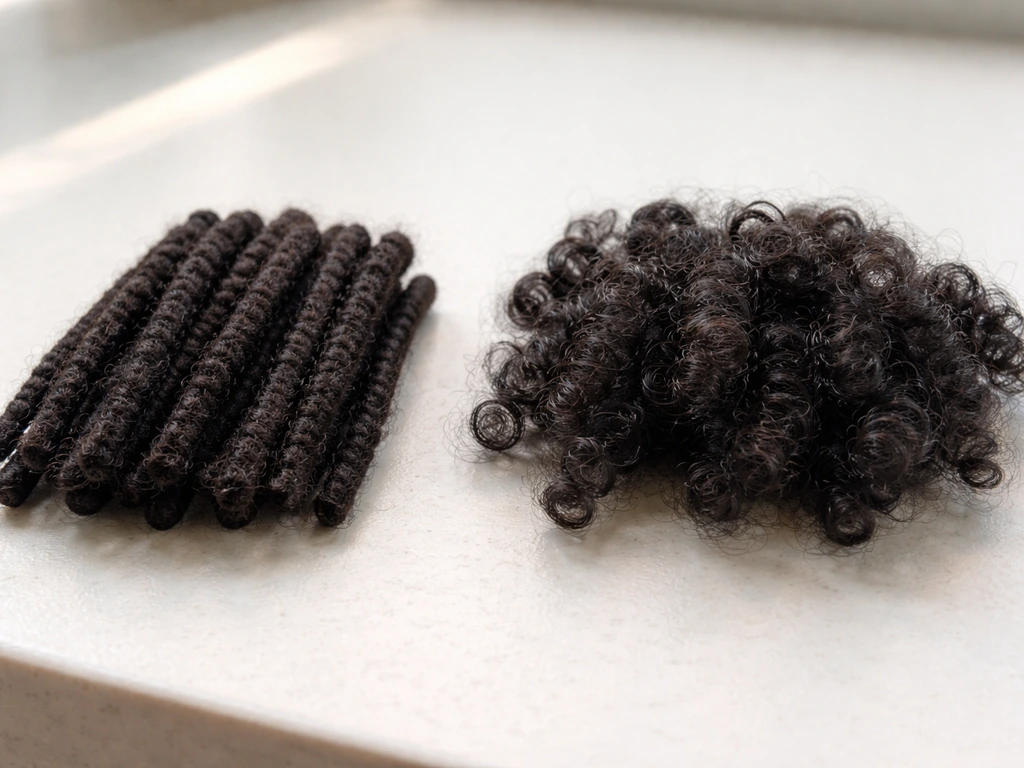
One of the sneaky things about natural textured hair is shrinkage. Coily and tightly curled strands can shrink to less than half their actual length when dry, which makes it genuinely hard to track how much your hair has grown over a few months. Loose natural hair also tends to tangle, knot, and shed fiber during detangling sessions, so even when length is being produced at the scalp, it disappears before you can measure it. Locs change that equation. Once your hair is locked, it can't coil back on itself the same way, so shrinkage is far less dramatic. The strand sits closer to its actual grown length. When people say their hair 'finally started growing' after starting locs, what's usually happening is that they're finally seeing the length that was always being produced, because it's no longer hiding or breaking off.
Hair growth rate vs. visible length: separating myth from biology
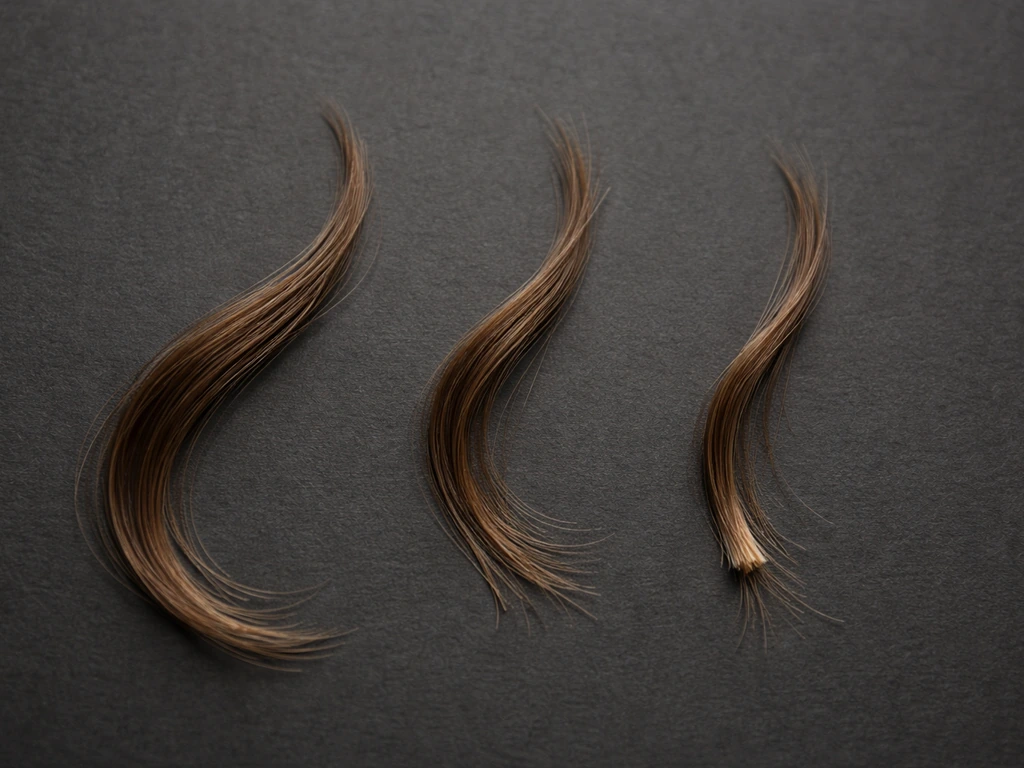
Your hair's growth rate is set by the follicle cycle, which has three phases: anagen (active growth), catagen (transition), and telogen (resting and shedding). At any given moment, about 85 to 90 percent of your scalp follicles are in anagen, with only around 5 to 10 percent resting in telogen, according to data from DermNet NZ and the AAFP. The anagen phase lasts roughly 2 to 4 years before the follicle transitions out, and you can shed up to 100 to 150 telogen hairs per day normally. Critically, this entire cycle is programmed at the follicle level. Styling methods, whether locs, braids, or a loose wash-and-go, do not reach into the follicle and speed up that biological clock. Research published via AccessMedicine confirms that hair follicle biology is fundamentally the same across racial groups, with differences largely related to melanin distribution rather than cycle speed. So if someone tells you locs 'activate' your follicles, that's not what the science shows. Yes, dreads can still grow naturally because the growth is driven by your follicles, not by locking itself can dreads grow naturally.
What styling does affect is retention: how much of that follicle-produced growth actually survives long enough to show up as visible length. That's the real conversation, and it matters a lot more practically than follicle speed.
Why locs can seem to grow faster than loose hair or braids
The comparison that comes up most often is locs versus braids, and both are frequently called 'protective styles.' They do offer some of the same benefits: reduced daily manipulation, less exposure of the ends to friction, and a lower chance of mechanical breakage from combing. But there are a few reasons locs often appear to outperform braids for visible length over time. First, mature locs require very little manipulation. You retwist the roots periodically, but the body of the loc is left alone indefinitely. With braids, especially installed and removed styles, you're re-braiding regularly, which introduces manipulation cycles. Each installation and take-down is a moment where textured hair can break, especially at the hairline and nape. Second, with loose natural hair or even braided styles, shrinkage is still a factor when the hair is out. Locs largely eliminate the shrinkage problem, so length appears more consistently. Third, individual strands in a loc are tangled and matted together, which means a strand that might otherwise shed and fall out can stay physically integrated into the loc for longer, making density look more consistent.
It's worth noting that research on afro-ethnic hairstyling published in MDPI found that traction alopecia prevalence varied with style type and tension, and that some styles with less direct tension showed better outcomes than tightly installed ones. The takeaway: it's not locs versus braids as a binary. It's about tension, installation method, and how much manipulation happens over time.
Does hair grow faster when braided, or when locked? What actually happens
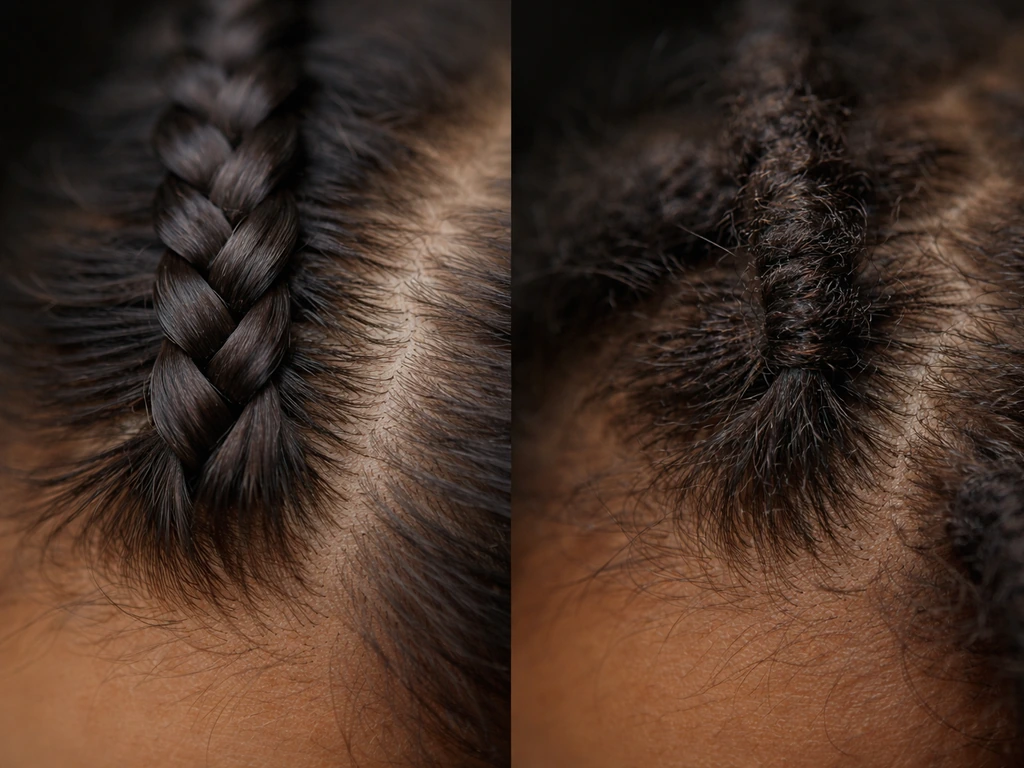
The honest answer is: neither one speeds up follicle growth. Braiding your hair doesn't tell your scalp to pump out more hair faster, and neither does locking it. The follicle grows at its own pace. What both styles can do is reduce the daily wear and tear that causes breakage and length loss. In that sense, both can improve visible length over time compared to styles that involve frequent high-manipulation detangling. Braids can protect the hair too, but the key for why locs look so long is usually retention and breakage control, not a faster follicle clock visible length. Where they diverge is in the degree of protection and the risks involved. Braids (particularly tight cornrows or box braids) introduce real tension at the root, and repeated tension on the same area over time is one of the main drivers of traction alopecia, a condition that the American Academy of Dermatology specifically links to braids, cornrows, and locs. PedsDerm handouts list blank" rel="noopener noreferrer">highest-risk signs and associations for traction alopecia, including tight braids, cornrows, or locs and symptoms such as pain, stinging, crusting, tenting, or pimples. Traction alopecia affects approximately one-third of women of African descent according to a review published in the PMC literature, making it a genuinely common concern rather than a rare worst-case scenario. The key risk isn't the style category; it's the tension and how consistently it's applied.
Locs can also cause traction alopecia, particularly as they mature and become heavier. The AAD specifically notes that longer and heavier locs pull more on the scalp, increasing risk. So if your goal is maximum growth and retention, neither style is automatically 'safer.' You have to manage tension either way.
What actually controls hair growth and length retention in textured hair
Since styling doesn't change your growth rate, the real levers are health-based. Here's what the evidence points to as genuinely meaningful factors.
Scalp health
The follicle sits in your scalp, and a healthy scalp environment supports the anagen phase. Chronic scalp inflammation, product buildup, fungal issues, and untreated conditions like seborrheic dermatitis can all disrupt the cycle and increase shedding. With locs specifically, buildup is a bigger concern than with loose styles because residue from products gets trapped inside the loc and at the scalp. Keeping your scalp clean and well-oxygenated matters more in locs, not less.
Breakage vs. shedding: knowing the difference
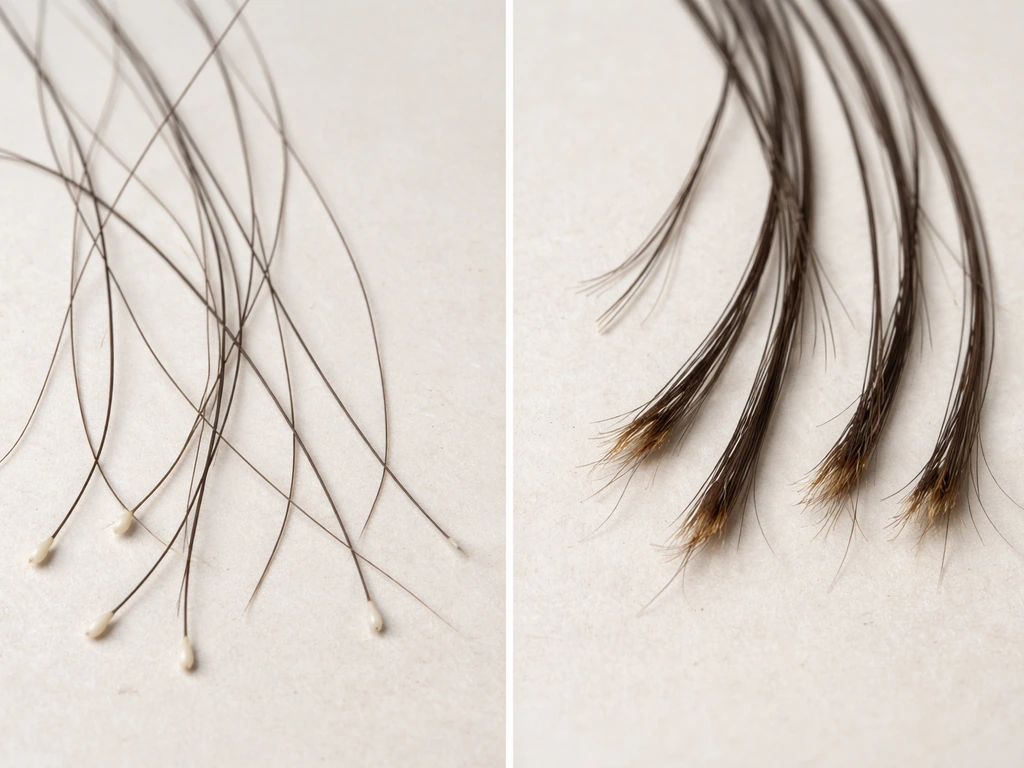
Not all hair loss is shedding. Shedding is the natural telogen phase release of a hair with a white bulb at the root. Breakage is a strand snapping mid-shaft from damage, dryness, or tension. Locs reduce breakage from manipulation, which is a genuine advantage. But if your locs are dry, over-processed, or too tightly retwisted, breakage still happens. Breakage doesn't have a white bulb and often produces short pieces. If you're seeing those in locs, the issue isn't growth rate; it's moisture or tension.
Moisture balance
Afro-textured hair is structurally more prone to moisture loss than straighter hair types, partly due to the coiled shape making it harder for natural sebum to travel down the strand. Dry hair is brittle hair, and brittle hair breaks before it retains length. Locs need moisture too, even though they look dense. A lightweight water-based moisturizer applied to the scalp and loc length, followed by a light oil to seal, is a basic but effective routine. The goal is flexible, hydrated strands, not crunchy or stiff locs.
Nutrition and internal health
Hair is not essential tissue, so the body deprioritizes it when nutrients are scarce. Deficiencies in iron, zinc, biotin, and protein are all associated with increased shedding and slower-feeling growth. If you've recently had a period of significant stress, illness, crash dieting, or hormonal changes, you may notice increased shedding two to four months later. That's telogen effluvium, and it's a known phenomenon described in Harvard Health's coverage of hair cycles. It's not caused by your locs; it's an internal health response. Fixing it requires addressing the root cause, not changing your style.
Tension management
Every time locs are retwisted too tightly, bands are added at the root, or heavy extensions are added to young locs, tension accumulates. StatPearls describes traction alopecia as mechanical damage to the dermal papilla and surrounding follicle structures from repeated tension. Once follicles are significantly damaged, growth is compromised permanently in those areas. Protecting your hairline and temples by keeping retwists loose, avoiding tight bands, and not starting locs on very short hair before it has enough length to form without extreme tension is a concrete way to protect long-term growth potential.
Practical steps to maximize loc length and retention right now
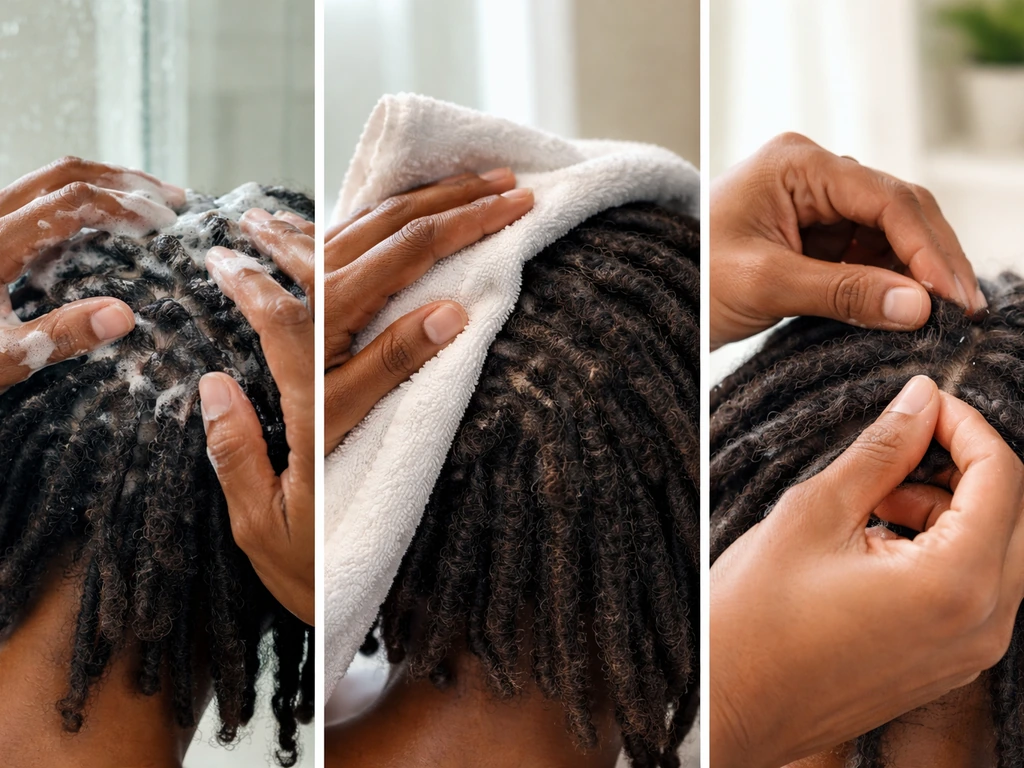
- Wash your scalp and locs regularly (every 1 to 2 weeks for most people) using a residue-free or clarifying shampoo. Buildup at the scalp blocks follicles and creates an environment for inflammation and fungal growth.
- Moisturize consistently. Apply a water-based product to your locs and scalp between wash days, then seal with a light natural oil like jojoba, grapeseed, or sweet almond oil. Avoid heavy butters and waxes that build up inside the loc.
- Keep retwists loose at the root, especially at the hairline and temples. If you feel tension or see scalp tenting (skin lifting slightly at the root), it's too tight.
- Protect your locs at night with a satin or silk pillowcase or a satin-lined bonnet or cap. Cotton pulls moisture from the hair and creates friction that damages the outer strand.
- Limit add-in extensions, especially on young locs, until the locs are fully mature and strong enough to handle the added weight.
- Give your scalp regular massages (2 to 4 minutes a few times per week) to promote blood circulation to the follicles. While this won't change your growth rate dramatically, it supports scalp health and helps with stress management, which has its own connection to shedding.
- Eat enough protein (hair is primarily keratin, a protein) and consider getting blood work done if you suspect a deficiency in iron or vitamin D, both of which are commonly linked to increased shedding in clinical practice.
- Take breaks from tight styles and let your roots breathe between retwists. Stretching retwist appointments to every 4 to 6 weeks instead of every 2 weeks reduces cumulative tension significantly.
Common problems that stall growth and retention in locs
Most people who feel like their locs aren't growing are actually experiencing one of a handful of fixable problems. Here's how to identify and troubleshoot them.
| Problem | What it looks like | What to do |
|---|---|---|
| Buildup | Locs feel heavy, look dull, smell musty, or have visible residue at roots | Clarify with an apple cider vinegar rinse or clarifying shampoo; cut heavy waxes and butters from your routine |
| Breakage from dryness | Short hair pieces on your shoulders or pillow; thin ends on locs | Increase moisture frequency; check that your water-to-oil ratio is right (water first, then seal) |
| Traction damage | Thinning or receding hairline; pain or pimples at roots after retwist; scalp tenting | Loosen retwist tension immediately; avoid tight styles at the edges; see a dermatologist if hairline loss is progressing |
| Over-manipulation | Locs that won't stay together; frizz and unraveling | Extend time between retwists; avoid touching locs frequently throughout the day |
| Scalp inflammation or fungal issues | Persistent itch, flaking, redness, or sores at scalp | Use a medicated or antifungal shampoo; see a dermatologist if it persists after 2 to 3 weeks of treatment |
| Telogen effluvium (internal shedding) | Noticeable thinning overall, not just at edges; hairs with white bulbs | Assess diet, stress levels, and recent health changes; rule out thyroid issues or iron deficiency with blood work |
One thing I want to call out specifically: it's easy to mistake traction alopecia in its early stages for 'slow growth' at the temples or hairline. If your edges look thin or your hairline has pulled back since starting locs, that's not a growth rate issue. That's follicle stress, and it's reversible in early stages but not once scarring sets in. The American Academy of Dermatology's guidance is direct: stop the tension, and stop it early. Don't wait to see if it 'comes back on its own' while continuing the same tight routine.
Understanding how locs grow over time, why they eventually get longer (and sometimes thicker), and how to manage the roots as new growth comes in are all related questions that connect to everything covered here. The foundation, though, is always the same: your follicles do the growing, and your job is to keep the environment around them healthy and avoid the tension and breakage that erase the progress they're already making.
FAQ
If dreads do not speed up growth, why do some people say they see growth “after starting locs”?
Your locs can look like they are growing slower if your retwist schedule is too infrequent or if new growth is being blended in by tightening the root. When the root is repeatedly pulled or the loc base gets constrained, you may get more shedding or breakage near the scalp, which masks real growth. Try tracking growth by marking a few locs with a non-damaging clip or rubber band at the same spot on the shaft, and use consistent lighting and timing for photos.
How can I tell whether my “slow growth” is breakage or normal shedding?
Look for a pattern. Breakage usually produces short, snapped pieces without a visible white bulb, and it often increases after dryness, rough handling, or overly tight retwists. Telogen shedding is more uniform, and the shed hairs typically have the white bulb at the root. If you are mostly seeing breakage “sprigs” at varying lengths rather than regular shedding from the roots, the fix is usually moisture and handling rather than changing style.
Can different wash routines or shampoo choice make locs grow longer faster?
Yes, but indirectly through retention and scalp health. For locs, focus on scalp cleansing that prevents heavy buildup without over-stripping, because trapped residue can trigger irritation. For loose styles, regular detangling and minimizing friction still matter. Hair follicles are not “turned on” by a method, but an itchy or inflamed scalp can increase shedding, which reduces visible length.
Do heavier or thicker locs make traction alopecia more likely?
Don’t assume size equals health. Thicker or heavier locs can increase tension on the roots, especially as they mature, which may worsen thinning at the hairline in some people. If you notice edge thinning or scalp soreness, reduce tension at retwist time, avoid heavy add-ons, and consider spacing or resizing your locs with a professional if needed.
Can I use extensions to get longer locs without hurting my growth potential?
Using extensions does not change the follicle cycle, but it can change how much stress the scalp receives. Adding weight to young or short locs increases the chance of mechanical damage, which can reduce future growth in stressed areas. If you use extensions, keep the installation light, avoid tight root bands, and have them monitored for tension after the first few weeks.
What are the most common retwisting mistakes that reduce real length gains?
Yes. A common mistake is retwisting too tightly because it feels “neat,” then compensating for frizz by adding more force. Another mistake is starting locs on hair that is too short, which can require pulling hard to form the base. For maximum retention, keep retwists firm but not painful, avoid tightening bands at the root, and stop if you feel traction or see new thinning.
My shedding increased a few months after stress. Is that related to locs?
If you are experiencing increased shedding, timing helps. Stress, illness, or crash dieting often shows up as telogen effluvium about two to four months later. That means your style may be innocent. Track major events in the same window and consider discussing labs (like iron status) with a clinician if shedding is significant or persistent.
Why do my locs look longer on some months but not others, even if my hair feels the same?
Expect some shrinkage early, even though locs reduce it dramatically. The more mature the locs, the more the hair tends to hang closer to its true length, so your photos may “catch up” over time. If you want an objective comparison, measure a few locs from the same reference point (for example, from the scalp to the same spot on the shaft), not just overall length on the ends.
How long should it realistically take to see noticeable length change with locs?
There is no one universal timeline. Follicles still cycle normally, but visible progress depends on retention, moisture balance, and how much breakage or tension you avoid. Use a realistic benchmark, like consistent shaft growth over months, then focus on whether your scalp area is stable (no increasing thinning) and whether snapped pieces are decreasing.
What should I do first if my hairline or edges are getting thinner after I start locs?
If you suspect tension-related thinning, stop the behaviors that create traction immediately, especially tight retwists and any pulling at the roots. Early traction changes can improve when tension is removed quickly, but scarring is not reversible. If thinning is progressing, painful, or you see shiny scalp where hairs used to be, a dermatology visit is the next practical step.
Next Article
How Do Dreads Grow: What Happens and How to Grow Faster
Learn how dreadlocks grow, what changes length and size, and maintenance steps to retain growth and prevent breakage.
