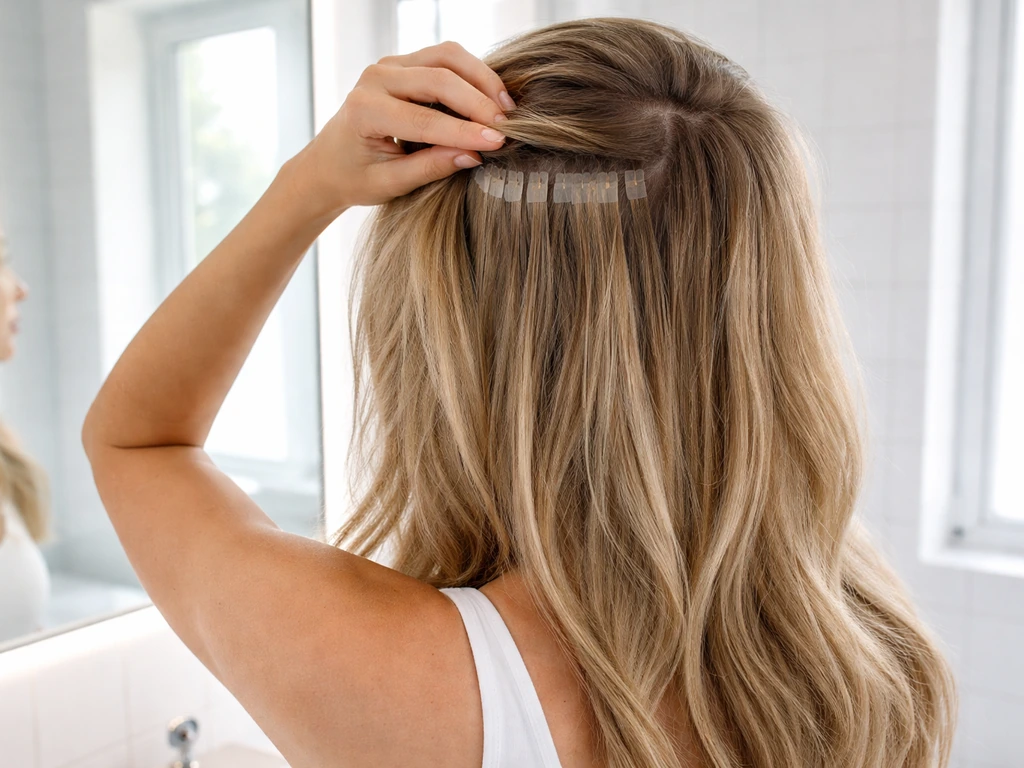
Loc extensions do not make your natural hair grow faster or longer on their own. What they do is add instant length and bulk to your locs the moment they are installed. Your natural hair underneath keeps growing at whatever rate it was growing before, roughly half an inch per month on average, and the extensions have nothing to do with that. So the short version is: the growth is yours, the added length was borrowed.
Do Loc Extensions Grow? What Really Increases Length

Simone Okonkwo
21 Jun 2026
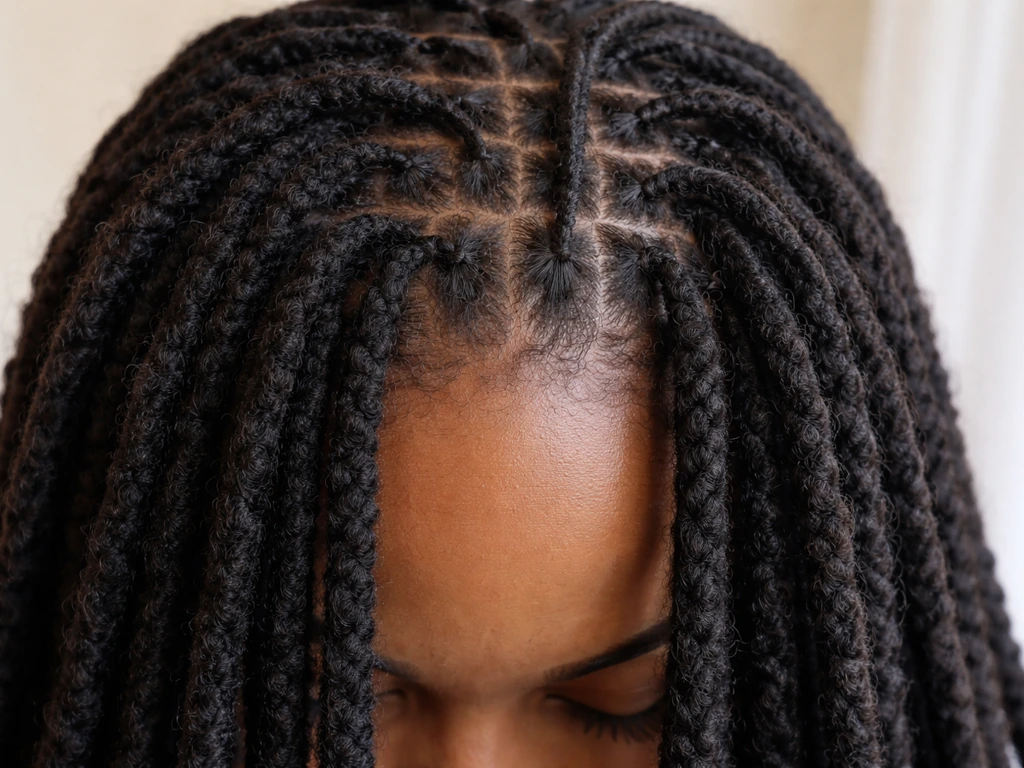
Do loc extensions grow or just add length?
This question trips a lot of people up because locs can genuinely look longer over time while you are wearing extensions, and it is easy to credit the extensions for that. But the two things are separate. Loc extensions are a styling method that gives you immediate visual length and fullness. A set of extensions installed today does not interact with your scalp or your follicles in any way that speeds up hair production. What you are seeing when locs appear to grow is your own natural hair doing what it was always going to do, just expressed through the structure of the loc. If you are wondering, does your hair grow with loc extensions, the answer is that the visible shift comes from your natural roots, not the attached loc pieces. The extensions are scaffolding, not a growth stimulant.
Where people get genuinely confused is when they notice their locs looking longer or the attachment points shifting downward after a few weeks. That movement is real, but it is not the extension growing. It is a combination of your natural hair pushing the join point away from the scalp as it grows, and slippage at the connection loosening over time. Both effects create a visual change that can feel like the whole loc has lengthened, even though most of that length was already there on day one.
What actually grows: your hair vs the extension hair
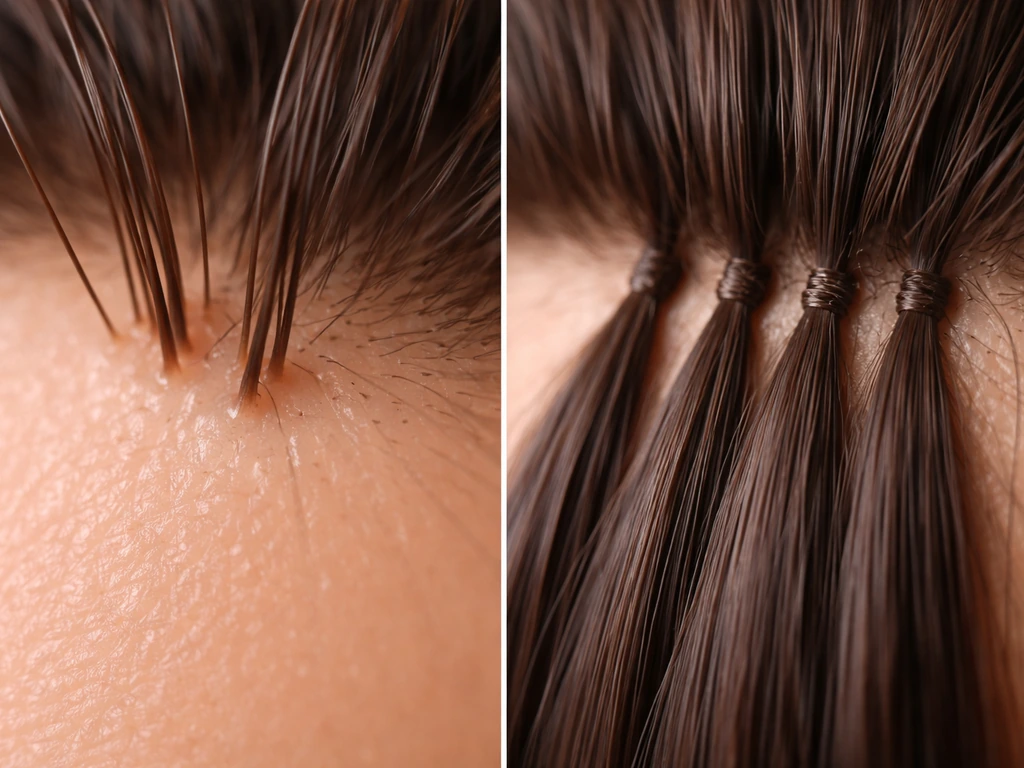
Hair growth happens inside the follicle, at the base of the hair shaft under your scalp. Follicle cells divide, push upward, and keratinize into the strand you can see and touch. The hair shaft itself is made of dead, keratinized cells, which means it cannot grow from the outside or absorb nutrients in a way that makes it physically longer. Length only comes from your follicle producing new shaft from the root. That process runs on its own internal cycle regardless of what is attached to the hair above the scalp.
The extension hair, whether it is synthetic, human hair, or a pre-made loc, is completely detached from any living follicle. It is a fixed-length piece of material. It will not lengthen, thicken, or mature the way a natural loc does. What it can do is give your natural hair something to latch onto and lock around over time, which is why some people find the blend between natural hair and extension improves as the loc matures. But the material itself stays the same length it was when it was installed, minus any mechanical damage or trimming.
Can loc extensions "grow out" over time? What to expect visually
Yes, they can look like they are growing out, and understanding why is genuinely useful for managing your expectations and your maintenance schedule. Two things drive that visual shift.
First, your natural hair at the root keeps growing, and as it does, it pushes the connection point between your natural hair and the extension further away from the scalp. After four to six weeks, you will often see a gap or a band of unloced or loosely loced natural hair near the scalp, sometimes called new growth or the "join" travelling down. That new growth is real length your follicles produced, and it is genuinely yours.
Second, slippage at the join point can make it look like the bulk of the loc has shifted even further down than the actual new growth explains. When your loc extensions grow out, the connection area can shift, so watching for new growth versus slippage helps you manage what you see between appointments slippage at the join point. When the attachment loosens, the extension may slide slightly lower, creating the impression that more length has appeared near the root than actually has. This is a mechanical illusion, not growth, and it is one of the main reasons people get confused about what is happening. Reddit discussions among loc wearers describe exactly this: "the bulk starting WAY low" after a few weeks is slippage, not the extension magically lengthening.
Growth vs breakage: how to tell what's happening
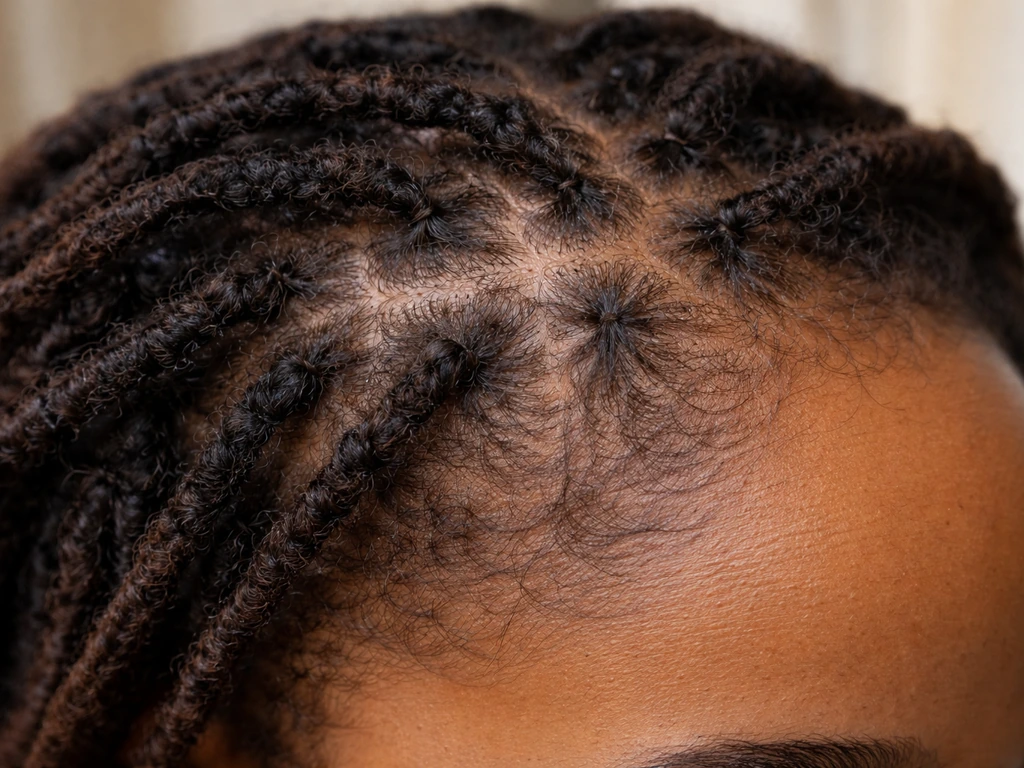
If you are wearing loc extensions and not sure whether your natural hair is actually retaining length or quietly breaking off, there is a practical way to figure it out. The key is examining the hair you find in your hands after detangling, washing, or retwisting.
- Shed hair has a small white or pale bulb at one end. That bulb is the root end, meaning the strand completed its natural growth cycle and released from the follicle. Some daily shedding (50 to 100 strands) is completely normal.
- Broken hair does not have a bulb. It is a shorter, snapped fragment, and it may look frayed or jagged at the break point. Finding a lot of these means something mechanical or chemical is snapping your hair shaft before it can shed naturally.
- If most of what you are finding is short, bulb-free fragments concentrated around the attachment point of the extension, breakage from tension or friction at that join is the likely culprit.
- If you are finding full-length strands with a visible bulb, you are mostly looking at normal shedding, not damage.
Another way to track actual growth is to measure the distance from your scalp to the start of the extension join right after installation, then measure again at your next maintenance appointment. If that gap has grown by roughly half an inch in four weeks, your follicles are doing their job. If the new growth zone feels thin, fragile, or is showing noticeable breakage, that is worth addressing before your next install.
Installation, tension, and retightening schedule impact on retention
This is where loc extensions can either protect your hair or seriously damage it, and the difference comes down to how they are installed and maintained. The American Academy of Dermatology and dermatologists at Johns Hopkins have both flagged tight extensions and weaves as a documented cause of traction alopecia, a form of hair loss caused by repeated mechanical pulling on the follicle. If the style is too tight at the scalp, especially at the hairline and temples, it creates chronic tension that can damage follicles over time and reduce their ability to produce new hair. That is the opposite of growth retention.
A loc extension that is installed with appropriate, gentle tension should not hurt. The British Association of Dermatologists is direct about this: if your scalp is painful after installation, the style is probably too tight, and that pain signals elevated traction alopecia risk. Pain at the roots, small bumps or pimples along the hairline, redness, or tenderness that does not resolve within a day or two after install are all warning signs worth taking seriously.
Retightening or retying the connection point every four to six weeks is generally a reasonable maintenance window. Going longer can mean the join loosens so much that the extension starts slipping and creating more friction at the root, which causes breakage. Going more frequently, especially in the first few months of a new install, can mean repeatedly stressing the same follicles before they have fully recovered, which is another path to traction damage. Some stylists move to two to three week intervals early in the loc journey, but if you are doing that, the tension at each session needs to be genuinely minimal.
Care routine that supports growth with loc extensions
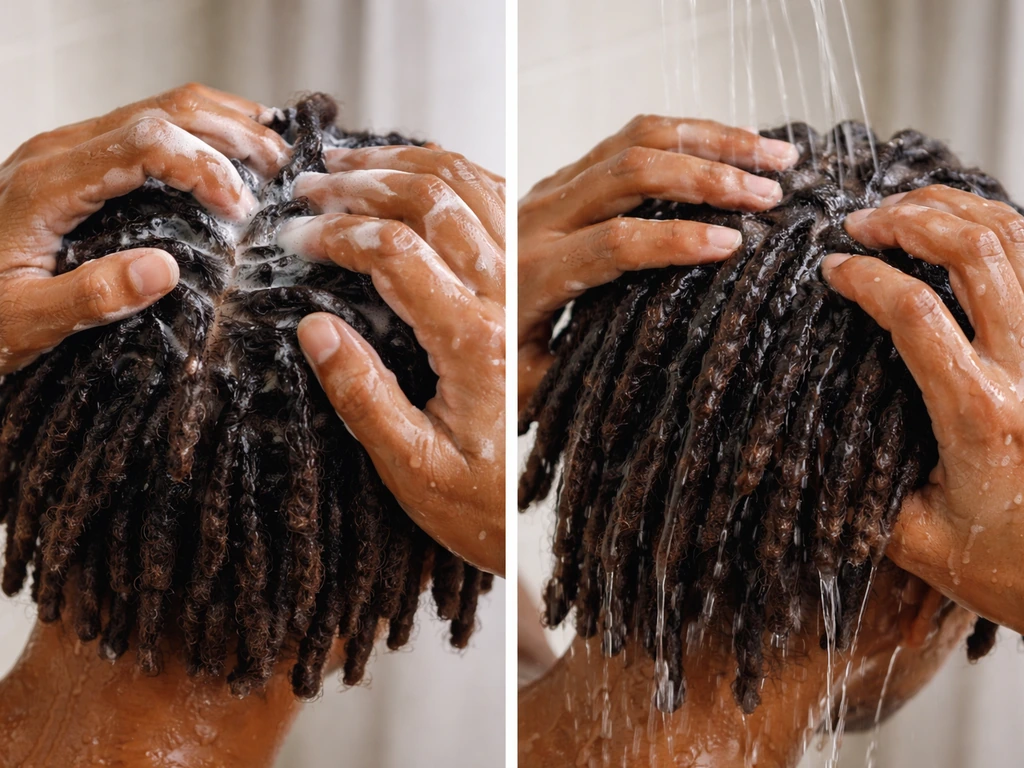
Scalp care comes first
Your scalp is where growth actually happens, so keeping it clean and healthy is the most direct thing you can do to support retention. Buildup from product, sebum, and dead skin cells around the base of loc extensions can clog follicles and create an environment that contributes to breakage and thinning. Aim to cleanse your scalp every one to two weeks, even with extensions in. A diluted apple cider vinegar rinse or a residue-free clarifying shampoo applied carefully to the scalp (not the loc body) works well for most people. Use a bottle with a nozzle to direct product precisely so you are not soaking the connection points and accelerating slippage.
Moisture without overloading the loc
Textured hair, especially Afro-textured hair, tends to be drier along the shaft because the curl pattern makes it harder for scalp oils to travel down the strand. Loc extensions add even more shaft length for oils to traverse, so intentional moisture is important. Light oils like jojoba, sweet almond, or argan applied directly to the scalp and the natural hair at the root are a good approach. Avoid heavy butters or thick pomades at the join point as these can trap lint, cause buildup, and make the connection feel tacky in a way that adds friction. A light spritz of water and a small amount of a loc-friendly oil two to three times a week is usually enough to keep the natural hair from becoming brittle.
Protective habits at night
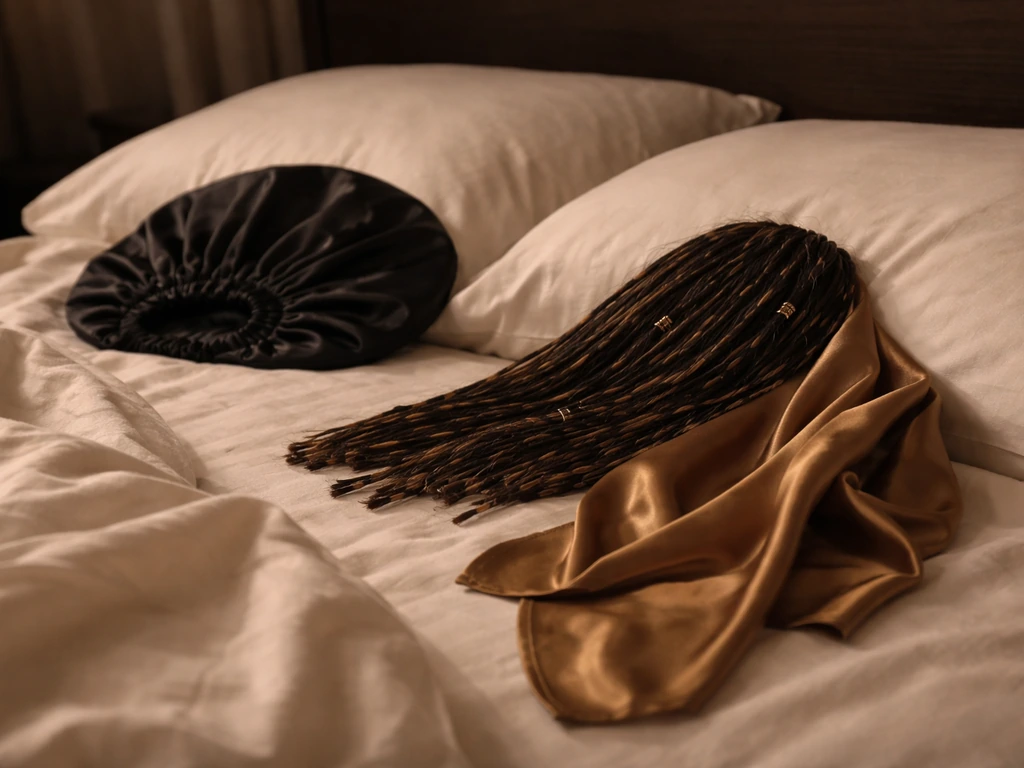
Sleeping on a satin or silk pillowcase, or wrapping your locs in a satin bonnet or scarf, reduces the friction that causes breakage at the shaft and loosens connections at the join. Cotton pillowcases absorb moisture and create friction against the loc surface overnight, which compounds over weeks into real damage. This one habit makes a measurable difference in how intact your natural hair stays between appointments.
Products to avoid
- Heavy waxes and styling creams: these attract lint, build up inside the loc, and can weaken the bond between your natural hair and the extension over time
- Alcohol-heavy sprays: these dry out the shaft and make the natural hair more prone to snapping under tension
- Thick butters applied at the root connection: these increase slippage and make it harder to see what is happening at the join during maintenance
Troubleshooting: signs extensions are harming your hair and what to do next
Even with a careful installation and a solid care routine, loc extensions can sometimes cause harm, and catching the signs early is the difference between a fixable situation and one that requires months of recovery. Here is what to watch for.
| Warning sign | What it likely means | What to do |
|---|---|---|
| Pain or tenderness at the scalp within the first 48 hours of installation | Extensions installed too tight; elevated traction risk | Do not wait it out. Loosen or remove the tight extensions. If pain persists beyond two days, see a dermatologist. |
| Consistent redness, bumps, or pimples along the hairline | Traction folliculitis or chronic tension at the roots | Stop retwisting that area for several weeks. Apply a soothing, anti-inflammatory scalp oil. Consult a dermatologist if it does not resolve. |
| Thinning hairline or visible scalp gaps that were not there before | Early traction alopecia; follicle damage beginning | Remove or significantly loosen extensions. Seek dermatology evaluation. Hair loss caught early is often reversible if tension is removed promptly. |
| Lots of short, bulb-free hair fragments at the join point after washing | Mechanical breakage from friction or excessive tension at the attachment | Check installation tension and loc weight. Switch to lighter extensions if the locs feel heavy. Adjust your retightening technique. |
| Extension slipping visibly further from the scalp between appointments | Connection loosening faster than expected; may mean installation technique or product buildup is contributing | Shorten your retightening interval or have a stylist evaluate the attachment method. Check for product buildup at the root. |
| Dry, brittle new growth at the root that snaps when touched | Moisture loss at the natural hair zone | Increase scalp oiling frequency and check whether you are cleansing too aggressively or not enough. |
If you are seeing multiple warning signs at the same time, it is worth taking a break from extensions entirely for a few weeks to let your scalp recover. Wearing loc extensions should not be a painful or damaging experience, and if it is, that is information about what needs to change in the installation or care routine, not a signal to push through. Your natural hair's ability to grow and retain length long-term is more important than any single style. If you are wondering whether do hand tied extensions help hair grow, the key is still your natural follicles and minimizing traction at the roots.
One final realistic note on timeline: if your installation is gentle, your scalp is healthy, and your care routine is consistent, you can expect to see genuine new growth at your roots every four to six weeks that is entirely your own. That new growth is real length retention. The extensions just give it a frame. Whether that natural hair ultimately becomes longer locs depends entirely on keeping breakage lower than growth, which is the whole game when it comes to length retention for textured hair in any protective style.
FAQ
How can I tell if my loc extensions are causing breakage instead of helping me retain length?
After you wash or detangle, look at the hair shed from the roots. If you are seeing lots of short, snapped pieces right at the join area (not just longer hairs slipping naturally), that points to traction or friction damage. Also check for thinning or a “see-through” zone near the scalp that does not improve after a retighten.
Do do loc extensions grow your locs at all, or is it only a visual illusion?
Your installed extension pieces do not lengthen. What can change is the visible loc length because your roots create new growth and the join point can move downward. If you are not seeing new unloced hair at the base over 4 to 6 weeks, you are likely dealing mostly with slippage, not true new length.
What maintenance interval is best, 2 weeks or 4 to 6 weeks?
If you feel tightness early, do not stretch the schedule, but also do not jump to frequent retightening if each session adds tension. Many people do well with 4 to 6 weeks when the installation is gentle, while newer installs may need earlier touch-ups at 2 to 3 weeks only if the reattachment is done with minimal pull.
Can synthetic vs human hair loc extensions affect how “much growth” I see?
They can change how the loc looks (texture, how it blends, how it reflects light), but they do not add growth. The most reliable way to track growth is measuring the scalp-to-join distance right after installation and again at the next maintenance.
Will loc extensions help my natural hair lock up faster or change my loc maturity timeline?
Extensions can make the process look faster because they add instant loc structure, but your natural hair still needs time to lock. Watch the roots for whether your own hair is developing a true loc coil, not just getting compressed by the extension connection.
Why do my locs look longer even when I did not notice new growth at the scalp?
That often comes from slippage or from bulky buildup at the join that makes the attachment sit lower. If you see little new growth band near the scalp but the bulk drops, remove the guesswork by measuring the join point distance and checking for loosening at the connections.
What scalp symptoms mean I should stop wearing loc extensions?
Stop and reassess if you have persistent soreness more than a day or two after install, recurrent bumps or redness that keeps returning, visible patchy thinning at the hairline, or pain that gets worse at each retightening. Pain is a signal to change the tension and potentially pause the style to let follicles recover.
How often should I cleanse when I have loc extensions?
A common schedule is every 1 to 2 weeks. If you use a nozzle bottle to target the scalp, you can keep the connection points from soaking. If your scalp gets oily quickly or you sweat a lot, shorten the interval rather than piling on heavy products.
Are there any product choices that make slippage more likely?
Yes. Thick butters or heavy pomades at the join can create buildup and a tacky surface that increases friction patterns, which can lead to loosening and sliding. Prefer light, targeted oil on the scalp and small amounts at the natural root, not a coating around the connection area.
Do loc extensions affect overall hair growth rate, like the average half-inch per month?
They should not change follicle production directly, so the growth rate is mainly driven by your genetics, health, and how much breakage you prevent. If your follicles are healthy and you see minimal new growth in 4 to 6 weeks, it is worth looking at factors like nutrition, stress, scalp inflammation, or traction from the installation.
Next Article
Can Your Hair Grow With Extensions? Tape-In Facts
Learn if hair grows with tape extensions, how wear affects roots, breakage, scalp health, and what to do for safe growth