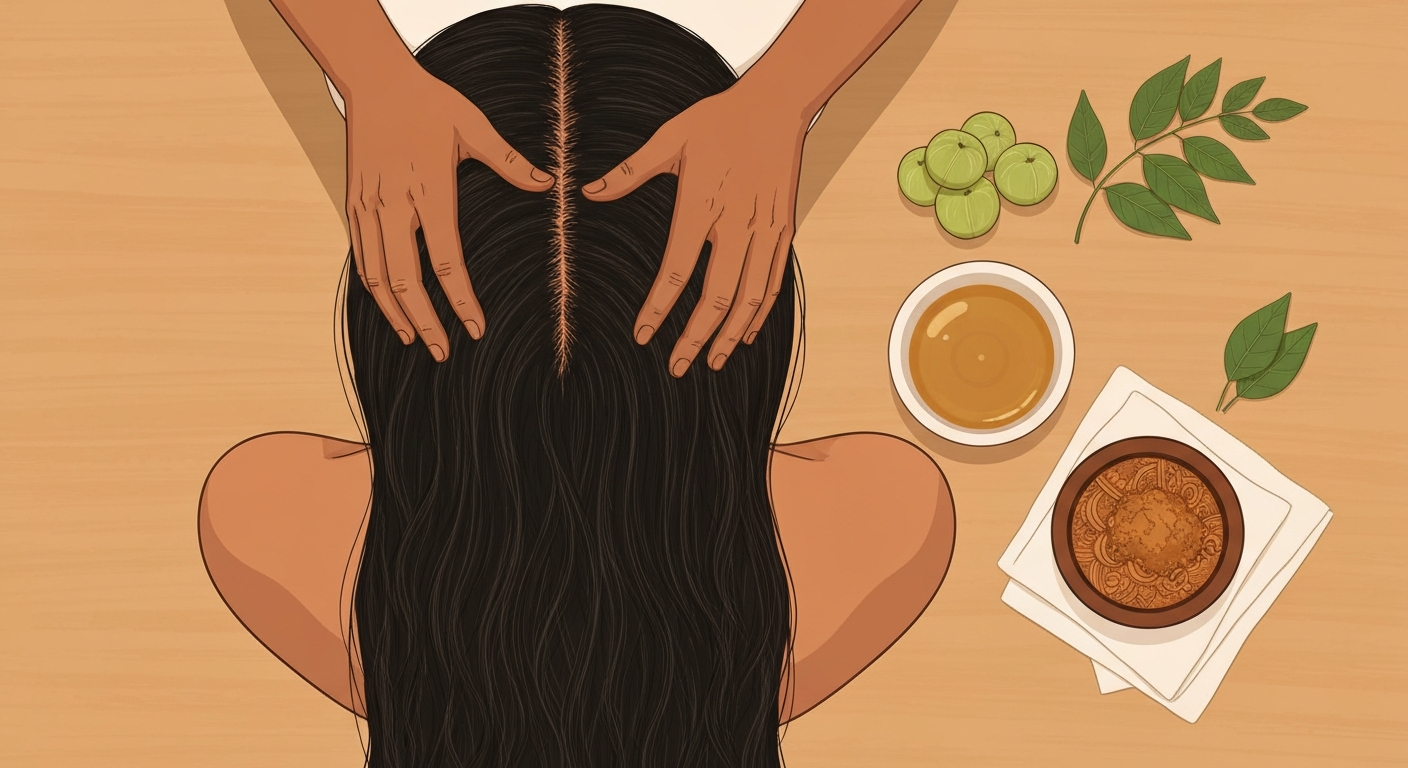
Jamaicans traditionally use Jamaican Black Castor Oil (JBCO), coconut oil, olive oil, aloe vera, and herbal rinses on their hair, combined with practices like hot-oil treatments, scalp massage, and protective styles such as braids, twists, locs, and weaves. These tools are genuinely useful, but mostly for retaining the length your hair already grows rather than speeding up the follicle itself. That distinction matters a lot, and getting it right is what this guide is built around.
What Do Jamaicans Use to Grow Their Hair, Science-Backed

Simone Okonkwo
10 Aug 2026
What this guide covers and who it's for
This article is written for anyone with textured, Black, Afro-Caribbean, or mixed-race hair who has heard about Jamaican hair practices and wants to know what actually holds up. If you're specifically wondering how to get my mixed daughter's hair to grow, see the child-friendly tips and gentler routines later in this guide. I'll walk through the traditional Jamaican ingredients and methods, explain the science of growth versus retention, and give you a practical routine you can adapt whether your hair is 4C coils, looser curls, or somewhere in between. I'll also cover protective styles (including locs and extensions), how heat and chemicals factor in, what you eat and how you sleep, and realistic timelines for seeing results. If you're raising a child with textured hair or have mixed-race hair with different curl patterns across the head, there are specific notes for you throughout. And because Jamaican hair culture overlaps with the broader Afro-Caribbean hair world, readers exploring how to grow Afro-Caribbean hair will find a lot of common ground here. For readers with different cultural hair traditions, see our guide on how to grow Native American hair for tailored care and retention strategies.
The quick answer: what Jamaicans use and why it works
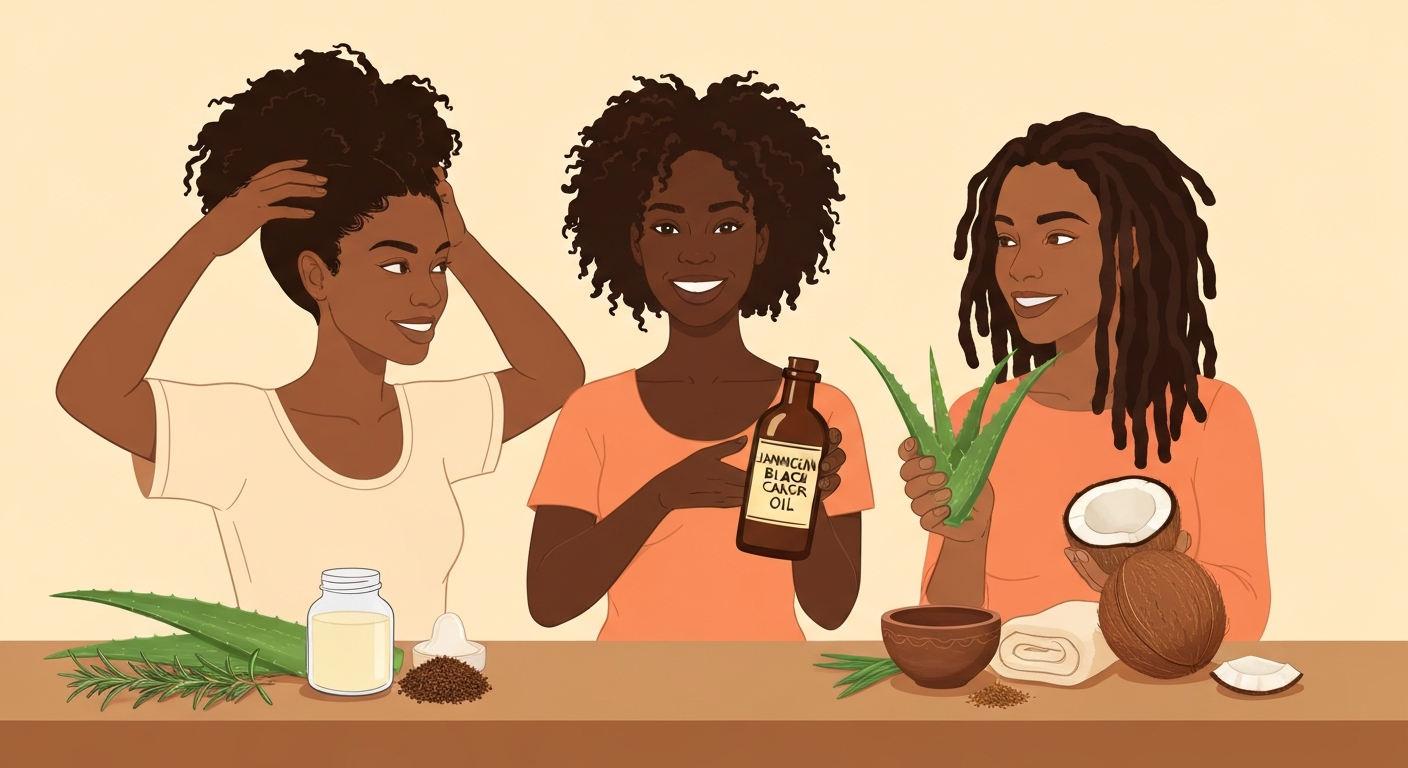
The core Jamaican hair toolkit has a few pillars: Jamaican Black Castor Oil for scalp conditioning and sealing, coconut oil for protein protection, aloe vera for moisture and scalp soothing, herbal rinses (often rosemary, nettle, or mint) as scalp tonics, and regular scalp massage. These are layered onto protective styling habits, from simple braids and twists to full locs. The honest summary is this: the oils and massage work primarily by reducing breakage and keeping the scalp in good condition, which allows your hair to retain the length it naturally grows. They are not reliably proven to make your follicles produce hair faster. That's not a knock on these practices; retention is genuinely most of the battle for people with textured hair.
The traditional Jamaican ingredients, explained
Jamaican Black Castor Oil (JBCO)
JBCO is made by roasting castor beans before pressing, which gives the oil its characteristic dark color and ashy smell. The roasting process raises the pH slightly compared to regular cold-pressed castor oil. It's thick, coating, and has been used in Jamaica for generations as a scalp treatment and edge-growth aid. Castor oil is rich in ricinoleic acid, a fatty acid that may have mild anti-inflammatory effects on the scalp, which has led to speculation about follicular stimulation. However, clinical evidence for JBCO directly increasing the rate of hair growth is limited. Systematic reviews focused on oils used in skin-of-color patients note that robust randomized controlled trial data is lacking, though the risk of harm from using it is also low. In practice, JBCO is most valuable as a heavy sealant: it locks moisture into the hair shaft and protects the scalp from environmental stress. For a cross-cultural comparison, see an overview of how Indians grow their hair, which similarly emphasizes regular oiling, scalp massage, and herbal rinses.
Coconut oil
Coconut oil is one of the most research-supported oils for textured hair. A 2003 laboratory study by Rele and Mohile found that coconut oil significantly reduced protein loss from hair compared with mineral oil and sunflower oil, both as a pre-wash treatment and as a leave-in. The reason is structural: coconut oil is rich in lauric acid, a medium-chain fatty acid with a molecular structure small enough to penetrate the hair fiber rather than just coat the surface. A 2005 study confirmed this penetration mechanism directly, showing that coconut (and to some extent olive) oil enters the hair shaft, while mineral oil does not. That penetration matters because it reduces hygral fatigue, the swelling and shrinking of the fiber during wetting and drying cycles that causes breakage over time. A recent PMC study, 'A Method to Measure Oil Penetration into Hair and Correlation to Tensile Strength', developed a technique showing oils that penetrate hair fibers correlate with improved tensile strength and reduced mechanical damage A Method to Measure Oil Penetration into Hair and Correlation to Tensile Strength (PMC, recent study). So coconut oil reduces breakage, and less breakage means more length retained.
Olive oil
Olive oil is lighter than JBCO and has been used in Jamaican households as both a scalp conditioner and a detangling aid. Like coconut oil, it contains fatty acids capable of some fiber penetration, though to a lesser extent. It works well as a pre-poo (pre-shampoo treatment) on coarser textures and as an ingredient in hot-oil blends. The evidence base is less developed than for coconut oil specifically, but the penetration data and low irritation profile make it a reasonable option.
Aloe vera
Fresh aloe vera gel is a staple in Jamaican hair care, applied directly from the plant or as a bottled gel. It is primarily a humectant and scalp soother. Aloe contains proteolytic enzymes that may help remove dead skin cells from the scalp, and its gel-like consistency adds slip for detangling without weighing down finer textured hair. It's one of the few natural ingredients genuinely suited to all hair types, including children's hair and the looser curl patterns found in some mixed-race hair.
Herbal rinses
Rosemary, peppermint, nettle, and hibiscus teas are brewed and used as final rinses or scalp sprays. Rosemary gets the most attention in the research: a 2015 randomized comparative trial found rosemary oil produced outcomes similar to topical minoxidil 2% for androgenetic alopecia in that specific study, though reviewers consistently note the trial had a small sample size and methodological limitations, and it should not be taken as proof that rosemary replaces proven pharmaceutical treatments. As a rinse, rosemary may improve scalp circulation and has a low risk profile. Hibiscus, common in Jamaican culture through sorrel drinks, is also applied as a rinse and may add shine and improve detangling.
How these ingredients are traditionally used
Hot-oil treatments
A hot-oil treatment involves warming your chosen oil or oil blend (JBCO, coconut oil, olive oil, or a mix) gently in a bowl of warm water, applying it from root to tip, covering the hair with a plastic cap, and leaving it on for 20 to 45 minutes before washing out. The warmth slightly relaxes the cuticle layer and is thought to help small-molecule fatty acids penetrate more deeply. The laboratory data on coconut oil penetration supports this mechanism, though clinical trials specifically on hot-oiling as a standalone treatment are not available. From a practical standpoint, it is a low-risk, useful pre-wash conditioning step, especially before a clarifying shampoo that might otherwise strip too much moisture.
Herbal rinses in practice
To make a basic herbal rinse, steep 2 to 3 tablespoons of dried rosemary (or fresh rosemary sprigs, hibiscus, nettle, or peppermint) in 2 cups of just-boiled water for 20 to 30 minutes, strain, cool completely, and pour over the scalp and hair as a final rinse after conditioning. You can leave it in or rinse lightly with cool water. The scalp tingling from peppermint or rosemary is real and reflects increased local circulation, which is a plausible retention-supporting mechanism even if the evidence for follicular regrowth remains limited.
Scalp massage
Scalp massage is one of the better-studied tools on this list. A 2016 randomized study using a standardized scalp massage protocol found measurable increases in hair shaft diameter in the treated group over 24 weeks, without a corresponding increase in growth rate. In plain terms: massage made hair strands thicker and stronger, not faster-growing. Thicker strands are more resistant to breakage, which means more retained length over time. A practical approach is 4 to 5 minutes of firm fingertip massage at the scalp, using small circular motions, either dry or with a light oil, three to four times per week.
Growth vs. retention: the most important distinction you'll read here
Your hair grows at a rate determined largely by your genetics, age, and overall health. For most people, scalp hair grows roughly 0.5 inches (about 1.25 cm) per month, or around 6 inches per year. This rate is set at the follicle level and is not meaningfully changed by applying oil or doing scalp massage. What determines whether your hair appears to get longer is how much of that growth you retain, meaning how little breaks off. For people with type 4 coils and tight curl patterns, the very structure of the hair fiber creates points of vulnerability at each curve. Shrinkage also makes retention harder to see. The entire Jamaican hair care tradition, viewed through a scientific lens, is fundamentally a retention system: sealing moisture, reducing mechanical damage, protecting the ends. For a step-by-step routine and time-saving tips on how to grow ethnic hair fast, see this practical guide. That framing makes the practices much more useful because you have a clear target.
What the evidence says actually supports retention
Dermatology reviews focused on Afro-textured hair consistently point to a cluster of factors that influence retention. These are the levers you actually control.
- Scalp health: A clean, balanced scalp with good circulation supports follicle function. Dandruff, seborrheic dermatitis, and product buildup create inflammatory environments that can impair follicular output over time.
- Moisture and protein balance: Textured hair needs regular moisture (humectants, water-based leave-ins) to stay pliable, and periodic protein treatments to reinforce the fiber structure. Imbalance in either direction causes breakage.
- Reduced mechanical damage: Aggressive combing, detangling dry hair, and rough towel drying cause significant breakage in curly and coily hair. Gentle handling with wide-tooth combs or fingers, always on damp conditioned hair, preserves length.
- Avoiding traction damage: Chronically tight styles pull on the follicle itself and can cause traction alopecia, a form of hair loss that can become permanent at the hairline and temples.
- Minimizing heat and chemical damage: Repeated heat styling and chemical relaxers weaken the fiber's disulfide bonds, leading to breakage. The less of either you use, the more length you keep.
- Oil sealing: Applying a penetrating oil (coconut, olive) before washing and a sealing oil (JBCO, shea butter) after moisturizing reduces hygral fatigue and locks in moisture.
Scalp care: practical steps that actually make a difference
The scalp is skin, and it needs to be treated like skin. Buildup from heavy products, dry shampoo avoidance, and synthetic scalp grease can clog follicles and cause irritation. Clarify with a sulfate-based shampoo every 2 to 4 weeks depending on product use, and use a gentle moisturizing or co-washing cleanser in between. Avoid applying thick butters or oils directly to the scalp if you have a tendency toward buildup; use lighter oils like jojoba or diluted rosemary oil instead. If you experience consistent scalp itching, flaking, or tenderness, address it with an anti-dandruff shampoo containing zinc pyrithione or ketoconazole before layering products on top. A clean, non-inflamed scalp is the foundation of everything else.
When oiling the scalp, less is more. A few drops of oil massaged in with fingertip pressure is effective. A thick layer of product sitting on the scalp without being worked in is mostly buildup. Combine your scalp oil sessions with the 4 to 5 minute massage described earlier. For people dealing with particularly dry scalps in cold or low-humidity climates, a light scalp spray of diluted aloe vera gel between wash days can maintain comfort without buildup.
Daily and weekly routines you can actually follow
The routines below are built around the traditional Jamaican practices, adapted for real-life schedules and different hair textures. Coarser, denser hair (type 4A to 4C) generally needs more moisture, heavier sealing, and less frequent manipulation. Looser textures (type 3A to 3C) tolerate lighter products and more frequent co-washing. For children, the same principles apply but with gentler products, shorter detangling sessions, and looser styling.
| Step | Coarser Textures (4A–4C) | Looser Textures (3A–3C) | Children's Hair |
|---|---|---|---|
| Daily moisture | Spritz with water or aloe-water mix, seal with JBCO or shea butter | Light leave-in spray or curl cream, small amount of coconut oil | Water-based leave-in, light cream, no heavy oils on scalp |
| Detangling | 2–3x per week on damp hair with conditioner, fingers first then wide-tooth comb from ends up | Every 1–2 days on wet hair with conditioner | Every wash day, always with slip conditioner, finger detangle first |
| Scalp massage | 3–4x per week, 4–5 minutes, fingertips only | 3x per week, lighter pressure | Gentle massage at bath time, 2–3 minutes |
| Wash day (shampoo) | Every 1–2 weeks, moisturizing or sulfate-free shampoo | Every 5–7 days, gentle sulfate-free shampoo | Weekly, mild baby or sulfate-free shampoo |
| Deep conditioning | Every wash day, 20–30 min with heat cap | Every 1–2 weeks, 15–20 min | Every 2 weeks, 10–15 min |
| Hot-oil pre-poo | Weekly or bi-weekly before shampoo | Bi-weekly or monthly | Monthly or as needed for dryness |
| Herbal rinse | Every 2 weeks as a final rinse | Every 2–4 weeks | Optional, rosemary or hibiscus rinse monthly |
| Clarifying shampoo | Every 3–4 weeks or when buildup is felt | Every 2–3 weeks | Every 4–6 weeks |
A simple swap for coarser hair that resists moisture: add a tablespoon of coconut oil to your conditioner before applying it as a deep conditioner. The oil penetrates the fiber and the conditioner provides slip. For finer textured hair that gets weighed down easily, switch JBCO out for a lighter oil like argan or grapeseed as your daily sealant and reserve JBCO for scalp-only application.
Choosing the right products
You don't need a cabinet full of expensive products. What you need is the right category of product for each job, and an understanding of what ingredients to look for (and avoid).
| Product Type | What to Look For | What to Avoid | Good For |
|---|---|---|---|
| Shampoo | Moisturizing surfactants (sodium lauryl sulfosuccinate, cocamidopropyl betaine), glycerin, panthenol | High-concentration sulfates as first ingredient if hair is very dry; silicones in shampoo | Cleansing without stripping |
| Conditioner / Deep Conditioner | Fatty alcohols (cetyl, stearyl), humectants (glycerin, aloe), proteins (hydrolyzed keratin or wheat for strength) | Cheap mineral oils as primary ingredient | Moisture restoration, detangling |
| Leave-in Conditioner | Water as first ingredient, light oils, glycerin, panthenol | Heavy waxes, petrolatum in leave-ins (best left for ends only) | Daily moisture for all textures |
| Lightweight Oils (daily use) | Argan, grapeseed, jojoba, sweet almond | Mineral oil (doesn't penetrate) | Finer textures, children's hair, daily sealing |
| Heavier Oils / Butters (weekly use) | Coconut oil, JBCO, shea butter, olive oil | Products with long lists of synthetic fragrance or preservatives if scalp-sensitive | Coarser textures, pre-poo, sealing after deep conditioning |
| Protein Treatment | Hydrolyzed proteins (small molecule), follow with deep conditioner | Overuse (monthly at most for most hair), heavy protein if hair is already stiff | Strengthening after chemical or heat damage |
One quick note on protein: textured hair often needs a moisture-protein balance. If your hair feels mushy, gummy when wet, or stretches too far before breaking, it likely needs a protein treatment. If it feels dry, rough, and snaps immediately without stretch, it needs moisture first. Getting this balance right reduces breakage significantly.
Protective styles: the real benefits and the real risks
Protective styles, including braids, twists, cornrows, locs, and weaves, are central to Jamaican and broader Afro-Caribbean hair culture for good reasons. They reduce daily manipulation, tuck away the fragile ends of the hair, and allow you to go longer between wash days without the mechanical damage of frequent combing and styling. When done and maintained correctly, they genuinely support length retention. I've seen this consistently: people who wear well-maintained protective styles regularly tend to retain more length over a year than those who manipulate their hair daily.
The risk is traction alopecia, and it's serious. Traction alopecia occurs when repeated or sustained tension on the follicle causes inflammation and, eventually, follicular death. The hairline and temples are the most vulnerable areas. Warning signs include scalp tenderness or pain immediately after styling, small pimples or pustules along the hairline, and gradual thinning at the temples. These signs mean the style is too tight and needs to come out. Traction alopecia caught early is reversible; caught late, after years of repeated insult, it can be permanent. Public health and dermatology guidance is clear: a protective style should never hurt when installed, and should be removed before 6 to 8 weeks to allow the scalp to rest. An FDA report on hair loss linked to hair products documents cases associated with synthetic braiding hair, adhesives, and prolonged tension and recommends scalp cleansing and prompt removal of painful styles.
- Choose a braider or loctician who does not braid tightly at the roots; baby hairs should not be wrapped into the braid.
- Avoid styles that require pulling back the hairline edges into the main structure.
- Moisturize the scalp and hair inside the style every 3 to 5 days with a lightweight scalp spray.
- Do not leave braids or twists in for more than 6 to 8 weeks; weaves with a net or glue should come out sooner.
- Clarify and deep condition after removing any protective style before reinstalling.
Locs and extensions: specific maintenance and warning signs
Locs are a permanent protective style deeply rooted in Jamaican Rastafarian culture and worn broadly across the Afro-Caribbean diaspora. Mature locs that are maintained without excessive tension are actually low manipulation and can support long-term retention. The risks come primarily in the early stages (when twisting or interlocking retwists are done too tightly or too frequently) and from product buildup inside the loc over time. Buildup inside locs creates a hospitable environment for mold and bacteria, which can cause scalp odor, irritation, and follicular damage.
Practical loc maintenance: clarify with a residue-free shampoo every 1 to 2 weeks (not dry shampoo or dry scalp sprays that add residue); allow locs to dry completely after washing (sitting in damp locs for hours is a major contributor to mildew); retwist or interlock no more than every 4 to 6 weeks and at a light tension; use lightweight oils on the scalp rather than heavy butters that can accumulate in the loc structure. For extensions and weaves specifically, the same traction rules apply, and adhesive glue should not be applied directly to natural hair if retention is the goal.
Heat and chemical straightening: what they actually do to your hair
Heat styling (flat irons, blow dryers on high heat) and chemical relaxers alter the structure of the hair fiber at a molecular level. Heat denatures the protein bonds in the cuticle and cortex; chemical relaxers break and reform the disulfide bonds that give curly hair its shape. Both processes, repeated over time, create cumulative structural weakness that manifests as breakage, particularly at the mid-shaft and ends. This is why someone who flat-irons weekly may feel like their hair is not growing when it actually is producing length normally from the follicle; it's simply breaking off at the damaged ends at roughly the same rate.
If you use heat, the practical risk reduction approach is: use a heat protectant with every application, limit temperatures to the lowest effective setting (typically 300 to 350°F for most textured hair, not 450°F), do not heat style more than once a week, and never apply heat to hair that has been freshly chemically treated. If you relax, stretch your relaxer application to every 10 to 12 weeks minimum and apply only to new growth, not over previously relaxed hair. Low-manipulation natural styles, twist-outs, braid-outs, and bantu knot-outs can achieve similar aesthetic results to heat straightening without the cumulative damage.
Diet, sleep, stress, and when to see a doctor
Hair follicles are metabolically active and highly sensitive to what your body has available to support them. Nutritional deficiencies, particularly iron deficiency (very common in Black women and adolescent girls), low ferritin even without clinical anemia, vitamin D deficiency, and zinc deficiency, are associated with diffuse shedding and reduced hair quality. Biotin deficiency is real but rare in people eating a normal varied diet; biotin supplementation without a confirmed deficiency is not supported by the evidence as a hair growth booster despite its heavy marketing. A diet rich in protein (hair is almost entirely keratin, a protein), iron (lean red meat, lentils, spinach with vitamin C for absorption), omega-3 fatty acids (oily fish, walnuts, flaxseed), and zinc (pumpkin seeds, chickpeas) supports follicular function.
Sleep and stress matter more than most people realize. Telogen effluvium, a form of temporary diffuse shedding, is triggered by significant physical or emotional stress events: illness, surgery, dramatic weight loss, postpartum changes, or prolonged psychological stress. The shedding typically begins 2 to 3 months after the stressor and can persist for several months. It usually resolves on its own once the stressor is removed, but chronic stress without resolution can lead to persistent shedding. Sleep is when growth hormone peaks and tissue repair, including follicular repair, is most active. Consistently getting 7 to 9 hours matters.
See a dermatologist or trichologist if you notice: sudden diffuse shedding (more than 100 to 150 hairs per day beyond your normal), patchy hair loss, significant hairline recession, scalp pain, persistent itching or inflammation, or hair loss that is not responding to improved care after 3 to 4 months. These can be signs of alopecia areata, traction alopecia (see above), androgenetic alopecia, or a systemic health condition. A blood panel checking ferritin, full blood count, thyroid function, and vitamin D is a reasonable starting point and can be requested through your primary care provider.
Realistic timelines and how to track progress
At roughly half an inch of growth per month, you're looking at 6 inches of potential growth per year. Realistically, most people with coily, tightly textured hair see 3 to 4 inches of net retained length per year once their routine is optimized, because some breakage is inevitable. Looser textures typically retain more of their growth, closer to 5 to 6 inches annually. Expect a minimum of 3 to 4 months before you notice meaningful differences from a new routine. Hair grows slowly, and the improvements from reduced breakage accumulate gradually.
The best way to track progress is to measure from the same point on the scalp (typically the crown) to the tip of a stretched, defined section, using a soft tape measure, on the same day of your monthly wash cycle. Photos under consistent lighting also help. If you're measuring shrinkage-prone coily hair, always measure stretched. If after 4 to 6 months of consistent practice you see no improvement, troubleshoot in this order: check for protein-moisture imbalance, review your styling tension and manipulation frequency, look at your diet and iron status, and then consider a dermatology appointment.
Troubleshooting slow progress
- If hair snaps easily and feels rough: prioritize moisture, reduce protein temporarily, deep condition weekly.
- If hair feels mushy and stretches before breaking: do a protein treatment, follow with deep conditioner, reduce humectant-heavy products in humid climates.
- If edges and hairline are thinning: remove all tight styles immediately, massage edges gently with JBCO or a light castor-based oil, give 8 to 12 weeks of no tension at the hairline.
- If shedding is excessive: check iron and ferritin levels, assess recent stress events, consult a clinician before adding supplements.
- If you see no change after 3 months of consistent routine: revisit wash frequency, product buildup, and styling tension before concluding your hair doesn't grow.
The limits of the evidence and myths worth dropping
It's worth being direct about what we don't know. The evidence supporting Jamaican Black Castor Oil as a follicular growth stimulator is anecdotal and marketing-driven; the clinical trial data is not there yet. Coconut oil has the strongest research support of the traditional oils, but even that evidence is mostly about retention mechanics rather than proven growth acceleration. Rosemary oil is promising but not proven to be a substitute for pharmaceutical treatments for androgenetic alopecia. Herbal rinses have low risk but unquantified benefit in humans. Hot-oil treatments make biological sense mechanically but lack dedicated clinical trials. None of this means you shouldn't use these things; it means you should use them with accurate expectations: they support retention, and retention is what makes hair grow longer in practice.
Myths worth dropping: that JBCO will dramatically regrow bald or thin areas (no consistent evidence), that eating more biotin supplements will speed growth if you're not deficient (no evidence for this), that trimming your ends makes hair grow faster (it doesn't; follicles are in the scalp, not the ends; trimming does prevent split ends from traveling up the shaft and causing more breakage), and that certain races or ethnicities have hair that simply doesn't grow (all human hair grows; the difference is in fiber structure, fragility, and retention capacity, not growth rate). For those exploring how different ethnic backgrounds influence hair growth and texture more broadly, the patterns found in Afro-Caribbean hair are closely connected to what you'd find when looking at how to grow ethnic hair generally, and some of the same principles apply to mixed-race and biracial hair types too.
The Jamaican approach to hair care, stripped of the marketing noise, is actually a well-designed retention system built through generations of practical observation. The oils penetrate and protect the fiber. The massage supports the scalp. The protective styles reduce manipulation. The herbal rinses keep the scalp clean and circulation active. Use these tools with clear eyes about what they do, build them into a consistent routine, and you're giving your hair exactly what it needs to hold onto every centimeter of growth it produces. For a dedicated, step-by-step guide on how to grow Afro-Caribbean hair, see the companion resource (ID 4032629d-319f-44f2-b6d1-3d0a8faf56bd).
FAQ
What do Jamaicans traditionally use to grow their hair?
Common traditional Jamaican hair practices include using Jamaican Black Castor Oil (JBCO), plain castor oil, coconut oil, olive oil, aloe vera gel, herbal rinses, and warmed "hot‑oil" treatments. Styling and care practices include regular scalp massage, greasing the scalp, and protective styles such as braids, twists, locs and weaves. These are used primarily to condition, reduce breakage, seal moisture and protect hair rather than to change inherent follicle growth rate.
Does Jamaican Black Castor Oil (JBCO) make hair grow faster?
Evidence that castor oil or JBCO directly increases the intrinsic hair growth rate is limited. Preclinical mechanisms (ricinoleic acid effects on inflammation/prostaglandins) are plausible, but high‑quality clinical trials demonstrating meaningful follicular stimulation are lacking. Many dermatology reviews accept castor oil as a low‑risk conditioning/sealing product that may help retention and appearance but caution against expecting proven regrowth.
How is hair growth different from hair retention, and why does it matter?
Hair growth (rate) is how fast each follicle produces new hair and is largely set by genetics, hormones and health. Retention is how much of that hair remains unbroken long enough to appear longer. For textured/Afro‑textured hair, improving retention (reducing breakage from dryness, mechanical stress or traction) often produces bigger visible gains in length than trying to speed follicular growth. Mechanisms that improve retention include better scalp health, balanced moisture/protein, reduced combing damage, and low‑tension styling.
What does the research say about coconut oil and other oils?
Laboratory studies show coconut oil (rich in lauric acid) can penetrate the hair shaft and reduce protein loss, which helps prevent breakage. Olive oil can partially penetrate; mineral oils mainly coat the surface and do not reduce protein loss. Overall, studies support oils for reducing mechanical damage and improving tensile strength, but not for proven acceleration of follicular growth.
What benefits can scalp massage provide?
A standardized scalp‑massage intervention produced measurable increases in hair thickness (shaft diameter) in the treated area in a randomized study, though it did not change mean growth rate. Scalp massage likely improves local circulation, reduces tension, and mechanically stimulates the scalp, supporting thicker, healthier hair shafts and retention rather than accelerating follicle output.
What is a practical daily care routine that adapts Jamaican practices for different textures and ages?
Daily (general): 1) Gentle moisturizing with water‑based leave‑in or spritz; 2) Seal with an oil suited to hair porosity (lightweight for fine/low‑porosity, heavier for high‑porosity or coarse); 3) Gentle detangling with fingers or wide‑tooth comb; 4) Low‑tension protective styling overnight (silk/satin scarf or pillowcase). For children: use very gentle detangling, minimal manipulation, loose styles. For fine/low‑porosity hair: use lighter oils (argan, grapeseed, jojoba). For coarse/high‑porosity hair: use coconut, castor, or olive to seal moisture. Avoid heavy product buildup on scalps prone to irritation.
Next Article
How Indians Grow Their Hair: Traditions, Science, Routines
How Indians grow their hair: science-backed, texture-specific tips on oils, herbs, styles, and retention.