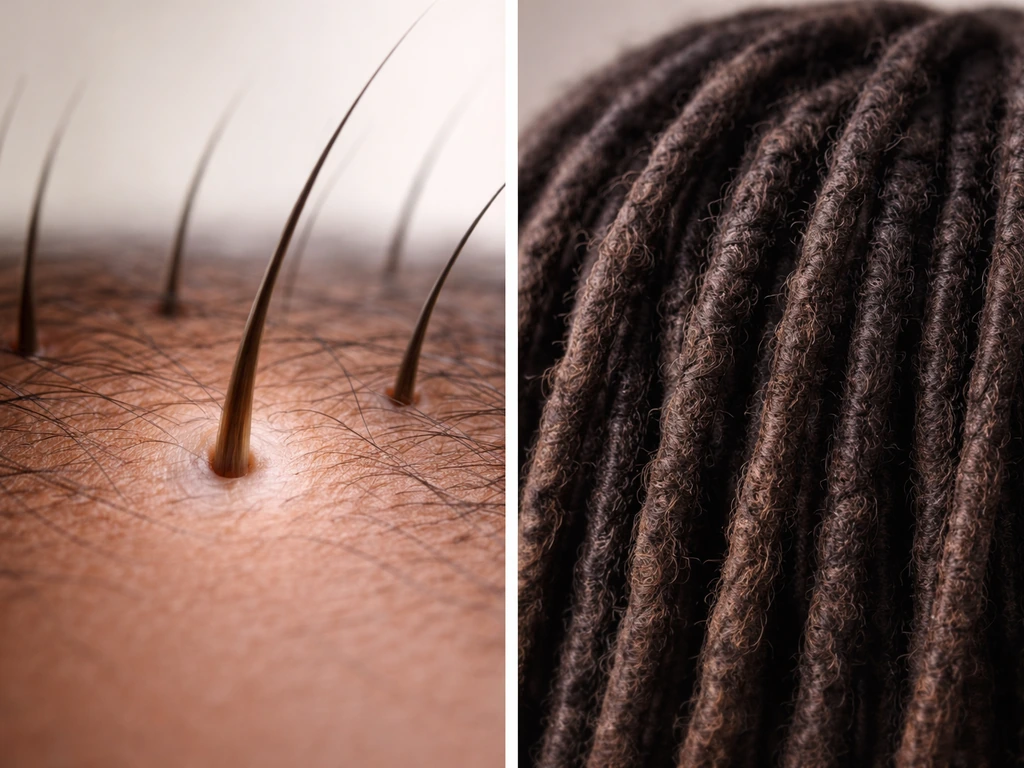
Freeform dreads typically take 1 to 2 years to reach full maturity, though you'll start seeing real locking activity within the first 2 to 6 months depending on your hair texture. If you have tightly coiled or kinky hair (Type 4), your hair will likely begin to mat and bud noticeably faster than someone with looser curl patterns. What most people aren't prepared for is that the first year often looks like your hair is doing nothing, or even shrinking, when it's actually doing the most important structural work underground.
How Long Does It Take to Grow Freeform Dreads?

Simone Okonkwo
26 Jun 2026
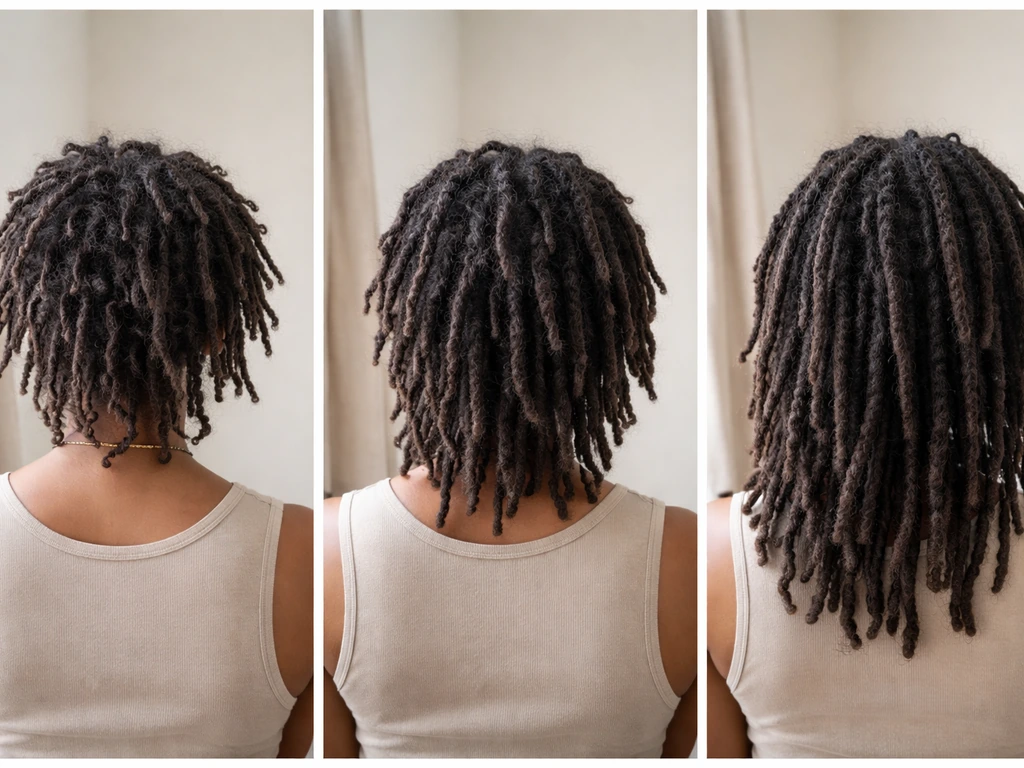
The real freeform growth timeline
Your scalp hair grows at roughly half an inch (about 1.25 cm) per month regardless of whether you loc it, twist it, or leave it loose. That biology doesn't change just because you've started a freeform journey. What does change is how much of that growth you actually see. Freeform locs compress, coil, and pack inward as they mature, so the visible length you perceive often lags behind actual growth by months. A commonly reported shrinkage range for locs is 10 to 30 percent, and that compression tends to be most dramatic in the middle stages when the interior of each loc is becoming densely packed.
Here's a rough breakdown of what to expect on a typical freeform timeline. Keep in mind that these are ranges, not guarantees. Your texture, starting length, and how hands-off you actually are will all shift these windows.
| Timeframe | What's Happening | What You'll See |
|---|---|---|
| 0–3 months | Hair begins to cluster and coil at the tips; no real interlocking yet | Loose clumps, some frizz, minimal visible change |
| 3–6 months | Budding begins; tips start to mat and hold shape; shrinkage often kicks in | Knobby or bumpy ends, noticeable shortening of perceived length |
| 6–12 months | Teenage stage begins; interior of each loc is densifying; roots still loose | Locs look uneven, some feel soft in the middle, length seems stalled |
| 12–18 months | Mature stage approaches; locs firm up, roots tighten naturally, shape stabilizes | More defined individual locs, roots catch up, length becomes more visible |
| 18–24+ months | Full maturity; locs are dense, cylindrical, and growing as a unit from root to tip | Consistent length, smooth or textured surface, established thickness |
Community experience lines up with this: most people report that their locs feel genuinely locked around the one-year mark, with final settling and real length visibility coming closer to years two or three. If you're at nine months and your locs still feel soft and uneven in the middle, that's normal, not a failure.
How freeform dreads actually form
Understanding what's physically happening inside a freeform loc makes the timeline make a lot more sense. Dreadlocks form when sections of hair mat, tangle, and interlock over time into a rope-like structure. As new hair grows from the follicle, it joins the base of the existing loc while shed hairs (which normally fall away in loose hair) become trapped inside, packing and compacting the core. This is why mature locs feel denser and heavier than you'd expect from just the hair you can see on the outside.
Freeform specifically means you're letting this process happen without manipulating individual sections into uniform shapes or using a starting technique like two-strand twists, comb coils, or backcombing. In contrast, the “twist and rip” approach repeatedly pulls apart sections to form loops or knots, which can produce loose dreadlocks rather than letting hair mat and entangle naturally into freeform locs freeform specifically means you're letting this process happen without manipulating individual sections into uniform shapes.
The hair decides where it wants to clump and mat. For tightly coiled hair types, this natural clustering happens relatively quickly because the curl pattern is already doing a lot of the interlocking work. For looser textures, the process is slower and the resulting locs may be less uniform because the hair doesn't naturally grip itself as aggressively.
Early locking (around months two to six) often starts at the tips and works its way upward toward the roots. This tip-first pattern is why locs can feel bouncy and soft near the scalp for a long time even when the ends feel firm. The roots are the last part to fully lock, which is also why the "teenage stage" feels so awkward, the ends are locked, the midshaft is firming up, and the roots look like they haven't done anything yet.
What actually speeds up or slows down your timeline
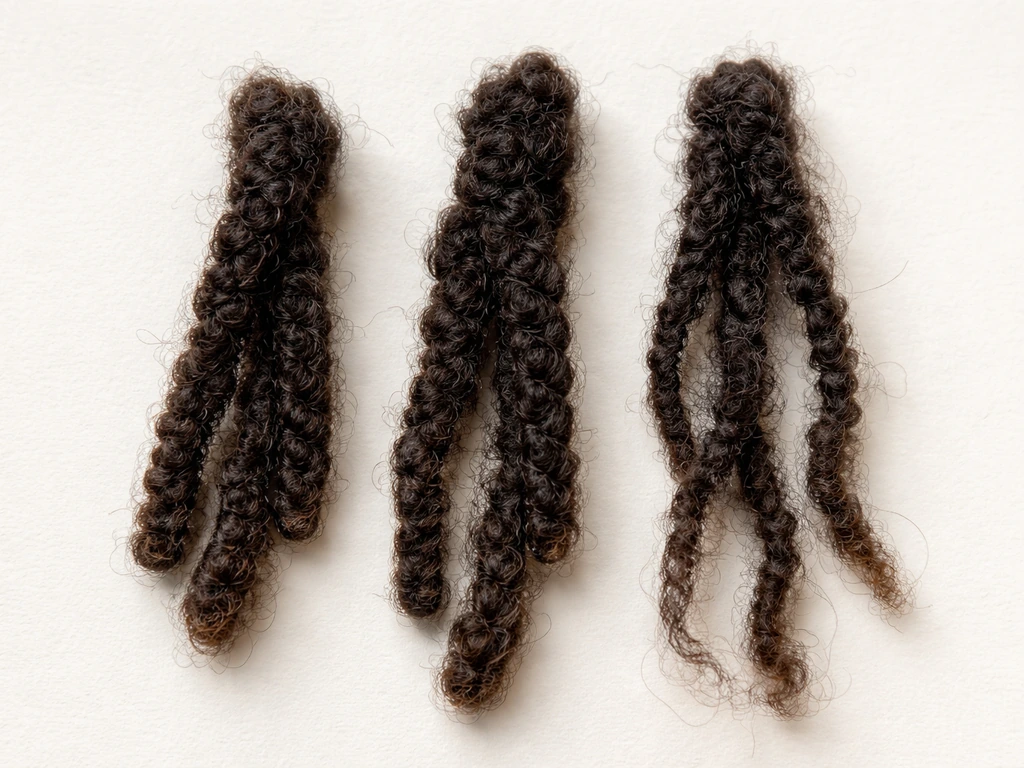
Hair texture is the single biggest variable. Tightly coiled Type 4 hair, especially 4B and 4C, has a curl pattern that naturally interlocks with adjacent strands, which is why freeform locs on this hair type can start showing real budding in as little as two to three months. Type 3 hair (looser coils and curls) takes longer to grip and mat, which can push initial locking activity out to six months or more. This isn't a quality difference, it's just physics.
- Hair density: denser, thicker hair has more strand-to-strand contact, which accelerates matting. Fine hair with low density may take longer to form well-defined individual locs.
- Starting length: shorter hair (under 3 inches) has less shaft to interlock, which can delay visible budding. Hair that's already 4 to 6 inches at the start has more material to work with.
- Shrinkage: high-shrinkage hair will look like it's barely growing even when it's putting on half an inch a month. Don't measure freeform progress by what you see stretched — measure by what's there when dry.
- Manipulation frequency: the less you touch your hair, the faster it locks. Constant combing, brushing, or pulling apart clumps resets the matting process and delays formation significantly.
- Product residue: heavy butters, waxes, and conditioning products can coat the hair shaft and reduce the friction and interlocking needed for locking. Residue buildup is one of the most common reasons freeform locs stay soft and undefined longer than they should.
- Moisture and dryness balance: hair that's chronically dry and brittle can break rather than mat. Hair that's kept too slippery with heavy products won't grip. Finding a balance with lightweight moisture supports healthy locking.
- Scalp health: poor scalp circulation, product buildup at the base, or chronic inflammation can affect new growth quality and slow down the process at the root.
It's also worth separating growth rate from length retention here. Your hair is almost certainly growing at roughly the same rate it always has. Hair growth rate is basically the same whether you wear dreadlocks or not, so dreadlocks do not make your hair grow faster. What freeform locs change is how much of that growth you retain and eventually see. During the compression and shrinkage phases, growth is happening but it's being absorbed into the tightening structure of the loc. Once your locs fully mature and stop compressing, that stored growth starts to become visible length again, which is why people suddenly feel like their locs are "finally growing" in year two or three.
The four stages of freeform locs and how to track your progress
Starter stage (0–3 months)

In the starter stage, your hair is essentially just beginning to cluster. For freeform, this means you've stopped combing and you're letting your natural curl pattern determine where clumps form. You won't see much visible locking yet, the hair still feels like hair. What you're watching for is the beginning of clumping: sections that consistently group together when wet and retain some of that grouping when dry. That's your future locs choosing their shape.
Budding stage (3–6 months)
This is when things get more interesting and also more frustrating. The tips of your hair start to knot and bud, you'll feel small, slightly firm knobs at the ends of your clumps. The hair may also start to look noticeably shorter than it did before even though it's still growing. That's shrinkage doing its job. Your locs are compressing. This is a normal and necessary part of formation, not a sign that something's wrong.
Teenage stage (6–18 months)
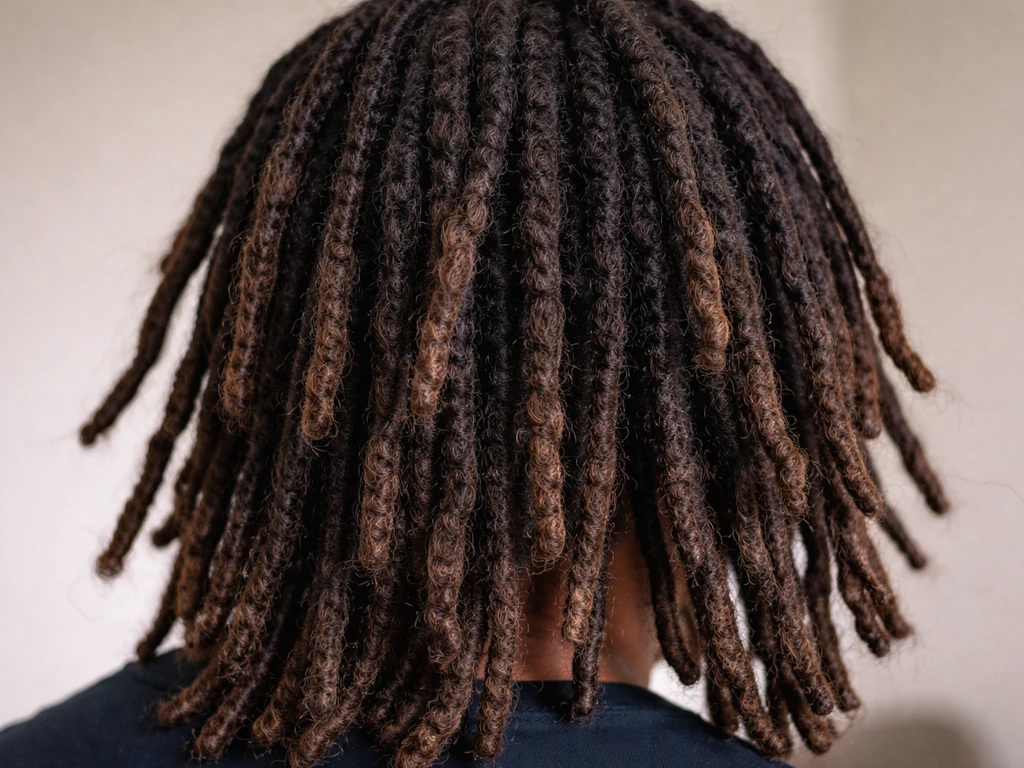
The teenage stage is where most people second-guess themselves. Your locs look uneven, some feel firm at the ends but squishy in the middle, and the roots might look like they haven't changed at all. The interior of each loc is actually becoming very dense during this phase, shed hairs are packing into the core, the cortex is compressing, but none of that shows on the outside as length. This stage can feel like stagnation but it's usually the most active structural period of the entire journey. Patience here is everything.
Mature stage (15–24+ months)
Around 15 to 18 months for many people, locs start to feel and look fully formed. The interior compression has stabilized, roots are locking as new growth comes in, and the overall shape of each loc has settled. From this point forward, your locs are growing as a unit, new hair at the scalp joins the base of the existing loc and the whole thing gets longer. This is when length really starts to show up consistently.
To track your own progress meaningfully, take photos every four weeks in the same lighting and with your hair in the same state (dry, unmanipulated). Don't stretch or pull, let it sit as it naturally falls. This gives you a real record of both your length and your loc formation over time, which is far more useful than trying to judge progress day to day.
Maintenance that helps (and what to avoid)
Freeform means low manipulation, but low manipulation doesn't mean zero care. How you wash, dry, and moisturize your locs has a real impact on how quickly and cleanly they form, and on long-term health.
Washing: the most important habit to get right

Wash your scalp and locs regularly, every one to two weeks is a reasonable starting frequency for most people. Use a residue-free or clarifying shampoo. This matters more than most people realize: regular shampoos and conditioners leave behind coating agents that reduce the friction and interlocking your hair needs to loc. They also contribute to buildup that causes itching, odor, and ultimately slows formation. If you live in a hard water area, mineral deposits from your water can add to this problem, and a periodic clarifying wash or apple cider vinegar rinse can help clear that out.
Rinsing thoroughly is not optional. Incomplete rinsing is the most common cause of itchy scalp, product buildup inside the loc, and the dreaded mildew smell sometimes called dread rot. After washing, squeeze (don't wring) excess water from each loc, then make sure your hair dries completely before you sleep or cover it.
After washing, make sure locs dry completely to prevent mildew, and use a clarifying or residue-free shampoo to reduce buildup that can interfere with proper locking dry completely before you sleep or cover it. Sitting under a hooded dryer, using a microfiber towel, or just air drying in open air all work, the key is that the interior of the loc gets dry.
A loc that stays damp inside for hours is a mildew risk.
Do's and don'ts for freeform loc care
| Do | Don't |
|---|---|
| Use a residue-free or clarifying shampoo | Use heavy butters, waxes, or creamy conditioners directly on locs |
| Rinse thoroughly every wash session | Leave shampoo or product residue in the hair |
| Dry locs completely before sleeping or covering | Go to bed with damp locs (mildew risk) |
| Moisturize the scalp lightly with oil (jojoba, tea tree, peppermint diluted) | Apply heavy moisturizers to the length of the loc |
| Separate locs at the root if they begin fusing together unintentionally | Separate individual hairs within a loc or comb through formed sections |
| Take progress photos monthly in consistent conditions | Judge progress day to day or compare your timeline to someone else's texture |
| Gentle palm rolling occasionally to shape if desired | Over-manipulate roots or retwist frequently if going freeform |
On the topic of palm rolling: it's sometimes used in freeform care to help shape and smooth locs, but it's not a tightening technique the way retwisting is. If you're truly going freeform, you can palm roll after washing to encourage shape, but doing it too aggressively or too often can actually stress the roots. Over-manipulation at the base is one of the underappreciated causes of thinning locs, so if you're going freeform, lean toward less rather than more. This is different from a semi-freeform approach where someone might retwist every four to six months, freeform purists let the root locking happen entirely on its own.
When to leave them alone vs. when to step in
Most things that look alarming in the first year are completely normal. Locs that look lumpy and uneven, locs that feel soft in the middle, roots that seem like they'll never loc, these are all par for the course in freeform formation. The situations where you actually need to intervene are more specific.
Separate when locs are fusing at the roots
In freeform, adjacent locs will sometimes begin to mat together at the base, creating what's called a "congo", two or more locs merging into one. If you want to keep individual locs, you need to gently separate these at the root while the hair is still in the early stages of fusing. Once they've been merged for months, separating them can be painful and damaging. Check your roots after every wash when hair is soft and damp, that's your best window to catch and separate any unintended merges.
Intervene when there's persistent itching, buildup, or smell
Persistent scalp itch, a sour or musty smell from your locs, or visible white or waxy buildup are signs your current wash routine isn't working. These aren't just cosmetic problems, buildup that traps moisture inside the loc creates conditions for mildew and can eventually compromise the structural integrity of the loc itself. If this is happening, do a clarifying wash with diluted apple cider vinegar or a dedicated loc clarifier, dry your hair very thoroughly, and reassess your shampoo and rinsing technique. If the itch is localized at the scalp rather than inside the loc, check whether you have product sitting on the scalp and ensure you're washing often enough.
When locs stay too loose for too long
If you're past the six-month mark and your locs are still entirely loose and unbudded, think about what might be preventing locking. If you're past the six-month mark and your locs are still entirely loose and unbudded, thinking about how to grow dreadlocks faster can help you figure out what to adjust in your routine.
The most common culprits are product residue coating the hair shaft (preventing friction), washing too infrequently (buildup), or simply having a looser curl pattern that needs more time. If you have Type 3 hair going freeform, extending your timeline expectations to 12 to 18 months before visible budding is realistic. If you have Type 4 hair and nothing is forming after six months, a clarifying wash to strip any coating residue from products is usually the first step worth trying.
Thinning at the roots
Thin or fragile roots, where a loc feels like it's hanging by a thread at the scalp, can result from over-manipulation, tension, or product-related scalp inflammation. If you notice this, back off any palm rolling or manipulation entirely, focus on scalp health with a gentle, diluted oil (tea tree is worth considering for both its antifungal properties and circulation benefits), and give the roots time to recover. Freeform should inherently be a low-tension style, which is one of its genuine protective benefits when practiced correctly.
Setting realistic expectations and your next steps
If you're starting today, the most useful thing you can do is mentally commit to a two-year timeline rather than a six-month one. That doesn't mean nothing will happen in six months, you'll likely see real budding and the beginning of individual loc formation. But going in expecting full mature locs within a year will lead to frustration during the teenage stage when your locs look their most chaotic.
For the first three months: stop combing, stop using heavy conditioning products, start washing with a residue-free shampoo, and start letting your hair cluster naturally. Take your first set of progress photos now, before anything has changed. For months three through six: wash consistently, dry thoroughly, gently separate any unintended root merges, and resist the urge to manipulate. For months six through twelve: stay the course. The teenage stage is uncomfortable to watch but it's where the real work is happening inside each loc. Keep your scalp clean, keep the locs dry, and track your progress with photos rather than daily mirror checks.
One thing worth knowing as you go: freeform locs and more structured loc methods like two-strand twist locs or interlocked locs have different timelines and different maintenance needs. Interlocking can change how quickly your locs look more established, but the biology of hair growth rate is still the same interlocked locs. Freeform's biggest advantage is dramatically reduced manipulation and therefore less mechanical stress on each strand, which supports retention over the long haul.
The tradeoff is less uniformity and a longer, less predictable formation window. If you're curious whether other methods would speed things up, the honest answer is that the underlying hair growth rate is the same, what changes is the formation style and maintenance intensity, not how fast your follicles produce hair.
FAQ
If my freeform dreads are growing, why don’t they look longer yet?
Because mature locs compress as they build structure, visible length can lag behind actual growth for months. The easiest way to check is to compare consistent progress photos (same lighting, hair dry and unmanipulated) every four weeks, rather than judging from daily mirror changes.
At what point should I worry that my locs are not locking?
If you have not seen any consistent budding or clumping that stays put when dry by about the six-month mark, it may be time to troubleshoot. Common causes are product coating (residue reducing friction), washing too infrequently, or a looser curl pattern needing a longer timeline (Type 3 often takes 12 to 18 months for clear budding).
Can I speed up freeform locking without retwisting or comb coils?
You can improve conditions, but not change your biological hair growth rate. Focus on removing residue with a clarifying wash, washing on a reliable schedule (often every one to two weeks), and ensuring thorough drying so the interior does not stay damp.
How often should I separate locs if they start merging at the base (congos)?
Check after every wash when hair is soft and damp, then gently separate only while the fusion is still early. If they have already been merged for months, splitting can be painful and can damage the root area.
Is palm rolling safe for freeform dreads, and how do I know I’m doing it too much?
Palm rolling can help shape after washing, but aggressive or frequent sessions near the roots can increase mechanical stress and contribute to thinning. If you notice tenderness at the scalp, increased shedding, or softening around the base, back off and prioritize gentle scalp care and time.
What’s the difference between locs feeling firm and them actually being “locked”?
Early firmness is often happening at the tips while the root is still catching up. True locking is about the internal structure stabilizing, which usually becomes more noticeable around the one-year range for many people, with full settling and more consistent visible length closer to years two or three.
Why do my locs look uneven, with soft middles and locked ends?
A tip-first locking pattern is common in freeform. Ends can bud and firm up earlier, while the midshaft tightens and the roots are usually last, so uneven texture during the “teenage stage” often reflects active internal compression rather than failure.
Can hard water or mineral buildup make freeform dreads grow slower?
It can indirectly slow formation by increasing buildup that reduces friction and traps residue. If you live in a hard water area and notice recurring itch, odor, or heavy buildup, a periodic clarifying wash (sometimes with a diluted vinegar rinse) can help reset the surface conditions.
How do I handle dandruff or scalp inflammation while staying freeform?
Treat scalp health as part of the process. Persistent itch, sour or musty smell, or visible white or waxy buildup are signals your routine is not working and buildup may be feeding mildew risk. Reassess shampoo choice, rinsing thoroughness, and drying time, and pause any extra manipulation that could worsen irritation.
Do freeform dreads require more drying than other styles?
Yes. The key is that the interior of each loc must dry completely before sleep or covering. If locs stay damp for hours, you increase mildew risk, which can create odor and potentially compromise the structure.
At what age of locs should I expect my “first real length” to show up?
Many people report that early stages look like little to nothing is changing during year one because shrinkage and compression hide length. More consistent length visibility often starts around year two or three once compression stabilizes and new growth displays farther down the loc.
Next Article
Do Dreadlocks Make Your Hair Grow Faster? What Helps
Dreadlocks do not speed hair growth, but improve length retention. Learn how size, care, washing, and tension help locs