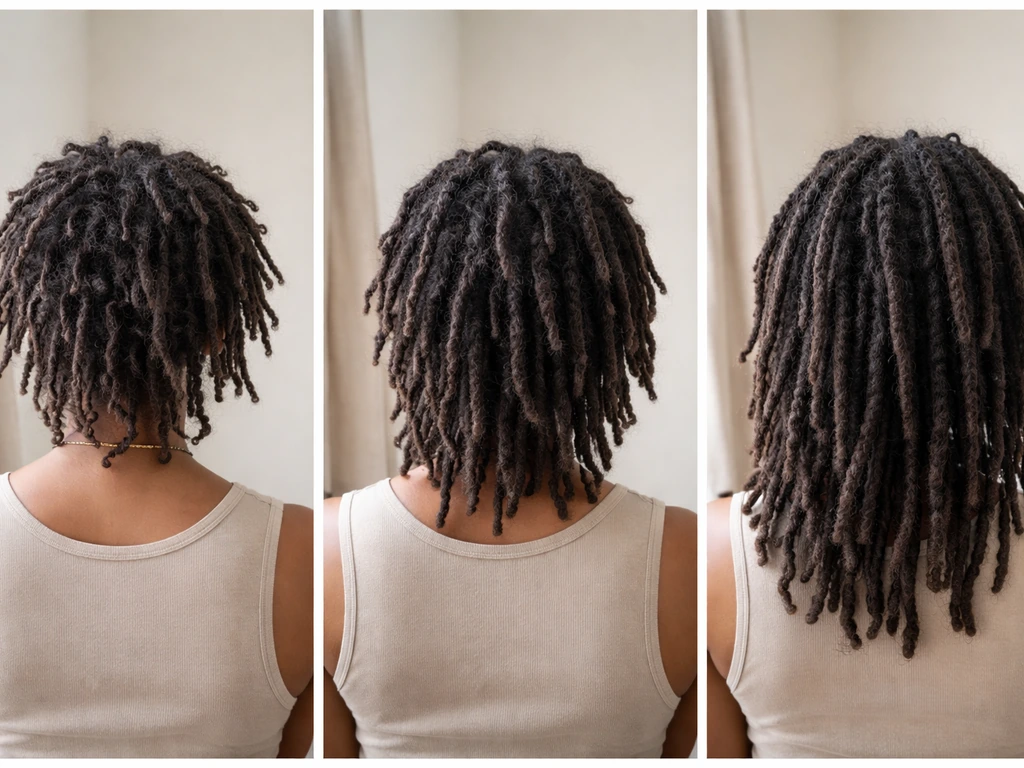
You can absolutely start and grow dreadlocks at home. What you need going in is an honest picture of what dreadlocks actually do: they protect existing hair length by reducing daily manipulation and breakage, which lets more of the hair your follicles already produce stay on your head. They do not make your scalp produce hair faster. That distinction matters because it shapes every decision you will make about methods, products, and maintenance.
How to Grow Dreadlocks at Home: Starter Guide & Maintenance

Simone Okonkwo
19 Jul 2026
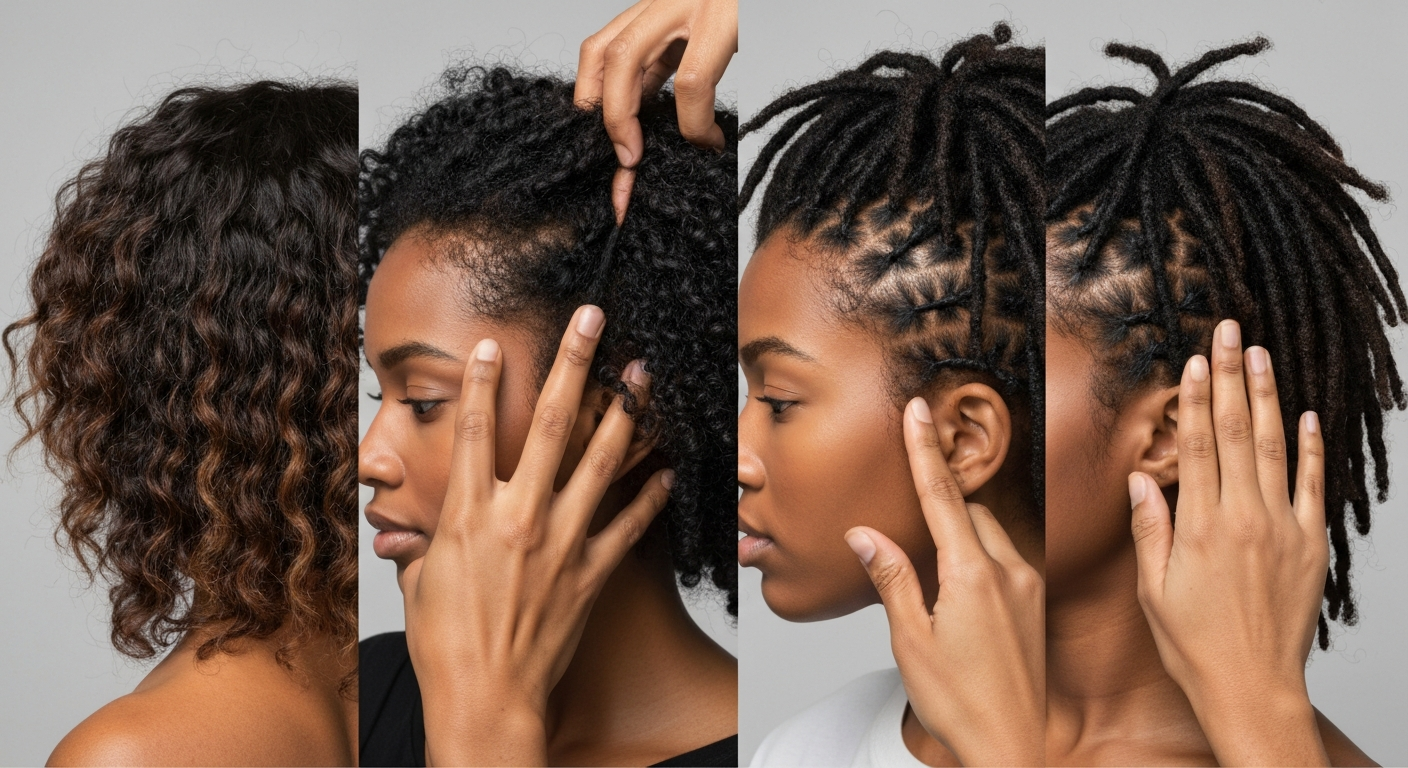
What this guide will (and won't) do
This guide will walk you through the biology of hair growth as it applies to locs, bust the most persistent myths with actual evidence, and give you step-by-step starter instructions for the three most practical at-home methods: freeform, twist-and-rip, and comb coils. It will also cover a maintenance routine built around retention, product choices that won't wreck your locs, and a realistic troubleshooting section for the problems most people run into in the first year. What it won't do is promise you dramatic length gains or tell you that any particular method unlocks some hidden growth potential. Those claims aren't supported by the science, and you deserve better than that.
How your hair actually grows (the biology part, made simple)
Every hair on your scalp lives in a follicle and goes through three repeating phases: anagen (active growth), catagen (transition), and telogen (rest and shed). The anagen phase is where length happens, and its duration is largely set by your genetics, hormones, and overall health. The commonly cited average growth rate is about 1 cm per month, but published studies show the real range is roughly 0.6 to 1.5 cm per month and it varies meaningfully by age, scalp region, and ancestry. Research on multi-ethnic populations consistently finds that African and coily-textured hair tends to show a slightly slower mean linear growth rate and lower density per square centimeter compared with Asian hair, which typically shows the fastest linear growth in these studies. None of this is a flaw. It just means realistic expectations look different depending on your hair type, and that is worth knowing before you get frustrated comparing your progress to someone with a completely different follicle geometry.
The other piece that matters most for loc wearers is breakage versus new growth. Your follicles might be producing a centimeter of new hair every month, but if that same centimeter is snapping off at the ends from dryness, friction, or aggressive manipulation, your visible length stays flat. Locs, when maintained gently, dramatically reduce the number of times your strands are combed, detangled, and stretched. That reduced manipulation is the real reason people with locs often see length retention they never experienced with loose styles. The follicle growth rate did not change. The breakage rate did.
How dreadlocks form and why your length looks different once they do
Dreadlocks form through a combination of matting, interlocking of the cuticle scales, and the gradual bonding of strands as the natural shed hair (which normally falls out during brushing) gets retained inside the loc instead of leaving your head. For a clear, practical overview of how dreadlocks grow and what to expect during each stage, see our guide on how do dreadlocks grow. Coily and kinky textures loc more readily and quickly because the tight curl pattern creates natural friction points that encourage strands to knot around each other. Laboratory and clinical studies report that textured (coily/kinky) hair has a flattened/elliptical shaft cross‑section, lower mean tensile strength per strand, and a higher propensity for knotting, factors that increase susceptibility to mechanical breakage during aggressive manipulation (Hair and scalp disorders in women of African descent: an overview, British Journal of Dermatology) blank" rel="noopener noreferrer">textured (coily/kinky) hair has a flattened cross‑section and lower tensile strength. Straighter textures can loc, but the process generally takes longer and usually requires a more deliberate starter method.
When you first start locs, you will almost certainly experience significant shrinkage. A two-strand twist that starts at your collarbone might look like it's at your ear six months later as it tightens and coils into itself. This is not your hair getting shorter. It is the curl pattern compressing the length into a denser, more compact structure. Once the loc matures and the internal structure sets, length starts to become more apparent again as new growth accumulates at the root. Understanding this cycle prevents a lot of panic in the first year.
There is also a density effect worth knowing about. As locs mature, they retain telogen (shed) hairs that would normally leave your scalp during brushing. This makes individual locs progressively denser and can give the impression of thicker, fuller hair over time. The actual growth rate from the follicle has not changed, but the visual result looks more substantial.
Myths answered with evidence
Do dreadlocks make your hair grow faster?
No. There is no published, peer-reviewed study demonstrating that wearing dreadlocks increases the follicular mitotic rate (the cellular process that actually produces hair length). Hair grows from the follicle according to its biological programming. A loc sitting on top of that follicle does not send a signal down to speed up cell division. What dreadlocks genuinely do is reduce the breakage and shedding loss that shortens the usable length of hair that has already grown. See the section 'Does interlocking make dreads grow faster?' for specific guidance on interlocking and its effects on tension and retention. That is still a meaningful benefit, but it is a retention benefit, not a growth benefit. The distinction matters because if your scalp health is poor or your nutrition is lacking, locs will not override those limiting factors. For a focused answer and a deeper explanation, see do dreadlocks make your hair grow faster.
Does interlocking make dreads grow faster?
No, and frequent or overly tight interlocking can actually work against you. Interlocking produces a neat, long-lasting root by threading the loc back through itself, but multiple clinical and dermatology reports have documented that repeated high-tension interlocking, especially at the hairline and temples, is associated with traction changes and fronto-temporal thinning in some cases. Experienced locticians generally recommend interlocking less frequently than retwisting to manage cumulative root tension. The neatness is real, but so is the risk if you are doing it too often or too tightly.
Choosing the right starter method for your hair type
The best starter method is the one that matches your hair texture, your tolerance for early-stage messiness, and how much time and budget you want to invest at the start. Here is a quick decision framework before we get into the step-by-step guides.
| Method | Best for | At-home friendly? | Time to mature | Main risk |
|---|---|---|---|---|
| Freeform / neglect | 4a-4c coily textures; low-maintenance preference | Yes, fully | 1-2+ years | Uneven sections; hard to undo |
| Twist-and-rip | 2c-4b wavy to coily; moderate curl pattern | Yes, with practice | 6-18 months | Uneven tension; fraying with straighter hair |
| Comb coils | 3c-4c tighter textures; defined sections | Yes | 6-18 months | Unraveling if touched too early |
| Two-strand twists / braid locs | 3a-4c; protective start preferred | Yes | 6-18 months | Transition look during unraveling phase |
| Interlocking | All textures; those wanting neat roots | Possible but riskier solo | 6-18 months | Traction damage if too tight or frequent |
If your hair is chemically relaxed, be especially cautious with high-tension methods. Relaxed strands have a lower tensile strength because the disulfide bonds in the cortex have been chemically altered, and they are more vulnerable to traction damage than natural hair. Freeform and gentle comb coils are typically the safer starting points for relaxed hair.
Freeform starter guide: step-by-step at home
Freeform locs, sometimes called the neglect method, are exactly what they sound like: you stop combing and brushing, wash regularly, and let your hair loc on its own terms. This is culturally one of the oldest and most natural ways to form locs, and for tightly coiled hair types it is also the most low-manipulation option available. The trade-off is that you surrender control over section size and placement, and the early stages can look unpredictable.
Step-by-step
- Start with clean, product-free hair. Use a residue-free or clarifying shampoo and rinse thoroughly. Avoid waxes, heavy butters, or silicone-based products from this point forward.
- Stop combing or brushing. You can still part with your fingers to encourage general sections if you want some control over loc size, but leave the strands alone otherwise.
- Wash every 1-2 weeks consistently. Use a residue-free shampoo, massage the scalp gently, and rinse well. Dry your hair completely after every wash, using a hooded dryer if needed. Damp locs that stay damp develop mildew and odor.
- Separate any sections that are budding together at the roots using your fingers. Do this gently and only when the hair is dry. This is the only significant maintenance task in the freeform stage.
- Be patient with shrinkage. Most coily textures shrink dramatically in the first 3-12 months as the locs tighten and form their internal structure.
- Once locs are established (usually 12-18 months in), you can begin light palm-rolling after washes to encourage a more uniform shape if desired, but this is optional.
Freeform pros and cons
| Pros | Cons |
|---|---|
| Minimal manipulation means minimal mechanical breakage | Section size and placement are unpredictable |
| No products or tools required at start | Early stages can look unkempt for a long time |
| Lowest risk of traction damage | Difficult to separate merging locs once bonded |
| Works beautifully on 4a-4c textures | Straighter textures may struggle to loc without assistance |
| Honors traditional and cultural loc practices | No defined start date or clear timeline milestones |
For relaxed hair: freeform is workable, but locs will form more slowly because the curl pattern has been chemically reduced. Finger-separating merging sections becomes especially important since relaxed hair can fuse into unintended thick masses. If your hair is transitioning from relaxed to natural, the line of demarcation (where relaxed meets new growth) is a fragile breakage point. Handle that zone with extra care and avoid pulling or stretching.
Twist-and-rip starter guide: step-by-step at home
Twist-and-rip is a popular method for people who want more control over their section sizes than freeform offers but don't want the very defined look of comb coils. You twist a section of hair, then pull it apart and re-twist repeatedly, encouraging the strands to tangle and mat together. It works across a range of textures from wavy to coily, though results on straighter hair can be inconsistent and may require more persistence.
Step-by-step
- Start on clean, dry or slightly damp hair. Section the hair into the size you want your finished locs to be. Use clips or hair ties to keep sections separate. Smaller sections produce thinner locs; larger sections produce thicker ones. Square sections are the most common.
- Take one section and split it into two equal halves. Twist the two halves around each other tightly in one direction.
- While still twisted, grab the two halves and pull them gently apart in opposite directions. You will feel (and see) the strands starting to tangle and rough up.
- Re-twist the section and rip again. Repeat this 5-10 times per section until the hair feels noticeably rougher and more tangled. It should hold a loose twisted shape when you release it.
- Leave it alone. Do not palm-roll obsessively or re-twist constantly. Frequent re-manipulation in the early stage disrupts the tangling process.
- Wash after 2-4 weeks using a residue-free shampoo. Use a knee-high stocking or net over the locs while washing to prevent excessive unraveling. Dry completely.
- Repeat the twist-and-rip on any sections that have fully unraveled after washing. Expect some unraveling in the first several months, especially on wavy or looser curl patterns.
Twist-and-rip pros and cons
| Pros | Cons |
|---|---|
| Good control over section size and placement | Requires patience through repeated unraveling early on |
| No tools or products needed | Less effective on very straight or fine hair without backcombing |
| Works on a wide range of textures (2c-4b) | Tension can be uneven if sections are not consistent |
| Relatively low manipulation once sections are set | Early locs look loose and undefined for months |
| Easier to fix uneven sections early on than freeform | Relaxed hair is more fragile during the ripping step |
For relaxed hair: the ripping action can cause breakage at the line of demarcation on transitioning hair. If you are fully relaxed with little to no natural new growth, twist-and-rip is high risk. Freeform or very gentle comb coils on clean, dry hair are safer choices until you have a meaningful amount of natural growth.
Comb coils starter guide: step-by-step at home
Comb coils (also called finger coils or loc coils depending on the technique) create tight, defined spiral sections that are one of the most common starter methods for 3c-4c hair types. A fine-tooth comb is used to coil each section into a spring-like shape that sits flat against the scalp. The resulting coils look neat and intentional from day one, which makes this method appealing for people who want to start locs without a long awkward-looking phase. The challenge is that the coils are vulnerable to unraveling, especially in the first few weeks, and they require patience.
Tools and what to have ready
- Fine-tooth rat-tail comb (for clean sectioning and coiling)
- Hair clips or sectioning clips
- A light, water-based moisturizer or loc gel (avoid wax-based or silicone-heavy products)
- Residue-free or clarifying shampoo
- Hooded or bonnet dryer, or a diffuser attachment
Step-by-step
- Wash hair with residue-free shampoo and allow it to dry to about 80% dryness. Completely soaking wet hair makes coils harder to hold. Completely dry hair can make coiling harder on very tight textures.
- Part the hair into even sections using the rat-tail comb. Section size determines final loc thickness. Classic square or diamond sections are easiest to replicate consistently across the whole head. Clip all other sections out of the way.
- Apply a tiny amount of light water-based loc gel or moisturizer to one section. Use very little. Product buildup inside locs is one of the most common long-term problems, and it starts here.
- Place the rat-tail comb near the root of the section and rotate it in one direction (clockwise or counter-clockwise, pick one and stay consistent) while feeding the strand around the comb barrel. Guide the hair into a tight coil from root to tip.
- Gently slide the comb out of the coil while holding the base in place. The coil should spring back on itself and sit against the scalp.
- Repeat for every section. Work in a consistent grid pattern so sections are uniform.
- Allow to dry completely before touching. Use a hooded dryer or sit under a heat cap. Manipulating wet or damp coils is the fastest way to undo your work.
- Avoid washing for at least 2-4 weeks. When you do wash, use a loc net or stocking over the coils, use diluted shampoo applied gently to the scalp, and dry completely every time.
Comb coils pros and cons
| Pros | Cons |
|---|---|
| Neat, defined look from day one | Highly vulnerable to unraveling in the first 4-8 weeks |
| Excellent for 3c-4c tight textures | Requires more product than freeform, increasing buildup risk |
| Easy to control section size and shape | Needs complete drying after every wash to avoid frizz and unraveling |
| A familiar starting point for many in loc-friendly traditions | Fine-tooth comb can cause tension at root if pulled too hard |
| Good transition from previous protective styles | Less effective on looser wavy textures without setting product |
For relaxed hair: comb coils can work on fine, relaxed textures but the coil will not hold as tightly due to the altered protein structure of the strand. Use a stronger-hold water-based gel and be extremely gentle with the comb near the scalp. Avoid any tugging motion at the root. Many stylists recommend waiting until there is at least 2-3 inches of natural new growth before attempting comb coils on transitioning hair, giving the coil something structurally sound to grip.
Building a maintenance routine that actually retains length
Once your locs are started, the maintenance routine is where most of the long-term outcome is decided. Getting the washing, moisturizing, and sleep habits right is more important than any product you buy or any retwisting technique you perfect.
Washing: frequency and products
Wash your locs every 1-2 weeks. Dermatology guidance consistently points to residue-free and clarifying shampoos as the standard for loc maintenance because they remove sebum, product buildup, and scalp debris without leaving the kind of film that traps inside the loc structure over time. Avoid shampoos and conditioners that contain heavy waxes, high-molecular-weight silicones like dimethicone, or heavy butters. These ingredients are documented to create progressive, hard-to-remove deposits inside locs. A loc that has accumulated wax buildup is not just aesthetically dulled. It is a structurally compromised loc that is heavier, more brittle, and harder to fully dry, which raises the risk of mildew and scalp odor.
Every wash must end with completely dry locs. This is non-negotiable. Use a hooded dryer, a diffuser, or sit in the sun if needed. A loc that stays damp internally, especially in the dense core of a mature loc, is a breeding ground for bacteria and mold. This is one of the most common causes of the persistent odor that gets unfairly attributed to locs as a style rather than to maintenance gaps.
Clarifying and buildup removal
Even with a good routine, mineral deposits from hard water and residual product accumulate over time. A chelating shampoo with ingredients like EDTA, citric acid, or sodium phytate used once every 4-6 weeks is an effective, evidence-backed approach to clearing mineral buildup. For mineral and product buildup, professional chelating shampoos (EDTA/disodium EDTA, citric acid, sodium phytate) and salon hard‑water treatments are effective; see Hard Water and Seborrheic Dermatitis: What the Research Shows (dermatology resource) for details. Apple cider vinegar rinses are widely used in the loc community as a lower-pH clarifying step, and there is some basis for their use as a light rinse to address surface residue and pH balance, but the clinical evidence is limited and they should not replace proper shampoo washing. If you develop scalp dermatoses like seborrheic dermatitis or flaking, medicated shampoos containing ketoconazole, selenium sulfide, or zinc pyrithione are well-supported first-line options. Consult a dermatologist if those conditions persist.
Moisturizing without buildup
Locs need moisture, especially the mid-shaft and tips where dryness-related breakage happens. The best approach is lightweight: a water-based leave-in spray misted over the locs and worked gently into the tips 2-3 times per week. A few drops of a lightweight oil like jojoba, grapeseed, or argan oil can seal moisture in after the water-based product. Avoid heavy butters and coconut oil applied in large amounts directly to the loc body. Coconut oil in particular, while popular, is high in lauric acid and can cause protein overload with repeated use on already fragile or low-porosity strands. Use it sparingly and mostly on the scalp rather than the loc shaft.
Sleep and protective habits
Friction against cotton pillowcases at night is a consistent source of dryness and breakage, particularly at the temples and hairline. Sleep with a satin or silk bonnet, or use a satin pillowcase as a minimum. If your locs are long enough to be styled, loosely wrapping or piling them with a large satin scarf works well. Also avoid sleeping with wet or damp locs, both for the mildew risk and because wet hair is mechanically weaker and more vulnerable to friction damage.
Root maintenance and traction awareness
Retwisting every 4-6 weeks is a reasonable frequency for most people. Going more frequently than every 3 weeks puts cumulative tension on the same root points repeatedly, and clinical dermatology literature is clear that chronic traction is a causative factor in traction alopecia, a form of hair loss that can become permanent if the follicle is damaged enough. Pay particular attention to your temples and hairline, which are consistently identified as the highest-risk zones for traction damage across multiple clinical reviews. If you notice thinning, bumps, or any pain at the root after maintenance, take it as a signal to rest that area and reduce tension at your next appointment.
Real tips for faster visible length (what the evidence supports)
Since dreadlocks don't speed up follicular production, the honest path to more visible length is maximizing retention and supporting the physiological conditions that allow your follicles to stay in the anagen phase as long as possible. Here is what actually helps.
- Reduce breakage: this is the biggest lever. Less manipulation, proper moisture, no tight elastic bands directly on the loc, and gentle root maintenance all contribute.
- Support nutrition: iron deficiency, low ferritin, and inadequate protein intake are the most commonly identified nutritional contributors to hair shedding and shortened anagen phases in clinical trichology. If you are vegetarian, vegan, or suspect your diet is low in these, a blood panel with a doctor is worth doing before spending money on hair supplements.
- Scalp health: inflammation from seborrheic dermatitis, buildup, or tight styles compresses follicle function over time. Keeping the scalp clean, low-inflammation, and properly moisturized protects the environment your follicles need.
- Protective styling between maintenance sessions: keeping locs loosely gathered or wrapped at night and during high-friction activities (working out, sleeping, swimming) reduces the cumulative mechanical damage that clips away at your lengths.
- Patience with shrinkage: the most common source of discouragement in the first 12-18 months is interpreting shrinkage as lost length. It is not. Trust the biology and let the structure form.
Realistic timelines: what to expect and when
These ranges are drawn from loctician professional guidance and community longitudinal observations. They are estimates, not guarantees, and your personal timeline will depend heavily on your hair texture, section size, maintenance consistency, and biology.
| Stage | Freeform | Comb coils / Twist-and-rip | What's happening |
|---|---|---|---|
| Starter / budding | Months 1-6+ | Months 1-3 | Hair begins to mat and tangle; significant shrinkage; locs look loose or undefined |
| Teenage / sprouting | Months 6-18 | Months 3-9 | Locs start to hold their shape; some still unravel at ends; visible length variation across head |
| Mature | 18 months to 2+ years | 9-18 months | Internal structure set; locs feel firm and cylindrical; shrinkage has mostly stabilized; length starts to express more clearly |
| Adult / rooted | 2+ years | 18+ months | Locs are fully established; length progress becomes more predictable; density and weight increase |
Freeform locs, because they form on their own schedule without forced structure, tend to take longer to reach the mature stage than methods that actively encourage tangling from the start. That said, freeform locs often have a stronger internal structure once mature because the tangling happened naturally along the path of least resistance for that particular hair's geometry. For a focused timeline and milestones specific to freeform locs, see our guide on how long does it take to grow freeform dreads. If you want a deeper look at the freeform timeline specifically, that topic is covered in much more detail in a dedicated piece on how long it takes to grow freeform dreads.
Troubleshooting common problems
Thinning at the roots or hairline
This is the most serious issue you can encounter and should not be ignored. Thinning at the temples, nape, or hairline after maintenance sessions is a warning sign of traction alopecia. Stop whatever maintenance technique is causing the tension immediately. Give the area rest, avoid styles that pull those sections, and see a dermatologist or trichologist promptly. Early-stage traction alopecia can be reversed if caught in time, but repeated insult can lead to scarring that permanently damages follicles. No aesthetic goal is worth that risk.
Locs unraveling
Unraveling in the first 3-6 months is normal and expected, especially with comb coils and twist-and-rip on looser curl patterns. The solution is not to redo them constantly. Re-doing them adds manipulation and delays the natural matting process. Instead, let the section dry completely after washing using a loc net for support, and only redo sections that have fully come undone at the root. Partial unraveling at the tips usually resolves itself as the loc matures.
Product buildup
Buildup inside locs presents as dullness, a rough or stiff texture that is not from the loc's natural structure, and sometimes an odor even after washing. A chelating shampoo treatment followed by a thorough rinse and complete drying is the first step. If the buildup is severe and long-standing from wax-based products, it may take multiple chelating treatments over several weeks. Some very heavy wax buildups may require professional help to address without damaging the loc structure. This is the best argument for avoiding wax entirely from day one.
Scalp issues: dryness, flaking, itching
Light flaking with itching, especially between wash days, is often seborrheic dermatitis, which is common among loc wearers because the scalp environment under locs can retain warmth and oil. A zinc pyrithione or ketoconazole shampoo applied directly to the scalp (not the loc body) during wash days is the evidence-backed first line. If symptoms are severe, persistent, or accompanied by redness and pain, a dermatologist visit is the right move, not another DIY product.
Too-tight interlocking
If interlocking was done too tightly or too frequently and you can feel tension pain at the roots, do not try to pull the interlock apart yourself since that can cause more damage. Leave it alone and let the tension relax naturally over 1-2 weeks. Going forward, space interlocking sessions out to at least every 6-8 weeks, and ask your loctician to use a lighter tension pass if you continue with the method.
When to see a loctician instead of going it alone
Doing your locs at home is entirely feasible for most people, but there are situations where a trained loctician is genuinely worth the investment. If you are starting from a big chop with less than 2 inches of hair, if you have significant breakage or thinning already present before starting, if you want interlocking and have not done it before, or if you have a chemical process on your hair and are unsure how to manage the transition zone, those are all situations where a professional consultation catches mistakes before they become hard to fix. A good loctician is also invaluable for severe buildup removal, merging runaway sections in mature freeform locs, and any scalp issue that does not respond to the standard approaches above.
Product categories worth knowing
You do not need a shelf full of products to grow healthy locs. You need a few well-chosen ones from the right categories.
- Residue-free or clarifying shampoo: your most important product. Look for sulfate-based or gentle clarifying formulas without wax, silicone, or heavy emollient ingredients.
- Chelating shampoo: for monthly or bi-monthly mineral and deep product buildup removal. Ingredients to look for: EDTA, disodium EDTA, citric acid, sodium phytate.
- Lightweight water-based moisturizer or leave-in: for daily or every-other-day moisture on the loc body and tips. Should be the first product applied.
- Lightweight oil (jojoba, grapeseed, argan): used as a sealant after water-based moisture. A small amount goes a long way.
- Water-based loc gel (for starter methods only): if using comb coils, choose a water-based gel with no wax, silicone, or petroleum. Use sparingly.
- Medicated shampoo (as needed): ketoconazole, zinc pyrithione, or selenium sulfide for seborrheic dermatitis management.
- Products to actively avoid: beeswax blends, petroleum-based greases, products listing dimethicone or amodimethicone high in the ingredient list, and any product marketed as a loc 'moisturizer' that contains a wax as a primary ingredient.
The bottom line on growing locs at home
Growing dreadlocks at home is genuinely achievable for most hair types, and the process is more forgiving than it can look from the outside. The fundamentals are straightforward: pick a starter method that matches your texture and lifestyle, keep your scalp clean and healthy, protect your locs from friction and excessive tension, use lightweight products that won't build up inside your locs, and stay patient through the shrinkage and teenage phases. Your follicles will keep producing hair at the rate your biology allows. Your job is to stop getting in the way of keeping that hair.
FAQ
What types of scientific and clinical sources are needed to explain dreadlock formation and hair growth accurately?
Use primary dermatology and hair‑biology reviews (hair growth cycles, anagen–catagen–telogen), population growth‑rate studies, trichology mechanical/shaft research, clinical guidance on traction alopecia, and formulation science on product buildup. Combine peer‑reviewed papers, dermatology textbooks/StatPearls, and high‑quality loctician/practitioner consensus or longitudinal community logs for timelines and technique outcomes.
How does true hair growth differ from the appearance of length in locked hair?
True growth is follicular: new shaft produced at the root governed by follicle biology and systemic factors (≈0.6–1.5 cm/month average). Apparent length gains come from reduced shrinkage (when hair is stretched), decreased end‑breakage due to less manipulation, and retention of shed hairs inside locs. Locking itself has no proven mechanism to increase follicular mitosis or intrinsic growth rate.
Do dreadlocks make hair grow faster or does interlocking speed growth?
No high‑quality studies show dreadlocks or interlocking increase the follicular growth rate. Perception of faster growth is usually due to better retention and less breakage. Interlocking can produce neat roots but, if done too tightly or too often, increases traction risk and may cause hair loss in vulnerable areas.
What biological and external factors actually control hair growth rate?
Intrinsic factors: follicle cycle timing, genetics, age, and scalp site. Extrinsic/modifiable factors: nutrition, hormonal status, systemic inflammation, and scalp health. Styling does not change follicle cell division rate; reducing breakage and improving retention are the main routes to faster visible length.
Which starter methods can you use at home and how do they compare for textured vs relaxed hair?
Common at‑home starters: freeform (neglect), two‑strand twists/twist‑and‑rip, comb coils, braids/braid‑locs, palm‑rolling/backcombing, interlocking, and crochet. For textured/coily hair, twists/coils and backcombing interlock naturally and hold well; relaxed hair may need tighter partitioning, smaller sections, or professional help. Freeform minimizes manipulation but takes longest to tidy; interlocking creates neat roots but raises traction risk if too tight—especially on relaxed or chemically treated hair.
What are the pros and cons of interlocking vs twist maintenance?
Interlocking: pros—neat roots, longer intervals between maintenance; cons—higher root tension if overdone, greater risk of traction alopecia on fragile hair. Twist/retwist: pros—gentler on roots when loose, widely used for textured hair; cons—requires more frequent maintenance for neatness and can cause buildup if heavy products used. Frequency and tension management are key to safety.
Next Article
How Long Does It Take to Grow Freeform Dreads?
Learn how long freeform dreads take to form, track progress by months, and boost growth vs length retention.