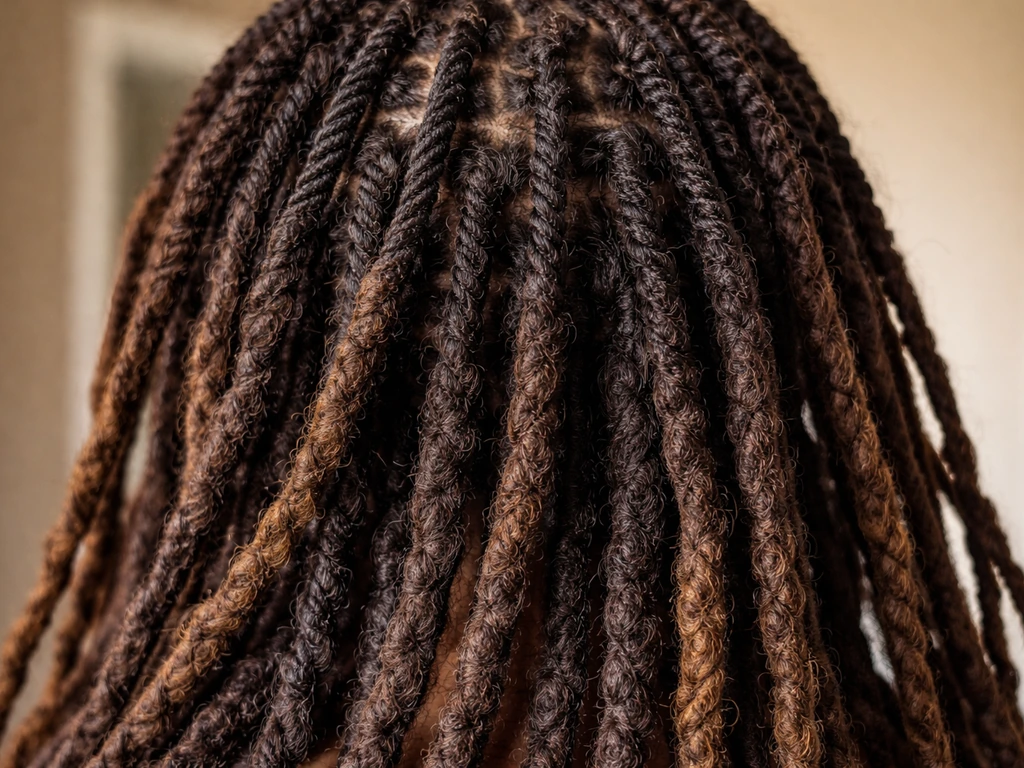
Twists don't actually make your hair grow faster, but they can make it look like they do, and that distinction matters. The real goal is length retention: keeping the hair you're already growing from snapping off before you get to see it. Hair grows roughly 1 cm per month no matter what style you're wearing, but most people lose a significant chunk of that to breakage, dryness, and friction. A well-installed, well-maintained set of two-strand twists cuts those losses dramatically, which is why your hair seems to shoot up while they're in. Here's how to set them up to do exactly that.
How to Grow Twists Faster: Retention and Scalp Care Guide

Simone Okonkwo
9 Jul 2026
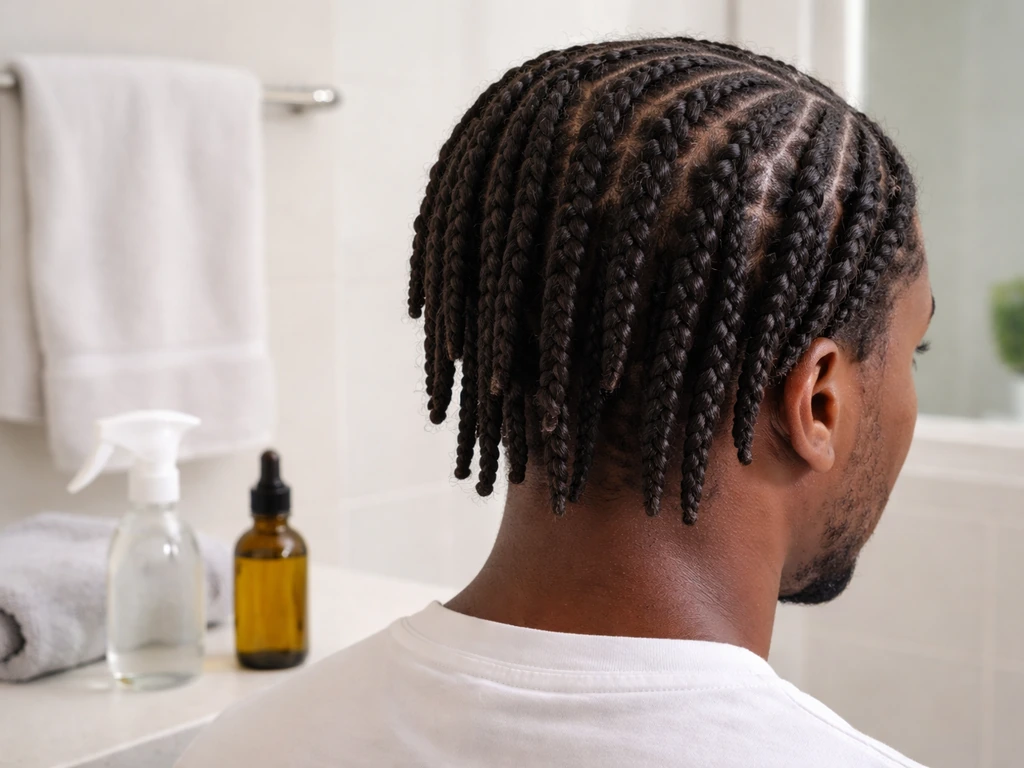
Twists and 'growth': what's actually happening
Your scalp hair grows at a biologically fixed rate of about 0.3 mm per day, roughly 1 cm per month during the active growth phase. No product, style, or technique changes that baseline in any meaningful way. What protective styles like two-strand twists change is how much of that growth you actually keep. Two-strand twists can help you keep more of your natural growth, as long as the tension and maintenance are done in a way that prevents breakage. For people with 4C hair, shrinkage alone can make hair appear 75% shorter than its true stretched length. Add in day-to-day manipulation, friction from clothing, and dryness-related breakage, and you can easily be snapping off almost as much as you're growing. Twists reduce all of that. They bundle the strands together, limit daily combing, and shield the ends, which are the oldest and most fragile part of each strand. The result is more retained length over time, which feels and looks like faster growth.
The trap people fall into is crediting the twist itself rather than the conditions it creates. Doing two-strand twists the right way can help your hair keep more length as it grows out does two strand twist grow dreads. If your twists are installed too tight, left in too long, or kept dry, they become a source of breakage rather than protection. That's why installation technique, product choices, and maintenance habits matter as much as the style itself. The sections below walk through each piece of that, in the order you'd actually do them.
Pre-twist prep: the work that happens before you even start twisting
Everything that goes wrong with a twist set usually starts here. Hair that goes into twists dirty, over-dry, or tangle-loaded will fight you at every stage and come out weaker than it went in. The goal for wash day before a twist install is simple: clean scalp, well-conditioned strands, and hair that's been detangled with the least possible force.
Cleansing
Start with a gentle, sulfate-free shampoo or a co-wash. Sulfate-free formulas clean without stripping the natural oils that coily and kinky hair textures already produce in smaller amounts than straight hair. If you have significant product buildup from a previous style, a single clarifying wash first is fine, but follow it immediately with a deep conditioner. Apply shampoo directly to the scalp and work it in with the pads of your fingers, not your nails. Move your hands in a downward direction along the hair rather than scrubbing in circles, which causes tangling and friction-related breakage.
Deep conditioning and detangling
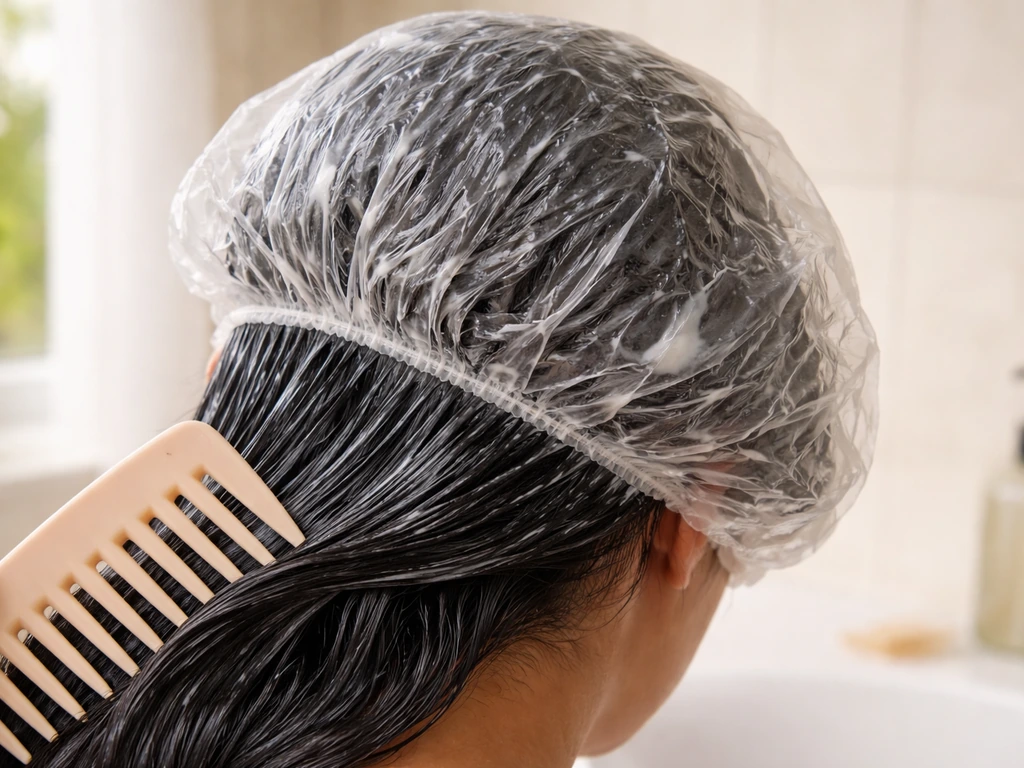
After rinsing, apply a deep conditioner and let it sit for at least 20 to 30 minutes, ideally under a plastic cap with some heat. After rinsing, apply a deep conditioner and let it sit for at least 20 to 30 minutes, ideally under a plastic cap with some heat. This is not optional prep, it's the step that makes detangling survivable. Research on hair cosmetics consistently shows that conditioners reduce inter-fiber friction and dramatically cut the force needed to comb through hair. One study found that conditioner use reduced damaged hairs from combing to less than one-tenth compared to combing without it. Work through each section with a wide-tooth comb or your fingers, starting at the ends and moving upward in short passes. Never start at the root and drag down.
For very dense or tightly coiled textures, divide hair into four to six large sections before you start detangling, and keep each section clipped out of the way as you finish it. This prevents already-detangled sections from re-tangling while you work on the rest.
Moisture before installation
Install your twists on damp (not soaking wet, not bone dry) hair that has a leave-in conditioner worked through it. Wet hair is more elastic and more manageable, but it's also more susceptible to tension damage, so avoid pulling hard on very wet strands. Aim for hair that feels moisturized and pliable but isn't dripping. If you're using a twisting cream or butter for hold, apply it section by section as you work through the install rather than applying it all at once and letting it dry before you're done.
How to install two-strand twists for the best retention results
The way you section, size, and tension your twists has a direct impact on how much growth you keep. If you focus on gentle tension and consistent two-strand twist technique, you can improve your chances of growing your hair out during the time the twists are in how much growth you keep. Getting this right matters more than which products you use.
Section size and parting
Section size determines twist thickness, style duration, and how much stress each twist puts on the root. Smaller sections create thinner twists that tend to hold longer and define more, but they also take longer to install and can create more tension points if you're not careful. Medium sections (roughly pencil-width to finger-width parts) are a good middle ground for most people wanting to wear twists for two to four weeks. Very large sections create chunky twists that install quickly but may unravel faster, especially on looser curl textures. Use a rat-tail comb to part cleanly, and keep your parting pattern consistent (horizontal rows starting from the nape, or diagonal sections, both work, just stay consistent) so you get even tension distribution across your scalp.
Tension: the most important variable
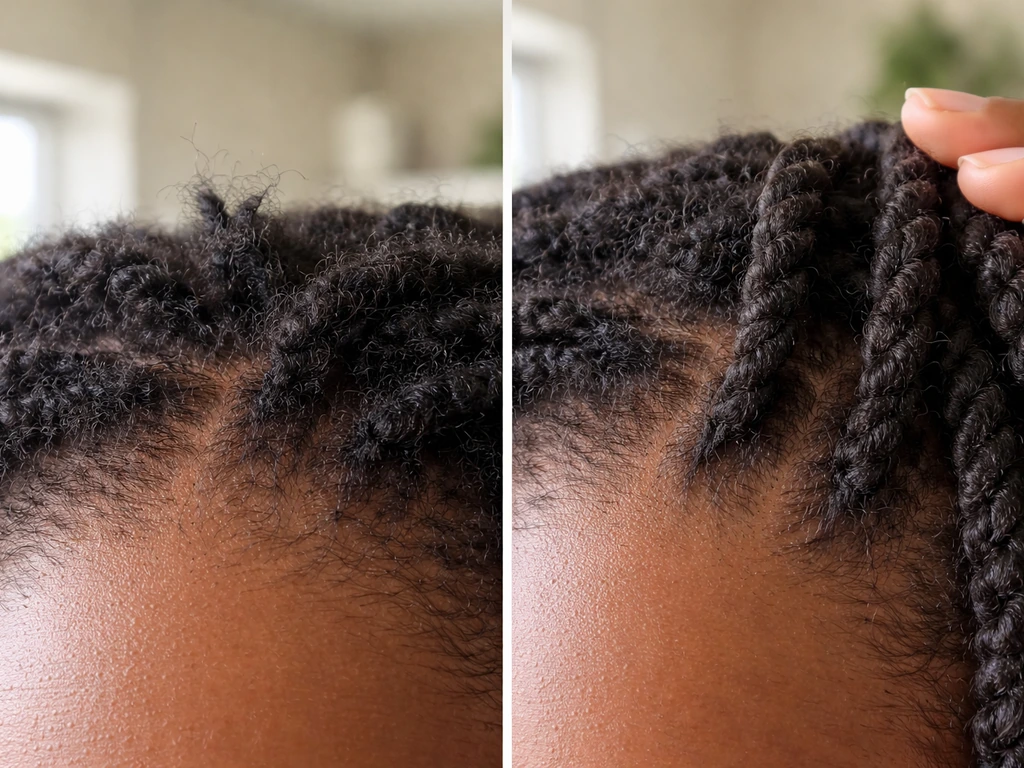
This is where most breakage and hair loss happens. If you’re using Senegalese twists specifically, the same rules about gentle tension and consistent moisture are what help them support hair growth over time. Traction alopecia, a real and documented form of hair loss, is caused by repeated mechanical tension on the hair follicle. Research published in dermatology literature is clear that pulling forces sufficient to cause traction can damage the dermal papilla, the structure that feeds each follicle. You should be able to fit a fingertip under any section at the root without resistance after it's twisted. If the skin at your hairline or temples looks taut, or if you feel a pulling sensation hours after installation, those twists are too tight. Loosen them before they become a problem.
Tension risk is even higher for hair that's been chemically relaxed or thermally straightened, because those processes weaken the hair shaft, making it more vulnerable to mechanical stress. If your hair has any chemical processing, be especially conservative with how tightly you twist.
Technique for the actual twist
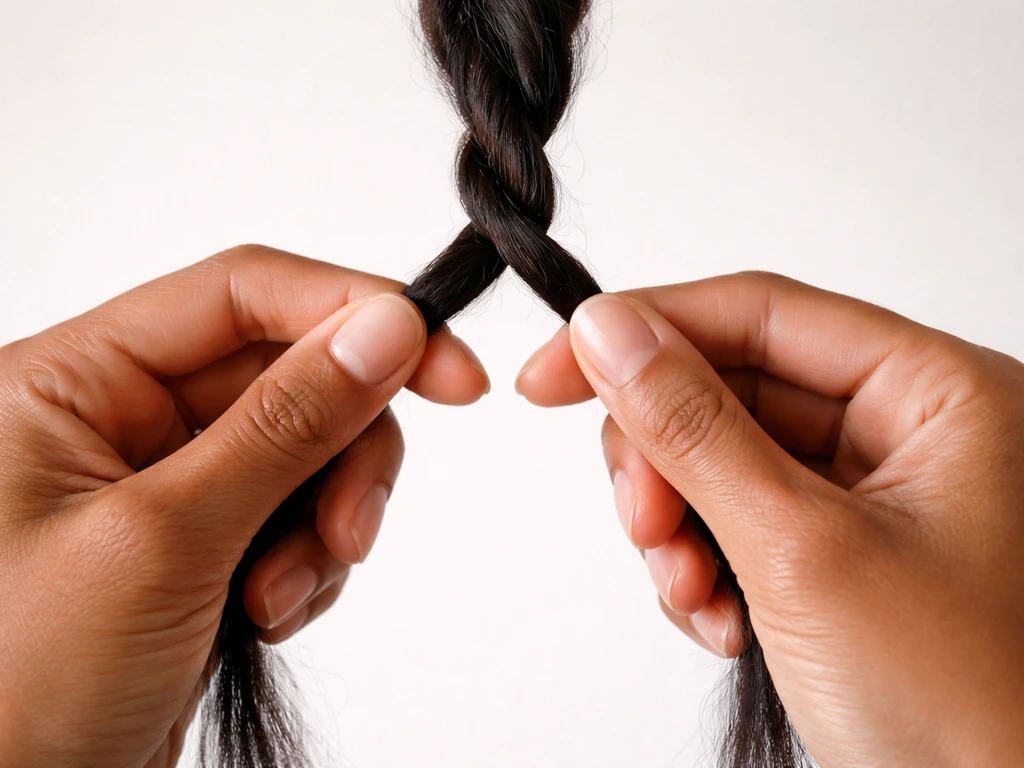
Split each section cleanly into two equal strands. Hold one in each hand and cross the right strand over the left consistently as you work downward. Keep the tension even but not tight throughout the length. At the ends, use a small amount of twisting cream to seal the tip so it doesn't unravel. Work section by section, applying your leave-in or twisting product to each section right before you twist it so it doesn't dry out while you're still working on earlier sections.
Products and scalp care while your twists are in
Twists need ongoing moisture to protect the hair inside them. Hair that sits dry for two or three weeks will be significantly weaker at removal than hair that was consistently hydrated. But there's a balance: too much heavy product causes buildup that blocks moisture from actually reaching the strand and can clog follicles.
The layering approach
Use a water-based moisturizer or a diluted leave-in spray as your base layer, applied lightly to the length and scalp a few times per week. Follow that with a light oil (jojoba, sweet almond, or argan work well) applied to seal the moisture in. You don't need much. A small amount massaged over each twist and worked into the scalp is enough. Avoid heavy butters and thick greases directly on the scalp while twists are in: they sit on the surface rather than absorbing, and they're a primary cause of the itchy, congested scalp that makes people remove their twists earlier than planned.
Scalp cleansing while twists are installed
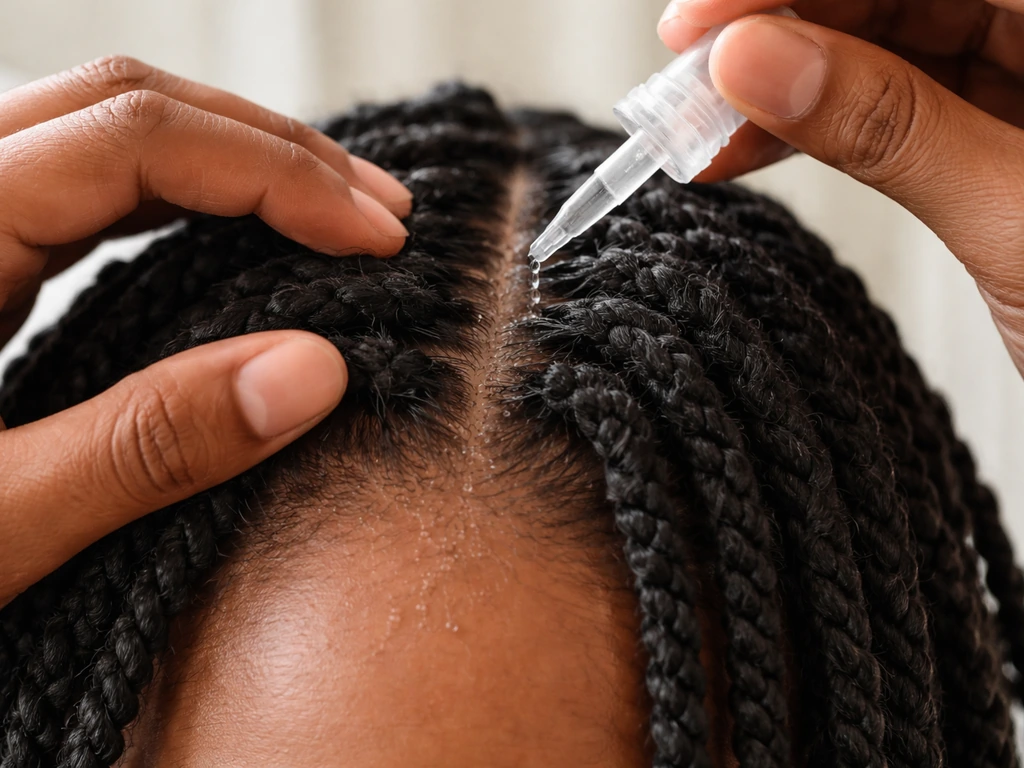
Skipping scalp cleansing while you're in a protective style is one of the most common mistakes people make. Product buildup can clog hair follicles, and a congested scalp is not a healthy growth environment. Every two to three weeks, cleanse your scalp while the twists are in. Dilute your shampoo or co-wash with water, apply it directly to the scalp in sections, and rinse by directing water downward along the twists rather than scrubbing side to side. Some dermatologists recommend washing even more frequently than that for people who produce more sebum or use heavier products. The goal is a clean, comfortable scalp, not a perfectly preserved set of twists at all costs.
Weekly maintenance: the routine that makes twists worth it
Maintenance doesn't need to be complicated, but it does need to be consistent. Here's what a realistic weekly routine looks like:
- Nights 1 through 7: Sleep with a satin or silk bonnet, or on a satin/silk pillowcase. Cotton fabric pulls moisture from your hair and creates friction that causes frizz and weakens the twist structure. Satin absorbs far less moisture than cotton and significantly reduces friction, which means fewer broken hairs over time.
- Days 2 to 3: Lightly mist twists with a water-based leave-in spray, focusing on the length and any sections that feel crunchy or dry. Follow with a thin layer of light oil.
- Every 2 weeks: Cleanse the scalp with a diluted shampoo or scalp-focused formula. Apply it in parts, massage gently, and rinse downward. Pat twists dry rather than rubbing.
- As needed (roughly every 3 to 4 weeks): Retwist the perimeter and any sections that have significantly loosened or fuzzed, especially the edges. Be careful not to re-twist too tightly when you do this.
- Edge care daily: Apply a light moisturizer or edge control (one that doesn't contain alcohol as a primary ingredient) to the hairline. The edges are the most fragile and most visible part of the style, and they need consistent attention.
One thing worth knowing: keeping twists in too long works against you. Beyond six to eight weeks, the new growth at your roots can start to lock around the base of the twists, making removal significantly harder and riskier. Set a reasonable take-down date before you install, and stick to it.
Mistakes that undo all your progress
Even with a good install and solid maintenance habits, a few common errors can wipe out weeks of retention work. HairObics All Natural also notes that sleeping without protection and letting friction build against your clothes can cause hairs to slip out of braids, which raises the risk of hair loss and breakage How to Keep Braids Fresh for 8 Weeks.
| Mistake | What it causes | What to do instead |
|---|---|---|
| Twisting too tightly | Traction alopecia, follicle damage, hairline recession | Install with enough slack to fit a fingertip at the root |
| Skipping scalp cleansing | Buildup, clogged follicles, scalp irritation | Cleanse the scalp every 2 to 3 weeks while twists are in |
| Letting hair go dry for weeks | Brittle strands, breakage at the ends and mid-shaft | Remoisturize with a light water-based spray every few days |
| Using heavy products directly on the scalp | Buildup, blocked follicles, itching, premature removal | Stick to light oils and water-based leave-ins on the scalp |
| Sleeping without satin/silk protection | Friction, frizz, moisture loss, weakened twist structure | Use a satin bonnet or silk pillowcase every night |
| Wearing twists past 6 to 8 weeks | Matting, tangling at the root, traumatic removal | Set a removal date before you install and keep it |
| Rough take-down | Breakage at the root, snapping of new growth | Detangle gently with conditioner before and during removal |
Taking twists down without losing your length
Removal day is where a lot of people lose the growth they worked weeks to retain. Essence notes that excessive extensions can add weight and tension on hair follicles, contributing to breakage, which is why careful take-down matters. Rushing through a take-down, or pulling out twists dry, causes unnecessary breakage right at the root, where the most tender new growth is. Take your time here. The extra 30 minutes you spend on careful removal is directly protecting the length you built up.
The step-by-step take-down process
- Before you remove anything, apply a generous amount of conditioner or a detangling oil to the entire head. Let it sit for 10 to 15 minutes. This softens any new growth that may have begun to interlock at the root and makes the unraveling process much smoother.
- Work in sections. Unravel each twist from the bottom up, not the top down, so you're releasing the length before you stress the root.
- As you unravel, use your fingers (not a comb) to gently separate any strands that have started to tangle or mat together. If you hit resistance, add more conditioner and wait. Don't force it.
- Once all twists are removed, apply a generous amount of deep conditioner to the entire head and let it sit for 20 to 30 minutes before washing. This is the step most people skip, and it makes a significant difference in how fragile or strong the hair feels after the style.
- Shampoo the scalp thoroughly to remove buildup from weeks of products, then condition again. Some people prefer to clarify after a long protective style to fully reset.
- Detangle after you rinse out the conditioner, while hair is still wet and slippery. Start from the ends and work upward, section by section.
- After drying, assess your ends. If they feel thin, rough, or look split, trim just the very tips before your next install. Going into a fresh set with damaged ends works against you.
If you're moving straight into another protective style, give your scalp and strands at least a week of low-manipulation care between installs. Your hair needs time to breathe, be assessed, and be conditioned without being bundled up again immediately.
What to expect and how to track real progress
With consistent protective styling, solid maintenance, and careful take-downs, most people see noticeably more retained length over a period of three to six months compared to wearing their hair in high-manipulation styles. With good two-strand twist technique and retention-focused maintenance, you may notice your hair looks longer even though your actual growth rate stays the same. That's not magic, it's just math. If you're retaining more of the roughly 1 cm per month your scalp is already producing, it compounds over time. Take a stretched-length photo on the day you install your twists and another on the day you remove them. That comparison, done consistently, is the clearest way to see whether your routine is actually working.
Two-strand twists are one of the most versatile and accessible protective styles available, and they work well across a wide range of natural textures. Whether you're curious about how they compare to other styles like Senegalese twists or wondering how they support locs growth over time, the core principles stay the same: gentle installation, consistent moisture, regular scalp care, and a careful take-down. Get those four things right and the length will follow. Do barrel twists help dreads grow? The same retention principles apply, so focus on gentle tension, consistent moisture, and minimizing breakage to support loc growth over time do barrel twist help dreads grow.
FAQ
If twists do not increase growth rate, how do I tell whether I’m actually retaining more length?
Track retention with a consistent method: take photos of the same section (for example, center-parted front hairline and one side panel) at installation and at removal, and also note how many inches your stretched length changes. If your stretched length stays the same or drops, your breakage is offsetting any retention benefits, usually from tension, dryness, or rough removal.
How tight should twists be for fast-growing-looking results without risking traction?
Use the fingertip check at the root: you should be able to fit a fingertip under each twist at the base without resistance. If you feel pulling during the first few hours, or the scalp edges at your hairline look shiny or pulled taut, loosen them immediately rather than waiting for “your hair to adjust.”
Can I twist on dry hair to avoid slippage and unraveling?
Dry installs often increase friction during twisting and can make the set feel “tight” even when tension is moderate. A better approach is damp (moist, not soaking) hair with leave-in worked through first. If you must start with drier hair, mist it lightly section by section until it feels pliable, then twist.
What’s the best way to reduce shrinkage so my twists look longer sooner?
Shrinkage is natural, but you can make results more consistent by installing on damp hair and sealing the ends with a small amount of twisting cream. Avoid stretching by pulling hard for tension, that increases traction risk at the root. Instead, focus on clean detangling, even sections, and properly sealed tips.
How often should I moisturize twists, and how do I know I’m not overdoing product?
Moisturize a few times per week using a light water-based moisturizer or diluted leave-in, then seal lightly with a thin oil layer. If your twists feel coated, crunchy, or your scalp gets itchy or congested quickly, reduce heavy layering and cleanse on schedule, since buildup can block moisture and drive earlier removal.
Is it okay to use a lot of oil on the scalp to help hair “grow faster” while in twists?
Usually not. Heavy oil and thick greases can sit on the surface, leading to an itchy or congested scalp and potentially more buildup. For the scalp, use small amounts of lighter products, focus on moisturizing the length, and keep scalp cleansing every two to three weeks as a baseline.
Should I use gel, mousse, or a thick butter to make twists last longer?
Thicker hold products can extend the style but they also raise the risk of buildup if used heavily, especially directly on the scalp. Apply hold products sparingly and section-by-section, prioritize leave-in as the moisture base, and cleanse on schedule. If you notice flaking or roughness at the roots, switch to lighter products for future installs.
What’s the maximum time I should keep twists in to avoid breakage and hard-to-remove knots?
A practical ceiling is six to eight weeks. Beyond that, new growth can lock around the twist base, which increases breakage risk during take-down. Plan your removal date before installing, and if you’re near the upper end, start prepping with gentle moisturizing and detangling-at-the-root (without pulling).
How should I remove twists to prevent snapping off the retained length?
Never pull out dry twists. Work slowly, loosen with a light moisturizer, and take them down one by one. If your twists feel stuck at the root, stop and re-moisturize rather than forcing, since most new tender hair loss happens when you rip the base.
Between installs, do I need a break, and what should my low-manipulation routine include?
Yes, give your scalp and strands at least a week of low manipulation before the next protective style. Use that time to cleanse, deep condition, and check for tenderness or thinning areas, then reintroduce detangling gently. Skipping this recovery window can lead to more tension, irritation, and breakage in the next set.
Why do my twists cause more shedding at the start of the style?
Some shedding right after installation is normal if you’re detangling correctly and the hair being released was already ready to shed. If shedding continues at high levels, check for overly tight tension at the roots, inadequate detangling before install, or dryness. Adjust tension and increase moisture, then reassess at your first scalp cleanse.
Next Article
Does 2 Strand Twist Help Dreads Grow? Truth, Tips
Learn if 2-strand twists boost loc growth or mainly help protect length, with tips to twist, moisturize, and avoid build