Braids do not make your hair grow faster at the follicle level. That part is settled science. What braids can do is help you retain the length you are already growing, which means less breakage, less friction damage, and more of your hair actually sticking around long enough to show up as length. For a lot of Black men, that difference alone is significant, because the real obstacle to length is rarely slow growth. It is usually damage and breakage that eat the length before you ever see it.
Do Braids Make Your Hair Grow Faster for Black Men?

Simone Okonkwo
24 Mar 2026
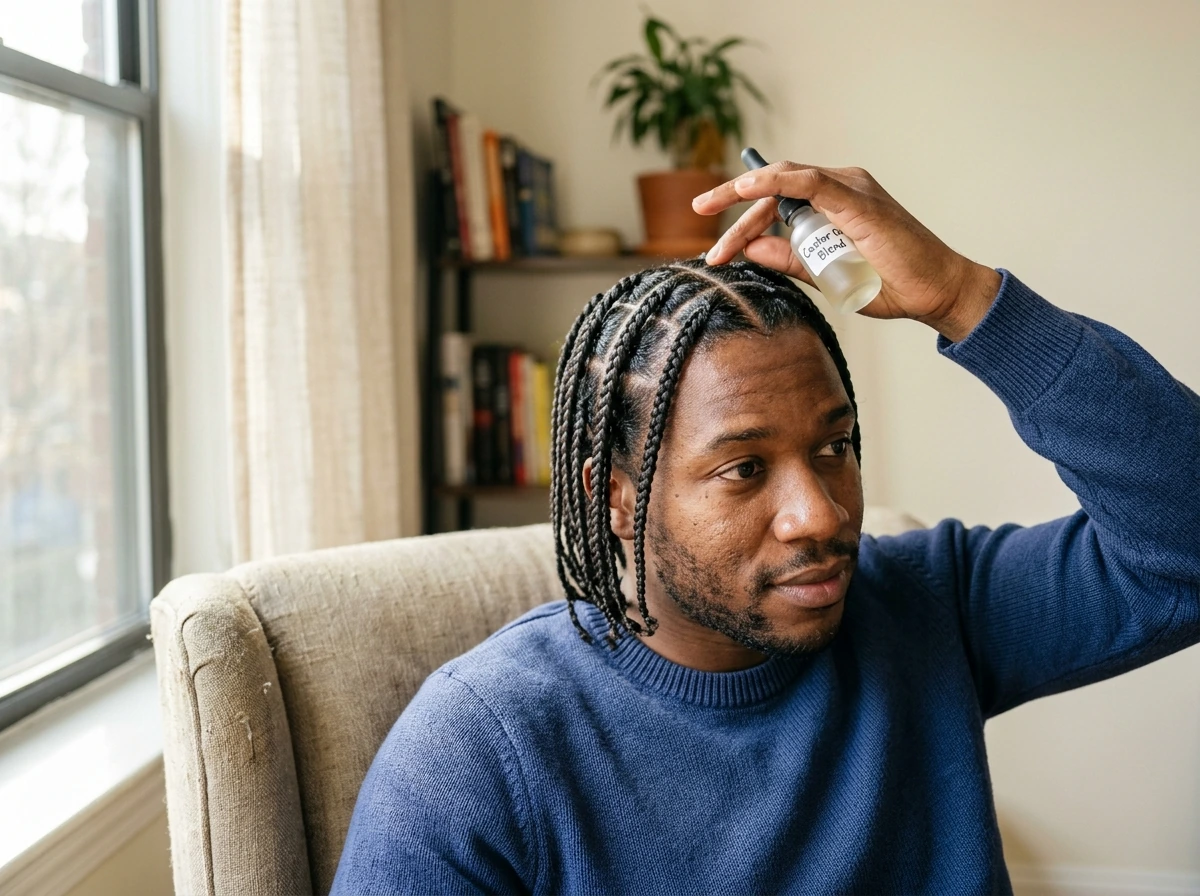
Do braids actually speed up hair growth
Hair grows from follicles embedded in your scalp, and the rate at which those follicles produce hair is determined by biology, not by what style you are wearing. Research on hair and scalp diseases puts the growth rate during the active anagen phase at roughly 0.3 mm per day, which works out to about 1 cm (just under half an inch) per month. That rate is largely fixed by your genetics, your age, your hormone levels, your nutrition, and your overall health. No hairstyle changes it, braids included.
So if someone tells you their braids made their hair grow three inches in two months, they are not lying about the length they see. They are just misidentifying the cause. What braids did was protect that hair from breaking off. The follicles were growing at the same pace they always were. The style just stopped the damage that was hiding the result.
This distinction matters because it changes what you actually focus on. If you believe braids biologically speed up growth, you might install them carelessly and expect magic. If you understand they work by reducing damage, you install them properly, maintain them consistently, and get realistic expectations about timelines.
Braids vs hair retention: why it can seem like faster growth
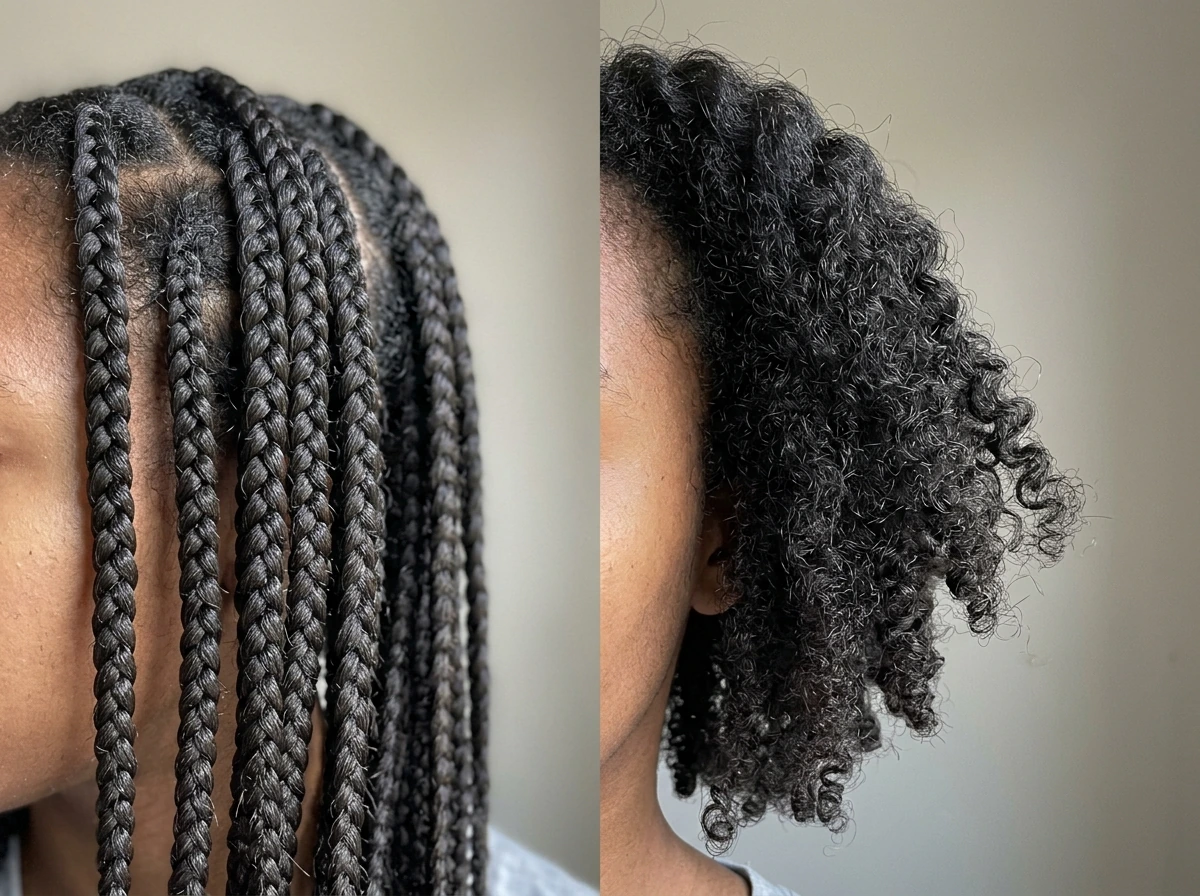
Textured, coily hair (the kind most Black men have) has a spiral or elliptical cross-section that makes it more prone to dryness and breakage at the points where curls bend sharply. Every time that hair rubs against clothing, a pillow, or another strand, it is a potential breakage event. Over weeks and months, that friction and manipulation adds up, and the hair that was growing from your follicle disappears before it reaches your collar.
Braids interrupt that cycle. They bundle the hair so it is not loose and rubbing around, they reduce the number of times you are combing and manipulating your hair daily, and they protect the ends from the environment. Because of this, the hair that grows during a braid install stays intact rather than snapping off. When you take the braids out after six to eight weeks, you see length that was technically always being produced, but that you had never been able to hold onto before. That feels like faster growth, and it is genuinely exciting, but the follicle speed has not changed.
This is why the conversation about whether braids help Black men's hair grow is more nuanced than a simple yes or no. The honest answer is: they help you reach your length goals faster in practice, even though they do not accelerate growth in biology. For someone trying to grow their hair out, that is a meaningful and real benefit. You can read more about how this protective mechanism works across different styling methods in the broader discussion of whether braiding in general helps hair grow.
When braids help Black men
Braids earn their reputation as a protective style when they are installed and worn correctly. Here is where the benefits actually come from:
- Reduced daily manipulation: No daily combing, detangling, or picking means far fewer opportunities for mechanical breakage.
- End protection: The oldest, most fragile parts of your hair are tucked into the braid and shielded from friction and dryness.
- Moisture retention: Bundled hair loses moisture more slowly than loose hair exposed to air and fabric all day.
- Scalp access: Cornrows in particular leave the scalp exposed so you can apply oils and maintain scalp health without disturbing the style.
- Consistent length tracking: Because the hair is not shrinking and expanding with humidity, it is easier to actually measure progress.
For Black men who are transitioning from a fade to longer natural hair, or who are trying to grow out a natural for the first time, braids can be the style that actually bridges the in-between phase where hair is awkward, prone to tangling, and likely to get cut out of frustration. Wearing a protective style through that phase protects your progress.
When braids hurt: traction alopecia, breakage, and irritation
This is the side of the conversation that does not get enough attention. Braids can cause serious, lasting hair loss if they are installed too tightly, worn too long, or done repeatedly without adequate rest periods. The condition is called traction alopecia, and it is well-documented in dermatology research. JAMA Dermatology describes it as hair loss caused by prolonged or repetitive tension on the hair shaft, and research from the American Academy of Family Physicians specifically notes that braids and weaves are common causes, with hair loss typically appearing at the frontal and temporal hairlines.
The good news from that JAMA Dermatology data is that in early stages, traction alopecia can be reversible if you stop the tension-causing style. The bad news is that if you keep doing it, the damage becomes permanent. Scar tissue replaces the follicles and the hair does not come back. This is why getting the tension right is not cosmetic. It is a genuine health issue.
Beyond traction alopecia, braids can also cause problems through dryness and product buildup. If you are not moisturizing your scalp and the braided hair throughout the install, the hair becomes brittle. When you take the braids out, you may see significant breakage, especially if the braids were left in too long. There is also the risk of scalp irritation and infection from infrequent washing, particularly in humid conditions. If you are considering whether braiding at night helps growth, focus on retention and scalp care rather than expecting faster follicle growth braiding at night help it grow.
Warning signs to watch for during an install
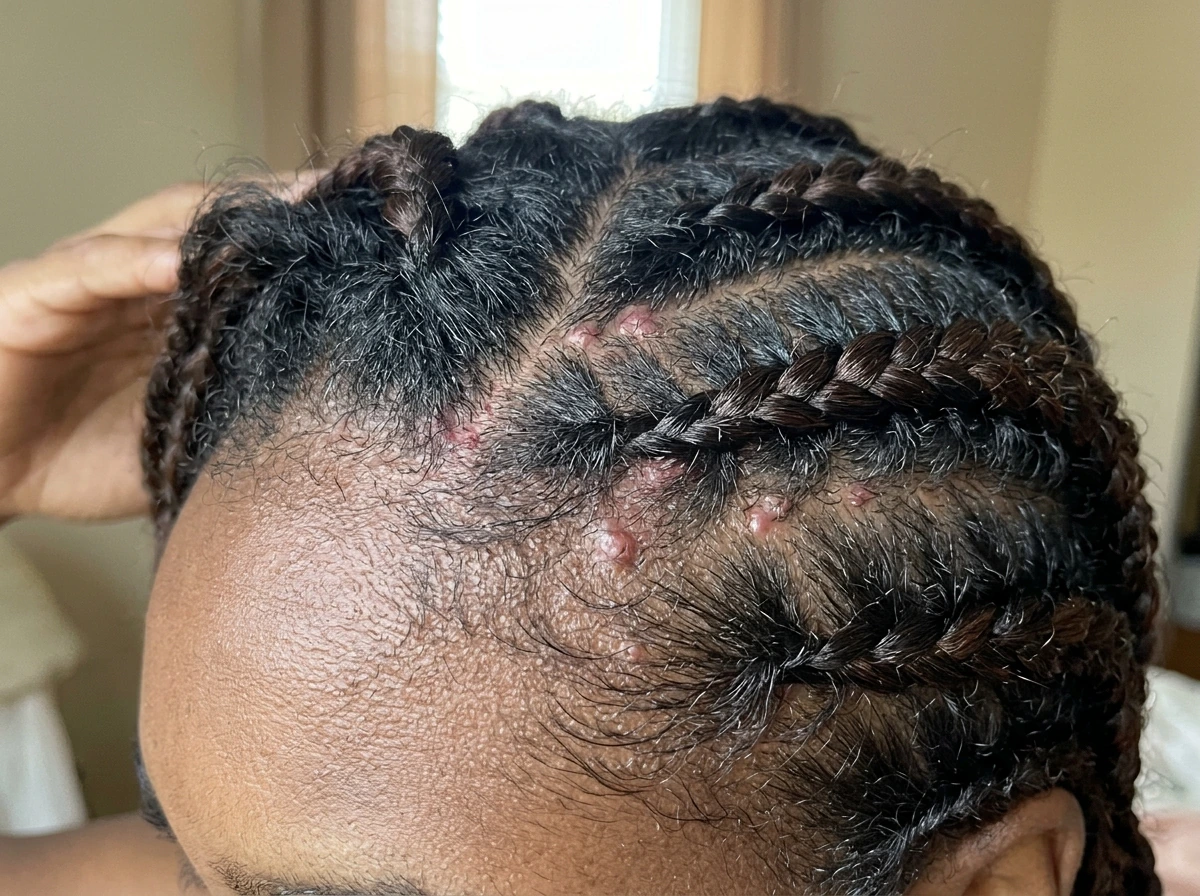
- Pain or tenderness at the roots immediately after installation or lasting more than a day or two
- Bumps, pimples, or redness along the hairline or part lines
- Visible thinning or pulling at the temples or edges after removal
- Small white bulbs on shed hairs (a sign that the root was pulled prematurely from the follicle)
- Scalp flaking, itching, or odor that does not resolve with washing
How to braid safely and maintain braids for growth
Safe installation is the foundation. No amount of good maintenance can undo a braid that was put in too tight. Here is how to approach this practically:
Installation
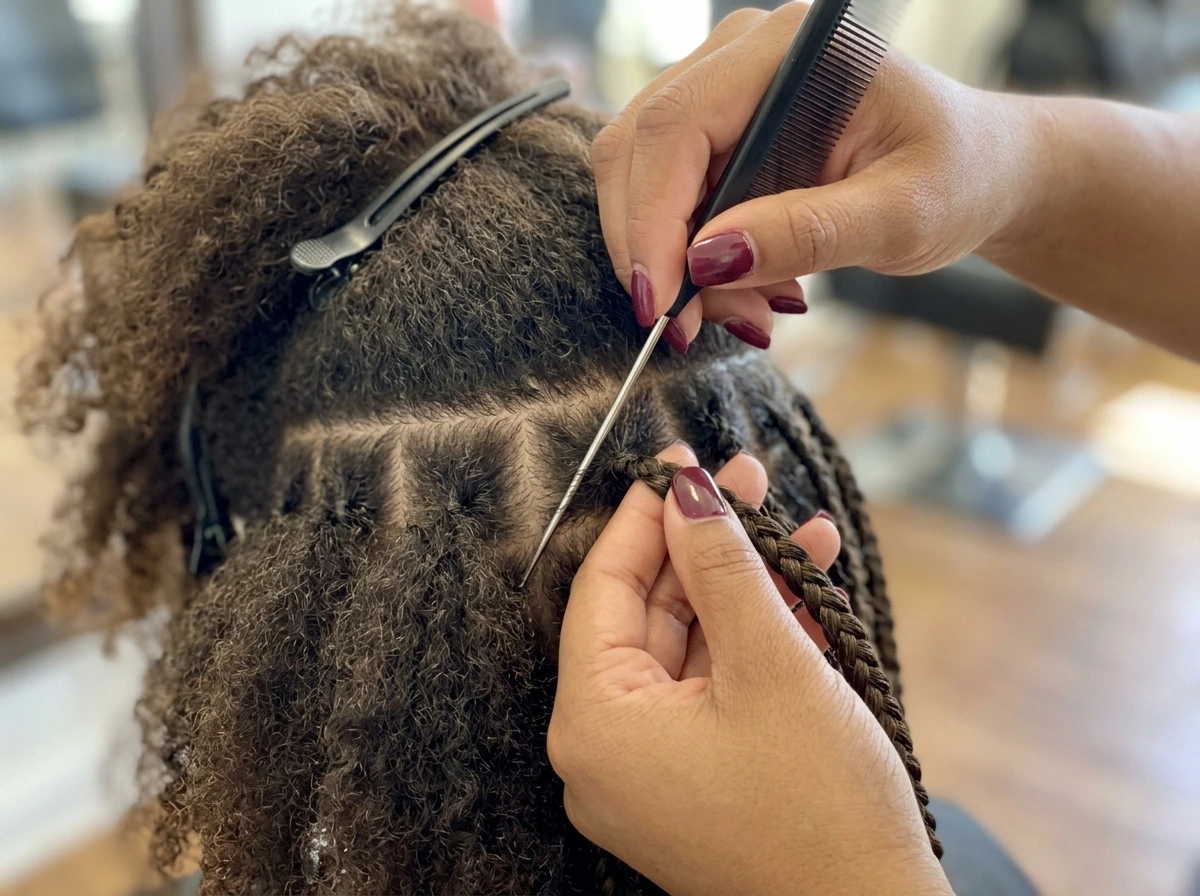
- Work with a stylist who understands tension and textured hair. If you are doing it yourself, start with looser styles like two-strand twists before moving to tighter braids.
- Tell your stylist explicitly that you want a comfortable tension. If it hurts during installation, speak up immediately. Pain during the process is not normal or necessary.
- Avoid very small braids or micro braids at the hairline, which concentrate tension on the most fragile area of your scalp.
- Do not braid on wet hair that is soaking wet. Slightly damp and stretched is better. Overly wet hair swells and the braid tightens as it dries.
- For box braids, larger sections reduce the tension per follicle and are generally safer than very small sections.
- For cornrows, wider rows and flatter parts put less stress on the scalp than very narrow parts pulled tight to the skin.
Maintenance during the install
- Moisturize your scalp every two to three days. A lightweight oil like jojoba or a diluted leave-in conditioner applied directly to the scalp (not just the braids) keeps the skin and roots healthy.
- Do not pile on heavy products. Buildup in braids is hard to rinse out and can clog follicles.
- Sleep on a satin or silk pillowcase, or use a satin bonnet or du-rag. Friction on cotton at night will fray your braids and dry out your hair.
- If your edges or hairline start feeling tender or look thinner, take the braids out. Do not push through warning signs.
How often to wash, take down braids, and what to monitor
Washing braids while they are in is not optional if you plan to wear them for more than two or three weeks. You do not need to wash as frequently as you would with loose hair, but every one to two weeks is a reasonable target. Use a diluted shampoo or a sulfate-free formula, apply it to the scalp, and rinse thoroughly. The goal is to clean the scalp without creating so much product residue in the braids that they become stiff and prone to breakage on removal.
On takedown timing: six to eight weeks is a commonly cited safe window for most braid styles, and I think it is a good benchmark. Going longer than eight weeks increases the chance of the new growth at the roots becoming tangled into the braid, which causes breakage during removal. It also means your scalp has gone longer without a proper deep clean, and the braids themselves start to look and feel rough.
After removing braids, give your hair and scalp a full rest period before reinstalling. A minimum of two weeks of loose styling or low-manipulation styling lets your follicles recover, lets you do a proper deep conditioning treatment, and gives you a chance to assess your scalp for any early signs of traction damage. If you are seeing thinning at the edges, extend that rest period significantly and see a dermatologist if it does not recover.
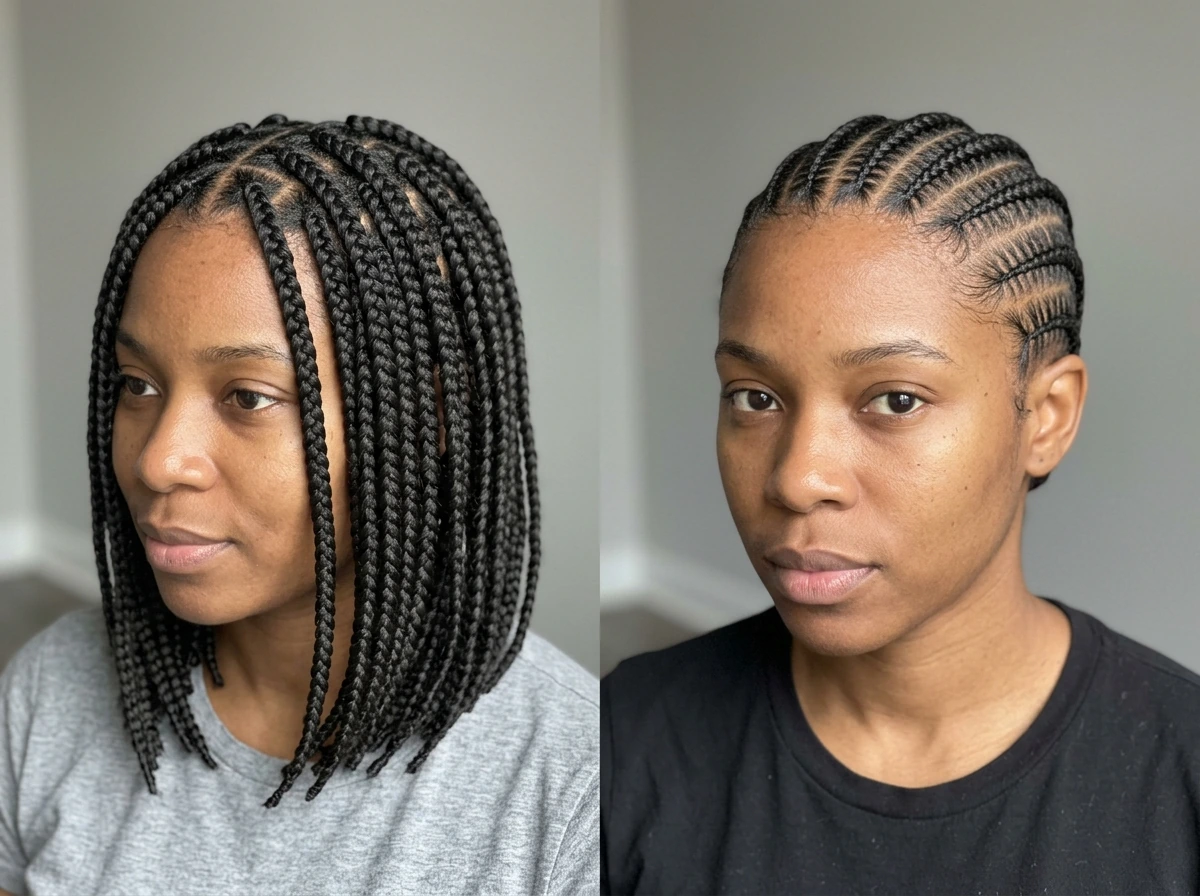
Box braids vs cornrows: a quick comparison
| Factor | Box Braids | Cornrows |
|---|---|---|
| Scalp access for moisturizing | Limited (braids cover scalp) | Good (scalp is exposed between rows) |
| Tension distribution | Isolated to each section's root | Distributed along row length |
| Traction alopecia risk | Lower if large sections, higher if micro | Higher at edges and part lines if too tight |
| Washability during install | Moderate (harder to rinse roots) | Easier (scalp more accessible) |
| Typical safe wear time | 6 to 8 weeks | 4 to 6 weeks (edges get stressed sooner) |
| Best for length retention | Yes, especially mid to longer hair | Yes, especially shorter to medium hair |
| Manipulation level during wear | Very low | Very low |
Both styles can work well for retention. The main recommendation is to go larger rather than smaller with your braid size regardless of which style you choose, and to be especially careful about tension at the hairline and temples no matter which type you install.
Reality check: what actually drives growth and your next steps for a length goal
Let me be direct: if your hair is not growing to the length you want, braids alone will not fix it unless retention is the actual problem. The real drivers of hair growth rate are things that happen inside your body, not on your head.
- Genetics: Your follicle cycle length and density are largely inherited. Some people have longer anagen (growth) phases and simply grow more hair per month than others.
- Age: Growth rates tend to peak in your 20s and slow gradually after that.
- Nutrition: Deficiencies in protein, iron, zinc, biotin, and vitamin D are all associated with reduced hair growth and increased shedding. A blood panel is worth doing if you are seeing unusual loss.
- Stress: Chronic stress can push hair follicles into the resting phase prematurely, causing a type of shedding called telogen effluvium.
- Scalp health: An inflamed, infected, or scarred scalp cannot support healthy hair growth regardless of style. Dandruff, folliculitis, and seborrheic dermatitis all need to be treated, not just managed with oils.
- Overall health: Thyroid issues, hormonal imbalances, and some medications directly affect the hair cycle.
Braids and protective styling sit firmly in the retention column, not the growth column. They help you keep what your body is producing. So if you are eating well, sleeping enough, managing stress, and keeping your scalp healthy, braids give that growth a fighting chance of showing up as actual length. If those underlying conditions are not right, no style will compensate.
A practical starting plan
- Assess your scalp and edges before your next install. Look for thinning, tenderness, or irritation. If you see any, rest before braiding again.
- Choose a braid size and style appropriate for your current length and health. Larger sections, less tension.
- Set a removal date when you book the install. Six to eight weeks max, then a minimum two-week rest.
- Moisturize your scalp every two to three days during the install. Use a lightweight oil or diluted leave-in conditioner.
- Wash your braids and scalp every one to two weeks with a gentle, diluted shampoo.
- Sleep with a satin bonnet or du-rag every night without exception.
- After removal, do a deep conditioning treatment and evaluate your length and scalp health before reinstalling.
- If you are not seeing the growth you expect despite consistent protective styling, look at nutrition, stress, and scalp health. Consider a dermatologist consultation if you are seeing unusual shedding or persistent thinning.
The bottom line is this: braids are a genuinely useful tool for Black men trying to grow their hair out, but they work by reducing damage, not by accelerating biology. Use them correctly, respect the warning signs, and pair them with the fundamentals of good health, and you will actually see the length your follicles have been producing all along.
FAQ
How can I tell whether my problem is slow growth or breakage when I wear braids?
If your goal is true length gain, braids help only when breakage is your main bottleneck. If your hair is not growing at all, or you notice thinning at the edges, braids are not a solution. Focus first on scalp health and overall nutrition, and consider seeing a dermatologist if shedding is persistent.
Do different braid styles (cornrows, box braids, twists) change whether braids can grow hair faster?
It is not the braid pattern itself that determines safety, it is the tension and the resting schedule. You can do cornrows, box braids, twists, or locs, but keep the hairline and temples protected with gentle tension. If you feel pulling when you move your face or scalp, that is a red flag to redo them immediately.
How often should I wash braids to support retention without causing dryness or buildup?
Yes, but it has limits. Frequent washing is about keeping your scalp clean and reducing buildup, it should not require heavy oils or thick creams that coat the braid shafts. Use light product on the scalp, rinse well, and if your braids feel sticky or stiff a day or two after washing, reduce residue next time.
What should I do if I notice my edges getting thinner after getting braids?
If you have already had traction alopecia or you are seeing edge thinning, avoid installing braids with tight tension and consider longer rest periods between styles. For early signs, stop the tension style and switch to lower-manipulation options while you monitor recovery. If thinning does not improve after rest, a dermatologist visit is the next step.
How should I measure progress to confirm whether braids are helping retention for me?
Braids can hide breakage during the time you wear them, so the best method is to measure before installation and right after removal, then again after your rest period. Track length from a consistent point (for example, from root to tip on the same strands) so you can tell whether you are retaining length or just seeing temporary illusion.
Can nighttime habits like sleeping on cotton ruin the “retention” benefits of braids?
Sleep friction still matters even with braids. Use a satin durag or bonnet and keep your braids flat enough to prevent constant rubbing. If you frequently wake up with frizzy, loose ends, your retention problem may be nighttime friction rather than the braid install itself.
Is it okay to keep braids in longer than eight weeks if I still feel comfortable?
Do not treat “longer braids” as better. Going past about eight weeks raises the chance of tangling at the roots and more breakage during removal, and it also increases the odds of scalp irritation from infrequent deep cleaning. If you want them longer, plan for a safer maintenance schedule rather than stretching the install.
How long should I wait after taking braids out before getting another protective style?
For most people, two weeks is a reasonable minimum rest period, but the right rest depends on your scalp response. If your scalp is tender, you see flaking or redness, or you are noticing new shedding, extend the rest and do a proper deep-conditioning routine before reinstalling.
Why do I still get lots of breakage when I keep braids in, even if they are not too tight?
Protective styles support retention, but they do not replace scalp moisture and light conditioning of the braid hair. If you skip moisturizing your scalp or you do not keep the braided hair from getting brittle, you may see heavy breakage at removal even if the install was tight enough. Aim for a routine you can sustain throughout the weeks you wear them.
Next Article
Does Braids Help Your Hair Grow? Length Retention Explained
Braids do not speed hair growth, but protect strands to reduce breakage and boost length retention, if not too tight.