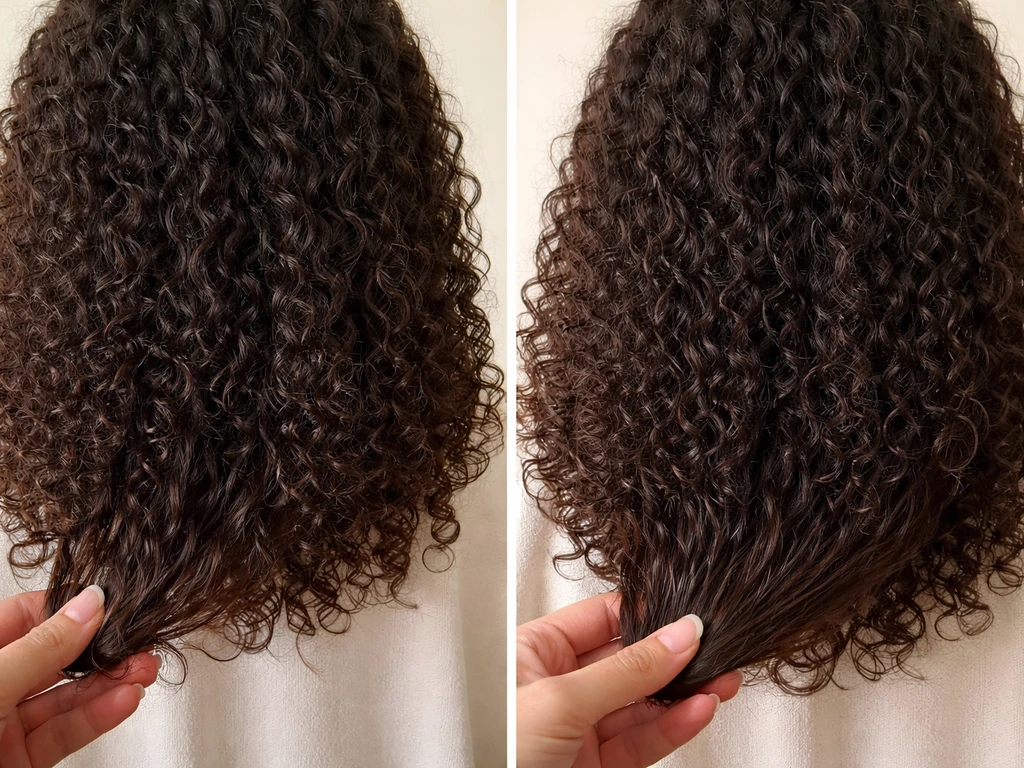
French braids do not make your hair grow faster. That part is biology, and no hairstyle changes it. What French braids can do is help you hold onto the length you are already growing by reducing the daily friction, manipulation, and breakage that silently steal inches over time. That distinction matters a lot, and getting it wrong is why so many people braid for months, see longer hair, and then credit the style when they should be crediting the reduced breakage. do braids make your hair grow faster black male
Do French Braids Help Hair Grow? Benefits, Risks, Tips

Simone Okonkwo
24 Mar 2026
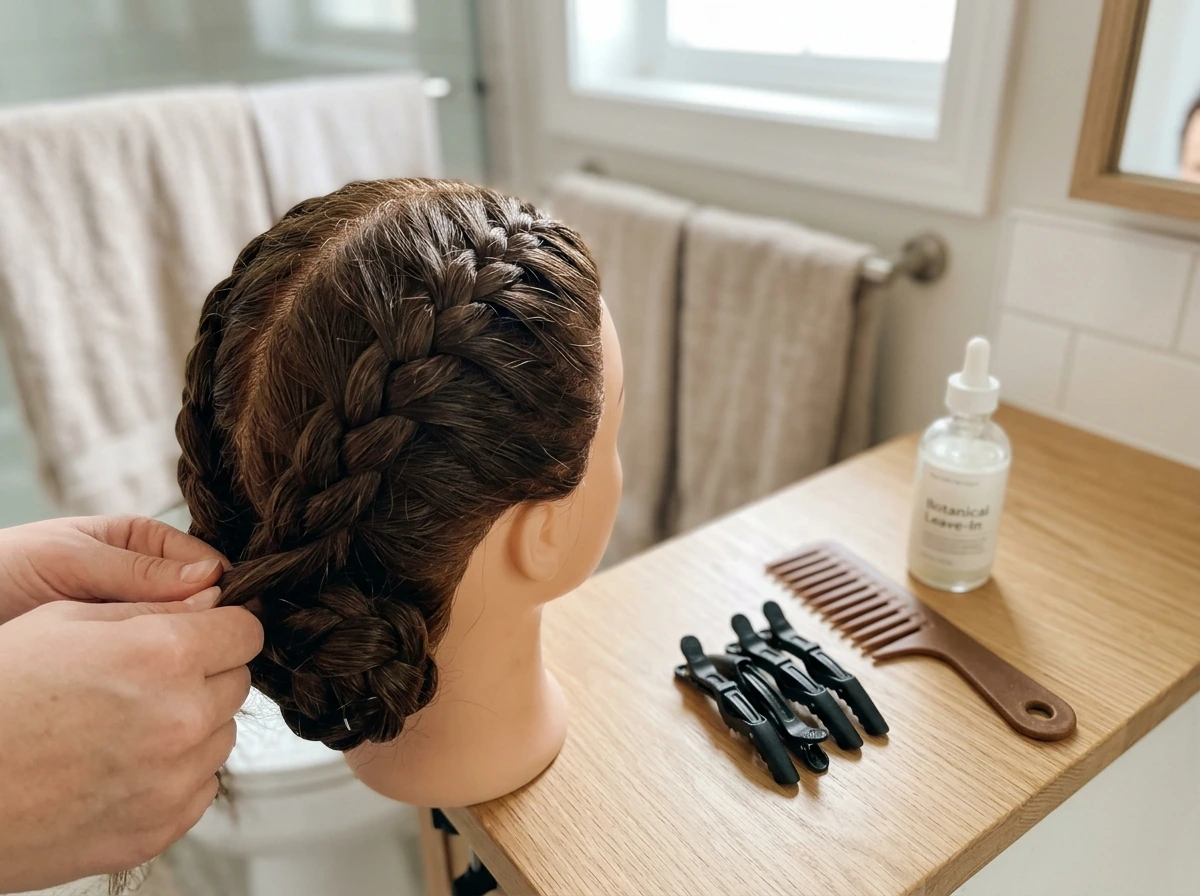
Hair growth vs. length retention: the difference that changes everything
Your scalp grows hair at a fixed biological rate. Research consistently puts it at around 0.35 mm per day, which works out to roughly 1 cm (about half an inch) per month. Johns Hopkins cites that same half-inch figure as the standard ceiling. That rate is set by your follicles, your genetics, your hormone levels, and your overall health. No braid style, no matter how elegant or tight, reaches down into your follicle and speeds up that clock.
About 90% of your scalp hairs are in the active growth phase (anagen) at any given time, and that phase lasts roughly 2 to 6 years per follicle before cycling into a resting and shedding phase. In an r/HaircareScience discussion on ultimate hair length, the expected terminal/scalp-hair length output is linked to anagen duration of about 2 to 6 years before shedding r/HaircareScience ultimate hair length discussion.
Hair cycles include [anagen, catagen, and telogen](https://www. ncbi. nlm. nih.
gov/sites/books/n/statpearls/article-22481/), and anagen is the growth phase that can last 2 to 6 years for scalp hair. Styling lives completely outside that cycle. What styling does affect is how much of that grown hair actually survives to become visible length. Hair breaks at the shaft long before it sheds from the follicle, and that breakage is where most people lose the game.
So when French braids help, they help with retention, not production.
When French braids actually help
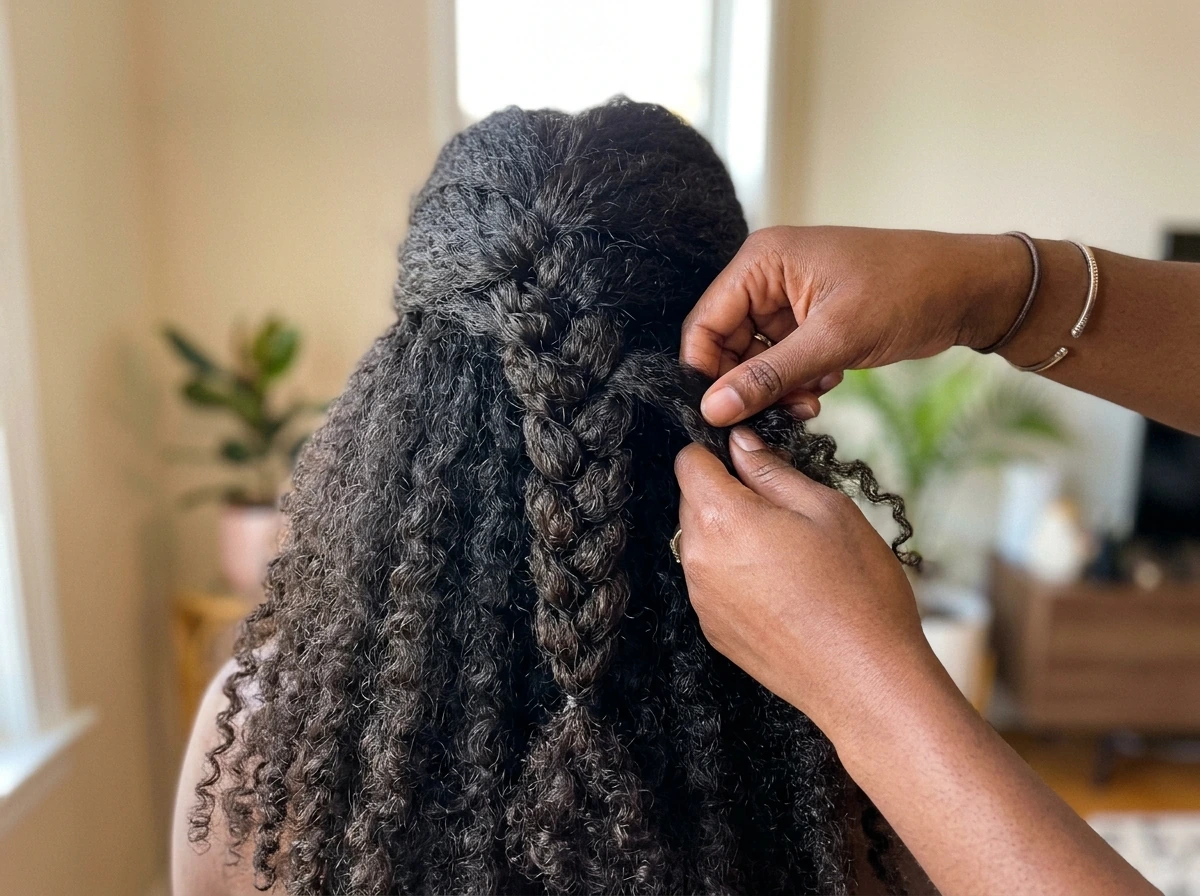
A well-executed French braid is a legitimate protective style. It keeps your ends tucked or at least controlled, limits the number of times you drag a brush or comb through your hair each day, and reduces the friction your strands experience against clothing, pillowcases, and your own hands. Less daily manipulation almost always equals less daily breakage, which means more of your monthly growth survives and accumulates into visible length.
French braids also work as a low-cost, low-commitment way to stretch textured hair without heat. For people with naturally coily or kinky hair, stretched styles expose less surface area of each strand to friction and tangling, which is a real structural benefit. If you have been going to bed with loose hair and waking up with knots that require aggressive detangling, switching to a loose French braid at night is a practical, immediate win for retention. This is part of why the question of whether sleeping in braids helps hair grow comes up so often. It is not magic. It is just less damage.
When French braids can seriously hurt your hair
Here is the part people skip over, and it causes real damage. French braids that are installed too tightly, kept in too long, or maintained with constant re-pulling create traction: a persistent mechanical force on the hair follicle. That force, repeated over time, leads to traction alopecia, a form of hair loss that starts as inflammation and breakage at the hairline and temples and can become permanent if the stress continues long enough.
The numbers on this are not small. A large cohort study of over 1,100 African schoolgirls and women found traction alopecia prevalence of 17. 1% in girls and 31. 7% in women, with the highest-risk situation being traction styles applied to chemically relaxed hair, where the odds ratio for developing the condition hit 3.
47. Mayo Clinic and the American Academy of Dermatology both list braids explicitly as a contributing cause. Mayo Clinic also lists braids such as pigtails, braids, and cornrows as possible triggers for traction alopecia, especially when styles are tight or repeatedly stress the hair [braids explicitly as a contributing cause](https://www. mayoclinic.
org/diseases-conditions/hair-loss/multimedia/traction-alopecia/img-20006442). The good news from the research is that early traction alopecia is often reversible if you stop the source of tension before follicular scarring sets in. The bad news is that many people do not recognize the early signs, which include itching, soreness at the roots, small bumps along the hairline, and fine broken hairs at the temples.
Tension is not the only risk. Research on protective styles notes that friction and styling stress can still damage the hair shaft when technique or maintenance is suboptimal. Leaving a French braid in for too long without moisturizing leads to dryness and brittleness. Unraveling braids forcefully rather than gently picking them apart creates massive mechanical damage in a single session. And nightly re-braiding to maintain a style, if done with tight pulls each time, adds up to chronic low-level traction that mirrors the damage from a single very tight install.
Best practices if you want to grow your hair with French braids
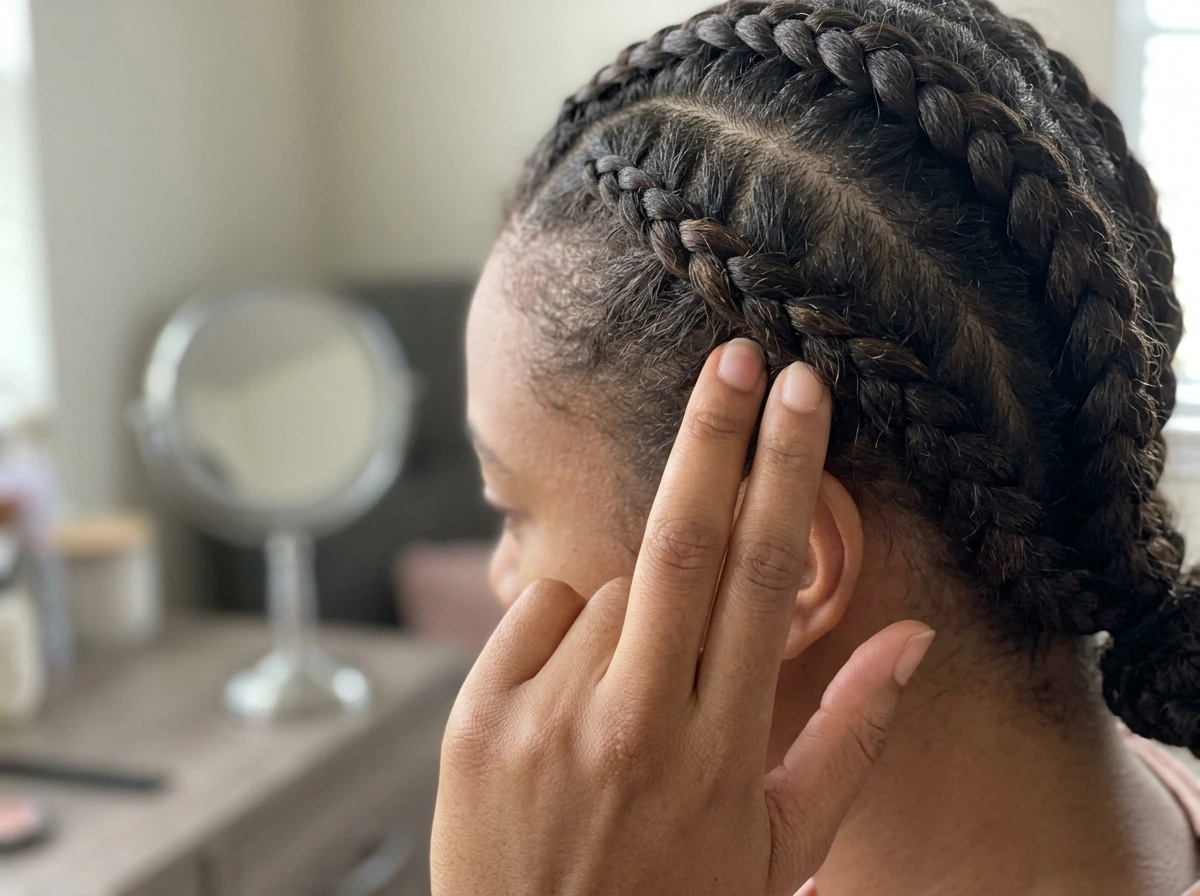
The goal is to get the retention benefits without the traction risks. That is genuinely achievable, but it requires attention to a few specifics that most guides gloss over.
Tension and installation
The braid should feel secure, not tight. You should not feel pulling at the roots, soreness along the scalp, or headache after installation. If your scalp is sore for more than a day, the braid is too tight. One clinical tip worth knowing: a style worn a week or two old (slightly loosened from its original install) places less tension on the scalp than a freshly redone braid. Resist the urge to re-braid tightly every few days to keep the style looking fresh.
How long to keep them in
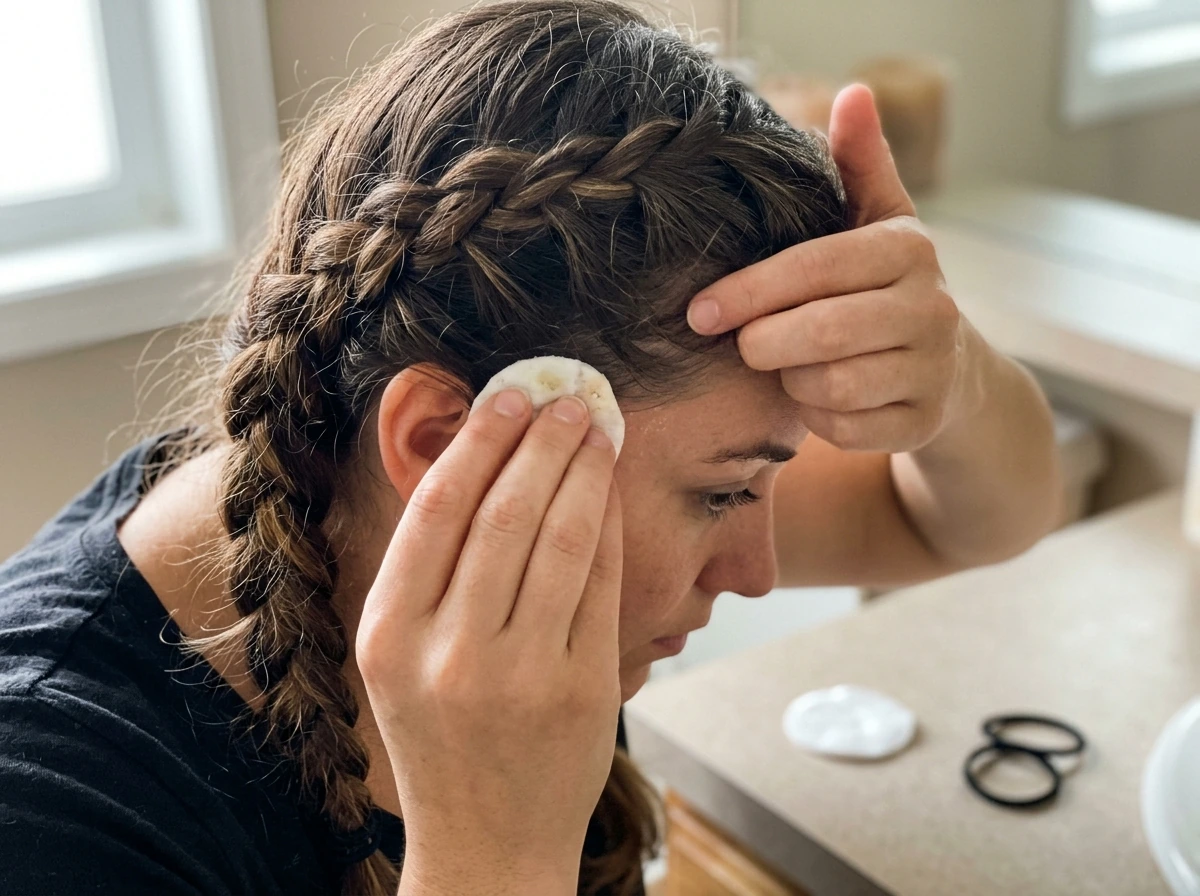
For a simple French braid without extensions, two to four weeks is a practical maximum before lint, product buildup, and dryness become problems that outweigh the protective benefits. Textured hair guides suggest protective styles with extensions (like box braids or cornrows) can be worn up to two months with proper care, but a standard French braid does not give you that kind of scalp access, so shorter wear times are smarter.
Scalp care while braided
Your scalp does not go on pause because your hair is braided. Many people with textured hair shampoo weekly or every other week to avoid over-drying, which is a reasonable baseline. While braided, diluted shampoo or a scalp-focused spray applied directly to the parts keeps the scalp clean without disrupting the style. Do not skip this. Product buildup and sweat left on the scalp can trigger inflammation that works against you.
Moisture and sealing
Braids lock your hair into position but do not lock in moisture. Apply a lightweight leave-in or water-based moisturizer along the length of the braid every few days, then follow with a light oil (jojoba, grapeseed, and castor oil are popular choices) to seal. Focus on your ends, since those are the oldest and most fragile parts of your hair. Dry, brittle braids will break when you take them down no matter how carefully you installed them.
Taking braids down
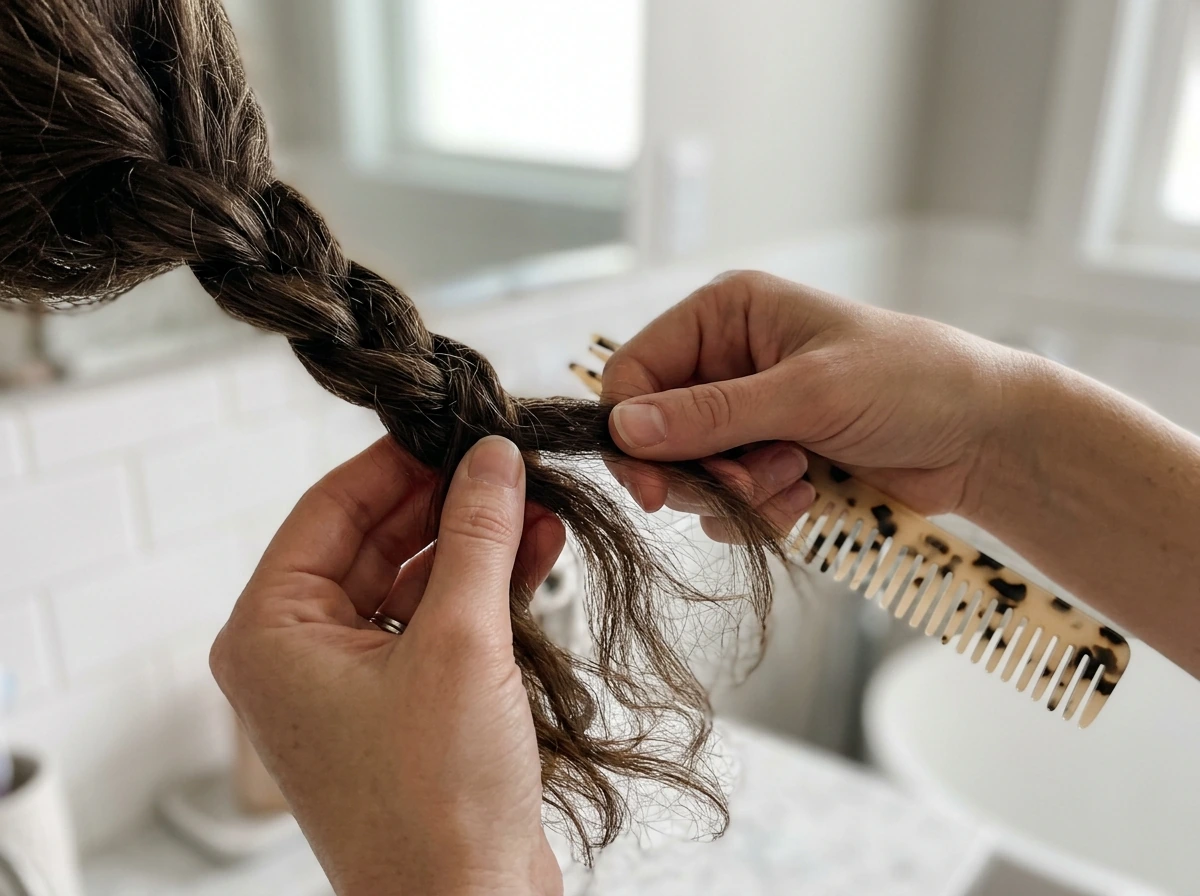
This step causes more breakage than most people realize. Unravel slowly from the ends upward. Use your fingers, not a comb, to work through any tangles before the first detangling pass. Apply a detangling conditioner or oil before you start, and work in small sections. Rushing the takedown is one of the fastest ways to undo weeks of protective styling progress.
For Black and textured hair: braid sizing, parting, and routines
Textured hair has unique structural properties, including a curved follicle shape and a coiled shaft, that affect how tension distributes across the scalp. This is not a weakness; it is just a different architecture that responds differently to mechanical stress. The curved follicle means tension from a tight braid does not distribute as evenly as it might on straight hair, which contributes to the higher traction alopecia prevalence seen in studies of African women and girls.
Practical adjustments that help textured hair specifically:
- Braid on stretched or slightly damp (not soaking wet) hair. Wet hair is more elastic and stretches under tension, meaning it snaps back when dry and tightens at the root. Stretching first (via banding, braiding dry, or blow-drying on low heat) reduces this rebound tightening effect.
- Use wider sections for each strand of the French braid rather than fine partings. Finer sections mean more tension per strand and more pulling points along the scalp.
- Avoid adding the French braid on top of a base of box braids or cornrows, which stacks tension layers.
- Keep the braid positioned lower on the scalp rather than pulling everything up and back, which reduces gravitational and positional tension on the frontal hairline.
- Give your hair and scalp a break between protective style installs. Two weeks of loose, low-manipulation styling between braided periods lets your follicles recover.
- Pay extra attention to the edges. The frontal and temporal hairline is the most common site for traction alopecia in textured hair wearers. French braids that pull the hairline back or are anchored tightly at the temples are the highest-risk configurations.
Overnight braiding routines are popular in the textured hair community, and for good reason. A loose French braid or two at night protects strands from friction against pillowcases, reduces tangling, and stretches the hair gently. If you are doing this, use a satin or silk pillowcase or wrap the braid in a satin bonnet before bed. The friction reduction is real and the tension is low when the braid is loose, making this one of the safer and more consistent habits you can build. This overlaps with broader questions around whether braiding at night supports hair growth, and the mechanism is the same: less friction, less breakage, better retention. does braiding your hair at night help it grow
What French braids cannot do, and what actually moves the needle
French braids cannot override your follicle biology. They cannot change your anagen phase length, speed up cell division in the hair bulb, or increase the diameter of your hair shaft. If you have been wearing protective styles for six months and your hair seems to grow faster in braids than out of them, almost certainly what you are observing is better retention, not accelerated growth. That is still worth celebrating, because for many people retained length is exactly what they have been chasing. But it is important to be clear-eyed about the mechanism so you do not over-rely on braiding as a solution to everything.
The factors that actually influence how much hair you grow and keep are:
- Scalp health: a clean, well-circulated, inflammation-free scalp is the environment your follicles need to perform their best. This means regular cleansing, managing dandruff or seborrheic dermatitis if present, and not leaving buildup to fester under styles.
- Nutrition: protein (hair is made of keratin, which is protein), iron, zinc, biotin, and vitamin D are the most commonly implicated deficiencies when hair growth stalls. If your diet is genuinely deficient in any of these, supplementing or correcting through food can make a measurable difference.
- Minimizing mechanical damage: this is where French braids can help, but it is just one piece. Reduce heat styling, use wide-tooth combs on wet hair, detangle gently from ends to roots, and protect hair during sleep.
- Moisture balance: chronically dry hair breaks. Consistent moisture-seal routines are not optional for most textured hair types.
- Medical intervention when needed: if hair loss is the actual concern rather than slow growth, treatments like topical minoxidil have genuine clinical evidence behind them. Research shows measurable improvement over six months and longer. Braids are not a substitute for treating an underlying condition like androgenetic alopecia or traction alopecia.
It is also worth naming what the evidence does not support. There is no strong clinical data showing that French braids specifically stimulate follicle activity, increase scalp blood flow in ways that translate to faster growth, or have any biochemical effect on the hair growth cycle. The protective styling benefit is real but mechanical, not biological.
French braids vs. other protective styles: a quick comparison
| Style | Protective Benefit | Tension Risk | Scalp Access | Practical Wear Time |
|---|---|---|---|---|
| Loose French braid (overnight) | High for retention and friction reduction | Low when done gently | Good | Daily or as needed |
| French braid (daytime wear) | Moderate: reduces manipulation | Low to moderate depending on tightness | Good | Days to 2 weeks |
| Cornrows (no extensions) | High | Moderate to high depending on technique | Excellent | 2 to 4 weeks |
| Box braids (with extensions) | Very high for ends and shaft | Moderate to high at roots | Limited | 4 to 8 weeks with maintenance |
| Two-strand twists | High for textured hair | Low | Good | 1 to 3 weeks |
For most people specifically asking about French braids, the loose overnight version is the lowest-risk, most consistently useful application. Daytime French braids are a solid moderate-protection option as long as the tension stays reasonable. If your goal is maximum length retention over months, box braids or cornrows with proper installation and maintenance tend to outperform a simple French braid because they offer better end protection. But they also carry higher tension risks, so technique and stylist skill matter even more.
What to do starting today
- Assess your current braiding tension. Press a finger to your scalp near the braid root. If it feels pulled or sore, loosen the style or take it down. Soreness is not normal and is not something to push through.
- Start a moisture routine if you do not have one. Before re-braiding, apply a water-based leave-in to clean, damp hair. Seal with a light oil. Do this every few days while braided.
- Plan your takedown before you braid. Know that you will take it down gently, with slip (conditioner or oil), working section by section. Deciding this in advance prevents the rushed, rough takedown that undoes everything.
- Give yourself a scalp check every week. Look for flaking, soreness, bumps along the hairline, or noticeable thinning at the temples. Any of these are signals to reduce tension or take a break from the style entirely.
- Take breaks between installs. Aim for at least one to two weeks of loose, low-manipulation styling between braided periods, especially if you have noticed any hairline recession.
- Address the basics: clean scalp, adequate protein in your diet, and consistent hydration of the hair shaft. These do more for your overall growth and retention than any single style choice.
French braids are a genuinely useful tool for anyone trying to retain length, especially for textured hair that is prone to mechanical breakage. But they are a tool, not a treatment. Use them well, keep the tension honest, care for your scalp underneath, and you will see the length accumulation that makes people think the braid itself is growing their hair. If you are wondering does braids help your hair grow, this is the realistic takeaway: braids mainly help with retention by reducing breakage, not by speeding up the follicle clock. It is not the braid. It is the breakage you stopped.
FAQ
If French braids don’t grow hair faster, how can I tell if they are improving retention for me?
You can’t speed up the follicle’s growth clock, but you can tell whether braids are helping you retain length. If, after consistently wearing braids with low tension and gentle take-down, you see less shedding that’s made up of broken pieces and your ends look less frayed, that points to breakage reduction. If shedding is unchanged and the ends are still snapping, the braid care routine is likely the issue, not the hairstyle.
How tight should French braids be to avoid traction or hairline damage?
For most people, the safest “tightness test” is comfort at the roots. The braid should feel secure without pulling at your hairline, scalp soreness, or a headache after styling. If soreness lasts into the next day, loosen it or remove it. Also avoid constantly re-tightening to keep it neat, because repeat pulling can create low-level traction over time.
How long can I keep French braids in, and does that change if I use extensions?
Yes, but it changes the risk. If you’re installing braids with no extensions, you can usually wear them for about 2 to 4 weeks before buildup and dryness outweigh the benefits. If you add extensions, some styles can be worn longer, but French braids with extensions still limit scalp access, so you’ll need extra attention to cleaning and moisture between refreshes to avoid inflammation and brittleness.
Can I wash my scalp while my hair is in French braids, and how do I do it without wrecking the style?
You may still get results if you shampoo while braided, but you need to clean the scalp without disturbing the braid pattern too much. Use diluted shampoo or a scalp-focused spray on the parts, then rinse thoroughly so sweat and product do not sit on the skin. Don’t skip rinsing, because remaining residue can worsen itching and buildup-related breakage when you eventually detangle.
Do French braids help hair grow when you sleep in them, and what makes that safe?
Sleeping with braids can help retention mainly by reducing pillow and clothing friction, but only if the braid is loose and secure enough not to cause tension at the edges. Pair it with a satin or silk bonnet, or a satin pillowcase, because that reduces friction even further. If you wake up with soreness at the temples or hairline, your overnight tension is too high.
What signs mean my French braids have been in too long or are causing dryness or buildup?
Buildup and dryness are the two biggest “hidden” problems. If your scalp feels itchy, your braids look fuzzy with lint, or your hair feels stiff and brittle, it’s time to remove or refresh the care routine (gentler cleansing and more frequent lightweight moisturizing). Leaving braids in past their practical window often leads to breakage during take-down, which can cancel out the retention benefit.
What’s the lowest-breakage way to take out French braids so I don’t lose the length I retained?
Gentle take-down determines whether you keep the length you protected. Start by unbraiding slowly from the ends upward, use your fingers first to loosen tangles, and add slip with conditioner or oil before detangling. If you yank through knots with a comb or rush the unraveling, you can break new growth in one session.
What early symptoms of traction alopecia should I watch for with French braids?
Protective styles can trigger traction alopecia when tension is repeated on the same areas. Early warning signs include itching, soreness at the roots, small bumps along the hairline, and fine broken hairs near the temples. If those show up, stop the tight styling immediately and consider a clinician’s advice if symptoms persist, especially if there’s inflammation.
Should I choose French braids or another protective style if my main goal is maximum length retention?
For many people, yes, but it depends on how you wear them. If your goal is maximum retention over months, longer-wear protective styles like box braids or cornrows often provide better end protection. The tradeoff is that they can increase tension risk if installed poorly or maintained tightly, so the “best” option is whichever style you can keep loose, clean, and gently moisturized with good technique.
Next Article
How to Grow Black Women’s Hair: Length and Growth Guide
Step-by-step guide to grow and retain Black women’s hair, boost length via breakage control, and avoid traction damage.