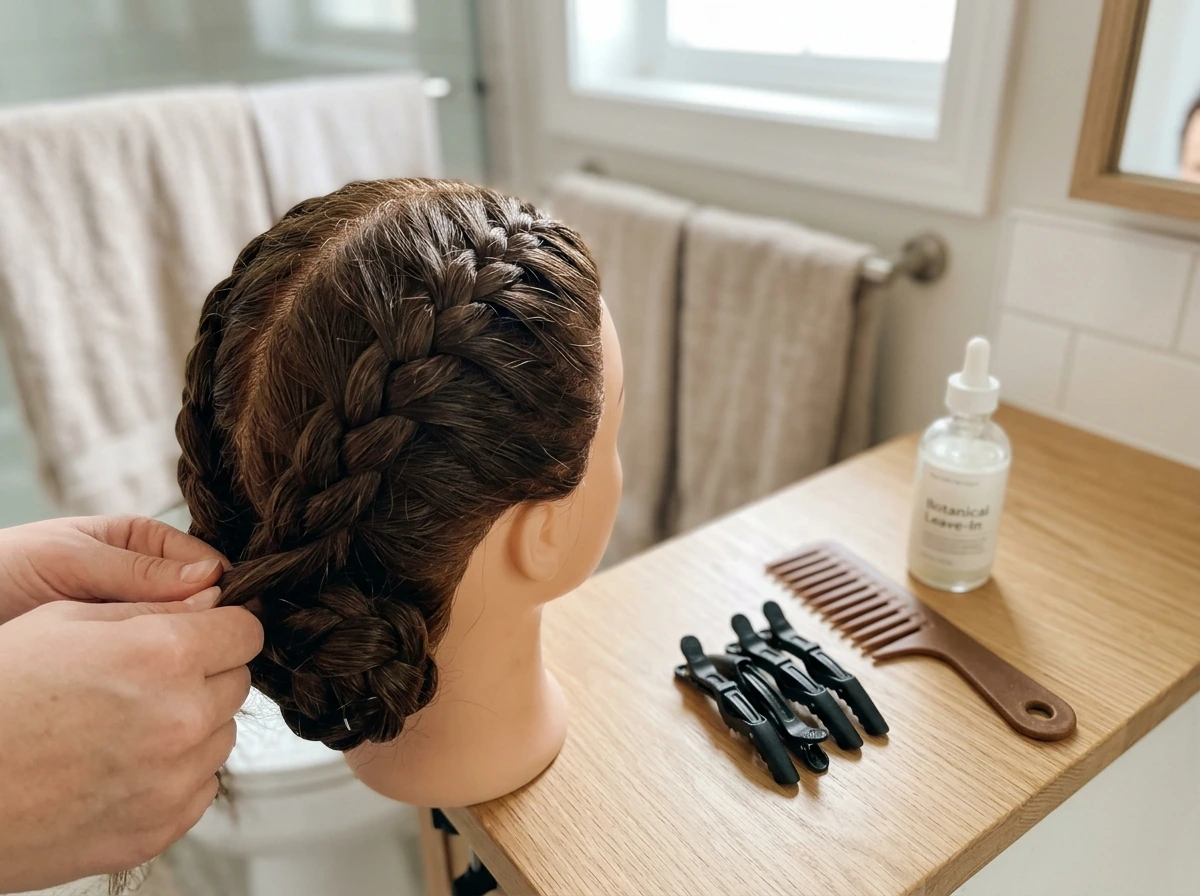
Braiding your hair at night does not make your hair grow faster. In general, does braiding help your hair grow? The answer is more about retention than actually speeding up growth does braids help your hair grow. do french braids help hair grow
Does Braiding Your Hair at Night Help It Grow?

Simone Okonkwo
24 Mar 2026
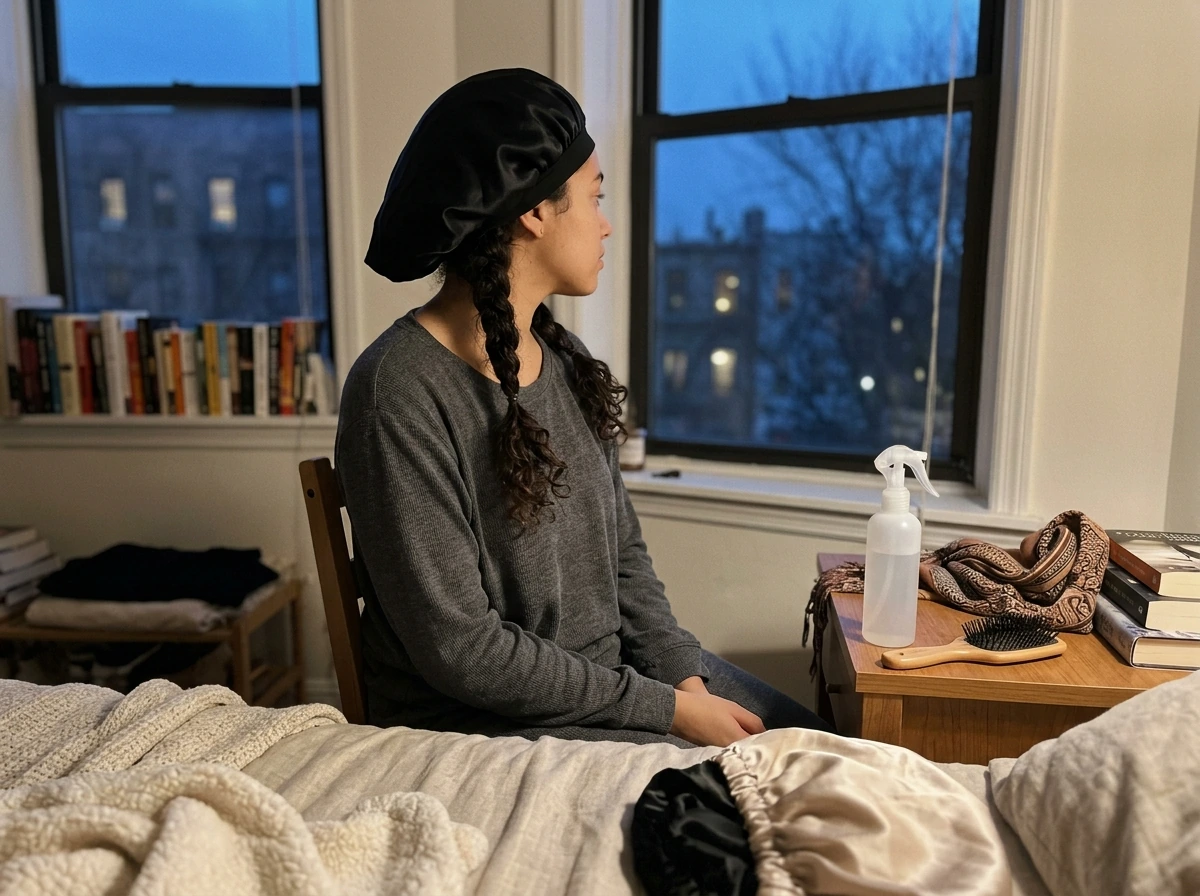
Does nighttime braiding actually make hair grow faster
Hair growth speed is set by your follicle biology, specifically by the anagen phase of the hair cycle. Anagen is the active growing phase, and how long your hair stays in it determines how long it can get. Some people have an anagen phase that lasts two years, others six or more, which is why some people can grow hair past their waist and others seem to max out at shoulder length no matter what they do. Braiding your hair at night does not extend anagen. It does not stimulate follicles. It does not increase the rate at which strands emerge from your scalp, which is roughly half an inch per month on average for most hair types. do braids make your hair grow faster black male
What braiding at night does address is the other side of the length equation: breakage. Textured and coily hair is structurally more vulnerable to friction and mechanical stress because of the curl pattern. Every twist, coil, and curl is a potential weak point, and rubbing against a cotton pillowcase all night is enough to cause breakage at those points over time. Reduce that breakage consistently, and your hair will appear to grow faster because you are retaining what grows instead of breaking it off at the same rate. That is the entire mechanism, and it is genuinely useful even though it is not magic.
Growth vs retention: why this distinction actually changes what you do
Understanding the difference between growth and retention is not just semantics. It changes your entire strategy. If you thought braiding at night was stimulating your follicles, you might invest all your energy in the styling routine and ignore everything else. But if you understand that the goal is protecting existing strands from breakage, you start paying equal attention to moisture, scalp health, protein balance, and gentle handling during the day, because those things work together to keep the hair you are growing intact.
Protective styling, including nighttime braiding, is well recognized by dermatologists and hair health researchers as a retention strategy rather than a growth accelerator. The logic is straightforward: friction, tangling, and repeated mechanical manipulation during sleep cause strand damage and breakage. Afro-textured and natural Black hair is particularly susceptible to this kind of physical damage because of its structure. A nighttime braid, twist, or protective set reduces that manipulation and keeps strands aligned, which means less breakage at delicate points. Over weeks and months, less breakage equals more visible length. That is worth doing, just with realistic expectations about why it works.
When braiding at night actually helps
Nighttime braiding works best when it follows a few protective styling principles. Done right, it is genuinely one of the simplest low-effort routines you can build for textured hair. Here is when it makes sense and what conditions help it work.
Hair types that benefit most
Coily, kinky, and tightly curled hair (often described as 4a, 4b, and 4c textures) tends to benefit the most from nighttime protective styling because these textures are more prone to tangling, dryness, and friction-related breakage. But wavy and loosely curly hair can also benefit, particularly if the hair is on the drier or more porous side. If you regularly wake up with tangled hair, frizz, or find hairs on your pillow every morning, nighttime braiding is a practical solution worth trying.
Conditions where it helps most
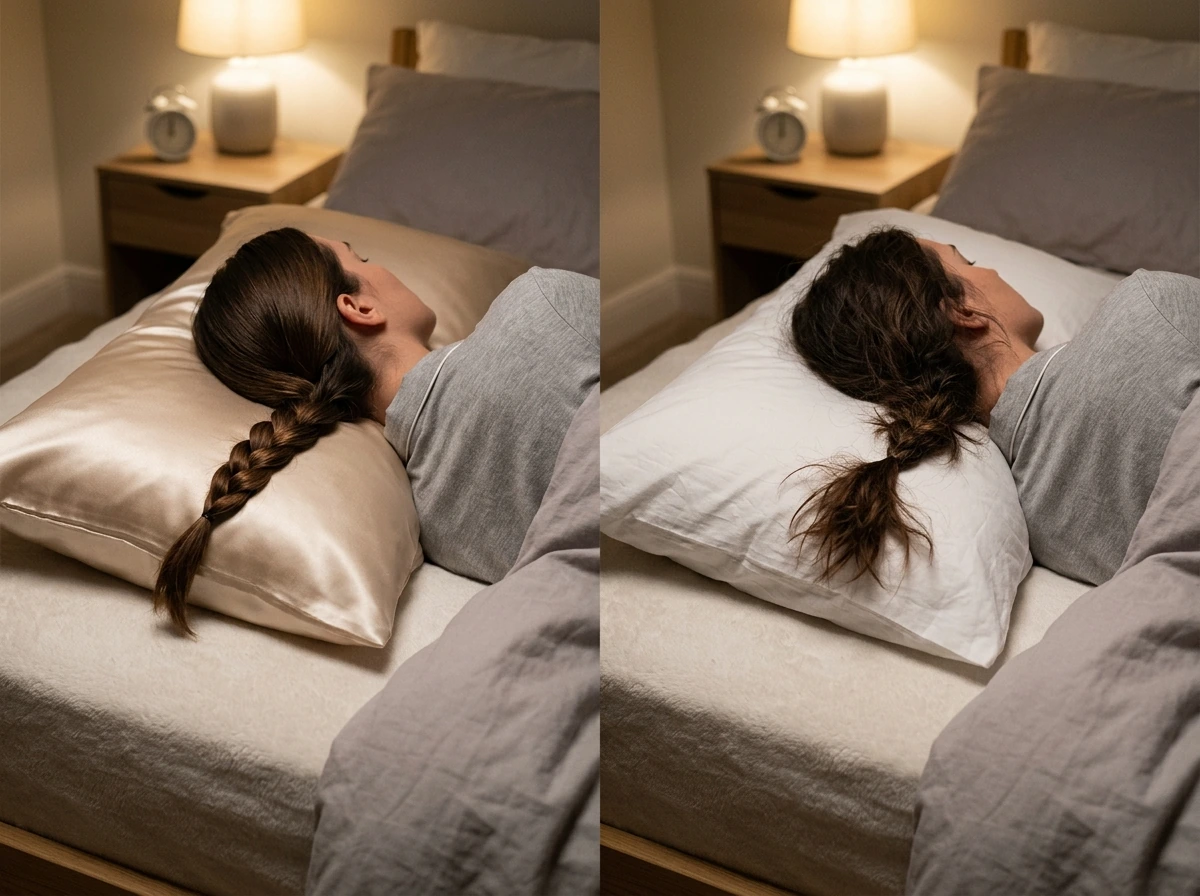
- You sleep on cotton pillowcases, which create friction and pull moisture from hair
- Your hair is currently worn loose or in a high puff, which rubs against bedding all night
- You have fine or fragile strands prone to breakage at mid-lengths or ends
- You are in a growth phase and want to protect length at the ends (the oldest, most vulnerable part of the hair)
- Your hair is natural, relaxed, or transitioning and benefits from reduced nightly manipulation
- You have extensions or braided styles already in, and want to keep them neat and the natural hair underneath protected
When braiding at night hurts instead of helps
This is the part most people skip, and it is important. Nighttime braiding done the wrong way can cause real damage, and the biggest risk is traction. Traction alopecia is hair loss caused by prolonged or repeated tension on the scalp and follicles. It is strongly associated with tight hairstyles including tight braids, cornrows, weaves, and ponytails, and it disproportionately affects Black women and girls. Dermatology research is clear that chronic mechanical tension can progress from early, reversible hair loss to permanent scarring alopecia if the traction is not stopped.
The hairline, temples, and edges are the most vulnerable areas, and these are exactly the areas where tight braiding tends to pull most. If you braid your hair tightly every single night and never give your scalp a rest, you are applying repeated low-level tension to the same follicles night after night. Over time, that adds up. Early traction alopecia may not be scarring and can be reversible if caught soon, but long-term or severe traction can cause permanent follicle damage. The American Academy of Dermatology specifically advises wearing tight styles only occasionally, and loosening braids around the hairline.
There are also everyday breakage risks that come from braiding incorrectly. Braiding dry, unmoistened hair puts stress on already fragile strands. Braiding too small sections with too much tension can snap hair at the braid base. Using rubber bands or tight hair ties at the ends causes breakage at those points. And braiding over buildup or dirty hair without detangling first can lock in tangles that make your next unbraiding session destructive.
Red flags to watch for
- Pain or tenderness at the scalp, especially at the hairline or nape, after braiding
- Itching, crusting, or small bumps along braid parts or at the scalp
- Noticeable thinning or recession at the temples, edges, or forehead
- Hair breaking off in chunks during unbraiding rather than shedding naturally
- Braid bumps or folliculitis (inflamed follicles) from tension or buildup
Any of these signals means your current method is causing harm. Stop the style, give your scalp a break, and reassess your technique before continuing.
How to braid your hair at night the right way: a step-by-step routine
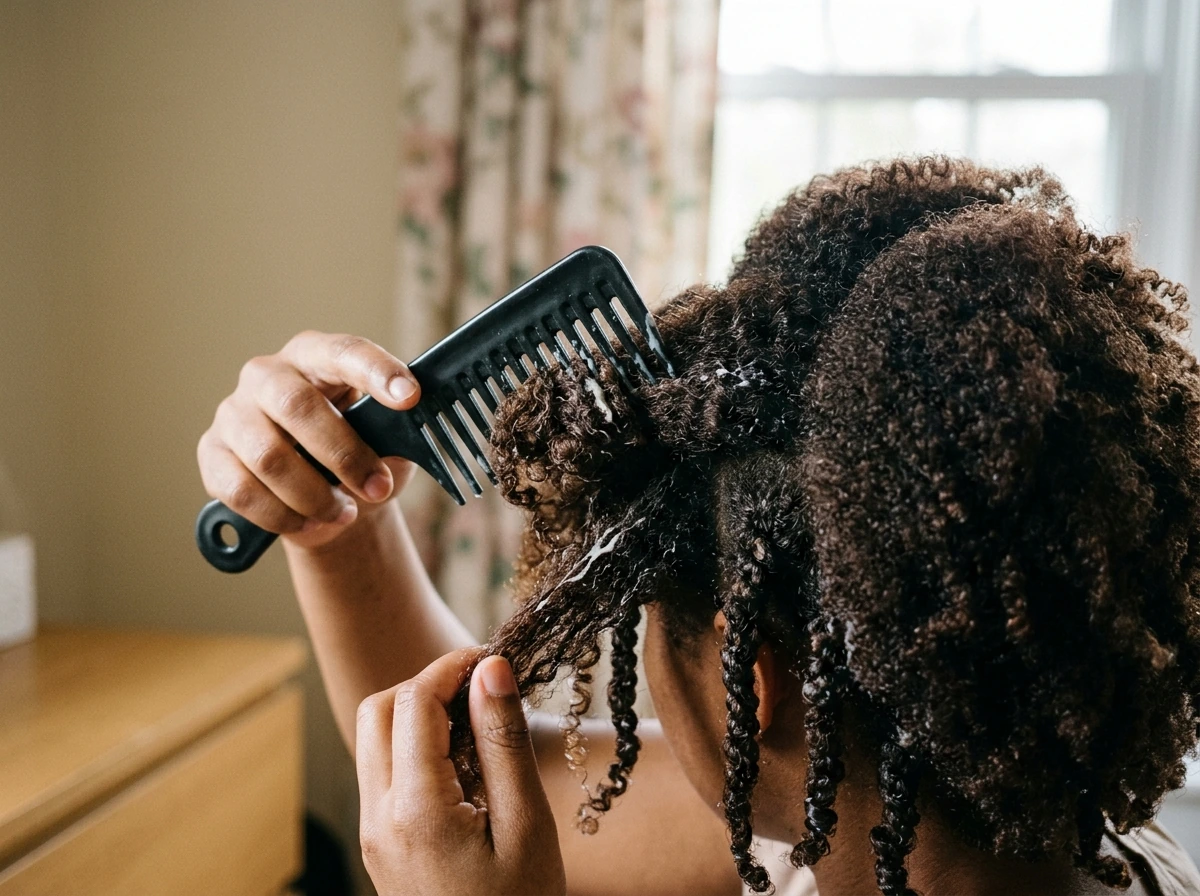
The goal of a nighttime braiding routine is to secure your hair with minimal tension, adequate moisture, and full scalp protection. This is not about achieving a perfect braid, it is about setting your hair up to survive eight hours of sleep with as little friction and breakage as possible.
- Start with detangled hair. Do not braid over knots or tangles. Use a wide-tooth comb or your fingers to gently detangle from ends to roots, section by section, before you begin. Braiding over tangles locks them in and makes unbraiding destructive.
- Apply a leave-in conditioner or light moisturizer. Dry hair is brittle hair. A small amount of leave-in worked through the hair before braiding adds slip, reduces friction inside the braid, and helps strands stay pliable overnight. For thicker or drier hair types, follow with a light oil (like jojoba, grapeseed, or a non-heavy castor oil blend) to seal in moisture.
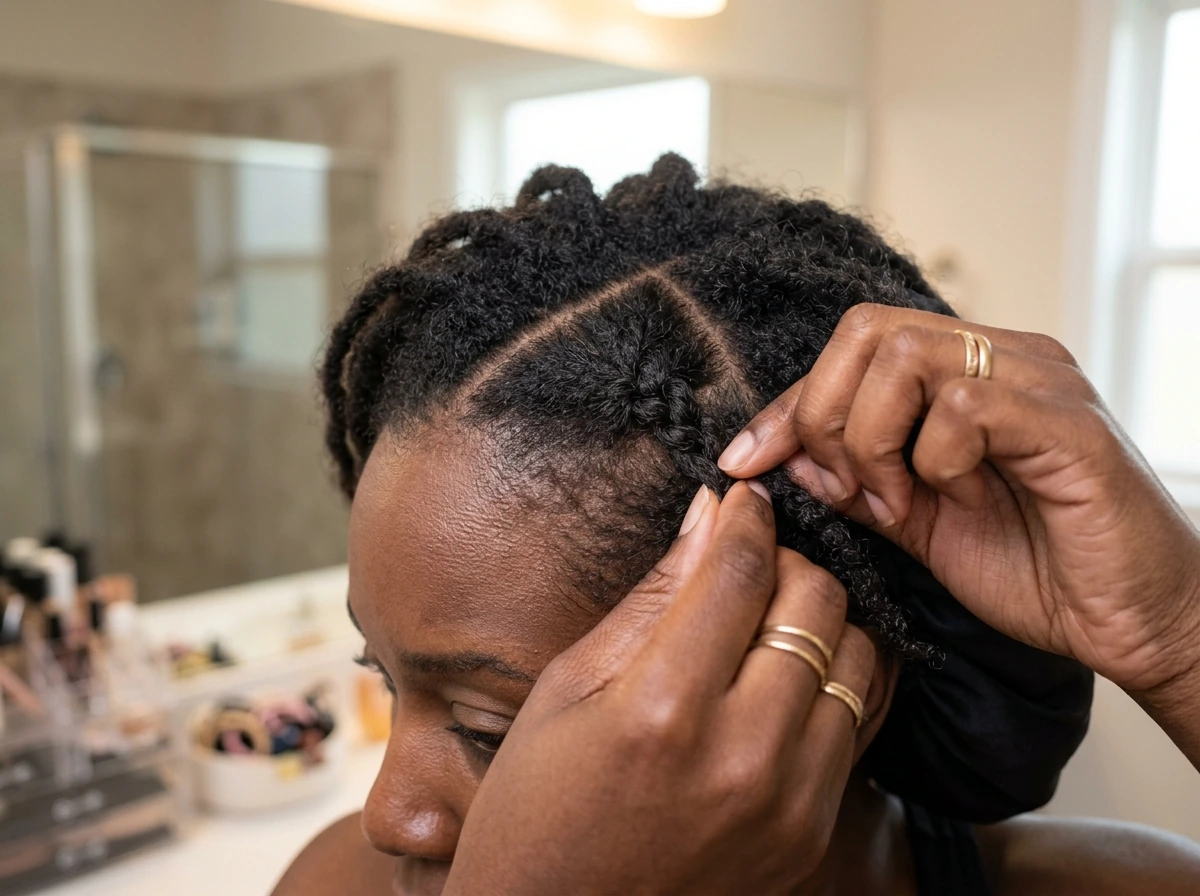
- Section into large, loose braids. Aim for three to eight sections depending on your hair volume. Larger sections mean less overall tension distributed across fewer roots. Loose, chunky braids are far kinder to your scalp than tight, small ones. For 4c or very dense hair, two to four large twists or braids work well.
- Braid loosely, especially at the root. The braid should feel secure but not pull. You should be able to slide a finger under the braid at the scalp without resistance. If the root feels tight or you can see the skin pulling, redo it looser.
- Secure ends gently. Use a soft fabric hair tie, a ribbon, or a scrunchie. Avoid rubber bands or small elastics with metal clips, which snap hair. If your ends are very dry, tuck them under or apply a tiny amount of oil before securing.
- Cover your hair. A satin or silk bonnet is the best option because it protects the entire braid set from friction and keeps moisture in. A satin-lined cap or a silk scarf tied loosely also works. If you prefer not to use a bonnet, a satin or silk pillowcase is a reasonable fallback, though a bonnet covers the hair more completely.
- In the morning, unravel gently. Do not yank braids apart. Unravel each section carefully from the ends up, using a little oil on your fingers if the hair feels dry or slightly tangled at the ends.
What to use and what to skip
| Product/Tool | Use it? | Why |
|---|---|---|
| Satin or silk bonnet | Yes | Reduces friction and moisture loss overnight, the single most impactful sleep tool for textured hair |
| Satin pillowcase | Yes (or as backup) | Good if you don't like bonnets; less complete coverage but better than cotton |
| Cotton pillowcase alone | No | Creates friction and pulls moisture from hair, accelerating breakage |
| Leave-in conditioner | Yes | Adds moisture and slip before braiding; prevents dry, brittle strands inside the braid |
| Light oil (jojoba, grapeseed) | Yes | Seals in moisture without buildup; great for sealing ends |
| Heavy butters or thick grease | Use sparingly | Can cause product buildup on scalp over nightly use; heavy residue can clog follicles |
| Rubber bands or metal-tip ties | No | Cause breakage at the point of contact, especially at delicate ends |
| Soft fabric scrunchies or ribbon ties | Yes | Gentle on strands, minimal tension at the ends |
| Dry hair (no product) | No | Dry braiding increases friction inside the braid and causes breakage during unraveling |
How to tell if the routine is working (and troubleshoot if it's not)
Progress tracking matters here because it keeps you from continuing a routine that is quietly causing damage. The feedback you are looking for is about breakage and scalp health, not just length, because length changes slowly and can be misleading in the short term.
Signs the routine is working
- Less hair on your pillow or in your hands when you unravel braids in the morning
- Ends feel softer and less dry after sleeping (a sign moisture is being retained)
- Less tangling and fewer knots during morning detangling
- Scalp feels comfortable, not itchy, tight, or irritated
- Visible length retention over 4 to 8 weeks compared to your usual shed and breakage pattern
Troubleshooting common problems
If you are seeing more breakage, not less, the most common causes are braiding too tightly, braiding dry hair, or using sections that are too small. Try larger, looser braids and always apply a leave-in before braiding. If your scalp feels tight, itchy, or you notice small bumps or flakes at the parts, the tension is too high or product buildup is causing follicle irritation. Take a few nights off from braiding, do a gentle clarifying wash, and restart with looser technique.
Normal daily hair shedding ranges from roughly 50 to 100 hairs per day, and this is telogen (resting phase) hair that has completed its cycle. If you are consistently seeing more than 100 to 150 hairs per day, or noticing thinning at your edges, temples, or crown, that is worth paying attention to. Persistent shedding beyond normal ranges, especially paired with scalp inflammation or hairline recession, should be evaluated by a dermatologist. Early traction alopecia is often reversible, but it becomes harder to treat the longer it goes unaddressed.
Measuring your length retention
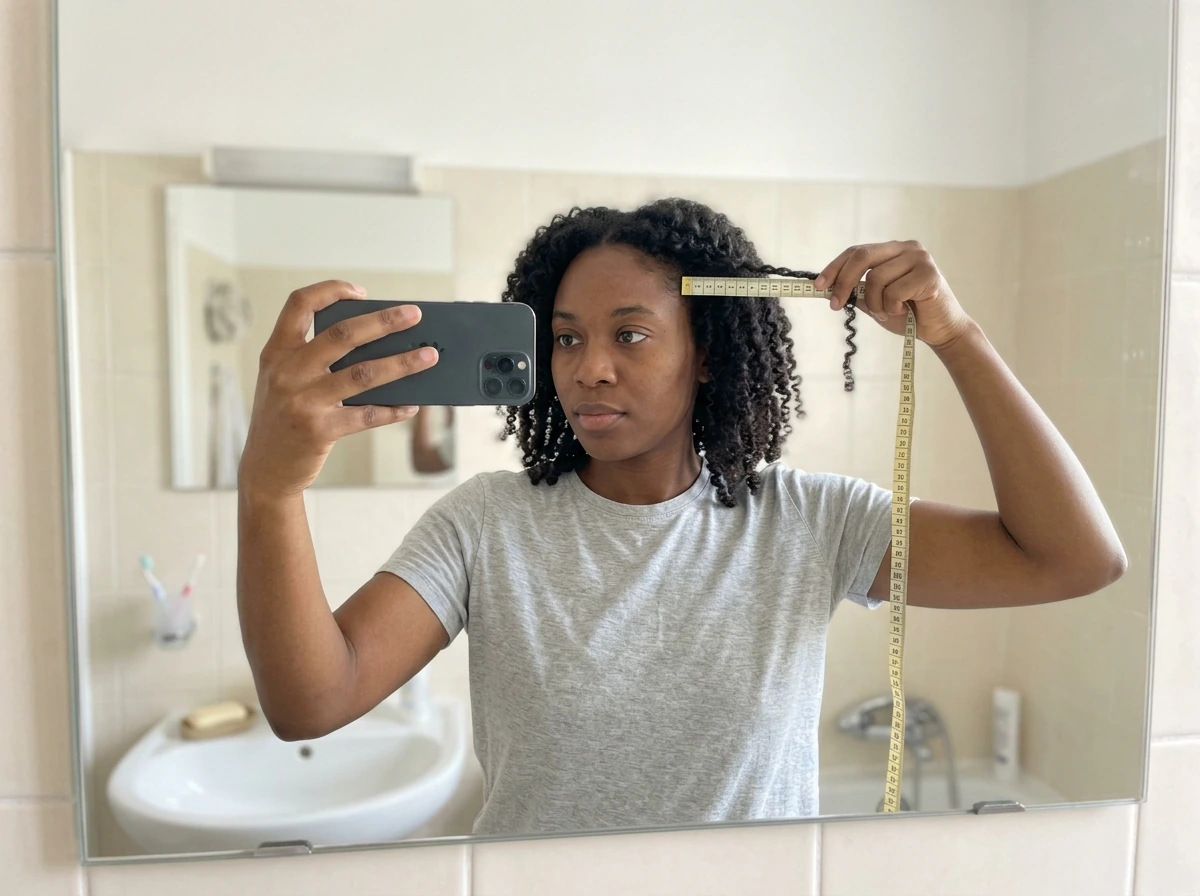
Take a photo of your hair from the same angle once a month, stretched or blown out if your hair is highly coily, so you can accurately compare length over time. Alternatively, measure a specific section (like the middle of the back of your hair) with a flexible tape measure once a month. Most hair grows roughly half an inch per month, so over three months you should see approximately 1.5 inches of new growth. If you are consistently seeing less than that after accounting for breakage, focus on the retention side: moisture, gentleness, and reducing mechanical stress.
What actually drives hair growth and healthy length
Nighttime braiding is one piece of a bigger picture. If you want real, sustained length, here are the factors that have actual influence on both how fast your hair grows and how much of it you keep.
Nutrition and internal health
Hair follicles are among the most metabolically active structures in the body, and they are sensitive to nutritional deficiencies. Iron, zinc, biotin, vitamin D, and protein are the most commonly linked nutrients to hair growth and shedding. If you are deficient in any of these, hair loss or slowed growth can result, and no amount of nighttime braiding will compensate. If you are experiencing significant shedding and suspect a nutritional cause, a blood panel from your doctor is the most direct way to find out.
Scalp health
A healthy scalp supports healthy follicles. Chronic scalp inflammation, seborrheic dermatitis, product buildup, and untreated dandruff all create an environment that can slow growth or increase shedding. Regular gentle washing, keeping the scalp clean and free of heavy buildup, and addressing any inflammatory conditions early are important baseline habits. If your nighttime routine involves heavy product application at the scalp every single night, consider whether you are creating buildup that is irritating your follicles over time.
Moisture and conditioning
Textured hair, particularly 4c and coily hair, tends to lose moisture faster than straighter hair types because the curl pattern makes it harder for natural sebum to travel down the strand. Chronically dry hair breaks. Deep conditioning regularly (at least once every one to two weeks), using leave-in conditioners, and following a consistent moisture-sealing routine are all high-impact habits for retention. The LOC or LCO method (liquid, oil, cream in different orders depending on your hair's porosity) is a well-established approach that many people with textured hair find effective.
Minimizing heat and chemical damage
Frequent heat styling, particularly at high temperatures, and overlapping chemical relaxer applications both weaken hair structure and increase breakage. If you are trying to retain length, reducing heat frequency, using a heat protectant when you do use heat, and spacing out chemical treatments are some of the most impactful adjustments you can make. These affect breakage far more dramatically than nighttime braiding style alone.
Gentle detangling and handling
How you handle your hair during wash day and styling has a massive impact on retention. Detangling on dry, unlubricated hair, rushing through sections, using fine-tooth combs on coily hair, and pulling through knots instead of gently working them apart all cause unnecessary breakage. Detangling on saturated, conditioner-covered hair with a wide-tooth comb or your fingers, working from ends to roots, is the standard recommendation for reducing mechanical damage during styling.
The full picture at a glance
| Factor | Affects growth speed? | Affects retention/length? | Impact level |
|---|---|---|---|
| Nighttime braiding (loose, low-tension) | No | Yes | Moderate to high (for retention) |
| Satin bonnet or pillowcase | No | Yes | Moderate to high (for retention) |
| Nutrition and iron/vitamin levels | Yes | Yes | High |
| Scalp health and inflammation | Yes | Yes | High |
| Moisture and deep conditioning | No | Yes | High |
| Reducing heat and chemical damage | No | Yes | High |
| Gentle detangling technique | No | Yes | Moderate to high |
| Tight braiding or high-tension styles | Potentially negative | Negative (breakage/traction) | High (harmful) |
| Follicle biology and anagen phase | Yes (cannot be changed by styling) | N/A | Fundamental |
Your practical starting point for tonight
If you want to build a nighttime routine that actually supports your length goals, here is what I would suggest starting with. Detangle your hair before bed, apply a leave-in conditioner to damp or lightly misted hair, then section into three to six large, loose braids or twists. Secure each end with a soft fabric tie. Put on a satin bonnet or sleep on a satin pillowcase. That is it. You do not need a complicated routine or expensive products. The consistency of doing this most nights matters far more than the complexity of what you do.
Keep an eye on your scalp comfort and your morning breakage levels. If those improve over the first month, you are on the right track. If you want to dig further into how braids work as a daytime protective style or whether sleeping in braids specifically is right for your hair type, those are worth exploring as separate questions alongside this routine. The nighttime piece is just one layer, but for a lot of people it is the missing layer that finally makes their hair feel like it is going somewhere.
FAQ
How can I tell if nighttime braiding is helping, since hair growth is slow?
Track breakage and scalp comfort, not just length. Take monthly photos from the same angle, and also count new shed hairs that are visibly broken (short, snapped pieces) or look for changes at the hairline. If breakage drops and your scalp feels calmer in the morning, it is working even if measurable length changes are modest at first.
Is it better to braid on wash days or should I wait until my hair is fully dry?
For most people, braid at night when hair is detangled and damp or lightly misted with a leave-in, then let it dry fully before you go to sleep. Braiding very wet hair can increase scalp irritation and tangling when you undo it, while braiding bone-dry hair increases friction-related breakage.
How tight is too tight for nighttime braids?
If your scalp feels pulled when you sit up or if you wake with tenderness, bumps, or a tight band sensation along the part, the tension is likely too high. Use larger sections and looser braids, and avoid repeated nightly tension on the same hairline area.
How often should I braid at night to avoid traction issues?
If you are prone to traction, consider rotating options and giving your scalp rest (for example, braiding most nights rather than every night). Watch for early signals like edge thinning, redness at the parts, or persistent itching, and stop tight styles immediately if those appear.
Can nighttime braids cause hair thinning even if my hair is not falling a lot?
Yes. Traction alopecia can start with subtle edge changes, like a small reduction in density at temples or the hairline, before you notice obvious shedding. If you see widening parts or patchy thinning at edges after a period of tight braiding, pause braids and get a dermatologist assessment.
Should I use gel, edge control, or heavy oils at the scalp before braiding?
Be cautious with products that build up. If you notice flaking, itch, or residue at the parts, switch to lighter scalp use and clarify periodically. Oils and creams are better applied to the lengths than the scalp if you are prone to buildup or dermatitis.
What should I do if my hair is still getting tangled when I take the braids out?
Let the braids fully dry first, then undo gently from the ends upward and detangle with fingers or a wide-tooth comb. If you are seeing tangles, you may be using too-small sections, not enough slip from a leave-in, or braiding hair that was not properly detangled before bedtime.
Does the braid style matter, like french braids versus twists or two-strand braids?
The main factor is minimizing friction and tension, not the braid name. Cornrows can become tight quickly for some people, while loose twists or larger braids with soft end ties often keep tension lower. Choose the style that holds securely without pulling at the edges.
Is satin bonnet or satin pillowcase enough, or do I still need braids?
A satin bonnet or pillowcase can reduce friction, but braids (or twists) provide alignment and reduce knots for many textured hair types. If you braid less often, protective fabric becomes more important, especially if you wake up with significant tangles or frizz.
What signs mean I should stop nighttime braiding and see a professional?
Stop and seek care if you have persistent scalp pain, increasing redness, swollen bumps, scaling that does not improve with gentle cleansing, or visible edge recession. Also get evaluated for consistent shedding that is above normal ranges or any patchy thinning that keeps progressing.
How long should I keep a nighttime braid or twist before unbraiding?
If your braid is comfortable and fully dry, a short overnight hold is typically fine. If you are keeping them for multiple days, monitor scalp buildup and tension at the hairline, and avoid reusing the same tight pattern without a break.
If nighttime braiding does not increase growth rate, what is the fastest way to improve my results?
Prioritize retention levers you control daily: detangle correctly with slip, keep hair moisturized, and reduce mechanical stress from braiding and unbraiding. Combine that with scalp care (wash schedule and dandruff control), and adjust protein and moisture based on how your hair feels and behaves.
Next Article
Do French Braids Help Hair Grow? Benefits, Risks, Tips
French braids may help prevent breakage through protective styling, but tight styles can cause traction and limit growth