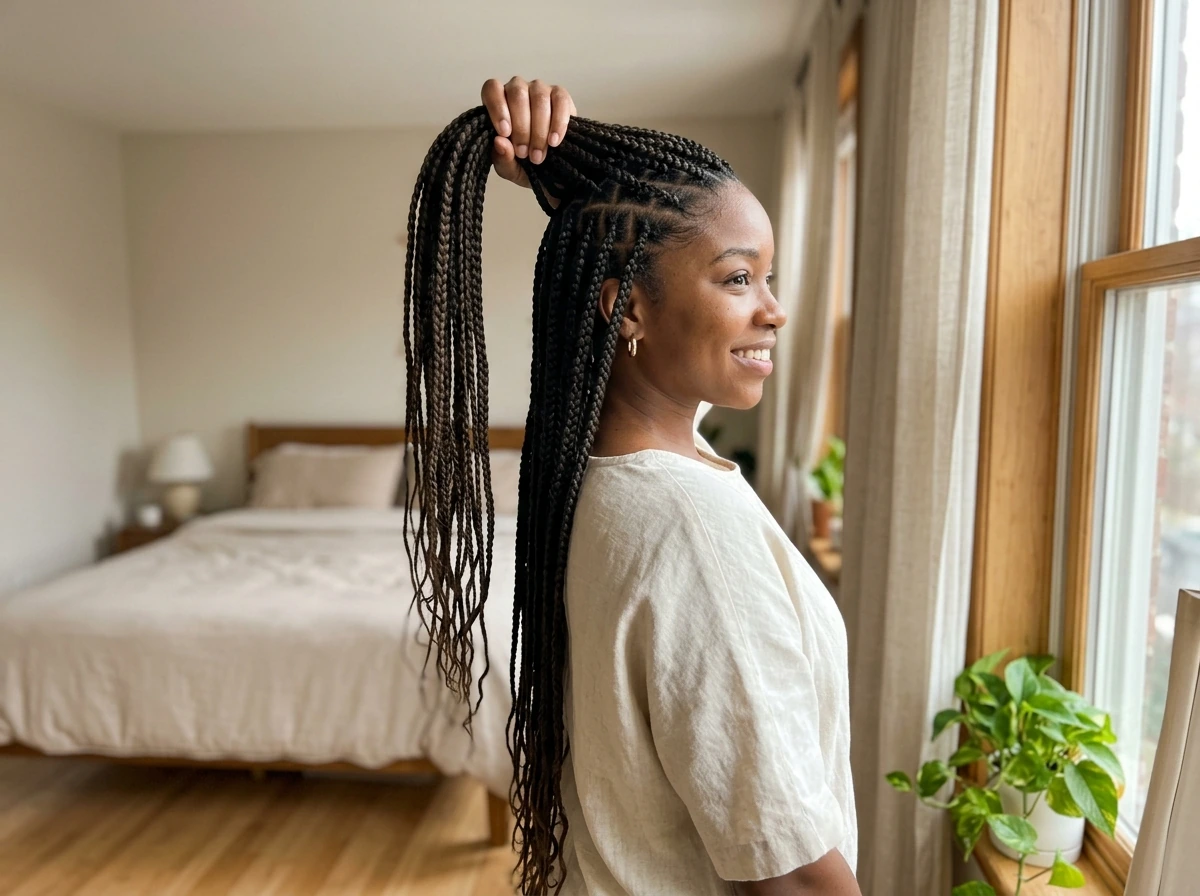
Braids do not speed up your hair growth rate. Your follicles grow hair at roughly 1 centimeter per month regardless of how your hair is styled, and that rate is controlled by your hair growth cycle, not by what you do on the outside. Braids can do, and this is genuinely valuable, is help you hold onto the length your scalp is already producing. For a lot of people, especially those with textured or coily hair that is prone to dryness and mechanical breakage, that distinction makes a real difference in whether hair ever seems to get longer.
Does Braids Help Your Hair Grow? Length Retention Explained

Simone Okonkwo
24 Mar 2026
Growth rate vs. length retention: the real answer
Your hair grows in biological cycles. The anagen phase is active growth, the catagen phase is a short transition, and the telogen phase is rest and shedding. On a healthy scalp, roughly 90 percent of follicles are in anagen at any given time. The length of your anagen phase is what sets your maximum potential hair length, and that is mostly genetic. Styling your hair, whether it is braided, loose, or wrapped, does not extend your anagen phase or push follicles to produce hair faster. Dermatologists confirm this: the follicle cycle governs hair growth behavior, and external handling does not change it.
So why do so many people, myself included at one point, swear their hair grew inches while in braids? Because it did get longer, just not for the reason we assumed. Retention, not acceleration, is what happened.
Why braids make it feel like your hair is growing faster
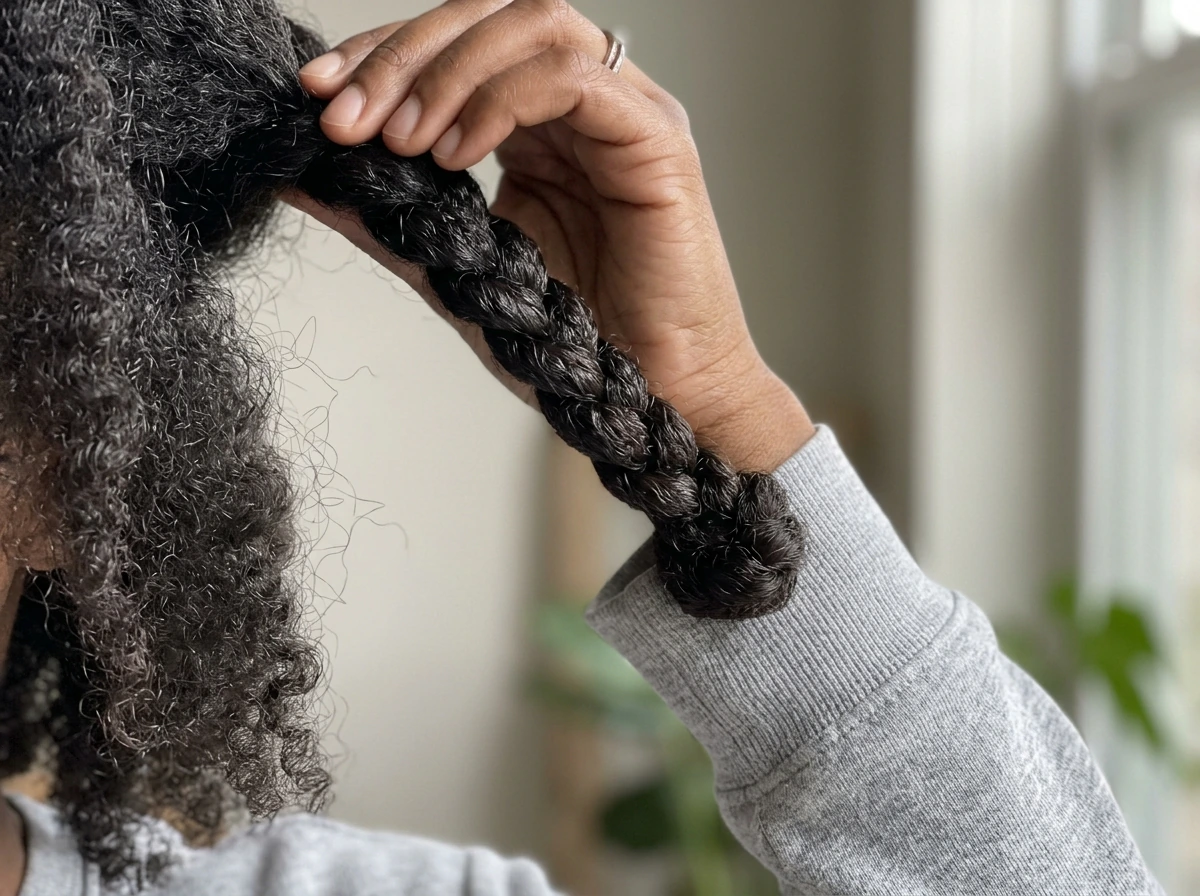
The honest explanation is that braids protect your hair from the everyday damage that quietly erases length before you even notice it. Afro-textured and coily hair in particular faces higher mechanical friction between strands, dries out faster at the ends, and tangles in ways that lead to breakage during detangling. A peer-reviewed narrative review on Afro-textured hair care found that protective styles like braids reduce interstrand friction, retain moisture, and lower the frequency of manipulation. Fewer comb strokes means less breakage: combing studies confirm that increasing the number of dry comb strokes directly increases short-fiber fragmentation. When you braid your hair and leave it alone for a few weeks, you are essentially pausing the daily attrition that was keeping your hair at the same apparent length.
There is also a shrinkage factor. Coily and kinky hair can shrink to less than half its actual length when loose and dry. Once that hair is stretched into a braid and you see it after several weeks, the visible length gain can look dramatic even when the actual monthly growth was a perfectly ordinary centimeter.
Growth rate, length, and retention: what is actually changing
Think of it this way: your scalp is producing about 1 cm of new hair every month no matter what. The question is whether that new growth survives long enough to add to your visible length. If your ends are snapping off faster than growth is occurring, your hair stays the same length or gets shorter. Braids interrupt that cycle by doing a few concrete things:
- Keeping your ends tucked away from friction against clothing and pillowcases
- Reducing the need for daily detangling, which is one of the highest-breakage activities in a hair routine
- Locking in moisture at the shaft, which makes the hair more flexible and less prone to snapping
- Lowering the number of times you apply heat or manipulate the hair
None of those things touch your follicles or change your growth cycle. But they can absolutely change how much length you accumulate over months. For someone whose hair was retaining very little length before, switching to a protective style regimen can feel like a revelation, and technically the hair is getting longer faster, just not because of faster growth.
Tight braids are not better: the traction alopecia risk
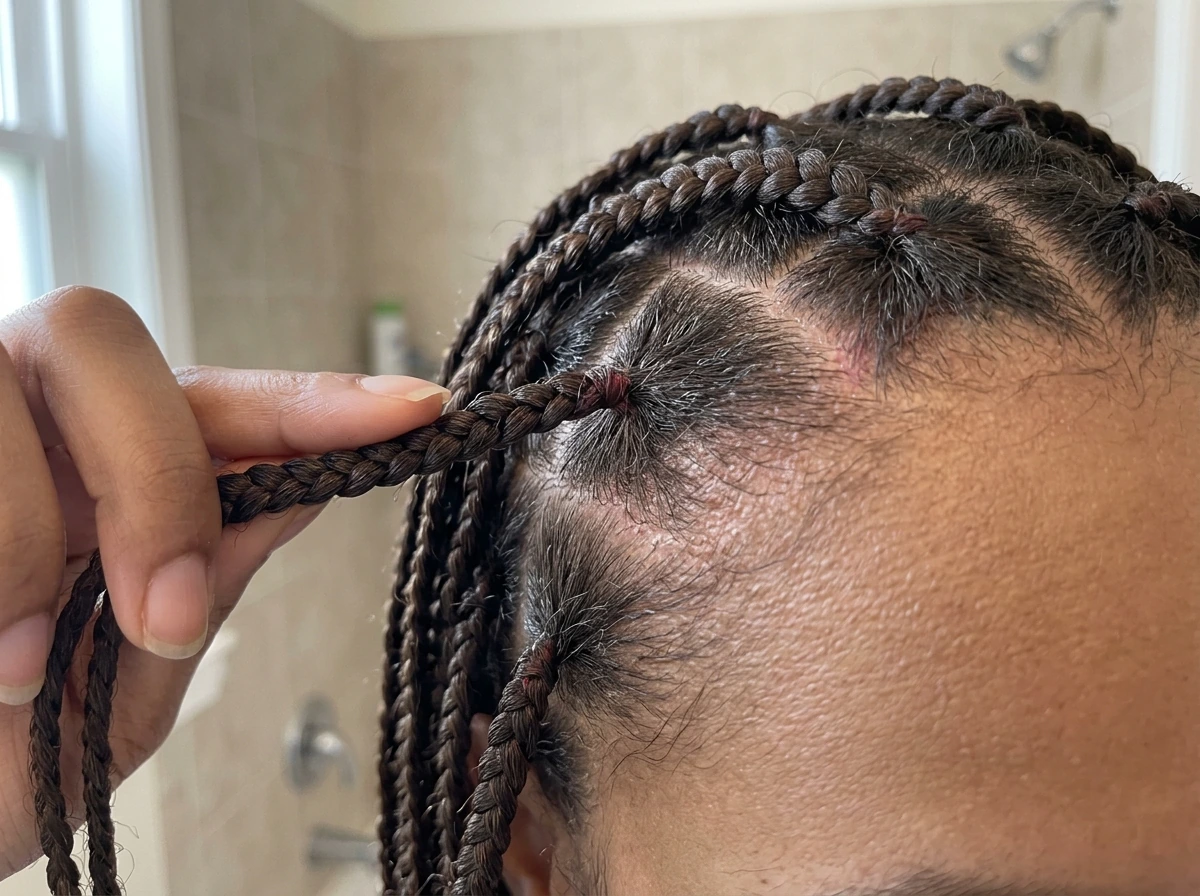
This is where a lot of people run into trouble. The tighter the braid, the more tension is placed on the hair follicle. Over time, repeated or prolonged mechanical tension causes a condition called traction alopecia, and it is more common than people realize, especially along the edges and frontal hairline. JAMA Dermatology describes traction alopecia as hair loss caused by prolonged or repetitive tension from tight braids, cornrows, locks, and similar styles. StatPearls lists tight braids and cornrows specifically as common culprits. The early stages may reverse once you stop the tension, but if the follicles are stressed repeatedly over years, the damage can become permanent.
One clinical sign to know: dermatologists describe what is called the 'fringe sign,' where a band of short, fine, retained hairs at the front hairline is left behind as the surrounding hair is lost. If you notice your edges thinning or getting shorter over time, that is your follicles signaling distress, not a sign that tight styles are working.
The edges are especially vulnerable because the hair there is finer, the follicles shallower, and the tension from a braid install hits that area hardest. Baylor College of Medicine's dermatologist guidance is straightforward on this: if your braids hurt, especially at the edges, tell your braider to stop and redo that section. Pain is not a sign of a 'tight and lasting' install. It is a warning signal.
The best braid types and styles for actual retention
Not all braids carry the same risk or offer the same benefit. Style choice matters a lot when your goal is length retention without damage.
Tension level matters more than style name
Whether you choose box braids, cornrows, knotless braids, two-strand twists, or feed-in styles, the single most important variable is how much tension is used at the root. Knotless braids, which start with your natural hair before adding extensions gradually, distribute weight and tension more evenly than traditional box braids that begin with a knot at the base. For people with fine edges or a history of traction alopecia, knotless installs are generally safer. Whatever style you choose, if you can feel your scalp pulling or see your skin raised at the hairline, the braids are too tight.
Size and weight considerations
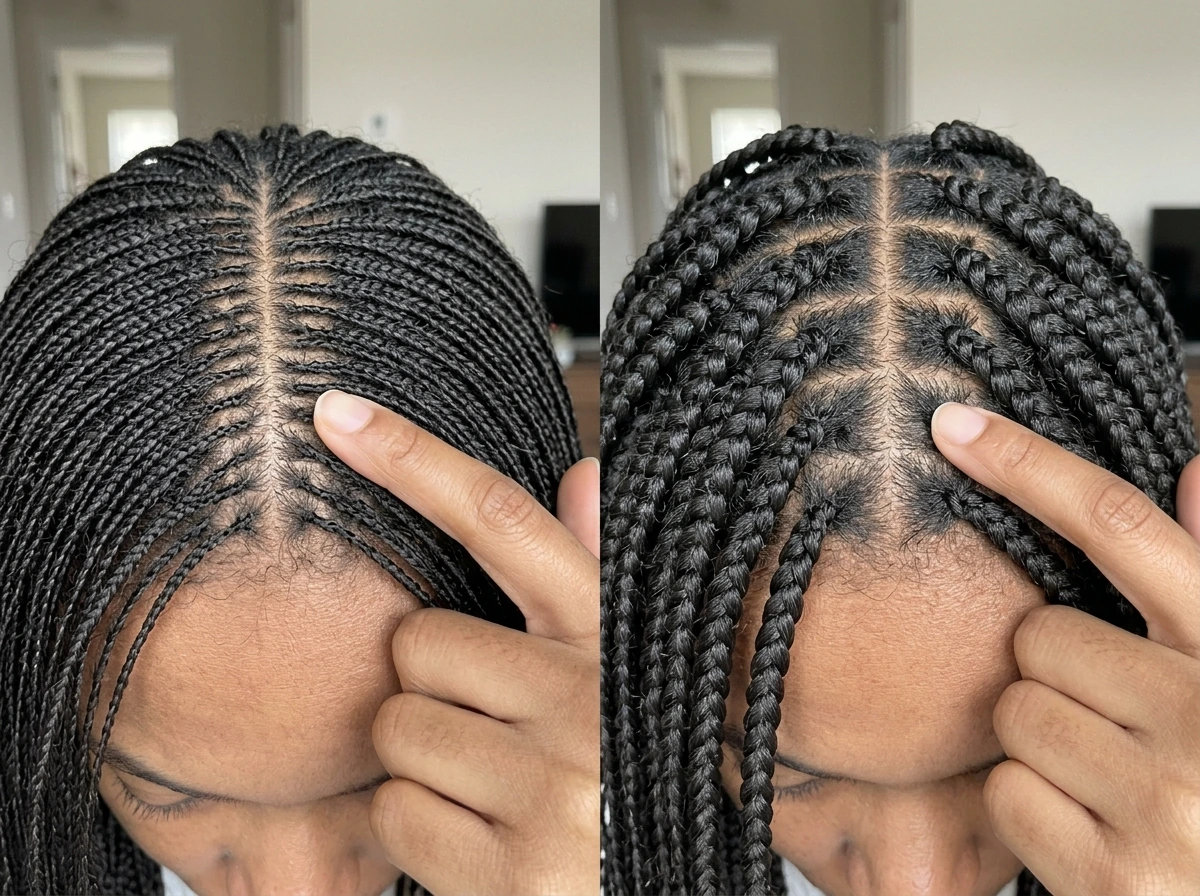
Very small, micro-sized braids pack more tension per square inch of scalp and can be heavier relative to the anchor point. Medium to larger braids with reasonable weight are gentler on follicles. If you use extensions, choose a lighter-weight hair to reduce the pulling load at the root. Heavy extensions on small sections are a reliable path to edge thinning over time.
Styles that offer the most protective benefit
- Knotless box braids: reduced tension at the root, good for edges
- Two-strand twists: minimal tension, easy to moisturize, gentle removal
- Loose cornrows: flat to the scalp with controlled tension, good for keeping hair stretched
- Feed-in braids: gradual addition of extension hair reduces single-point tension
- Flat twists: low manipulation, easy to maintain moisture at the scalp
Styles that carry higher risk when done repeatedly or left in too long include very tight cornrows with heavy extensions, small micro braids with a lot of extension weight, and any style that consistently pulls the hairline back or upward. If you love cornrows or traditional box braids, you can still wear them safely, but the tension, size, and wear time all need to be managed.
How to braid and maintain safely
Before the install
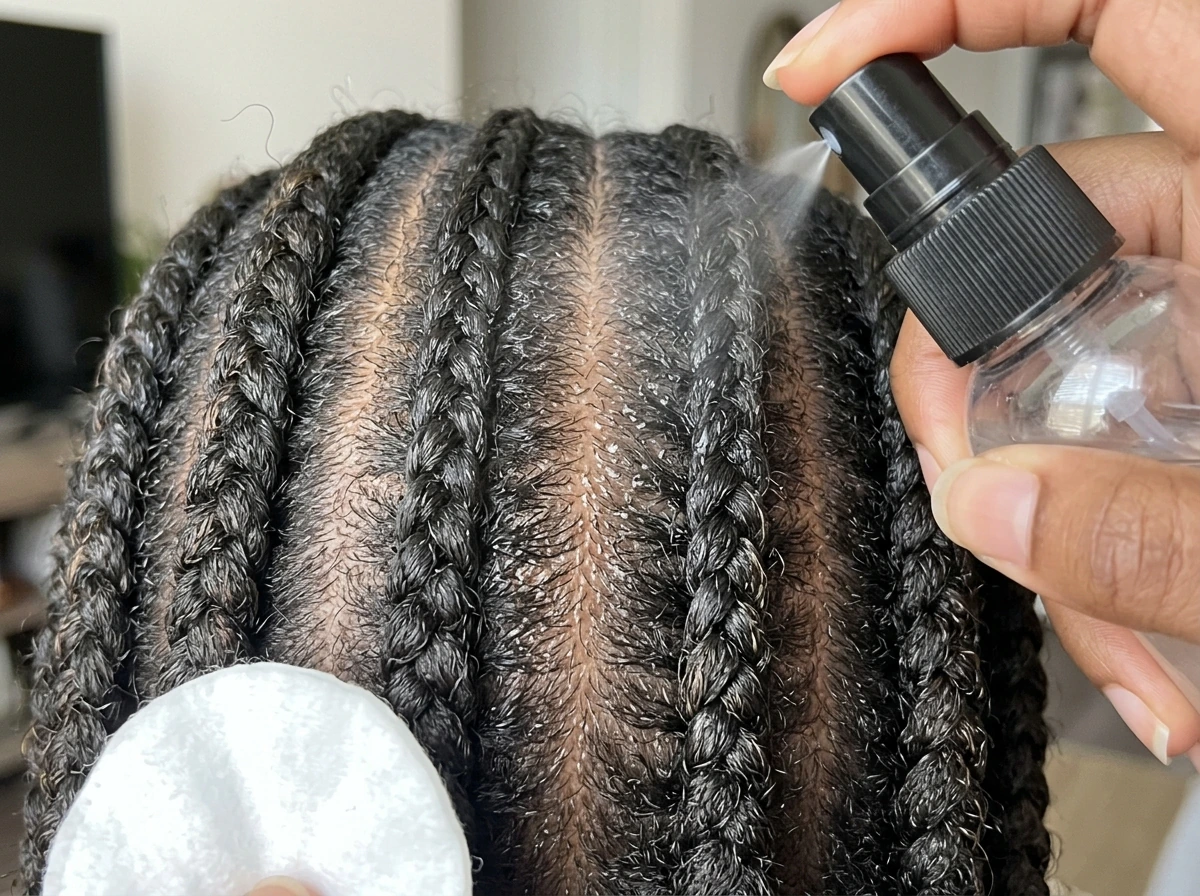
Baylor's dermatologist team is clear: wash and deep condition your hair before your braiding appointment. Going into a braid install with clean, well-moisturized, and detangled hair makes the process smoother and reduces the mechanical stress of getting braids put in. Knots and tangles during installation increase the force needed to braid each section, which adds tension you did not need. Detangle thoroughly from ends to roots before you sit in the chair.
Scalp and moisture care while braids are in
Your scalp does not take a break just because your hair is braided. Washing while your braids are in is not optional if you plan to wear them longer than a couple of weeks. Use a diluted sulfate-free shampoo applied directly to the scalp, rinse carefully, and allow the braids to dry fully before wrapping them. Product buildup and a dirty scalp can clog follicles and create an environment that is not great for hair health. A light, non-greasy scalp oil applied between the braids every few days can keep the scalp from getting overly dry without inviting buildup.
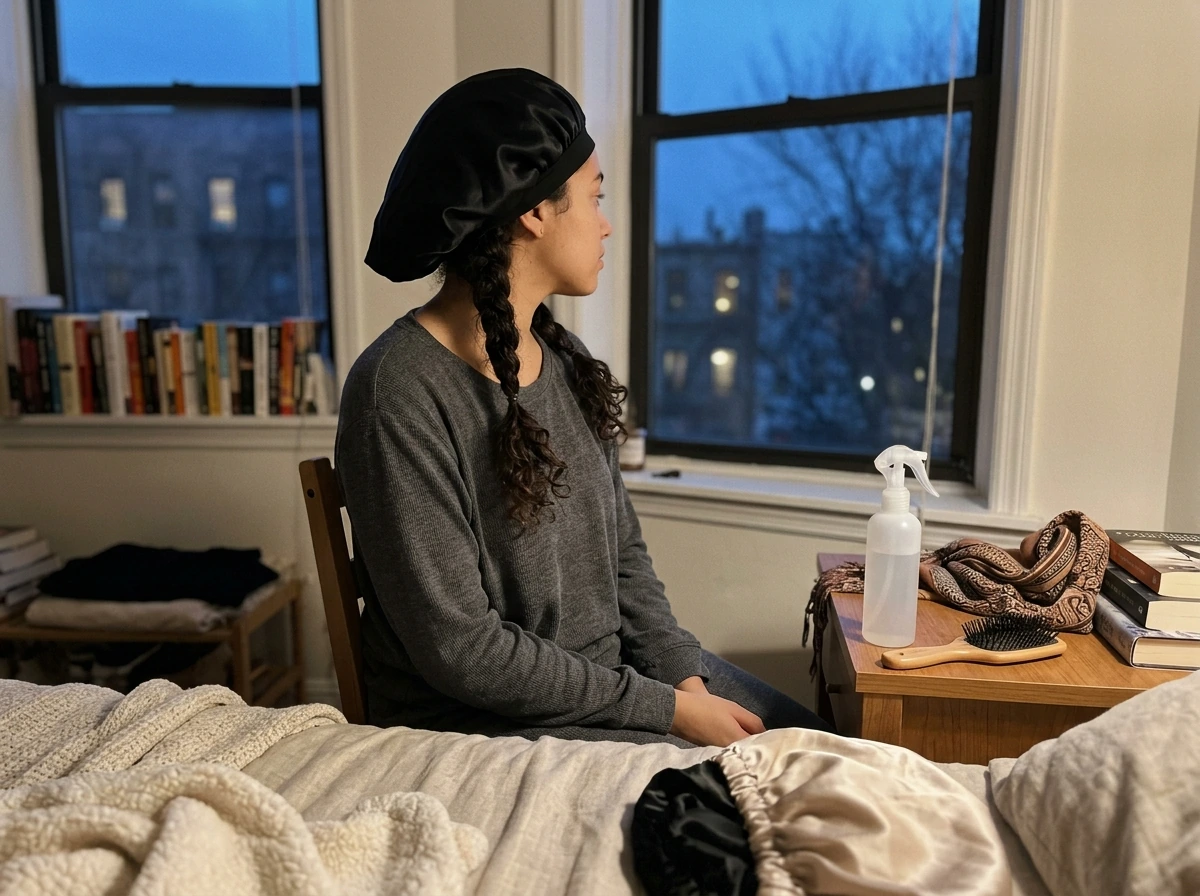
Avoid loading the length of the braid with heavy butters or products that attract lint and residue. Focus moisture where it matters most: the scalp and the first inch or two of your own hair at the root. At night, sleep with a satin or silk bonnet or on a satin pillowcase. Braiding your hair at night is mainly useful for reducing friction and breakage, which can improve length retention, but it does not change your natural growth rate. This reduces friction and frizz, and it keeps the braids intact longer without adding manipulation.
How long to keep braids in (and how to take them out without wrecking your progress)
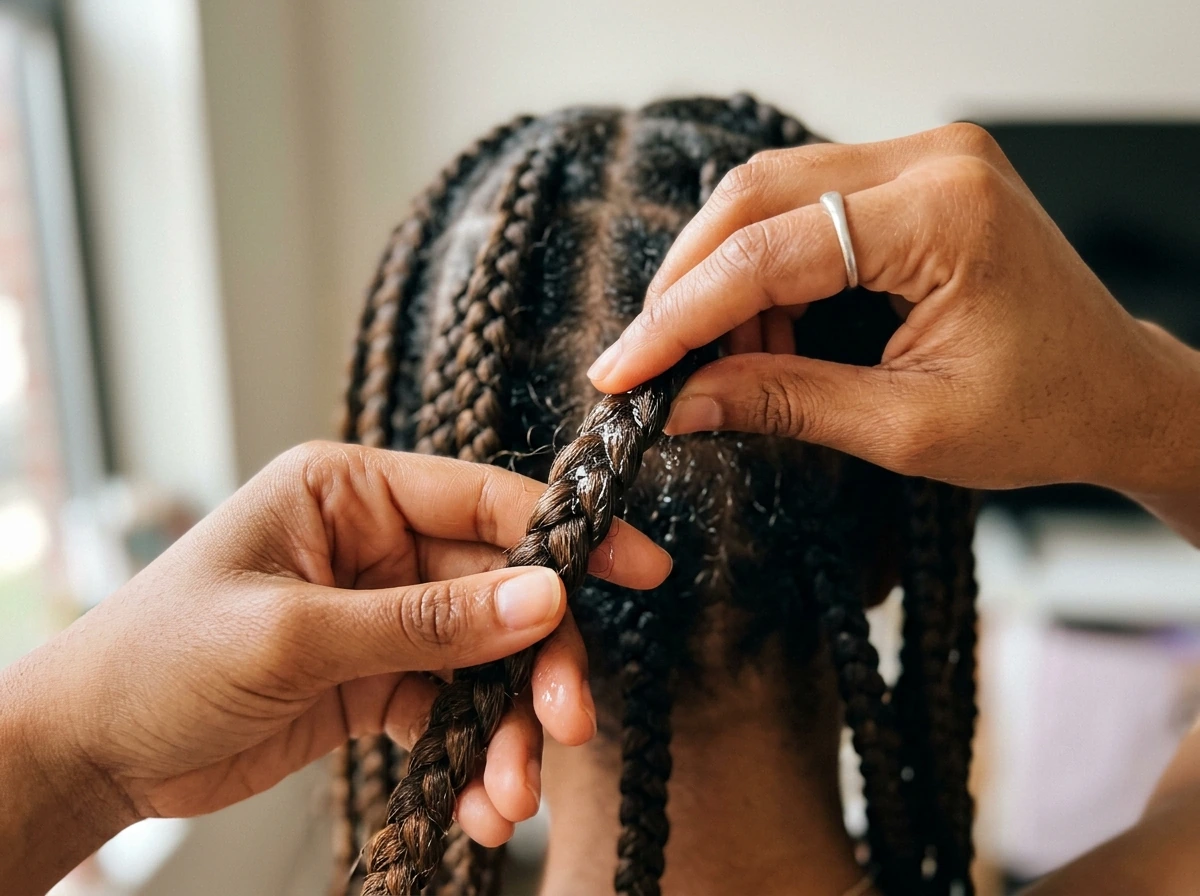
This is where a lot of retention gains get lost. University of Iowa Health Care recommends leaving braids in for no more than two to three weeks to reduce traction-related risk. Some sources and stylists suggest four to six weeks is workable for styles with lower tension if the scalp is being properly cleaned. What most experts agree on is that leaving braids in beyond six to eight weeks significantly increases the risk of matting, new growth tangling into the braid base, and breakage during removal.
The longer braids stay in, the more your new growth locks into the base of the braid, and taking them out becomes a detangling job rather than a simple removal. That is when most of the breakage happens: not during the wearing period, but during careless or rushed removal.
Removal and aftercare
- Work slowly and in sections. Do not rush or pull.
- Apply a detangling product, oil, or conditioner with slip to the base of each braid before unraveling.
- Unravel from the end up, not from the root down.
- Once the extensions or braid are out, use your fingers to gently separate any shed hair before reaching for a comb.
- Wash with a clarifying or sulfate-free shampoo to remove buildup from the weeks of wear.
- Follow with a deep conditioning treatment to replenish moisture before styling again.
- Give your scalp and hair at least a week to breathe between installs, more if your edges feel sore or look thin.
Baylor's guidance specifically mentions using a slow removal approach with detangling slip and washing with a sulfate-free shampoo after removal. That combination prevents the snap-off breakage that can undo weeks of retention work in one careless afternoon.
Who benefits most from braids for length retention
People with Afro-textured, coily, and kinky hair types tend to see the most visible benefit from protective styling, and the research backs this up. That is not because Black or textured hair grows faster in braids, but because the structural properties of highly curved hair (tighter curl pattern, higher porosity, more friction between strands) mean that loose styles involve more daily manipulation, more dryness, and more mechanical breakage. Braids remove most of those friction points in one step. The retention gains can be significant and consistent. do braids make your hair grow faster black male
Straight and wavy hair types can also retain length in braids, but the baseline breakage rate from daily wearing and styling is generally lower, so the relative difference is smaller. That does not mean braids are not useful for other hair types, but the transformation tends to be more dramatic for people whose hair was losing significant length to breakage before.
Realistic expectations matter here. If your hair grows 1 cm per month and you wear braids for eight weeks, the maximum new growth from those follicles is about 2 cm. What braids can do is make sure most of that 2 cm actually stays on your head instead of breaking off. Over six months of consistent protective styling with good scalp care, the cumulative difference can be several centimeters of retained length that would otherwise have been lost. That is real progress, even if the follicles were working at the same pace the whole time.
Pairing braids with the things that actually support growth
Braids are a retention tool, not a growth treatment. If your goal is to grow longer hair, the supporting work happens off-scalp and inside your body. A healthy scalp, adequate protein and iron intake, low chronic stress, and avoiding damage from harsh chemical treatments or excessive heat all influence whether your follicles stay in the anagen phase longer and produce strong, intact strands. Braids give those strands a better chance of surviving, but they cannot compensate for nutritional deficiencies or a scalp that is not being cared for.
If you are also exploring whether specific timing or nighttime braiding habits make a difference, those are worth looking into as part of your overall routine. The bigger picture is always the same: braids are one useful tool in a set that also includes scalp health, moisture balance, gentle handling, and honest expectations about what biology will and will not do on command.
A quick side-by-side: braid types compared
| Style | Tension Level | Edge Safety | Moisture Retention | Best For |
|---|---|---|---|---|
| Knotless box braids | Low to medium | High (no knot anchor) | Good | Most hair types, sensitive edges |
| Traditional box braids | Medium to high | Moderate (knot at base) | Good | Thicker, stronger hair at roots |
| Two-strand twists | Low | High | Excellent | Fine edges, high breakage patterns |
| Cornrows (loose) | Low to medium | Moderate to high | Moderate | Keeping hair stretched, shorter styles |
| Feed-in braids | Low to medium | High (gradual weight) | Good | Edges, hairline styles |
| Micro braids | High | Low (high density, weight) | Moderate | Not recommended for long-term retention |
If retention and edge safety are your priorities, knotless braids, two-strand twists, and feed-in styles are the most practical options based on both expert guidance and the traction alopecia research. Micro braids and very tight cornrows with heavy extensions carry the highest risk profile and are best used sparingly, if at all, when your goal is long-term length.
FAQ
Does braiding actually make hair grow faster, or just make it stay longer?
No. Braids can help you keep the length you already have by reducing day-to-day breakage, but they do not change the monthly growth rate of your follicles. You can see “faster progress” because less snapping off makes new growth more likely to stay visible.
Can braids ever make your hair seem like it’s growing slower?
Yes, but it depends on retention. If your braids are worn too tight or too long, breakage and traction can outweigh any protection, so your overall length may not improve. Many people maintain length with proper tension, then lose some if edges start thinning or the style is removed late.
What signs mean the braids are too tight to support hair growth/retention?
Watch for scalp pain or a visibly pulled-up hairline during the install, not just soreness after. Pain at the edges, redness that doesn’t fade, or bumps that worsen can signal excessive tension, even if the braids look neat.
What should I do if my edges start thinning while wearing braids?
If you notice your edges getting shorter or thinner between braids, the priority is stopping tension and letting the area recover. Re-braiding the same stressed hairline repeatedly is a common reason traction becomes persistent. A derm check is especially important if there is a widening part, shiny skin, or persistent fringe thinning.
Why do I get breakage when I take braids out, even if they were protective?
Generally, yes. If your hair tangles or matts at the braid base, removal is where most breakage happens. Using a slow removal process with detangling slip, working section by section, and washing after removal reduces snap-off compared with rushed pulling.
How often should you wash braids, and does it affect growth?
Don’t skip scalp cleansing. If you’re wearing braids longer than a couple weeks, wash the scalp with a diluted sulfate-free shampoo, rinse thoroughly, and fully dry the braids before covering them again. Buildup can irritate the scalp and increase shedding, which undermines retention.
Do hair extensions in braids change the risk to my edges?
If your braids are done with extensions, the weight can affect retention through tension load at the root. Choose lighter hair and avoid very small sections that make extensions heavier per square inch of scalp. Even “protective” styles can contribute to edge thinning if the added weight is too much.
How long is it safe to leave braids in for length retention?
Consider keeping wear time short if you have fine edges, a history of traction alopecia, or you notice any tension symptoms. A common safety range is about two to three weeks for many people, and longer than six to eight weeks increases risks like matting and removal breakage.
Are knotless braids better for growth/retention than box braids?
Knotless braids often distribute weight more evenly at the root because they start with your natural hair before adding extensions. For people with fine hair at the edges or prior tension issues, that can reduce the likelihood of pulling compared with traditional installs that begin with a knot at the base.
Are micro braids and very tight cornrows worse for hair growth?
They are usually higher risk because the smaller the braid and the heavier the extension load, the greater the tension per area. Micro braids or very tight cornrows with heavy extensions are more likely to stress follicles over time, especially along the front hairline.
Why do my braids look like they made my hair longer even when I’m not sure it really grew?
Shrinking is normal with coily and kinky hair when hair is dry and unstretched. Braids can make the style look longer because the hair is held in a stretched shape, so visible length change may be partly “stretch,” not additional new growth.
If braids don’t speed growth, what actually helps my hair produce stronger, longer strands?
Yes, diet and scalp health still matter because braids cannot correct deficiencies that weaken strands. Adequate protein, iron, and overall nutrition support strong hair shafts, and a healthier scalp environment helps follicles continue producing hair effectively.
Next Article
Does Braiding Your Hair at Night Help It Grow?
Does nighttime braiding boost growth or mainly prevent breakage? Learn evidence-based sleep tips for length retention.