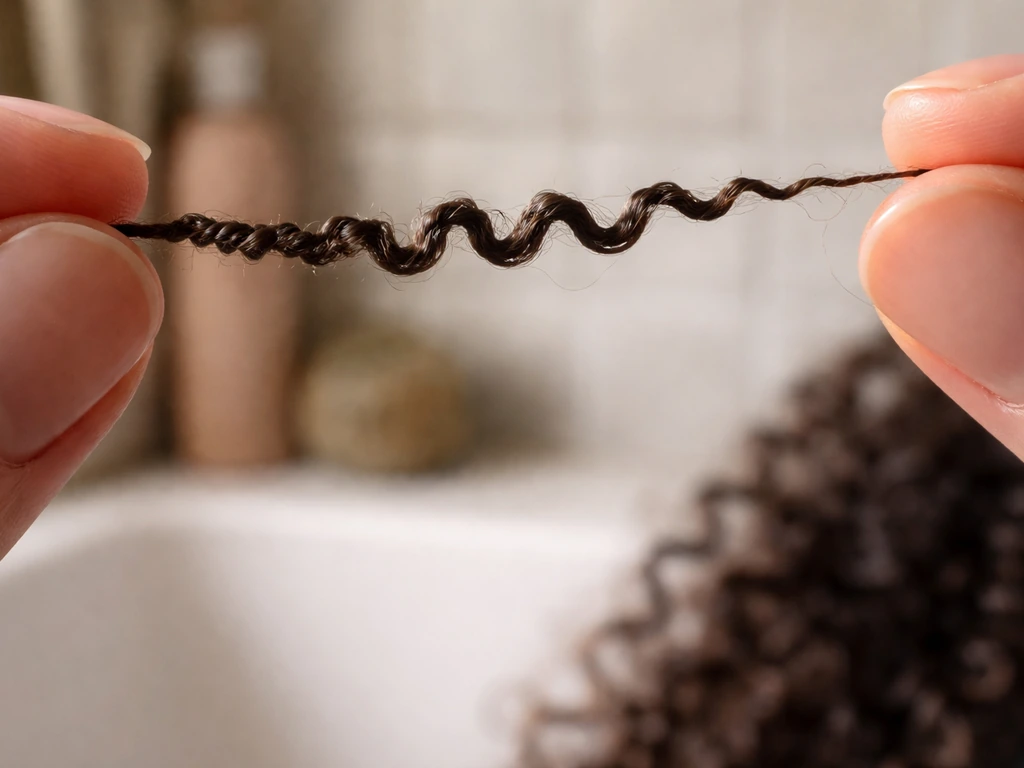
Getting a perm does not make your hair grow curly permanently. The perm changes the structure of the hair that's already on your head, but new hair growing from your follicles comes in with your natural pattern, the same as always. So yes, right after a perm your hair looks curly all over, but as weeks pass you'll see straight (or naturally textured) roots coming in while your permed ends stay curled. That line of demarcation is the most telling sign that your growth pattern hasn't changed at all.
When You Get a Perm, Does Your Hair Grow Curly?

Simone Okonkwo
31 May 2026
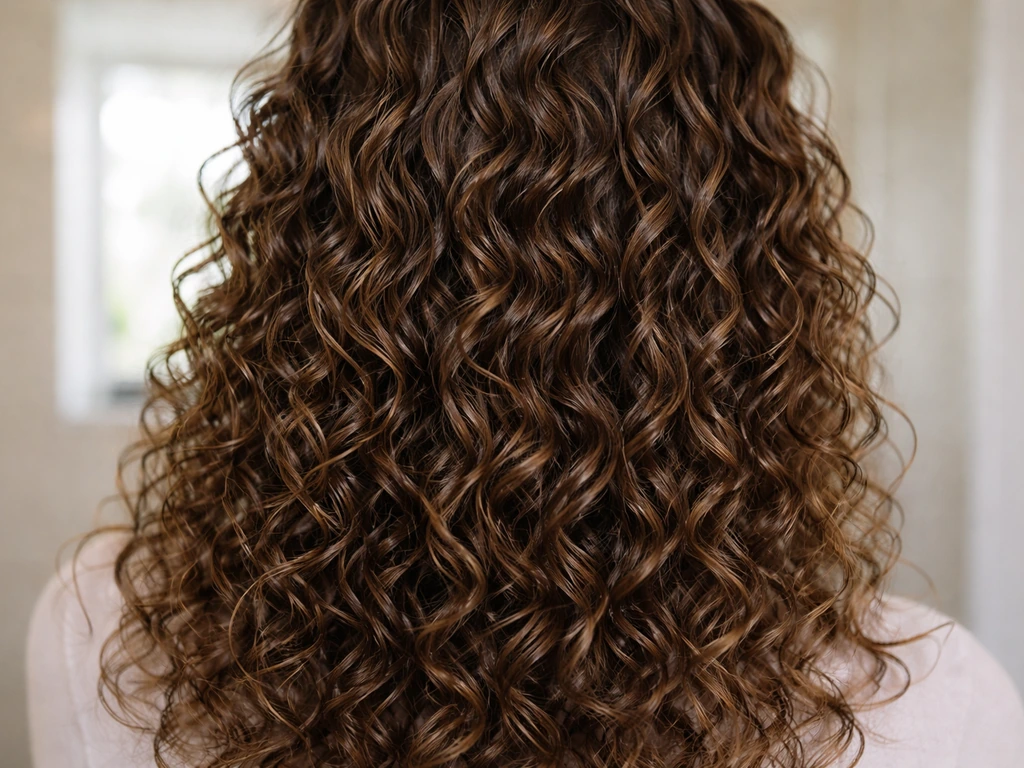
How a perm actually creates curl
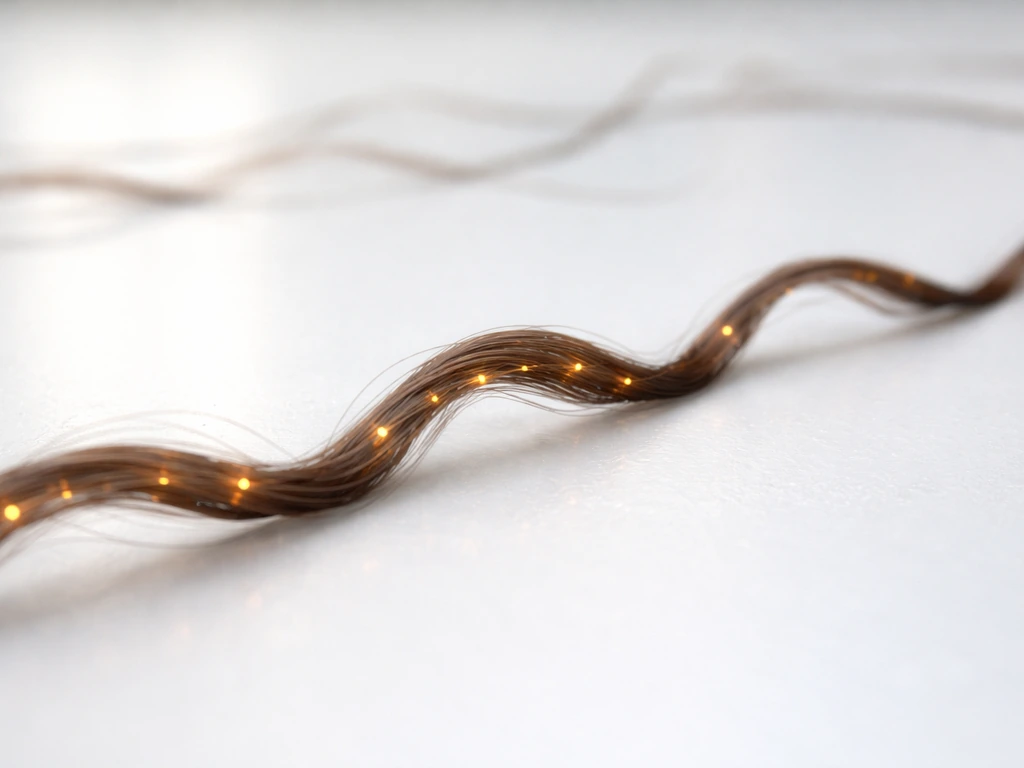
A perm works through a two-step chemical process targeting the disulfide bonds inside your hair shaft. Disulfide bonds are the strong sulfur-to-sulfur links that give each strand its natural shape and strength. The stylist applies a reducing agent (usually a thioglycolate solution) called the waving lotion, which breaks those bonds and temporarily softens the hair so it can be molded around a rod. Once the hair is set into the rod's shape, a neutralizer is applied. The neutralizer is an oxidizing agent that rebuilds the disulfide bonds in the new curled position, locking in the shape.
The key thing to understand here is that this chemistry is happening entirely on the hair shaft, the visible strand sitting above your scalp. Your follicle, the living structure underneath the skin that actually produces new hair, is not touched by any of this. Hair is composed of the hair shaft (visible part) and the hair follicle (under the skin); the follicle is the primary structure from which hair grows. The perm has no pathway to reach the follicle and rewrite how it forms hair. So every millimeter of new growth that comes in after your perm service will have your original, pre-perm texture.
Will a perm change your natural growth pattern long-term?
No, and this is one of the biggest misconceptions I see people carry into a perm appointment. The curl a perm creates will literally hold only as long as that treated hair remains on your head. Once the permed hair is cut or broken off and replaced by new growth, there's no lasting change to how your hair grows. The disulfide bond restructuring doesn't affect the follicle's genetic blueprint. Your growth pattern is determined by the shape of the follicle itself, whether it's round (producing straight hair), oval (producing wavy hair), or tightly curved (producing coily or kinky hair), and a topical chemical service simply cannot alter that architecture.
To put it plainly: if your natural hair is straight, it will grow in straight under your permed ends. If your natural hair is coily or kinky, it will keep growing in that pattern at the root. The perm is a semi-permanent restyle of the existing strand, not a reprogramming of the follicle.
What to expect right after a perm vs. weeks and months later
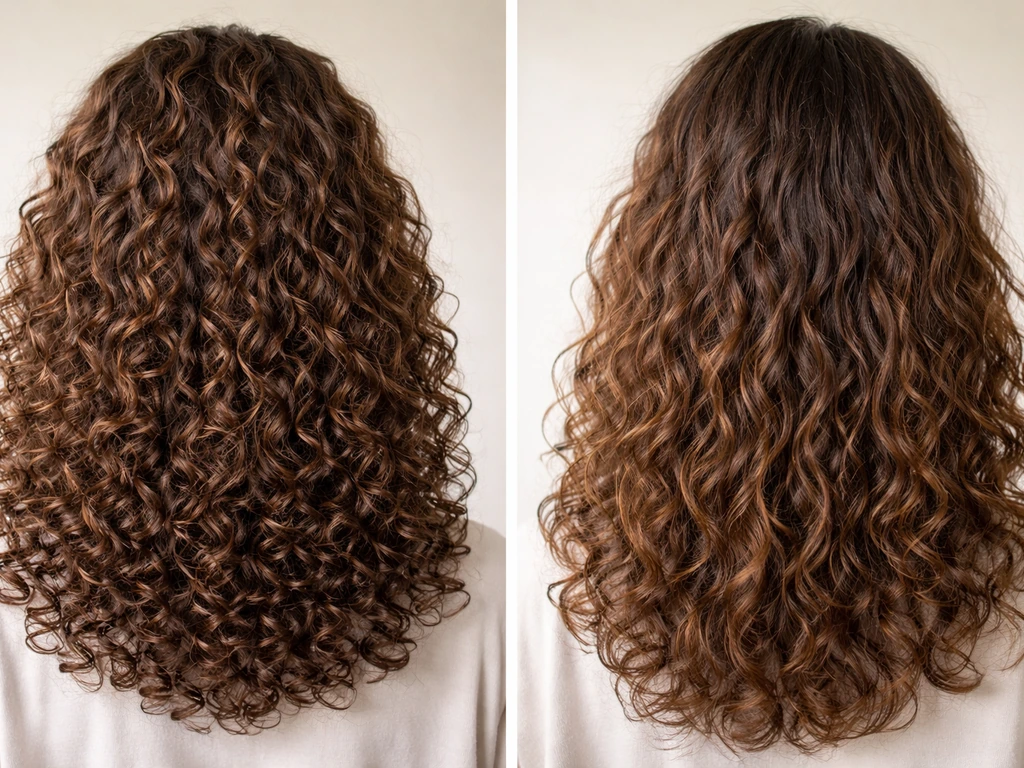
Immediately after the service
Right after a perm, your entire head of hair is curled, from root to tip. Everything looks uniform because all the hair that was present during the service was treated. This is when perms look their best and most consistent. Most stylists will tell you to avoid washing for 48 to 72 hours to let the bonds fully stabilize, and to skip tight styles that could distort the curl pattern while it sets.
Four to eight weeks later
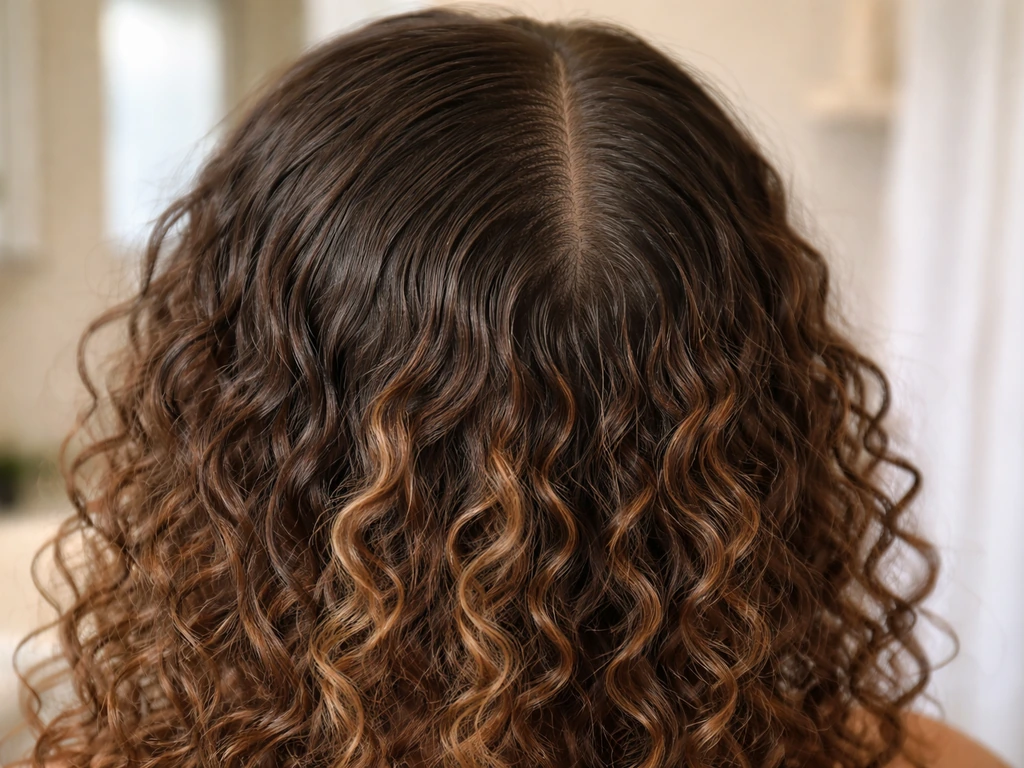
Hair typically grows about half an inch per month, so by the four-to-six-week mark you'll start seeing a noticeable demarcation line where your natural texture is growing in at the root and the permed curl starts further down the shaft. If you grow your hair out after a perm, the new growth will come in at your natural texture, so your curls will mainly stay in the previously treated ends.
This is completely normal, but it's also the moment that surprises people who assumed the curl would carry through. The contrast is most obvious on people with naturally straight hair, where the roots look distinctly flat or flat-ish against the spiraled ends. On naturally textured hair, the line is often subtler but still visible.
Three to six months and beyond
By this point, you're typically looking at an inch or more of new growth. If you haven't done a touch-up, the permed ends may also be losing some definition as they age, dry out, or experience mechanical damage. The overall look becomes a blend of your natural pattern at the root and the fading curl at the ends, which reads as messy to some people and charmingly lived-in to others. If maintaining the perm curl is your goal, most stylists recommend a touch-up every three to four months.
How hair health affects what you actually see
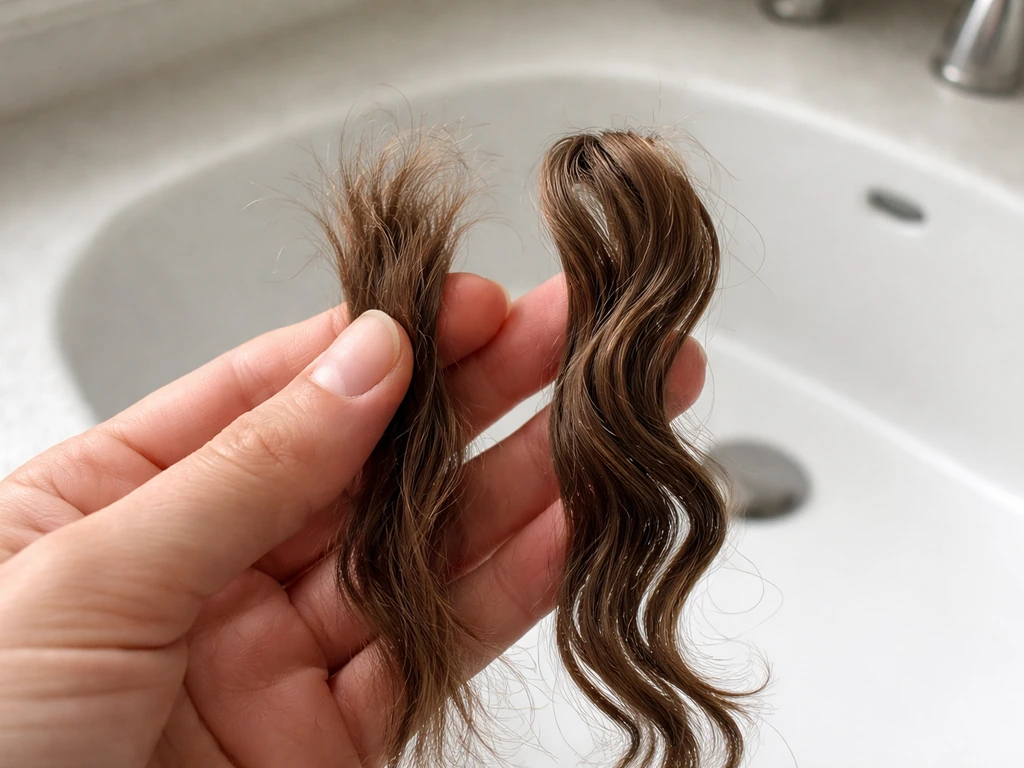
One thing I want to be really honest about: how fast your hair appears to grow and how well your length is retained has a lot to do with how much breakage you're experiencing, not just your actual growth rate. Permed hair has been chemically processed, which means the disulfide bonds have been broken and reformed. That process, even when done correctly, leaves the hair shaft more porous and more susceptible to dryness, brittleness, and mechanical damage from combing, heat styling, and friction.
If your permed hair is constantly snapping off at the ends, you may feel like it's not growing, when in reality it's growing at a normal rate but you're losing length just as fast at the other end. This is the breakage-versus-growth problem, and it's incredibly common. Keeping permed hair moisturized, minimizing heat use, protective styling where possible, and using protein treatments periodically can make a dramatic difference in how much length you actually retain.
- Deep condition every 1 to 2 weeks to combat the porosity that perms create
- Use a wide-tooth comb or finger-detangle when hair is wet and saturated with conditioner
- Minimize direct heat styling, especially over already-processed ends
- Incorporate a light protein treatment monthly to help reinforce weakened bonds
- Sleep on a satin or silk pillowcase (or use a satin bonnet) to reduce friction breakage overnight
When your ends are the only curly part: your options
If you're at the stage where your roots are your natural texture and only your ends hold the perm curl, you essentially have three paths: get a touch-up, trim the permed ends and go back to your natural texture, or find styling methods to blend the two. There's no universally right answer, it depends on your hair goals and how much chemical processing you're willing to do.
- Touch-up service: A stylist applies the perm solution only to the new growth (similar to a relaxer touch-up), being careful to avoid overlapping onto already-processed ends. Overlapping can cause severe damage and breakage at the line of demarcation, so this really needs a professional.
- Trim the ends: If you're over the perm and want your natural texture back, trimming the permed ends gradually (or doing a big chop if you want a faster reset) is the healthiest approach.
- Curl-refreshing products: Mousse, curl creams, or setting sprays can help re-activate a drooping perm curl without a full chemical service. These are great for extending time between touch-ups.
- Flexi-rods or perm rods on new growth: You can use heatless or low-heat rod sets on your natural growth to temporarily blend it with the permed ends while you decide your next move.
Perms, textured hair, and what's different for Black hair
This is where context really matters, and I think it's important to be specific. In Black and textured hair communities, the word 'perm' has historically referred to a chemical relaxer, a service that straightens naturally coily or kinky hair using a lye or no-lye formula. In the mainstream beauty industry (and in cosmetology textbooks), 'perm' typically refers to a wave or curl service applied to straight or wavy hair. These are chemically opposite services. One breaks and resets bonds to add curl, the other breaks and resets bonds to remove it. The confusion between these two definitions is genuinely common, and it's worth knowing which one you're discussing.
If you have naturally coily or kinky hair and you're asking whether a curl perm would make your hair grow in curly, the answer is still no, and the considerations are actually more complex. Highly textured hair already has a significant amount of natural curl, so a curl-enhancing perm on top of that pattern can cause different results than it would on straight hair.
Stylists often use larger rods on textured hair to loosen rather than add curl, but the chemical process still only treats the existing strand. New growth continues to come in at your natural coily pattern. The demarcation line on highly textured hair can also be a weaker point in the strand and more prone to breakage if not carefully managed.
For people transitioning from relaxed to natural hair (or growing out a curl perm), the demarcation between two different textures on the same strand is a real structural vulnerability. That junction between treated and untreated hair needs extra moisture, gentle handling, and minimal manipulation to avoid snapping at the weakest point. If you're in that phase, understanding how your natural curl pattern actually grows can help you plan your transition, and knowing whether curly hair can reach the lengths you're hoping for matters for long-term planning too. If you also want to understand how does curly hair grow from the root upward, that can clarify what to expect as your permed ends age.
| Hair Type / Situation | What Perm Does | New Growth Pattern | Key Concern |
|---|---|---|---|
| Naturally straight hair | Adds curl from root to tip at time of service | Grows in straight | Visible root demarcation within 4 to 6 weeks |
| Naturally wavy hair | Enhances or tightens curl pattern | Grows in wavy | Texture mismatch at root is subtler but still present |
| Naturally coily or kinky hair (curl perm) | Loosens or redefines curl shape on existing strand | Grows in at natural coily/kinky pattern | Demarcation line is a breakage-prone weak point |
| Relaxed (chemically straightened) hair | Relaxer removes natural curl (opposite of perm) | Grows in at natural textured pattern | New growth contrast can cause breakage at line of demarcation |
The bottom line on perms and growth
A perm gives you curly hair on the strands that were treated, full stop. Your follicles keep doing exactly what they were always going to do, growing hair in whatever pattern your genetics programmed. If you want to maintain curly hair throughout your length, you'll need either regular touch-ups or a way to blend your natural texture with the permed ends. The real work of keeping permed hair looking great and growing long comes down to moisture, minimal damage, and managing the transition zone between your natural root and the treated ends carefully. Get those things right, and you can absolutely have healthy, length-retaining permed hair. Just don't expect the chemistry to change what's happening inside your follicle.
FAQ
If I perm my hair, will my roots eventually become curly too?
Your new growth will follow your natural pattern, so if you want curls to look consistent from root to tip, you typically need periodic re-treatment, not just one perm. Another option is blending styles that add definition to the roots (for example, curl-forming creams or gels) while keeping the ends moisturized and protected.
How long until I see the straight roots line after a perm?
If your natural hair is straight, the roots will grow in straight or only slightly textured, even if the perm ends stay curled. When you see a straight-to-curled boundary, that boundary is where the untreated growth begins, and it will continue moving upward as new hair grows.
Can a perm make my roots curl temporarily even though they wont stay curly long-term?
Yes, but it will not be from the perm changing the follicle. The “curl at the roots” look can happen because recently treated hair can still be loosely set, or because styling products create temporary curl clumping. True root curl still won’t become permanent unless you re-treat the new hair.
What if I feel like my perm isn’t growing out or my length isn’t increasing?
A big reason your hair may feel like it is not “growing” is breakage or shedding from compromised ends, not a slower growth rate. Watch for short, frizzy pieces, thinning at the ends, or visible length loss between months, which points to damage that needs moisture, gentler handling, and sometimes a protein and conditioning routine.
When is the best time to get a touch-up after a perm?
Touch-ups are usually considered when the natural texture becomes noticeably different, often around the 3 to 4 month window. If your hair is getting dry or snapping, doing a touch-up too early can worsen damage, so many stylists prefer waiting until the transition zone is well-defined and the hair can still tolerate the next chemical process.
Does the transition zone between permed ends and natural roots need special care?
It can be, especially if you use heat, brush aggressively, or apply heavy friction from hats or collars. Plan for less manipulation at the transition zone (the area where untreated growth meets treated ends), detangle with slip, and consider protective styles to reduce snapping where the strand is weakest.
If I trim or cut my hair after a perm, will my curls last longer or shorter?
If you cut a lot off soon after the perm, you might remove the best-defined curls and shorten the amount of permed hair you can see, which can make the overall look change quickly. A trim can still help if ends are breaking, but it will affect how long your “curled” length lasts visually.
What should I do if my perm curls start looking flat or undefined?
Sometimes it is, especially if your curl definition drops before you expect it due to dryness, buildup, or mechanical disruption. A quick “refresh” with a water-based leave-in plus gel can re-form curl clumps, but if the ends are mushy, overly dry, or rough, you may need deeper conditioning and less heat before styling.
I heard “perm” can mean different things. How do I make sure I’m getting the right service?
In Black and textured-hair communities, “perm” may mean a straightening or relaxing service, which is chemically different from a curl/wave perm. If your goal is curl and you meant a curl perm, confirm with your stylist which service is being performed, since a relaxing formula targets curl removal rather than adding shape.
Next Article
How Does Curly Hair Grow and Why Length Can Look Stuck
How curly hair grows, shrinkage vs real growth, breakage vs shedding, and length-retention tips for textured hair.