
Wavy caps (Psilocybe cyanescens) grow primarily on wood chips and mulch, and your best bet for finding them is checking mulched garden beds, park paths, and urban tree pits in cool, wet autumn weather. If the temperature is dropping, rain has been falling, and there's fresh wood-chip mulch nearby, you're in the right conditions.
Where Do Wavy Caps Grow? Habitats and Best Timing

Simone Okonkwo
13 Jun 2026
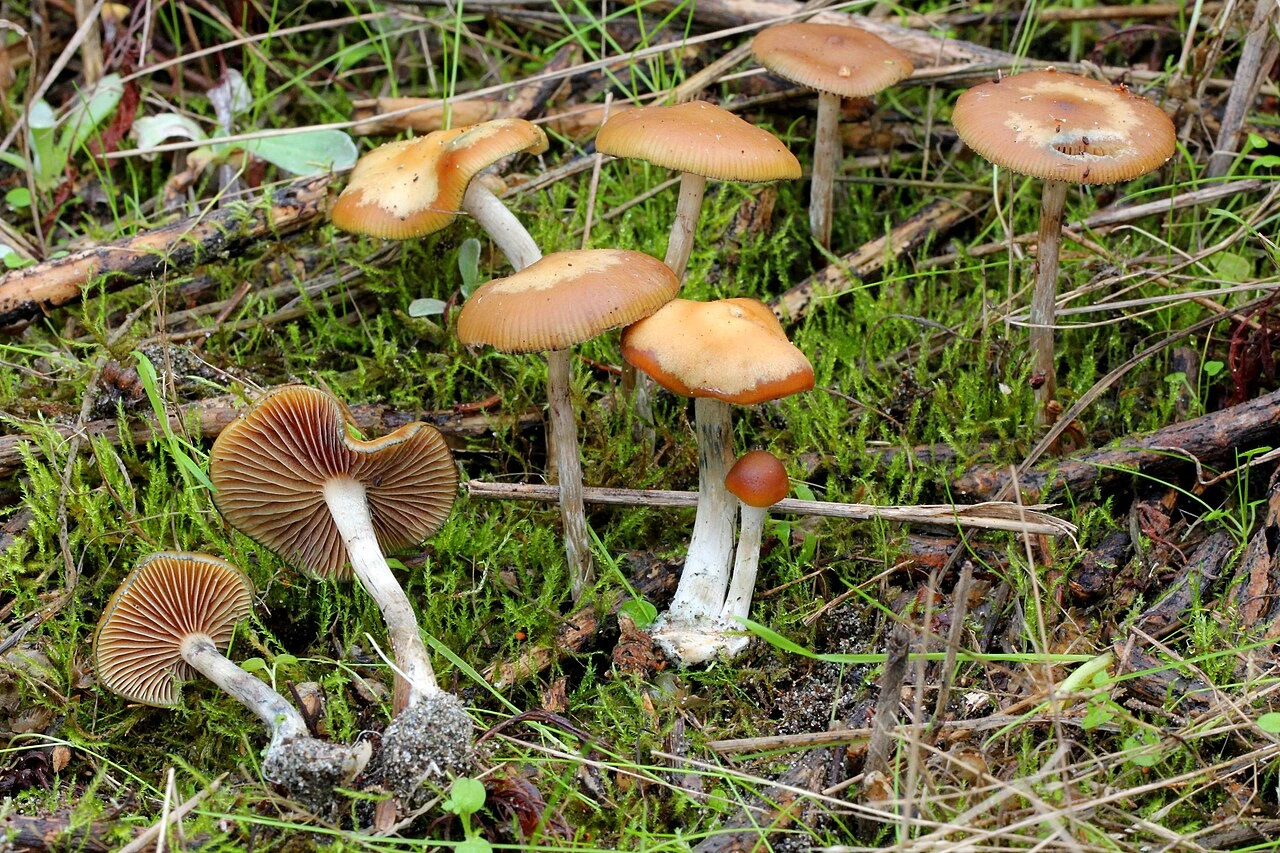
What people mean when they say "wavy cap"
The term "wavy cap" almost always refers to Psilocybe cyanescens, a wood-loving psilocybin mushroom named for its distinctively undulating, wavy cap margin. It's a small-to-medium brown mushroom, and foragers seek it out because it's one of the more reliably identified psilocybe species once you know its habitat and key traits.
A few related species sometimes get lumped under similar names, so it helps to know the distinction. Psilocybe azurescens (sometimes called the flying saucer mushroom) is closely related, also uses wood-chip substrate, and is often discussed alongside P. cyanescens in foraging circles. Psilocybe allenii is another close relative that's visually similar but notably lacks the wavy cap margin that gives P. cyanescens its common name. And Psilocybe stuntzii and Psilocybe baeocystis are Pacific Northwest species that share the same mulch/wood-chip habitat. If you're in the Pacific Northwest and finding small brown mushrooms in bark mulch, any of these could be in play, so habitat and physical traits both matter.
Where wavy caps actually grow
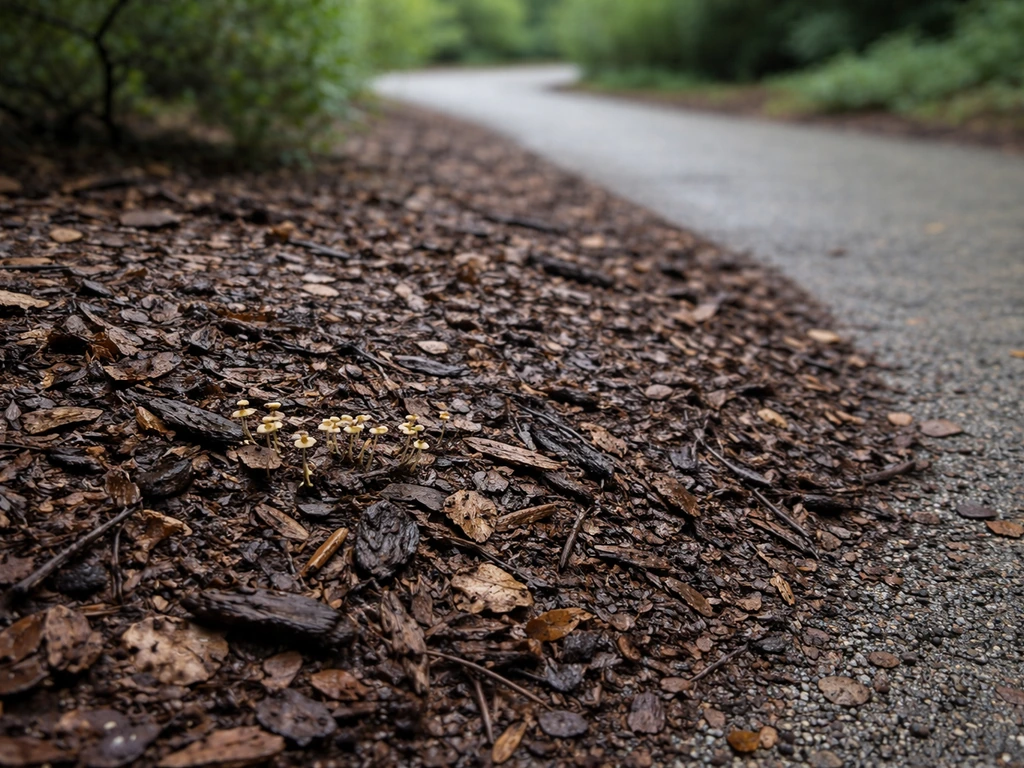
The defining habitat clue for P. cyanescens is wood chips and lignin-rich debris. This isn't a meadow mushroom or a forest-floor species in the traditional sense. It colonizes decomposing woody material, and it's followed the human habit of spreading wood-chip mulch everywhere. That's actually how this species expanded its range: its mycelium spread through wood-chip distribution networks, hitching rides to new cities and gardens.
The most productive spots to check, in rough order of reliability:
- Mulched plant beds along roadsides, in parks, and in botanical gardens, especially recently refreshed ones
- Urban tree pits filled with wood-chip mulch in city streets and parks
- Perimeter borders of mulched ornamental beds in cemeteries and public gardens
- Wood-chip paths in parks and nature reserves
- Areas near where tree-trimming trucks have dumped fresh chipped wood (roadside drops are a real forager tip)
- Garden beds under shrubs like rhododendrons and rose bushes, especially where bark mulch is thick
P. cyanescens is genuinely an urban and suburban mushroom. One of the most striking documented finds was more than 100,000 individual mushrooms found in a single patch at a racetrack in England, all growing on wood-chip mulch. This is a species that can carpet a mulched bed when conditions align. Natural wild habitat is actually poorly understood because the species spread so widely via human wood-chip use that its original native range is uncertain.
Moisture, shade, and soil
Wavy caps want moisture and cool air. They do well in partially shaded spots where mulch stays damp, and they struggle in exposed, dry conditions. You won't find productive patches on sun-baked beds that dry out quickly. Beds near buildings, under trees, or along north-facing borders that hold moisture longer are better bets. The substrate is the key factor, not the surrounding plant species.
When wavy caps come up: seasons and timing
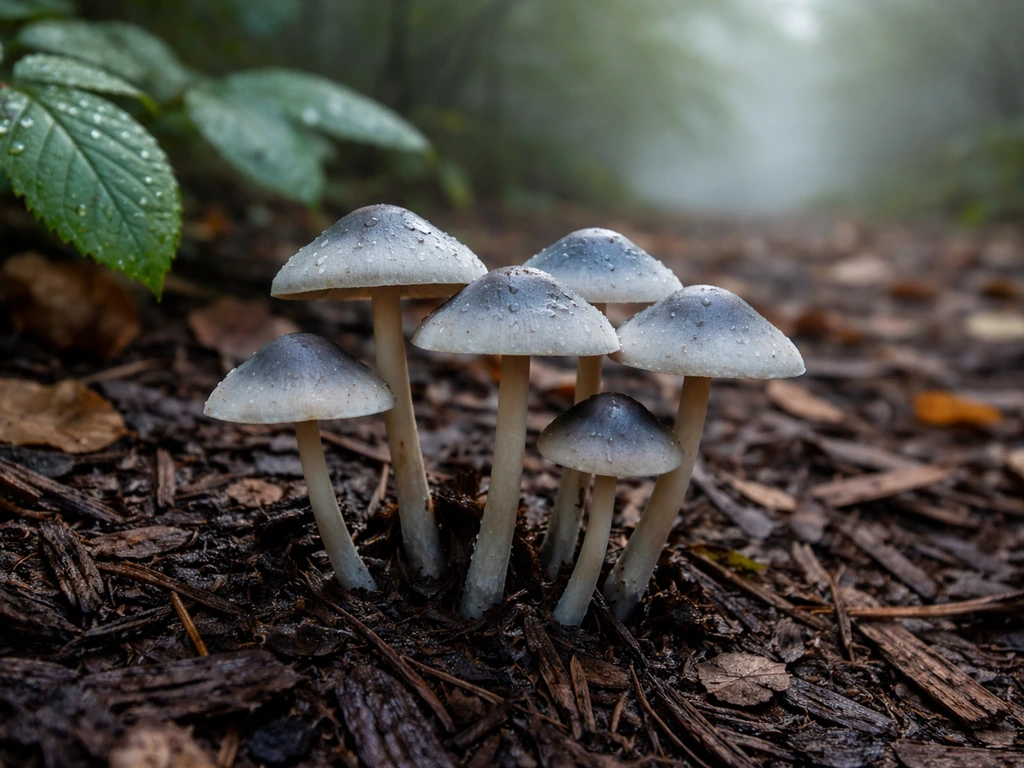
P. cyanescens is a cold-fruiting species. This is important: it's not a spring or summer mushroom in most climates. The trigger is the arrival of cool, wet autumn conditions. In practical terms, think October through December in temperate regions of the Northern Hemisphere, though this shifts depending on your latitude and local climate.
The conditions that reliably trigger fruiting:
- Daytime temperatures dropping consistently into the 50s°F (10–15°C range)
- Recent rainfall soaking the wood-chip substrate
- A stretch of cool, damp nights following a wet spell
- Fresh or recently turned mulch that's been in place long enough for mycelium to colonize (weeks to months)
If you're in a warmer climate, fruiting pushes later into the year or into winter. In the Pacific Northwest (one of the most documented regions for this species), the classic window is mid-autumn through early winter. In milder coastal climates you might see activity into January. Hot, dry summers are essentially dead time for this species. Don't bother in July.
Field ID: how to confirm you've got the right mushroom
Identifying P. cyanescens in the field requires checking several features together, not just one. No single trait is enough on its own.
- Cap shape and margin: The cap is caramel to chestnut-brown when moist, fading to pale yellow-brown as it dries. The defining feature is the undulating, wavy margin (the edge of the cap rolls and ripples noticeably). Young caps are convex, flattening with age.
- Cap surface: Smooth and slightly hygrophanous (color-changing as moisture level changes). This is a classic trait of psilocybe species generally.
- Gills: Attached, brownish-gray turning darker as spores mature.
- Spore print: Dark purple-brown to nearly black. This is a critical check. Take a spore print before eating anything.
- Bluing reaction: When you bruise or damage the flesh, stem, or cap, a blue or blue-green staining appears within a few minutes. This is caused by psilocin oxidizing. No blue staining is a red flag that you may have a different species.
- Substrate: It should be growing directly on or very near wood chips or woody debris, not from soil alone.
- Smell: Farinaceous (floury or starchy) smell is often noted, similar to other psilocybe species.
The look-alike you need to know: Galerina marginata
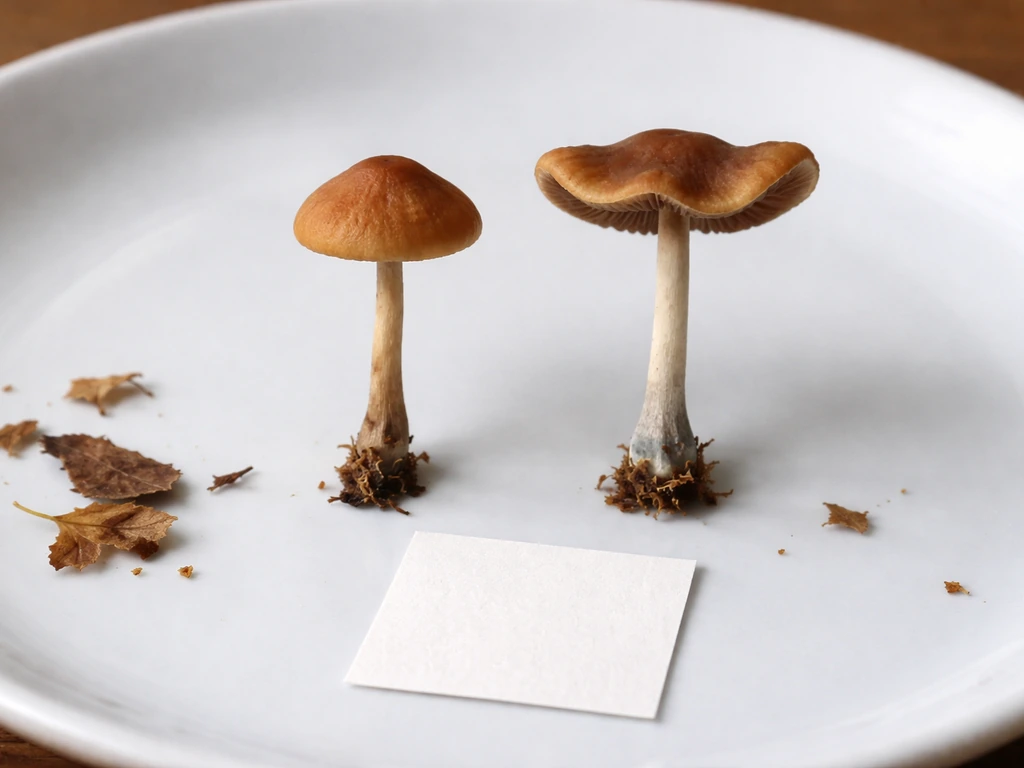
Galerina marginata, commonly called the funeral bell or deadly Galerina, is the primary deadly look-alike and deserves specific attention. FungiAtlas describes Galerina marginata as blank" rel="noopener noreferrer">deadly poisonous due to amatoxins, which are the same lethal toxin type found in the Death Cap. Galerina marginata, the “funeral bell” or “deadly Galerina,” is extremely poisonous due to amatoxins and can be mistaken for wavy-cap species on similar woody substrates fatal liver and kidney failure. It's a small brown mushroom that can grow on the same woody substrates, sometimes even in mixed clusters with psilocybe species. It contains amatoxins, the same lethal toxins found in the Death Cap (Amanita phalloides), and they are not destroyed by cooking. Eating even a small amount can cause fatal liver and kidney failure.
| Feature | Psilocybe cyanescens (wavy cap) | Galerina marginata (deadly Galerina) |
|---|---|---|
| Cap margin | Distinctly wavy/undulating | Smooth, not wavy |
| Bluing when bruised | Yes, blue-green staining | No bluing |
| Spore print color | Dark purple-brown to black | Rusty brown |
| Toxicity | Psilocybin/psilocin (not acutely lethal) | Amatoxins (potentially fatal) |
| Substrate | Wood chips/mulch | Wood chips/decaying wood (overlapping) |
| Veil remnants | Faint fibrous veil, often absent | Often a distinct ring (annulus) on stem |
Always take a spore print. A rusty-brown spore print instead of dark purple-brown is a clear signal you're looking at Galerina or another dangerous species, not a wavy cap. The bluing reaction is another key differentiator, but it's not foolproof on its own because bluing intensity can vary. Use both checks together.
What to do when you find them
If you've confirmed your ID through multiple traits (wavy margin, bluing, dark purple-brown spore print, wood-chip substrate, correct season), here's how to handle what you've found responsibly.
- Harvest selectively: Don't strip an entire patch. Take what you need and leave the rest so the mycelium can continue fruiting. Established patches can fruit year after year.
- Use a basket or paper bag, not a sealed plastic bag. Mushrooms need airflow or they degrade quickly from moisture buildup.
- Cut at the base with a clean knife rather than pulling, to minimize substrate disturbance.
- Clean in the field: brush off any wood chips or debris with a soft brush before bagging.
- Store in the fridge in a paper bag or wrapped loosely in paper towels inside a container. Fresh mushrooms stay good for a few days; dry them for longer storage.
- For drying: use a food dehydrator at low heat (around 95–115°F) until fully crisp. Air drying alone in humid climates often isn't sufficient.
- Note the location and date. A productive patch in the right conditions often fruits again the following autumn.
Know the legal status before you go
Psilocybe cyanescens contains psilocybin, which is a controlled substance in many countries and most U.S. states as of mid-2026. The legality of possessing, harvesting, or consuming these mushrooms varies significantly by jurisdiction. Some cities and states have decriminalized possession; others have not. Check the specific laws where you are before you forage. This is a genuine legal consideration, not just a formality.
Safety first: when to ask for help
Mushroom poisoning in the U.S. most commonly happens not because someone was reckless but because they were confident in an incorrect ID. Novice foragers are the most common victims, and most poisonings come from eating something they genuinely believed was safe. Cooking does not neutralize amatoxins. A mushroom that looks right and smells fine can still kill you if it's the wrong species.
- If you're not 100% certain of your ID, don't eat it. Take photos, get a spore print, and bring a physical sample to a local mycological society or expert.
- Join a local or regional foraging or mycology group before you go out solo. Having an experienced forager look at your finds in person is far more reliable than photos alone.
- If anyone eats a mushroom and then feels ill (nausea, stomach cramps, dizziness, especially within hours), call Poison Control immediately at 1-800-222-1222 in the U.S. Bring a sample of the mushroom or clear photos to the emergency room.
- Don't wait for symptoms to worsen before calling. Amatoxin poisoning has a deceptive lag period where initial symptoms ease before severe organ damage sets in.
The enjoyment of foraging is real, and learning to identify P. cyanescens confidently is genuinely achievable with practice. But it requires building that confidence through education, mentorship, and caution, not just a quick read before heading out. Start with guided walks, consult experts, and cross-check every find thoroughly until the ID process becomes second nature.
Quick recap: your action plan for today
If it's autumn, it's been raining, and temperatures are cool in your area, you have the right conditions. Head to urban parks, botanical gardens, or roadsides where fresh wood-chip mulch is present. Look for caramel-brown caps with wavy, rippled margins growing directly on the chips. You may also wonder, can quick weaves grow your hair, but that's a completely different topic from wavy cap mushrooms. Bruise a sample and watch for blue staining. Take a spore print and confirm it's dark purple-brown. Some people also ask whether psilocybe species or mushroom products can affect hair growth, so it helps to separate myths from evidence does weave grow your hair. If anything doesn't match, walk away. If it all checks out, harvest selectively, store properly, and document the spot for next year. When in doubt about any part of the ID, contact a local mycological society before taking anything home. If you meant hair extensions instead of mushrooms, see our guide on how to grow hair with weave. Some people ask whether can sew ins grow your hair, but hair results depend on your scalp health and the exact installation method rather than mushroom habitat.
FAQ
Do where do wavy caps grow mean anywhere there are trees, or only on certain mulch types?
Wavy caps are typically found on fresh, wood-chip or bark-mulch material rather than ordinary forest duff, so if the bed is purely leaf litter or grass clippings, expect far lower chances. Look for lignin-rich chips and check where the mulch has been recently replenished or disturbed, since that often brings new colonization opportunities.
If I found wavy caps last year, will they grow in the same place again?
Yes, but timing is everything. If you have a patch from a prior year, fruiting usually returns when the mulch stays consistently damp and temperatures drop into the cool, wet autumn pattern for your area. If the bed dries out for weeks or the chips are replaced with different material, the patch may go quiet even if tree cover remains.
Should I search immediately after rainfall, or wait a certain number of days?
They are often easiest to spot after rain because the mushrooms emerge from already-moist substrate, but you still want to look at the right temperature range. A sunny warm stretch after a wet period can stop new growth, so check repeatedly during the cooling trend rather than only on the first rainy day.
What should I do if the mushrooms look right but one identification feature is missing?
Because you cannot reliably identify by cap look alone, pick a strategy that uses multiple confirming checks together. For high-risk look-alikes, treat spore print color and bruising behavior as part of your ID workflow, and avoid any specimen that you cannot confirm with all key traits (including season and wood-chip substrate).
Can wavy caps grow in full sun if the weather is cool?
Yes. In warm, sunny climates where the substrate dries quickly, wavy caps may fruit only in shaded microclimates, such as under overhangs, beside walls that keep moisture, or in north-facing borders where evaporation is reduced. If the mulch surface cracks or pulls away from the edges after a day or two of sun, conditions are likely too dry.
Are roadside parks and pathways reliable, or do wavy caps only show up in backyard gardens?
They can, especially along paths where cities and parks apply wood chips, but the presence of mulch is not enough by itself. Concentrate on areas with repeated wetting (sprinklers, frequent rainfall, shaded drainage) and avoid beds that are regularly weeded, raked, or heavily trafficked, since disruption can break up stable colonization.
If I see one wavy cap, how far around should I search?
They may appear in clusters, but mass patches are usually tied to a suitable pocket of substrate and moisture, not just one random chip. If you find a few, methodically scan outward within the same mulch zone and also check adjacent wood-chip strips, because mycelium can fruit across an extended area.
Why don’t wavy caps show up when I water my mulch in summer?
Usually not in the way people hope. Fruiting for this species is generally cold-season driven, so attempting to force them in summer by watering alone often fails because the temperature trigger is missing. If you are in a warmer region, expect the earliest signs only when nights and overall weather start cooling.
Is blue staining enough to confirm wavy caps?
Handle the “blueing” cue carefully. Bruising and bluing reactions can vary in intensity based on the specimen and conditions, so it should support an ID that also includes substrate, season, and a correctly colored spore print. If you can’t get a clear spore print or the print color is unexpected, stop there and don’t attempt consumption.
What is the most serious look-alike risk when checking wood-chip mulch?
The most dangerous overlap is with small brown mushrooms growing on similar woody substrates, particularly species that produce lethal amatoxins. If your specimen’s spore print is not the expected rusty-to-dark profile you would associate with wavy caps, or if you cannot rule out the look-alike confidently, do not eat it, even if it seems to match overall shape.
Does park maintenance like mulching or raking affect where wavy caps grow year to year?
Yes, because management practices change substrate quality and moisture. After mulch replacement, some beds can become prime again the following season if the new chips stay damp and lignin-rich, but aggressive raking or removal can reduce future yields. Re-check the same managed site across several cool, wet periods to learn its pattern.
How can I track conditions so I know when to check again next season?
If you need a practical “next step,” start by creating a simple log for each candidate bed: date, rainfall, temperature, shade exposure (morning vs afternoon), and whether you observed mushrooms and how many. That lets you predict the window for your specific neighborhood, since the species’ autumn timing shifts by latitude and local weather.
Next Article
Does Weave Grow Your Hair? How to Grow Safely
Find out if weave truly grows hair or only improves length retention, plus safe, step-by-step tips to prevent damage.