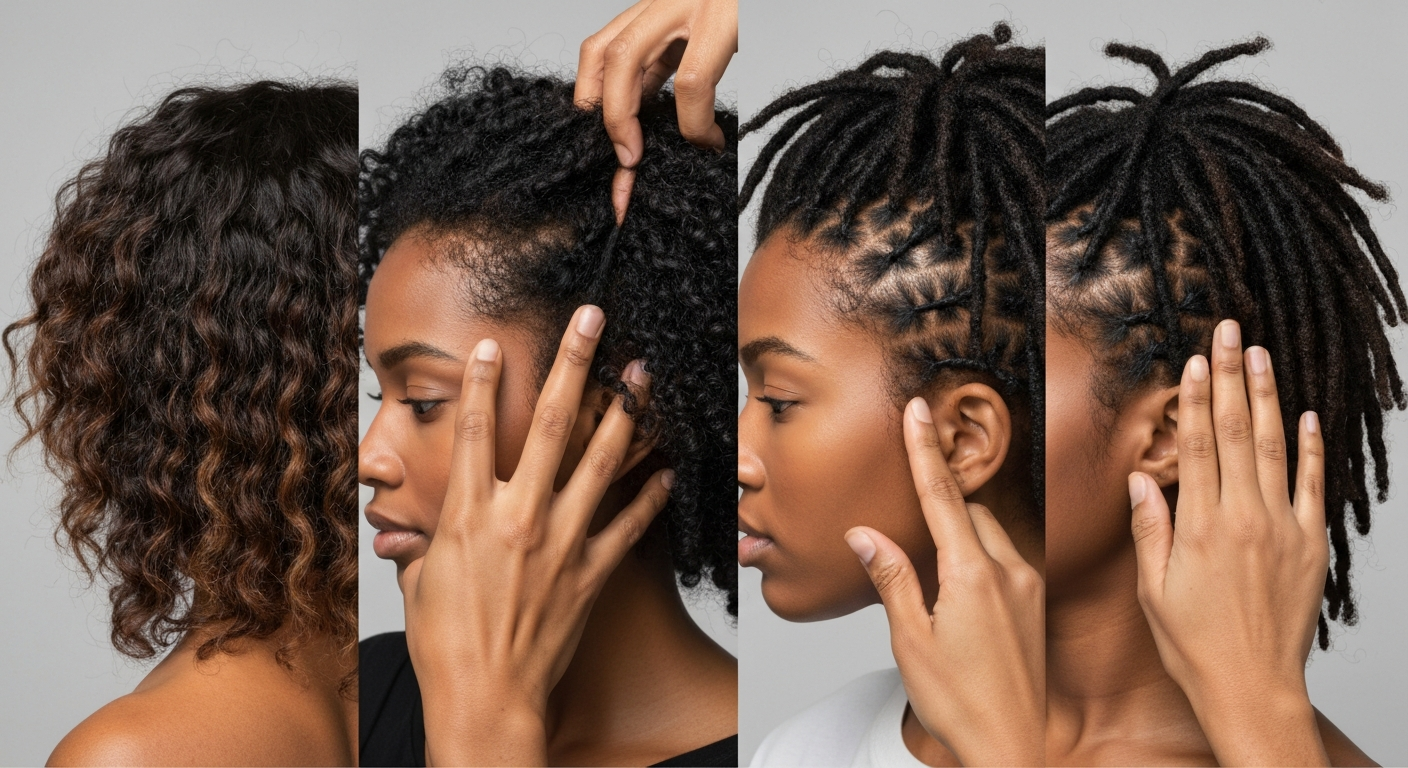
Interlocking does not make your dreads grow faster. Do dreadlocks make your hair grow faster, a concise FAQ explaining why locs affect visible length and retention but not the follicle’s growth rate. Your follicles grow hair at whatever rate your biology dictates, typically somewhere between 0.6 and 1.4 cm per month, and no maintenance technique changes that. What interlocking can do is help you retain more of that growth by keeping roots tight, reducing manipulation, and locking shed hairs inside the loc so they are not lost. That distinction between biological growth and visible length retention is the whole story here, and once you understand it, a lot of the confusion around dreadlock growth disappears.
Does Interlocking Make Dreads Grow Faster? Evidence-Based Guide

Simone Okonkwo
11 Aug 2026
Quick takeaways for textured and Black hair
- Interlocking is a maintenance method, not a growth stimulator. Anagen (active growth) rate is set by your follicles.
- African-textured hair grows at roughly 0.8–0.9 cm/month on average in large multi-ethnic studies, compared to ~1.1–1.3 cm/month for some other groups. That difference is biological, not a result of styling.
- Locs accumulate shed hairs inside their structure, which contributes to perceived volume and length gains over time without changing follicular output.
- Interlocking can improve length retention because the tighter root hold reduces re-manipulation and mechanical breakage between sessions.
- Done too tightly, too often, or at the perimeter, interlocking becomes a traction risk. Traction alopecia is documented in the dermatology literature specifically in relation to tight retwisting practices.
- Nutrition matters more than technique: ferritin, vitamin D, zinc, and protein deficiencies are evidence-backed contributors to shedding and reduced retention.
- No randomized controlled trial has shown that interlocking, palm-rolling, or any other retwist method increases the biological hair growth rate.
How hair actually grows: follicles, the anagen clock, and why retention is everything
Every strand on your scalp is produced by a follicle cycling through three phases: anagen (active growth, lasting 2–7 years), catagen (a brief regression phase), and telogen (resting and shedding, roughly 3 months). The length your hair can reach is largely determined by how long your anagen phase lasts, not by what you put on top of your head. The follicle does not know you have locs.
Measured anagen growth rates across populations show a wide range, roughly 0.6–1.4 cm/month in research, with some individual outliers pushing higher. Large in-vivo studies across 24 ethnic groups, including work by Loussouarn and colleagues, found that hair in African-descent groups averages around 0.8–0.9 cm/month, which is meaningfully slower than the 1.1–1.3 cm/month seen in some Caucasian and Asian groups. That gap is biological, rooted in follicle geometry, growth cycle length, and shaft structure. No styling choice closes it.
What styling does control is retention: how much of that monthly growth you actually keep. Afro-textured hair has a retrocurved follicle and a more fragile shaft at certain points along the curl, making it more prone to grooming-related breakage. If your hair is growing 1 cm a month but breaking at 0.7 cm a month through manipulation, your net retained length is only 0.3 cm. That is why so much of the practical guidance around growing locs longer is really about reducing breakage, not increasing output from the follicle.
What interlocking actually is: the technique explained
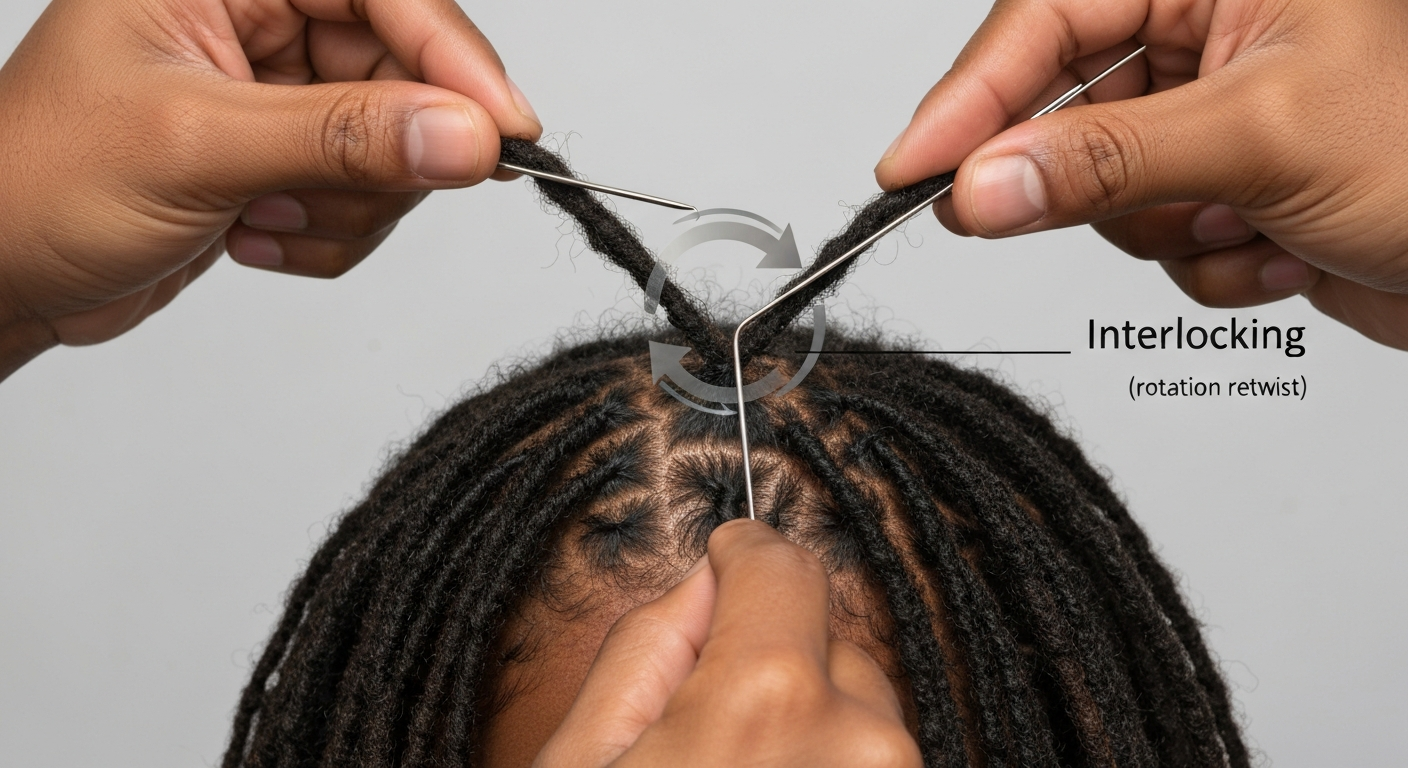
Interlocking, sometimes called rotation retwisting or lock tightening, is a method where a tool (usually a thin latch hook or interlocking needle) pulls the tip of a loc back through its own root in a series of directional rotations. Each pass cinches the new growth tight against the existing loc, essentially weaving new growth into the body of the loc rather than palm-rolling or twisting it in place. The result is a firm, knotted connection at the root that holds considerably longer than a palm-roll and does not unravel when wet.
Sisterlocks, the trademarked small-loc system developed by Dr. JoAnne Cornwell, was built around interlocking and has its own certified training for the specific grid pattern and tool technique. But interlocking is used beyond Sisterlocks: many locticians apply the same basic mechanics to traditional locs, particularly for clients who swim, work out frequently, or simply want lower-maintenance appointments. The key difference from other methods is that interlocking changes the physical structure at the root, creating a more permanent matting pattern rather than a surface twist.
Interlocking versus true growth: visible length is not the same thing as faster growing
This is the part that trips people up most often, including me when I first started researching this topic. When someone says their locs 'grew so fast' after starting interlocking, what they usually mean is one of two things: either their locs look longer because the root is tighter and the loc hangs lower, or they are measuring retained length after a period of less breakage and manipulation. Neither of those is the follicle running faster.
Locs specifically benefit from another retention mechanism that loose hair does not have: they trap telogen (shed) hairs inside the loc structure. Normally, when a hair reaches the end of its telogen phase, it falls out and ends up on your pillow or in your brush. Inside a loc, that hair is physically woven in and stays. Over months and years, this accumulation contributes noticeably to the perceived density and length of the loc. Dermatology reviews have flagged this mechanism as part of why people with locs often perceive stronger growth than they did with loose hair. But again, the follicle is doing the same job it always did.
There are no peer-reviewed randomized controlled trials comparing anagen growth rate across interlocking versus palm-rolling versus freeform loc wearers. The available evidence is clinical reviews, observational data, and professional practice guidance. That is an honest gap in the literature, and anyone claiming scientific proof that interlocking accelerates follicular growth is outrunning the evidence.
How interlocking shapes visible length, tightening, and loc maturation
Even though interlocking does not change growth rate, it does change how your locs look and behave over time in ways that feel like faster progress. A freshly interlocked root sits tighter against the scalp, so new growth is immediately incorporated rather than sitting loose. This makes locs look longer and neater sooner after a session than a palm-roll would, because there is no puffy 'halo' of unmatted new growth.
Interlocking also accelerates loc maturation in the sense that the locking pattern at the root is more permanently set. Locticians and community timelines generally put 'mature' locs (fully locked with no loose sections) at 12–24 months or more depending on texture and method. Interlocked locs often reach a cosmetically mature appearance sooner within that window because the root structure is locked from the start rather than relying on the gradual matting that palm-rolling or freeform produces. That cosmetic maturation is real and meaningful, but it is a structural change in the loc, not a change in follicular output.
Length retention is where interlocking genuinely earns its reputation. Because a properly interlocked root holds without re-manipulation, you are handling those root hairs less between appointments. Every time textured hair is manipulated, it risks micro-fractures at the curl points. Fewer manipulation sessions means less cumulative breakage, which translates to more retained length over months. That is a real, practical benefit grounded in the mechanics of Afro-textured hair fragility.
The real risks: tension, breakage, and traction alopecia
Interlocking done incorrectly or too aggressively is one of the documented risk factors for traction alopecia in the dermatology literature. The key 2016 JAAD review by Haskin and Aguh on Black hairstyling practices identified tight retwisting at the perimeter and repeated tension as contributors to hairline thinning and follicular damage. The risk is not theoretical: I have seen it in community spaces and in before/after photos shared by locticians discussing correction cases.
The mechanism is mechanical: repeated tight interlocking puts sustained traction on the follicle. Dermatology texts on ethnic hair describe micro-tears and root fractures from forceful or overly frequent interlocking, sometimes visible as holes or thinning at the root. The edges and temples are particularly vulnerable because the follicles there are already in a more exposed mechanical position. Heavy locs pulling on an interlocked root compound the tension.
The risk is not a reason to avoid interlocking entirely. It is a reason to do it correctly, at appropriate intervals, with appropriate tension, and by someone who knows what they are doing if you are not confident doing it yourself. Severity of traction alopecia correlates with chronicity, meaning it is the months and years of repeated tight tension that cause lasting damage, not a single session. Catching early warning signs early matters.
Warning signs to watch for
- Soreness or tenderness at the scalp that lasts more than 24–48 hours after a session
- Bumps, pimples, or folliculitis forming along the hairline after retightening
- Visible thinning at the temples or edges, particularly if locs sit there
- White casts or flaking at the root (can indicate product buildup or scalp stress)
- Holes or noticeably thinner sections developing within a loc near the root
- Gradual hairline recession over multiple months
If you see persistent hairline recession, papules at the follicle openings, or scalp scarring, those are clinical signs that warrant a visit to a dermatologist, not just a change in maintenance routine. Early-stage traction alopecia is reversible if tension is removed in time; scarring alopecia from chronic traction is not.
Pros and cons at a glance
| Factor | Benefit | Risk / Limitation |
|---|---|---|
| Root hold durability | Holds much longer than palm-rolling, especially through water exposure | Permanent lock pattern harder to undo if problems arise |
| Manipulation frequency | Fewer sessions needed = less cumulative mechanical breakage | Incorrect technique during each session causes more damage than palm-rolling done wrongly |
| Visible length retention | Tighter root means length appears sooner and is retained better | Does not increase biological growth rate at all |
| Loc maturation speed | Cosmetic maturity reached sooner in the timeline | Early tight interlocking on fragile baby locs can stress the shaft |
| Tension at hairline | Neat, controlled appearance at edges | Perimeter locs are highest risk for traction alopecia if done too tightly |
| Skill requirement | Achievable DIY with practice and the right tool | Improper rotation direction or too-tight pulls cause root holes and breakage |
| Product compatibility | Works well with lightweight, low-residue products | Waxes and hard-setting gels cause buildup at the interlocked root over time |
Comparing methods: interlocking, freeform, palm-rolling, and twisting
Each maintenance method produces a different relationship between manipulation, maturation, and retention. None of them changes your biological growth rate, but they affect retained length, loc structure, and cosmetic outcomes in very different ways. Understanding the tradeoffs helps you choose the right approach for your texture, lifestyle, and goals.
| Method | How it works | Root hold strength | Maintenance frequency | Maturation timeline | Main retention benefit | Main risk |
|---|---|---|---|---|---|---|
| Interlocking | Loc tip pulled back through root in rotational passes with a tool | Very high, holds through water | Every 6–12+ weeks depending on texture and growth rate | 12–18 months typical for cosmetic maturity | Low manipulation between sessions reduces breakage | Traction alopecia if too tight; root holes if technique is off |
| Freeform | No manipulation after starting; hair mats and locks naturally | Natural, no artificial tension | None or minimal (wash only) | 18–36+ months for full maturation; highly variable | Zero manipulation = minimal mechanical breakage | Uneven loc formation; harder to control size and shape |
| Palm-rolling | Loc rolled between palms to tighten and shape root | Moderate; unravels when wet if new | Every 2–6 weeks for maintained locs | 12–24 months | Gentle enough for regular use; low tool risk | Frequent manipulation; can thin locs if done too tightly over time |
| Two-strand twisting | Two sections twisted around each other at root | Low to moderate; needs time to set | Every 2–4 weeks at start | 18–30 months depending on texture | Very low tension method when done loosely | Twists can unravel before locking; less durable root hold long term |
How long does freeform take?
Freeform locs are the lowest-manipulation option: you start (usually by washing and leaving hair to mat on its own, sometimes with a simple coil start) and then largely leave them alone. The tradeoff for that minimal handling is time. Full maturation, meaning the locs are locked from root to tip with no loose sections, typically takes 18 months at the shorter end and can push past 3 years for some textures. For a detailed timeline and practical tips on how long does it take to grow freeform dreads, see our dedicated guide. Coarser, tighter curl patterns often mat more quickly; looser curl patterns may take considerably longer. The cosmetic 'messy' phase also lasts longer with freeform than with maintained locs, which is worth knowing if aesthetics during the journey matter to you.
Practical interlocking guidance: doing it safely at home and knowing when to see a loctician
If you are going to interlock yourself, starting on an established loc (at least 6–12 months old and reasonably mature) is safer than interlocking fragile baby locs. For a step-by-step guide on safely starting and maintaining locs at home, see our detailed how to grow dreadlocks at home resource (173bd1f0-e460-4d74-bc16-19f4cf2dd029). Baby locs have less structural integrity and are more prone to root fractures under rotational tension. Here is a basic safe interlocking process:
- Wash and fully dry your locs before interlocking. Wet hair is more elastic and more prone to breakage under traction.
- Work in sections, clipping the rest out of the way so you can see the root clearly.
- Insert the interlocking tool at the base of the loc near the scalp, not into the scalp. Pull the tip of the loc through the root hole gently.
- Rotate consistently in one direction (typically alternating two-point rotation: 12-to-6, then 9-to-3) to distribute tension evenly around the root rather than concentrating it in one spot.
- Stop when the root feels snug, not tight. You should not feel pulling tension at the scalp after you release.
- Apply a lightweight, water-based moisturizer or loc spray after the session. Avoid waxes, heavy butters, or products that form a hard film at the root.
- Aim for sessions every 6–10 weeks for average growth rates; going more frequently than every 4–6 weeks on the same root hairs increases cumulative tension risk.
For Sisterlocks specifically, the patented grid system and specific tool are part of the trademarked method. A certified Sisterlocks consultant is the recommended route for installation and early maintenance until you are trained in the correct technique for your specific grid. The margin for error is smaller with small locs than with traditional locs.
Product recommendations for interlocked locs
- Lightweight loc sprays with water and aloe vera as primary ingredients: humectant without residue buildup
- Glycerin-based moisturizers in diluted form: glycerin is a well-researched, low-hazard humectant that works well on textured hair without coating the shaft heavily
- Diluted apple cider vinegar rinse (1 part ACV to 3–4 parts water) monthly: helps remove mineral and product buildup at the root without disrupting loc structure
- Clarifying shampoo (sulfate-based, used occasionally): locs accumulate buildup faster than loose hair; a monthly clarify keeps the scalp healthy
- Avoid: beeswax, petroleum-based edge gels, heavy shea butter applied directly at the root, and any product that forms a stiff film. These trap debris, stiffen the root, and increase resistance during interlocking which raises traction risk
What actually moves the needle on growth and retention
Since technique alone does not speed up follicular output, the factors that actually determine how much length you retain over time are worth understanding clearly. For a general overview, see how do dreadlocks grow for a concise explanation of the biological and structural factors behind loc development. This is where the evidence is strong and actionable. For practical, evidence-based tips on retention and speeding visible progress, see our guide on how to grow dreadlocks faster (internal resource).
Nutrition is probably the most underestimated factor in this conversation. Iron (specifically ferritin, the storage form) is one of the best-documented nutritional contributors to hair shedding. See the Scientific Opinion on the substantiation of a health claim related to iron and maintenance of normal hair growth (EFSA / PubMed summary) for evidence supporting ferritin’s role in hair shedding and retention (PubMed ID 42112021). Low ferritin is common, particularly in women with heavy menstrual cycles, and the association with telogen effluvium (excess shedding) is consistent across multiple studies. Vitamin D deficiency has been associated with non-scarring alopecias including telogen effluvium and alopecia areata in systematic reviews and meta-analyses, though the evidence is still somewhat mixed on whether supplementation reverses hair loss in isolation. Zinc and adequate protein intake round out the nutritional picture. If you are shedding more than usual (roughly more than 100–150 hairs per day), a blood panel covering ferritin, vitamin D (25-OH), zinc, thyroid function, and a complete blood count is a reasonable starting point before investing in expensive hair products.
Scalp health directly affects follicle environment. A clean, well-circulated scalp with no chronic inflammation gives follicles the best conditions to complete a full anagen cycle. Wash your locs regularly, at least every 1–2 weeks, despite the common myth that locs should be kept dry. EWG Skin Deep ingredient page, Glycerin notes that glycerin is a widely used, effective humectant and is rated low hazard EWG Skin Deep ingredient page — Glycerin. Buildup, sebum, and product residue do not help locs lock faster; they create a damp, nutrient-rich environment for fungal overgrowth and can irritate the follicle.
Chronic stress and sleep deprivation are documented contributors to telogen effluvium through cortisol-related effects on the hair cycle. These are not things a leave-in conditioner fixes. Similarly, thyroid disorders and autoimmune conditions affecting hair are medical issues that need clinical management, not styling adjustments.
Low-manipulation retention habits worth building
- Sleep on a satin or silk pillowcase or wrap locs in a satin bonnet or scarf. Cotton fabrics increase friction and contribute to breakage at exposed loc tips overnight.
- Stretch sessions between interlocking appointments to the maximum comfortable length for your texture, rather than retightening at the first sign of new growth.
- Keep locs moisturized between sessions, especially at the tips. Dry, brittle tips break off and reduce the length you retain.
- Avoid tight updos, high ponytails, or buns that place mechanical stress on the hairline locs repeatedly. The perimeter is the most traction-vulnerable zone.
- If you swim, rinse with fresh water before entering the pool to reduce chlorine absorption, and rinse thoroughly and dry completely after.
When to see a professional
See a loctician if you are new to interlocking and unsure of technique, if you have Sisterlocks or very small locs where margin for error is narrow, or if you have noticed uneven root thickness, holes developing within locs, or sections that seem to be thinning. A good loctician can assess whether your current approach is causing structural damage and adjust the method, tool size, rotation pattern, or frequency.
See a dermatologist or trichologist if you are experiencing hairline recession, persistent scalp pain after maintenance, folliculitis, scalp scarring, or diffuse shedding that does not resolve within a few months. These are not styling problems; they are clinical issues. Early traction alopecia caught before follicle scarring is reversible with tension relief. Scarring alopecia is not. The stakes are genuinely high, which is why the line between a loctician visit and a clinical visit matters.
FAQ
Short answer: Does interlocking make dreads grow faster?
No — interlocking does not change the biological hair‑growth rate (anagen). It can, however, increase visible/retained length by keeping roots neat longer, reducing loose shedding from the shaft into the environment, and trapping shed hairs inside locs. Those retention effects make hair look like it’s growing faster even though follicular cell proliferation is unchanged.
How does hair actually grow (biology) and what’s the difference between growth and retained length?
Hair length increases when follicles in anagen produce new shaft (true biological growth). Average linear rates vary by person and ethnicity (rough group means ~0.6–1.4 cm/month). Retained length is what you see — it depends on growth minus breakage and shedding. Styling, damage and grooming practices influence retained length without altering the follicle’s anagen pace.
How does interlocking change matting, tension and visible length?
Interlocking pulls new growth through the existing loc to tighten the root. That creates a firmer root hold that resists undone sections and can keep locs compact and smooth longer between service visits. Tighter roots and the loc’s structure also trap shed (telogen) hairs, contributing to apparent thickness and length. In short: interlocking improves retention and neatness, not cellular growth rate.
Pros of interlocking
- Strong root hold that lasts longer between maintenance appointments- Cleaner, neater appearance and predictable parting- Often requires less frequent servicing than palm‑rolling, which many wearers find convenient- Helps incorporate loose shed hairs into locs, improving perceived volume/length
Cons and risks of interlocking
- If done too tightly or too often it produces repetitive traction at the root → risk of breakage, root fractures and traction alopecia- Can stress fragile or chemically relaxed hair more than looser methods- Improper technique can create weak spots or holes at the root- Product buildup at the root combined with tightness increases irritation and potential damage
Which hair types are especially at risk and why?
Afro‑textured and chemically relaxed hair have higher shaft fragility and different mechanical properties, making them more vulnerable to grooming‑related breakage. That makes tension control, spacing between maintenance sessions, and gentle technique especially important for textured/Black hair.
Next Article
How to Grow Dreadlocks at Home: Starter Guide & Maintenance
Grow dreadlocks at home: starter methods, realistic timelines, maintenance, and retention tips.