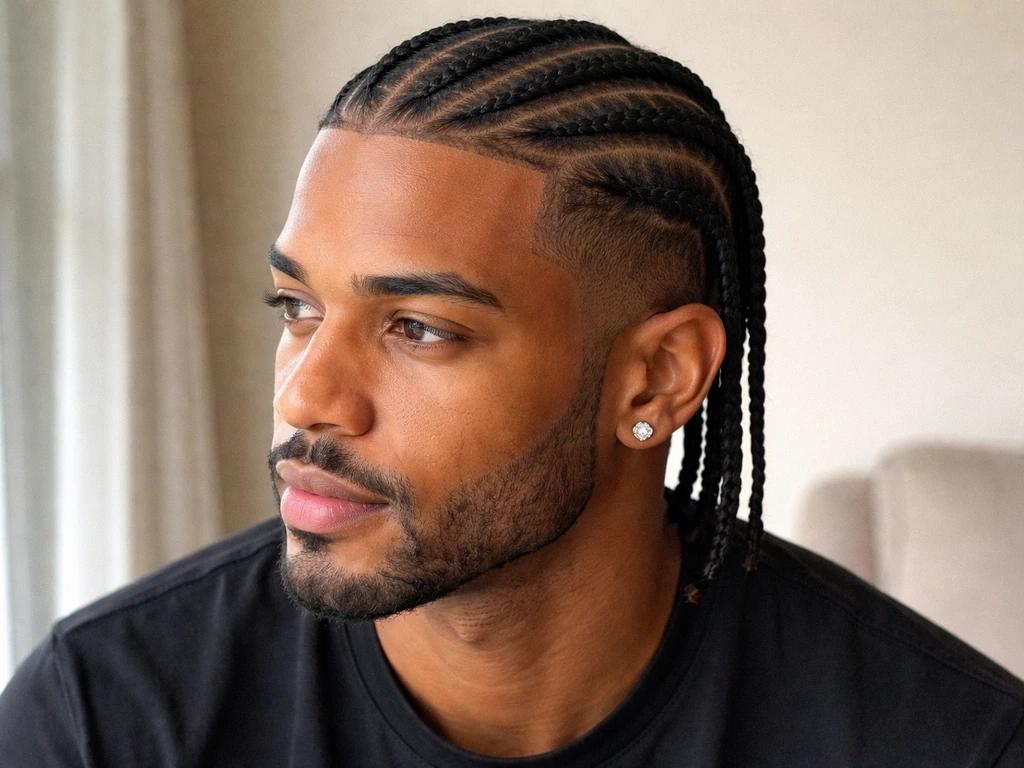
Box braids don't make your hair grow faster, but done right, they can absolutely help you grow out your hair. The real mechanism is retention: your hair grows roughly half an inch per month no matter what style you're wearing, but without a protective style, that new growth often breaks off before you ever see it. Box braids keep your ends tucked away, reduce daily manipulation, and give your strands a chance to accumulate length instead of snapping off. That's the deal, and understanding it is the foundation for actually making progress.
How to Grow Out Your Hair With Box Braids: Retention Steps

Simone Okonkwo
8 Jul 2026
What box braids can (and can't) do for hair growth
Hair growth happens at the follicle, underneath your scalp. That biological rate of roughly 0.5 inches per month is set by genetics, hormones, nutrition, and overall health. No style changes that number. What a protective style like box braids can do is stop the length you're already growing from disappearing due to dryness, friction, and breakage. The best protective style to grow hair is one that limits dryness, friction, and breakage while keeping your scalp comfortable and tension-free.
Think of it this way: if your hair grows an inch over two months but breaks off an inch at the ends, your length stays exactly the same. Box braids interrupt that cycle by protecting the ends from rubbing against clothing, reduce daily combing and detangling stress, and help your hair hold onto moisture longer than it would loose. That's the retention side of the equation, and it's genuinely powerful for textured hair, which tends to be more fragile at the ends and more prone to hygral fatigue from constant wet-dry cycles.
What box braids can't do: fix a nutrient deficiency, overcome hormonal hair loss, heal a damaged scalp, or compensate for braids installed too tight. If anything, braids installed poorly can actively cause permanent hair loss through traction alopecia. So the goal isn't just 'wear braids and wait.' It's wear braids correctly, care for your scalp and hair while they're in, and take them down safely.
Hair growth fundamentals for textured and natural hair
Textured and natural hair, particularly 4A through 4C curl patterns common in Black hair, has a coiled structure that makes it naturally prone to dryness and mechanical breakage. The tight curl pattern means sebum from the scalp has a harder time traveling down the hair shaft, so ends tend to dry out faster. This is why moisture retention matters so much more for this hair type than for straight hair types, and why protective styles like box braids are genuinely useful rather than just a trend.
Hair growth also happens in cycles: anagen (active growth), catagen (transition), and telogen (resting/shedding). About 85 to 90 percent of your hair is in anagen at any given time. Stress, extreme caloric restriction, illness, and scalp inflammation can push more follicles into telogen prematurely, slowing visible growth. So the growth fundamentals to focus on alongside your protective style are: adequate protein and iron intake, enough sleep, stress management, and keeping your scalp healthy and free of inflammation.
Scalp massages are worth mentioning here. A small 2016 study found that standardized scalp massage over 24 weeks was associated with increased hair thickness, likely through mechanical stimulation of the dermal papilla cells. It's not a guaranteed growth accelerator, but a few minutes of fingertip massage on your scalp each day is low risk and potentially beneficial, and it's easy to do even while you have braids in.
Braids for length retention: installation, parting, tension, and scalp care
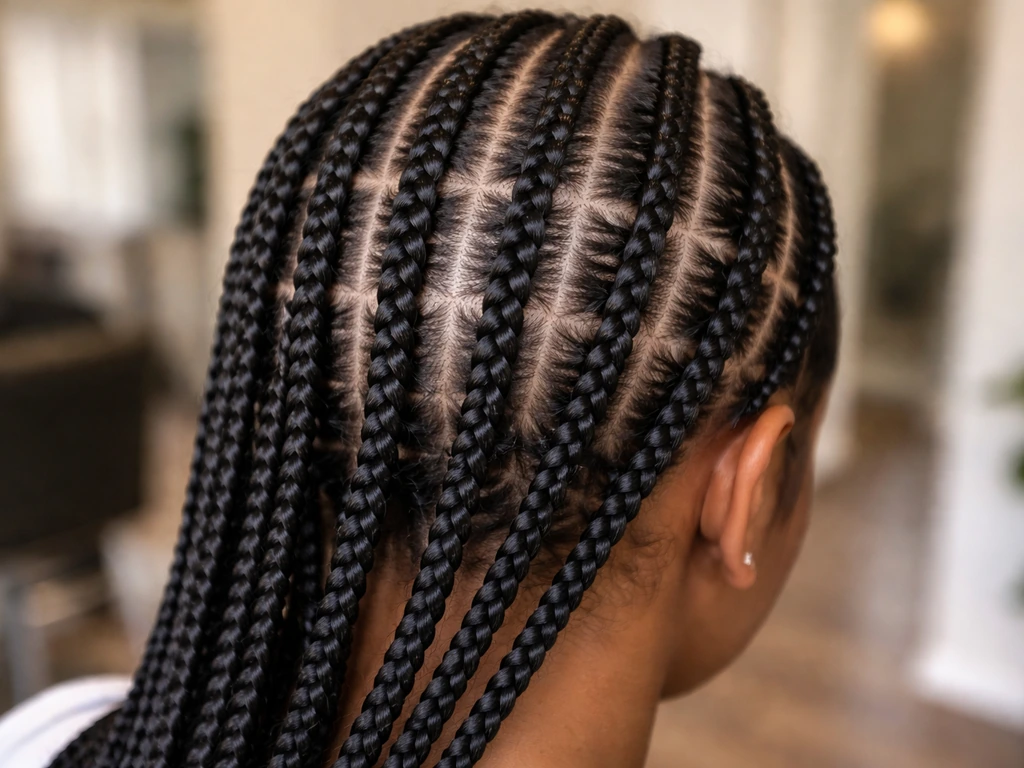
How your braids are installed is probably the single most important factor in whether they help or hurt your hair. A bad installation can undo months of growth progress and, in the worst case, cause permanent damage.
Part size and section shape
Larger box-shaped parts (roughly 1 inch by 1 inch, or bigger) distribute tension more evenly than tiny micro-parts. Micro braids and very small sections look gorgeous but concentrate stress on smaller amounts of hair, which increases breakage risk especially at the root. If your goal is length retention and scalp health, medium to large box parts are safer. Clean, square parting also matters because jagged or uneven parts create inconsistent tension and can cause tangling where parts meet.
Tension limits: the most important rule
Your braids should not hurt. Full stop. The AAD is clear that if a hairstyle feels painful, it's too tight, and repeated tension on hair follicles is the documented cause of traction alopecia. Traction alopecia can start as temporary hair loss but become permanent if the tension continues long enough. Signs that your braids are too tight include scalp throbbing or soreness in the hours after installation, small bumps or pimples along the hairline, follicular redness, and visible indentations at the root. If you're experiencing any of these, the braids need to come out or be significantly loosened. Do not wait it out hoping the pain will pass.
The edges and nape are the most vulnerable zones. These hairs are finer and have a shorter growth cycle, which makes them far less forgiving of tension. Ask your braider specifically not to braid these areas tightly, and if you're doing your own braids, go lighter at the perimeter than you think you need to.
Length and weight of extensions
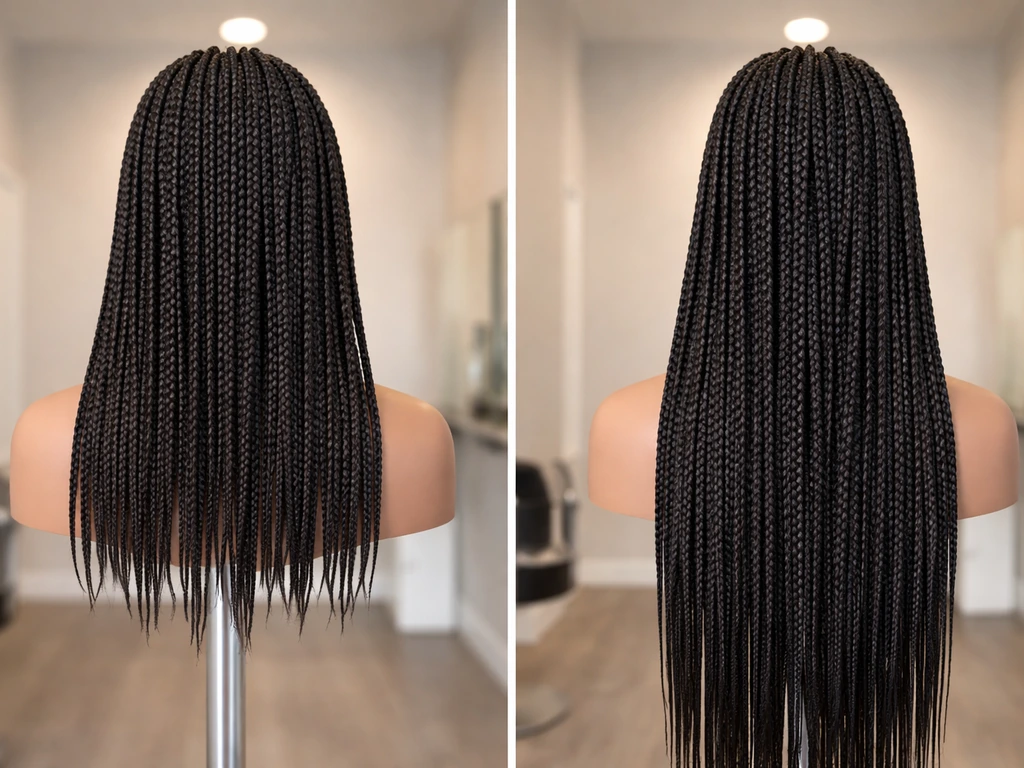
Very long, very heavy box braids put more gravitational tension on each follicle over time. If you want braids past bra-strap length, consider using less extension hair per braid so the overall weight is lower, or go with a mid-back length style for a growth-focused install. Knotless braids are worth considering here too: because the extension hair is fed in gradually rather than knotted at the root, the tension at the base is lower, which is better for retention and scalp health.
Your routine while the braids are in
This is where most people drop the ball. Putting your hair in box braids and then ignoring it for two months is one of the fastest ways to end up with drier, more damaged hair than when you started. A big part of how to grow your hair with protective styles is making sure your ends stay moisturized and protected while your scalp remains healthy. Your scalp still produces sebum, still accumulates sweat and product buildup, and your hair still needs moisture while it's braided.
Washing while braided
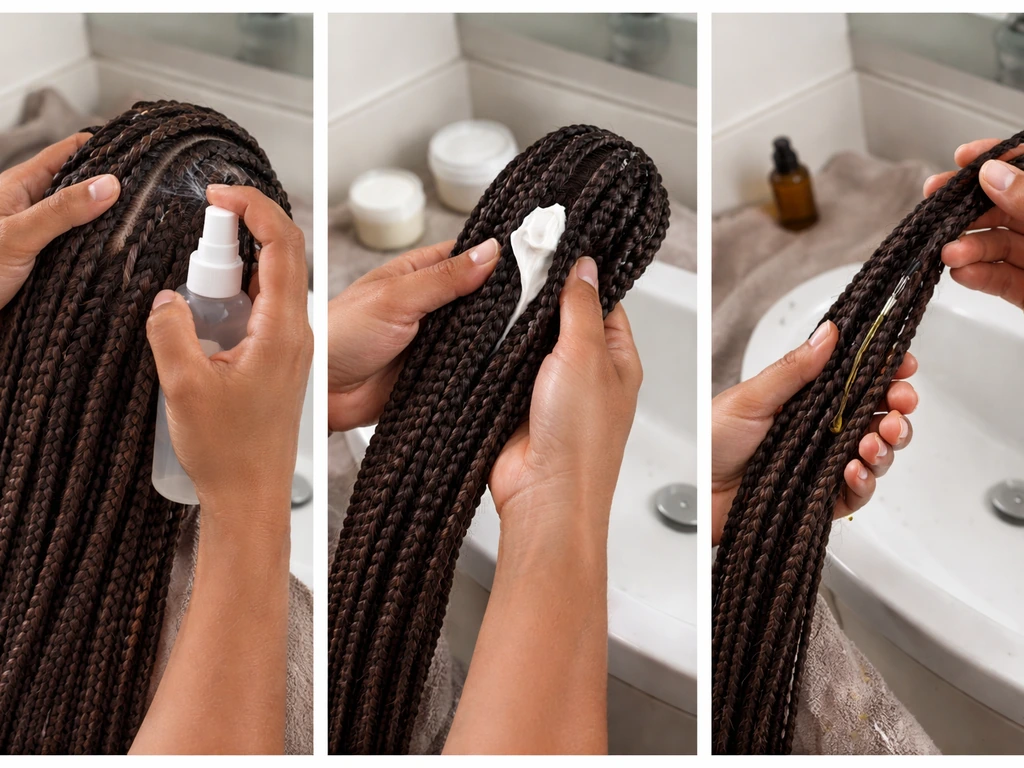
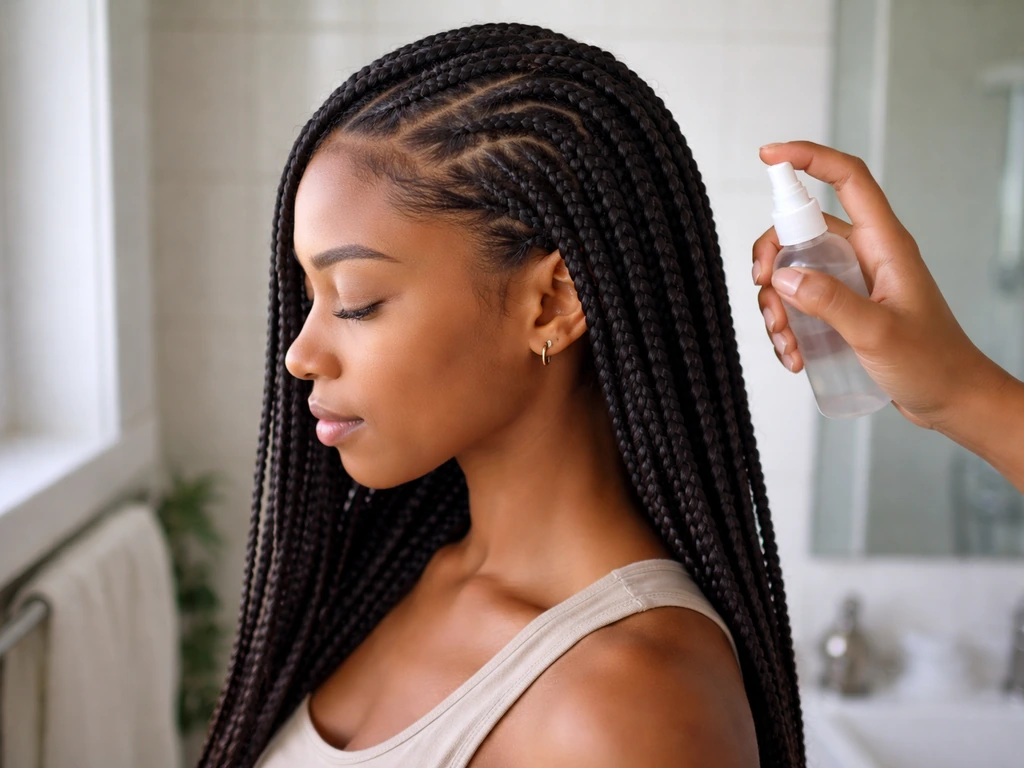
Wash your scalp every one to two weeks, depending on your activity level and how oily your scalp runs. Dilute a clarifying or gentle sulfate-free shampoo with water in an applicator bottle and apply it directly to your scalp in sections, then rinse thoroughly. Avoid scrubbing the braids themselves aggressively, which causes frizz and loosens the braid pattern. Focus the product on the scalp, let the water carry it through the braids on the rinse. After washing, squeeze (don't rub) the braids with a microfiber towel, and let them air dry fully before putting them up. Braids that stay damp under a bonnet or bun can develop mildew smell and scalp fungal issues.
Moisturizing and sealing
The LOC or LCO method still applies while braided: apply a lightweight water-based leave-in first, then a cream or butter, then seal with an oil. The key word here is lightweight. Heavy butters and thick creams build up fast when they can't be fully distributed or rinsed out between washes, so stick to lighter formulas while you're braided. Penetrating oils like jojoba, argan, or sweet almond are better choices than coating oils like castor oil for daily scalp use. Save the heavier sealants for your ends.
Pay special attention to the actual ends of your natural hair inside the braid. Those tips are the oldest, most fragile part of your hair, and they're the inches you're trying to retain. A small amount of oil massaged gently into the ends every few days helps keep them from drying out and snapping off while tucked away in the extension hair.
Scalp health between washes
Between washes, use a scalp oil or lightweight scalp serum to keep the scalp hydrated and prevent the itching that comes from dryness. For people wondering how to grow hair in cornrows, consistent scalp hydration and gentle maintenance can support healthy follicles between styles keep the scalp hydrated. Apply it with a dropper or nozzle tip directly onto the scalp in rows, then use your fingertips to gently massage it in. This also gives you the opportunity to do those scalp massages mentioned earlier. Keep sessions gentle: too much manipulation on braided hair can cause frizz and premature loosening.
Protecting your hair at night
Always sleep with a satin or silk bonnet, scarf, or pillowcase. Cotton pillowcases absorb moisture from your hair and braids overnight and cause friction that leads to frizz and breakage at the hairline. This is a small habit that makes a measurable difference over weeks.
How long to keep box braids in (and how to take them down)
The right timeframe
The sweet spot for box braids worn for length retention is six to eight weeks. At that point you've gotten real protective benefit, and your new growth is still manageable enough to handle during take-down without massive tangling. Going past eight to ten weeks significantly increases your risk of matting, because the shed hairs that collect inside the braid can begin to tangle with the new growth at the root. Some people push to twelve weeks, but this requires very diligent maintenance and an honest self-assessment of how much new growth your hair type produces. The more shrinkage-prone and tightly coiled your hair is, the shorter your wear window should be.
Safe take-down
Take-down is where a lot of the retention gains get lost if you rush. Before you start, apply a generous amount of a slippery conditioner, detangling spray, or oil mixture to each braid and let it sit for a few minutes. Start unraveling from the bottom tip and work upward, never pulling or ripping. Use your fingers before any tool, and if you use a comb, start at the end and work upward in small sections.
After all the braids are out, do not attempt to detangle dry hair. Apply more conditioner or a detangling product and work in small sections with your fingers and a wide-tooth comb or detangling brush. Expect significant shed hair: after weeks of low manipulation, all the hairs that would normally come out daily during combing have accumulated. Seeing a lot of shed hair during take-down is normal and is not the same as breakage. Breakage is short pieces with no bulb at the root; shedding is longer strands with a white bulb. Follow take-down with a clarifying wash, deep conditioning treatment, and a gentle protein treatment if the hair feels limp or mushy.
Product and tool recommendations for growth and retention
You don't need a ten-step routine, but having the right products for each job makes the routine you do have actually work. Here's a practical breakdown by category.
| Product Category | What to Look For | Examples / Notes |
|---|---|---|
| Scalp oil / serum | Lightweight, non-comedogenic, anti-inflammatory | Jojoba oil, tea tree + peppermint blends, scalp serums with niacinamide or salicylic acid for buildup-prone scalps |
| Leave-in conditioner | Water-based, low in heavy butters or silicones | Spray leave-ins or lightweight liquid formulas work best on braided hair |
| Sealing oil | Penetrating for hair shaft, lighter for daily use | Argan, sweet almond, or avocado oil for daily use; castor oil mixed with a lighter carrier for ends |
| Clarifying / cleansing shampoo | Sulfate-free or low-sulfate, rinses clean | Dilute it in an applicator bottle for easy scalp-focused application |
| Deep conditioner | High moisture or protein-moisture balanced | Used at take-down and mid-style if hair feels dry; sit under a hooded dryer or plastic cap for 20-30 minutes |
| Edge care | Non-drying, flexible hold, no alcohol | Edge control or light pomade; avoid heavy gels with drying alcohols near the hairline |
| Tools | Wide-tooth comb, detangling brush, microfiber towel, satin bonnet/scarf | Rat-tail comb for parting during install; detangling brush for take-down |
One thing worth saying plainly: hair growth supplements like biotin are popular but evidence for their effectiveness in people without a deficiency is limited. If your diet is balanced and your ferritin (iron stores) and vitamin D levels are in the normal range, adding biotin is unlikely to change your growth rate. It's worth getting bloodwork done if you're concerned about slow growth, because addressing an actual deficiency will do far more than any topical product.
Troubleshooting common problems
Itching and scalp irritation
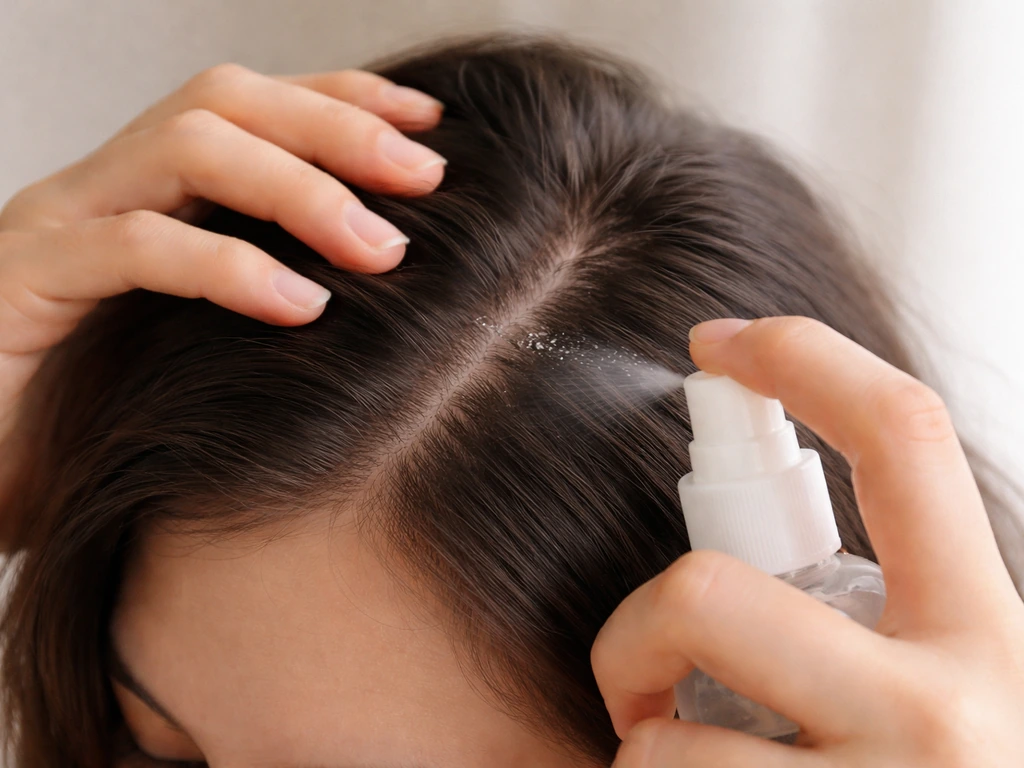
Itching is one of the most common complaints and has a few different causes. Dryness is the most common: your scalp isn't getting its usual sebum distribution with hair braided down, so it dries out. Fix this with regular scalp oiling between washes. Product buildup is another cause: too much heavy product applied too frequently without proper washing creates a layer on the scalp that traps bacteria. Clarify more often if this is you. A third cause is ACV (apple cider vinegar) sensitivity or reaction to synthetic hair coating: some people rinse their synthetic extension hair in diluted ACV before installation to remove the alkaline coating, which can significantly reduce post-installation itching.
Dryness mid-style
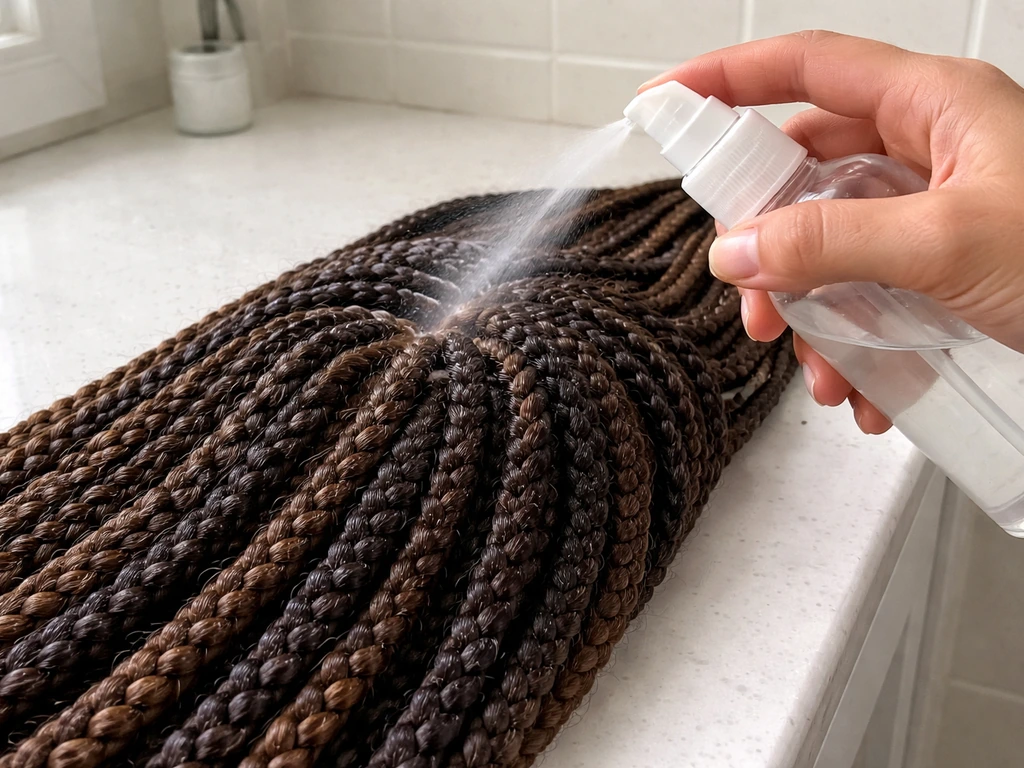
If your hair feels dry and stiff by week three or four, your moisture routine isn't frequent enough. Increase to a light leave-in spray every two to three days on the scalp and along the braids, followed by a drop of oil. If you're still struggling, a mid-style refresh with a diluted conditioner spray (mix a small amount of your leave-in with water in a spray bottle) can soften things up. Just make sure braids dry fully before you cover them.
Breakage and thinning at the edges
If you're noticing short broken hairs at the hairline, thinner edges than before installation, or small bald patches forming, these are serious warning signs of traction alopecia starting. Do not wait and hope for the best. The AAD, StatPearls, and Mayo Clinic all note that the key to managing early traction alopecia is removing the source of tension immediately and avoiding re-installing tight styles while the area heals. If you remove the braids and the edges haven't recovered after several weeks of loose styling, consult a dermatologist. Early intervention is important because traction alopecia can become permanent once the follicle is sufficiently damaged.
For general breakage in the mid-shaft or ends, evaluate two things: whether your braids were too tight, and whether you've been moisturizing consistently. Mid-shaft breakage usually signals tension or protein-moisture imbalance. End breakage is almost always a moisture and retention issue. A protein treatment followed by a deep moisture treatment often helps hair that feels brittle and breaks easily.
Scalp soreness after installation
Some mild scalp sensitivity in the first 24 to 48 hours after installation is common, but blank" rel="noopener noreferrer">actual pain or throbbing is not normal and is a signal your braids are too tight. If the soreness doesn't resolve within two days, or if you notice bumps, swelling, or redness along the hairline, the braids need to come out. Continuing to wear painful braids is one of the clearest paths to hair loss that could have been avoided. Your hair will grow back faster from a redo than from traction alopecia recovery. If you are wondering how to grow braids for guys, focus on retention first by keeping tension comfortable, moisturizing the scalp and ends, and choosing a safe wear time.
Putting it all together: a practical plan
Growing out your hair with box braids is genuinely achievable, but it requires treating the protective style as a system rather than a set-it-and-forget-it situation. Get a tension-appropriate install with clean parts and edges left loose, build in a consistent weekly or biweekly washing and moisturizing routine, protect your hair at night, take the braids down by eight weeks before tangling becomes a problem, and do a thorough take-down with conditioner and patience. If you want to explore how different styles stack up for retention, the conversation around the best braids to grow hair is worth digging into, as is the broader topic of how to grow your hair with protective styles more generally. The fundamentals stay the same across all of them: protect the ends, protect the edges, keep the scalp healthy, and minimize tension.
FAQ
Can I swim or work out while I’m growing out my hair with box braids?
Yes, as long as you keep tension comfortable and avoid leaving the hair damp. If you sweat heavily, rinse or wash your scalp as scheduled (every 1 to 2 weeks), then dry fully before putting on a bonnet, and use lightweight leave-in only after the scalp feels dry to the touch.
What should I do if I have to take my box braids out before 6 weeks?
If you need to take them down early, focus on minimizing tangling and root stress. Use plenty of conditioner and detangling spray, remove from the tips upward with your fingers, then do a clarifying wash and a deep conditioning treatment right after. This reduces the risk that matted shed hairs turn into more breakage when you re-style.
How can I tell the difference between normal shedding and true breakage when I take braids out?
You should treat shed hair during take-down as normal only if it’s longer strands with a white bulb and not short broken pieces. If you see mostly short fragments, especially around the root or hairline, that points to tension or dryness. In that case, loosen the install next time and increase moisture/conditioning before re-braiding.
Are heat tools okay on box braids for growing out your hair?
Not usually. Heat can make synthetic extensions frizz or shed, and it can also dry your natural hair at the roots where it’s most fragile. If you must reduce frizz, try air-drying fully, using lightweight leave-in, and focusing on moisture on the braids and scalp instead of applying direct heat.
How do I know the right time to change my box braids for my hair type?
Plan around your natural growth and shrinkage, not the calendar alone. If your hair shrinks a lot or your parts feel stressed before 6 weeks, shorten the wear window. A simple self-check is whether the roots feel loose enough to massage comfortably; if not, it’s time to remove.
Can I re-use or add extensions to my existing box braids to keep going longer?
Yes, but it has to be done carefully. If you add more extension at the roots to “fill in” too-tight braids, you can keep tension on the same follicles. Consider doing a partial redo only if the braid bases are still comfortable and you can separate the sections cleanly without pulling.
What should I do if my scalp stays itchy even after washing and oiling?
If your scalp feels itchy right away, first rule out dryness and product buildup before adding more oils. Wash according to your schedule, use lightweight scalp serum between washes, and avoid applying thick layers that can trap bacteria. If itching persists after a proper cleanse, stop and reassess for irritation or allergic reaction to products or synthetic hair.
What if my braids start hurting after I’ve already worn them for a few days?
If your braids are causing real pain, the safest move is to remove or significantly loosen them immediately. Waiting increases the chance of traction alopecia, and regrowth from early intervention is typically easier than recovery after prolonged tension. After removal, give your scalp a few weeks before re-installing.
Should I oil my hair before take-down to make detangling easier?
Detangling with oils is often not the best approach because it can create slip for movement but also coat and weigh down shed hair inside the braid. Use conditioner or a detangling spray for the take-down stage, then detangle with fingers and a wide-tooth tool on damp conditioned sections only after the braids are fully out.
How often should I touch up my braids during the weeks I’m wearing them?
Keep it to gentle, predictable maintenance. Refreshing with a light leave-in spray and a tiny amount of oil on the ends is usually enough. Overworking the braids to chase “freshness” can frizz the pattern, loosen the roots sooner, and undo retention benefits.
Next Article
How to Grow Braids for Guys: Routine, Care, and Timeline
Learn how to grow braids for guys with a real timeline, moisture and scalp care, and breakage prevention tips.