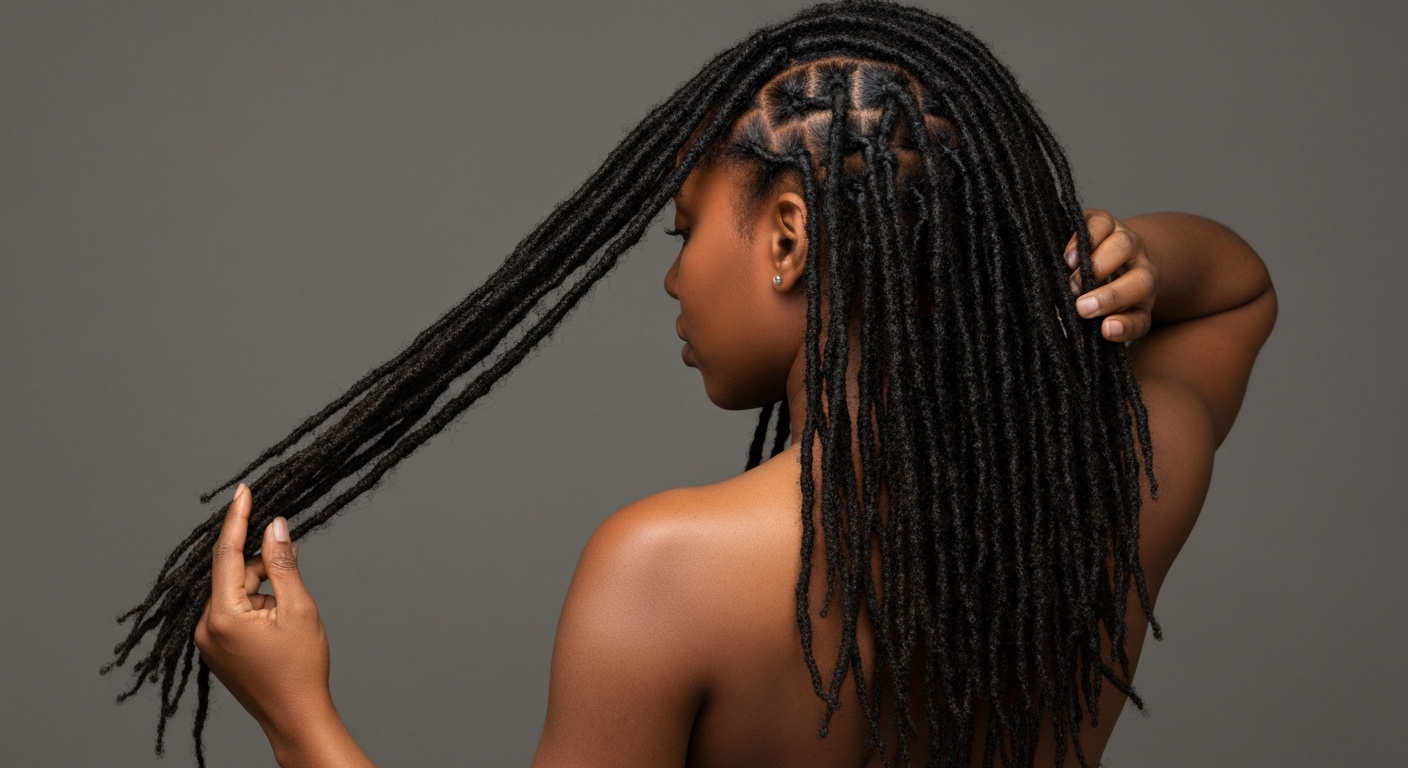
Sisterlocks do not make your hair grow faster. If you want a focused discussion on the core question, does Sisterlocks grow your hair, see this detailed guide covering retention versus follicular growth and practical timelines. Your follicles produce hair at roughly the same rate they always have, somewhere between 0.6 and 1.5 cm per month depending on your genetics, age, and overall health. What Sisterlocks can genuinely do is help you keep more of that growth. By dramatically reducing the daily manipulation that snaps textured hair at its most vulnerable points, a well-maintained set of Sisterlocks is a powerful length-retention tool. That distinction matters, because the same practices that maximize retention are completely different from the snake-oil approaches that claim to speed up your follicles.
How to Grow Sisterlocks Faster: Care, Retention, Timeline

What actually controls how fast your hair grows
Every strand on your scalp follows a cycle: anagen (active growth), catagen (transition), and telogen (rest and shed). The anagen phase for scalp hair typically runs two to six years, and its length is largely set by genetics. Published dermatology research puts average scalp hair growth at around 1 cm per month, or roughly 0.3 mm per day. No cosmetic styling technique, Sisterlocks included, changes that intrinsic follicular clock. What the research is clear about is that measured length differences between individuals and hair types usually come down to breakage and retention, not a faster or slower follicle.
Afro-textured hair has a curved, elliptical follicle and a tightly coiled shaft that creates structural points of high stress. This architecture makes it more susceptible to mechanical breakage than straighter hair types, which is why natural Afro-textured hair often appears not to grow when it is actually growing just fine but breaking at similar or greater rates. That is the core reason protective low-manipulation styles like Sisterlocks produce such visible length gains for many people: they reduce the daily friction and tension that causes that breakage.
The factors you can actually influence fall into a few concrete categories. Scalp health is foundational: a clean, well-circulated scalp supports follicle function. Nutrition matters more than most people want to hear, particularly iron status (low ferritin is consistently linked to non-scarring hair loss in women), vitamin D (deficiency is associated with telogen effluvium and other alopecia types), and adequate protein intake. Chronic stress and hormonal shifts (thyroid disease, postpartum changes, perimenopause) are among the most common triggers of diffuse shedding. And genetics remains the ceiling for everything else. You can optimize the environment, but you cannot override the blueprint.
How locs grow and why shrinkage fools you
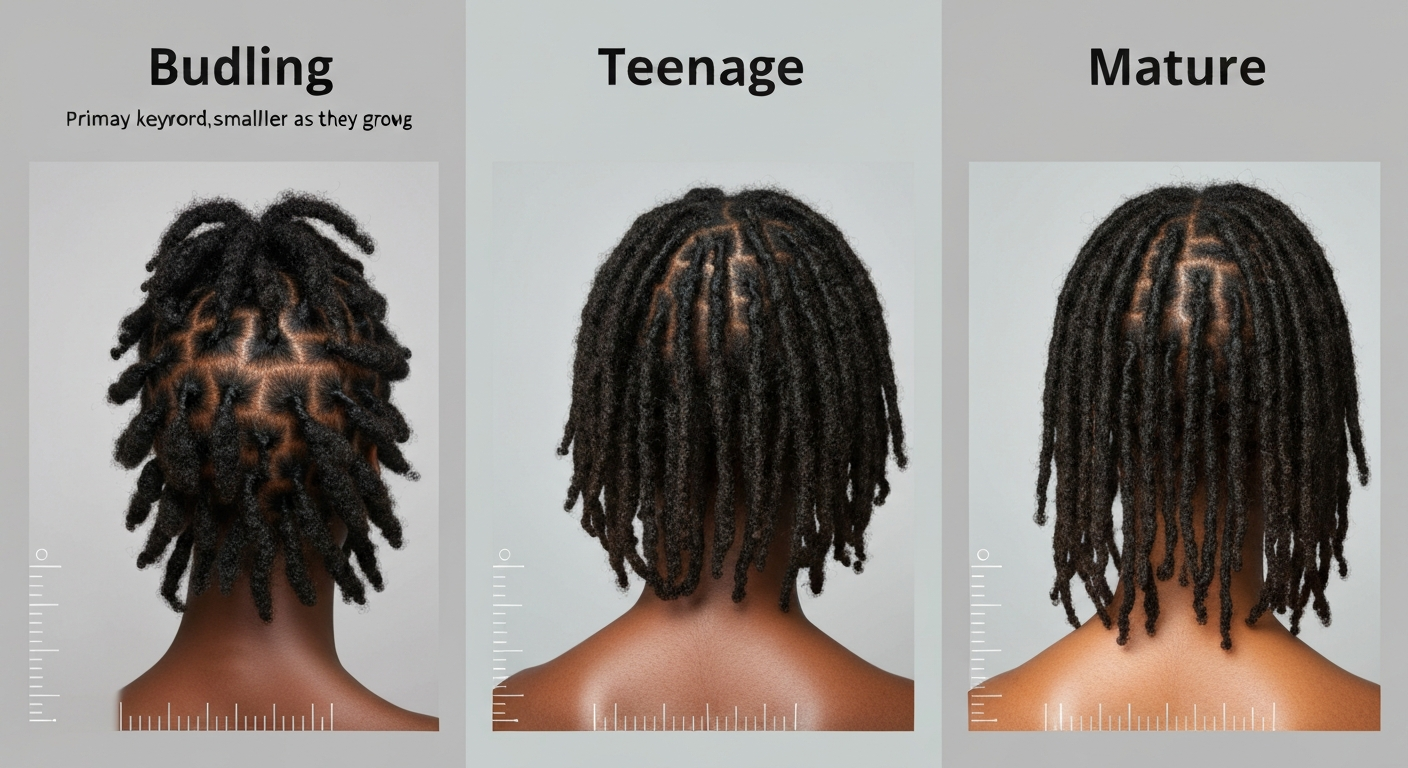
One of the most disorienting things about the early Sisterlocks journey is watching your hair appear to shrink even as it is technically growing. For more on why locs can look shorter during early stages, see do locs get smaller as they grow. This is not a malfunction. As the locs settle, the hair coils tighter around itself, and the loc structure condenses. The length is there, locked inside the coil pattern, but it does not appear until the loc matures and begins to elongate under its own weight. Most people see a genuine increase in visible length somewhere between 12 and 24 months, which is when the locs have typically moved through the budding and teen phases. For a detailed explanation of how locs grow, see how do locs grow. Measuring from the root to tip of individual locs periodically, say every three months, gives you a more honest read on progress than a quick glance in the mirror.
Retention is the concept that ties all of this together. If your follicle produces 1 cm of hair per month and you retain 90% of it, you gain roughly 10.8 cm of real length per year. If breakage is severe and you retain only 50%, you gain closer to 6 cm, and the difference is often invisible until you track it. This is why I push back hard on any product or method that promises to make your hair 'grow faster' without addressing the retention side of the equation first.
Day-to-day habits that add up to real length gains
Low manipulation is the closest thing to a guaranteed growth strategy I can offer. With Sisterlocks, most of the heavy daily manipulation of loose natural hair is already eliminated, but there are still habits that can quietly stall your progress. Avoid picking at new growth or pulling locs to check how they are settling. Do not repeatedly style or pin locs in the same direction under tension. When your locs are wet, they are at their most fragile, so never aggressively squeeze or wring them. Let them air dry or use a diffuser on a low setting, and avoid putting wet locs into a tight style. For more detailed strategies on thickening and increasing density in locs, see our guide on how to grow thick locs.
- Handle locs gently at all times, especially at the new growth near the scalp
- Avoid repeating the same tension points when pinning, updoing, or accessorizing
- Do not pick, pull, or test your locs during the starter and budding phases
- Sleep with a satin or silk bonnet or on a satin pillowcase every night
- Avoid heavy styling products that leave residue inside the locs
Scalp massages are a habit worth building into your weekly routine. While the evidence on scalp massage directly increasing hair density is still preliminary, improved blood circulation to the follicle is plausible, and the practical benefit of keeping your scalp connection healthy while wearing a low-manipulation style is real. A few minutes of gentle fingertip massage during or after washing is a low-risk addition to any routine.
Retightening: getting the schedule and tension right
Retightening is where things can quietly go wrong for a lot of Sisterlock wearers. The standard community and consultant guidance lands around every four to six weeks during the starter and maturing phases, with some consultants extending to eight weeks depending on the individual client's growth rate and hair density. Going more frequently than this can create chronic tension at the root, and that is not a minor concern. The American Academy of Dermatology has been clear that sustained or repeated pulling from tight styles can cause traction alopecia. Early traction alopecia is reversible, but repeated follicular stress over years can cause permanent scarring and loss.
Low-tension technique during retightening matters just as much as the schedule. A certified Sisterlocks consultant trained in the official tool and technique system is going to produce less mechanical stress than someone self-retightening without adequate training. If you are retightening at home, take a class. The Sisterlocks organization offers training specifically for clients who want to maintain their own locs, and I cannot overstate how much difference proper tool angle and tension control makes. Your scalp should not hurt during or after retightening. Tenderness, small bumps, or perifollicular redness at the hairline and temples are your body telling you the tension is too high.
| Signal | What it likely means | What to do |
|---|---|---|
| Scalp tenderness after retightening | Excessive tension at root | Extend interval, reduce tension on next session |
| Small bumps or folliculitis at hairline | Chronic traction stress or trapped buildup | Loosen style, clarify, consult a dermatologist if persistent |
| Thin or receding hairline edges | Early traction alopecia | Stop high-tension styling immediately, see a trichologist |
| Breakage mid-loc rather than at root | Dryness, hygral fatigue, or over-proteinization | Reassess moisture/protein routine |
| Itchy, flaky scalp between washes | Product buildup or seborrheic dermatitis | Increase wash frequency, use a clarifying or medicated shampoo |
Moisture, protein, and keeping the balance right
Textured hair in Sisterlocks has a moisture-protein balance challenge that is slightly different from loose natural hair. Because you cannot fully detangle or deeply condition each strand individually, you need to think about what you are putting into the locs and how it will behave over time. Water is your primary moisturizer. A light water-based leave-in misted onto the locs and scalp regularly keeps the shaft hydrated without the heavy residue that thicker products leave behind. Coconut oil is one of the few oils with actual research behind it for hair shaft protection: studies show it can penetrate the shaft and reduce protein loss, which translates to less breakage. Controlled cosmetic‑science experiments show coconut oil (pre‑ or post‑wash) penetrates the hair shaft better than mineral oil and can reduce protein loss and combing damage in treated hair tresses, a hair‑shaft protection effect rather than evidence it stimulates follicular growth Effect of mineral oil, sunflower oil, and coconut oil on prevention of hair damage (Rele & Mohile, Journal of Cosmetic Science, 2003). A small amount used sparingly works well for sealing moisture after a water-based application.
Protein treatments are useful but easy to overdo. Hair cosmetics research confirms that periodic protein conditioning can temporarily increase tensile strength, but over-proteinizing makes textured hair brittle and more prone to snapping. A rough rule of thumb is to use a light protein treatment no more than once a month, and only if your hair is feeling weak or breaking easily. If your locs feel stiff, hard, or straw-like after a protein treatment, reduce frequency and focus on moisture. A simple porosity test, a clean strand dropped in a glass of water, gives a rough indication: if it sinks quickly, your hair is high porosity and likely needs more moisture focus; if it floats indefinitely, it is low porosity and benefits from lighter, heat-assisted product application.
- Use water or water-based leave-ins as your primary moisturizer
- Apply light oils like coconut oil sparingly to seal, not to moisturize
- Avoid heavy butters, waxes, and thick creams that cannot rinse cleanly from locs
- Use protein treatments occasionally (roughly monthly at most) and only when hair feels weak
- Back off protein if locs feel hard, stiff, or brittle after treatment
- Never use products containing beeswax or petrolatum in Sisterlocks
Washing, clarifying, and keeping your scalp clean
A clean scalp is not optional if you want healthy hair growth. Product buildup inside locs is a real problem that is widely documented in the Sisterlock community: residue from leave-ins, oils, and hard water minerals accumulates inside the loc structure and can cause odor, itching, and scalp congestion. The conventional wisdom about washing natural locs less frequently does not apply to scalp health. Washing every one to two weeks is a reasonable starting point for most people with Sisterlocks, adjusted based on your scalp's oil production and exercise level.
For regular washing, a sulfate-free or gentle clarifying shampoo diluted and worked into the scalp with your fingertips (not scrubbed into the locs themselves) is the approach most consultants recommend. Every four to eight weeks, a true clarifying or chelating shampoo addresses mineral deposits and stubborn buildup that regular shampoos miss. Chelating agents like EDTA and citric acid are specifically designed to break the bond between mineral ions and the hair shaft, and they are the active mechanism behind both commercial chelating shampoos and diluted apple cider vinegar rinses (ACV contains citric and acetic acid). If you live in a hard water area, chelating washes are especially important.
After washing, thorough drying is non-negotiable. Moisture trapped inside dense locs creates a warm, dark environment where mildew and bacteria can grow. Sit under a hooded dryer, use a diffuser, or allow at least several hours of air drying time in a well-ventilated space before sleeping or covering your hair. Never sleep with soaking wet locs.
Protecting your locs at night
Night care is one of the most consistently underrated parts of a Sisterlock routine. Eight hours of friction against a cotton pillowcase adds up to thousands of micro-abrasions on the cuticle surface every week, and over months and years, that contributes meaningfully to breakage, frizz, and thinning of individual locs. Satin and silk create significantly less friction than cotton, and the difference in loc condition over a year of consistent use is noticeable.
A large satin bonnet that fully accommodates all your locs without cramming them tightly is the most protective option. A satin-lined pillowcase is a good backup if bonnets shift off during sleep. Avoid tying locs into a tight pineapple or bun at the hairline every night, as the repeated tension at those anchor points can contribute to traction stress over time. If you prefer to pile locs up to keep them from tangling, use a very loose, fabric-covered scrunchie or simply spread them across the pillow inside the bonnet. During the day, when putting locs up in styles, give your edges and nape periodic breaks from any tension.
A sample weekly care schedule
| Frequency | Task |
|---|---|
| Daily | Sleep in satin bonnet; mist locs and scalp lightly with water-based leave-in if feeling dry |
| 2–3x per week | Gentle fingertip scalp massage (2–3 minutes); check hairline and edges for any tension soreness |
| Weekly or biweekly | Wash with diluted gentle or sulfate-free shampoo; focus on scalp; dry thoroughly before sleeping |
| Monthly | Clarifying or chelating wash to remove mineral and product buildup |
| Every 4–6 weeks | Retightening by certified consultant or trained self-retightener; assess tension at hairline |
| Every 4–6 weeks | Light protein treatment if breakage or weakness is present; skip if hair feels strong |
| Every 3 months | Measure and photograph loc length from root to tip to track retention honestly |
The first 6 to 12 months: what to do and what to avoid
The starter phase is the most fragile period in the Sisterlock journey. The locs have not matured, the hair is not yet fully interlocked, and the structure is vulnerable to unraveling with the wrong handling. During this window, simplicity is your best strategy. For practical, step-by-step advice on how to make starter locs grow faster, see our guide on how to make starter locs grow faster. Stick to light products only, wash gently and not too frequently at first (some consultants suggest waiting two to four weeks after installation before the first wash, then establishing a regular schedule), and avoid any styling that puts significant tension on the new growth.
Resist the urge to style extensively in the first six months. The appeal of Sisterlocks is eventual styling versatility, but pulling fresh, unsettled locs into updos, buns, or accessories too early introduces the same kind of traction stress you want to avoid long-term. Your priority in year one is letting the loc structure consolidate and minimizing everything that could slow that process or damage the hairline.
How Sisterlocks compare to other loc methods for growth and retention
Because this is a question I get constantly, it is worth addressing directly. No loc method increases intrinsic hair growth rate. The differences between Sisterlocks, traditional starter locs, instant locs, and freeform locs come down to structure, manipulation, and the retention environment each method creates.
| Method | Manipulation level | Tension risk | Retention potential | Key tradeoff |
|---|---|---|---|---|
| Sisterlocks | Low after installation; regular retightening required | Moderate if retightened correctly; high if overtightened | High with proper maintenance | Requires certified consultant; cost and access vary |
| Traditional starter locs | Low to moderate; maintenance varies by technique | Low to moderate | High with proper care | Thicker locs; some methods require product use that risks buildup |
| Instant locs (interlocking/comb coils) | High at installation; varies after | Can be high depending on installation tension | Moderate to high; depends on aftercare | Installation method determines long-term health; no growing-in period |
| Freeform locs | Minimal ongoing manipulation | Very low | High if left undisturbed | No control over size, pattern, or separation; not for everyone aesthetically |
If you have read about whether instant locs or freeform locs grow faster than other methods, the answer is the same: the follicle is the same. Freeform locs may have a slight retention edge from near-zero manipulation, but that benefit is inseparable from the lack of control over loc formation. For a more detailed comparison on whether freeform locs grow faster, see do freeform locs grow faster. Sisterlocks sit in a useful middle ground of structure and relatively low manipulation when maintained correctly. The comparison to traditional starter locs and what actually drives their growth patterns is worth exploring in more depth separately.
Products worth using and what to leave on the shelf
The product rules for Sisterlocks are stricter than for most natural hair styles because residue cannot be combed out. Keep it simple and light. Water-based leave-ins that absorb quickly are the backbone of a good Sisterlock moisture routine. For oils, coconut oil has the most meaningful research behind it for shaft protection and protein loss reduction. Jojoba oil is a reasonable lightweight alternative. Beyond that, the evidence thins considerably, and most specialty 'hair growth oils' on the market have little to no clinical backing.
On the supplement side: biotin gets enormous marketing attention, but systematic review evidence is clear that it only helps in cases of confirmed biotin deficiency, which is actually rare. Taking extra biotin when you are not deficient does not accelerate hair growth. Iron and vitamin D are different: low ferritin and low vitamin D are both consistently associated with hair shedding conditions in research, and if you are experiencing unexplained shedding, getting those levels checked by a clinician and correcting deficiencies if found is genuinely worthwhile. These are not things to self-diagnose and self-supplement at high doses, but they are worth discussing with your doctor.
Topical minoxidil is the one growth-promoting agent with solid randomized trial evidence behind it, specifically for androgenetic alopecia and some telogen effluvium cases. The catch with Sisterlocks is that there are no quality trials studying its use under locs, and practical concerns include product residue building up inside the loc structure and potential for localized irritation. If you are dealing with pattern hair loss and wearing Sisterlocks, this is a conversation to have with a dermatologist or trichologist who can assess your specific situation rather than something to start based on general guidance.
Common mistakes that slow your progress
- Retightening too frequently or with excessive tension, which risks traction alopecia at the hairline and edges
- Using heavy waxes, butters, or styling creams that build up inside the loc structure and cannot be removed with regular shampoo
- Washing infrequently out of fear of unraveling, leading to scalp buildup and follicle congestion
- Neglecting nutrition, especially iron and vitamin D status, when experiencing unexplained shedding
- Over-relying on protein treatments and making the hair brittle and prone to snapping
- Styling new locs aggressively during the starter phase before the structure has consolidated
- Sleeping on cotton without any protective covering night after night
- Measuring progress only by looking at length in the mirror rather than tracking from root to tip over consistent time intervals
A realistic timeline for what to expect
Months one through six are about establishment. You are learning your retightening schedule, dialing in your washing routine, and watching the locs settle. Visible length gains during this phase may be minimal or even appear negative due to shrinkage. Months six through twelve typically bring the budding phase, where the loc structure starts to firm up and you may notice some elongation. Real, consistent, visible length gains become more apparent between twelve and twenty-four months as the locs mature and begin to hang under their own weight. At a retained growth rate of even 0.8 cm per month, that is nearly 10 cm per year, and in a style that protects that growth rather than breaking it off, the cumulative effect over two to three years can be dramatic.
DIY versus a certified consultant, and when to see a trichologist
Sisterlocks is a trademarked system with official consultant certification, and that structure exists for real reasons. The tool, technique, and parting pattern are specific, and doing it wrong at installation or retightening creates problems that are hard to undo. For the initial installation and first several retightening sessions, working with a certified Sisterlocks consultant is the safest choice. After that, if you want to maintain your own locs, the organization's client training is a legitimate option.
You should see a trichologist or dermatologist if you notice your hairline receding, significant thinning at the temples or nape, persistent scalp pain or inflammation that does not resolve when you ease tension, or a general increase in shedding that lasts more than two to three months. These are not things to wait out. Early traction alopecia is reversible; late-stage scarring alopecia is not. A trichologist can also help you figure out if shedding is related to nutritional deficiency, hormonal changes, or something else entirely, which changes the approach entirely. The goal is to catch problems early rather than reverse permanent damage later.
FAQ
Do Sisterlocks actually make hair grow faster or do they mainly improve length retention?
Evidence and hair‑biology reviews show cosmetic styles (including Sisterlocks) do not change intrinsic follicle cycle length or anagen duration, so they do not increase the actual rate of hair production. Measurable longer hair with Sisterlocks is therefore primarily from improved length retention — reduced breakage and controlled manipulation — rather than faster follicular growth. That said, safe low‑tension maintenance and improved scalp health that often accompany good loc care can indirectly support better retention and fewer breakage‑related losses.
What is the basic biology of scalp hair growth I should know?
Average scalp hair grows roughly 0.6–1.2 cm per month (≈0.3–0.36 mm/day in many studies), though values vary by age, ethnicity, and body site. Hair length on the head is determined by the rate of follicle production (anagen), the duration of anagen, and how much hair is lost to shedding or breakage. For textured/Afro‑textured hair, structural differences increase mechanical fragility: breakage and poorer retention — not necessarily a shorter anagen — often explain shorter measured lengths. Therefore, reducing mechanical damage and improving scalp health are the most effective ways to increase measurable length.
What controllable factors most influence measurable length and scalp health?
Key controllable factors: 1) Scalp health — keep it clean, free of inflammation, and well‑hydrated. 2) Nutrition — adequate protein, iron stores (ferritin), vitamin D, and overall calorie sufficiency matter for hair‑bearing follicles. 3) Stress and systemic illness — chronic stress and acute illnesses can cause shedding (telogen effluvium). 4) Local mechanical tension — frequency and tightness of retightening or tight styles; reduce to avoid traction alopecia. 5) Product buildup and hygiene — residue trapped in locs can irritate scalp and increase odor/mildew risk. 6) Genetics and hormones — set baseline potential and must be managed clinically when abnormal.
What daily and weekly routines maximize length retention and measurable length in Sisterlocks?
Concrete routines: - Daily: protect hair at night with a satin/silk scarf or bonnet and sleep on satin pillowcase; avoid rubbing and tight headwear. Keep scalp moisturized with water‑based spritzes; seal with a light oil if desired (jasmine, jojoba, fractionated coconut). - Weekly (every 3–7 days): gentle scalp cleansing if needed with a mild sulfate‑free cleanser or diluted clarifying wash for light residue; light scalp massage to stimulate circulation (not painful). Assess for buildup, odor, or tenderness. - Every 2–6 weeks: retightening per your consultant’s individualized schedule; err on longer intervals if you notice tenderness or perifollicular inflammation. - Monthly or as needed: clarifying wash or chelating treatment if product/hard‑water buildup accumulates. - Quarterly: reassess protein vs moisture needs; use a light protein treatment if fragile or stretchy ends, otherwise prioritize hydration. Always dry thoroughly after washing to prevent mildew.
What maintenance practices reduce breakage or traction risk?
Key practices: - Use low‑tension retightening schedules; stop retightening if scalp is tender or inflamed. - Avoid styles that tug on edges or pull across the hairline. - Keep moisture/protein balance: hydrate with water‑based products and occasional protein treatments to strengthen when needed. - Minimize manipulations and styling that cause friction. - Avoid heavy waxes, butters, and product formulas that cause buildup in locs. - Thoroughly dry hair after washing; trapped moisture increases microbial risk and odor.
What should I do and avoid in the first 6–12 months after Sisterlocks installation (starter loc phase)?
Do: - Follow consultant guidance on first retightening (often ~4–6 weeks) and subsequent intervals adapted to your hair’s response. - Keep scalp clean and observe for soreness or inflammation. - Use light, water‑based moisturizers and light oils to seal. - Sleep with satin/silk protection and protect styles that avoid extra tension. - Use clarifying washes sparingly to prevent buildup but not over‑strip hair. Avoid: - Early, frequent, or overly tight retightening; this is the highest risk period for traction. - Heavy greases, waxes, or products that accumulate inside locs. - Excessive manipulation or repeated wet‑dry cycles that cause hygral fatigue. - Ignoring persistent redness, tenderness, or progressive thinning at the hairline.
Do Locs Get Smaller as They Grow? Causes and Care Tips
Do locs get smaller as they grow? Evidence-based reasons, care tips, and fixes for thinning or thicker locs.