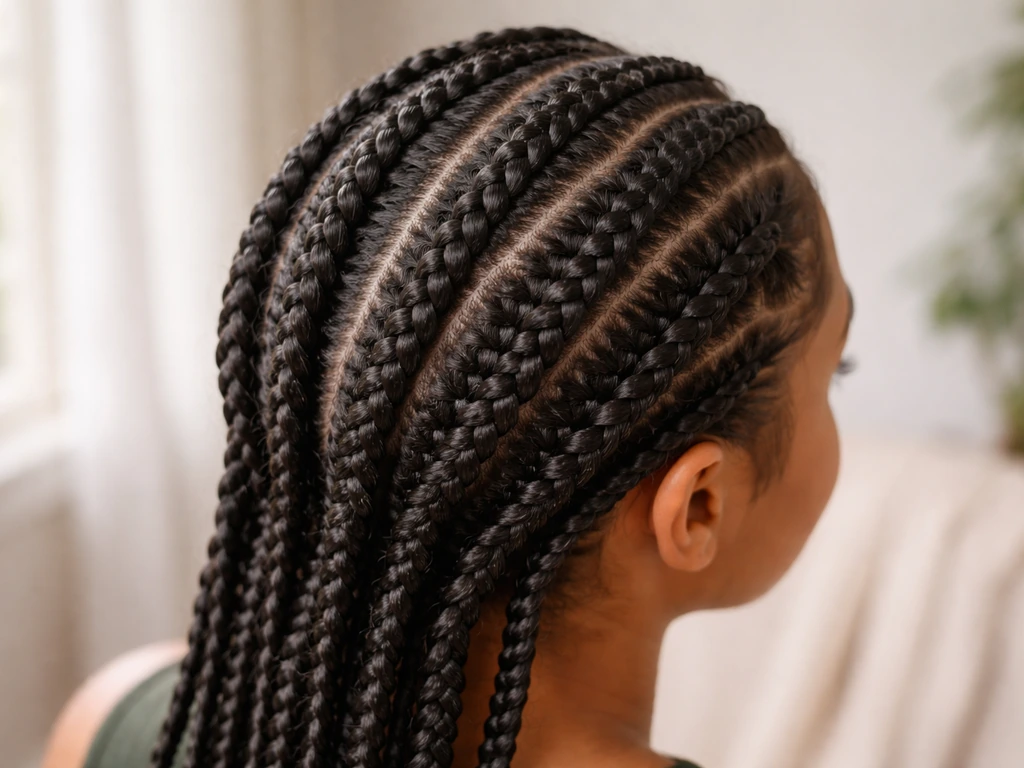
Protective styles do not make your hair grow faster. Your scalp produces hair at a fixed biological rate of roughly 1 cm per month regardless of what is sitting on top of it. What protective styles can do, when chosen and worn correctly, is stop that new growth from snapping off before you ever see it. That distinction between growth rate and length retention is the entire game, and most of the confusion around protective styles collapses once you understand it clearly.
How to Grow Your Hair with Protective Styles: A Practical Guide

Simone Okonkwo
4 Aug 2026
Who this guide is for
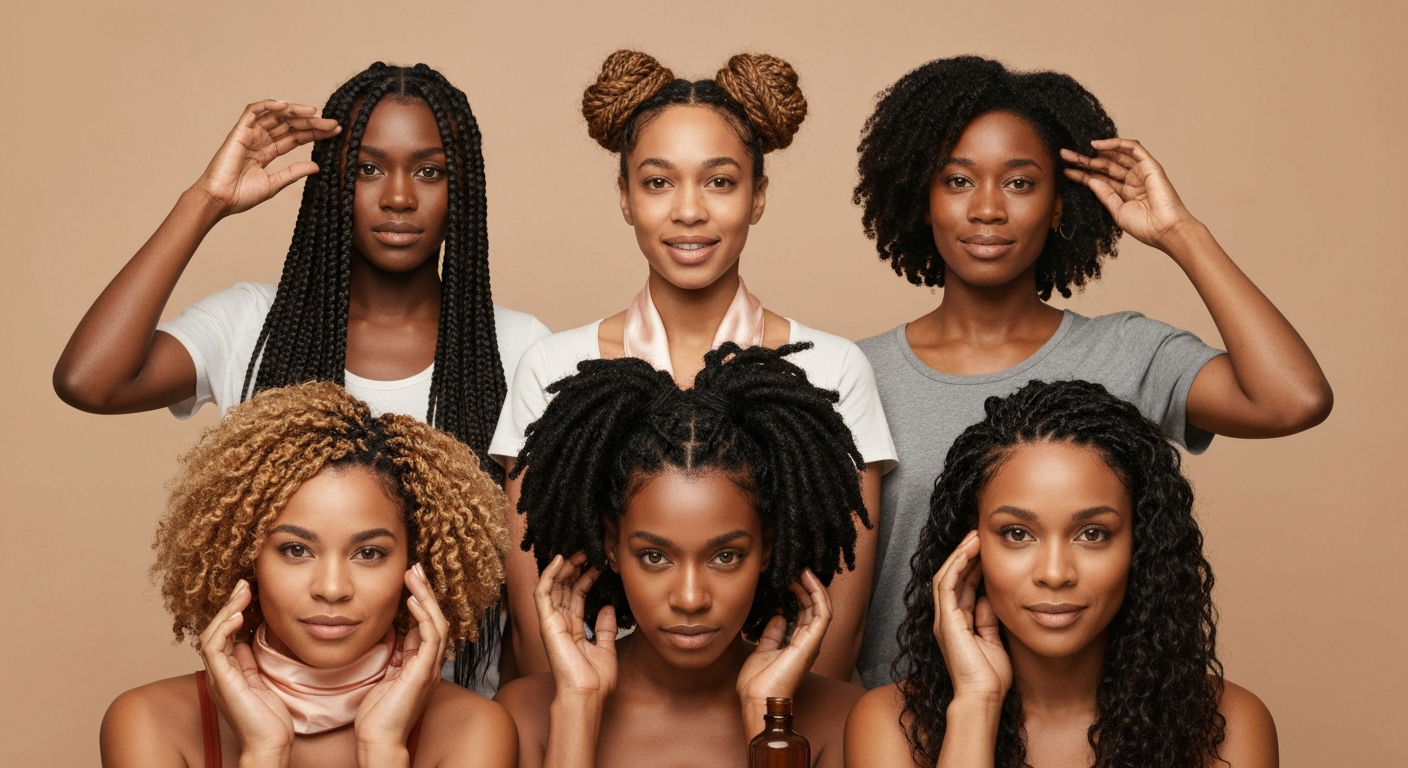
This guide is for anyone with textured, coily, or Black hair who wants a clear, evidence-based answer to whether protective styles actually help you grow longer hair. It is also useful for people with relaxed hair, for men exploring braided looks, and for anyone already wearing braids, twists, box braids, cornrows, locs, or weaves who wants a step-by-step plan to get more out of their current style. I have tried to cut through the mythology on both sides: the overclaiming (braids will grow your hair six inches in two months) and the overcorrection (protective styles are dangerous and never worth it). The reality is more nuanced, more practical, and more manageable than either extreme.
What 'protective style' actually means
A protective style is any hairstyle that keeps your ends tucked away, minimizes daily manipulation, and reduces the mechanical stress your hair experiences from combing, styling, and environmental friction. Classic examples include box braids, cornrows, two-strand twists, flat twists, locs, weaves, sew-ins, and crochet styles. The word 'protective' refers to protection from breakage, not protection from the follicle slowing down or speeding up. Your follicles sit about 4 mm below the scalp surface and operate on a genetically determined cycle that no hairstyle influences directly.
The clearest way I can frame this is: growth is what happens underground; retention is what you hold onto above the scalp. Hair grows at approximately 0.35 mm per day, and at any given time about 80 to 90 percent of your follicles are in the active growing phase (anagen). That biology is mostly fixed. What is not fixed is how much of that growth survives the daily friction, combing forces, and manipulation that textured hair is uniquely susceptible to. Protective styles, at their best, create a low-manipulation environment that lets retention catch up to growth.
How protective styles actually help, and where they fall short
The evidence base here is pretty clear. Styles that reduce end manipulation and daily combing genuinely do reduce mechanical breakage. Afro-textured hair has a helical, elliptical shaft cross-section with points of structural weakness at each curl, which means every combing pass generates more friction and breakage risk than it would for straighter hair types. Research published in the International Journal of Cosmetic Science by Molamodi and colleagues (2021) measured the surface damage from braiding and combing on natural African hair and confirmed meaningful increases in shaft damage from routine manipulation. Tucking ends away and reducing how often you drag a comb through that structure is a real, measurable benefit.
Where protective styles fail, and where many people get hurt by the word 'protective,' is tension. The American Academy of Dermatology has clearly documented that styles which pull on the follicle cause traction alopecia, a form of hair loss caused by repeated or prolonged tension. A 2018 review in Clinical, Cosmetic and Investigational Dermatology described exactly what that damage looks like: perifollicular redness, small pustules along the hairline, broken hairs at the margins, and in chronic cases, follicular fibrosis that can make the loss permanent. Research by Khumalo and colleagues found traction alopecia in 31.7 percent of adult women studied in Cape Town. That is not a rare edge case. It is a widespread, preventable problem that comes directly from how protective styles are installed and maintained.
So the honest summary is: properly installed, low-tension protective styles reduce breakage and improve length retention. Improperly installed ones trade short-term styling convenience for potentially permanent follicle damage. The style itself is not the problem or the solution. The execution is.
Which styles retain length best, ranked honestly
Not all protective styles offer the same retention benefits, and the risk profile varies considerably. Here is a practical comparison based on the tension, manipulation, and wear-duration evidence available.
| Style | Retention Benefit | Tension Risk | Ideal Wear Duration | Notes |
|---|---|---|---|---|
| Two-strand twists (natural) | High | Low to moderate | 2–4 weeks | Minimal tension if self-installed; great starter protective style |
| Box braids (medium/large) | High | Low to moderate | 6–8 weeks max | Larger sections = less follicle load; avoid heavy extensions |
| Locs (established) | Very high | Low once mature | Ongoing, retwist every 4–6 weeks | Best long-term retention if installed without excessive tightness at roots |
| Cornrows (large, spaced) | Moderate to high | Moderate | 4–6 weeks | Flat-to-scalp rows increase tension; leave edges out or loose |
| Weaves / sew-ins | Moderate | Moderate to high | 6–8 weeks max | Thread tension on natural hair and weight of weft are the main risks |
| Box braids (micro/small) | Moderate | Moderate to high | 4–6 weeks | More braids = more follicle load; weight of extensions multiplies risk |
| Tight cornrows / feed-in braids | Moderate | High | 3–4 weeks max | Frontal-temporal hairline most vulnerable; fringe sign develops quickly |
| Crochet styles | Moderate | Low to moderate | 4–6 weeks | Attachment point tension depends on technique; monitor knots at scalp |
If your primary goal is retaining length, large to medium two-strand twists and larger box braids (without heavy extension packs) consistently offer the best combination of low manipulation and manageable tension. Locs deserve a special mention: once they are past the early stages, they are arguably the most retention-friendly style that exists for textured hair, because the ends are never loose and manipulation is almost entirely eliminated. If you are curious about how locs compare to other long-term protective options, that comparison goes deep on this site. For a focused discussion on what is the best protective style to grow hair, see our in-depth comparison. For step-by-step instructions on how to grow a padawan braid, see our dedicated guide that walks through preparation, low-tension installation, and maintenance. For a step-by-step tutorial on how to grow a jedi braid, see our practical guide on how to grow a jedi braid. For a practical list of options and sizing tips, see our guide to the best braids to grow hair.
Micro braids and very tight cornrows along the hairline are consistently the most problematic in the clinical literature. For practical, style-specific tips, see our guide on how to grow hair in cornrows. The combination of small section size, high follicle load per braid, and repeated installation at the same sites is exactly what drives marginal traction alopecia. Men wearing braided looks, including longer braided styles sometimes associated with cultural or fashion trends, tend to have lower traction alopecia rates (roughly 2 percent in population studies), likely because braid sizes in men's styles tend to be larger and total head tension is more distributed. That said, the biology is the same for everyone: prolonged tension at the follicle is damaging regardless of gender. Population research from Cape Town (Determinants of marginal traction alopecia in African girls and women, Khumalo et al., J Am Acad Dermatol 2008) reported TA prevalence of 31.7% in adult women and 17.1% in schoolgirls, found much lower prevalence in men (≈2%), and identified hairstyle variables as strong determinants Determinants of marginal traction alopecia in African girls and women (Khumalo et al., J Am Acad Dermatol 2008).
Choosing the right style for your hair, lifestyle, and goals
Natural hair
Natural hair in its unaltered state has the most mechanical resilience to installation because the disulfide bonds in the cortex are intact. You still need to manage tension, but your starting tensile strength is higher than relaxed hair. Twists, flat twists, and locs are particularly well-matched to natural coily textures because they work with the curl pattern rather than against it, minimizing the friction and manipulation needed during installation.
Relaxed hair
Relaxed hair needs extra caution. Chemical straightening breaks disulfide bonds, damages the cuticle and cortex, and measurably reduces tensile strength and increases porosity, as documented in a 2023 review in Frontiers in Medicine. Population data from Khumalo's research showed approximately three times higher odds of developing traction alopecia when chemical relaxing and traction were combined, compared to traction alone. If your hair is relaxed, I would strongly recommend choosing lower-tension styles (loose twists, larger braids), avoiding heavy extensions, and keeping wear durations on the shorter end of the range.
Men's braided styles
Men growing out their hair for braids, locs, or longer braided styles face a specific challenge in the early growth phase where hair is too short for the intended style. The instinct to braid hair that is not quite long enough creates more tension per millimeter of hair, which is a real risk. Patience in this phase is not optional; it is protective. Styles for men that require hair at the frontal hairline to be included in tight braids from very short lengths deserve particular scrutiny. For specific guidance on how to grow braids for guys, see our step-by-step guide.
When not to wear a protective style
- Your scalp is actively inflamed, itchy, or showing signs of seborrheic dermatitis or folliculitis (installation traps product and sebum and can worsen infection)
- Your hair has significant breakage or is in a compromised state from overlapping chemical treatments (relaxer on top of color, for example)
- Your edges or frontal hairline are already sparse or showing signs of the fringe sign (traction alopecia in progress)
- You are not prepared to follow a maintenance and cleansing routine for the duration of wear
- You are planning to wear the style for longer than the recommended wear period without reassessment
Preparing your hair before installation
The condition your hair is in at the moment of installation determines a lot of what happens over the following weeks. I think of pre-installation prep as the single most skipped and most important step in the whole protective styling process. Here is what that prep should actually include.
Deep conditioning and moisture
Deep conditioning 24 to 48 hours before installation reduces combing forces and breakage during the detangling phase. Robbins & Kamath (J Cosmet Sci 2007) found that conditioning reduced combing forces and both short‑segment and long‑segment breakage in tress combing tests Robbins & Kamath (J Cosmet Sci 2007) found that conditioning reduced combing forces and both short‑segment and long‑segment breakage in tress combing tests.. Laboratory combing studies, including work by Robbins and Kamath published in the Journal of Cosmetic Science, have shown that conditioning treatments measurably reduce the mechanical force needed to comb through hair, directly lowering breakage during that process. Use a conditioner with slip-enhancing ingredients (cetyl alcohol, behentrimonium chloride, or natural butters), leave it on for at least 20 to 30 minutes under a plastic cap, and detangle gently in sections while the conditioner is still in.
Protein balance
If your hair feels mushy, stretches excessively when wet, and has little elasticity, it needs protein before installation. If it feels stiff, brittle, and snaps without much stretch, it needs moisture first. Installing in either extreme increases breakage risk. A light protein treatment (hydrolyzed keratin or wheat protein) followed by a moisturizing deep conditioner typically brings most textured hair into balance. Relaxed hair often needs more protein support because the chemical process compromised the cortex structure.
Trimming
Trim any visibly split or severely damaged ends before installation. Split ends left in a braid or twist will continue to split upward along the shaft during the wear period, creating more breakage when you take the style down. A small trim now prevents larger losses later. This does not mean cutting off length aggressively; it means removing ends that are structurally compromised.
Scalp health and porosity checks
Check your scalp for any active inflammation, flaking, or tenderness before sitting in the stylist's chair. If you have seborrheic dermatitis or product buildup, use a clarifying shampoo 2 to 3 days before installation and let the scalp fully settle. Porosity matters for product choices during the wear period: high-porosity hair (common in relaxed, heat-damaged, or chemically processed hair) loses moisture faster and needs more frequent sealing with lightweight oils. Low-porosity hair resists moisture entry but holds it once it is in, so use lighter, water-based leave-ins and apply heat (steam or a hooded dryer) during deep conditioning.
Low-tension installation: what to ask for and what to watch
Installation tension is the most controllable risk factor for traction alopecia, and it is also the variable most often handled passively by the person getting their hair done. Here is how to take control of it.
Talking to your stylist before they start
Have this conversation before the first braid goes in, not after. Tell your stylist explicitly that you want low-tension installation at the roots, that you want your edges and hairline left loose or left out entirely, and that if anything feels tight or painful you will ask them to redo it. Pediatric dermatology guidance has stated this plainly: if a style causes pain during or after installation, it is too tight and needs to be removed or loosened immediately. Pain is not something to push through when it comes to follicle tension.
- Ask for medium to large sections (bigger braids mean less follicle load per braid)
- Request that extensions be attached to the middle of the braid shaft rather than right at the scalp root
- Ask for the hairline and temple areas to be braided last, more loosely, or left out entirely
- If you feel a burning or pulling sensation at the scalp during installation, say so immediately and ask for that section to be re-done
- Do not add extensions that are significantly heavier than your own hair's weight for that section length
- Confirm the style will not pull the root follicle in a direction different from its natural growth angle
DIY installation guidelines
When installing yourself, the most common mistake is pulling each new braid tight to keep it looking neat and polished. Neatness at the root is achieved by cleanly parting sections, not by yanking the braid tight against the scalp. Use the following checks as you go.
- Section size: part cleanly but do not make sections smaller than your little fingernail; micro sections increase tension per follicle
- Parting tool: use a rat-tail comb for clean lines, but do not use the tail to scrape aggressively along the scalp
- Root tension test: after completing each braid or twist, gently wiggle the root with your fingertip; you should feel slight movement and no burning sensation
- Scalp skin check: the skin around the braid root should not look whitened, puckered, or pulled; those are visual signs of excess tension
- Extension weight: for box braids, use half a pack of extension hair per braid or less for the first few rows nearest the hairline
- Front hairline: braid the front row last, go one size larger than the interior braids, and use no extensions on the first row if your edges are fine or sparse
- If any braid causes you to wince when you press on the root, take it out and redo it with a slightly larger section and less root pull
How tight is too tight: the practical test
A braid is too tight if: it causes pain during installation; you cannot sleep the first night without painkillers; small bumps or pustules form along the part lines within 48 hours; the skin at the root is visibly lifted or puckered; or you see broken short hairs along the hairline within the first week. Any one of these is a signal to remove or loosen the style. Waiting for it to 'settle down' with a style that is producing those signs is how early traction alopecia becomes a permanent problem. Clinical histopathology research has confirmed that once perifollicular fibrosis sets in, hair cannot reliably regrow in those follicles.
Maintenance while your style is in
Installation is only half the equation. How you treat your hair and scalp for the full wear period determines whether the protective style actually delivers on its promise.
Cleansing
A cross-sectional study of women of African descent in London found that the average wash interval stretched to roughly 32 days when braided or wearing a weave, compared to much shorter intervals otherwise. That is too long. Sebum and product buildup on the scalp creates an environment for folliculitis (scalp infection) that can damage follicles and produce the very breakage you installed the style to prevent. Aim to cleanse your scalp every 1 to 2 weeks while in a protective style. Use a diluted sulfate-free shampoo applied directly to the scalp through a nozzle applicator, massage gently with fingertip pads (not nails), and rinse thoroughly to avoid product residue sitting on the scalp under the braids.
Moisturizing
The ends of your hair are the oldest and most fragile part of the strand. Keep them moisturized throughout the wear period with a light water-based leave-in conditioner applied along the braid length. Follow with a sealing oil to slow moisture loss. The most evidence-supported choice for a penetrating oil is coconut oil: a study by Rele and Mohile in the Journal of Cosmetic Science showed that coconut oil uniquely reduced protein loss from hair shafts compared to mineral oil and sunflower oil, because its medium-chain fatty acids allow it to enter the hair shaft rather than just coating the surface. Use it sparingly on the braids themselves and on the scalp between washes. Avoid heavy butters or thick products directly on the scalp, as they contribute to buildup and can block follicle openings.
Nighttime care
Nighttime friction and tension are underappreciated contributors to breakage and traction alopecia. A published dermatology review specifically identified nocturnal traction (pressure and tension applied during sleep) as a risk factor for progressive follicle damage. Use a satin or silk bonnet or pillowcase every night without exception. If your braids are long, loosely wrap them rather than tightly pinning them up against your scalp while sleeping. Avoid tight ponytails or bun placements that place all the weight of the braids on one section of scalp overnight.
Maintenance schedule
| Task | Frequency | Products / Tools | Notes |
|---|---|---|---|
| Scalp cleanse | Every 7–14 days | Diluted sulfate-free shampoo, nozzle applicator | Massage with fingertip pads; rinse fully |
| Scalp oil / moisture application | Every 3–5 days | Lightweight oil (coconut, jojoba, argan) | Focus on scalp and exposed parts; avoid heavy buildup |
| Braid / twist moisture | Every 3–5 days | Water-based leave-in conditioner + sealing oil | Mist lightly, then seal; avoid over-saturating |
| Edge care | Every 2–3 days | Light edge gel or light oil; no alcohol-based products | Gentle smoothing only; no pulling or aggressive laying |
| Nighttime protection | Every night | Satin/silk bonnet or pillowcase | Loose wrap for long styles; no tight overnight buns |
| Tension check | Every 1–2 weeks | Visual and tactile inspection | Look for new breakage, bumps, or edge recession |
| Style takedown / reassessment | Per style type (see table above) | Wide-tooth comb, detangling conditioner | Do not exceed recommended wear duration |
Taking the style down and what to do after
Takedown is where a lot of protective style gains are lost. Rushing the removal or dry-detangling after weeks in a style causes the bulk of post-protective-style breakage. Apply a generous amount of conditioner or a lightweight oil (coconut oil works well here too) to each braid or twist before unraveling it, and detangle section by section from the ends upward with a wide-tooth comb or your fingers. Never pull a comb from root to end through weeks-old shed hair that has accumulated inside the braid. That shed hair builds up and tangles with your live hair during the wear period, and forcing it out is one of the fastest ways to cause significant breakage.
After takedown, do a full deep conditioning treatment before doing anything else. Then assess your hair and scalp honestly. Check the hairline for any new recession or increased sparseness along the temples and front. Look for the fringe sign: a row of short broken hairs along the frontal-temporal margin that indicates traction stress has been occurring. If you see it, do not reinstall immediately. Give your hair and scalp a rest period of at least 2 to 4 weeks, and consider going to a dermatologist or trichologist if the recession is noticeable. Early traction alopecia responds to removing the traction source; late-stage scarring alopecia does not.
Products to use and what to skip
Prioritize these ingredients
- Coconut oil: penetrates the shaft, reduces protein loss, best evidence base among oils for textured hair
- Hydrolyzed proteins (keratin, wheat, silk): reinforce compromised strands between chemical services; use in balance with moisture
- Glycerin, aloe vera, panthenol: humectants that attract and bind water to the strand; excellent in leave-in conditioners
- Behentrimonium chloride or cetrimonium chloride: conditioning agents that reduce combing friction without heavy buildup
- Jojoba oil and argan oil: lightweight surface sealants appropriate for daily edge and braid moisturizing
Avoid or limit these
- Alcohol-based gels and edge controls with denatured alcohol high on the ingredient list: drying to already fragile edge hairs
- Heavy petrolatum or mineral oil as a primary scalp product: creates buildup that clogs follicle openings and requires more aggressive cleansing
- Sulfate shampoos used at full strength directly on braided scalp: can strip too aggressively and cause tangling mid-braid
- Overlapping chemical services (relaxer and color, or relaxer touch-up while in extensions): compounded damage to already weakened strands significantly increases breakage risk
- Thick hair butters used directly on the scalp under braids: contribute to the folliculitis-promoting buildup environment
Warning signs you should not ignore
Traction alopecia caught early is reversible. Caught late, it is not. These are the signs that mean you need to act now, not at your next installation appointment.
- Persistent pain or burning at the scalp lasting more than a day after installation
- Small red bumps or pustules along part lines or at the hairline
- Short broken hairs accumulating along the frontal-temporal hairline (the fringe sign)
- Visible recession of the hairline compared to where it was before protective styling began
- Increased hair shedding during takedown beyond what you consider normal for you
- Scalp tenderness that worsens with movement of the braids or style
If you are seeing early signs, the first intervention is also the most important one: remove the tension. Dermatology research is consistent that early, non-scarring traction alopecia can respond to removing the traction source, sometimes supported by topical treatments. A 2023 case series reported that low-dose oral minoxidil showed promise for improving hair density in traction alopecia patients, but that evidence comes from retrospective case reports and should be discussed with a clinician, not self-prescribed. The most powerful treatment available is still the free one: stopping what is causing the problem before it becomes permanent.
Common mistakes and how to fix them
| Mistake | What it causes | The fix |
|---|---|---|
| Installing over dry, non-conditioned hair | Higher combing forces during detangling; more breakage at installation | Deep condition 24–48 hours before; detangle gently with conditioner in |
| Going too small with section size | Excess tension per follicle; faster onset of traction stress | Use medium to large sections; accept that bigger braids last just as long |
| Heavy extensions on a full head of small braids | Compounded follicle load; increased weight traction especially overnight | Fewer, larger braids with lighter extension hair; leave hairline loose |
| Skipping scalp cleansing for 4+ weeks | Sebum and product buildup; folliculitis; weakened emerging hair | Cleanse scalp every 7–14 days with diluted shampoo via nozzle |
| Sleeping without protection | Friction breakage on braid tips; nocturnal traction on follicles | Satin/silk bonnet every night; loose wrap for long styles |
| Wearing the same style repeatedly in the same parts | Cumulative follicle stress at the same sites; progressive traction damage | Rotate parting patterns; rest periods between installations |
| Rushing takedown on dry hair | Tangled shed hair causes mass breakage on removal | Apply oil or conditioner before unraveling; detangle ends-first in small sections |
| Reinstalling immediately after takedown | No recovery time for stressed follicles; cumulative damage compounds | Wait at least 1–2 weeks between installations; assess scalp and edges |
Realistic expectations for length retention
If your hair grows at approximately 1 cm per month and you are currently retaining very little of that due to breakage, switching to a consistent, properly maintained protective styling regimen can make a meaningful difference over 6 to 12 months. The upper limit is your growth rate; protective styles cannot exceed it. But for many people with high-breakage patterns, the difference between retaining 20 percent and retaining 70 or 80 percent of their monthly growth is dramatic when measured over a year. That is not magic; it is just mathematics working in your favor instead of against you.
The other honest caveat is that genetics set the ceiling on achievable length through anagen duration. Not everyone's hair will reach waist length regardless of how well they retain it, because not everyone has a follicular anagen phase long enough to produce that length before the hair sheds naturally. What protective styling and retention-focused care give you is the best chance of reaching your personal genetic ceiling, rather than falling short of it through preventable breakage.
FAQ
SEO title and meta description to use for this article?
Title: How to Grow Your Hair with Protective Styles: Evidence-Based Guide for Black & Textured Hair Meta description: Learn the science of protective styling—what protects vs what damages, safest styles, step-by-step prep, low‑tension installation, hygiene, product guidance, removal and warning signs to maximize length retention and scalp health.
What is a "protective style" and how is it different from increasing hair growth?
Definition: A protective style reduces frequent manipulation of the hair ends and shields shafts from environmental/mechanical damage (examples: box braids, twists, cornrows, locs, weaves, extensions, men’s braided looks). Growth vs retention: True hair growth (rate from the follicle) is biologically determined (average ≈0.35 mm/day or ~1 cm/month) and driven by anagen duration and follicle health. Protective styles do not increase follicular growth rate in healthy scalps; they improve length retention by preventing breakage of already-grown hair. Therefore wearing protective styles can lead to longer hair over time by reducing loss from shaft breakage, not by speeding scalp growth.
Which protective styles are most and least helpful for length retention and why?
Most helpful (for retention when low-tension and well-maintained): loose twists, large-box braids with light extensions, soft two-strand twists, loose cornrows with extended hair left out at the perimeter, well-maintained locs. These minimize root tension and reduce end manipulation. Moderately risky: small, very tight braids, heavy extensions/weaves, micro-braids—they protect ends but increase shaft load and root tension. Highest risk: chronically tight braids, pulled-up high-tension styles, heavy sew‑ins or glued weaves and styles that repeatedly tug the hairline—these increase traction and risk of traction alopecia. Risk increases with added weight (extensions), duration, and if combined with chemically relaxed or damaged hair.
How do protective styles cause harm—what is traction alopecia and how does it present?
Mechanism: Repeated or prolonged tension on follicles causes perifollicular inflammation and, over time, fibrosis and follicular unit loss. Clinical signs: early perifollicular redness, folliculitis, broken hairs, receding edges including the "fringe sign" (sparing of very short broken hairs at the margin). If traction continues, scarring (permanent) hair loss can occur. Early detection and removing tension are critical because scarring TA may be irreversible.
Are there differences in risk or advice for natural versus chemically relaxed hair?
Yes. Chemically relaxed/permed hair has weaker shafts and more cuticle/cortex damage—tensile strength is reduced—so it is more likely to break when exposed to traction or weight. Population studies show significantly higher odds of traction alopecia when relaxers and traction are combined. For relaxed hair: favor lower-tension installations, avoid heavy extensions, increase conditioning and protein/moisture balance, shorten wear times, and be more conservative with heat/chemical processing before or after styles.
Are men’s braided styles (e.g., Jedi/padawan braids, cornrows) safe to use as protective styles?
They can be, but the same principles apply. Men in epidemiologic samples had lower TA prevalence overall, but styles with high root tension, tight edge braids, or heavy added hair can still produce traction injury. For men: request loose root direction, avoid repeated tight knots at the hairline, avoid chronic high styles that tug on the frontal/temporal margin, and maintain regular scalp cleansing and short rest periods between installs.
Next Article
What Is the Best Protective Style to Grow Hair?
Choose the best protective style for natural hair to boost length retention, with safe install, upkeep, and growth troub